Home » Jazz Musicians » Miles Davis
Miles Davis
Throughout a professional career lasting 50 years, Miles Davis played the trumpet in a lyrical, introspective, and melodic style, often employing a stemless harmon mute to make his sound more personal and intimate. But if his approach to his instrument was constant, his approach to jazz was dazzlingly protean. To examine his career is to examine the history of jazz from the mid-'40s to the early '90s, since he was in the thick of almost every important innovation and stylistic development in the music during that period, and he often led the way in those changes, both with his own performances and recordings and by choosing sidemen and collaborators who forged the new directions. It can even be argued that jazz stopped evolving when Davis wasn't there to push it forward.
Davis was the son of a dental surgeon, Dr. Miles Dewey Davis, Jr., and a music teacher, Cleota Mae (Henry) Davis, and thus grew up in the black middle class of East St. Louis after the family moved there shortly after his birth. He became interested in music during his childhood and by the age of 12 had begun taking trumpet lessons. While still in high school, he started to get jobs playing in local bars and at 16 was playing gigs out of town on weekends. At 17, he joined EddieRandle's Blue Devils, a territory band based in St. Louis. He enjoyed a personal apotheosis in 1944, just after graduating from high school, when he saw and was allowed to sit in withBilly Eckstine's big band, which was playing in St. Louis. The band featured trumpeter Dizzy Gillespie and saxophonist Charlie Parker, the architects of the emerging bebop style of jazz, which was characterized by fast, inventive soloing and dynamic rhythm variations.
It is striking that Davis fell so completely under Gillespie andParker's spell, since his own slower and less flashy style never really compared with theirs. But bebop was the newsound of the day, and the young trumpeter was bound to follow it. He did so by leaving the Midwest to attend the Institute of Musical Art in New York City (since renamed Juilliard) in September 1944. Shortly after his arrival in Manhattan, he was playing in clubs with Parker, and by 1945 he had abandoned his academic studies for a full-time career as a jazz musician, initially joining Benny Carter's band and making his first recordings as a sideman. He played with Eckstine in 1946-1947 and was a member of Parker's group in 1947-1948, making his recording debut as a leader on a 1947 session that featured Parker, pianist John Lewis, bassist Nelson Boyd, and drummer Max Roach. This was an isolated date, however, and Davis spent most of his time playing and recording behind Parker. But in the summer of 1948 he organized a nine-piece band with an unusual horn section. In addition to himself, it featured an alto saxophone, a baritone saxophone, a trombone, a French horn, and a tuba. This nonet, employing arrangements by Gil Evans and others, played for two weeks at the Royal Roost in New York in September. Earning a contract with Capitol Records, the band went into the studio in January 1949 for the first of three sessions which produced 12 tracks that attracted little attention at first. The band's relaxed sound, however, affected the musicians who played it, among them Kai Winding, Lee Konitz, Gerry Mulligan, John Lewis, J.J. Johnson, and Kenny Clarke, and it had a profound influence on the development of the cool jazz style on the West Coast. In February 1957, Capitol finally issued the tracks together on an LP called Birth of the Cool.
Read moreTags
Miles Davis, Tony Williams, Flat Earth Society, Paolo Fresu & More

by Ludovico Granvassu
Countless ways to celebrate the electric era of Miles Davis.Happy listening!Playlist Ben Allison “Mondo Jazz Theme (feat. Ted Nash & Pyeng Threadgill)" 0:00 Paolo Fresu “Orange" kind of LIVES (Tǔk) 0:16 Host talks 2:56 Flat Earth Society “It's About That Time" In a Silent Way (Zonk) 5:12 Miles Davis “Directions" Reference: Miles Davis' 3rd Quintet Bitches Brew Live 1969 in Europe (AlAy) 15:37 Tony Williams Lifetime “Spectrum" Reference: Emergency! (AlAy) 25:58 Host talks 34:52 The Big ...
Continue ReadingThe Tension Is Where the Music Lives: Miles Davis at 100, Part 3
by Kofi Adjepong-Boateng
Herbie Hancock Celebrates Miles Davis Hollywood Bowl Los Angeles, CA August 19, 2026 The Hollywood Bowl began as a picnic ground called Daisy Dell, a canyon chosen for its acoustics, willed into being largely by women, chief among them Artie Mason Carter, a music teacher who believed music was for everyone and priced every seat at a quarter. It opened in 1922 and still seats around 17,500 under the open sky; the audience still arrives ...
Continue ReadingBoxes: Mass Market, Boutique, and Odd
by Patrick Burnette
Mike is swamped in Spain (with homework, not water), so Pat does an intermediary episode that is .5 by name, .5 by nature. He takes a look at five box sets in three completely made up categories and when he's done you'll still have time to go out for a nice dinner.Playlist Discussion of John Coltrane's album The Complete Village Vanguard 1961 Recordings (Impulse!) 4:00 Discussion of Charles Mingus' album Changes: The Complete 1970s Atlantic Studio Recordings (Atlantic) ...
Continue ReadingFillmore Dreams, Part 2
by Blue Note Portal
Part 1 | Part 2 | Part 3 The transition was not at all what Xample expected. Dr. Kovac had walked him through the neural integration protocol multiple times. He had read the technical documentation--all 1,400 pages of it. He had sat in the chamber on the seventy-seventh floor, felt the interface nodes calibrate against his temporal lobes, felt the gentle heat of the mapping sequence as it built a model of his sensorium. He had closed his ...
Continue ReadingFillmore Dreams, Part 1
by Blue Note Portal
Part 1 | Part 2 | Part 3 The room had no name. It didn't need one. Everyone who mattered in the trillion-dollar architecture of Xample Global knew exactly where they were when the elevator opened onto the seventy-seventh floor of the X Tower in what had once been called New York City and was now, in the casual parlance of 2092, simply “the Corridor." The boardroom was a perfect sphere, suspended within the larger structure ...
Continue ReadingMiles Davis' 3rd Quintet: Reference: Bitches Brew Live 1969 In Europe
by Mark Corroto
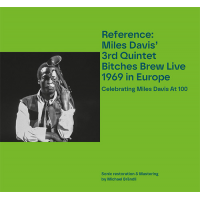
For Miles Davis, timing was everything. His music rarely stood still long enough for audiences to catch up. The Columbia releases of Filles de Kilimanjaro (January 29, 1969) and In a Silent Way (July 30, 1969) marked the decisive bridge between his acoustic past and electric future. Yet Davis was already moving beyond that bridge before listeners had a chance to cross it. Less than a month after In a Silent Way reached record stores, he assembled musicians for what ...
Continue ReadingMiles the Composer Part 3: The second great quintet
by Larry Slater
Miles Davis wasn't a prolific composer, and he wrote even less in his later years. There are some classic tunes from the late '50s, and a few written for the second great quartet. Many of these compositions have stood the test of time to become jazz standards..In this hour you'll hear the two tunes written for his wife Frances Davis, “Fran Dance" and “Pfrancing." Other classic Davis tunes you'll hear include “Seven Steps to Heaven," “Teo," “Nardis," “Filles ...
Continue ReadingMiles Davis: Walkin' and Musings
Source:
JazzWax by Marc Myers
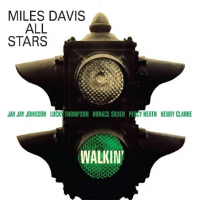
The 1950s produced two pop superstars—Elvis Presley and Miles Davis. Both began the decade recording for smaller labels and were launched into the mainstream by larger ones—Presley on Sun and then RCA, and Davis on Prestige and then Columbia. Both were perceived as ultra cool and a departure from the norm, both were viewed as sex symbols and both achieved fame through a conversational lyricism—Presley with his vocal approach and Davis with his trumpet. What's more, both Presley and Davis ...
read more
Announcing Smoke Jazz Club’s May 2025 Line-up Featuring A Miles Davis Celebration, Louis Hayes And The Jazz Communicators, And More
Source:
AMT Public Relations
SMOKE Jazz Club today announced its concert schedule for May 2025. Some of today’s top ensembles reunite on the SMOKE stage including: supergroup Something Else! featuring Vincent Herring (Apr 30-May 4) and The Jazz Communicators led by NEA Jazz Master Louis Hayes (May 21-25). The month culminates with the Miles Davis Celebration (May 28-Jun 1). An exceptional quintet—featuring trumpet legend Eddie Henderson, saxophonist Ralph Moore, pianist George Cables, bassist Peter Washington and drummer Billy Hart—will celebrate the life and music ...
read more
Miles Davis: Miles 54, the Prestige Recordings

Source:
JazzWax by Marc Myers
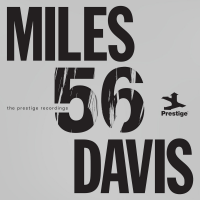
In 1954, Miles Davis's future meant considerably more than his past. Recording for Prestige since 1951 (The New Sounds was his first album for the label), the trumpeter came into his own in 1954. Returning to New York in February of that year after kicking his heroin habit, Davis had also kicked his bebop fixation. What emerged was a cooler sound that came with space, a trumpet mute and a style influenced by vocalist Helen Merrill's close, breathy proximity to ...
read more
Backgrounder: Miles Davis - Miles Ahead, 1957

Source:
JazzWax by Marc Myers
Miles Davis's Miles Ahead: Miles +19 for Columbia is one of jazz's most exquisite orchestral albums. The LP was arranged by Gil Evans, who, with Davis, selected nine jazz songs plus an Evans-Davis original and dressed them up in a modernist, Thornhillian style. The result is spectacular. Davis on flugelhorn is gentle and at times even meek as Evans's orchestrations descend on him like a violet mist. It's pure musical poetry. One should note that Evans and Davis were together ...
read more
Perfection: Miles Davis - A Gal in Calico
Source:
JazzWax by Marc Myers
On June 7, 1955, Miles Davis recorded Musings of Miles for Prestige. One of the tracks for the album was “A Gal in Calico," composed by Arthur Schwartz. It was introduced in the 1946 film The Time, the Place and the Girl. Musings of Miles was the trumpeter's first 12-inch LP (earlier ones were 10 inches). The musicians were Miles Davis (tp), Red Garland (p), Oscar Pettiford (b) and Philly Joe Jones (d). Garland and Jones would go on to ...
read more
'Listen To This' Exploring The Early Electric Period Of Miles Davis
Source:
Mary Curtin Productions
For the past year, improvising keyboardist Dave Bryant, curator and host of the “Third Thursdays" series of monthly harmolodic jazz concerts, has also been involved with the “Listen To This" musical project, which explores the rich musical legacy of Miles Davis, particularly from his early electric period 1968-1975. The project includes founder Jerome Deupree of Morphine and Either/Orchestra (drums), Russ Gershon of Either/Orchestra (woodwinds, organ), Rick Barry of Bim Skala Bim and Lookie Lookie (percussion), Todd Brunel of Know Orchestra ...
read more
Jazz Musician of the Day: Miles Davis
Source:
Michael Ricci
All About Jazz is celebrating Miles Davis' birthday today!
Throughout a professional career lasting 50 years, Miles Davis played the trumpet in a lyrical, introspective, and melodic style, often employing a stemless harmon mute to make his sound more personal and intimate. But if his approach to his instrument was constant, his approach to jazz was dazzlingly protean. To examine his career is to examine the history of jazz from the mid-'40s to the early '90s, since he was in ...
read more
August 1969: Rock, Jazz and Women

Source:
JazzWax by Marc Myers
August 1969 marked a dramatic turning point in the evolution of two forms of popular music—rock and jazz. In both cases, women came up short. The first transition took place In Bethel, N.Y., between August 15 and 18. There, four co-promoters of a four-day music festival known as Woodstock proved that rock and the rock concert were a much bigger deal than previously thought. With an estimated 400,000 people stretched out on hilly pastures running to the horizon, the audience's ...
read more
Jazz Musician of the Day: Miles Davis
Source:
Michael Ricci
All About Jazz is celebrating Miles Davis' birthday today!
Throughout a professional career lasting 50 years, Miles Davis played the trumpet in a lyrical, introspective, and melodic style, often employing a stemless harmon mute to make his sound more personal and intimate. But if his approach to his instrument was constant, his approach to jazz was dazzlingly protean. To examine his career is to examine the history of jazz from the mid-'40s to the early '90s, since he was in ...
read more
Jazz Musician of the Day: Miles Davis
Source:
Michael Ricci
All About Jazz is celebrating Miles Davis' birthday today!
Throughout a professional career lasting 50 years, Miles Davis played the trumpet in a lyrical, introspective, and melodic style, often employing a stemless harmon mute to make his sound more personal and intimate. But if his approach to his instrument was constant, his approach to jazz was dazzlingly protean. To examine his career is to examine the history of jazz from the mid-'40s to the early '90s, since he was in ...
read more

Louis Armstrong
trumpet and vocals
Clark Terry
trumpet
Dizzy Gillespie
trumpet
Ahmad Jamal
piano
Charlie Parker
saxophone, alto
Freddie Webster
trumpet
Lester Young
saxophone
B.D. Lenz
guitar
Brian Swartz
trumpet
Christopher Burnett
saxophone, alto
Christopher Hoffman
cello
Darryl Alexander Sr.
drums
Dom Minasi
guitar
Edward Simon
piano
Ithamara Koorax
vocals
Joseph Patrick Moore
bass
Michael Jefry Stevens
piano
Michael Parkinson
trumpet
Richard Kalman
vocals
Sparky Koerner
trumpet.jpg)
Terry Gordon
trumpet
Walter Goldstein
drums.jpg)
Yves Nadeau
guitar
Darrell Looney
violin
Karen Francis
vocals
Michael Simon
trumpet
Eric Golub
violin
Cathy Segal-Garcia
vocals
Vicki Burns
vocals
Marilyn Scott
vocals
Gabriele D'Angela
guitar, electric
Vinny Valentino
guitar
Dale Bruning
guitar
Max Perkoff
trombone
Roman Miroshnichenko
guitar
Bill Gati
saxophone
Ben Makinen
drums
Russ Nolan
saxophone, tenor
Ed Byrne
trombone
Chris Abelen
trombone
Jeff Gauthier
violin
Denny Zeitlin
piano
Lynda Murray
saxophone, alto
Taeko Kunishima
pianowilson somers
piano
Monnette Sudler
guitar
Mike Clark
drums
Larry Davis
bass
Joey DeFrancesco
organ, Hammond B3
Orhan Demir
guitar
Ian Dogole
percussion
Niels Lan Doky
piano
Christy Doran
guitar
David Friesen
bass
Bruce Gertz
bass, acoustic
Tim Hagans
trumpet
Herbie Hancock
piano
Dave Holland
bass
Saskia Laroo
trumpet
Jeanette Lindström
vocals
Michael Mason
flute
Dmitri Matheny
flugelhorn
Lyle Mays
keyboards
Jackie McLean
saxophone, alto
Pat Metheny
guitar
Tete Montoliu
piano
Eddie Moore
piano
Doug Munro
guitar
Lauren Newton
vocals
Judy Niemack
vocals
Shunzo Ohno
trumpet
Gene Perla
bass
Sarah Pillow
vocals
Bruno Raberg
bass, acoustic
Larry Williams
multi-instrumentalist
Cassandra Wilson
vocals
Francis Wong
saxophone, tenor
Sam Allen
drums
Matt Savage
piano
Glenn Zottola
saxophone, tenor
Russell Gunn
trumpet
Tedd Baker
saxophone, tenor
Kenny Wright
bass
Matthieu Marthouret
organ, Hammond B3
Steve Blanco
piano
Hans Tammen
band / ensemble / orchestra
Paul Peress
drums
Rochelle House
vocals
Walter Clark
piano
Moreira Chonguica
saxophone
Ron Thomas
piano
Karen Stachel
flute
Bruce Harris
trumpet
Todd Mosby
guitar
Reggie Watkins
trombone
Aaron Liddard
saxophone, tenor
Alan Gaumer
trumpet
Jeff Lofton
keyboards
Bill Stevens
trumpet
Lee Barbour
guitar
Jason Rigby
saxophone
Bob Boguslaw and The Way
piano
Scott Detweiler
vocals
Jarez
saxophone
Ferenc Nemeth
drums
Scott Sawyer
guitar
Russ Spiegel
guitar
Charles Gambetta
bass
David Leikam
multi-instrumentalist
Guido Santoni
piano
Mario Fragiacomo
flugelhorn
Kestutis Stanciauskas
bass, electric
Matt Finley
flugelhorn
Brownman
trumpet
Ivan Valentini
saxophone
Norberto Tamburrino
piano
Michaela Rabitsch
trumpet and vocals
Carlos Jimenez
flute
Brad Felt
euphonium
Dave Anderson
saxophone
Patrick Manzecchi
drums
Cold Spring Jazz Quartet
band / ensemble / orchestra
Tomoko Omura
violin
Satish Robertson
trumpet
Lajos Dudas
clarinet
Alan Lewine
bass
Philip Clemo
guitar, electric
Marco de Tilla
bass
Shirley Crabbe
vocals
Pernille Bevort
saxophone, tenor
Klaus Lessmann
woodwinds
Robert Castelli
drums
Martin Jones
trumpet
Ricardo Pinheiro
guitar, electric
Rubim de Toledo
bass
Massimo de Majo
drums
Charlie Porter
trumpet
Scott Reeves
trombone
Billy Denk
guitar
Kevin Brady
drums
Wolfgang Seligo
piano
Robert Chandler
guitar
Francesco Crosara
piano
The Worst Pop Band Ever
band / ensemble / orchestraChris Tedesco
trumpet
Justin Perdue
guitar
Scott D Marshall
saxophone
Jason Arce
saxophone
Gui Duvignau
bass, acoustic
Michael Blicher
saxophone
Tobias Gebb
drums
Daphna Sadeh
bass, acoustic
Hakan Brostrom
saxophone
Sonic Liberation Front
band / ensemble / orchestra
David Laborier
guitar
Jim Josselyn
guitar
Kit Watkins
multi-instrumentalist
Dave Howard
guitar, electric
Karlton E Hester
flute
Santana
band / ensemble / orchestra
Josh Rosen
piano
Joshua White
piano
Michael J McEvoy
piano
Dave Clark
guitar
Michael Staron
bass, acoustic
Dan Wilensky
saxophone
Krystof Medyna
saxophone
Jaques Morelenbaum
cello
Fumi Tomita
bass
Jodi Michelle Proznick
bass, acoustic
Ryan Berg
bass, acoustic
Mharlyn Merritt
vocals
Michael William Gilbert
composer / conductor
Matt Panayides
guitar
Ted Chubb
trumpet
John Bacon
drums
Marianne Trudel
piano
Volker Goetze
trumpetKonstantin Ruchadze
guitar
Tim Fox
piano
Pat Marafiote
keyboards
Dmitry Tsepilov
saxophone, alto
Tony Passarell
multi-instrumentalist
Laurent Doumont
saxophone
Perry Thoorsell
bass, acoustic
Anita Eccleston
trumpet
Jacob Karlzon
piano
Brent Bowman
saxophone, alto
Bob Crawford
guitar
Spyros Manesis
pianoChris Hall
trumpet
Larry Tamanini
guitar
Hugo Alcazar
drums
Giampiero Spina
guitar
Jack Furlong
saxophone, baritone
Timothy Lee Miller
composer / conductor
John DePaola
trumpet
Henley Douglas Jr
saxophone
Al Swainger
bass
Laura Marks
vocals
Mike Field
trumpet
Ray Sandoval
guitar
Jeff Oster
flugelhorn
Stafford Hunter
trombone

Milo Mannino
trumpet
Matthias Broede
harmonica
Sohrab Saadat
saxophone, tenor
Darrell Lavigne
piano
Scott Emmerman
guitar
Jimmy Hobson
drums
Marcel P Blanchet
drums
Hugo Fernandez
guitar
Arthur Sadowsky
bass, electric
Nick Phillips
trumpet
Carl Clements
saxophone
Billie Davies
drums
Sam Ospovat
drums
Tom Lippincott
guitar
Larry Brown
piano
Manu Koch
keyboards
Phil Ravita
bass
Barbie Anaka
vocals
Elliot Spero
saxophone, tenor
Bob Schlesinger
piano
Güç Başar Gülle
guitar
Myles Brown
guitar
Markus Rutz
trumpet
Fran Vielma
percussion
Bobby Stern
saxophone, tenor
Paul Westlake
bass
Kit Eakle
violin
Yuko Mabuchi
piano
Daniel Weltlinger
violin
Geoff Mason
trombone
Ethan Margolis
guitar and vocals
AmooMazz
bass, electric
Mike Freedman
guitar
Gijs Levelt
trumpet
Jasen Weaver
bass
Iggy Cardozo
vocals
ctraltu
trumpet.jpg)
Luiz Santos
drums
Barry Danielian
trumpet
Ian Rashkin
bass, acoustic
Nicolas Ojeda
bass, acoustic
Simon Paterson
bass
Gary Kelly
bass, electric
Branko Arnsek
bass, acoustic
Jorge Garcia
guitar, electric
Kitty B Green
saxophone, alto
Paula Maya
piano and vocals
Dave Quick
synthesizer
Noshir Mody
guitar

Nathan Ott
drums
Jakob Dreyer
bass
Daisy Castro
violin
Arie Salma
piano
Tim Scott
guitar, electric
Duo Laroo-Byrd
band / ensemble / orchestra
Phil Wilkinson
organ, Hammond B3
Simon Read
bass, acoustic
Andrew DeNicola
saxophone, tenor
Anne Vanschothorst
harp
Aengus Hackett
guitar
Marco Moura
guitar
Mike Kapitan
synthesizer

Derel Monteith
piano
Michael Lake
trombone
Gabriel Bey
trumpet
Antero Priha
trumpet
Mehmet Ali Sanlikol
multi-instrumentalist
Seiki Yukimoto
trumpet
Jim Faulkner
guitar
Tom Gershwin
trumpet
Pavel Wlosok
piano
LJ Folk
guitar and vocals
Jesse Dietschi
bass, acoustic
Gregg Arthur
vocals
Julian Nicholas
saxophone, tenor
Justin Page
drums
Nick Maclean
piano
Hashima
band / ensemble / orchestra
Joseph Perkins
guitar
Sorin Zlat
piano
Benjamin Boone
saxophone
Charleston Jazz Orchestra
band / ensemble / orchestra
Matt Ratcliffe
piano
Neil Brathwaite
saxophone, tenor
Defenders of the republic
composer / conductor
Justin Duhaime
guitar
Jenny Maybee
piano and vocals
Louie Moon
guitar
Walter Simonsen
trumpet
Simon Vincent
piano
Michel Seba
percussion
Vasil Hadzimanov
piano
Ryan Baker
vocals
Joe Syrian
drums
Ultrafaux
band / ensemble / orchestra
Paul Williamson
trumpet
Fabio Rojas
drums
Filippo Bianchini
saxophone, tenor
Karla Bauer
vocals
Andy Bianco
guitar
Gonzalo Esteybar
guitar
Dave Welsch
bass
David G Bailis
guitar
Sarah James
vocals
Jozef Nadj
violin
James Olsen
composer / conductor
Eric Zolan
guitar, electric
Paul Giess
trumpet
Angelo Mastronardi
piano
Ben Higham
tuba
Kristen Lee Sergeant
vocals
Jim Goetsch
saxophone
Mitch Perrins
drums
Nick Lombardelli
multi-instrumentalist
Matthew Shell
guitar
Dan Waldman
guitar
Claudia Vorbach
guitar and vocals
Filtron M
band / ensemble / orchestra
Dan Jonas
trumpet
Marc Beaudin, poet
poet / spoken word
Tyr Morris
flugelhorn
Phil Dawson
guitar, electricSarah LeMieux
guitar and vocals
Jaimie Branch
trumpet
Jeff Lopez
bass, electric
Ingrid Gerstmann
vocals
Yayo Morales
drumsBill Stieger
drums
Elliot Bild
trumpet
Jun Iida
trumpet
Nick Maclean Quartet
band / ensemble / orchestra
Levin Brothers Band
band / ensemble / orchestra
Gregg Fine
guitar
Mark Haskins
guitar
Christopher Dominique
piano
Marley Edwards
bass
Juan Ibarra
drums
Lucia Fodde
vocals
The Next Step Quintet
band / ensemble / orchestra
Disaster Relief
band / ensemble / orchestra
Mike De Masi
bass, acoustic
Michael Neff
trumpet
Matt Malanowski
piano
Viktor Haraszti
saxophone
David Post
vocals
Matteo Prefumo
guitar
marcelo von schultz
drums
BrandonLee Cierley
saxophone
Sadiki Pierre
bass
Yasushi Gonjo
bass
Amir Segall
piano
Pete Kelly
vocals
Matthew Ottignon
saxophone, tenor
Felix Tani
piano
Paul St-Amand
trumpet
John Kalleen
trumpet
Vin Venezia
guitar
Linda Jozefowski
flute
Mitch Livstone
guitar
Gregory Harrington
violin
Statik Link
piano
José Canha
bass, acoustic
Pete Coco
bass, acoustic
Sea Rocket Jasmine
synthesizer
Alejandro Gamboa
drums
Philip Adie Trío
guitar

Pagliuca-Mena
band / ensemble / orchestra
The Rookies
arranger
Charles Gordon
trumpet
Christine Kamau
trumpet
Katerina Brown
vocals
Sergio Fulqueris
guitar
Akos Forgacs
bass, electric
Christophe Gervot
piano
Faris Ishaq
flute
Slip Mahoney
drums
Angela on the Arts
band / ensemble / orchestra
LuisGa Núñez
bass, acoustic
Amanda Addleman
vocals
Guillaume Muller
guitar
Simon Petermann
trombone
Jol Tai
saxophone
Emile Turner
trumpet
Mark R DeJong
saxophone
Eric West
drumsMichael Fox
trumpet

Guido Coraddu
piano
Krissy Bergmark
tablas
Gabe Terracciano
violin
Simone Brilli
drums
Marco Cremaschini
piano
Jazz Interlude
band / ensemble / orchestra
Thad Bonduris
guitar
Lex French
trumpet
Illya Gomola
keyboards
Fabrizio Savino
guitar, electric
Mary Amaral
vocals
Mariane Bitran
flute
The Gardenia Society
various
Denin Slage-Koch
guitar, electric
The Dallas Jazz Band
trumpet
Sunhyun Yoo
saxophone, alto
Giuseppe Cucchiara
bass, acoustic
Mike Schwebke
multi-instrumentalist
donald hamilton (queen)
trumpet
Philippe Coignet
guitar, electric
Szymon Mika
guitar
Manuel Muzzu
bass, electric
Stuart Redd
guitar
Robert Vega-Dowda
trumpet
Luca Lo Bianco
bass
Paco Reinaldet
saxophone, soprano
Nikos Koulouris
saxophone
Matteo Mosolo
bass, acoustic
Anderson Quevedo Farias
saxophone
Guy Mintus Trio
band / ensemble / orchestra
Allen C. Paul
piano
Kurt Leege
guitar
Jason Whatley
piano
Robert Heirendt
multi-instrumentalist
Summer Camargo
trumpet
Irini Konstantinidi
vocals
Camila Ronza
vocals
Gentiane MG
piano
Johan Grim
guitar
Dom Angelo Mongiovi
guitar, electric
Francesco Mascio
guitar
Noam Shapira
saxophone
Ash Luo
drums

Erik Hempel
bass, acoustic
Andres Hayes
saxophone, tenor
Tibor Debreceni
guitar, electric
Carlos Cippelletti
piano
Ari Joshua
guitar
Leon Brenko
piano
The Modern Beat Combo
band / ensemble / orchestra
Unc D
bass, electric
ML Caldwell
keyboards
Hard Bop Messengers
band / ensemble / orchestra
Boni de Souza
piano
Erkin Kydykbaev
bass, acoustic
Iwan VanHetten
trumpet
Sothiac with Paul Jolly
author
E.G. Phillips
author
Mikkel Borrisholt Grevsen
trumpet
Brendan McGrath
piano
Erich Fischer
vibraphone
Kal Ferretti
trumpet
Roberto Zechini
guitar
Skip Walker
drums
Ken Krueger
guitar
Pat Metheny Group
band / ensemble / orchestra
David Cain
multi-instrumentalist
Germana Stella La Sorsa
vocalsKen Ferrantino
trumpet
Jacques Bailhé
keyboards
Anastasios Gouliaris
drums
Vasco Belo Agostinho
guitar
Lorenzo Cimino
trumpet
Hank Hehmsoth
piano
Shems Bendali
trumpet
VOODOO DRUMMER
drumsPieter Egriega
guitar and vocals
Anita Donndorff
vocals
Sebastian Gahler
piano
Alexia Gardner
vocals
Rupert Gillett
cello
Fil Pate
multi-instrumentalist
Amin Zebarjad
piano
David J Perkins
keyboards
Frank Vitolo
saxophone, tenor
Brian Sacco
saxophone
Helios Fernandez
guitar
Michael Sassi
drums
Andrew Richards
vocals
Rohan Buch
saxophone
Angelo Della Valle
guitar
Larry Davis Vernec
bass
Lucas Amorim
vibraphone
John Hench
bass, acoustic
Louis Siciliano
synthesizer
Cleômenes Junior
saxophone
Kingsley Durant
guitar
Miles
drums
Bill Martin
piano
The Beatnik Preachers
band / ensemble / orchestra
Anthony "ToK" Norris
trumpet
Andrew Ginzel
guitar, electric
The Cordovox Project
drums
Emil And The Detectives
band / ensemble / orchestraHila Hutmacher
vocals
Pedro Henry
bass
Enrico Solazzo
arranger
Blue Moods
band / ensemble / orchestra
Lakis Tzimkas
bass
Guillermo Marigliano
guitar
Christian Artmann
flute
Diana Torti
vocals
Tombajazz
band / ensemble / orchestra
Tomba
bass
Mats Monstad
drums
Ron Bosse
guitar
Stephen Enos
trumpet
Viden Spassov
bass
German Lema
organ, Hammond B3
Thomas Fryland
trumpet
Christopher Robin Cox
trombone
Zach Rich
trombone
Gerhard Daum
composer / conductor
Michele Gori
flute
Cliff Korman
piano
Dave Salvator
saxophone
Bianca Love
trumpet and vocals
Badrya Razem
vocals
The Jazz Kings
band / ensemble / orchestraDarius Jones Shrek
trumpet and vocals
Jodi Proznick
bass, acoustic
Spencer Alexander
guitar, electric
Alex Madeline
saxophone
Jerald Bittle
drums
Kerilie McDowall
guitar, electric
Jonathon Clyde Neal
trumpet
Logan Conkright
saxophone
Edward VanLandeghem
drums
Astrakan
band / ensemble / orchestra
Eve Minor
multi-instrumentalist
Phil Raskin
drums
Anthony Bruno
saxophone
Ferran Rico
bass, electric
John Alvey
drums
Myles Cochran
multi-instrumentalist
Veli Mert
drums
Ian Raymond Smit
guitar
Adam Ponting
piano
Rafael Moreno
vocals
Timotej Kotnik
trumpet
Raw Odoni
band / ensemble / orchestra
Conor Cantrell
guitar, electric
Pablo Tarantino
drums
Christopher Boscole
keyboards
Kyle Beck
percussion
Angelo Tatone
guitar
Karl Clews
bass, electric
Jauron Perry
trumpet
Tenshi
band / ensemble / orchestra
Double Vision Jazz Ensemble
band / ensemble / orchestra
Mattias Bråhammar
guitar, electric
Kim Paterson
flugelhorn
Stacy Wilde
vocals
Stefano Tanzi
guitar, electric
Rutger Mathys
harmonica
Reuben Paterson
saxophone, alto
Jazzmosax
saxophone
Butter And The Genre
band / ensemble / orchestra
Polymorphic Orkestra
band / ensemble / orchestraDavid Salmon
multi-instrumentalist
Shahar Amdor
woodwinds
Joaquín Lombardo
guitar
yeast
guitar, electric
Byron M Thomas
piano
Felipe Arce
bass, acoustic
Transcendence
band / ensemble / orchestra
Dré Matsumoto
bass, acoustic
Rebecca Perricone
vocals
Threegonos - Modern Jazz Unity
band / ensemble / orchestra
Tim Larkin
trumpet
Justin Fitzgerald
piano
Dmytro Vorobiov
multi-instrumentalist
Lili Maljic
vocals
Twaang
guitar, acoustic
Jake Tavill
vocals
Quadrature
sitar
Ilija Nikolic
piano
Todd Bordonaro
guitar, electric
Tumbao Experience
band / ensemble / orchestraJeppe Cornelius Thejsen
guitar, electric
Joel Stoner
flute
Mike Bruzzese
guitar, electric
Darrin James
guitar
May Yu
violin
Serge Rogalski
guitar, electric
La Otra Band
band / ensemble / orchestra
Shmeisani Jazz Massive
band / ensemble / orchestra
Andrés Coll
marimba
Ben Blankenship
guitar
Jason Kruk
drums
Saul Hirshberg
drums
Kentaro Saito
guitar
Austin Di Pietro
trumpet
Mike Del Campo
drums
Jeremy Cubert
keyboards
Valerio Marino
vocals
Yeon Ji Lee
piano
Dan Webb
keyboards
Billie Eidson
vocals
Dylan Pilcher
trumpetPhotos
Music


Videos
Similar
Pat Metheny
guitar
Thelonious Monk
piano
John Coltrane
saxophone
Chet Baker
trumpet and vocals
Herbie Hancock
piano
Chick Corea
piano
Weather Report
band / ensemble / orchestra
Cannonball Adderley
saxophone
Kenny Dorham
trumpet
Miles Davis
Instrument: Trumpet
Born: May 26, 1926
Died: September 28, 1991