Home » Jazz Articles » Live Review » The Tension Is Where the Music Lives: Miles Davis at 100, Part 3
The Tension Is Where the Music Lives: Miles Davis at 100, Part 3
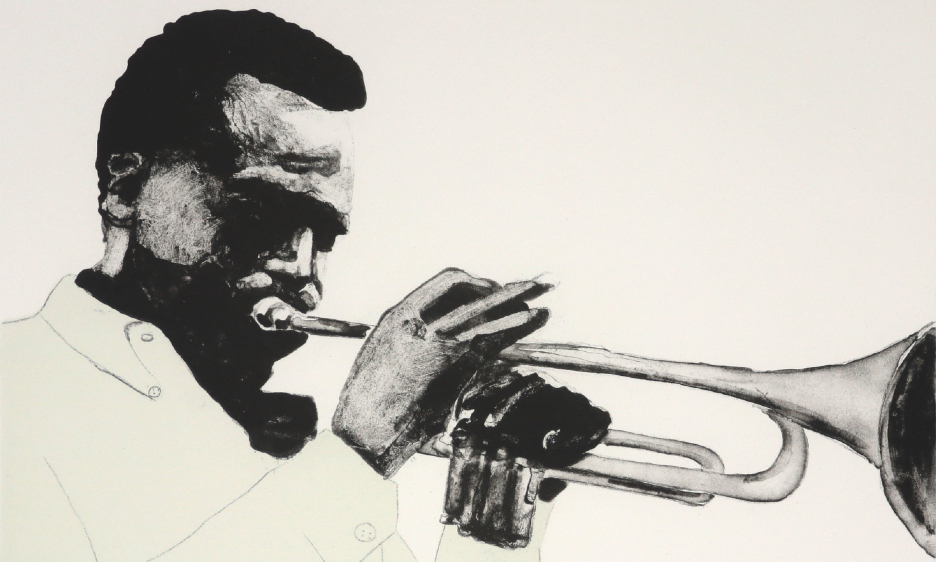
Courtesy Sam Nhlengetwa
On August 19, 2026, the musicians who carry what Miles Davis left returned to where he set it down. The venue’s page counts forty-five Grammys between them.
Hollywood Bowl
Los Angeles, CA
August 19, 2026
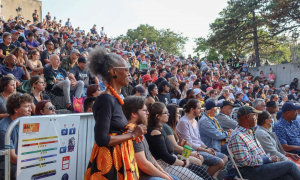
The Hollywood Bowl began as a picnic ground called Daisy Dell, a canyon chosen for its acoustics, willed into being largely by women, chief among them Artie Mason Carter, a music teacher who believed music was for everyone and priced every seat at a quarter. It opened in 1922 and still seats around 17,500 under the open sky; the audience still arrives with picnics.
Miles Davis played his last concert on this stage, on August 25, 1991. Within days, he entered the hospital and died in Los Angeles on September 28. On August 19, 2026, six days short of thirty-five years later, the musicians who carry what he left returned to where he set it down. The venue's page counts forty-five Grammys between them.
Herbie Hancock opened as master of ceremonies, calling Davis the most innovative and influential musician that jazz has produced, who took tunes from any genre and made them his own. Hancock promised "musical high points" in Davis's 'legendary career.' Then a joke at his own expense. The Davis and Gil Evans collaborations, he said, had left out a piano part, and the evening's curator excused himself from its first hour.
The first set belonged to Davis and Evans. Terence Blanchard took the trumpet chair, Christian McBride the bass, and Vince Mendoza led the orchestra through Miles Ahead (Columbia Records, 1958) and Porgy & Bess (Sony Records, 2010). The set opened with John Carisi's "Springsville" and Ahmad Jamal's "New Rhumba." The suite ran to six movements in the record's sequence: "The Buzzard Song," "Bess, You Is My Woman Now," "Gone," "Summertime," "My Man's Gone Now" and "There's a Boat That's Leaving Soon for New York." When Davis returned from silence on this stage in 1981, he kept "My Man's Gone Now" from his old repertoire, remade over Marcus Miller's Fender bass. The We Want Miles (Sony Records, 1982) sleeve credits the remake to Heyward and George Gershwin, the song's parents from the first. Wednesday's concert passed over the remake for the 1958 original. Gershwin's opera rendered black Charleston in a white composer's hand. Davis and Evans took it back and made something else of it. Under a blue-noted trumpet line, with Mendoza standing for the arranged, European half of this creole music, both of jazz's parents sounded at once. The set closed with the "Miles Ahead" title piece and "I Don't Wanna Be Kissed," a Spina and Elliott tune first recorded by Doris Day.
Hancock returned for the second set with three boys: his grandson, Wayne Shorter's grandson, and a family friend, the gesture speaking of Shorter's absence. Davis's last concert here fell on Shorter's birthday, and his grandson, Max, stood on Wednesday where his grandfather had kept it. The three grandchildren made the chain of hands visible in both directions, backwards to the dead and forwards to boys who will outlive everyone named in this review.
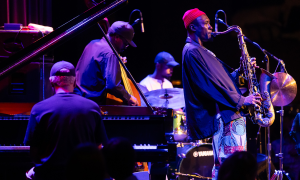
Hancock named the band that the set would reimagine, the Miles Quintet, by its sidemen, Tony Williams, Wayne Shorter, Ron Carter, and himself, the leader's chair going unspoken. He introduced Vinnie Colaiuta, Kenny Garrett, Blanchard, and "the Legendary" Ron Carter. Hancock and Carter shared a long, purposeful old head embrace, the first of several that evening. Carter is eighty-nine, Hancock eighty-six, the quintet's last survivors. The embraces were not stagecraft, but the transmission made visible.
'So What' came first, Carter leading it. The bass vamp is by Paul Chambers. Carter never played on Kind Of Blue (Columbia, 1959). Arriving four years after it, he took the line the way every listener takes it, off the record. Carter, as always, was immaculate in suit and tie. He puts on a suit as he puts a sound on a bass string—no extra fabric, no extra vibrato, no extra noise, just enough to make his chords look inevitable. Hearing him state it, with six decades' authority and none of the excuses of authorship, was exceptional. "Sorcerer" followed, Hancock's tune from the quintet book, Garrett out front.
Then the evening found its centre. Blanchard, Garrett and Colaiuta walked off, and Hancock and Carter played "My Funny Valentine" alone. The Rodgers and Hart ballad enters the Davis story twice. In 1956 the first quintet recorded it for Cookin' (Prestige Records, 2007), behind Red Garland's celebrated piano introduction. That introduction was not included tonight. In February 1964, at a Philharmonic Hall benefit for civil-rights organisations, Davis played it again with Hancock and Carter in the band. The performance is remembered not least for a passage thinned to piano and bass alone, captured on the concert's album. Sixty—two years later that passage became the whole song. The two men who had played it with Davis played it to each other, the warmth of the interplay making up for the vanished introduction. From the seats it read as 'Thank you' and 'We miss you' in one gesture, the most wrenching music of the night.
"Eighty-One" closed the set, Carter's piece with Davis from E.S.P. (Sony Records, 1965), made at Columbia's Hollywood studios a few miles away, four months after the band's Bowl debut. Blanchard's solos lifted it, his exchanges with Garrett the set's sharpest playing. Then Carter left the stage.
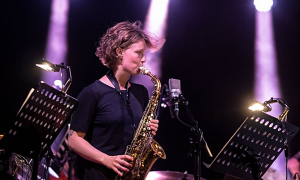
For the third set Hancock introduced Julian Pollack on keyboards and Marcus Miller, naming him producer and bassist of Tutu (Sony Records, 1986) and Amandla (Sony Records, 1989). Both southern African dedications were in the room, though only one would be played. Miller opened with "Tutu," written in 1986 for the record Davis dedicated to Archbishop Desmond Tutu. It was the only Africa-named title heard all night, and its Africa is not ancestry but solidarity, a dedication pointed sideways at a living churchman in the struggle against apartheid. Four minutes in came a surprise. Led by Miller, answered by Garrett's riffs, the band slid out of the vamp into a collective improvisation in the manner of "Hylife" from Miller's Afrodeezia (Blue Note Records, 2015), joyful, circular, unresolving, Colaiuta holding a steady West African beat alone, one crying out, to this listener, for Adama Dembele. Three minutes on, the vamp returned as though nothing had happened.
The group played "In a Silent Way," Joe Zawinul's tune, and "Bitches Brew." Miller set the bass down and played bass clarinet, Garrett on a second reed beside him.
Miller introduced "Time After Time" by saying how much Davis loved a melody. Davis took up Cyndi Lauper's single in 1985 and kept it for life. Miller began it on bass clarinet, switching back to bass partway through. The evening's one pop song stated Davis's principle, that it made no sense in 1983 to play 1963, and that a musician should connect his music with his times.
Then "Jean-Pierre." Miller told of Davis at rehearsal drifting into what sounded like a nursery rhyme, then called Carter back to the stage to the loudest ovation of the night. Carter opened it, Colaiuta grooving beneath him, Blanchard carrying the lullaby loop. On Davis's 1982 recording the child's tune floats on deep water, trumpet and saxophone soloing above the vamp. Miller ran the record's design wider, each musician soloing in turn until every instrument had spoken. Hancock took his solo on a clavitar: a nod, perhaps, to Davis who in 1968 first sat him at an electric piano.
This series has read the year's Davis concerts through the lens of one distinction, between inheritance, carried often unknowingly, and re-creation, which names its object. Nearly everyone on that stage has reached, Hancock with the Gambian griot Foday Musa Suso, Miller along the slave routes on 'Afrodeezia,' Garrett toward the Bight of Benin through Cuba's liturgies on Sounds From The Ancestors (Mack Avenue Records, 2021). Yet none was programmed, and its one surfacing, three unannounced minutes inside "Tutu," was reaching erupting inside carrying. Davis's own reach was slighter still. Struck in 1959 by Les Ballets Africains, itself a re-creation that Fodéba Keita assembled in Paris in 1952, he faced an Africa that was already someone else's reaching-back, and the concept he took away, finger piano beside Ravel and half-remembered Arkansas gospel, left no African feature on the record. What "Kind of Blue" carries, it carries unawares, audible all night in the bent blue third of the exposed horn lines, the interval in the crack between two piano keys, belonging to neither, and, in the last tune of all, a children's melody riding the evening's deepest time.
The room supplied its own evidence. When Miller taught the amphitheatre the lullaby and seventeen thousand voices sang it back before any solo, the oldest architecture in this music, the call that Chernoff wrote is incomplete 'without a participant on the other side,' re-formed in the open air at scale. The circle can form outdoors. All it asked for was a child's tune.
The trumpet was Blanchard's, the only trumpeter of the nine and a man who never met Davis. At Montreux in 1991, Davis's one full return to his own past, Wallace Roney covered the written parts and, to the composer Michael Gibbs, who taught at Berklee and was in the hall, sounded superb but like the records. Davis's own solos were completely new. Every tribute risks the chair outliving the voice, the records beginning to play the man. Blanchard is this chair's most interesting occupant, the musician in whom the two categories of this series have already collapsed into one act, and on Wednesday he sat in the chair of the man whose "So What" is the purest case of unknowing carriage. He told me the bent third was drilled into him at twelve by a New Orleans piano teacher, Louise Winchester, so a Bowl willed into existence by one music teacher spent the sundown hearing a trumpeter formed by another, and the most exact lines of descent that this series has found run through women passed over by the archive, on a stage of nine men and three boys. Garrett, asked in London in July whether what he does is inheritance or re-creation, had called it a bit of both, and on Wednesday it was.
The point has a control, one night away. On August 20 the Proms in London marked the centenary at the Royal Albert Hall with the same Evans repertory, Ambrose Akinmusire's quartet and the BBC Concert Orchestra under Miho Hazama. Listening days later to the recording, not the room, allowing for what recordings do to liveness, I am still struck by how much it sounds like the records, faithful and loving, the chair holding the voice's shape. The Bowl's men sounded like musicians playing music they are part of, improvisation writ large, the records seeming a place to set out from rather than return to. The rooms had a say. A Victorian memorial hall, raised to the memory of Prince Albert and long the sanctuary of the classical canon, receives this music as an honoured guest. A canyon, where Davis stood from the quintet's 1964 debut, Hancock and Carter beside him, to the last concert of his life, lets it behave as family. Both are ways of preserving a legacy.
Davis first came to Los Angeles at nineteen, early in 1946, following Charlie Parker west into a music weeks old in the city; forty-five years later he died there at sixty-five. His own last set here had ended on a Prince instrumental, someone else's present tense, and Wednesday's ended on his own past, commemoration pointing backwards even in honouring a man whose rule was forwards.
Blanchard, McBride, Mendoza, Colaiuta and Pollack never played with Davis, receiving the music as the rest of us do, through the records. The first name of the lineage has a place here too. Louis Armstrong played the Bowl in 1956, the night of the venue's first jazz recording. Every hand in this chain, Armstrong to the men of August 19, has crossed these boards.
Davis was born on 26 May 1926 and gave his last concert on August 25, 1991. My centenary reviews began beside the first date and end beside the second, with a child's tune that seventeen thousand people sang before seven musicians carried it home, bearing every element of what crossed the water. I will remember the music, but I will remember the Hancock and Carter embrace more. Two old friends who carried this music for over sixty years, still lifting each other up. In that moment, I understood why I come to performances like this, to feel, for a second, that time had not passed at all. One of the best nights of jazz I have ever had.
 FOLLOW Kofi Adjepong-Boateng
and get notified whenever a new article published.
FOLLOW Kofi Adjepong-Boateng
and get notified whenever a new article published.
I grew up to Louis Armstrong, which says it all.
About Miles Davis

Tags
PREVIOUS / NEXT


Become a Sustaining Member

Since 1995, All About Jazz has championed jazz as an art form and supported the musicians who create it. Over three decades, it has grown into one of the world's leading jazz resources, serving hundreds of thousands of readers, musicians, presenters and industry professionals each month.
Help Build the Future of All About Jazz
Your support helps us continue building All About Jazz for the next generation—expanding our editorial coverage, preserving jazz history, developing new community features and creating better ways to discover the music and the people behind it.
Become a sustaining member for as little as $20 per year and you'll immediately enjoy an ad-free experience along with access to subscriber features and future articles for a full year.
Together, we're not simply sustaining All About Jazz—we're building its future. Thank you for being part of the journey.