Home » Jazz Articles » Interview » Fred Lipsius: The Blood, Sweat & Tears Sax Voice Still Resounds
Fred Lipsius: The Blood, Sweat & Tears Sax Voice Still Resounds
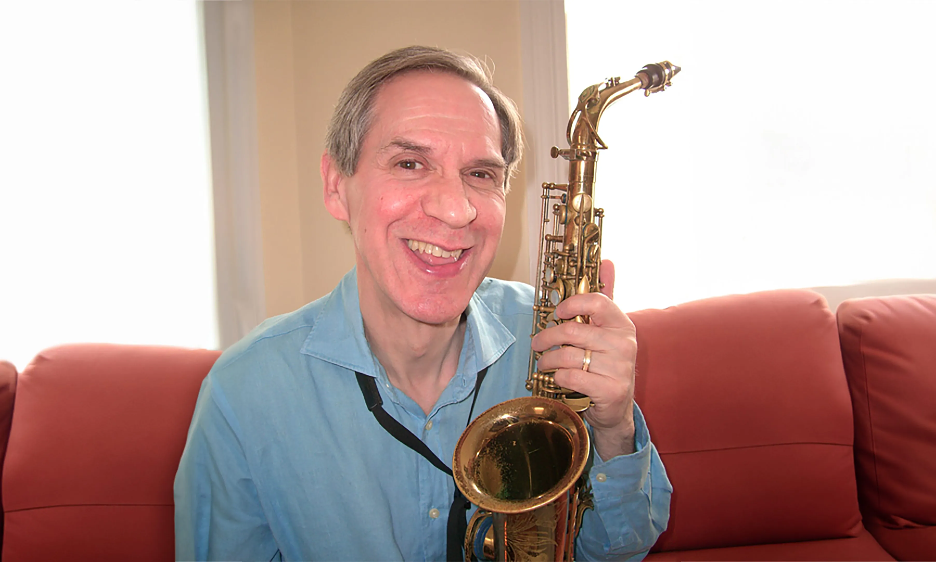
I'm not excited to toot my own horn or anything, but BS&T as a jazz, rock or fusion band came before Miles Davis, Herbie Hancock, Weather Report...
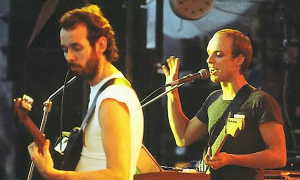
The resounding horn is that of Fred Lipsius and the band was Blood, Sweat & Tears, of which he was a founding member.
Now age 82, Lipsius is still blowing. Much of his post-BS&T career was taken up by teaching—35 years at the famed Berklee College of Music—but he never stopped playing. While his public performances are sporadic, he's still available. His gigging days are not done.
Outside of Blood, Sweat & Tears, Lipsius has eight recordings under his own name and has also been a featured soloist on various CDs with guitarist Gerry Beaudoin and trumpeter Peter Welker. Remaining idle is not an option for this artist. He is heavily involved in making original computer art, and has written a book, The Tree With Many Colors, comprised of insights on the giving and receiving of love in life.
But his association with the seminal jazz-rock fusion band Blood, Sweat & Tears is what he, and many of his bandmates, are most known for. It's not a cross to bear. The band played with fire. Its arrangements were sophisticated, but accessible, and there were radio hits—important in the late 1960s and early 1970s when the band was burning it up.
Lipsius was with the band from 1967 to 1971. The band performed at the legendary Woodstock festival, the Newport Jazz Festival and at clubs and concert venues around the globe. He doubled on keyboards during that time and was a major arranger for a band that had nine gold records. His arrangement of "Spinning Wheel" won the Grammy for Best Arrangement Accompanying Vocalist(s) in 1970. The album it appeared on, Blood, Sweat & Tears (Columbia, 1968), also won Album of the Year honors.
Lipsius arranged and co-arranged hit singles including "Hi-De-Ho" and "You've Made Me So Very Happy." His playing earned him mention in the DownBeat and Playboy magazine musician polls and some jazz historians credit him as the first saxophonist to mix jazz and rock styles in his solos.
"I'm not just a jazz player or just BS&T," Lipsius says from his home in the Boston area where, by his own admission, he leads a happy, mostly quiet life. "I do various things that some people haven't heard. Mike Armando, the owner of MJA Records, is promoting me lately. He loves my playing. He released my first jazz album, Dreaming of Your Love (MJA Records, 1995), with Al Foster, George Mraz, and my good friend who passed away some years ago, Larry Willis, on piano. He's got a golden heart and he's a good blues guitarist. He played with Screamin Jay Hawkins."
But BS&T, well known and beloved from that early period of rock and pop, is still a beacon and a source of pride for band members. The founding drummer, Bobby Colomby, still runs the current iteration of the band. The young players who cycle through the organization are fine musicians, but the band moves no needles in the popular music world.
"Since I left the band, I haven't followed them. Al Kooper was the original arranger/leader. After we left, they never had any hits. Not bragging about it. It's just a fact. They had some really good players, but I've never been interested in them," Lipsius says.
Lipsius loved jazz from an early age and listened to Benny Goodman. Born in the Bronx, he began playing the clarinet at age 9 and switched to saxophone. He also studied piano at the High School of Music & Art in Manhattan. In his teens, he discovered Cannonball Adderley, Charlie Parker, Sonny Stitt, John Coltrane and Sonny Rollins. "I love the old players too, but they didn't excite me. They didn't play a lot of the fast stuff. That was another dimension. It's not better or worse. It's just what you like, really. So that's what I was attracted to. I have a lot of that in me, on the alto and then on tenor."
He continued his studies at Berklee School of Music from 1961 to 1962 and then toured with different groups. Lipsius kept a hand in arranging, doing charts for various artists and playing the sax on recordings by others, in addition to his own.
As for the original BS&T band, he says, "I'm not excited to toot my own horn or anything, but BS&T as a jazz, rock, or fusion band came before Miles Davis, Herbie Hancock and Weather Report. I think 'Spinning Wheel' was the first in pop music to have a jazz trumpet solo, and also to have the big band sound."
"Someone mentioned to me that Woody Herman, who I never met, had said that BS&T brought back the big band sound to pop music. So that's what I did," Lipsius says. "I didn't think of it at the time. I'm a jazz person, so I arranged the jazz ... Maynard Ferguson's arrangers were a big influence on me. I didn't think of it at the time. I'm just saying, don't exclude BS&T. Without BS&T, Miles may have never gotten into the field of playing for 50,000 people, different kind of music. Herbie also. As great as they play. I'm not talking about who plays better or anything. I'm a jazz person, and I tell people I'm just doing what I do, almost like passing on legacy, or the passing on the torch of jazz, because that's what I do."
Stories about BS&T abound in conversation with the superb alto saxophonist.
"I'm not being cocky. I was proud of everybody in the band. I mean, Steve Katz was not a jazz player. Half the band weren't jazz people. It wasn't a contrived thing. Al Kooper liked Maynard and Ramsey Lewis. But he was a rock and roller. Basically, he couldn't improvise. He could sort of play what he does, and he had his own style on piano. We used to sit at the piano together when I joined the band. I was called to join the band to write arrangements with Kooper and to lead the horn section.
"I was the first horn player before there were any horns. One guy knew someone else, and someone knew someone else. Then we had a horn section. We had two trumpet players that left immediately before we even got known. After the first week, they didn't think anything was going to happen. We're still rehearsing, so Randy Brecker was really the first trumpeter. I met (trumpeter) Jerry Weiss, who's a good player. I still talk with Randy. Really nice guy, always very gracious with me. He's a great player."
Eventually, he says, with great popularity, attention from the press and large amounts of money rolling in, the camaraderie of the group began to weaken. "It was a nice run until people were hassling with each other. We're all human. We're not perfect, but there was a lot of crazy stuff going on in the band. I didn't see people in the band actually fighting with each other. Just words sometimes. I never felt I needed that in my life, you know. But I was proud playing with everybody. I was close with everybody in the band."
He says the band's remarkable singer, David Clayton-Thomas, was also a good guitarist. At one point, he was playing a new tune for Lipsius called "Go Down Gamblin.'"
"I never heard anybody play that style, the way he played his solo," Lipsius says. He ended up writing the arrangement for it and used a Clayton-Thomas guitar lick that was on a cassette. "A lot of what he played was on the cassette. When I took it home, I said, 'I'm not going to write anything better than this.' I don't have that ego. So I used half of the stuff that he played. He was oblivious to it. He didn't even know until I told him, and so we were co-writers. I could have taken credit for it. I'm not like that. It was just great."
For a time, the band could do no wrong, he says.
"We played all over Woodstock, and you know, Newport Jazz Festival, we played there. I remember before we went on, Bobby Colomby, being a little silly I guess, told Lew Soloff, a good jazz trumpet player, just before we went on stage, 'Miles and Diz are in the audience,'" he says, chuckling at the memory. "'Do you think you're gonna get a little jittery over that?'"
Lipsius says he even stirred something in Chick Corea.
"I knew Chick through a mutual friend a little bit. Very friendly. After we played, he came over to me and said, 'Fred, you really had me out there.'" Lipsius was playing in tandem with Soloff but "he's behind me. I couldn't see him, and I don't have perfect pitch. He was playing in some key. I couldn't tell what key it was in. I just played a whole bunch of different kind of chords. Ornette Coleman might have liked it, but it wasn't traditional. I couldn't find the key that he was in, you know. Chick said, 'You really had me out there.' Maybe he loved it, but I was sort of embarrassed."
Lipsius always appreciates and values the BS&T time.
"I could write whatever I wanted as an arranger. I was playing sax. I also was featured in the (contract) rider. They would have a seven-foot Steinway piano for me. Dick Halligan played too, but I was featured playing maybe five minutes alone. The whole band just went off stage and I played for five minutes. What a gift! I didn't lose the audience. I just played free. I could play a blues. I might play a tune. I might just improvise something I've never played before.
"We were very serious musicians, more than almost anybody doing rock and roll. Because we didn't just do rock and roll. If we would have stayed together, one of the ideas someone came up with was to do 'Peter and the Wolf' (composed by the Russian composer Sergei Prokofiev in 1936). Can you imagine us playing that with a rock beat at certain parts? It could be incredible. That's sad because the sky's the limit if we kept doing good stuff that people enjoyed. We can play almost anything—not the best classical players, not the best jazz players—but at a high level."
His astute musical memory recalls Halligan's "Symphony for the Devil/Sympathy for the Devil" which was a version Halligan arranged of the Rolling Stones hit. "That was kind of genius. Maybe not compared to Mozart, but no one did anything like it. And 'Lonesome Suzie,' my arrangement. I'd never heard anything like that in rock and roll ever. It starts out just with David (Clayton-Thomas) and the bass. And it just builds. It's one of the few tunes in pop that has dynamics. David starts singing. He sounds like Art Garfunkel. It's not the growly, gruff kind of voice. And as I transitioned, it got stronger with the horns coming in and different things. On purpose. That's the way I wrote it, not contrived. David uses his guttural voice in the last minute or so. It's very, very powerful. I've never heard an arrangement like that on a ballad. We're not in time at the beginning either. I don't normally think about it but we were doing stuff that no one else ever did."
The band's intent and execution were "an uncontrived mixture of people that happened to work ... I think we were the first group, with a singer, to reach millions of people with fusion or rock, whatever you want to call it."
Lipsius, like so many musicians, acknowledges a debt to Charlie Parker in his playing. "Without Charlie Parker, I have no jazz licks. If you like me, like Charlie Parker. Without him, without Sonny Stitt and all these people, I wouldn't know what to play. But I came into my own. I do my thing, and they don't sound like me. Besides playing licks like them, I have some my own stuff too. I joke with people that if I was just copying Sonny Stitt's licks, he'd probably want to hit me and say, 'Fred, play your own stuff. Don't copy me.' He plays a lot of Bird's licks. He's got his own style. I love him just as much. And Cannonball Adderley too. He's a different generation and to me, it's just as good."
He says music history books have cited him as the first saxophonist to mix bebop licks into rock music. "True as far as I know. As far as popular bands go. Cannonball played a little bit, but they didn't really play rock. They're all jazz players playing in that style. So it's not authentic like what we had.
"It's not better or worse. All those great players are top of the line, best players on the planet. But we were close as jazz players. I still listen to my heroes. But I love my sound as much as Coltrane or Charlie Parker. My sound, my tone, and what I do. But without those players, I wouldn't have licks to play. They gave me the doorway to walk through. I didn't study the history of jazz. I was more just listening to people and admiring them ... When I listen to myself, I sound like myself. Be creative. That's the whole point."
His years with BS&T are the source of many stories. As Lipsius looks back on a memorable career, he feels good about it without being over-nostalgic. It's just the way things were and he was a major talent that was able to go on that ride. It's historical fact.
"The jazz players in our band really loved jazz. That was our love. Bobby Colomby, the drummer who owns the band now, for many years his brother, Jules Colomby, managed Thelonious Monk, and through him, Lew (Soloff) and I got a chance to play with Monk one day in San Francisco. Actually, Bobby had an idea. I think only I knew about this. I don't think he spoke to anybody else in the band about it. It was a concept to do an album with Monk. Can you imagine? And I had a great idea for it, if it ever happened. Have David Clayton-Thomas singing, let's say, on the left (speaker) side with Monk, and then the right side, the rest of the band. So you can turn off the right side and just hear Monk accompanying David. It would have been incredible."
Lipsius met Monk once when he accompanied Colomby on a visit to the pianist's home in New York City.
"He was very nice. We go over to Monk's house, and he's playing. A beautiful nine-foot piano. Bob said, 'Play something for Monk.' I don't know what to play. It was insane. I felt really weird. He's standing over me. He's about two or three inches taller. I played something. I have no idea what I played, but I got off the piano and he said, 'You really sound good.' We talked very briefly and I was very clumsy. I almost felt like I was going to fall over, I can't explain it, you know, in his presence. I was 25 or so. It was almost like a test in my strength as a person."
He says, "When you're around a band like BS&T, you're always bumping into people that are stars. And then after I left the band, I joked, 'No one cares about Fred.'" However, that humorous comment has never been true.
One of the last gigs Lipsius played was in Maine with a 19-piece orchestra. He was reluctant because one of the ideas was to play BS&T tunes. "I ended up deciding to do it just to play in front of people. So I enjoyed that. I really enjoy even speaking to the people, adding a little New York silly sense of humor here and there. But just sharing love, not just playing. So I did. We also started out with one tune that I wrote when I was about 17 or 18, called 'Blue Funk.'" Playing solo sax is also something Lipsius enjoys, and he played the Beatles song "And I Love Her."
"I believe I do it very well," he says of playing sax with no accompaniment. "I've performed many times. At first, I never thought I could do it. I thought you needed to have chords behind you. But it's like a beautiful voice. It gives you a lot of freedom. I love to play ballads because I elongate the tune. I'm not playing in time. You just interpret."
Lipsius has played occasional gigs over the years with guitarist Gerry Beaudoin, whom he met at Berklee, where the guitarist was also a teacher. "We've done gigs together, mostly him as the leader. I'm his favorite musician. So it's nice that someone loves you that much."
In addition to his sax and computer art, Lipsius enjoys staying home with his wife of 41 years, Setsuko, whom he met in Japan when the saxophonist was on tour there with Simon and Garfunkel.
"I'm 82 now," he says. "I'm not really doing a lot as far as playing. I'm not the kind of person that books my own gigs usually. So my guitarist friend, if he calls me, I'll do a gig. But the weird thing is, I haven't lost anything. I feel like I can play probably cleaner and faster than I've ever played in my life. I'm fairly healthy. There's always health issues. I'm good. I mean, I'm older but I think I'm really playing clearer than I've ever played. I have like five-year-old fingers. It's just the way it is, you know. So I love to play."
 FOLLOW R.J. DeLuke
and get notified whenever a new article published.
R.J. DeLuke is an indefatigable jazz fan and arbiter elegantiarum who aspires to ultimate hipness; also an upstate NY freelance writer for various media.
PREVIOUS / NEXT
About Fred Lipsius

Tags
Become a Sustaining Member

Since 1995, All About Jazz has championed jazz as an art form and supported the musicians who create it. Over three decades, it has grown into one of the world's leading jazz resources, serving hundreds of thousands of readers, musicians, presenters and industry professionals each month.
Help Build the Future of All About Jazz
Your support helps us continue building All About Jazz for the next generation—expanding our editorial coverage, preserving jazz history, developing new community features and creating better ways to discover the music and the people behind it.
Become a sustaining member for as little as $20 per year and you'll immediately enjoy an ad-free experience along with access to subscriber features and future articles for a full year.
Together, we're not simply sustaining All About Jazz—we're building its future. Thank you for being part of the journey.