Home » Jazz Articles » Interview » Erik Truffaz and Antonio Lizana on "Sketches of Spain"
Erik Truffaz and Antonio Lizana on "Sketches of Spain"

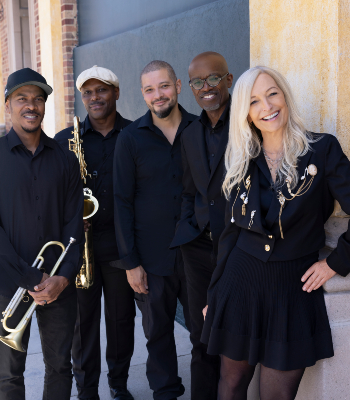
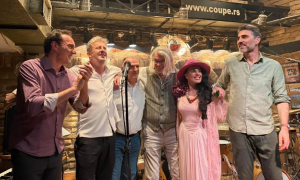
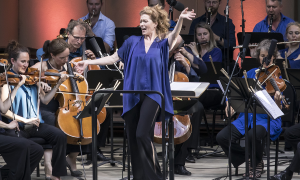
Courtesy Jules Naudin
Few Miles Davis albums are as deeply rooted in a specific place as Sketches of Spain (Columbia, 1960). Yet the Spain imagined by Davis and Gil Evans was always an outsider's vision—an inspired interpretation rather than an immersion in Spanish musical traditions.
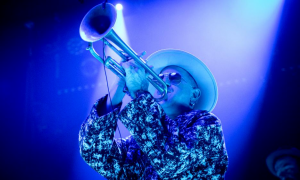
That became the starting point for trumpeter Erik Truffaz and saxophonist-singer Antonio Lizana, who revisit the album by bringing authentic flamenco voices back into the conversation, with their band featuring dancer Ana Perez, Renaud Gabriel Pion (bass clarinet, English horn, arrangements), Pau Figueres (guitar), Arin Keshishi (electric bass), Manuel De la Torre (drums) and Vincent Thomas (percussion). In this joint interview, Truffaz and Lizana discuss how the collaboration began, why imitation was never an option, and how honoring Miles ultimately means finding a new path rather than retracing his.
All About Jazz: How did your collaboration come about?
Antonio Lizana: I met Erik Truffaz at the Kathmandu Jazz Festival in Nepal. We shared the stage, got along immediately, and the idea of doing something together was left hanging in the air. Erik mentioned he might invite me to one of his concerts when he came to Spain a month later, and the conversation continued from there. We stayed in touch, and shortly afterward my manager, Vincent Thomas, also contacted Erik. While speaking with François Lacharme, director of La Seine Musicale in Paris, about a possible event, the idea of inviting a guest artist came up. Vincent seized that opportunity as the seed for a new project, and that is when things really started moving.
AAJ: Erik, how did the idea of creating a project around Miles Davis' Sketches of Spain take shape?
Erik Truffaz: My main goal was simply to work with Antonio. I love the way he sings and plays. I had never thought about revisiting a Miles Davis work—that idea came from François Lacharme, the director of La Seine Musicale. By coincidence, while we were in Kathmandu, Antonio's manager Vincent Thomas and I went swimming before the concert. Later, Vincent mentioned to François that Antonio and I were both there, and François immediately suggested we should create something together.
Since I already wanted to work with Antonio, the idea arrived at exactly the right moment. Once we embraced it, I thought it would be interesting to build the project around Spanish musicians. About eighty percent of the ensemble is Spanish, and I wanted a flamenco element. We had to differentiate ourselves from what Miles had done. That is why we included a flamenco dancer and Spanish musicians, apart from Renaud Gabriel Pion, who wrote part of the arrangements.
AAJ: Why did a project based on Miles Davis seem impossible to you before?
ET: I would not say impossible. I have already played Miles' music with orchestras, especially in the Czech Republic. The problem was that, in my own artistic journey, it could easily have been a mistake. I don't want to recreate Miles' music. I already have a sound that sometimes points in a similar direction, and I don't want to become a pale copy of Miles Davis. You should never be a copy—you have to present something that belongs to you. For this project to make sense, I needed someone like Antonio and the musicians we assembled around him. What we created is genuinely different.
AAJ: Antonio, how did you approach Miles Davis' music and think, "I have to do this—but differently?"
AL: When I was younger and discovering Miles' albums, I came across Sketches of Spain. Naturally, I listened to it with great curiosity. I wanted to understand what had attracted him to Spain.
From the beginning, I understood what he had captured: the drama, the melodies, the atmosphere. But I always thought how wonderful it would have been to meet him and introduce him more deeply to Spanish culture. On that album he draws inspiration from Spain, but he doesn't really enter the traditions of Spanish music itself. How amazing it would have been to open that door further. Now it's incredible to have the opportunity to do something like that—not with Miles, of course, but with Erik.
AAJ: What does it mean for you to play Miles Davis today?
ET: Actually, we are not really playing Miles. Gil Evans reinterpreted a Spanish classical work, so we are revisiting something Miles interpreted rather than simply playing Miles Davis.
On my recent album devoted to film music, Rollin' (Blue Note, 2019), I recorded music from Ascenseur pour l'échafaud (Fontana, 1958). That is never a problem as long as you find your own voice. If we had simply reproduced Gil Evans' arrangements exactly as written, it could only have been less interesting than the original. Whenever you revisit something, you have to find another path.
AAJ: And what was that new direction?
ET: Antonio, Vincent and I spent a lot of time discussing it, especially which musicians to involve. The main objective was authenticity—an authentic Spanish voice.
The second step was asking Renaud Gabriel Pion to contribute some arrangements. He is capable of writing music that feels contemporary and even rock-oriented, which interested me. It was important not to choose someone who would write in the style of Gil Evans.
The concert begins with a fairly structured, heavily arranged section, but afterward it moves much closer to my own musical world than to Miles. The atmospheric textures, percussion and soundscapes all feel much more connected to my music.
AAJ: Antonio, what was the first Miles Davis recording that really mattered to you?
AL: It is a cliché, perhaps, but for me it was Kind of Blue (Columbia, 1959). It was the first Miles Davis album where I learned every tune and truly understood his personality as a musician. Of course, I'd already heard him with Charlie Parker on earlier recordings, but there his own personality wasn't as clearly defined. On Kind of Blue you really hear everything that makes Miles unique. It also featured some of my heroes: Cannonball Adderley, one of my greatest saxophone influences, and John Coltrane. Everyone was there. It was a dream team.
ET: For me, Antonio sits somewhere between Kenny Garrett and Cannonball Adderley. I love the way he plays. He is incredibly powerful, which is one reason I wanted to work with him. He combines saxophone and voice in a way that is anything but ordinary. His playing is powerful, highly articulated, rhythmically strong, and he has a huge sound. I have always tried to collaborate with people I feel are stronger than I am because they push me forward. I have worked that way my entire life.
AAJ: What do you think younger audiences should take away from Miles Davis today?
ET: That is a little like asking what we should preserve from Picasso's work.
Picasso began with relatively straightforward drawings before moving toward abstraction. Miles' journey was similar. He spanned an entire century, beginning in a world where horses were still common and ending with Doo-Bop (Warner Bros., 1992) in the computer age. So it is difficult to identify one single thing to pass on.
For jazz listeners, Kind of Blue remains the most obvious entry point. The music is spacious, slow enough to absorb, accessible on one level and yet completely magical. But when I played with rap groups, I would have them listen to Doo-Bop, which is practically electronic music. The distance between those two worlds is enormous, yet they are both unmistakably Miles Davis.
 FOLLOW David Unger and Samuel Thiebaut
and get notified whenever a new article published.
David Unger and Samuel Thibeault are French documentary filmmakers, directors, and television producers.
PREVIOUS / NEXT


About Erik Truffaz

Tags
Erik Truffaz Concerts
Become a Sustaining Member

Since 1995, All About Jazz has championed jazz as an art form and supported the musicians who create it. Over three decades, it has grown into one of the world's leading jazz resources, serving hundreds of thousands of readers, musicians, presenters and industry professionals each month.
Help Build the Future of All About Jazz
Your support helps us continue building All About Jazz for the next generation—expanding our editorial coverage, preserving jazz history, developing new community features and creating better ways to discover the music and the people behind it.
Become a sustaining member for as little as $20 per year and you'll immediately enjoy an ad-free experience along with access to subscriber features and future articles for a full year.
Together, we're not simply sustaining All About Jazz—we're building its future. Thank you for being part of the journey.