Home » Jazz Articles » History of Jazz » A Chronological History of Jazz
A Chronological History of Jazz
A living, breathing river that constantly reinvents itself while absorbing new global currents.
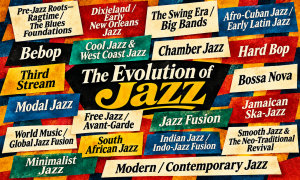
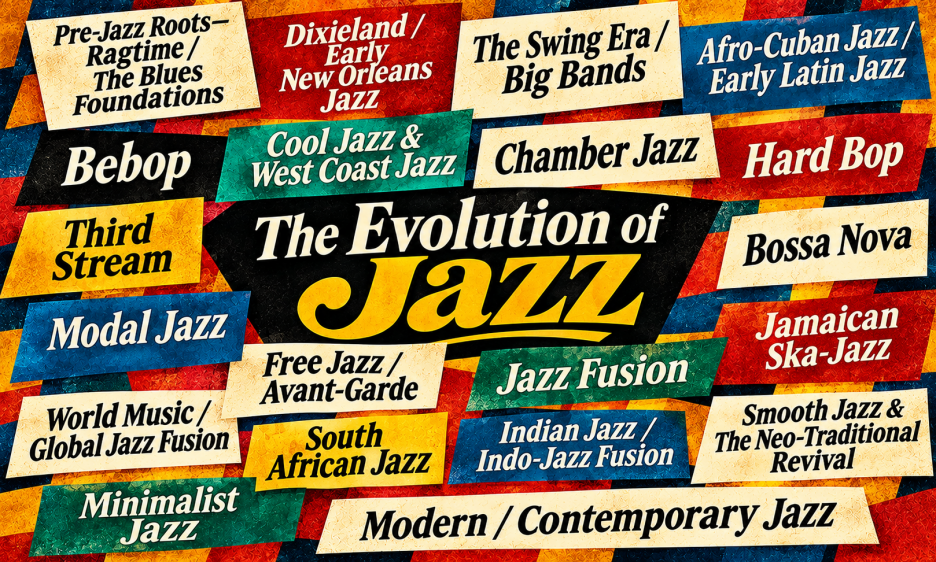
From its foundational roots in syncopated ragtime and rural blues, jazz has been defined by a relentless spirit of innovation and intellectual rebellion—shifting from the grand dance halls of the Swing Era to the virtuosic, small-combo intensity of Bebop. It expanded through the contemplative spaces of Modal and Chamber Jazz. As the decades progressed, the music pushed further outward, embracing the electrified weight of Fusion, the synchronized patterns of Jamaican Ska-Jazz, the hypnotic loops of Minimalist Jazz, and the borderless experimentation of the modern era.
The following chronological timeline provides a roadmap through these milestones, outlining the defining characteristics and key figures who shaped jazz from a distinctly American art form into a truly global musical language.
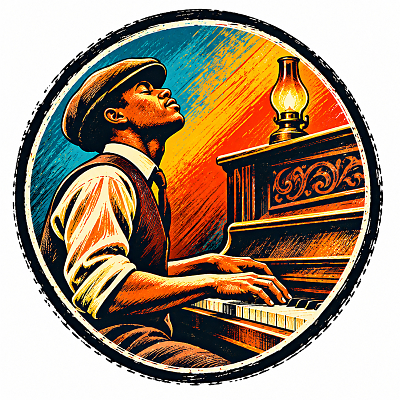
Pre-Jazz Roots—Ragtime / The Blues Foundations
Late 19th Century
Early 1900sCharacteristics
A foundational blend of African rhythmic traditions and European harmonic structures. Features Ragtime (highly syncopated piano styles) and The Blues (12-bar vocal lamentations born in the rural American South).Key figures
Scott Joplin, Blind Lemon Jefferson, W.C. Handy.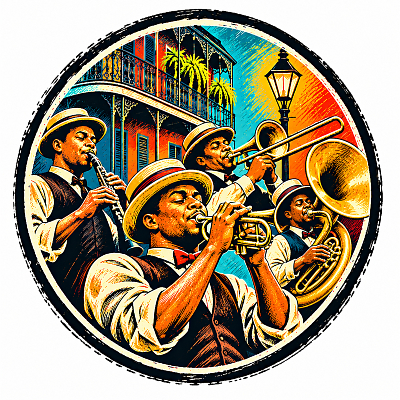
Dixieland / Early New Orleans Jazz
Early Jazz
1910s—1920sCharacteristics
The official birth of jazz in New Orleans. Small ensembles characterized by polyphonic, collective improvisation where brass and woodwind instruments play interlocking, contrasting lines simultaneously.Key figures
Louis Armstrong, Jelly Roll Morton, King Oliver, Bix Beiderbecke.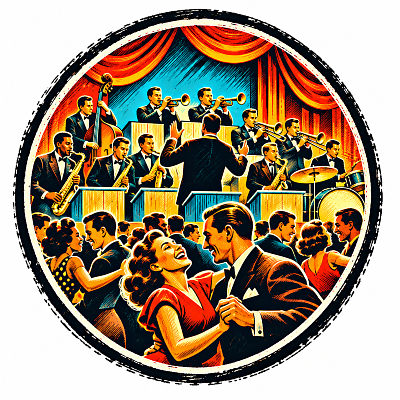
The Swing Era / Big Bands
Mainstream Pop
1930s—mid-1940sCharacteristics
Jazz becomes America's dominant mainstream popular music. Massive 15-to-18-piece orchestras playing highly structured, precisely written arrangements designed primarily for large dance halls.Key figures
Duke Ellington, Count Basie, Benny Goodman, Glenn Miller.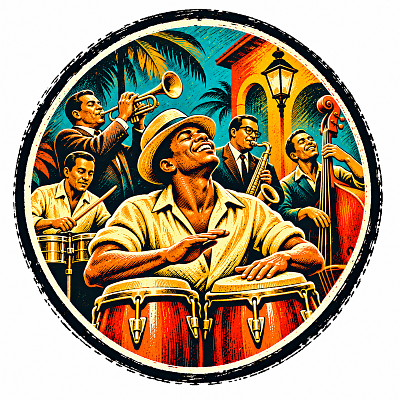
Afro-Cuban Jazz / Early Latin Jazz
Latin Fusion
1940s—1950sCharacteristics
The pioneering fusion of jazz harmony and bebop improvisation with complex Afro-Cuban rhythms and percussion instruments like congas, bongos, and timbales. Built upon the clave rhythmic baseline, it brought driving polyrhythms and big-band horn layering into a vibrant dialogue.Key figures
Machito and his Afro-Cubans, Mario Bauza, Dizzy Gillespie, Chano Pozo, Tito Puente, Chico O'Farrill.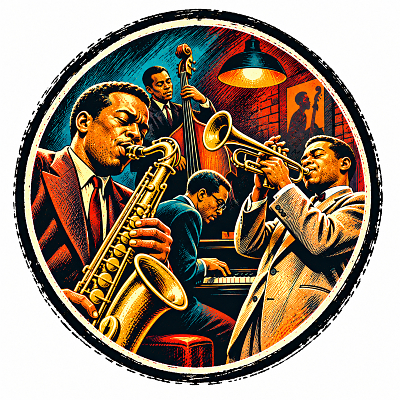
Bebop
Modern Jazz
Mid-1940s—1950sCharacteristics
A fierce intellectual rebellion against the commercial constraints of swing. Shifted jazz from dance halls to small clubs. Small combos playing blistering tempos, complex altered chords, and athletic, virtuosic soloing meant strictly for listening.Key figures
Charlie Parker, Dizzy Gillespie, Thelonious Monk, Max Roach, Bud Powell.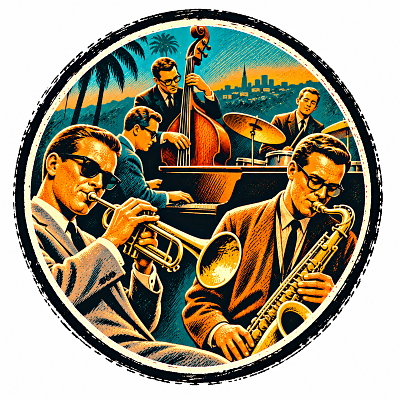
Cool Jazz & West Coast Jazz
Modern Jazz
Late 1940s—1950sCharacteristics
A direct, understated reaction to the blistering heat and frantic pace of bebop. Characterized by slower tempos, lighter and breathier tones, smoother textures, and relaxed, cerebral arrangements.Key figures
Miles Davis (Birth of the Cool [Capitol, 1957]), Chet Baker, Dave Brubeck, Gerry Mulligan.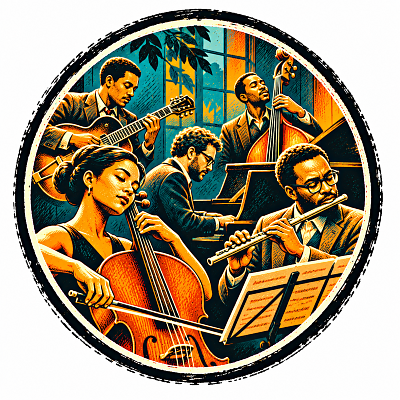
Chamber Jazz
Classical Crossover
Early 1950s—1960sCharacteristics
Born out of the Cool Jazz ethos, this style shrank jazz into intimate, highly disciplined acoustic settings. It stripped away the traditional soloist versus background rhythm section dynamic. Instruments engaged in intricate, conversational counterpoint reminiscent of European classical chamber music.Key figures
Modern Jazz Quartet (M.J.Q.), Ahmad Jamal, Chico Hamilton Quintet.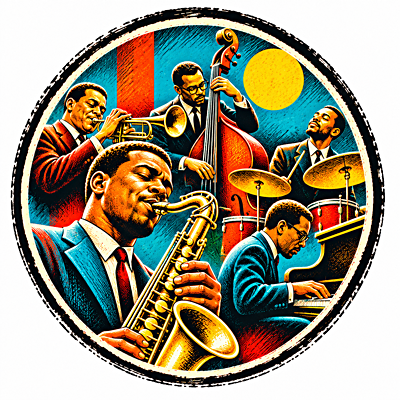
Hard Bop
Modern Jazz
Mid-1950s—1960sCharacteristics
Mainstream East Coast musicians felt that Cool and Chamber styles lacked raw soul. They steered bebop back to its roots by heavily infusing it with elements of gospel, deep blues, and contemporary rhythm and blues (R&B).Key figures
Art Blakey and the Jazz Messengers, Horace Silver, Sonny Rollins, Clifford Brown.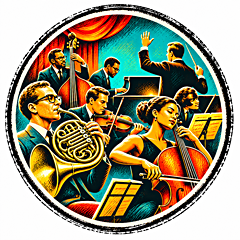
Third Stream
Classical Synthesis
Late 1950s—mid-1960sCharacteristics
A deliberate, radical synthesis of European classical structures with jazz improvisation. Highly intellectual, precisely scored, and frequently performed by mixed ensembles of classical musicians and jazz players.Key figures
Gunther Schuller, John Lewis, Charles Mingus (Epitaph), Bill Evans, Charles Bell (CJQ).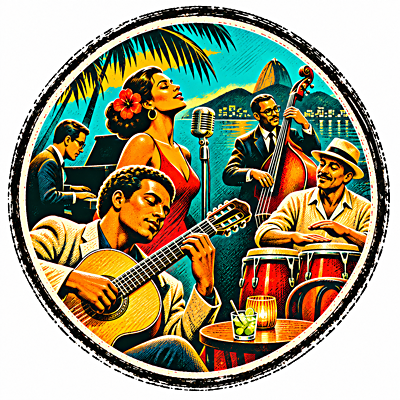
Bossa Nova
Brazilian Fusion
Late 1950s—1960sCharacteristics
A sophisticated fusion of Brazilian samba rhythms and cool jazz harmony that emerged in Rio de Janeiro before achieving international popularity through collaborations between Brazilian and American musicians. Characterized by subtle syncopation, understated vocals, intricate nylon-string guitar patterns, gentle percussion, and elegant melodic writing.Key figures
Joao Gilberto, Antonio Carlos Jobim, Stan Getz, Astrud Gilberto, Baden Powell.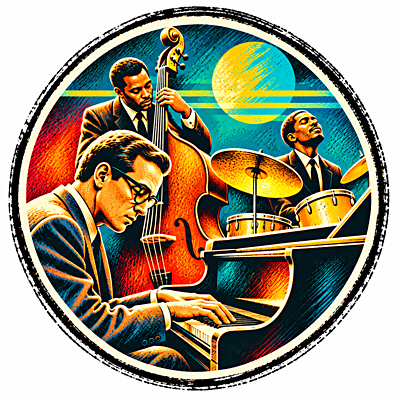
Modal Jazz
Modern Jazz
Late 1950s—1960sCharacteristics
Abandoned the dense, rapidly shifting chord progressions of bebop. Musicians instead improvised over stationary musical modes, shifting the focus toward long, deeply contemplative melodic lines.Key figures
Miles Davis (Kind of Blue [Columbia, 1959]), John Coltrane, Bill Evans, McCoy Tyner.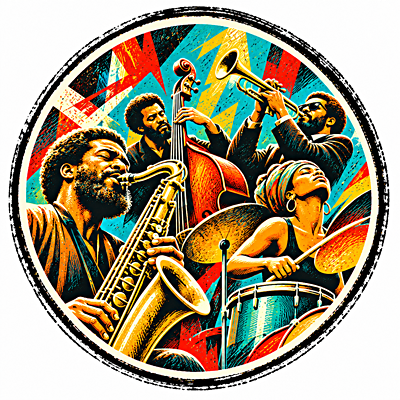
Free Jazz / Avant-Garde
Radical Expression
1960sCharacteristics
Mirrored the intense civil rights and political radicalism of the decade. Shattered traditional rules by discarding fixed chord structures, steady dance tempos, and standard scales to prioritize raw emotional expression and free-form group interaction.Key figures
Ornette Coleman, Cecil Taylor, Albert Ayler, late-career John Coltrane.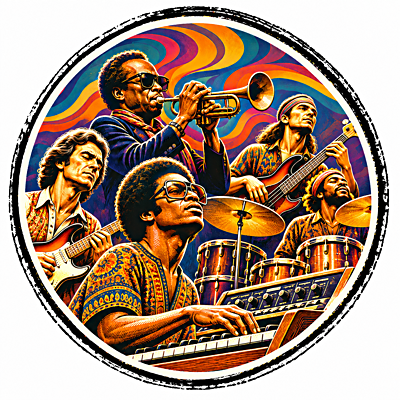
Jazz Fusion
Electric Era
Late 1960s—1970sCharacteristics
Blended acoustic jazz improvisation with the electric instruments, high-volume amplification, and heavy rhythmic backbeats of rock, funk, and psychedelic soul.Key figures
Miles Davis (Bitches Brew (Columbia, 1970)), Herbie Hancock (Headhunters), Weather Report, Return to Forever.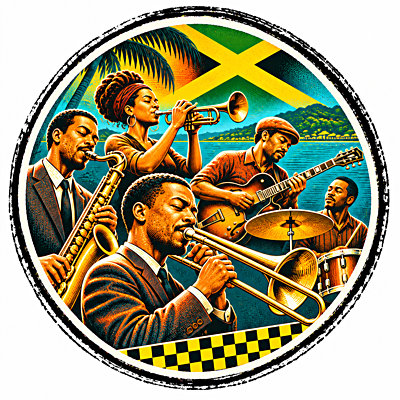
Jamaican Ska-Jazz
Caribbean Groove
1960s—1970sCharacteristics
The vibrant intersection of American jazz big-band arrangements and bebop improvisation with traditional Jamaican folk music and Mento rhythms. Spearheaded by jazz-trained instrumentalists, it layered sophisticated jazz horn lines and virtuosic soloing over a syncopated, up-tempo offbeat baseline (the ska chop).Key figures
The Skatalites, Ernest Ranglin, Don Drummond, Tommy McCook, Rico Rodriguez, Monty Alexander.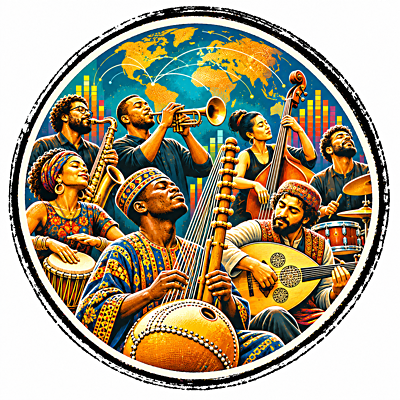
World Music / Global Jazz Fusion
Global Fusion
1970s—1980sCharacteristics
As jazz musicians increasingly toured, collaborated, and absorbed influences from outside North America and Europe, many began incorporating musical traditions from Africa, Asia, Eastern Europe, the Middle East, and other regions into their work. Rather than simply borrowing melodies or instruments, artists explored deeper integrations of indigenous rhythmic systems, scales, and performance practices with jazz improvisation.Key figures
Don Cherry, Jan Garbarek, Rabih Abou-Khalil, Trilok Gurtu.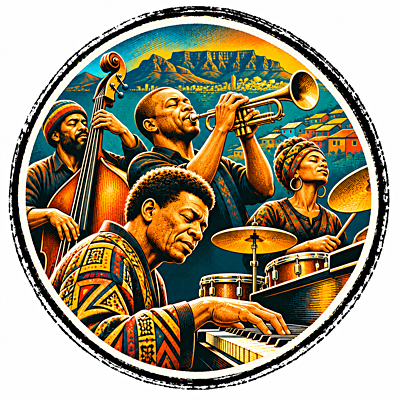
South African Jazz
Township Fusion
1970s—1980sCharacteristics
Although its roots reach back to earlier decades, South African Jazz gained substantial international visibility during this era. The style fused American jazz harmony and improvisation with township traditions such as marabi and mbaqanga, along with indigenous vocal and rhythmic practices. Frequently serving as both cultural expression and political commentary during the apartheid era, the music emphasized lyrical melodies, powerful rhythmic grooves, and a strong sense of communal interaction.Key figures
Abdullah Ibrahim, Hugh Masekela, Chris McGregor, Bheki Mseleku.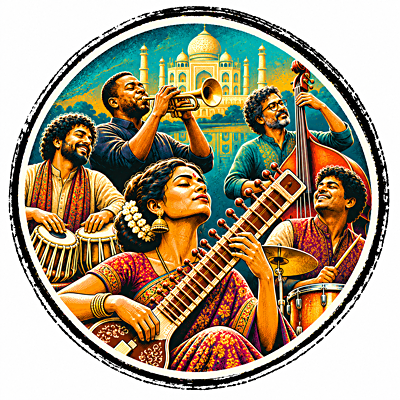
Indian Jazz / Indo-Jazz Fusion
Indo-Jazz Merger
1970s—1980sCharacteristics
Building on early collaborations between jazz musicians and Indian classical artists, Indo-Jazz Fusion emerged as a mature musical dialogue during the 1970s and 1980s. Musicians combined jazz improvisation with Indian ragas, tala rhythmic cycles, and traditional instruments such as the sitar and tabla.Key figures
Ravi Shankar, John McLaughlin, L. Shankar, Zakir Hussain, Trilok Gurtu.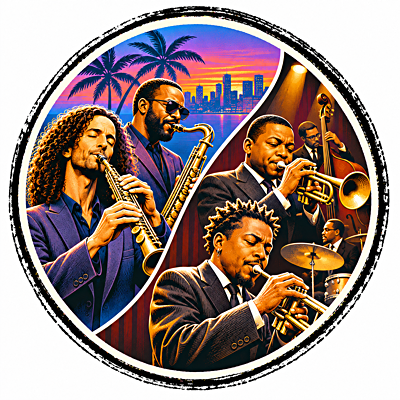
Smooth Jazz & The Neo-Traditional Revival
The Great Schism
1980s—1990sCharacteristics
The genre fractured into opposite extremes. One half embraced commercial, radio-friendly pop-fusion (Smooth Jazz), while the other half fiercely rejected both fusion and avant-garde styles, aggressively returning to acoustic swing and bebop roots (Neo-Traditionalism / The Young Lions).Key figures
Kenny G, Grover Washington, Jr., Wynton Marsalis, Roy Hargrove.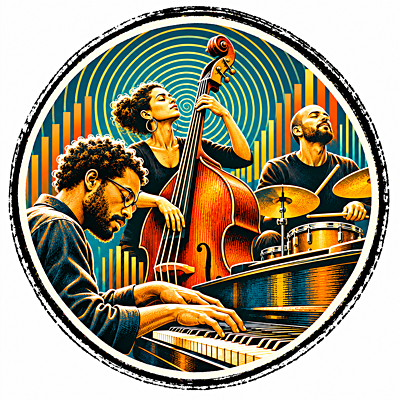
Minimalist Jazz
Hypnotic Groove
1990s—2000sCharacteristics
Rather than standard jazz exploration, this signature style focuses on long-form improvisation built on repeating, hypnotic musical loops that slowly evolve over 40 to 60 minutes. It bridges the gap between acoustic jazz instrumentation and the pulsing, drone-like structures of American minimalism (such as Steve Reich or Terry Riley).Key figures
The Necks, Dawn of Midi, Nik Bärtsch's Ronin.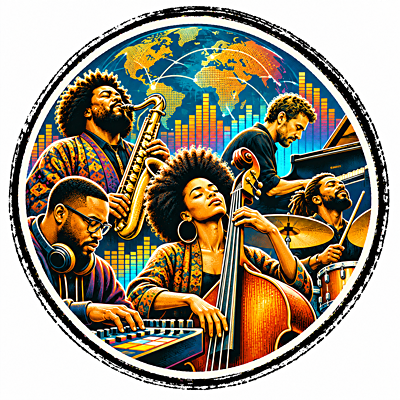
Modern / Contemporary Jazz
Global & Decentralized
2000s—presentCharacteristics
Completely decentralized, eclectic, and global. Modern artists seamlessly blend classic acoustic jazz improvisation with hip-hop production, indie rock textures, electronic music, and non-Western global folk traditions.Key figures
Robert Glasper, Kamasi Washington, Esperanza Spalding, Snarky Puppy, Brad Mehldau.
 FOLLOW Frank Rubolino
and get notified whenever a new article published.
Frank has been a writer of live and recorded music for decades, having published in both hard copy and on-line magazines, and currently he documents the live jazz scene through photography, as evidenced by his AAJ photo collection of about 2,800 shots.
Tags
PREVIOUS / NEXT
Become a Sustaining Member

Since 1995, All About Jazz has championed jazz as an art form and supported the musicians who create it. Over three decades, it has grown into one of the world's leading jazz resources, serving hundreds of thousands of readers, musicians, presenters and industry professionals each month.
Help Build the Future of All About Jazz
Your support helps us continue building All About Jazz for the next generation—expanding our editorial coverage, preserving jazz history, developing new community features and creating better ways to discover the music and the people behind it.
Become a sustaining member for as little as $20 per year and you'll immediately enjoy an ad-free experience along with access to subscriber features and future articles for a full year.
Together, we're not simply sustaining All About Jazz—we're building its future. Thank you for being part of the journey.