Home » Jazz Articles » History of Jazz » His Name was Tommy Sims. He played Trumpet. Too Bad You ...
His Name was Tommy Sims. He played Trumpet. Too Bad You Probably Never Heard Him
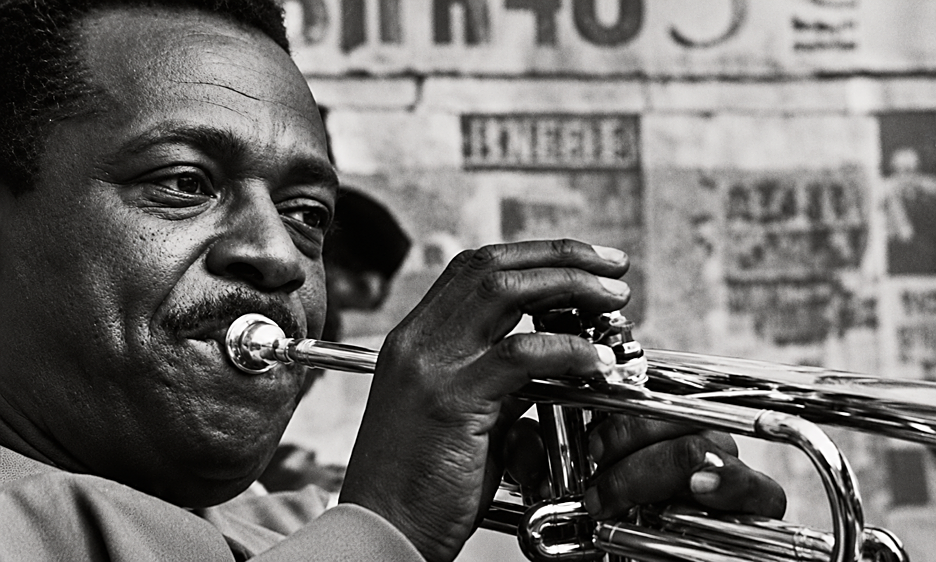
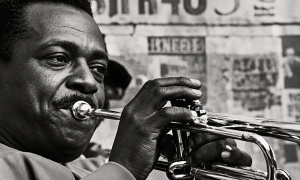
Courtesy Philadelphia Daily News
Remember Billy Krechmer's on Ranstead Street? Slam Stewart, bass! Tommy Simms, trumpet! Benny Golson, sax! Center City Philadelphia in the 1950s.....
—Bill Collins, Philadelphia Inquirer (1980)
Let's set eroticism aside, though it's never far from the surface where the trumpet is concerned.
This piece isn't about the instrument itself—an inexhaustible topic covering everything from technical execution to mouthpieces and tongue position. It is about a man who played it. I know precious little about him, but I wish I knew an awful lot more. His name was Enoch Thomas Sims, Jr., though everyone called him Tommy. He was, without a doubt, the greatest player I almost never heard.
Gather 'round, friends. I'll tell you what I know and why it matters.
Right off the bat, there's a tracking problem: his last name is listed as Sims in some places and Simms in others. The paper trail is an adventure. Finding photos even more so.
Sims was born in 1922 in Washington, Georgia. By 1930, his family had moved to South Carolina, and by 1935, to North Carolina. By 1940, young Tommy was living in South Philadelphia on Reed Street in a typical brick row house. It was not far from where the Delia branch of my mother's family lived on Cross Street. While that stretch of Reed Street had become largely Black through the Great Migration, his neighbors two doors down were among the few remaining Italian families before the neighborhood fully segregated between the 1920s and 1940s. By the time Tommy registered for the draft in 1942, he was out of school and working, though he didn't list his occupation as "musician" as many of his contemporaries did.
I was around fourteen, circa 1965, when I first heard his name. As an aspiring trumpet player, I was serious about practicing—so serious that everyone in the neighborhood became an unintended critic (my favorite evaluation being a dry, "Not much improvement, is there?"). Most neighbors were encouraging, however, and one woman down the street was particularly supportive. She was a blowzy, frowzy type who liked sunbathing in her backyard—definitely not your typical Penn Wynne PTA or Sodality of the BVM member. One day, while sunning herself with an adult beverage in hand, she stopped me to talk.
It turned out she was a Harry James fan. She had heard me through the open window blasting "You're My Thrill," struggling to copy a solo that was hopelessly beyond my ability. She loved the tune, and in true The Graduate fashion—though Mrs. Robinson left me entirely unmolested—we chatted about jazz. I loved James's band even more than Woody Herman's, spending hours trying to copy internal section parts I couldn't handle, putting myself into a trance with tunes like "Shiny Stockings." During our conversation, she mentioned the local legend: "You know who you really need to go hear? Tommy Sims."
By 1966, Tommy's long-running gig with Philadelphia clarinetist Billy Krechmer —see my Billy Krechmer: A Philadelphia Story—was coming to an end. Sims had previously toured with Jimmy Lunceford's orchestra after Lunceford's death, when the band was led by Eddie Wilcox. Fortunately, we have a record of how Sims sounded during his Philly years because Krechmer made a few rare recordings.
On Spotify, Krechmer's catalog (released on the obscure Ranstead label) features several standout solos by Sims. He wasn't playing bebop; he was playing Dixieland and swing, having joined Krechmer in 1952. My guess is that Sims came to Philly for a gig at the Web Cafe, an established bop joint, sat in with Krechmer, and received an offer he couldn't refuse. Krechmer had a sharp tongue and zero tolerance for mediocrity, but he knew real talent when he heard it. For Sims, whose family was settled in Philadelphia, the steady gig meant getting off the road for good.
Listening to those Ranstead recordings, Sims' playing is remarkable. He operates in a completely different stratosphere from almost everyone else in the group, Krechmer aside. The tragedy of the recording is that he is rarely given room to stretch out, usually limited to an 8-or 16-bar taste of what he could do.
Yet, in the mid-1950s, Sims made a significant blip on the national radar. In the 1956 and 1957 DownBeat Critics Polls—the premier jazz authority of the era—Sims' name appears alongside absolute titans of the instrument: Clifford Brown, Roy Eldridge, and Buck Clayton.
This wasn't local hyperbole; national critics were taking notice. Writer Martin Williams, author of The Jazz Tradition, singled Sims out, praising him as a Philadelphia player whose skill surpassed many artists with major national reputations. Critics urged readers to make a pilgrimage to Krechmer's club just to hear Sims and pianist Eddie Evans.
Off the bandstand, Sims led a surprisingly grounded life. Like many in Krechmer's orbit—including famous Philadelphia DJ Jack Pyle—see my Jack Pyle's Son —Sims was an avid baseball fan. But while Pyle lived and died with the Phillies (mostly died, given the 1964 collapse), Sims was pragmatic. During the 1950 World Series, he loyally cheered for the "Whiz Kids" Phillies, but when it came to placing bets, he put his money on the New York Giants. Sentiment only goes so far.
To support his family, Sims kept his day job working for the Pennsylvania Liquor Control Board at the local "State Store." After Krechmer's club closed in 1966, Sims stayed in high demand locally. Throughout the 1970s, Philadelphia venue advertisements regularly billed "Featuring Tommy Sims."
He also possessed a legendary, dry humor common among brass players. One story claims that while driving home from a South Jersey gig at 3:00 AM, Sims and his bandmates pulled over near Fort Dix, where the Army then conducted basic training. Sims stepped out, aimed his trumpet toward the barracks, and blasted a flawless, full-volume Reveille, waking half the base before the band sped off into the night.
Sims later recorded with the Ed Ashley Jazz Band. Though the band itself was fairly standard Dixieland, Sims' playing on those rare tracks cuts through with exceptional brilliance. He never achieved broad national fame simply because he chose not to leave Philadelphia.
Being a Black freelance musician in mid-century America carried immense challenges, even in the North. If Miles Davis could be beaten by police outside the Birdland in New York, and Roy Eldridge harassed in York, Pennsylvania, Philadelphia was hardly a paradise of integration. Sims navigated this world on his own terms, living in the integrated West Philadelphia neighborhood of Powelton Village until his death in 1986.
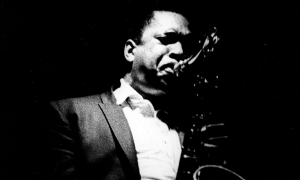
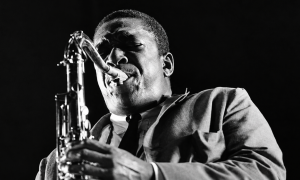
I never got to hear Tommy Sims live. Aside from missing John Coltrane, it remains one of my greatest musical regrets. He is buried near West Chester, Pennsylvania, and one of these days, I intend to head out there to pay my respects to the best player I almost never heard.
 FOLLOW Richard J Salvucci
and get notified whenever a new article published.
FOLLOW Richard J Salvucci
and get notified whenever a new article published.
Richard is an emeritus professor of economics at Trinity University.
Tags
PREVIOUS / NEXT

Become a Sustaining Member

Since 1995, All About Jazz has championed jazz as an art form and supported the musicians who create it. Over three decades, it has grown into one of the world's leading jazz resources, serving hundreds of thousands of readers, musicians, presenters and industry professionals each month.
Help Build the Future of All About Jazz
Your support helps us continue building All About Jazz for the next generation—expanding our editorial coverage, preserving jazz history, developing new community features and creating better ways to discover the music and the people behind it.
Become a sustaining member for as little as $20 per year and you'll immediately enjoy an ad-free experience along with access to subscriber features and future articles for a full year.
Together, we're not simply sustaining All About Jazz—we're building its future. Thank you for being part of the journey.