Home » Jazz Articles » Phil Schaap's Jazz Room » Franc Williams: Live From The West End
Franc Williams: Live From The West End
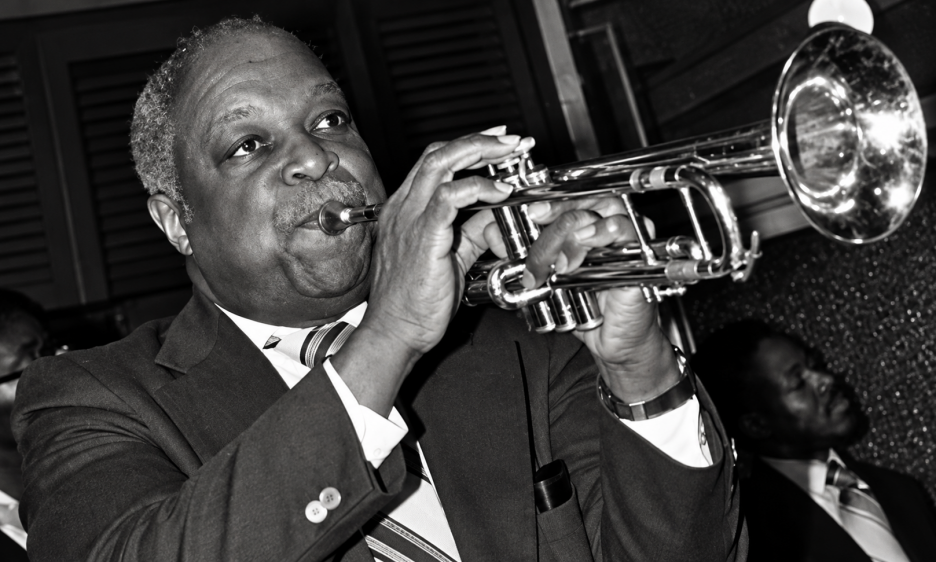
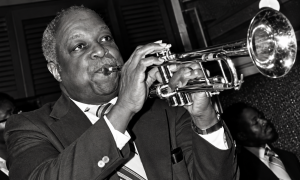
Courtesy Otto Flückiger
I did spend seven years with Ellington and they were wonderful years because Ellington, as I've always maintained, had the college. He had the college Ellingtonia. The other bands that were prevalent at the time were, as we nicknamed them, high schools where you got your academic preparatory courses before going into the college, which was Ellington's Orchestra. This was a wonderful experience. You learned something every day; nothing remained the same–the status quo wasn't. There wasn't any such thing as a status quo because everything was constantly changing; you were constantly learning [and] you found out there that all that you'd learned before was just a training ground until you got up to this band.
—Franc Williams
Loren Schoenberg, Founding Director & Senior Scholar at The National Jazz Museum in Harlem, played tenor saxophone and piano many times with Williams at the West End. He told the author in an email:
"Francis Williams was one of the most technically competent and versatile trumpeters of his generation. Going back to the early days of jazz, there were these incredible first trumpet players, lead trumpet players who would play in the big bands; they were phenomenal instrumentalists. The great majority of the time when people hear a big band play, they hear the trumpet that's on top. The first trumpet player establishes the tone and the rhythm and the feel and the sound of a band. Franc was a superlative lead trumpet with Ellington and never got his due."
Schoenberg went on to note that lead trumpeters often have "a big ego" but that Francis Williams was "very modest." Many of the comments contained in this article serve to verify Williams' modest nature.
He was born September 20, 1910, in Pennsylvania, and his family moved to Toledo, Ohio when he was four years old. He was given piano lessons at an early age. He met a neighbor about the same age, who also liked to shoot marbles. His name was Art, he was severely vision-impaired, and he also played the piano.
Speaking to Phil Schaap of WKCR-FM in May 1974, Williams recalled:
"I was 12, Art was about 12, we used to play marbles together. Art would say, I've got a new piano roll, come on over and hear it. I'd go across the street; he'd play the piano roll, turn the piano off and play it by hand. It was his assumption that one man made it, one man should be able to play it. He didn't know at that time that two men cut some of them. Some of them were cut by [a] machine. He didn't know anything other than he believed if one man made it, one man could play it. So, he played it. Or if there was a record, he'd play this record over and then he'd say, well, this is the introduction. This is what the reeds do. This is what the brass does. This is what the trumpets do. This is what the trombones do. And he would just play the record down just the way he heard it. That was Art Tatum."
"One of the reasons I took up the trumpet was because when I was trying to learn piano, and Art was trying to show me things, I concluded that I was dumb because I didn't seem to be able to learn what Art was trying to teach me. So, if I'm too dumb, I'll take up something else."
Williams went on to Toledo University and was a working musician, but he didn't immediately recognize the significance of Louis Armstrong:
"I didn't know enough about trumpet to recognize the greatness of the man. I hadn't collected [Armstrong recordings] in the Twenties because I was too dumb and I didn't know. I didn't know from nothing [sic]. I didn't even realize how great he was then. And it wasn't until years later I began to realize the magnitude of such men as Louis Armstrong and my buddy Art Tatum. In Cleveland, the older musicians began to pull my coat and show me [how] this man was starting a style that was rapidly becoming something that was being copied by all jazz trumpet players."
In 1930, Williams had a memorable first encounter with Armstrong:
"Louis was playing at a theater in Cleveland and he was scheduled to play a dance after the theater. I was hired to play in the band [that] was to play until Louis got there. Louis had a record at that time, it was very hot, Fats Waller's "Black and Blue." So, I memorized this record. Now at that time I was hitting and missing, missing mostly, but I did learn this record to be played. We didn't play it as early as I wanted to. Later on in the evening we played "Black and Blue" and when we came to the vocal part, I stepped back to let the pianist play a solo at that point. And I heard this gravel voice from the back of the hall, All right, you played it, now sing it! And that was a standing joke with Louis and I from that time on."
Armstrong did give some important advice to Williams:
"Louis told me something very simple: Just be able to play every note in the trumpet range, play it on any occasion, no matter how it's asked for, and be able to make it clear [and] clean. And he said the portion that you're doing as your own individual solo; you will work that out. But be able to play your horn, play every note in the trumpet range and be able to play it whenever called upon under any condition. That is the first thing you want to be able to do. Then, after having done that, you can work on the finer points of how to increase your range or how to display your individuality.
He said, Every trumpet player you meet can teach you at least one thing. Try to learn that one thing that he can teach you. And when you meet enough of them and learn one thing from this trumpet player, one thing from the next one, gradually you'll be able to put all this together. And as you amass this information and learn how to play it in your style and do what you do, then you will begin to expand as a trumpet player and you'll be doing what everybody else is doing. You'll be doing what I'm doing."
From Columbus, Williams began to tour with a territory band, Frank Terry's Chicago Nightingales. The group went as far east as Maine, but mostly kept to Ohio, Michigan and Indiana. In the mid-1930s, the group split up in Albany, New York. Williams led a small group in Albany for several years and here he shared his bandstand with a future giant: Thelonious Monk. That tale is missing from Robin D. G. Kelley's seemingly exhaustive Thelonious Monk: The Life and Times of an American Original (Free Press, 2009).
Kelley devoted a chapter to the years from 1934-1937 ("We Played and She Healed") which describes Monk's first time away from New York City, accompanying an unidentified traveling preacher woman of indeterminate denomination. According to Kelley, Monk told Nat Hentoff in 1956: "While still in my teens, I went on the road with a group that played church music for an evangelist. Rock and roll or rhythm and blues. That's what we played." They traveled for "about two years" in the Southwest. Kelley notes that the only confirmed sighting of Monk in these years was by pianist Mary Lou Williams, in 1935 in Kansas City.
And yet, Williams told Schaap in an interview conducted for a 1976 Thelonious Monk radio festival that in 1936, his small group was gigging in a club called Big Charlie's and that it was a spot where other musicians congregated after their gigs to jam or sit in. Williams assumed that Monk might have been gigging at one of the nearby resorts and recalled that he appeared for enough jam sessions that Williams and his bandmates took note of Monk's impressive talent:
"We were all struck with his wonderful stride and the way he played then. He could play beautifully. He could play ballads, could play swing, he played rhythm, could play whatever you wanted, but his manner of playing [was] very far removed from the Monk that I heard later down here in New York. One night [he] stretched out and made our pianist look kind of sick by comparison. We had a good pianist, but Monk was doing a lot of playing then."
It is unfortunate that Kelley was never made aware of Francis Williams' recollections of Monk in Albany in 1936, as it is a second sighting and one that does not seem in keeping with what is known about Monk's time with the itinerant preacher who utilized a small jazz group while she saved souls.
By 1938, Franc Williams had moved to New York City, and in 1939 he made his first recordings, with Earl Bostic. In March of 1940, he was tapped by Fats Waller to play in his big band.
"I was with Fats for about six months. And then in rapid succession, I went through a lot of other bands like Edgar Hayes, Claude Hopkins, and Horace Henderson and in the Fall of 1941, I went with Ella Fitzgerald's Big Band."
In late 1945, Rex Stewart was leaving the Duke Ellington Orchestra, and Francis Williams was tapped to take his place. It was in Williams' mind the pinnacle of his career—what he had been preparing for over the past fifteen years. He told Phil Schaap in an interview for a Jazz At One broadcast on WKCR-FM:
"I did spend seven years with Ellington and they were wonderful years because Ellington, as I've always maintained, had the college. He had the college Ellingtonia. The other bands that were prevalent at the time were, as we nicknamed them, high schools where you got your academic preparatory courses before going into the college, which was Ellington's Orchestra.
This was a wonderful experience. You learned something every day; nothing remained the same—the status quo wasn't. There wasn't any such thing as a status quo because everything was constantly changing; you were constantly learning [and] you found out there that all that you'd learned before was just a training ground until you got up to this band."
Ellington's recordings had captured Williams' ear many years before. As he told Schaap on April 9, 1974:
"There was a time when Duke would be recording on four or five different labels. So, on each one, he'd use a different name. When we'd hear a record, it would be the Washingtonians, or it would be the Foot Stompers, or it would be the Jungle Band. But whoever it was, they had an identification that was so certain [and] so strong, that whatever name the announcer might say, you knew it was Duke Ellington."
The significance of Duke Ellington could not be over-estimated, according to Williams. He recalled how Ellington molded his musicians into "one huge instrument":
"He plays on this instrument with consummate daring, depth, dexterity and devotion. He can do so many things with these men and get them all to work together. Under Duke, you know what this man wants. You know how great this man is. He picks the men who go in that band. He molds them. He makes them this instrument. And all credit is due to him. Because it starts from him."
That respect from his musicians didn't always ensure tranquility though:
"Duke said [that] one of his principles had always been because of the number of temperaments that he had to corral and keep in check in order to keep the band going, because you know a musician is a temperamental person, he's full of temperament and in order to control that, Duke knew he had to do something so he said, Well, we may be going to the crazy house but I'll be driving the van [laughs]."
Williams' entry into the band wasn't as smooth as he had perhaps hoped:
"When Duke would write these chords and write these parts, he would give dissonance to men who might be sitting next to each other. I found myself sitting next to a man and we're making dissonance, and I couldn't adjust myself to it. I couldn't become acclimated. I knew, well, it had to be me who was wrong. So, I tried to humor the note, and Duke would come to me and say, No, don't do that. Play what's there and play it out. Play it loud. So eventually, I learned to do it. After I could hear the playbacks and see how it all blended, then I could understand."
In an interview conducted August 8, 1979, Schaap asked Williams about the significance of Billy Strayhorn to the Ellington Orchestra:
"Strayhorn was a lyric writer. He was a lyricist when he first came to Ellington, but it became quickly apparent to all who were in contact with him, this man knew his way around the piano and he knew his way around music. I think his talent shows most when he used to do things for Johnny Hodges . Billy had a sad strain running through him that manifested itself in his music. And he used to write some very sad, plaintive but beautiful melodies, which are most exemplified by Johnny Hodges because he could use these melodies as a vehicle for his own talent. And Strayhorn being a lyricist, a writer and an arranger made a perfect alter ego for Duke, because Duke used to call him my right—hand man. And when he said right, he meant W-R-I-T-E, my write—hand man. And Strayhorn was just that, and a wonderful adjunct to Ellington and the band."
One long—form Ellington composition that Francis Williams was involved with was the Deep South Suite (1946). Its Happy Go Lucky Local section formed the basis of the saxophonist Jimmy Forrest's hit record "Night Train" (1951), but the full composition never saw a commercial recording. Williams told Schaap in April of 1974 why that might have been:
"This was a work that had quite a bit of social significance. And it might have been that to play it at certain times or certain places the number might not have been so well received, or the whole work might not have been so well received. Because it started out with the Chamber of Commerce, "Magnolia and Molasses" version of the South. That was the opening of the suite. The second number was "Hearsay." And in that were parts that could be pretty well defined if you knew the South at that time. You could hear shots in it, could hear discords; you could hear the rabble rousing of the riot. And all of it added together might have told a picture that certain parts of the country might not have wanted to hear."
Williams' time in the Ellington band ended around the time of the recording of A Tone Parallel to Harlem (1951), also known as the Harlem Suite or just Harlem.
"That was something else. When I was called in to do this, I was called in to take [Cat Anderson's] place. And Cat was out of the band, as he often was. And not only was he out of the band, the first part that he played was also gone. Now, I had played it, but I hadn't played Cat's part. However, I did know just about what his part consisted of, by looking at Shorty Baker's part and Ray Nance's part, between the two, I was able to play something that was approximately what Cat had been playing and we made the recording without Cat and without that first part. It was rough but evidently, it passed muster because the engineers liked it, Duke liked it, and it was accepted."
After his time with Duke, Williams worked with what Loren Schoenberg called "Latin jazz bands or what we call Latin Afro-Cuban bands that had a jazz tinge. They all did." He also played with Lena Horne, Harry Belafonte, and Sammy Davis Jr.. The 1960s found Williams working on Broadway for such shows as Funny Girl, On the Town, and Dr. Jazz. In the 1970s and early 1980s he returned to the recording studio, first with the Harlem Blues & Jazz Band (From Past to Present, Volume 1 (VocCa) and Harlem Blues & Jazz (VoCa)) and later he appeared on three albums by Panama Francis' Savoy Sultans (Gettin' In The Groove (1979), And the Savoy Sultans Volume 2 (1981), (both Black & Blue) and Groovin' (1982) on Stash.
In 1974, Phil Schaap began booking jazz at the West End near Columbia University in New York City. Ellington-inspired pianist Brooks Kerr led the first group Schaap booked, and Franc Williams played trumpet. By 1975, he had formed the Franc Williams Swing Four and played regularly at the West End through to the spring of 1983.
Our first musical sample from the Phil Schaap Jazz Collection features Franc Williams on fluegelhorn for the Louis Armstrong associated "I'm Confessin' (That I Love You)." He's joined by Eddie Durham on trombone, Loren Schoenberg on piano, guitarist Jimmy Shirley, Frank Deane on bass and Shelton Gary on drums. This was broadcast from the West End, August 8, 1979, on WKCR-FM:
Franc Williams Swing Four at The West End (8/8/1979), Phil Schaap Jazz Collection, Special Collections Library, Vanderbilt University, Nashville, TN
Loren Schoenberg considered trombonist/guitarist/arranger/composer Eddie Durham to be a critical part of the Swing Four:
"Eddie, you could just tell, you know, not that he was necessarily from Texas, but he was just really improvising all the time and played with a great deal of blues and swing and spontaneity. Franc was such a master and a perfect partner for Eddie, whose playing was a little rough, a little rough-edged. And that's what made it so, so brilliant."
On May 19, 1975, the Franc Williams Swing Four appeared on Phil Schaap's Jazz at One program at the WKCR studios, for interviews and a live performance. Ellington valve trombonist Juan Tizol composed "Perdido" for Ellington in 1941. Franc Williams plays trumpet, Eddie Durham is on trombone, the pianist is Ram Ramirez (who was co-composer of the standard "Lover Man"), and Shelton Gary is on drums.
Jazz at One (5/19/1975): Franc Williams Swing Four, Phil Schaap Jazz Collection, Special Collections Library, Vanderbilt University, Nashville, TN
This last performance was captured at The Third Phase and therein lies a little-remembered part of the story of Phil Schaap's involvement with the programming of the West End. According to the Columbia Spectator, in June 1977, new owners wanted to reduce the music schedule at the West End to six nights per week and also employ fewer musicians. Schaap, who was Music Director at the West End but also manager for several of the groups which would be affected by this change, chose to support the musicians (it is not clear if he was Franc Williams' manager). The West End started booking "disco and dixieland," while Schaap took his regulars and his reel-to-reel recorder to The Third Phase, a restaurant located about three blocks away which adopted a music policy booked by Schaap. No broadcasts were made from The Third Phase, and according to the New York Times, Schaap returned to his position of Music Director at the West End in December 1977.
The Franc Williams Swing Four played The Third Phase July 30, 1977, with a front line of Williams on trumpet with George Kelly on tenor saxophone. The rhythm section was Harold Mabern on piano, Jimmy Shirley on guitar and Shelton Gary on drums. This is Horace Silver's "The Preacher," a tune Williams played quite regularly. (The advertisement is from the Columbia Spectator, July 28, 1977.)
The Third Phase (7/30/1977, 9:30 p.m. show): Franc Williams Swing Four, Phil Schaap Jazz Collection, Special Collections Library, Vanderbilt University, Nashville, TN
Sadly, Franc Williams suffered some form of dementia at the end of his life, but as Loren Schoenberg recounted, it did not keep him off the bandstand:
"I hadn't seen him in a while. He looked the same. He looked healthy. He didn't look disoriented. But as we were talking, it became obvious that I don't think if you had asked him where he was that he would have known. And of course, I was very concerned and I wondered, How the hell is he going to play? And then he went up on the bandstand and led the set. He did everything: Called the tunes, played perfectly. It was such a deep thing to witness how the music part of his brain was intact."
Francis (Franc) Williams died of cancer on October 2nd, 1983. According to the New York Times, he had continued to play regularly at the West End until the previous May. The Times also noted that "he is survived by a son, the actor Greg Morris, who is known for his television role in "Mission Impossible." Therefore, we conclude by noting that the Seinfeld character Jackie Chiles (played so memorably by Greg Morris' son, the actor Phil Morris) is two, or at most, three degrees of separation from Duke Ellington.
Up next
Eddie Barefield. Barefield played clarinet, alto and tenor saxophone and was a gifted arranger who worked with Cab Calloway, Ella Fitzgerald, Louis Armstrong and Duke Ellington. Barefield's story, plus music from the Phil Schaap Jazz Collection will be featured in the next installment of Live from the West End.
 FOLLOW Daniel Gould
and get notified whenever a new article published.
FOLLOW Daniel Gould
and get notified whenever a new article published.
I came to Jazz after rejecting the pop music of the 1980s - just in time for the CD reissue boom.
About Francis Williams
Tags
PREVIOUS / NEXT
Become a Sustaining Member

Since 1995, All About Jazz has championed jazz as an art form and supported the musicians who create it. Over three decades, it has grown into one of the world's leading jazz resources, serving hundreds of thousands of readers, musicians, presenters and industry professionals each month.
Help Build the Future of All About Jazz
Your support helps us continue building All About Jazz for the next generation—expanding our editorial coverage, preserving jazz history, developing new community features and creating better ways to discover the music and the people behind it.
Become a sustaining member for as little as $20 per year and you'll immediately enjoy an ad-free experience along with access to subscriber features and future articles for a full year.
Together, we're not simply sustaining All About Jazz—we're building its future. Thank you for being part of the journey.