Home » Jazz Articles » Interview » Scott Kinsey: Thought Distortions and the Art of the Left Turn
Scott Kinsey: Thought Distortions and the Art of the Left Turn
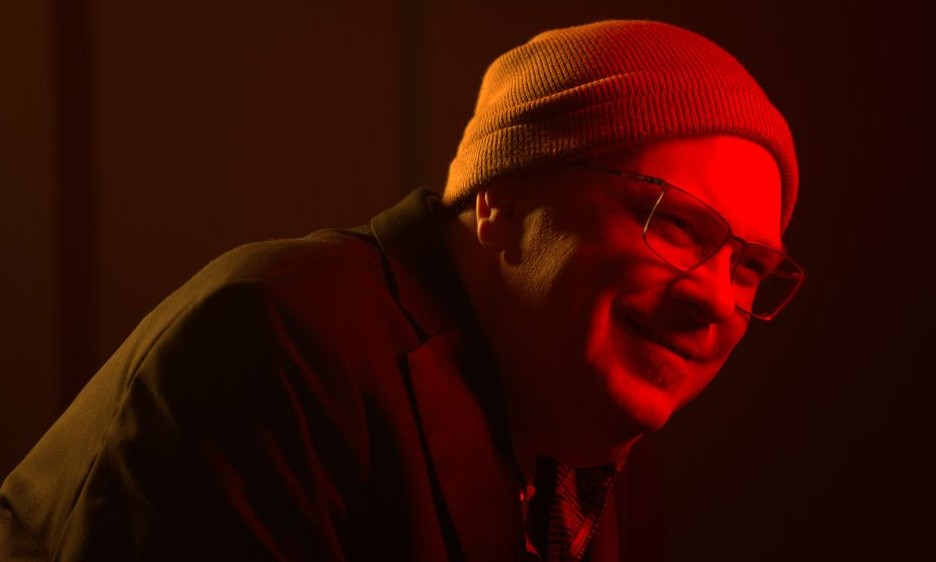
Courtesy Artur Gevorgyan
I think of my music as a ride or a journey. You start somewhere, and you see what you see along the way–and it’s always a different trip.
—Scott Kinsey
The Berklee student who landed the keyboard chair in fusion stalwarts Tribal Tech before graduating, cementing the band's definitive lineup while exerting a major influence on its musical direction.
The ardent admirer of Weather Report founder Joe Zawinul who went from fan to friend and mentee, and eventually became one of the most dedicated interpreters of Zawinul's musical legacy.
The solo artist and collaborator whose projects attract some of the world's most formidable instrumentalists, creating music that might best be described as pan-stylistic, forward-thinking electro-jazz.
Along the way, Kinsey has left his mark on scores of recordings—not only as an innovative keyboardist, but also as a producer, sound designer, mixing engineer and mastering engineer. His recordings include the solo albums Kinesthetics (Abstract Logix, 2006) and Near Life Experience (Abstract Logix, 2016), group projects with Human Element and Arc, collaborations with vocalist Mer Sal, and the Joe Zawinul/Weather Report-inspired We Speak Luniwaz (Whirlwind, 2019) and Luniwaz LIVE (Whirlwind, 2024).
So why does Kinsey—a musician operating at an exceptionally high level and well-known in elite musical circles—still seem like an under-known artist?
Perhaps part of the answer lies in Kinsey's obvious preoccupation with music as human expression and obsession rather than merely a product to be packaged and marketed. Or perhaps it's just the frustrating way of the world these days for an A-list musician, working in an arguably niche art form, in front of a listening public with a seriously limited attention span.
In any case, if you're a music lover of any stripe, Scott Kinsey is definitely someone worthy of your attention, however limited that might be.
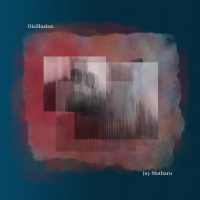
Prior to the interview, All About Jazz had an opportunity to preview Kinsey's forthcoming album, Thought Distortions (Kinesthetic Music, 2026), which will be released worldwide following a European tour, during which physical copies will first be available at shows.
For this interview, All About Jazz talked with Scott Kinsey on several occasions, via Zoom and in person, in 2025 and 2026.
All About Jazz: Let's talk about Thought Distortions. While you've made several albums in recent years as group efforts, would it be fair to call this only your third true solo album?
Scott Kinsey: Well, I feel like those ARC Trio and Human Element records all had music I probably would have released under my own name had I not already been involved with those projects and those players. Not to take anything away from anybody else—they are group records—but I feel like they're very much my records too, in the sense that I poured myself into them the same way I would my own records.
AAJ: Having heard Thought Distortions, it certainly feels like part of a continuum with your other work, but also like an advance.
SK: I'm happy to get that perspective. Sometimes I can't tell, being so involved with something and working on it over a long period of time.
This record was basically finished several years ago, but it was a very different record then. I played it for [music publicist] Mike Charlasch, who said it felt like a compilation of different tracks that didn't have a particular direction or a particular "thing." He recommended I go back and look at it with that in mind. So I did. I added several tunes and took out several that didn't fit, and I think it became a much better record.
AAJ: It has a wide stylistic range, but there is a continuity to it.
SK: I feel that too. "Psychi Stereo," with Scott Henderson, looks at the past a little because there's obviously a Tribal Tech connection, but it also looks forward because Meredith [Mer Sal] is a big part of that song. There are different parts of my musical life in there, but I don't feel like I'm trying to revisit them. They're just part of the language now.
AAJ: "Mr. Jamal" is almost a throwback to straight swing jazz, but from a very contemporary perspective.
SK: Yeah. It doesn't have Ahmad Jamal's type of swing, of course, but it feels like a possible answer to the questions: How do you play swing in the future? How do you interact with it?
And I love the way Pedro Martins played on it. He's putting these splashes of color into it that are really distant from the key. It's such an abstract and beautiful approach. The tapping comping he's doing also came partly from something I heard guitarist Ray Crawford do on an old Ahmad Jamal record.
And "Mr. Jamal" is my actual Estonia acoustic piano. It's prepared—I threw keys and different objects inside it to get those buzzy, clunky sounds.
AAJ: Martins also contributes "Há de Haver," which is harmonically and structurally remarkable.
SK: Yeah, that's Pedro's tune. When he first came to Los Angeles, he did a solo gig at The Blue Whale and knocked me out. He played "Há de Haver," and I thought it was such a beautiful piece. I thought, "I would love to record that." So I asked him, and he said yes. He's since recorded it himself, and of course his version is very different.
AAJ: "Misfits and Ne'er-do-Wells" is another track where piano takes center stage.
SK: That's my tribute to Keith Jarrett after I learned he'd had a stroke. That was devastating news. Keith was a huge influence on me. My dad and I would listen to him every time we got in the car—Still Live or one of those trio records. He was a major part of our lives.
But "Misfits" isn't really about the solo piano records or even the trio with Gary Peacock and Jack DeJohnette. It's more inspired by the American quartet—with Dewey Redman, Charlie Haden and Paul Motian. It's not that. It's still my music. But that world was an inspiration.
And in a weird way, Arto Tuncboyaciyan's singing on it reminds me of records where Keith actually sings.
AAJ: You mean Jarrett's famous involuntary singing?
SK: No, not that. [Laughs.] There are records where Keith actually sings folk tunes and plays guitar. So Arto's vocals kind of echo that in an odd way.
AAJ: Another standout is "Night Tripper."
SK: For me, "Night Tripper" feels very modern, but I may be approaching it differently from some of the younger players I love. You listen to DOMI and DOMi + JD Beck, or Thundercat, and sometimes the energy is there instantly—they hit the gas and they're gone. That's completely their thing, and I love it.
I've always been drawn to almost the opposite approach. I want to hang out. I want to find an environment I like and see what's going on inside it. Take some time, let an atmosphere develop, let some trippy shit happen.
At the end of "Night Tripper," with Arto's vocal and all that weird stuff happening, I just want to stay there and enjoy the trip. There's no reason to shred all over it. I think of my music as a ride or a journey. You start somewhere, and you see what you see along the way. It's always a different trip.
AAJ: That's a good description of "Welcome Essyx." It begins in one place and ends somewhere completely different.
SK: Exactly. I didn't know it was going to go there. How do you know? You get an impulse to take a left turn and suddenly you're in another neighborhood you've never been in. Sometimes it can be a dangerous neighborhood too. [Laughs.] That's what I like in music—an adventure, a journey.
AAJ: There are moments on the album that could almost function in a dance club too.
SK: I hope you're right. I played an early version of "Trance In Your Pants" for Cyril Atef. There was a different rhythm at the beginning and he was looking at me like, "Dude, you've got to make this a dance track." Then he sang the drum part he was hearing. And I thought, "Yeah. What am I doing? You're right." So I went back and made it a straight-down-the-middle dance beat. Now there are three drummers and a drum machine on that track. [Laughs.]
AAJ: What is your compositional process generally? Groove-inspired? Sound-inspired?
SK: It's a mixed bag. "Misfits" I composed intentionally. "Psychi Stereo" unfolded when I sat down to write. "Há de Haver" is Pedro's tune.
"Baked Potato Boogie" came out of a live jam at The Baked Potato that just started going to cool places. To me, it somehow exudes that excitement and anticipation you feel while you're waiting for the set to start. And Arto explains it perfectly—in a language only his mother would truly understand. [Laughs.] And the title track, "Thought Distortions," started as a jam at The Baked Potato too. I managed to get a recording of it, so there you go.
Another tune born out of a jam was "Flux." We had a party here for Meredith's birthday. Michael Pipoquinha, Francisco Fattoruso, and Gergo Borlai were here, and we had a little jam session. Later, I was trying to remember the jam because it had this really cool thing. Then I discovered Pipoquinha had made a phone recording and posted about 15 seconds of it on Instagram. I was like, "Holy shit, there's that jam!" [Laughs.] I had a session two days later with Gergo and Francisco, and we recreated it. I have a steel drum that used to belong to Jaco Pastorius, and Gergo played that too. Pedro played guitar, Jeroen de Rijk played percussion, and Meredith used this really cool vocal processor called the Soma Pipe. You can't always tell what instrument is what.
But that's often the process for me. Something happens between musicians, I hear a little world opening up, and then I want to find out what's inside it.
AAJ: That immersive quality carries over into the production. Sound design and mastering have been part of what you do for a long time. How did you get so deeply involved in that side of recording?
SK: Being a keyboard player, sound design was always part of my world. Working with the sound of all the instruments was another thing. I started mixing some Tribal Tech and Gary Willis records in the old days, and I just kept getting more involved. I'm always going for a sort of 3D vibe.
With mastering, I literally mastered my Kinesthetics record out of necessity. I was intimidated by what mastering cost and thought, "I've got to learn this stuff." So I dove in, but I also had some really cool reference points.
Danny Carey from Tool has these unbelievable mastering speakers and monoblock amps at his house—the same kind of system [renowned mastering engineer] Bob Ludwig used at Gateway Studios. I would take mixes over there and suddenly hear where I was going wrong, usually in the low end, then come home and fix it.
I also got to visit Sony Studios in New York while they were mastering something for Bob Belden. I put my record on in that room too. So little by little, I figured it out.
I still master records for other people. I mastered Shakti's Mind Explosion (Abstract Logix, 2025), which was a thrill.
AAJ: For a synthesist, getting into production and engineering isn't that far a step, is it?
SK: Not at all. And nowadays it's the do-it-yourself era. If you want to do something, you often have to figure it out. That's almost to a fault for me. I try to do nearly everything in every situation, and I probably shouldn't. Sometimes it's a necessity, but sometimes it's just too much. There's got to be a line somewhere. I just haven't found it yet. [Laughs.]
AAJ: And you mastered Jimmy Herring's Lifeboat (Abstract Logix, 2008)?
SK: Yeah. I heard a couple spots while mastering it that seemed a little empty, so I asked Jimmy if maybe he wanted me to put some organ on there. And I ended up playing with him for like a year or two. [Laughs.]
AAJ: There's a story you've told about Joe Zawinul that seems to encapsulate your whole approach to sound—where Joe closes his eyes, plays a note and turns one knob very slowly.
SK: Yeah. Have you ever seen a keyboard player walk up and just start wildly twisting knobs and playing frantically? That drives me insane.
When I used to sit with Joe and go through sounds on the Nord Lead 3, he would yell at me, "Slow down!" I figured the synth concepts were old information for him, so I would speed through everything. But he didn't care about what was in the past. He wanted to deal with what was in front of him.
Joe's way was literally closing his eyes, playing one note, slowly turning one knob and saying, "What is it doing?" Not worrying about what the knob says, just listening. Then he'd turn another knob and hear how that changed what the first knob did, going completely by intuition, by ear. That's the way to come up with great stuff. Every single thing he came up with was awesome, and I think that's literally how he did it.
There are still sounds of his I would love to ask him about because I can't figure them out. I sat next to him so much, and I could have asked him at any time, but for some reason, I didn't. It felt like he was always going to be there. Well, now he's not, so...
AAJ: You've always worn Zawinul's influence pretty openly. With people like Zawinul, Jaco Pastorius, Allan Holdsworth or even Jimi Hendrix, there's always the question of how to absorb those innovations without simply imitating them.
SK: You mean people saying you're derivative?
AAJ: Yes.
SK: Joe was a completely unique presence, and completely unique music came out of him. I was a huge fan. So if I play anything from that world, it comes out of love.
I also noticed nobody else was really doing it, and I think part of the reason is the way Joe played. He wasn't a riff player. He wasn't a lick player. At a certain point, he wasn't playing bebop lines you could just transcribe and reproduce. Joe got inside the feeling of the moment. It might be, "I need to play an E here—not a D, not an F—because the E has the feeling I need." But tomorrow, maybe the D has that feeling. How do you learn that? You have to live in it for a while.
AAJ: Which gets into Weather Report's famous idea: "We always solo, we never solo." You have to be a compositional improviser.
SK: Exactly. You have to be a compositional improviser. That's what I've always tried to do. A lot of times when I write, I'm just improvising—and usually with somebody else. Get together, improvise, record it, and see what happens.
When I was in high school, I read an interview where Joe talked about composing that way. He'd sit there, jam and keep a cassette recorder running. It was the most intriguing thing I had ever heard. You just sit down and play, and there's a tune? What? I thought, "I need to learn how to do that."
AAJ: Your Luniwaz records seem to work in that same territory.
SK: Yeah, although with We Speak Luniwaz and Luniwaz LIVE there might still be a little more of a traditional approach than I would ultimately like. Weather Report had years to evolve into what they became. You have to start somewhere. Ultimately, I'd like our thing to become even more open, conversational and dynamic.
And when you have soloists like Patrick Bartley Jr and Hadrien Feraud, you have to take advantage of that too. Some of the stuff Patrick plays on Luniwaz LIVE is off-the-charts incredible—live and right in the moment.
AAJ: Is that lineup something you try to maintain, or is it necessarily based on availability?
SK: I maintain it in my mind. [Laughs.] With players at that level, availability is always part of reality.
Right now, the immediate focus is Thought Distortions. I'm touring Europe in November 2026 with Gergo Borlai on drums, Hadrien Feraud on bass, Max Light on guitar and Mer Sal on vocals. Because Thought Distortions has a strong guitar element, that lineup makes a lot of sense for this music.
Then I'd like to make a third Luniwaz record that moves beyond simply revisiting Weather Report material and evolves more into original territory. That's where I want it to go.
AAJ: Going back, did you grow up in a musical household?
SK: Yeah. My dad was a pianist and worked in radio. We lived in Owosso, Michigan, and you could see the radio station from our front window. He also played piano in a dance band. I would go to the gigs with him from the time I was about five.
At one point I wanted to be a drummer. I imagined his drummer having this giant Billy Cobham kind of kit with toms and cymbals everywhere. Then I went to a gig and saw this tiny two-piece kit. I thought, "Well, that isn't going to be cool enough." [Laughs.]
AAJ: What first pulled you toward jazz?
SK: I heard Patrick Gleeson playing synthesizer on the radio, emulating a big band. It knocked me out. I walked over to the piano and tried to find one note that worked with what I was hearing. I couldn't, and that fascinated me. I thought, "I'm so lost with this music that I can't find one note? I need to understand this." That probably got me more interested in jazz than anything.
AAJ: Were you studying jazz in school by then?
SK: A little. There was basically one other guy at my high school who was interested in jazz. He was older than me and had the Charlie Parker Omnibook, so I got some information from him.
Later I found a guy in Lansing for some jazz piano lessons. I started learning the basic things—scales, modes, rootless voicings, all that stuff—but I never cared that much about learning tunes. Some people say the key to learning jazz is learning songs. Well, I don't know. I never really went that way. I wanted to learn how to function inside music. I wanted to make my own songs, I guess. I didn't know the language yet, and I was trying to learn the language rather than memorize a repertoire.
AAJ: But before jazz you were listening to rock and pop too.
SK: Absolutely. King Crimson, Yes, and even earlier, I hesitate to say this, but I was an ABBA fan. [Laughs.] I loved the rhythm section, the sound of the vocals and how tight everything was.
I was also super into Blondie. It's funny how those things stay in your head. Jimmy Destri's keyboards on "Heart of Glass," the synth bass doubling the bass—little production ideas like that are still part of my vocabulary now.
AAJ: What did going to Berklee change for you?
SK: Everything. I came from a small town where almost nobody was into what I was into, and suddenly I was surrounded by incredible musicians from all over the world. I would walk around listening to people in the practice rooms. It was exciting and a little terrifying because now there was serious competition everywhere. [Laughs.]
I always tried to play with people who were better than me. Wolfgang Muthspiel, Alex Deutsch and Peter Herbert had a killer trio and occasionally let me play with them. Kurt Rosenwinkel moved in right across the hall from me, and we became best friends almost instantly. Matthew Garrison was there. Paula Cole, Lalah Hathaway, Jim Black—so many great musicians.
AAJ: You and Rosenwinkel recorded Do It 1992 (Self-released, 2019), which was just released in the last few years.
SK: Yeah. That was right around when we graduated. Kurt came out to L.A., and we made those four tracks while we were hanging out. That could have become something more. If I have a regret, it's probably that Kurt and I didn't do more together. We're still good friends.
AAJ: Had you already gotten the Tribal Tech gig by then?
SK: Yeah. I got the Tribal Tech gig before I graduated. One of my Berklee classmates, saxophonist Lisa Maxwell, had moved back to Los Angeles and was dating Scott Henderson. When David Goldblatt left and Tribal Tech needed a keyboard player, she told Henderson she knew "the guy." They called me. I sent a cassette with some stuff I'd been doing and they hired me. That was pretty much it.
AAJ: You stayed with Tribal Tech for roughly two decades. Looking back, what did that period mean to you?
SK: It's strange looking back on it. I understand now how important that band was to a certain group of listeners and musicians. What surprised me was how little that musical impact translated economically. It was incredibly difficult to make money playing that music.
I think we came along as the era that had supported bands like Weather Report, Mahavishnu Orchestra and Return to Forever on a much larger scale was fading. Had Tribal Tech existed twenty years earlier, maybe the circumstances would have been completely different.
AAJ: But musical importance certainly isn't usually reflected by economics, especially in jazz.
SK: No. I still meet people who tell me what seeing that band meant to them, and Tribal Tech definitely put me on the map. I'll always appreciate that.
I still talk to Scott Henderson and Kirk Covington all the time. Gary Willis is in Spain, so I don't talk to him as often, but we're all still friends.
AAJ: Your arrival in Tribal Tech also coincided with the band moving toward more improv-based writing and reverse composition—taking things that happened spontaneously and building compositions around them—something that sounds a lot like the compositional processes you describe for Thought Distortions.
SK: Yeah, some of that is probably my fault. [Laughs.] I noticed that the most fun we had on tour was during soundcheck. Usually it was me, Kirk and Willis just jamming. And I kept thinking, "What the fuck, man? This is so cool. Why aren't we incorporating this into the gig?" The songs were great, but all this exploration was happening naturally an hour before the gig.
So the idea became to compose structures that supported the improvisation instead of the other way around. And that's still how I think. I try not to write too much.
When people write too much, sometimes everything gets trapped inside this box of: "It's got to be this, then this, and then you get to solo." That's exhausting to me. Unless all of that writing really has a reason to exist, if you're just writing to write, dammit, throw half that shit away. I've been on sessions where a producer literally crossed out four pages of music and said, "Fuck all this bullshit. Just play this and this." And he was right. I remember thinking: He just earned his money as a producer.
AAJ: Is there a Tribal Tech album that feels especially significant to you?
SK: Illicit ( Mesa Blue Moon, 1992) was important because it was my first album ever. And I got to be myself.
When you're brand new, you feel like maybe you have "a thing," but you're not quite sure what it is yet or whether you're confident enough to put it out there. I had this amazing opportunity, but I was shy too.
What was great was that I didn't simply have to play what Henderson and Willis had in their minds. I got to start figuring out who I was. That was really important.
But even when I finally made my first solo album, I was nervous. "Is this really me?" "Is this the part of me people want to hear?"
AAJ: The terror of total freedom?
SK: Exactly. Henderson and Willis were never shy about telling you if a tune you brought in sucked. [Laughs.] You'd bring something in and they'd go, "What is this? Is this a tune or a joke?"
Their voices are still in my head sometimes, for better or worse. Sometimes they can make me second-guess myself, but I still ended up going the way I wanted to go. And I guess, after all that, I'm still going the way I want to go today.
 FOLLOW Mike Jacobs
and get notified whenever a new article published.
Mike Jacobs is a serious music addict, writer and a composing/occasionally-performing musician.
About Scott Kinsey

Tags
PREVIOUS / NEXT
Become a Sustaining Member

Since 1995, All About Jazz has championed jazz as an art form and supported the musicians who create it. Over three decades, it has grown into one of the world's leading jazz resources, serving hundreds of thousands of readers, musicians, presenters and industry professionals each month.
Help Build the Future of All About Jazz
Your support helps us continue building All About Jazz for the next generation—expanding our editorial coverage, preserving jazz history, developing new community features and creating better ways to discover the music and the people behind it.
Become a sustaining member for as little as $20 per year and you'll immediately enjoy an ad-free experience along with access to subscriber features and future articles for a full year.
Together, we're not simply sustaining All About Jazz—we're building its future. Thank you for being part of the journey.