Home » Jazz Articles » Interview » David Unger and Samuel Thiebaut: Miles in Motion
David Unger and Samuel Thiebaut: Miles in Motion
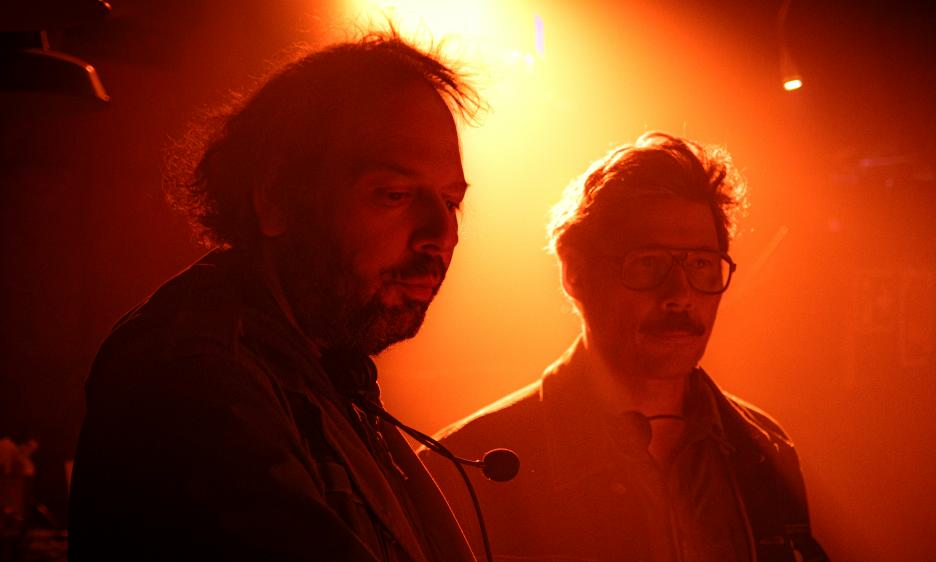
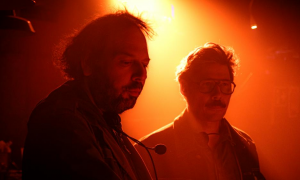
Courtesy Jules Naudin
Our idea was quite simple, almost a heist, or a Trojan horse: Miles Davis is THE star of jazz. Everyone knows his name, even if they do not necessarily know his music. We wanted to draw on this immense notoriety to introduce, almost by surprise, through serendipity, today’s jazz musicians. So it is not so much about telling the story of Miles Davis as showing how alive his music still is, and how contemporary artists take it up and use it to invent something else.
—Samuel Thiebaut
Perhaps the real challenge of making a musical tribute is creating something that will outlive the anniversary that prompted it. A big name may get people through the door, but what makes them stay?
Amid the ocean of Miles Davis tributes in 2026, one project stood out for its vision and its potential to outlast the centennial festivities. Conceived by French documentary filmmakers and directors David Unger and Samuel Thiebaut for France Télévisions, Miles Davis, 100 ans d'avance brings together five performances and interviews with distinctive trumpeters from today's scene. Rather than simply going for the biggest names, Unger and Thiebaut chose musicians who are helping keep the music adventurous, alive, and fun, pushing it forward much as Miles himself did. Each was invited to reimagine a seminal Miles Davis album: Yazz Ahmed: "Bitches Brew", Avishai Cohen: "Jack Johnson", Hermon Mehari: "Kind of Blue", Emma-Jean Thackray: "Tutu" and Erik Truffaz with Antonio Lizana: "Sketches of Spain".
The results are not exercises in reverential note-copying. Each project brings Miles's music into conversation with a different contemporary musical sensibility, taking his restless spirit of reinvention as a cue rather than treating his recordings as untouchable relics.
At the links above, you can watch the performances, and read the interviews with the musicians conducted by David Unger and Samuel Thiebaut. But we wanted to get behind the scenes and find out how the two directors approached this ambitious undertaking, and how they balanced their own love of Miles Davis's music with the challenge of honoring not only his albums, but also the shape-shifting spirit that animated them. We had plenty of questions. They had plenty to say.
All About Jazz: Let's start from your own personal connection with the music of Miles Davis. How did you first discover his music, and what was it that struck you most powerfully about it?
David Unger: My father gave me Kind of Blue when I was nine or ten years old. We sometimes listened to jazz at home, very old things—Art Tatum, Benny Goodman, Al Jolson—but nothing like that. It was the coolest sound that had ever entered my ears. It was also the discovery that a sound could have a color.
Later, I discovered the rest of his discography, which became part of the soundtrack of my life. From the first bebop records to the last hip-hop album, which we listened to a lot with our high school friends when it came out!
I realize today that having gone through the 1980s and 1990s with the records Miles was releasing at the time was a blessing. I also remember some of his television appearances, which made a great impression on me. For me, he was the adult counterpart of Michael Jackson! But he came from another world, older, deeper, more authentic, less show-business.
Samuel Thiebaut: I discovered In a Silent Way in the early '90s. I had never heard anything like it. The way the musical forms appear, the dilation of time, the hallucinating textures—the album had a psychotropic effect on me. Like taking drugs without taking any substances, just with your ears. I discovered through Miles Davis that music had this immense power.
AAJ: When and how did the idea for this tribute project first come about?
DU: Television people are like children: they love anniversaries! For Samuel and me, who regularly film jazz artists and love doing it, we had to take advantage of the centenary of Miles' birth. The project came to us quite naturally: five artists, five albums revisited, to show and hear the diversity of Miles Davis' discography. Then we discussed the programming with France Télévisions. They love Emma-Jean Thackray, for example, whom I didn't know. After listening to her musical universe, entrusting her with Tutu seemed like an excellent idea.
AAJ: Let's now turn to the project itself, and to your choice of musicians to be invited, and albums to be revisited. The project is built around albums. Why was the album format important to you, and what does it reveal about Miles' artistic legacy?
DU: There are quite distinct periods in Miles' career, as with Picasso or Bowie! We wanted to emphasize this aspect. And the album format appears to have lost its primacy, even though it was at the source of every form of popular music from the 1960s through the 2010s. Reminding people that an album is a sound, a sound color, a cover, a story that develops over a relatively long period of time seemed essential to us when approaching Miles.
Imagine that in 1970, Miles records Bitches Brew, an album of deep melodic complexity, and the following year he records Jack Johnson, a record whose blues power electrifies you like a rock concert. That is astonishing. Two rooms, two atmospheres, even though the periods are more or less the same! In retrospect, it is also this diversity that makes Miles so rich. He could change his sound, change his skin, change the color of his instrument or that of his arrangements, and yet it always sounded integral and authentic. He sacrificed nothing to fashion; in fact, he was often ahead of it, equally attentive to the world around him and to the beat of his own heart!
AAJ: If you could have added three more Miles Davis albums to be revisited in this project, which ones would you have chosen, and why? And who would you have invited to reimagine them?
ST: I would have invited Ibrahim Maalouf to reimagine Ascenseur pour l'échafaud; Airelle Besson for In a Silent Way and Ambrose Akinmusire for Miles Smiles.
DU: I would have loved to film reinterpretations of Ascenseur pour l'échafaud, Live at Montreux, and Doo-Bop.
Ascenseur pour l'échafaud, because it is a unique soundtrack in the history of cinema and jazz, along with Charles Mingus' soundtrack for John Cassavetes' Shadows. And I would have loved to offer it to Arve Henriksen, whose melodies always emerge from unidentifiable atmospheres! If his ambiences are clearly more influenced by Scandinavian glaciers than by nocturnal Montparnasse, I am certain that he would have magically transcended Miles' improvisation.
Live at Montreux is an album I listened to a lot. Miles is accompanied there by a big band conducted by Quincy Jones; it is absolute class. I would have loved to entrust such an adventure to Dave Douglas, who would undoubtedly have broken apart the melodies and arrangements with extraordinary experimental jubilation, infusing them with a particular blues and gentleness that belongs only to him.
As for Doo-Bop, I would have had Antoine Berjeaut—a close friend and an unclassifiable French trumpeter—work with the great voices of contemporary hip-hop or slam. Female voices, above all! Aja Monet, the American poet, would have been fantastic for this. She would have preserved the melodies from the original album but rewritten the lyrics.
AAJ: Miles Davis spent his entire career avoiding repetition. How did you design a project that celebrates his legacy without turning it into a museum piece?
DU: Improvisation is at the very heart of jazz practice. Inviting five different artists to take five extremely different albums and reinterpret them according to their own sensibilities meant that we were hardly at risk of repetition or turning the project into a museum piece.
ST: We deliberately sought to avoid imitation. Miles would have hated that! We also imagined this collection for Miles Davis' ears. If he is listening somewhere, we wanted him to be surprised, touched, moved by what his grandchildren are doing with his work. We asked the artists to be as free as possible with this repertoire, to make it their own and take it somewhere else, somewhere unexpected.
AAJ: The project asks five emerging trumpeters to reinterpret five iconic Miles Davis albums. How did you choose the artists, and what qualities were you looking for beyond technical excellence on the instrument?
DU: The selection was made in partnership with France Télévisions, and according to our strongest desires. Avishai Cohen is an exceptional trumpeter—and his group Big Vicious has such energy that we wanted to entrust them with an album: the rock-oriented and nervous character of Jack Johnson suited them perfectly! Avishai was more inclined toward In a Silent Way, but after some consideration, he accepted our proposal. The power of their sound, the joy that comes through it, the two drummers, the electric guitar solos, the very present bass, the bursts of soul from the trumpet... I think we made the right choice!
The fact that they are Israeli also seemed important to us: the boycotting of artists is a phenomenon that is spreading more and more, and which seems all the more unacceptable to me when it affects musicians who never stop expressing their disagreement with their current government. It was not a matter of turning this into a political platform, but it became, in itself, a political gesture. And Avishai's position on these questions is very clear.
As for Erik Truffaz and Antonio Lizana, their project around Sketches Of Spain predated ours, so why pass it up?! Especially since it is rich and intelligent: reaffirming the Spanish identity of a Spanish musical work Americanized by Miles, adding flamenco guitar, dance and voice... It was an opportunity for us!
Emma-Jean Thackray was a request from France Télévisions, and the way she took on Tutu, adding a touch of British drum'n'bass and dancefloor music, was quite crazy.
Yazz Ahmed, with her oriental and electronic sounds, seemed like a good idea for taking on Bitches Brew. And Hermon Mehari is such an elegant musician that he seemed to us the best possible choice for Kind of Blue—a difficult exercise given that the album has almost become a cliché. But what a pleasure to hear it live with such a classy and inspired quintet!
AAJ: When you approached the musicians you invited, did you ask them to stay close to the original albums, or did you actively encourage them to challenge, subvert, or even contradict Miles' vision?
DU: They had total freedom—although we insisted that these were not really covers, but reinterpretations. We suggested that they revisit the albums through the lens of their own musical universes. As for subverting or contradicting Miles, you need a lot of nerve for that! The idea was more the following: if Miles had recorded these albums today, how do you think he would have approached them? It was mainly about bringing Miles together with contemporary sensibilities.
AAJ: Through your interviews, conversations, and artistic interactions with the five invited trumpeters, did any common thread emerge regarding what Miles Davis means to them and to their generation of musicians?
DU: He is clearly an icon, yes. A master. A free, incorruptible spirit. A form of integrity from which all of them draw inspiration. A source of inspiration... and great humility.
AAJ: Moving from the conceptualization phase to the execution and outreach phase, I have a few more questions. In particular, as directors, how did you balance the educational aspect of the series with the artistic one? Were you creating something primarily for dedicated Miles devotees, or for listeners who may know only a handful of his recordings?
ST: Our idea was quite simple, almost a heist, or a Trojan horse: Miles Davis is THE star of jazz. Everyone knows his name, even if they do not necessarily know his music. We wanted to draw on this immense notoriety to introduce, almost by surprise, through serendipity, today's jazz musicians.
So it is not so much about telling the story of Miles Davis as showing how alive his music still is, and how contemporary artists take it up and use it to invent something else. The educational dimension is almost an excuse. You enter the series because of Miles Davis, and I hope you come out of it wanting to listen to a whole new generation of musicians.
Perhaps that is the most beautiful tribute we could pay him: to use his extraordinary legacy to introduce people to the music being invented today.
DU: I don't think there is an educational dimension to the series... We limited the editing of interviews within the films in order to let the musicians express themselves primarily through music!
At teh same time, we dreamed of creating a setting, a decor that would evoke the universes of Miles' records each time. Hence the boxing ring—and the extras wearing boxing gloves—for Jack Johnson, which is a tribute to a great boxer! Hence the 1980s Brooklyn nightclub feel, with neon lights on the walls, for Tutu; the dark psychedelia of Bitches Brew, with masks sculpted in Côte d'Ivoire; and the enormous fabric onto which we printed the iconic cover of Sketches of Spain, reproducing the colors of the Spanish flag, with the silhouette of Miles playing opposite a bull.
For Kind of Blue, we wanted to recreate the club atmosphere of the late 1950s, with a blue atmosphere, naturally! But a blue whose shades and nuances evolved... The work with cinematographer Benoît Feller was essential to this original scenography.
As for the audience, our series is naturally aimed at everyone!
AAJ: Jazz is often considered an art form that does not naturally lend itself to mass audiences. What creative and production challenges did you face in turning this idea into a top-notch national television production?
DU: I don't think our series is a top-level national television program!
First of all, it is only broadcast on the Internet—as well as on a cable channel. It was not intended to air just after the evening news! But we are happy that France Télévisions is interested in jazz as a current artistic genre, and not as something museum-like or belonging to the past. We are very lucky to have high-quality interlocutors within the network! It reminds us how essential public broadcasting is to French vitality.
I doubt a private channel would have committed to such a project... Jazz certainly does not have as large an audience as hip-hop or R&B today, but it is clearly at the origin of them! Without jazz, we would never have had Beyoncé or Jay-Z.
As for the creative challenges, I have just listed them—sets, lighting—and I admit that I am delighted that France Télévisions gave us all the means to realize them. Creating five different atmospheres in the same place for five Miles covers was an exceptional gift for enthusiasts like us!
AAJ: Let's close by returning to your own personal experience. During the making of the series, was there a particular performance, rehearsal, or conversation that continues to resonate with you and that you find yourself returning to?
DU: The performance by Avishai Cohen and his group Big Vicious is the one that made the greatest impression on me. I wasn't expecting such electric detonations. It is one of the best concerts I have ever had the opportunity to film.
Hermon Mehari's joy, both on stage and in the interview, is also a wonderful memory. Hermon was so happy to be there; it was really a pleasure!
As for the interview with Emma-Jean Thackray, yes, it made an impression on me because she gave me the keys to her interpretation: she comes from a House, very Garage-oriented culture. But she began by playing trumpet in English brass bands, which have enormous importance in British culture. Anyone who listens to the brass instruments in Beatles songs—or remembers that brilliant 1990s film Brassed Off—knows this.
In short, meeting and listening to all these artists was an incredibly enriching experience.
ST: Every performance deeply impressed me. I was worried about how the musicians would react before contacting them: would they dare to take on the master? Would they be paralyzed by the comparison? Measuring yourself against Miles Davis can be very inhibiting.
Their responses quickly dispelled my fears. They threw themselves into the project with great freshness and energy, without inhibition, committing their entire personalities to it. Miles Davis is one of those beings whose presence elevates us. I felt that elevation in all the artists who accepted the game we proposed to them.
Perhaps one event continues to resonate with me: Avishai Cohen, who came from Tel Aviv for his performance. Over there, there is no more music. Only the sound of sirens and bombs. He was so eager to play that he did not want to stop. The music continued even after we had stopped the cameras.
And he told us something that stayed with me: the disappearance of empathy from the polarized public sphere. At a time of extreme brutality, when we need to understand one another and listen to one another, empathy is considered a weakness. That is one possible definition of hell.
AAJ: After spending so much time immersed in Miles Davis' catalog, which album do each of you find yourselves returning to most often? Has that choice changed as a result of this project?
DU: I find myself returning most often to Jack Johnson, which I love, but the project also allowed me to discover others, such as In a Silent Way, which I knew less well.
ST: I listened to everything again, and I will continue to do so. You never bathe in the same river twice!
AAJ: More broadly, has your appreciation and understanding of the Miles Davis universe changed through working on this project? If so, in what ways?
DU: Changed, not really. But it was an opportunity to dive back into his discography intensely, and that was a real gift!
We also realized, from talking to people around us, that Miles Davis' aura was unfortunately beginning to fade. He was a huge star throughout his life—and personally, I grew up with an image of him that was both highly mediated and historical. He was the ultimate in cool, the one who had almost invented the word! His concerts were packed, his television appearances were always events. His look, his clothes, his walk, his phrasing, his hoarse voice—in short, he was above the stars of the 1980s because he had preceded them by a very long way, and because he had played with the greatest: Charlie Parker, Thelonious Monk, John Coltrane, Dizzy, Mingus, etc. Not to mention the younger generation with whom he collaborated, from Herbie Hancock to Marcus Miller, John McLaughlin, Chick Corea and Joe Zawinul.
Today, that aspect seems to have disappeared from people's memories... He no longer has the same influence on younger generations as Prince, for example, with whom he had a mutual admiration. They even played together a little, on stage and in the studio.
The gradual amnesia concerning Miles' importance, his discourse in the media—his rejection of the word "jazz," for example, which assigned Black musicians to a single identity and froze them within it—and above all, the importance his music had at the time... The fact that he can be forgotten today is something that saddens me. Let's hope our series helps revive those memories!
AAJ: Now that this project is finished, do you see more clearly why, one hundred years after his birth, Miles remains such a fundamental and emblematic figure in the world of jazz?
DU: Miles hated the word "jazz," as did many of his contemporaries: Nina Simone and Rahsaan Roland Kirk preferred to speak of "Black Classical Music." Miles thought it was a catch-all word that allowed white critics to avoid saying just how much Black American musicians had transformed music and taken it into unexplored spheres. He saw it as a form of discrimination.
I think he was a precursor in all kinds of areas. Look at the 1960s: pop music often believed it was inventing the very concept of the album, but when you look at a Miles record from those years, the ones produced by Columbia, you understand that he was wildly ahead: Kind of Blue is from 1959! Quiet Nights is from 1963! You already have there all the elements that foreshadow the revolution of pop records: an original-looking cover, a sound color, the care given to arrangements, a spirituality that emerges, a story that opens mental doors for listeners...
At the same time, the Beatles had not even recorded Please Please Me! The same goes for the 1970s: he brought the cut-up technique, a literary process, into music before anyone else! He was very far ahead of his time.
The same goes for Black psychedelia: he almost responded to the hippies with a highly advanced form of LSD's influence on music—although I don't think he ever took any himself. It is mental, psychic music that caresses your hypothalamus like no other!
There is a Miles mystery that will remain, that's for sure! He created bridges between decades that seem very far apart to us—the 1940s and the 1990s!—and evolved his own sound so radically. As far as I'm concerned, it is an unprecedented vertigo in the history of music.
AAJ: Finally and above all: did this project inspire you to undertake another one?
ST: We wanted to do the same thing with John Coltrane, with a slightly different approach. We looked for the reasons why there was a before and an after Coltrane. We identified four doors that he opened in the history of jazz, and that musicians now walk through every day: Language: his revolutionary harmonic grammar, Giant Steps and what followed; trance: the modal playing and long forms, My Favorite Things, Impressions; engagement: the political voice of the music, "Alabama" and its legacy; the sacred: A Love Supreme and spiritual jazz.
The idea was to invite artists whose work clearly follows these paths. But unfortunately, I was not able to finance this project.
There are many centennials coming up in the years ahead. By 2030, the following giants will have reached 100: Stan Getz, Gerry Mulligan, Etta Jones, Cannonball Adderley, Horace Silver, Fats Domino, Chet Baker, Bill Evans, Helen Merrill, Abbey Lincoln, Sonny Rollins, Clifford Brown. I hope to be able to celebrate them as we did Miles Davis—but first I have to convince broadcasters to come along with me.
DU: Indeed, we are thinking with Oléo films about other projects connected to centennials, notably Stan Getz! A very different musician, but no less precious.
Otherwise, just before this project, I finished directing a documentary film entitled Une Histoire de la Musique d'Ascenseur, available on ARTE, also produced by Samuel Thiebaut. After exploring Muzak in all its forms, returning to music as authentic as Miles' did me a world of good!
My next project revolves around John and Alan Lomax, the ethnomusicologists who were the first, in the 1930s, to record the Blues voices of the southern United States—in prisons, on large farms, in the most unlikely bars in cities where discrimination was still rampant. Let's hope this project comes to fruition... !
 FOLLOW Ludovico Granvassu
and get notified whenever a new article published.
I'm the Editor-in-Chief of All About Jazz Italia, host of Mondo Jazz on Radio Free Brooklyn and was once visited by Frank Zappa's ghost.... he was funny too.
About Miles Davis

Tags
PREVIOUS / NEXT

Become a Sustaining Member

Since 1995, All About Jazz has championed jazz as an art form and supported the musicians who create it. Over three decades, it has grown into one of the world's leading jazz resources, serving hundreds of thousands of readers, musicians, presenters and industry professionals each month.
Help Build the Future of All About Jazz
Your support helps us continue building All About Jazz for the next generation—expanding our editorial coverage, preserving jazz history, developing new community features and creating better ways to discover the music and the people behind it.
Become a sustaining member for as little as $20 per year and you'll immediately enjoy an ad-free experience along with access to subscriber features and future articles for a full year.
Together, we're not simply sustaining All About Jazz—we're building its future. Thank you for being part of the journey.