Home » Jazz Articles » Interview » Hermon Mehari on "Kind of Blue"
Hermon Mehari on "Kind of Blue"

Courtesy Jules Naudin
Few jazz albums carry the weight of Kind of Blue (Columbia, 1959). Revered, endlessly analyzed and almost impossible to escape, it can seem untouchable. Yet precisely because it has become such a monument, it also raises an intriguing question: how can a contemporary musician engage with it without simply paying tribute?
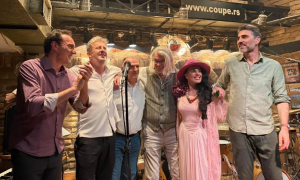
Trumpeter Hermon Mehari and a quintet featuring Francesco Bigoni (saxophone), Tony Tixier (piano), Billy Mohler (bass) and Jonathan Pinson (drums) approached the challenge by looking beyond the mythology and back to the qualities that made the album revolutionary in the first place. In this conversation Mehari reflects on the Miles Davis he first fell in love with, the elusive perfection of the first great quintet, and why Kind of Blue still invites reinterpretation rather than imitation.
All About Jazz: How did you approach the reinterpretation of Kind of Blue?
Hermon Mehari: I tried to capture the spirit of the album and the spirit of the music. I didn't want to change it so much that it lost its identity. So I found little ways here and there to do things differently—taking parts that might originally have been played by the piano and putting them in the horn parts, changing tempos, or changing the feel, as I did for instance with "All Blues."
It was a challenge because I think it could easily have gone in a direction that felt cheesy, did not work, or tried too hard. Part of the beauty of Kind of Blue is its simplicity. There's an almost minimalist aspect to that music.
I wanted to find a balance between staying true to the spirit of the original while also creating something different, and I feel I achieved that balance.
AAJ: What's the spirit of Kind of Blue?
HM: For me, Kind of Blue, perhaps more than any other record I've heard, has an unmistakable mood. Besides the nostalgia I feel for it, it creates a very particular atmosphere.
From the first notes, it transports you somewhere. Even the title is perfect—it does feel kind of blue. There's an intensity to the music, but at the same time it feels calm and smooth.
AAJ: How did you choose the three songs you decided to revisit?
HM: I chose "So What" because, for me, it is the most iconic song on the album. It's the tune everyone knows, but it was also the first one I heard. It is definitely my favorite. I love how the bass presents the melody, a beautiful melody. It is also an introduction to the whole idea of modal jazz, where the harmonies are different from much of the music that was being played at the time, especially in 1959.
"Blue in Green" was an obvious choice because it is the ballad of the album, and it is such a beautiful composition. Bill Evans' chords are amazing. Even his introduction is all about atmosphere. It really transports you somewhere. I know people who aren't jazz musicians at all—people who don't really listen to jazz—who hear just that introduction and are immediately transported. I feel the same way about it.
The last choice was the most difficult because I love the entire album. I eventually decided on "All Blues" because I felt I could do something a little different with it. If I had chosen "Freddie Freeloader," it would have been harder to create an arrangement that felt distinct while still balancing the rest of the set. With "All Blues," I felt there was room to do something interesting.
AAJ: Is it frightening to play such an iconic album?
HM: No, it's not frightening to play this album. These are songs I've been playing for a long time. They're part of the repertoire many musicians learn during their formative years. What is interesting is that when you're learning this music as a younger musician, you don't necessarily grasp its depth. Now, having played for many years and matured as a musician, I find this music incredibly liberating. The whole band felt the same way. And that is beautiful because it allows you to express yourself in your own voice. We all felt a sense of freedom playing it. We literally walked off stage saying, "Wow, that felt so good." It felt wonderful to play this music in this way.
So we were actually very far from being afraid of it. We have enjoyed the opportunity to play it, because very often we are busy playing other music. As important as Kind of Blue is to us, we don't often get the chance to perform it, especially in an environment like this.
AAJ: Maybe that's the only way it can continue to sound fresh.
HM: Exactly. People might play these tunes at jam sessions, but it is different to place them in a context where you can really focus on them. We can pay attention to all the details, listen carefully to everyone's role, and figure out how we want these songs to sound. For me, that's the opportunity. Having the chance to approach this music in that way is fantastic.
 FOLLOW David Unger and Samuel Thiebaut
and get notified whenever a new article published.
David Unger and Samuel Thibeault are French documentary filmmakers, directors, and television producers.
PREVIOUS / NEXT

About Hermon Mehari

Tags
Become a Sustaining Member

Since 1995, All About Jazz has championed jazz as an art form and supported the musicians who create it. Over three decades, it has grown into one of the world's leading jazz resources, serving hundreds of thousands of readers, musicians, presenters and industry professionals each month.
Help Build the Future of All About Jazz
Your support helps us continue building All About Jazz for the next generation—expanding our editorial coverage, preserving jazz history, developing new community features and creating better ways to discover the music and the people behind it.
Become a sustaining member for as little as $20 per year and you'll immediately enjoy an ad-free experience along with access to subscriber features and future articles for a full year.
Together, we're not simply sustaining All About Jazz—we're building its future. Thank you for being part of the journey.