Home » Jazz Articles » Interview » Emma-Jean Thackray on "Tutu"
Emma-Jean Thackray on "Tutu"

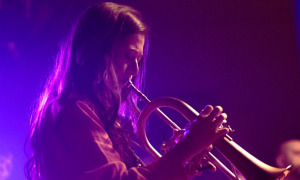
Courtesy Jules Naudin
Often regarded as one of Miles Davis' most unmistakably '80s albums, Tutu (Warner Bros., 1986) is inseparable from its era-defining production. Strip away the gated drums and digital sheen, however, and another record emerges: one built on remarkably strong compositions.
That was the starting point for Emma-Jean Thackray and her band featuring Lyle Barton (keyboards), Matthew Gedrych (bass) and Dougal Taylor (drums), who rebuilt the album through the lens of British electronic dance music while remaining faithful to Miles' restless artistic philosophy. In this conversation Thackray reflects on discovering Sketches of Spain (Columbia, 1960) by accident, finding permission in Miles' example to ignore labels, and why the only meaningful tribute to his genius is to follow his example and always keep moving forward.
All About Jazz: What was the idea behind revisiting Tutu?
Emma-Jean Thackray: If you're going to revisit or reimagine something, you need to say something new. If you play it exactly like the record, people can just listen to the record. So I wanted to put my own stamp on it.
The way I work is to flip things around completely: take the melody and harmony as the skeleton, then dress them in an entirely different way. For this project, I drew on different forms of dance music—house, techno, drum-and-bass—bringing a distinctly British dance-music perspective to American music in a French venue.
AAJ: For you, Miles Davis is American music?
EJT: Absolutely. Miles was American, and jazz is an American art form. I don't think jazz could have become what it is anywhere else. The specific history of the United States—the transatlantic slave trade and the meeting of different cultures and communities—created the conditions for jazz to emerge.
So yes, I see it as American music. As a Brit, though, I can bring my own perspective to it.
AAJ: What was your first musical encounter with Miles Davis?
EJT: I discovered Miles completely by accident. I was playing a lot of brass band music in Yorkshire, where I'm from. In the brass-band repertoire, "Concierto de Aranjuez" is a standard solo for cornet and flugelhorn.
One day I illegally downloaded "Concierto de Aranjuez" and accidentally ended up with the Miles Davis and Gil Evans version from Sketches of Spain. It completely blew my mind. I'd never heard anything like it. It wasn't classical, it wasn't pop—it was something else entirely. I would not even necessarily call it jazz; it felt like its own world. That accidental discovery set me on the path that eventually led me to what I do today and, in many ways, shaped the artist I have become.
Beyond the music itself, Miles also changed the way I thought about being an artist. He wasn't just playing trumpet: he was composing, producing in real time, leading the band and shaping the entire musical picture. Listening to him made me realize that is how my own brain works. I'm inside the music—playing, singing, performing—but at the same time I'm hearing everything from above, taking in the whole landscape. I recognize that quality in Miles, and it is one of the reasons I feel such a strong connection to his music.
AAJ: How did you approach such an iconic Miles Davis album as Tutu, so closely tied to a specific period and sound?
EJT: Tutu has a very distinctive sound because of its production—the gated snare, for example. It is unmistakably an '80s record. But if you strip away the production and look at the lead sheets, the harmony and the melodies, you discover just how great those compositions are.
Miles and Marcus Miller created something beautiful at the core, and those compositions can live in many different forms. So I stripped everything back to the lead sheets and rebuilt it from there. I wasn't interested in recreating the original sound. If you're going to reimagine something, it should actually sound different. Otherwise, what is the point?
AAJ: There is a moment in your interpretation where we hear Miles Davis' voice. What is he saying, and why did you choose that particular excerpt?
EJT: Between "Tomaas" and "Portia" I use a sample from an interview Miles gave, I believe, at the Molde Jazz Festival in Norway. I edited it slightly and rearranged some phrases to emphasize what I wanted to say.
Essentially, Miles says that if you're playing exactly like people did in the past, he is not interested. He wanted musicians looking forward, experimenting with synthesizers, new sounds and new ideas. He also says that "jazz" is just a label somebody invented—it doesn't really mean anything. You can do whatever you want. That is something I relate to deeply. Listening to Miles gives me permission to be myself as an artist. I don't feel constrained by his legacy; I feel encouraged by it.
And honestly, I think Miles would approve.
AAJ: Do you think people should be dancing to Miles Davis today in clubs?
EJT: Absolutely. I think people should be dancing to a lot of jazz.
At least in the UK, it feels as though jazz has returned to the dance floor. That is where it began. It started as dance music, then moved away from that, and now it is coming full circle.
AAJ: How did you work with your musicians on this reinterpretation? Why did you choose them, and how did the music come together?
EJT: The musicians you heard today are my regular band. They're incredibly versatile. They can improvise, navigate complex harmony, play amazing solos, then move effortlessly into completely different musical worlds. One project might be rock-oriented, another techno-inspired, and they're equally comfortable in both.
They listen widely, just as I do. They're like brothers to me. I can throw almost anything at them—they might complain a little—but they'll play it, and they'll nail it. I came into rehearsal with lead sheets, an overall concept and some electronic percussion loops I'd created. I explained the direction I wanted to take, and because we know each other so well, everything came together very quickly.
AAJ: How did you feel after that concert?
EJT: It was fun. The crowd was wonderful, and that always makes it more enjoyable.
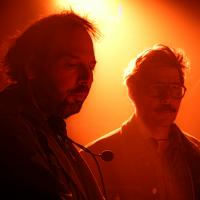 FOLLOW David Unger and Samuel Thiebaut
and get notified whenever a new article published.
David Unger and Samuel Thibeault are French documentary filmmakers, directors, and television producers.
PREVIOUS / NEXT


About Emma-Jean Thackray

Tags
Become a Sustaining Member

Since 1995, All About Jazz has championed jazz as an art form and supported the musicians who create it. Over three decades, it has grown into one of the world's leading jazz resources, serving hundreds of thousands of readers, musicians, presenters and industry professionals each month.
Help Build the Future of All About Jazz
Your support helps us continue building All About Jazz for the next generation—expanding our editorial coverage, preserving jazz history, developing new community features and creating better ways to discover the music and the people behind it.
Become a sustaining member for as little as $20 per year and you'll immediately enjoy an ad-free experience along with access to subscriber features and future articles for a full year.
Together, we're not simply sustaining All About Jazz—we're building its future. Thank you for being part of the journey.