Home » Jazz Articles » Book Review » The Midnight Special: The Secret Prison History of American Music
The Midnight Special: The Secret Prison History of American Music
Art refutes the claim that people in prisons are less than human.
—Incarcerated Musicambia student
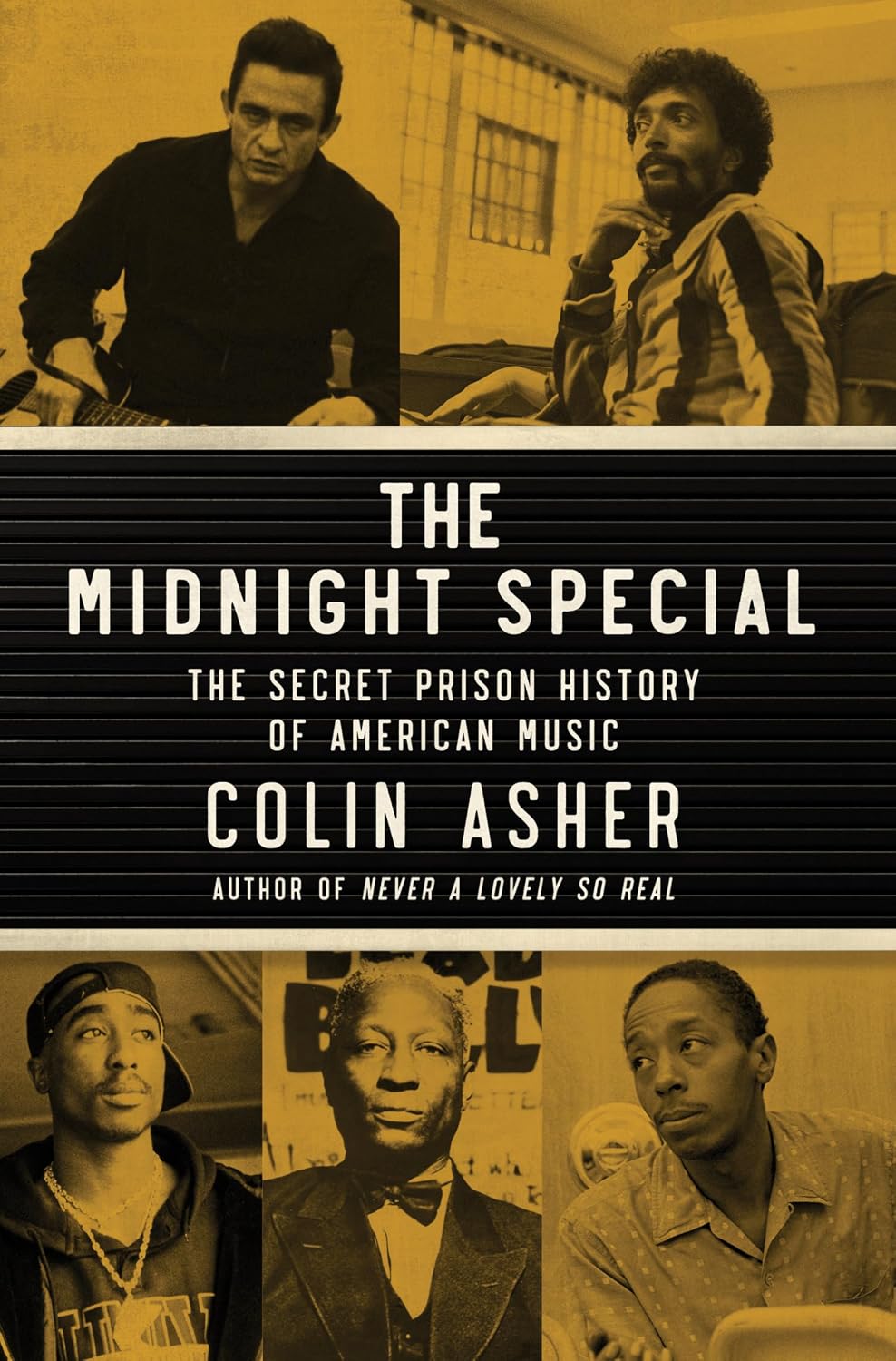 The Midnight Special: The Secret Prison History of American Music
Colin Asher
308 Pages
ISBN: #978-1-324-05139-8
W. W. Norton
2026
Colin Asher spent the pandemic teaching remotely from his living room while his public-defender partner worked on getting her clients released from "atrocious" conditions on Rikers Island in New York City. He kept a few jazz albums on repeat at home "in an effort to keep our household grounded." Elmo Hope's Sounds from Rikers Island (Audio Fidelity, 1963) was among them, inspiring Asher's excellent 2026 study, The Midnight Special: The Secret Prison History of American Music. What makes it a secret? Some would say it is the silence that surrounds the historical record.
The author found the notion of writing a history of prison music in America to be "quixotic." Fair enough. His solution was to limit himself to five albums and the lives of the musicians who made them, looking at ways in which, as he put it, "policing and incarceration have shaped our musical culture—affecting our perception of an artist's work, choosing who is able to perform, record and tour, and influencing the development of musical styles."
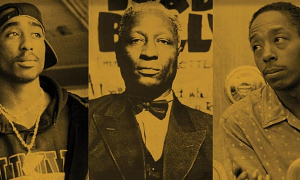
The first chapter focuses on Huddie Ledbetter's "The Midnight Special" and other Southern Prison Songs (Victor Records, 1940/41). Ledbetter, who is billed as Lead Belly on the album, performs with the Golden Gate Quartet, an a capella group founded in 1934 that continues to perform as of this writing, which was engaged by the folklorist Alan Lomax, who produced the date. The recording appears late in Ledbetter's tale, well after had made a name for himself ("Lead Belly") working for John Lomax, Alan's less-sympathetic father, who amassed a large collection of "folk" songs and artifacts that the author and poet Richard Wright referred to as one of the greatest American "cultural swindles."
But in the book's introduction, before we learn more about Ledbetter, Asher has us meet Calvin Leavy and listen to his single, "Cummins Prison Farm" (Blue Fox, 1970—YouTube below). Leavy and Cummins weave their way through the narrative, showing up in the chapter on Ledbetter and elsewhere in the book.
Rikers Island figures prominently as well. Ledbetter had been there, and of course Hope's Sounds from Rikers Island was recorded there. In fact, lots of well-known jazz musicians have been incarcerated there, including Sonny Rollins, with whom Hope wrote a tune there. Their "Carvin' the Rock" became, in jazz parlance, a euphemism for doing time at Rikers. Asher devotes the second chapter to Sounds from Rikers Island, fleshing it out with tales of "cabaret cards" and other impediments faced, along with musical escapades and joyful experiences shared by other jazz artists we know and love.
Continuing chronologically, Johnny Cash at San Quentin (Columbia, 1969) occupies the third chapter. Like Leavy when he recorded "Cummins Prison Farm" and Ledbetter when he cut "The Midnight Special," Cash had no personal prison history when he recorded at San Quentin. Cash was building the persona of an "outlaw" while engaged as an entertainer at San Quentin. Leavy, meanwhile, was not singing about his own experiences, but those of his brother, who had served time at Cummins Farm. Leavy's producers had encouraged him to adopt a "dangerous" persona, asking that he dress in prison garb to lend more "authenticity" to his image, cachet intended to bring in more record sales.
John Lomax did the same thing with Ledbetter, and Death Row Records later enabled Tupac Shakur's release from jail, expecting him, in exchange, to intensify the "gangsta" persona he had adopted for Thug Life (Interscope/Out da Gutta/Atlantic, 1994), to align with Death Row's successful brand. Ironically, for Shakur "thug life" was an acronym for The Hate You Give Little Infants F**ks Everybody. As Asher relates, these (and other such) public images were put forth largely for economic reasons, but they affected the music and lives of the artists, often deeply and destructively.
A certain Glen Sherley became part of Cash's story when Cash 'discovered' him while performing at Folsom Prison, where Sherley was incarcerated. Cash recorded and released Sherley's "Greystone Chapel" on Johnny Cash at Folsom Prison (Columbia, 1968). "Inside the walls of prison my body may be, but my Lord has set my soul free," the lyric goes. The album was a hit, and Sherley caught another break when Eddy Arnold recorded his "Portrait of My Woman" on Arnold's Portrait of My Woman (RCA Victor, 1971). Asher details how and why, nonetheless, what began as a fairy tale success ended less than happily ever after.
Ike White, whose life and music Asher discusses in the fourth chapter, is another less-familiar name. White, like Sherley (and Ledbetter before him), gained fame while in prison. The touchstone in his tale is the album Changin' Times (LAX Records, 1976), recorded while White was serving time in Tehachapi Prison (California Correctional Institution), 50 miles southeast of Bakersfield, in the Tehachapi Mountains that separate California's San Joaquin Valley from the Mojave Desert. White's story is unique, but it has a Sisyphean feel; American dreams set to the ineluctable beat of targeted policing.
The final chapter of the book looks at Tupac Shakur's Me Against the World (Interscope/Out da Gutta/Atlantic, 1995), but the chapter begins with Shakur's mother, Afeni Shakur, who was not a lawyer, as she defends herself and the "Panther 21" in a New York courtroom in 1971, while very pregnant with Tupac. The defendants, members of the NY Black Panther Party, had been arrested in 1969, charged with with conspiring to "murder policemen and blow up four police stations, five department stores, railroad lines, the Queens Board of Education building, and the Bronx Botanical Gardens."
The trial was the longest and most expensive the state had seen. The roster of defendants had whittled down to 13, with 156 charges, 12 per defendant. Seemingly miraculously, after just over three hours, the jury came back with verdicts of "not guilty" for each and all. A month later, Afeni gave birth to Tupac. What a way to begin a life. It was, as we know, an extraordinary, if short one. Asher's analysis is penetrating and his prose engaging. He draws threads together and makes connections that illuminate the story of Shakur and his family, the larger tale of prison music, and the enormous story of the criminalization and mass incarceration of people of color and poor people in post-slavery America.
The book's epilogue closes with Asher's experiences at Sing Sing in Ossining, New York, under the auspices of Musicambia, a non-profit in partnership with Carnegie Hall Connections, founded in 2014, which brings music teachers into the prison every other week for several hours, from September through June. The program serves 30 students at a time in a curriculum that includes theory, composition, songwriting, improv, orchestration and applied lessons on various instruments. Students perform twice a year at the facility. Musicambia is not the first program of its kind, but is among a dwindling number. In 1961, for example, 197 facilities responding to a survey "reported using music in their facilities." Not so today.
Sadly, Asher reports, there is little evidence that music education leads to employment or keeps people out of jail once they leave, but as a former Musicambia student told him, "art refutes the claim that people in prisons are less than human." That humanity matters.
What can we do with a clearer understanding of the lives and music of Ledbetter, Hope, Cash, White, Shakur, and so many others? "We need an era of truth and justice, of truth and reconciliation," Bryan Stevenson, the civil rights lawyer and founder of the Montgomery, Alabama-based Equal Justice Initiative, insists. "If we don't usher in the kind of conversation that happened in South Africa and Rwanda and Germany, we're not going to achieve any of the progress that so many of us long to see." The Midnight Special: The Secret Prison History of American Music is essential reading for those who love jazz (and other forms of American music) and its creators, and who desire "to form a more perfect union, establish justice, insure domestic tranquility, provide for the common defence, promote the general welfare, and secure the blessings of liberty to ourselves and our posterity," as the US Constitution would have it. The book is well researched and beautifully written, a good ice-breaker for that long-overdue conversation.
 FOLLOW Katchie Cartwright
and get notified whenever a new article published.
Ethnomusicologist, singer-flutist, writer, radio host (KRTU San Antonio 91.7FM).
About Elmo Hope

Tags
PREVIOUS / NEXT
Become a Sustaining Member

Since 1995, All About Jazz has championed jazz as an art form and supported the musicians who create it. Over three decades, it has grown into one of the world's leading jazz resources, serving hundreds of thousands of readers, musicians, presenters and industry professionals each month.
Help Build the Future of All About Jazz
Your support helps us continue building All About Jazz for the next generation—expanding our editorial coverage, preserving jazz history, developing new community features and creating better ways to discover the music and the people behind it.
Become a sustaining member for as little as $20 per year and you'll immediately enjoy an ad-free experience along with access to subscriber features and future articles for a full year.
Together, we're not simply sustaining All About Jazz—we're building its future. Thank you for being part of the journey.