Home » Jazz Articles » Book Review » Music Sets You Free
Music Sets You Free
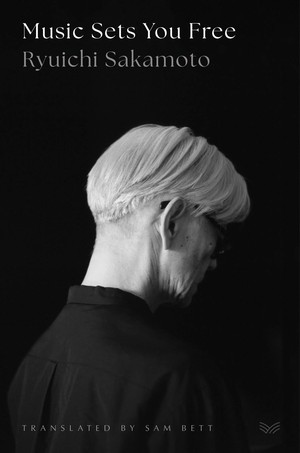 Music Sets You Free
Ryuichi Sakamoto
496 Pages
ISBN: 9780063416505
HarperVia
2026
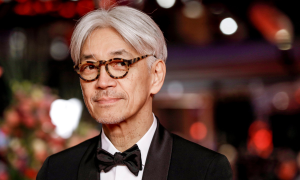
There is something fitting about the fact that Ryuichi Sakamoto was never particularly interested in the idea of becoming something. As a child, when asked what he wanted to be when he grew up, he wrote "nothing." He could not imagine the future self that adults seemed so certain was waiting for them somewhere ahead. Decades later, looking back on a life that encompassed Yellow Magic Orchestra, electronic music, experimental composition, film scores, pop, contemporary art, environmental activism and collaborations across continents, Sakamoto is still trying to answer the same question: how did I get here?
Music Sets You Free, originally published in Japanese in 2009 and now appearing in English together with How Many More Times Will I Watch the Full Moon Rise? is his attempt to find an answer. But this is not quite the conventional musician's autobiography. Sakamoto is suspicious of the neatness of autobiography itself. He admits that sorting memories into a single storyline does not come naturally to him.
That resistance is actually one of the book's strengths. There is little sense here of the carefully manufactured origin story that musicians sometimes construct after becoming famous—the childhood prodigy, the inevitable calling, the moments that supposedly foretold greatness. Sakamoto doesn't seem particularly interested in proving that he was destined to become Ryuichi Sakamoto. What makes the book fascinating is precisely that Sakamoto's career never followed a straight line. He wasn't simply a musician who became famous. He was a restless listener who kept moving—from Johann Sebastian Bach to The Beatles, from free jazz to electronics, from Yellow Magic Orchestra to cinema, from pop to contemporary art—and each new direction seemed to open another door rather than close one behind him.
Sakamoto repeatedly dismantles that mythology himself. He did not grow up dreaming of being a musician. He disliked practicing. He even abandoned piano and composition for basketball, partly because, as he cheerfully admits, he thought the basketball players had better chances with girls. It was only after walking away from music that he discovered how much he missed it. That anecdote is more revealing than any conventional statement about artistic vocation. Sakamoto's relationship with music was never particularly obedient.
His earliest musical revelation came almost accidentally. At kindergarten, he was asked to turn his experience of looking after a rabbit into a song. He wrote the simple "Rabbit's Song," and the experience of transforming an ordinary physical event into something abstract and communicable left an enormous impression on him. He would return to this idea throughout his life: once an experience becomes music, it is no longer merely personal. Something is lost, certainly, but something else is gained—the possibility of reaching somebody who lives somewhere else, at another time, in another culture. For Sakamoto, this is one of the fundamental powers of art. That idea quietly becomes the book's governing philosophy.
Sakamoto's education was gloriously promiscuous. Bach leads to the Beatles; the Beatles lead toward Debussy; The Rolling Stones lead him toward the avant-garde; John Cage, Nam June Paik, Fluxus and free jazz enter the picture. He describes listening almost as a form of investigation. When something fascinated him, he wanted to take it apart and understand why it worked. He heard harmonies in the Beatles that reminded him of Debussy before he even knew the theoretical vocabulary for what he was hearing. Later, he would approach electronic instruments, sampling, computers and new technologies with the same curiosity. This is perhaps the clearest explanation of Sakamoto's career. He was never really an electronic musician, a classical composer, a pop musician, a film composer or an experimental artist. He was interested in the space between those categories. His career makes considerably more sense when understood as a continuous act of crossing borders.
The Yellow Magic Orchestra years are therefore important, but Sakamoto does not treat YMO as the final destination of his story. The group's first album appeared in 1978, the same year as his solo debut, Thousand Knives (Nippon Columbia/Denon, 1978), and the chronology takes him from Tokyo into an increasingly international musical world. What emerges is less the story of a band that conquered the West than the story of an artist discovering that Japanese music, Western pop, contemporary composition and technology did not have to exist in separate rooms.
And then there are the movies.
Sakamoto's film career could easily have become a book in itself. Bernardo Bertolucci's The Last Emperor and The Sheltering Sky, Pedro Almodóvar's High Heels, Little Buddha, Brian De Palma's Femme Fatale and many other projects appear not simply as credits but as encounters with different cultures, directors and ways of thinking about sound. The timeline alone gives an indication of the breadth: by the early 1990s he was moving between albums, international film scores and major public commissions, while The Sheltering Sky brought him another Golden Globe.
What is especially attractive is that Sakamoto rarely talks about these achievements in the language of achievement. He is much more interested in the circumstances surrounding the work: the people, the places, the accidents, the technical problems, the things he learned and, just as importantly, the things that failed. That makes the second half of the book particularly valuable. Sakamoto's political and environmental consciousness was never simply an accessory to his music. After the 2011 earthquake and nuclear disaster in Japan, he established disaster-recovery initiatives and a project supporting the repair of musical instruments. He participated in anti-nuclear demonstrations, worked on projects connected with landmines and war, and continued to treat music as something that could exist in the public sphere rather than retreat into the supposedly neutral territory of art. His political engagement feels less like a celebrity's occasional intervention than a continuation of the curiosity and skepticism that had been present since his youth.
Then the book changes.
How Many More Times Will I Watch the Full Moon Rise? begins with cancer and mortality. Sakamoto had already encountered the words of Paul Bowles in The Sheltering Sky decades earlier, but after his diagnosis in 2014, the question acquired an entirely different weight. The full moon was no longer a poetic image belonging to somebody else's story. It became a question addressed directly to him.
The difference between the two books is striking. The first is expansive, restless and outward-looking. The second is quieter, more concentrated and haunted by absence. It moves through cancer, his mother, nature, travel, creation, failure and the possibility of passing something on to younger artists. Even the chapter titles—"Living with Cancer," "Requiem for Mother," "No Match for Nature," "The Taste of Failure," "New Vantages," "The Promise of New Talent," "Left for the Future"—suggest a different relationship to the world. And yet Sakamoto does not suddenly become solemn.
That is one of the most moving things about the book. Even while confronting mortality, he remains curious about sound, food, landscapes, technology, other people's work and the absurd details of everyday existence. There is no grand final confession in which the artist explains the meaning of his life. Instead, there is a continuing desire to make something—one more piece, one more collaboration, one more journey, one more experiment.
The circumstances under which the second book was created make that even more poignant. Sakamoto dictated the essays through a series of interviews conducted during 2022, while undergoing treatment. His illness had already required major surgery, and those close to him understood only gradually how serious his condition had become. After the surgery, he reportedly asked, "How many more times will I watch the full moon rise?" The question eventually became the title of the book. This is where Music Sets You Free stops being merely a document of a remarkable career. It becomes a book about attention. Sakamoto spent his life paying attention—to sounds other people ignored, to new technology, to the natural world, to political events, to cinema, to other musicians, to the possibilities contained within a single note. His career was built less on establishing a recognizable "Sakamoto sound" than on refusing to remain in one place long enough for that sound to become a prison.
There are imperfections here, and they are worth mentioning. The first memoir can sometimes feel too episodic, particularly when Sakamoto moves through decades of collaborations and projects. Readers looking for behind-the-scenes revelations about famous records or films may occasionally find themselves wanting more. He is also not interested in constructing dramatic conflict for its own sake. Some of the most important events in his life receive surprisingly little theatrical emphasis. But that restraint is consistent with the man portrayed in these pages. Sakamoto seems more interested in how things felt and sounded than in turning his life into mythology.
The second book, meanwhile, inevitably carries a different kind of emotional pressure. Knowing that these were among Sakamoto's final writings makes even casual observations resonate differently. But the book is strongest when it does not ask us to feel sorry for him. He remains an artist examining the world rather than a dying man delivering his final wisdom.
The result is a strange and beautiful portrait of an artist who spent his entire life resisting fixed identities. The child who once wrote "nothing" in response to the question of what he wanted to become eventually became almost everything music could allow him to be. Composer. Pianist. Pop musician. Electronic pioneer. Film composer. Producer. Activist. Sound artist. Collaborator. Teacher. Listener. But perhaps "artist" is still too restrictive.
What Sakamoto really became was a listener who learned how to turn listening into a life. Music Sets You Free is ultimately less about the man who created all those famous works than about the restless intelligence that made them possible. And the later book adds the final dimension: the recognition that listening itself is temporary. The moon will rise again, certainly. The question is how many times we will still be here to see it. That makes the book's title feel less like a declaration than a question. Music may set us free from memory, from geography, from language and even from time. But the musician remains subject to time. Sakamoto knew that better than most. He simply kept making music anyway.
 FOLLOW Nenad Georgievski
and get notified whenever a new article published.
For as long I can remember music has been a focal point in my life.
PREVIOUS / NEXT


About Ryuichi Sakamoto

Tags
Become a Sustaining Member

Since 1995, All About Jazz has championed jazz as an art form and supported the musicians who create it. Over three decades, it has grown into one of the world's leading jazz resources, serving hundreds of thousands of readers, musicians, presenters and industry professionals each month.
Help Build the Future of All About Jazz
Your support helps us continue building All About Jazz for the next generation—expanding our editorial coverage, preserving jazz history, developing new community features and creating better ways to discover the music and the people behind it.
Become a sustaining member for as little as $20 per year and you'll immediately enjoy an ad-free experience along with access to subscriber features and future articles for a full year.
Together, we're not simply sustaining All About Jazz—we're building its future. Thank you for being part of the journey.