Home » Jazz Articles » Profile » Percy France: Live from the West End
Percy France: Live from the West End
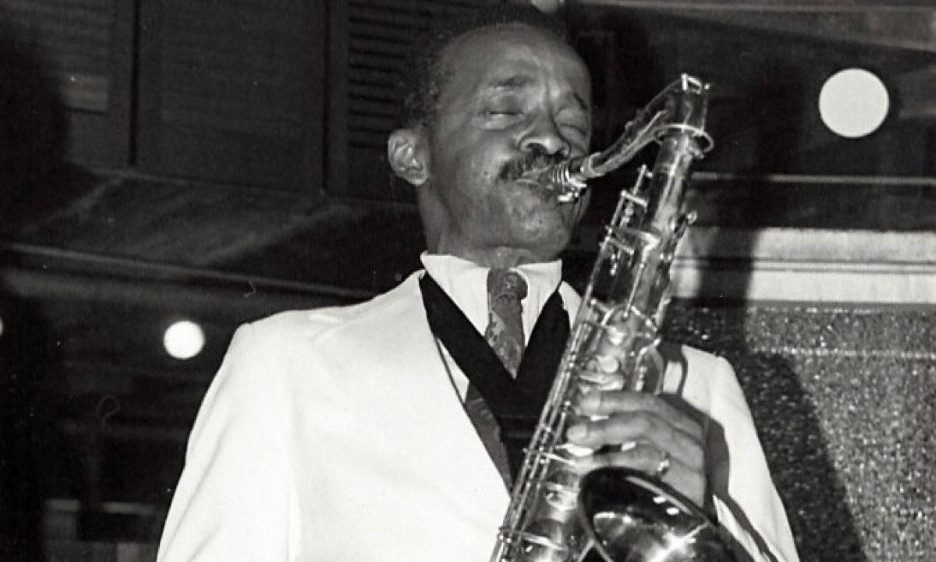
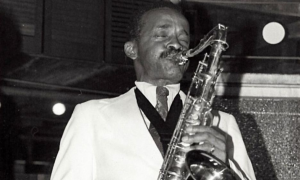
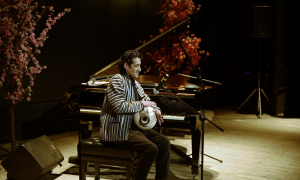
Courtesy Otto Flückiger
Percy was one of the tenor players that I had to compete with when I was making my reputation as a young saxophonist. He was probably the best player around at that time; I never could beat him. We were good friends, and I think of him as my brother.
—Sonny Rollins
That list of sidemen appearances, each booked, broadcast and recorded by Phil Schaap and accessible through Vanderbilt University's digitized Phil Schaap Jazz Collection, are indicative of how Percy France was actually much more than just a "grits 'n' gravy" organ—jazz saxophonist. His first major gig was with Bill Doggett, but the organist distinguished France's influences from other "honkers and screamers" when speaking to Phil Schaap during the Percy France Memorial broadcast on WKCR-FM: "You know, some of the guys at that time were doing a lot of honking. And I think that that was the difference in Percy's sound. And Percy being a young man, you would think that he would follow in that tradition. But he was following in the tradition of the more elite players."
On the same broadcast, drummer Max Roach told Schaap, "[Jazz is] really a performer's music and the great performers are the ones who make the history of the music and Percy was certainly one of those. You don't hear playing like that today, you just don't, you don't hear that. It came from that school that embodied people like Coleman Hawkins and Duke Ellington and Don Byas—some of the greatest musicians that this country has produced. And Percy was certainly one of those."
Otto Flückiger was eulogized by his fellow Swiss jazz researchers as "never [being] only interested in the 'big' names, but also in the unknown, obscure, unmentioned, those of only local fame." He visited New York City in the Spring of 1980 and took several of the photos included here of Percy France at the West End. Flückiger later wrote the only feature—length profile of the saxophonist to appear during his lifetime, for the Swiss publication Jazz (March 1983):
"He plays his instrument with a dark, earthy voice. The barely perceptible rhythmic shifts from the basic beat create a high degree of tension, which he builds imaginatively and leads to a crescendo. He swings like a demon, and when even the last chatterer in the audience falls silent, it is an unmistakable sign that his message is getting through!"
Percy France was born in New York City on August 15, 1928, to parents from the British West Indies. He told Schaap in a Musician Host interview on WKCR's Jazz Alternatives, that his mother, Martha, started him on piano lessons at a young age. But by the age of ten he had switched to clarinet because "it seemed as though playing piano, I always had my back to what was going on. I began to develop a craving to find out what was happening with the rest of the band, you see. It seemed like I had to sit so still, [but] I take on energy from being able to move and hearing the vibes in the room change."
Hearing Budd Johnson's tenor solo on Earl Hines recording of "Second Balcony Jump" (1943) inspired France to switch to tenor sax. He recalled to Phil Schaap that "In 1944, I even remember the date, September 11th 1944, I [had gone to] work, saved some money [but] I fell a little short, so I went to my Pop. You know, that's who you go to when you're in trouble, right? Or when you want to rap and you got something on your mind. I went to my Pop and I spoke to him about it and the money that I was short, he loaned it to me and I bought a tenor."
France described his influences to Schaap during a broadcast from the West End on July 6, 1981:
"There were a number of saxophone players I liked very much: Lester Young, Don Byas, Ben Webster. I liked Herschel Evans very much. And one of the great gentlemen from the old school, Chu Berry. I admire all the Texas tenor players. I know most musicians know what I mean when I say big bad tenor saxophone players from Texas [laughs]. But all in all, I think Charlie Parker would be the guy that I would say created the most and contributed the most to the era. Charlie Parker was my man."
Among France's classmates at Benjamin Franklin High School were pianist Walter Bishop, Jr. and another saxophonist the world would come to know as Sonny Rollins. In 2021, Rollins said in an email to the author, "Percy was one of the tenor players that I had to compete with when I was making my reputation as a young saxophonist. He was probably the best player around at that time; I never could beat him. We were good friends, and I think of him as my brother."
France made his first recording in very fast company in 1949. Backing up vocalist Betty Mays, he played tenor in a frontline that featured J.J. Johnson, Kai Winding, and Cecil Payne, all at least five years into their respective recording careers. But as he continued to gig in New York, New Jersey and Connecticut, he grew disenchanted with his development.
As he told Schaap:
"I saw that after the bebop era came in, more and more musicians were getting into the bebop picture. But now so many of them began to sound so much alike. I began to feel like there was something that I needed to do that would make my thing a little more complete. So, in 1950 I took nine months and tried to get a different conception going for myself and develop my tone to a fuller extent where I would be able to use it upstairs and downstairs and to have it flow.
I came out of my shedding and I said, Well, something has got to happen. I'm going to find that open door. And one night I went up to the [Club] Baby Grand and this is where Bill Doggett was doing a single. I went up and played a tune with him and someone stuck a $20 bill in the bell of my horn. They came up after we finished playing. I think I played 'Flying Home' and then we played some blues. And Doggett came out after the set and he told me he liked the way I sound. He liked me to consider if I wanted to go on the road. And I just happened to like the way he played and the way he talked. Two weeks later we were getting ready to pack our bags and this is how it happened. We started from scratch, we did one—nighters and we made records and we were accepted so very wonderfully that we continued with our effort. And I am very happy to say it was one of the most rewarding periods of my life."
Doggett credited France for "turning around" his group, for his tenor saxophone distinguished the band from other organ trio groups like that of Wild Bill Davis. Hits like "Early Bird" and "Percy Speaks" were recorded for King Records and the group enjoyed considerable success from 1952 through1956, with France playing tenor sax except for a few short periods.
In early 1956, a tune was percolating during the group's regular tours playing clubs and dances. According to France, he actually developed the trademark tenor sax sound of "Honky Tonk." But for reasons that were never fully resolved, when the song was recorded in June of 1956, France was neither in the studio, nor was he listed on the copyright registration of what would become one of the biggest instrumental hits of the decade (#1 R&B, #2 Pop). Tenor saxophonist Clifford Scott played France's part, and he went on to record over a dozen 45s for King Records and was leader on three albums for World Pacific and Pacific Jazz and sideman on two others, while France, now permanently replaced in the Doggett group, could only make "Honky Tonk" a staple of his live performances.
1959 started another peak period in France's early career, but also one with its own missed opportunity. Already mentioned are France's two sidemen appearances on Blue Note, 1959's Home Cookin' (Jimmy Smith), with France's solo helping to make Ma Rainey's "CC Rider" a jukebox hit, and 1962's Down to Earth (Freddie Roach). Yet even though Percy had a close relationship with unofficial A&R man Ike Quebec, Blue Note never chose to record France as a leader, choosing instead to give leader opportunities to superficially similar saxophonists like Fred Jackson and Don Wilkerson.
Starting in 1959 and continuing into 1960, France had a lengthy booking at Count Basie's, a popular club in Harlem, backing pianist/organist Sir Charles Thompson and leading his own All-Stars. A review in Jazz Notes (July 1959) of a performance called France ..." a slightly built master of the sax and a treat to hear." Another sideman appearance resulted: Sir Charles Thompson & The Swing Organ (1959) on Columbia. Thompson's career had started in the mid-1940s and included dates with many saxophonists often known by one name: Bird, Pres, Hawk, Dex. But thirty years after that summer spent on Count Basie's bandstand with Percy France, Thompson told musician/composer/historian Allen Lowe that France was "the best saxophonist" of all.
Unfortunately, the jazz market was changing, and after France's appearance on Roach's album, he disappeared from the jazz press and the recording studios. Fortunately, he chose to resume his performing career in the 1970s, perhaps inspired by the scene that Phil Schaap was creating at the West End and over the airwaves of WKCR.
As Schaap described it:
"He came back so strongly, so confidently in the 1970s. He decided, and this was a difficult time to try to do it, to become a full-time musician again. And he joined the scene at the West End, first sitting in and also filling in as a substitute, before eventually being hired by Sammy Price to join the Two Tenor Boogie, replacing Buddy Tate..And he built up a new following and started appearing at the West End as leader of his own groups, Honky Tonk Part 3, and later, Rhythm 'n' Jazz."
Organist/pianist Mike LeDonne played often with Percy France at a club in New Jersey called the Cornerstone, and credited France with helping him restore his organ chops with a weekly gig with Percy at Showman's in Harlem. He cast light on the derivation of France's Rhythm 'n' Jazz group: "He believed that soulful jazz that grooved hard could have just as much popular appeal as r&b if it were marketed in the same way."
These musical selections from the Phil Schaap Jazz Collection each feature pianist Bob Neloms. Neloms was introduced to Percy France by Allen Lowe at the West End, and they gigged together at other NYC clubs as well. He was both Motown's first house pianist, and Charles Mingus' last pianist in the 1970s. His playing was described by Jon Pareles in the New York Times in 1985: "His good humor and the volatility and ebullience of his playing are contagious."
As mentioned earlier, France was inspired to switch to tenor saxophone when he heard Budd Johnson's solo on "Second Balcony Jump" around the age of 14. Here he performs the tune at the West End on October 28, 1983, with Neloms, bassist Harold Dodson and drummer Ronnie Cole:
Live! from The West End (10/28/1983): Rhythm 'n' Jazz, Phil Schaap Jazz Collection, Special Collections Library, Vanderbilt University, Nashville, TN
On occasion, Percy France sang on stage, and he expressed to Phil Schaap a need to "sing" through one's horn, particularly on ballads like "What's New?" from the same broadcast:
"Any instrument that you attempt to play, you've got to sing to make it get over to the people. You've got to reach them to express your deep feelings, your hurts, your joys, your sorrows, your happiness, and you try to express love above everything else. If you don't have love in your heart, you find it very difficult to communicate and to convey the pureness that might be within you. When you have love, you're able to play a ballad and make your instrument sing. If you can make your instrument sing, you can touch the hearts of those that come to hear you."
Live! from The West End (10/28/1983): Rhythm 'n' Jazz, Phil Schaap Jazz Collection, Special Collections Library, Vanderbilt University, Nashville, TN
West End Days were a tradition every August throughout the time frame covered by the Phil Schaap Jazz Collection. Musical friends of WKCR would play all day to generate donations to what Schaap regularly referred to as "the home of technical difficulties," and Percy France was a regular participant. Here, from August 26, 1984, he rips through "Honky Tonk," the tune he helped conceive in 1956. He's accompanied by Neloms and guitarist Bill Wurtzel (who also worked with Bill Doggett at the West End), along with Billy Kaye on drums and Jimmy Lewis on bass.
West End Day Benefit (8/26/1984), Phil Schaap Jazz Collection, Special Collections Library, Vanderbilt University, Nashville, TN
The second chapter of Percy France's career extended well beyond the West End bandstand. Starting in 1979, he toured Europe regularly with Sammy Price's Two Tenor Boogie and was well-received at the 1987 Bern Jazz Fest. In the winter of 1982, he was the featured horn with the Oliver Jackson Trio while on tour in France, Spain and Switzerland. That September, Jackson, France, pianist Cliff Smalls and bassist Leonard Gaskin self-produced an album which was issued by the Black & Blue label, titled Le Quartet (1983). They again toured the continent in support of the record in the winter of 1983.
When Percy France died on January 4, 1992, hit by a car as a pedestrian in New York City, his death was not noted by any of his hometown newspapers (although his friend Phil Schaap did make sure that Billboard included his name in their end-of-year list of musical passings). He had been off the scene for well over a year following a cancer diagnosis and treatment. France's words to Schaap about the lives of musicians apply to himself as well:
"We have so many musicians that are so talented and their lives are very short-lived and I hope the day will come when we begin to appreciate talent when it's here and not after it's gone. Creators usually don't get the praise that's really due them while they're here. I hope the day will come that we become a little more sensitive as to giving tributes to those that have this unlimited talent and they contribute so much to the public."
Up next in this series: "Franc" Williams. Francis Williams played lead trumpet in the Duke Ellington Orchestra between 1945 and 1952. He was also boyhood friends with Art Tatum, whose already advanced talents on piano led Williams to switch to trumpet at the age of eleven. The Franc Williams Swing Four often featured the trombonist/guitarist/arranger/composer Eddie Durham and was one of the first bands booked into the West End Café by Phil Schaap. Learn more about his story and hear tracks broadcast on WKCR in the next installment of Live from The West End.
 FOLLOW Daniel Gould
and get notified whenever a new article published.
FOLLOW Daniel Gould
and get notified whenever a new article published.
I came to Jazz after rejecting the pop music of the 1980s - just in time for the CD reissue boom.
About Percy France

Tags
PREVIOUS / NEXT

Become a Sustaining Member

Since 1995, All About Jazz has championed jazz as an art form and supported the musicians who create it. Over three decades, it has grown into one of the world's leading jazz resources, serving hundreds of thousands of readers, musicians, presenters and industry professionals each month.
Help Build the Future of All About Jazz
Your support helps us continue building All About Jazz for the next generation—expanding our editorial coverage, preserving jazz history, developing new community features and creating better ways to discover the music and the people behind it.
Become a sustaining member for as little as $20 per year and you'll immediately enjoy an ad-free experience along with access to subscriber features and future articles for a full year.
Together, we're not simply sustaining All About Jazz—we're building its future. Thank you for being part of the journey.