Home » Jazz Articles » History of Jazz » Philly Jazz: Lost & Found » "The Mason-Dixon Line Moved North" The Downbeat Swing Ro...
From Philly Jazz: Lost & Found, a History of Jazz series..."The Mason-Dixon Line Moved North" The Downbeat Swing Room and Philly Jazz

Nathan (Nat) Segall was the owner and operator of The Downbeat Swing Room on South 11th Street from 1938 to 1948. More than a few major careers got started there, or nearly so. Who? Dizzy Gillespie. Stan Levy. Gerry Mulligan. Red Rodney. You may have heard of The Blue Note or The Click or The Jam Session run by Billy Krechmer). But a Philly Downbeat? Yes.
Maybe because it closed in 1948—or the Philadelphia police basically closed it nearly 80 years ago. And Segall passed away in 1972 while living in Margate, New Jersey, most of his friends having died, drifted away, or moved on long before. At his funeral, his old friend Krechmer said he recognized no one. But this was a guy who once had a fountain in his apartment that splashed red wine... So perhaps Philly jazz historians can do a bit better. Segall remains a bit enigmatic, and many personal details are not terribly clear. But he should have been a poor man's Norman Granz, so dying in obscurity while running a liquor store from behind a cage hardly does Segall justice.
Segall was born in Romania in 1906 (the second "l" was an American afterthought). In 1930, he was living in Philadelphia, single and employed selling jewelry. He needed the day job because Segall described himself as "the worst saxophonist in the world."
In 1938, he and Billy Krechmer opened a club on Ranstead Street called The Jam Session, "tastefully decorated" with photos of Louis Armstrong. It was not a happy marriage because the partnership lasted a year, while the Jam Session went on until the early 1960s. Krechmer once said nothing could spoil a friendship faster than business, but nothing more. Segall went on to do a lot of things, and that may explain a changing cast of friends, none of whom stuck around too long. It is only a theory, but there you have it. He may have been married, but it is not certain.
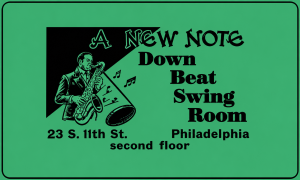
In 1938, after splitting with Krechmer, Segall opened the Downbeat Swing Room on South 11th Street. At one point, there were even simultaneous ads for the Downbeat Swing Room and the Jam Session. The Downbeat was immediately adjacent to the Earle Theatre. The Earle was a major venue for swing bands, less than a minute's walk away, but Krechmer played in the Earle's pit band, so the advantage only went so far.
In reality, the Downbeat was more innovative as far as talent was concerned, while Krechmer stuck to Dixieland. Ironically, that may have helped the Jam Session outlast the Downbeat. The Downbeat encouraged sitting in, but Krechmer eventually came to stop sitting in entirely, complaining that "the overly hip kids" did not really know what they were blowing, which served "to mess things up." Bop may have been an acquired taste as far as Krechmer was concerned, but since the Downbeat was closed in 1948 and the Earle was torn down in 1953, there was really no competition anyway. Some may have thought the "moldy figs" prevailed. Segall never said one way or another.
The Downbeat was conceived of as "strictly appealing to musicians." There was the usual house band staffed by local musicians who changed from time to time. Segall did schedule swing bands like Vaughn Monroe for engagements. Yet this was a place for blowing sessions. Since the musicians' union frowned on its members doing this sort of thing after hours, the Downbeat seems to have gotten away with it by paying a small fee—or a bribe—who knows, really?
And talented players showed up: Nick Travis, Dizzy Gillespie, Charlie Parker, Duke Ellington, Gene Krupa, Philly Joe Jones, Fats Navarro, Red Rodney, Howard McGhee, Dexter Gordon, Wardell Gray, Bud Powell, Max Roach, Ben Webster, Al Haig, Nelson Boyd, Erroll Garner, Henry "Red" Allen, Elliot Lawrence, whose father, Stan Lee Broza, was a major figure in the local entertainment scene with connections to Jan Savitt.
Parker was in town and, at the behest of Red Rodney, went to hear one of the band's rehearsals (possibly a studio band at station WCAU). Parker liked what he heard. He invited Mulligan to come to the Downbeat that night to hear him play, where he was appearing with Don Byas. Parker told Mulligan he could not leave the club without playing with them. Mulligan, sensibly enough, tried to demur, but Parker would have none of it. So Mulligan got up on the bandstand. He said he was so terrified he had no idea what he had played, but that Parker had been encouraging. Gerry later said it had been a signal experience in his development as a young player and improviser.
Red Rodney said much the same thing. Coming off the road with Jimmy Dorsey in 1944, Red had built his chops on a firm swing foundation. But Nat Segall had engaged Dizzy Gillespie, and having Gillespie was a massive catalyst. Red changed direction. He also credited Howard McGhee as a major influence from his time there. By the time Red joined Woody Herman in late 1948, he was a confirmed bopper, as his solo on "Lemon Drop" illustrated. The Jam Session was ultimately commercially successful, but the Downbeat was more important musically.
By the late 1940s, Philadelphia was changing rapidly. The black population of the city had doubled from 1940 to 1950. Some viewed the change as an opportunity. Others, unfortunately, did not. Some entrepreneurs saw the potential in a larger black audience for jazz. This was what happened with the Ebony Lounge at the Chesterfield Hotel, a stop on the Negro Motorist Green Book, which underwent renovation and enlargement.
But at the same time, Philadelphia was a segregated city, de facto if not de jure. And here was where the guardians of public order, the Philly cops, came in. The Downbeat was run on strictly integrated lines, both in music and clientele. Smack in downtown, a mixed club was inviting trouble, and trouble the Downbeat (and others) found. Regardless of what some might think, initially, the poverty rate in Philadelphia actually fell, so facile arguments alluding to problems of existing ethnic communities assimilating lots of poor people with increased migration do not cut it, at least then. There seems to have been a lost opportunity in Philly for people "to get along," but it was left to progressives like Frank Rizzo, making his way in the police ranks, to keep things under control. Using some pretext or another.
The Downbeat got raided in a wave of police activity in late 1948 as a "hellhole" of underage drinking that had to be cleaned up. The raids cost the club its liquor license, which also happened to the Club Harlem in West Philly (seeThat's Club Harlem in West Philly, NOT Club Harlem in Atlantic City ). Both of them closed down because, music aside, you made money selling drinks, not bop. Krechmer stuck to Dixieland—less progressive, but more profitable and less likely to draw the wrong audience. Ultimately Krechmer had a mixed band with Tommy Sims. (see His Name was Tommy Sims. He played Trumpet. Too Bad You Probably Never Heard Him). So it was not just Segall who was progressive, although he may have been a little more aggressive than Krechmer. Or less pragmatic.
Segall took a different view of things: "The Mason-Dixon Line has moved up North," Nat famously observed. This is aquote which has survived Segall. You can see why he was hardly a favorite of the City Fathers. Since the minors who got rounded up in these raids usually got a pass, Segall's cynicism was understandable. His days as proprietor of the Downbeat, or any club, were at an end.
Yet Segall had other projects up his sleeve. One of them, his version of JATP, was extremely promising. In fact, it was so promising that one wonders why he did not pursue it, other than competition from Norman Granz as the original JATP (dating from 1944) began to move away from its base in Southern California.
Segall promoted jazz concerts at the Academy of Music at Broad and Locust, the home of the Philadelphia Orchestra, in 1945 and 1946. Billie Holiday made her Philadelphia debut at one of these concerts, and Sarah Vaughan was featured too—in a gown that Segall had presented to her. In the December 1945 concert, the lineup included Georgie Auld and his band, Oscar Pettiford, Rex Stewart and J.C. Heard. There was apparently a remote radio broadcast, for now, lost. The You Tube segment here is supposedly from an acetate of a June 1945 concert. Maybe. Maybe not.
Supposedly, further shows were planned for Boston, Providence and Pittsburgh. But Granz's 1945 tour of the JATP was a financial disaster, and Segall must have known that. So, presumably, that was what stopped Nat Segall from becoming Norman Granz. The rest, as they say, is history, but all Granz's.
Segall was not quite done with Philly jazz yet, and he became booker for the Showboat, a place that deserves a history of its own. But R&B was beginning to hold its own attractions, and Segall followed the money.
His career highlight was surely managing Jerry Blavat, a legendary Philadelphia rock star (literally) who was known to adolescent boomers in the 1960s as "the Geator with the Heater." Blavat was a television dance maven who grooved to what he called "The Discophonic Sound," and he stayed on the scene in Philly until 2023.
Jerry did mention Segall in a 2022 interview, but that was it. They must have somehow stayed in touch because Blavat owned a club called Memories in Margate, where his former dancing "Yon Teens" aged into "Yon Seniors" before easing into physical therapy induced by contortions they could no longer manage. If Segall had anything to do with this, no one knows.
Segall is one of those stories that really does not quite fit into anyone's narrative. And it shows. He probably operated the most innovative jazz spot in Philly. He was as uncompromising about segregation—audience, players, anything—as Norman Granz. But Granz has gone down in history as the jazz warrior for social justice. Nat Segall? Who? Never heard of him. In part because he was ahead of his time, no?
Well, now his name is a bit more familiar. There are, one suspects, other stories like Segall's waiting to be told. But people have to keep digging. In libraries and archives. Because that is how history has always been written.
 FOLLOW Richard J Salvucci
and get notified whenever a new article published.
Richard is an emeritus professor of economics at Trinity University.
PREVIOUS / NEXT

About Red Rodney

Tags
Become a Sustaining Member

Since 1995, All About Jazz has championed jazz as an art form and supported the musicians who create it. Over three decades, it has grown into one of the world's leading jazz resources, serving hundreds of thousands of readers, musicians, presenters and industry professionals each month.
Help Build the Future of All About Jazz
Your support helps us continue building All About Jazz for the next generation—expanding our editorial coverage, preserving jazz history, developing new community features and creating better ways to discover the music and the people behind it.
Become a sustaining member for as little as $20 per year and you'll immediately enjoy an ad-free experience along with access to subscriber features and future articles for a full year.
Together, we're not simply sustaining All About Jazz—we're building its future. Thank you for being part of the journey.