Home » Jazz Articles » History of Jazz » Philly Jazz: Lost & Found
Philly Jazz: Lost & Found
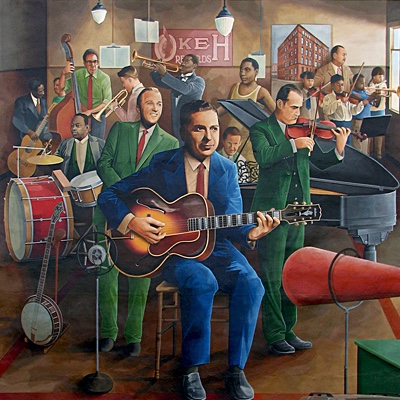 Philadelphia was once known as the "City of Homes," but it could just as easily have been called the "City of Clubs." Its numerous jazz clubs nurtured generations of musicians, both local and visiting, and their histories offer a fascinating portrait of the city itself.
Through these clubs, we can trace Philadelphia's evolving relationship with race, class, and music, along with the city's changing fortunes. Even the smallest neighborhood venue can reveal surprising connections between local life and the wider world.
Philly Jazz: Lost & Found explores the musicians, venues, and forgotten stories that helped establish Philadelphia as a major jazz center, uncovering a history that is often surprising, sometimes overlooked, and occasionally all but forgotten.
Started: 2017
Billy Krechmer: A Philadelphia Story

by Richard J Salvucci
There is a story told of the last night of an iconic jazz club in Philadelphia in 1966. The bandleader-owner, it was said, had been called away prior to closing. He was unable to return before the end of the last set. Walking back, he watched the crowd filing out. Some, I am told, had tears in their eyes. Ok. Too good to be true. Or too sentimental to be true. Unconfirmed by independent sources. All true. But if the ...
Continue Reading...Nick Travis: A New York Studio Jazzman

by Richard J Salvucci
It may well be that in the world of the Internet, no one is ever truly forgotten. That's obviously true of people commonly known as “the great and the good." Yet even in the more obscure branches of human endeavor, the principle holds. Nowhere, more so, it seems, than in music, and even in jazz, the taste of a distinct minority. Especially in jazz, apparently, seek and you shall find, somewhere, sooner or later. This is the historian's ...
Continue Reading...Harvey Husten Presents "Jazz in Jersey": The Red Hill Inn

by Richard J Salvucci
On October 13, 1957, there was a concert at the Red Hill Inn in Pennsauken, New Jersey. According to Downbeat, 3,000 fans wanted in, but there wasn't room for more than 1,000. Leonard Feather was there. Erroll Garner too. And Cannonball Adderley, Gerry Mulligan, and Oscar Pettiford. The occasion was the first annual memorial concert for one Harvey Husten. And the beginning of what was supposed to be a living memorial to Harvey Husten, the Harvey Husten Memorial Fund. As ...
Continue Reading...1502 Ridge Avenue and Other Extinct Philly Jazz Temples

by Richard J Salvucci
So we give Cannonball Adderley the floor. It is late 1955, and Adderley was in Philadelphia at the legendary Blue Note Café--yes, there was a Blue Note in Philly, in Chicago, and in New York, no kin to each other. Adderley was making an initial tour in the North, this after his sensational debut in Café Bohemia in New York. It isn't entirely clear who Adderley had with him in Philadelphia: he called them his “Florida men." And they had ...
Continue Reading...That's Club Harlem in West Philly, NOT Club Harlem in Atlantic City
by Richard J Salvucci
History can be a funny thing. The established story--the received wisdom--can be difficult to contest. And yet, there are subtle indications that something is not quite right. The weight of prejudice, self-interest, and or sheer inertia may stand in the way of getting things right. And material circumstances change too, especially over a lengthy period of time. Such would seem to be the story of the Club Harlem in Philadelphia, a kind of footnote to the history of jazz in ...
Continue Reading...The Only Radio Station in the World With a Real Bar: Philly Jazz, The Click, and Other Postwar Ephemera
by Richard J Salvucci
If you don't know the name Frank Palumbo, you are not a Philadelphian. If you never went to Palumbo's or to the CR Club, you are not a Philadelphian of a certain age. And if you remember the Click, much less went there, you've reached a stage in life when you look in the mirror and see your parents. Because for a few glorious moments in the late 1940s, Philadelphia was one of the jazz radio beacons in the country. ...
Continue Reading...His Name was Tommy Sims. He played Trumpet. Too Bad You Probably Never Heard Him
by Richard J Salvucci
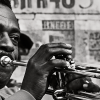
Ok, this one is strictly for jazz nuts--and a specific subset known as trumpet players and aficionados. Not everyone who likes jazz necessarily digs trumpet players, and those who do rarely agree on what constitutes a good one. Believe me, the sectarian differences would make an Anabaptist tremble, because this isn't just music; it's a religion. To truly understand, you have to have had carnal relations with the “Brass Beast," preferably over many years and across four or five octaves. ...
Continue Reading..."The Mason-Dixon Line Moved North" The Downbeat Swing Room and Philly Jazz
by Richard J Salvucci
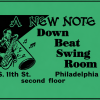
What do Charlie Parker, Jerry Blavat and the Mason-Dixon Line have in common? This is serious, ok? The answer is a certain Nat Segall, a serial music entrepreneur in Philadelphia from 1938 to 1972. He was much more than a peripheral figure, however obscure he is today. Nathan (Nat) Segall was the owner and operator of The Downbeat Swing Room on South 11th Street from 1938 to 1948. More than a few major careers got started there, or ...
Continue Reading...Album Showcase
Trending
 Profile
801 Live at 50: A Short-Term Experiment with a Long-Lasting...
 Interview
Enrico Rava: The Secret Corners of a Master
 Radio & Podcasts
Six new releases from Michael Pagan Big Band, Ron Vincent,...
 Opinion
Bomb Shelter Bebop
 Interview
Fred Lipsius: The Blood, Sweat & Tears Sax Voice Still...
 History of Jazz
A Chronological History of Jazz
 Interview
Avishai Cohen on "Jack Johnson"
Featured Video
VOTE!