Home » Jazz Articles » From the Inside » The Quiet Cruelty of the Music Business
The Quiet Cruelty of the Music Business

Courtesy Hajo Müller
But the most devastating realization is that the architects of this cruelty aren't just the executives in corner offices. It is the audience and its psychology.
There is a strange, fierce myopia in modern idol-worship, a culture of fandom that treats music not as a living dialogue, but as a static mirror for their own egos. You can stand on a stage with a band for twenty-five of its thirty years of existence, and to a subset of the crowd, you will always be the interloper. Your contributions, sometimes the very bedrock of the music they claim to love, are overlooked, uncredited, and entirely unmentioned. Often, listeners simply lack the musical vocabulary to understand what they are actually seeing or hearing. They misattribute the genius of a collective to a single figurehead, leaving the essential people, the musicians without whom the magic would literally not exist, invisible. The erasure is physical as much as it is critical. You can arrive at a venue as a working trio, and watch as local promoters literally look right through two of the members in their rush to greet the one with the legendary status. It is a striking, quiet humiliation to realize that the people facilitating the concert do not actually care about the music you are about to play; they only care about their proximity to a recognized name.
The toll this takes on a working musician's mental health is profound. I watch, exhausted, as vast reserves of support, capital, and adoration are poured into deeply uninteresting, hollow projects, while genuinely exciting, honest musical innovations go entirely ignored. The audience often only wants to believe what they have been told to believe. They close their eyes, their ears, and their hearts, fiercely supporting those who need it least while starving those who need it most.
And what of the neglected? The artists who never receive the visibility or the financial compensation they have earned? They stay quiet. They swallow the pain and carry on, because stepping forward to demand recognition carries the fatal risk of being branded as whiny, bitter, or weak. It is a profoundly cruel dynamic, and I have reached a point where I can no longer tolerate it in silence. While I can manage my own personal disappointments, watching brilliant colleagues be neglected, discarded, or utilized for another's ego is unbearable.
This illusion does not stop at the edge of the stage; it bleeds directly into the gear and instrument industry. Driven by the same psychological projection, consumers buy into a manufactured dream, elevating image above all else while entirely ignoring the physical reality of the instruments themselves. We are watching the love of music be systematically dismantled. People point to recent technological developments like AI as the death knell of art. But technology is not the root of the problem. The real problem is us. It is the twisted psychology of the modern world, the unchecked greed, and the willful ignorance that devalues authentic creation. It is a culture of hate disguised as love.
Acknowledging this darkness out loud is terrifying, but it is also deeply necessary. How can we build something outside of this toxic ecosystem?
 FOLLOW Markus Reuter
and get notified whenever a new article published.
FOLLOW Markus Reuter
and get notified whenever a new article published.
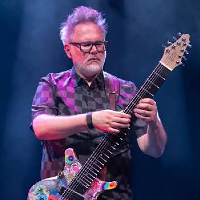
Markus Reuter is a German multi-instrumentalist, composer, record producer and instrument designer.
Tags
PREVIOUS / NEXT
Become a Sustaining Member

Since 1995, All About Jazz has championed jazz as an art form and supported the musicians who create it. Over three decades, it has grown into one of the world's leading jazz resources, serving hundreds of thousands of readers, musicians, presenters and industry professionals each month.
Help Build the Future of All About Jazz
Your support helps us continue building All About Jazz for the next generation—expanding our editorial coverage, preserving jazz history, developing new community features and creating better ways to discover the music and the people behind it.
Become a sustaining member for as little as $20 per year and you'll immediately enjoy an ad-free experience along with access to subscriber features and future articles for a full year.
Together, we're not simply sustaining All About Jazz—we're building its future. Thank you for being part of the journey.