Home » Jazz Articles » Catching Up With » Satoko Fujii on Sound, Freedom, and Not Two
Satoko Fujii on Sound, Freedom, and Not Two
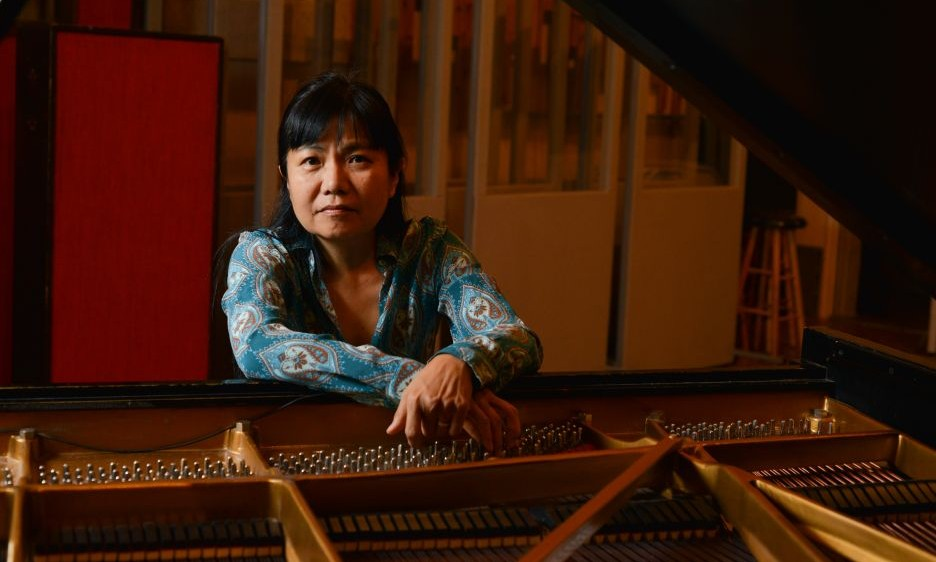
Courtesy Bryan Murray
All our existence is not two, we are only one.
—Satoko Fuji
In this conversation, Fujii reflects on her long friendship with founder Marek Winiarski, the meaning of "Not Two," the experience of recording in Poland, and the evolving identity of her own sound. She speaks with the same openness and honesty that animate her music—revealing a creative life shaped not by genre, but by conviction, freedom, and love.
All About Jazz: Marek Winiarski named the label "Not Two" to signal independence from any one aesthetic or duality. Interestingly, in Zen Buddhism, "Not Two" (advaya) means that reality is non-dual, rejecting the strict separation between subject and object, self and other. Does that philosophy—refusing to be pinned to one side of a binary—resonate with how you think about your own music, which resists being called just "jazz?"
Satoko Fujii: I know Marek for a long time. He came to our show in Krakow probably in 2001. Since then he has been so helpful and supportive. We always feel his love for music. All our existence is Not Two, we are only one. He knew about it and he always respected music. I don't know what my music can be called. I make music that I believe. I don't care what people call it. I love jazz because jazz is a music that is always alive and changes its face and has a strong freedom spirit. In this value, I think I play jazz. But I don't play jazz as a style.
AAJ: Your first Not Two release, In Krakow, In November, was recorded live in a radio studio with just you and Natsuki Tamura—no rehearsal room, no overdubs, just the room. Nearly 20 years later, does that recording still sound like "you" to you, or like a different artist entirely?
SF: Well, my first Not Two release is "Zephyros" (NatSat Music, 2004) in 2003 by Satoko Fujii Quartet. In Krakow, In November was a 2006 release. However, I can recognize clearly my sound from the very beginning of my career, even before I became a professional musician. I don't know if it is a good thing or not, but I think we are all "Not Two" since our birth.
AAJ: So much of your Not Two work was actually recorded in Poland rather than shipped over as a finished master. What does it change about a recording, for you, to make it somewhere far from home rather than in Tokyo or New York?
SF: I love Kraków. Kraków is one of my favorite cities. It has a strong atmosphere. That affects my play.
AAJ: Small independent labels like Not Two operate on faith and relationship, not contracts and marketing budgets. What does an independent label actually make possible for a composer of your stature that a bigger label couldn't?
SF: I love working with people who I can trust and share the same value. Our music is not commercial music that people want to consume. So we need to have a reason to make it without making money. I would call it "Love."
AAJ: Not Two's packaging has a reputation—elaborate gatefold sleeves, distinctive graphic design. Does the physical object matter to you as an artist and composer, or is that entirely someone else's art once the music leaves your hands?
SF: I always feel that I collaborate with a designer of the CD cover and a director of the label. I would like to have their "Not Two" concept and work.
AAJ: Your ensembles range from solo piano to full orchestra. Does an idea arrive already knowing what size it wants to be, or do you sometimes discover mid-composition that a piece is too big or too small for what you intended?
SF: It depends... I sometimes start composing without knowing with which band I can play it. And other times, I compose for a certain group. In any case, the composition tells me which band when I put my pen down.
AAJ: AI models are already mining catalogs like yours. With 121 albums out there (including 10 on Not Two), how do you feel about your life's work becoming fuel for music made by something that has never lived a life?
SF: I don't know so much about it. I think it doesn't steal my music. I live and change every day, every time, so it is not possible to steal my existence. They probably can get my shadow after I move. I think human beings are totally different from AI.
AAJ: You mentioned recognizing your own sound even before you became a professional musician. What made you decide to actually pursue music as a career—was there a specific moment, or was it more gradual?
SF: I started learning classical piano when I was 4 years old. I was never a good piano student. In piano class I was always the one who took so long a time to learn something. Usually people might think they are not gifted, but I didn't care about it. I wanted to get it even taking so long a time. I think I chose to be a professional musician because I needed to work more than other people. I think I became a musician gradually in this way.
AAJ: You've collaborated constantly across borders—European, American, Japanese musicians. Is there a musical tradition or region you haven't worked in yet that you're curious about?
SF: I am curious to collaborate with musicians in Africa.
 FOLLOW Cezary L. Lerski
and get notified whenever a new article published.
FOLLOW Cezary L. Lerski
and get notified whenever a new article published.
Editor in chief at PolishJazz.com and NotTwoRecords.org
About Satoko Fujii

Tags
PREVIOUS / NEXT


Become a Sustaining Member

Since 1995, All About Jazz has championed jazz as an art form and supported the musicians who create it. Over three decades, it has grown into one of the world's leading jazz resources, serving hundreds of thousands of readers, musicians, presenters and industry professionals each month.
Help Build the Future of All About Jazz
Your support helps us continue building All About Jazz for the next generation—expanding our editorial coverage, preserving jazz history, developing new community features and creating better ways to discover the music and the people behind it.
Become a sustaining member for as little as $20 per year and you'll immediately enjoy an ad-free experience along with access to subscriber features and future articles for a full year.
Together, we're not simply sustaining All About Jazz—we're building its future. Thank you for being part of the journey.