Home » Jazz Articles » Reanimating Conversations Past » John Scofield: Meant To Be
John Scofield: Meant To Be
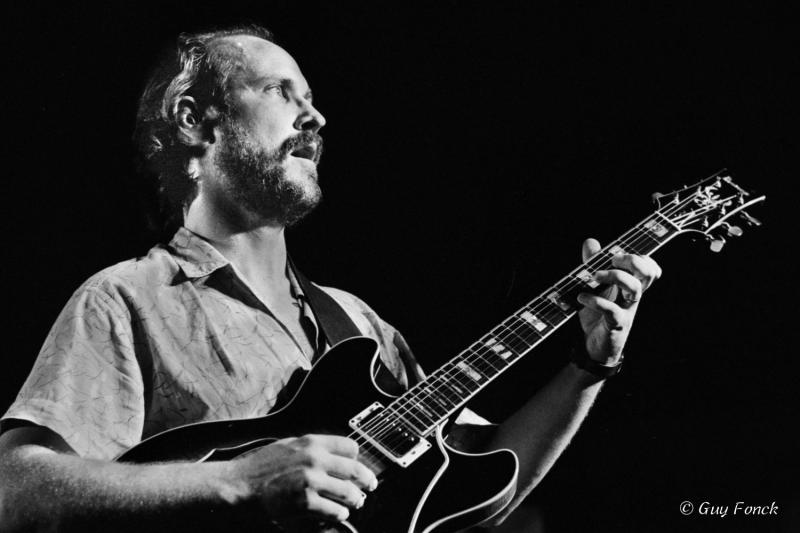

People have different perspectives on what’s already happened. It’s not about copying; it’s the next stuff in this evolutionary chain. I think this is a very good time for jazz music, and for my generation.
By this point, Sco had been covered by DownBeat extensively, my interview adding to the burgeoning crop. To recap: In the '70s Sco had left Berklee to play with Chet Baker and Gerry Mulligan, followed by stints with the Billy Cobham/George Duke band, Charles Mingus, and eventually replacing Pat Metheny in Gary Burton's group. It was time to start recording under his own name by the late '70s, and in 1982 he joined Miles Davis' new group, touring with and recording on four of Davis' albums, followed by more leader dates, including Time On My Hands and Meant To Be (Blue Note Records, 1991). Over the years, Sco had continued working as a leader and collaborator, gigging with, among many others, Eddie Harris, Steve Swallow, Bill Stewart, Herbie Hancock, Bob Belden, Joe Henderson, and Medeski Martin & Wood, and releasing the occasional album with large ensembles, including a quirky acoustic-guitar record, Quiet (Verve Music Group, 1996), with Wayne Shorter. John was, and remains, all over the map, stylistically.
Back to Vancouver, 1990: Before we revisit my interview, let's fast-forward to what I had to say about his performance at the festival in DownBeat's September 1990 issue: "The most unassuming guitar hero of the ages is John Scofield, who, along with Don Pullen, organist Jimmy McGriff, the The Jazz Passengers, and Lawrence "Butch" Morris' International Creative Music Orchestra, was also performing at Seattle's Earshot Jazz Festival. With Joe Lovano on saxophones, bassist Anthony Cox, and drummer Anthony Cox, the Saturno Supper Club was treated to some of the best combo jazz this side of heaven. There wasn't a weak link in the bunch as the band cruised through much of Sco's material from his latest, Time On My Hands. Is it the blues and funk connection, amply displayed on such numbers as 'Nocturnal Mission' and 'So Sue Me,' or the flat-out jazz predisposition to blow that communicates? Surprise stickman John Rileyused cymbals to great effect, nourishing soloists; Cox's tiddly-winks, walking basslines were spot on, and Lovano was one hep cat with his swinging, Traneish shrieks, mixed with a purring tone. Sco's delicacy fused with his penchant for rockier terrain, but always within the friendly confines of their groupthink/groupfeel."
Before all that musical fanfare, though, it was just us, John and me, hanging out in his hotel room. I remember John was super relaxed, as if he had all the time in the world to share his story. He even went so far as to play a little guitar towards the end of what seemed, in retrospect, like a long interview that paradoxically just flew right by.
John kicked things off ...
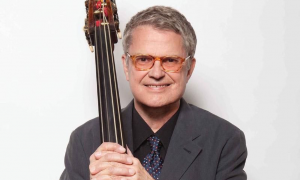
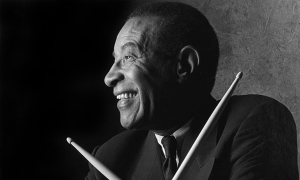
John Scofield: I think it's really coming together on the record Time On My Hands. The title didn't come from the song "Time On My Hands" [chuckles]. I kinda like the reference to it; I sit around with my wife and kick this stuff back and forth with titles, and she thought of that. And I was thinking about how much rhythm that's going on with this record, with Charlie Haden, Joe Lovano, Jack DeJohnette and myself as time being an allusion to rhythm. My wife comes up with all these expressions that are used everyday, and some of them really fit the theme; so I like to do it that way. Anyway, the record was supposed to be a kind of all-star thing and Wayne Shorter was gonna play saxophone and Wayne couldn't do it, so I got Joe to do it. And now Joe has joined what used to be my trio with John Riley and Anthony Cox. So it's a quartet, a new band. And it's coming together real nicely. And that's what I like to do, to keep them together and develop a momentum and a sound, where the music kinda develops by itself over time; which doesn't really happen that often in jazz. One reason is the economy. People don't have enough gigs to stay together and develop. And the other is the old thing of being a soloist and playing with different rhythm sections all the time, a soloist/rhythm section disparity, which I don't really like that much.
John Ephland: Speaking about signing with Blue Note, in 1990, you referred to his good relationships with label executives Bruce Lundvall and Michael Cuscuna.
JS: Mainly, they told me I could do whatever I wanted to; they signed me as an artist. Other labels were more cautious, worried about radio play. The fusion—I hate that word—the stuff I did with [drummer] Dennis Chambers did get on the radio.
JE: As for more about the title to the new album ...
JS: I was looking for something a little more elastic. I really miss having music that withstands different interpretations. And that's what I like about this current bunch of tunes and the way the band is playing; that kind of open acoustic-rhythm section, and writing tunes that can be treated various ways. When I had the other band, with Dennis Chambers and Gary Grainger, we really worked up arrangements, you know, and then kinda played them like that every night. There'd be variation in the length and stuff, but we really thought about different grooves and ways to treat it; that's the way funk arrangements are. And I love that. It's really hard to do as an art form and it's really related to popular music and comin' up with grooves and stuff like that. You do the same thing with my new band, but somehow that thing with acoustic bass and using jazz rhythms more than funk rhythms, it seems more elastic and we can go to different places. That's why I wanted to do this last record with Charlie and Jack, because they epitomize that kind of rhythm-section playing.
Even though it's really drawing on the acoustic jazz tradition, a lot of the harmonies that I use, probably more from some sort of pop music, and out, too, and the blues, but I really see this as a fusion music; but not as generic fusion music has become. I see it as a fusion of different stuff, which is the way I play. I mean, this is not bebop, not free jazz, it's not funk, it's not second-line New Orleans, and it's not bossa nova. But it's kinda of lot of that stuff.
JE: Do you play acoustic much?
JS: Yeah, at home, I really love the sound of the acoustic guitar, but when I play that I can't get a big enough variation in tone. After you hit the note you can do all sorts of things with it. The setup I play is a real simple thing. I use a tube amp, and I use little effects and stuff to alter the sound, a chorus to fatten it up, but they're nothing compared to synths; it's not supposed to sound like a chorus, and sometimes it does. And I use a distortion unit that actually creates the sound of a broken amp [chuckles]. The great sound that you get with a Marshall that has to be really loud, but now using little distortion pedals and you can get that sound, that control. So, that's all I need, and there's something about the electric guitar, to me, that's in-between.
JE: Not like your typical player who uses synths.
JS: Yeah. Synthesizers, unless it's a Joe Zawinul, there are very few synthesizer players who are interesting to me. 'Cause I still really come from that jazz tradition of making a sound; of getting a sound like Coleman Hawkins, and Roy Eldridge, and John Coltrane and Miles. These guys that have this great sound, and then they do something with that. And Zawinul's been able to make a real personal thing with it. It takes years, you know?
JE: Growing up in the '50s and '60s, you saw the guitar become more prominent.
JS: Yeah, well, I just started on guitar. Because right when I started folk music was in, and The Beatles were just hitting, in the early '60s. I was 12. So, I just had the guitar. I didn't choose it, except like a 12-year-old chooses an instrument, because it was cool. I saw it when Ricky Nelson played it on the Ozzie and Harriet TV show. The thing that singers had on TV, and I liked music. So then, by the time I started to think about jazz, I'd already played the guitar for a while, and that was the instrument that I played. And I wasn't gonna turn around and play tenor sax. Although it did cross my mind when I was a teenager and I wanted to get into jazz, listening to Trane and Miles, that was the kind of music I loved so much. And I came to love Wes Montgomery and Jim Hall and Pat Martino, George Benson and those guys. But originally I liked the sound of blues guitar, and just kinda rock and roll and folk music. Jim Hall said an interesting thing: in the guitar there's an inherent bluesiness, because the blues and all that music and jazz are so related; a lot of kids today and all these guitarists that I talk to say, "Well, you got into the blues, and then you got into jazz, and how did that happen?" You know, they're really from the same mother lode. I mean, this is Black music we're talking about, which in turn influenced every white musician I know that's involved in any kind of music other than classical music, more or less serious, from Hank Williams to Bill Evans.
JE: What about heavy metal players?
JS: And those guys, too, whether they realize it or not, they all play blues. There's no such thing as rock and roll without blues; it doesn't exist. You know, when you've done your note and a minor third on a dominant chord and play a blues lick, it may have come from some Deep Purple record some kid had in 1975. And there's this other thing that came in, too, to that music that I hear, which is these elements in rock and roll that are not specifically blues, chord changes and harmonies in pop music; but that has a lot to do with me, too, like The Beatles and pop music, and what came before that, like Tin Pan Alley. It's so mixed up, it's hard to make any definite statement. There's a lot of stuff in there, but you gotta learn to play being a guitarist, learning songs from whatever generation that you're in. You got a guitar or whatever instrument, and you learn some blues lick, you learn the chords to a romantic ballad that's on the radio by whoever or whatever rock group, you're slowly amassing all this stuff. And then, you realize when you're older, some of the stuff traces back to some British-isle folk music and other stuff goes back to the blues; but it's been all mixed up for so many years. You can't go anywhere else to study this stuff other than to just learn music, learn songs, learn about music. Sometimes it's not even worth tracing it back. But you can hear the sound of Black music in there. You can also hear the sound of European folk music in there, and you can pull out these different sounds.
JE: Then there's the idea that you need to keep growing, that each new album has to be saying something new, where you aren't repeating yourself. You are on Blue Note now, and there seems to be something else going on.
JS: I can see making the same kind of record, if you want to get it right. I just wanted to do some different stuff. I realized that my own voracious need to feel good about the stuff, like I'm doing something that's alive, that feeling of creativity dies and you're stuck with that shell where you used to live. It happens with everybody. So, that's what I'm learning now after doing it for ten, 15 years, professionally, making records, where inspiration leads.
JE: On top of that, you've been a busy man. And, you're in demand.
JS: I'm actually gonna stop doing sideman stuff, pretty much. Unless it's somebody like McCoy Tyner, who I've wanted to play with for a long time; I might do something on Elvin Jones' new record. But I've gotta start to stop doin' so much stuff. And after I spent so many years waiting for the phone to ring. I turned down so many recording projects, as I did last year, that I realized that I gotta save my energy for my own music; that's what that's about.
JE: It's a sign that you've made it, that you've arrived, when there are now so many John Scofield clones out there.
JS: It's funny; when I think about people imitating me, I can tell when they sounded like they picked the worst aspects of my playing [laughs]. 'Cause you know, probably if I had my way, I would sound like one of these perfect guys. But I don't sound perfect, and I'm glad I don't. But it's funny to see some young guitarist trying to imitate me because my style is a series of compromises of not being a virtuoso.
JE: And then there's the guitar-hero syndrome.
JS: And you know why that guitar hero happens is because there's no interplay with the band. That's why all those guitar heroes, no matter who they are or how good they are, they're gonna play like that because the rhythm section is grinding away a dance groove and they play over it and that's what I don't like about jazz-rock. It gets so trippy, because it becomes a self-conscious attempt, for me anyway, at group interplay. And, at the same time [he mimics a likely scenario], this real strict bassist stay here, drummer stay there, chord player do this, and the soloist is right on top of that. And that gets really boring, too. You know the thing I like about jazz, from the beginning, was all these different parts that kinda stood by themselves and made this mesh, with drummers playing a lot of different things, Kenny Clarke and Max Roach playing a lot of different stuff, and the comping itself being almost like a big band. That's the great thing about really great jazz, that's something special that's transcendent and not self-conscious.
JE: Listening to the new album, it made me wonder if you have thought about pursuing a more polyphonic type of playing?
JS: I know what you mean. If you check out this group we have, Joe and I are getting more and more into playing together. I would like the roles to disappear more. But I also really believe in nature, you know, the forces of nature and gravity in music, and I think we all have an innate thing of certain layers as a whole, harmony moving in a certain way that nature kind of dictates, almost. When some bands self-consciously try to do things on an intellectual level, I can tell immediately.
JE: I think of Ornette Coleman's approach.
JS: I think Ornette is really, really special. I really like him a lot. And I think he's an intellectual, but I also think that—I don't know—he's kinda hard to categorize. And I've had all kinds of feelings about his music over the years. When I first heard his early records I fell in love with them because of the melodies; the same reason I just like music, you know. And sometimes I've listened to him and thought, well, that's self-conscious. But actually I think he has a concept sometimes that dictates what he's gonna do. But I think he's real natural.
JE: And playing four-bar bridges. That gets boring. Why not play three? Why not play one? Just one?
JS: Well, the reason you don't play 3-2-1 is because it comes from an idea to play 3 first instead of 4. 4 is like an even thing. But, Ornette kinda shows that doesn't matter. You can play natural phrases no matter how long they are. And musicians sit around and say, I'll try 3s, I'll try 2s, I'll try 5s, I'll try everything, and then afterwards you go back and you don't think in terms of 3s and 5s and 2s, and you just play in a freer way. That's what Ornette really did, and that's why he's important. And that's what I learned from him; to break away from tradition and just let yourself be creative.
JE: I think of the example of Miles' second great quintet and the ways they moved around the beat and melody.
JS: Miles was really influenced by Ornette in a weird way. He saw what was happening, and he freed up his music, but still the laws of nature exist with Miles more than anybody, and that's what I love about him; you know, this guy cannot play something that's intellectual, even though he's a great thinker. The stuff comes from the heart, no matter what. And he always plays four-bar phrases; if he doesn't, he'll play some real natural thing that sounds like it's a four-bar phrase and it's not, because really he's so jazzed; he's the most jazzed person I've ever met. When I think of jazz, I mean music, it's almost like you pass into it and it comes through you, when it's right [chuckles]. I mean, when he freed up his stuff like at the Plugged Nickel, and the stuff that happened after that with the great quintet, that's some of the greatest music I've ever heard. That music and the music Coltrane was playing at the time. I go back and forth between them. I played with Elvin the other night.
JE: With McCoy and Elvin, I can't imagine them playing with an electric guitarist.
JS: Well, Elvin actually has. McCoy a little bit; not very much. McCoy had John Abercrombie on one date, on one of his records. Like I was saying, I was playing with Elvin the other night; his pianist, James Williams, couldn't make it to the Blue Note on a Saturday night. He asked me to come down and play with his band the other night. No big deal. And boy, I tell ya that guy, he is another force of nature. To me, his music is so free, you know, really free but rooted in tradition because he doesn't think about being rooted in tradition; why would anybody not want to be rooted in tradition, because that's music. I mean these guys, like Miles and him, to me, they're like great lessons in ... when people ask them why do you do that, you're just trying to be creative. That's all. That's really the bottom line is trying to be creative. And Elvin, god, the stuff that he plays, to come up with that style, I mean, it's right from the heart, man; the way he plays is like nobody else.
JE: And then there's another approach, with people like John Zorn and Tim Berne.
JS: Zorn, what I've heard about his music, and what I've heard Bill Frisell, when I heard what Bill did, I really liked it. It's interesting to me, but my heart is somewhere else. Bill, to me, is the greatest thing happening on guitar. Bill is the guy who's influenced me on the guitar from the last couple of years. Music, to me, has to have a certain naturalness to it in improvising, definitely in improvising. And when I hear that flow comin' from people, that's what turns me on. I'm really starting to believe more and more in improvisation. I mean, there's a certain trend in cynicism of jazz players: sure, he can blow, but what's improvisation? It's not really that much, let's do something else.
JE: What about the kind of jazz that's built around repertoire, playing the music of Duke Ellington, or Thelonious Monk?
JS: For me, anyway, the composition has always been used to offset the improvisation. They go hand in hand. And I'm not even talking about, when I say I believe in improvisation, I'm not talking about playing free. I'm not that good at that. The written music, or the music that you know, whatever you call it, the stuff you're gonna play ensemble-wise, however you're gonna do it, and then using that as a jumping-off place to set up some other stuff, I still really like that; I still find it exciting, that whole idea. To me, Monk's music and Ellington's music, I can't think of it without the solos. I mean, a couple of Monk tunes and a couple of Duke's tunes ... I know Monk's tunes better, there are a couple where there are no solos, like "Crepuscule With Nellie." But, mainly, what he did with it, I mean, when he would play straight-ahead, just the little shifts in stuff, when he would improvise, and that living quality to the music, makes it so great and so different from, you know, classical music and all.
JE: There's a dynamic of thinking and feeling. We can't help but be thinking, it seems, all the time.
JS: If you can play natural for the moment, that's certainly the ideal for me. We're always thinking. Every musician is always thinking. You can't not think. You can't only feel. I can tell when I hear guys play when they start to only think. Then something stops. Sometimes you have to let yourself be led by the forces of nature.
JE: Instinct?
JS: Instinct. That's what I mean. Whatever that stuff is, go with it.
JE: Monk was a perfect example.
JS: Yeah. He played those weird intervals, but they worked. And he developed a language, his own language. That's ultimately what I'd like to do. Not to downplay that this is all my music, but it's also generic music. But that's not right, either. I mean I'm writing tunes for us to play together, using elements from music that's already just music. But it's not like I'm writing symphonies. It's vehicles for us to play. And I wanna do it my way and I keep writin' the tunes 'cause I want to direct the music. But it's different from writing out every note.
JE: Which is kind of like what Monk does.
JS: Yeah.
JE: Which brings me to the review in Wire magazine of Time On My Hands. "John Scofield is building up a formidable body of work, especially compositionally. And Time On My Hands is, without doubt, his strongest release yet. 'Since You Asked,' 'Let's Say We Did' and 'Strangers To The Light' will be tomorrow's standards."
JS: That's really great. It's funny what becomes a standard. It's not the greatest tunes that become standards, actually. Sometimes it's just the stuff that musicians can play together that everybody kinda knows. "Blue Bossa," the Kenny Dorham tune—and I love Kenny Dorham, but he's certainly written a lot better tunes than that. But "Blue Bossa" is what everybody knows 'cause it's so easy, you know. But I'm a big fan of composition. Steve Swallow is one of my teachers, and I think he's one of the great writers. There's nothin' like a good tune.
JE: Anything that might involve a piano?
JS: I wanna do something with some sort of keyboard again. Actually, I just played some stuff with Don Pullen on organ. I did a video shoot that Blue Note put together where I play with this current band; and I played with Don Pullen and Marvin "Smitty" Smith. Don played a B-3 organ. And that was really nice to play, and then I played with Dr. John. I played a few R&B chestnuts with him. And it was nice playing with keyboards again because there's a difference I can do with all that harmony underneath. Pullen and I are gonna do some more stuff together.
JE: Compositionally, don't you think about it differently when a piano's involved?
JS: I write a lot of the stuff on guitar; the guitar being a kind of lax piano. And what I was doing with my kind of fusion group before was I would write 'em on the guitar and the keyboard player would then take over the guitar function and I would become sort of a single-line part, a couple of notes at once, but mainly singing over. But with the new band, I'm the harmony and Joe plays the melody line, and I choose to either play it with him or play a harmony or chords underneath it. And that whole thing is different, backing up or joining him. But Joe can't really play backup as much on a saxophone; it doesn't work like that. So when I play with keyboards I become the horn.
As far as the state of jazz today, I don't know. On the one hand, it's scary to see it become academic 'cause you don't want it to become like, you know, classical music and that whole scene. At the same time, you see jazz getting some kind of funding and special treatment as an art form. But I think that young musicians coming along playing good on their instruments and playing in a way that I can relate to, improvising and learning tunes and playing in bands; that's really happening now. There's as many good musicians as there have ever been, probably more. And so, that makes me think that jazz, whatever the hell that is, is really in good shape. And, like I said, I think my career is slowly getting better; but I also see people coming to these gigs that are really looking for something good, and they respond to it because they see the honesty and the chance to make it great with music.
JE: Any artists you are particularly interested in working with?
JS:[long pause] Well, there are a lot of people that I love, like James Brown. Sure, I'd love to play with him in a second. But I'm not sure how it would work with a lot of people. I'm not sure what we'd play together. I'm a drum fanatic, because I need a good drummer to play my music. For me to play, I need a great drummer. For me to play with Elvin is like Christmas morning. I get to play my stupid licks and have them all sound as great as they've ever sounded because this guy's there. I haven't gotten to saying who I would really like to play with. I'm actually starting to move away from really wanting to play with these certain idols, because I've gotten a chance to play with some of them. I've seen it as being less important than what I want to do with the music. It's playing with musicians that I really dig, and developing that and the one-shots to play with the icons of jazz is great, and I love it and I'll continue to do it. And if I have a chance to play with Wayne Shorter, or if I have a chance to play with Joe Henderson, or if I have a chance to play with Bonnie Raitt or James Brown or any of these musical idols, I would do it; but really what's more important to me now is to establish musical relationships. You know what I mean? I really wanna develop my stuff now. Finding musicians and music that transcends my little guitar parts. That's what's exciting to me rather than playing the guest-soloist appearance on the new record by whatever pop star. I got plans to play with a bunch of people; Pat Metheny and I have been knocking it around for a couple years about when we want to do something together. I'll probably do an album with Don Pullen on organ.
JE: What about the whole guitar-synth thing that you know Pat and John Abercrombie have worked with?
JS: Quite honestly, the synthesizer is this thing that's supposed to recreate anything, and I keep hearing the same sounds over and over again, all the time. I mean, like the Mini-Moog had a couple of great sounds, and everything sounds like some sort of version of a Mini-Moog, glossed up a little bit. And on the guitar synth, there is like this violin sound and trumpet sound, which both John and Pat get and it really works good. These are the kinds of sounds that work, and on the guitar synth, because of the triggering action, especially the trumpet-ish and the kind of string sound that Metheny uses are the ones that really work. And I sat down with the guitar synthesizer for a few days and I ended up with the same sounds. And it really worked in order to play the kind of jazz lines; but those sounds are taken.
JE: So, for you, that particular technology doesn't interest you?
JS: No, it doesn't. I like synthesizers and I like to work with them; but not for me to play on because you lose a certain subtlety of phrasing when you play the synth guitar. And I think you lose a little bit of your personality; your personality turns into what notes you choose and the sound that you choose. And, like I said, the first sounds have been taken. I start sounding like Pat Metheny when I play it, or Abercrombie, because they were there in the beginning.
JE: Other guitarists these days?
JS: Frisell influenced me personally because he plays my instrument with a completely different approach; but, still, we're somehow very similar. He's somebody who, every few years or more than that, it's "ahh, that's a neat way to do that." There isn't anybody else who's an innovator that you don't know about.
JE: John McLaughlin?
JS: I like McLaughlin a lot, but he's over in Europe, so I don't see him that much. I heard his new trio and I think it's the best that he's done in a while. I haven't heard the record but I've heard him live [Live At Royal Festival Hall (JMT, 1990), with Kai Eckhardt and Trilok Gurtu]. It's mainly people that I meet and play with; it takes that for me to get really influenced by somebody. So, that's why I say Frisell, but also hearing Ralph Towner. I went to his house the other day, and he played a couple of things that he's working on. He's incredible. His writing, the whole thing.
JE: You have already incorporated a variety of styles, kind of like a short history of the music. And your approaches to being a jazz musician.
JS: People have different perspectives on what's already happened. It's not about copying; it's the next stuff in this evolutionary chain. I think this is a very good time for jazz music, and for my generation. The people who like the Talking Heads or the Grateful Dead, they like this because it's gonna stretch out a little bit more than the normal pop thing. I mean, having all these great musicians in the Talking Heads, they use all these Latin players, and the Grateful Dead, they take long solos. People want to hear a lot more in the music than the industry gives them credit for. I see people coming to our gigs, and these are people who are not musicians, they're listeners who wanna get into something a little bit more.
I'm lucky that I don't play trumpet or tenor. If I played trumpet or tenor ... I think it's harder to find your own sound. I mean, the guitar can do so many things, there are so many possibilities that are open on that instrument.
Speaking of "that instrument," John Scofield ended our time together grabbing the nearest acoustic guitar. He then proceeded to play a ditty or two, smiles all around.
About John Scofield
Tags
PREVIOUS / NEXT
John Scofield Concerts

Become a Sustaining Member

Since 1995, All About Jazz has championed jazz as an art form and supported the musicians who create it. Over three decades, it has grown into one of the world's leading jazz resources, serving hundreds of thousands of readers, musicians, presenters and industry professionals each month.
Help Build the Future of All About Jazz
Your support helps us continue building All About Jazz for the next generation—expanding our editorial coverage, preserving jazz history, developing new community features and creating better ways to discover the music and the people behind it.
Become a sustaining member for as little as $20 per year and you'll immediately enjoy an ad-free experience along with access to subscriber features and future articles for a full year.
Together, we're not simply sustaining All About Jazz—we're building its future. Thank you for being part of the journey.