Home » Jazz Articles » Reanimating Conversations Past » Charlie Haden: Anatomy of a Jazz Classic
Charlie Haden: Anatomy of a Jazz Classic
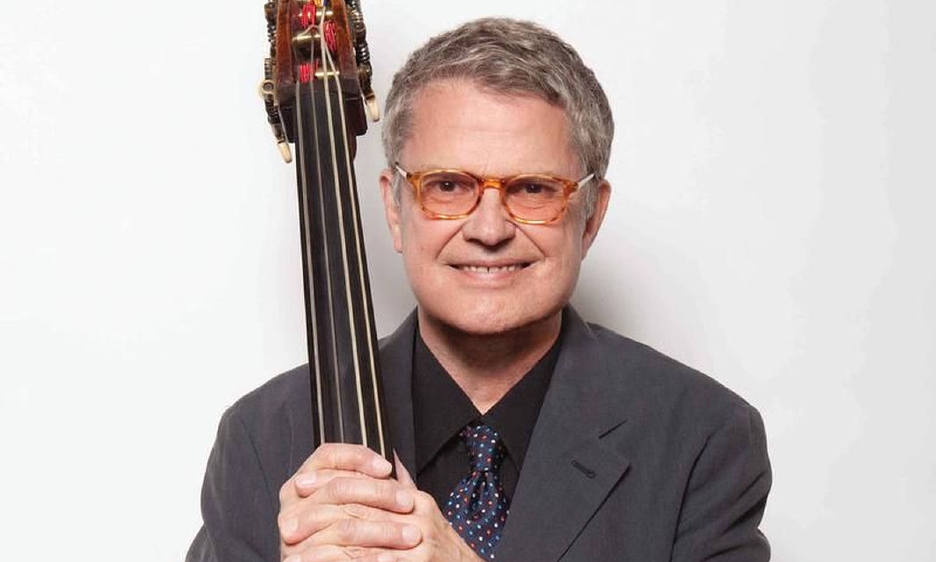
Ornette and I used to talk about it in a way where, looking at music, playing music as if you’ve never heard music before, and you’re creating it for the first time.
Fall 2026 marks 65 years since Free Jazz—recorded on December 21, 1960 for Atlantic Records and released in September 1961, produced by Nesuhi Ertegun at A&R Studios in New York City—made it's appearance, an appearance that both shocked and delighted. In the January 18, 1962 issue of down beat (as it was so monikered then), in a unique review titled "Double View of a Double Quartet," critic Pete Welding gave the album five stars while John A. Tynan rated it "no stars."
The sole outtake from the album session, "First Take," was later released on the 1971 compilation Twins and subsequent CD reissues of Free Jazz. Charlie was part of one of two quartets playing music that didn't include overdubbing or edits.
And this interview, like the subject at hand, includes no "overdubs or edits." What follows is the complete interview and reflects the immediacy of our talk, Charlie hitting the ground running, so to speak, his smooth, understated yet excitable voice the embodiment of his words.
How did Free Jazz emerge?
The most important thing was when we really started talking about the double quartet. When we arrived in New York, in November, I think it was, 1960. We were with Atlantic Records. We'd already made two records on Atlantic. One is called The Shape of Jazz to Come, the other one is called Change of the Century [with Don Cherry on cornet or pocket trumpet and Billy Higgins on drums, both 1959]. And, we went into rehearsal at the Five Spot and opened... I can't remember the night we opened, but during the period of time we were playing at the Hillcrest Club [in Los Angeles, 1958], Ornette had mentioned several times that he was writing some music for a double quartet that he wanted to do, and he wanted to use two drummers, and two bass players, and two trumpets, and two saxophones. I know he was thinking inside of his mind who he wanted to play the other trumpet and the other saxophone, because we had always played strictly as a quartet, and no one else really knew how to play with us. A lot of people wanted to play with us. I mean, at different times we would be playing at the Five Spot and people would come up and ask him if they could play, and he would always say "no," because he knew that they wouldn't be able to grasp what we were doing because we were improvising a completely different... feeling.
Could you expand on that idea of what came to be known as spontaneous composition?
When I first met him, he told me that the way he was hearing improvisation was to improvise on the feeling and the inspiration of a song rather than on the chord structure. And I told him that I had been hearing the same thing before I met him, but every time I tried to do that people would become very upset with me. And he said that's what they always do. And I said, "I know, I saw it last night when I heard you on the bandstand." And he said, "If they would just listen to what was happening, they would understand that we are actually playing the song."
And people would get angry and react.
They would get real upset, because when someone is confronted with something very challenging or telling them that maybe they might be doing something wrong, you know, they get real insecure. And they lose their perspective and their objectivity. It's a very simple thing: If you have any kind of maturity and objectivity inside you, you can say to yourself, "There are so many different ways to improvise and the way that I'm improvising isn't necessarily wrong because there's this new way of improvising that these guys are doing." Because it's all about honesty and beauty and communicating beautiful music; and, how you go about it is what's inside you. It comes from what's inside you. So, the example that I gave a while ago about... we were talking about, he told me, "You can take any standard song, and you can take your inspiration from that song and play from that inspiration and spontaneously create a new chord structure as you're playing." And, he said, as an example, the standard "Out of Nowhere," and I said, "Yeah, I know that song." And he said, "We're gonna play a melody that I've written on the chord changes of that song where you will be playing the chord changes of 'Out of Nowhere' when we play the melody that I've written, but when we start to improvise then just go with me. I'm gonna be playing how I feel about this song as far as where the intervals fall and where the phrases fall discovering new chord changes to the feeling of the song." And that's what we did.
And that was "Jayne."
That was "Jayne," a song he had written for his wife. That's on a record called Something Else!!!! [1958]. That's with a different rhythm section [including Higgins on drums, Don Payne on bass and Walter Norris on piano]... Anyway, so, while we were at the Five Spot different people wanted to sit in with us, and Ornette would never allow it. People like John Coltrane used to come in, he was there every night listening to us; Sonny Rollins came in at different times. Most every important jazz musician in New York City at one time or another came into the Five Spot and the place was packed every night, usually with musicians, and people from different art forms, painters and writers. [The cover art to Free Jazz was a painting by Jackson Pollack.]
 And after you and Ornette met, he brought in Don Cherry and Billy Higgins.
 Well, the thing was that after Ornette and I had met, I already knew Don Cherry and Billy Higgins; we had played gigs together in L.A. And so, after we met and played together, he said, "I want you to come over to Don Cherry's house and rehearse with us." And, I started going over to Cherry's every day, and we played every day with Billy and Cherry; and that's when we made the albums The Shape of Jazz to Come and Change of the Century [both 1959]. And so, when we were in New York, Ornette had mentioned to me that he was writing music for a double quartet.
This is before November of '60.
Yeah, this is like '59, 1960. And he was thinking about who to use, because he knew that he wanted to use Ed Blackwell and Billy. Billy came to New York when we opened at the Five Spot. And then he lost his cabaret card because they had found out that he had an old arrest record or something. And the cabaret card was something you needed to have back in those days in New York to play in a place where they served liquor. And if you had any kind of arrest record or police record you weren't able to get a cabaret card, you couldn't work in any club. They found out, I don't know how, an old record that Billy had had in L.A., and they took his cabaret card. When Ornette found out that was gonna happen, he immediately called for Ed Blackwell to come from New Orleans to New York. So Blackwell replaced Billy on the gig. And then, when we did the double-quartet album he used Blackwell and Billy, and Scott LaFaro and I... I mean he was my closest friend in life; we shared an apartment together in L.A. He lived with me for about a year or so. Sometimes he would go to rehearsals that I did with Ornette and listen. Although he told me, you know, on the side, "that I don't know if I can play this music or not because I love playing chord changes." And, I said, "Well, that's what we're doing." And he said, "You're not." And I said, "Yes, we are" [chuckles]. But anyway, a couple of times Scotty would play for me. He went to California at one point with Ornette. They went and played the Monterey Jazz Festival and a couple of places in L.A. Ornette liked his playing...
...and wanted to include him on the Free Jazz album.
And wanted to include him on the Free Jazz album. Anyway, we were talking at different times about this thing, and, finally, Ornette came to me and he said, "Look, I've got this music together, and I wanna have a rehearsal," if I remember correctly. I don't think we had a formal rehearsal until we got to the recording studio. I might have to refresh my memory by calling Billy, but I'm pretty sure that the first time we played that music was when we got to the recording studio up at Atlantic, and Ornette had told me that he had called Freddie Hubbard and [reed player] Eric Dolphy to be the other horns. It wasn't a surprise that he would call Eric; it was a surprise that he would call Freddie Hubbard because Freddie Hubbard was really a bebop trumpet player. There was a question as to whether Freddie can play this, the way we're playing. And he said, "Well, we'll bring him with us." And I said okay.
You don't remember them playing together or even meeting before?
No. Let me call Billy Higgins and ask him about some of these details.
We agreed for me to call him back in 15 minutes. When I called back...
...I was on the phone with Ornette. He had spoken to Freddie Hubbard and heard him play. And he thought that Freddie was one of the only other trumpet players that was open-minded enough to do this thing that he wanted to do. And then he said that he had known Eric Dolphy in L.A. And when Ornette got to New York Coltrane had asked him to join his band. And he said that he couldn't because he was playing with his quartet and that was the most important thing. And then, Eric Dolphy joined Coltrane when Ornette didn't do it. And, actually, Trane was coming by and studying with him, at least once a week. And he had written some tunes for him. Anyway, when he started thinking about doing the double-quartet album, he wrote all the music, and then he called Scotty because Scotty had played a little bit with him before. And me and Blackwell and Cherry were playing with him already. And then he got Billy, and we went into the studio at Atlantic Records; where they had their old studio was real small. And I remember it was a snowstorm outside. And, we went in, went over the music about one time and then recorded. And we did two takes of everything; and the best take was released as the double-quartet record Free Jazz on Atlantic; that's with the Jackson Pollock painting on the cover. And then, maybe ten or twenty years later they issued the second take on another album.
What was the concept behind the double quartet?
He felt that with more horns involved that it could open up even more and become even freer if the horns are playing the right music as far as the compositions were concerned; that would give them a take-off point for improvisation; and he thought [that] with that instrumentation. In fact, he said Eric asked him what instrument he should play. And Ornette told him you can play whatever instrument you want. So he brought his bass clarinet, and that's what he played; he didn't play alto. He had this feeling that everything would open up and become really free with this certain number of musicians, and that we're all thinking about improvisation. They were open to it. They were open to playing free and to discovery and experiment. And that's what happened. He was right.
Was the idea of duplicating instruments a way to free up the other instrument? For example, you and Scotty were able to free each other up. It wasn't like one of you had to hold down the bass chair.
Right.
Was there a discussion about this in advance?
There was a discussion where Ornette said just listen and your roles will come to you. Somebody will have a certain role and then that role will be taken by somebody else and you'll have a different role, and there'll be a lot of exchanges going on. But, as far as there are two trumpets and two saxophones, the double instrumentation can free each horn player up to do what they want to do at different times.
So, the communication was less verbal and more musical, more in the moment.
There was discussion. Ornette explained to us that he had written this piece for a purpose, for a double quartet, and the reason was to be able to experience a new kind of freedom with the individual instruments in a way that's never been done before. And, hopefully, the music that he had written would allow this to happen even more. And then we started rehearsing.
How did it stand in line with the quartet's previous albums? An extension? A departure?
Well, it was completely different in that we were listening to four more musicians than we ordinarily would.
Apart from the additional instruments, was there something different in concept?
There wasn't that much difference in concept except for the fact that there were two added musicians that we had never played with before. I had played with Eric in San Francisco and some in New York; so I knew his playing. I had never played with Freddie Hubbard before, and didn't really know him.
There seemed to be a more conventional approach to rhythm when it came to Ed and Billy's playing.
Well, you know, in Ornette's music there's always a flow and always a pulse happening.
As opposed to something a few years later, like with Coltrane's multi-instrumental Ascension.
Well, of course, we've played music that's completely out of time. More recently, like on Song X [1986, with guitarist Pat Metheny], we played a thing called "Endangered Species," which has no time.
But then, were you building on something that had bebop roots?
We didn't think of it so much as a bebop basis. We were playing different rhythm patterns behind the soloists, which were in a definite flow.
There's a kind of swing feel going on.
Man, when you got Billy Higgins and Ed Blackwell playing you can help but swing!
Did Ornette come up with the title Free Jazz?
Yeah.
Is he the one who coined the term free jazz?
You know, you got me there. I was probably thinking that he was.
And the titles to many of those albums of his were like declarative statements.
Ornette completely produced and directed his albums. Back to Free Jazz and the swinging: the role of the bassist, you know, it really freed Scotty and I to do pretty much what we wanted to do, and I was listening to what Scotty was doing. It was the first time, I don't know, two bass players played together in a context like that. Duke Ellington at one time had two bass players when Jimmy Blanton joined him [with bassist Billy Taylor in 1939]. But, I was able to listen to what Scotty was doing and he was able to listen to what I was doing, and we kind of complemented each other; we played completely different things. We never walked together. If he would walk, I'd be doing something else, if I was walking he'd be doing something else.
What do you think the legacy of Free Jazz and free jazz itself is today? You've played in many styles of jazz over the years, apart from electric bass and fusion.
I've been playing fusion, too. But not on electric bass. I got an electric bass when my family was getting started and we were broke and I started doing jingles and things like that. I felt like I was aiding and abetting the enemy. I stopped.
And Steve Swallow?
Steve Swallow switched to electric bass 'cause that's what he was hearing. I've always heard wood and the beauty of the acoustic bass. The only reason I ever played an electric bass was when we needed the money and I started doing some tv commercials, which right away I stopped. I felt I was contributing to the people who were destroying creative values and perpetuating shallow values. So I sold my electric bass and I said to myself, "My god, I'll never ever do that again no matter how broke I am." Anyway, when a person realizes why they have been given the gift that they have, they have to be true and honest to that and give it back to the people. That's what I learned and that's what I'm doing. That's why I never play an electric bass, but I play any music that I feel is honest from a person's heart that's gonna enhance other people's lives. I've played some things with Pat [Metheny] that could be considered fusion, and I've played some stuff on Michael Brecker's albums that could be considered fusion, where I use digital delays. I played them even on the early Keith Jarrett stuff [late-'60s, early '70s]. We played some stuff where I used, back then they called it, a wah-wah. In fact, one of Keith's tunes is called "Wah-Wah," because it's named after this foot pedal that I got, on one track with him [Jarrett's album Birth, 1972]. I've played a lot of different kinds of music with lots of different kinds of musicians, but it's always been with musicians that I felt were really dedicated to enhancing the world with honest values. As far as free jazz is concerned, those were labels; I don't know if Ornette was the first one to use that term because we were all thinking about the music we were playing, and the titles that were given to all that stuff, avant-garde and everything, were given by critics and writers and other people. We were just involved in playing the music and finding out how to execute better what it was we were hearing. All of the titles and categories we left up to other people. And the controversy that was going on behind the music, we didn't have time to think about that, either, because we were playing all the time. And we didn't let any of that stuff bother us. So, the impact of what you call avant-garde jazz and free jazz was very very strong when we came to New York and opened at the Five Spot. It made a big impact. It started kind of a... you know, it was more than a controversy because a lot of people became angry, wrote a lot of angry things in the press. A lot of musicians were very upset, saying things that later on they took back after they discovered that the music was really valid. I think that the impact of that time period was really a tremendous impact, similar to the impact that Bird and Diz [Charlie Parker and Dizzy Gillespie] brought to 52nd Street. It was the same kind of feeling. I wasn't there on 52nd Street but I can imagine what it was like by reading about it and by listening to records. I missed Bird by a few years coming to New York. I wish I had gotten there soon enough to play with him because I feel like I played with him listening to his records and talking to a lot of musicians that did play with him, and I know I would have loved him and loved playing music with him, and I think he would have liked my playing, too.
But fast-forward to today in 1991.
What I was saying was that the impact was so strong that after that the impact kind of wears down or goes away, kind of mellows out with the wind. People don't really think in terms of the new movement in jazz anymore. After we opened up in New York there were a lot of different things, like the Jazz Composers Orchestra that started happening and Archie Shepp's band and the AACM and the Art Ensemble, and Cecil Taylor... and the direction Coltrane went.
And the direction Coltrane went, exactly. I mean, he even went so far as to hire Ornette's rhythm section to record with him [The Avant-Garde, with Don Cherry, including Haden, Percy Heath, Ed Blackwell, 1960].
The album with Don Cherry. That's right. And then also Sonny Rollins hired Don and Billy and I; and I wasn't able to make it to go to Europe to make a record; I was in jail at the time.
Around the same time, Rollins made that album with Don and Billy.
That's right. With Henry Grimes on bass, or Bob Cranshaw or somebody [Our Man in Jazz, 1962; Three For Jazz, 1963]. Anyway, that made a definite explosive impact on musicians' lives when we did that. And it died down as every explosion does and goes into the mainstream of living every day. People were still really highly influenced by our music and a lot of people are still today.
John Scofield comes to mind.
Oh yeah, Scofield and Pat. Keith Jarrett. Keith hired Dewey Redman and me. He hired me because he loved me playing on all those Ornette records. And he wrote some tunes for Ornette, about Ornette. Ornette has influenced almost every musician that's making any kind of contribution to the art form. And that's the way it is and that's the way it should be because it was an innovation, and it's still an innovation. I mean, we just made this album now, a couple years ago, called In All Languages [1987], which is an innovative album. The quartet of Billy and Cherry and me and Ornette.
What is the essence that's been preserved of what runs through Scofield's music and Metheny's music and is still a part of what Keith Jarrett's doing from those early records you did with Ornette?
The essence is to play something, to improvise with an energy that's different from the traditional jazz energy, which is to create something that's never been before in a way that's gonna change the world, and that you do with your whole life energy and that you do on another level, a level above chord changes. Actually, any great musician that's made any kind of impact on the art form, like Coleman Hawkins and Sonny Rollins and Bud Powell, that's the way they approached improvisation. Bird approached improvisation risking his life with every note he played to create something that's never been before on a level that's way above the normal level of life. And that's what Ornette's music was about. And that's the impact that lasted and still lasts to this day, that way of improvising: it's a desperation to create something that's never been before. Ornette and I used to talk about it in a way where, looking at music, playing music as if you've never heard music before, and you're creating it for the first time. There are only a few musicians who approach improvising like that, but the ones that do have been highly influenced by Ornette in that quartet. People all over the world want to hear this quartet play. We did a reunion tour in '87 of Europe and every place was sold out with people standing outside that couldn't buy tickets. The same thing happened at the JVC Festival when we played at Town Hall; there were like 300 people outside that couldn't get in. A lot of young people hear the records and they've never heard us play in person.
How did you build on those early days when you got back together again?
Well, you see, Ornette and I and Cherry and Billy and Blackwell and Dewey, we play together all the time. And we were playing gigs together in the '70s, played some gigs in the '80s. We never stopped playing together, so the music is always growing.
How do you not codify what came before? It's different than, for example, what we hear on This Is Our Music [1960].
Well, that happens without even thinking about it. When we play, we play with that same dedication of making new music, and that's what happens. Listen to Song X, which included Pat Metheny and Jack DeJohnette, who had never played with Ornette before. I mean, that's a revolutionary album.
When it's the quartet, how is it different?
Same thing. When we played the tour in Europe, every night was completely different. We played all new music. We played a couple of tunes from the old albums because people wanted us to, like "Lonely Woman," we would play "Lonely Woman." And, believe me, it's so beautiful to hear Ornette play "Lonely Woman" now and listen to how he played it on the first record [The Shape of Jazz to Come]. And Old and New Dreams play it on their record [Old and New Dreams, 1979]. That's another band that kept the music growing [with Cherry, Redman, Haden and Blackwell]. There's only a few musicians that know about the language of jazz in the context of the way the improvisation goes when you play with Ornette, and those are the ones that are keeping the music alive and keep steadily influencing other musicians that hear them. I think that [pianist] Geri Allen is coming out of that completely. When the Liberation Music Orchestra plays, we just played at the Hollywood Bowl last Tuesday, and when Dewey Redman stood up to play it was like that kind of thing, that energy when Paul Motian and I were playing behind him. We've played behind him with Keith Jarrett and I've played behind Dewey with a lot of different people. It's that thrust of dedication that makes the thing different.
And makes it different every time.
Every time. Every time.
So what might seem to the outsider musicians just playing for themselves is quite the opposite. You are playing for an audience.
We are definitely playing for an audience. And the audience that wants to come and hear us play knows they're going to be challenged and know they're going to have an experience that they'll never forget.
So, the legacy of free jazz is not only an attempt to heighten the interpersonal communication between artists but it's a music of inclusion as well.
To broaden people's musical horizons.
The way you play with your group Quartet West is an example of how you've maintained a conversation with your more mainstream colleagues.
Well, I love to be able to play with different musicians that approach music with different ways and have different concepts inside them, have different harmonies inside them. Every musician has their own soul and their own identity. It's just like everyone has different fingerprints; they all hear their instruments in different ways. And when they touch their instruments that's the sound that comes out, it's the sound that they hear from their soul and their heart, and I feel very lucky to be able to seek out musicians from all over the world who have the same dedication that I do about music and to experience playing music with them; experience communicating to as many people as possible in the world so that other people can touch the deeper parts inside themselves and the beauty inside themselves and maybe make a change in their life for the better. Because, this time in the '90s of marketing, especially in the jazz world, which is a minority art form, has never been profitable for anybody. And record executives have never taken the time to find out that if they approach this thing in an intelligent way, that people can make a profit from creative and deep music. But they don't want to take the chance because they're so used to making so much money off pop music. They don't wanna gamble on it.
It's not about being inside or outside. It's about communicating.
In the '90s and in the late '80s, you see the world of music going in the direction of money. And it's really, really sad. And you see the [George H.W.] Bush administration systematically wiping out the arts. They are cutting funding everywhere they can cut it to stop art, to stifle it. You see it every day happening, man. You see it in the schools, you see it in the funding of arts organizations, the NEA [National Endowment for the Arts], everyplace. It's real important now that people realize this and get together and support the art forms. It's just like this guy in the L.A. Times, the concert that we had at the Hollywood Bowl was so beautiful and so uplifting, it was almost like a healing process for L.A. after the Rodney King beatings [March, '91]. We brought all these kids from the different churches in South and Central L.A. together to sing in the L.A. Youth Victory Choir. And it was so beautiful, and anybody who was there who heard it, they were all like enthralled and they were like in heaven. And the L.A. Times, of course, sends a classical music critic, and the guy was comparing the Orchestra with a symphony orchestra, and his last line was something like, "Well, the Liberation Music Orchestra wasn't the only band on stage that night that had great soloists..." pitting people against each other instead of trying to support the art, and make people aware of the importance of beauty in the world. It's so sad, man. So, what's gonna have to happen is with this new music that's happening, you know, and it's classical and jazz, all the art forms are coming together in a way that's never happened before, there's gonna have to be a new critic developed, a new person who has a new, open mind and a new concept. It's like a new communism. A new way of looking at government and economies for people that cannot be corrupted. And this is what's going to be necessary in the '90s. That's why this music that we're playing is always going to get better and better because there are more and more determined musicians that are coming along every day to create beauty. The more beauty that's needed the more people who'll be there to give it. So, that's what we were doing and what we were doing with Ornette when we made the double-quartet album and that's what we're doing now with Ornette every time we play. I just talked to him on the phone, and he's thinking about the next time we're going to get together. We played at the L.A. Festival last year, me and him and Billy Higgins. The place was not only sold out, there were people who couldn't get tickets at the old Orpheum Theatre where [silent screen movie star] Rudolph Valentino and all those people used to come for their premieres. Talk about energy, man.
To tie a ribbon on it, your new album, [Liberation Music Orchestra, Dream Keeper] won for Album of the Year in Down Beat's 1991 Readers Poll. Add that to your win in the Critics Poll earlier this year.
That's fantastic. You just made me very happy.
 FOLLOW John Ephland
and get notified whenever a new article published.
FOLLOW John Ephland
and get notified whenever a new article published.
A lover of music finds the words to express it. Once in a while.
About Charlie Haden

Tags
PREVIOUS / NEXT
Become a Sustaining Member

Since 1995, All About Jazz has championed jazz as an art form and supported the musicians who create it. Over three decades, it has grown into one of the world's leading jazz resources, serving hundreds of thousands of readers, musicians, presenters and industry professionals each month.
Help Build the Future of All About Jazz
Your support helps us continue building All About Jazz for the next generation—expanding our editorial coverage, preserving jazz history, developing new community features and creating better ways to discover the music and the people behind it.
Become a sustaining member for as little as $20 per year and you'll immediately enjoy an ad-free experience along with access to subscriber features and future articles for a full year.
Together, we're not simply sustaining All About Jazz—we're building its future. Thank you for being part of the journey.