Home » Jazz Articles » In Tribute To... » John Coltrane At 100: A Global Perspective
John Coltrane At 100: A Global Perspective
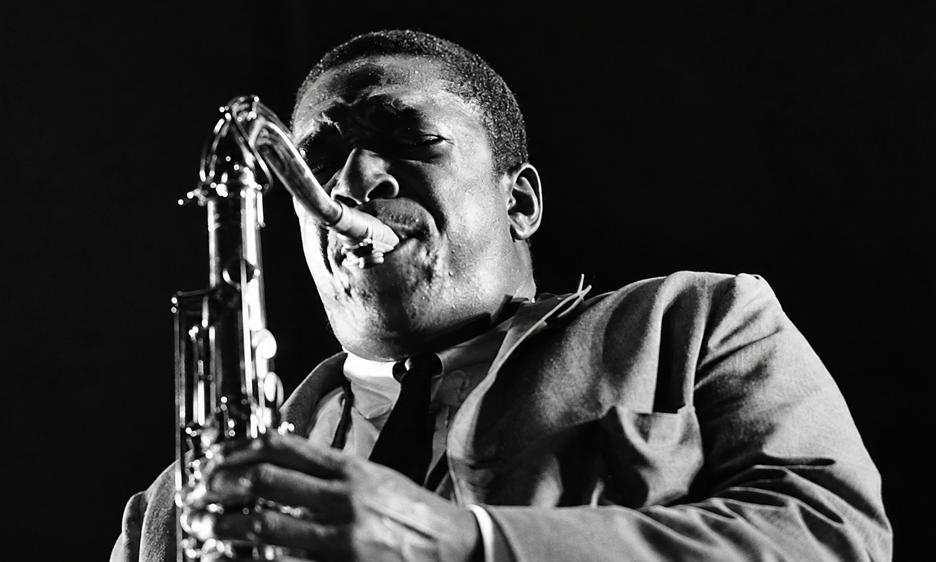
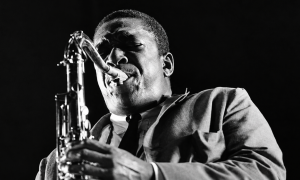
Courtesy Don Schlitten
Coltrane played love songs like a true lover, wild and intense improvisations like a fierce warrior, spiritual meditations like an old sage.
—Makram Aboul Hosn, bass (Lebanon)
His main influence, however, is not so much in his style of playing or in his sound, but in his philosophy of music—one that looked not just towards other musical cultures, their rhythms and blowing techniques, but to their spirituality as well.
His was a philosophy that sought reinvention, advancement and challenges, regardless of the critical or popular response, be it praise or disdain.
In the years since his death at the age of 40 in 1967, Coltrane has become a mythologized, lionized and sanctified figure. An icon. A legend. Too much weight, perhaps, for any musician to bear—alive or dead.
The celebrations to mark John Coltrane's 100th anniversary on September 23rd, 2026—and for the remainder of his anniversary year—will take many forms. A good proportion of these will be commercially driven—books, reissues of his recordings, archival releases, merchandise and so on.
But the countless concerts around the world honoring Coltrane will arguably be more in tune with his restless creative spirit.
On this significant occasion, many musicians and cultural gatekeepers will be asked to share their thoughts on John Coltrane.
Where this homage differs from most of these tributes is in its global reach. All About Jazz invited jazz professionals from 100 countries to talk about John Coltrane—his music, his influence and his lasting legacy. The number is symbolic, but the wide reach is surely necessary to better understand Coltrane's global legacy. Purely North American and European perspectives on Coltrane, which will doubtless dominate discussions, would tell only part of the story.
From Iraq to Singapore, from Wales to Benin, from Ukraine to New Zealand, from Haiti to Burundi, from Trinidad to Jordan, from Latvia to Venezuela, from South Africa to Iceland .. and many points in between, All About Jazz has gathered testimony from voices all too rarely represented in mainstream jazz media on such milestone occasions.
Taken together, their reflections on John Coltrane offer broad insights into his lasting influence and legacy.
Aziza Brahim, vocals (Western Sahara)
 John Coltrane is one of the most important musicians of the 20th century because, in a relatively brief period of approximately 15 years, he helped music in general, and jazz in particular, progress significantly. He had one foot in tradition and the other in modernity. His artistic curiosity and knowledge of his instrument led him to search for elements in the music of other cultures to enrich his compositions, and this is a great inspiration for me.
  My favorite John Coltrane album, and the one I have listened to the most, is Blue Train (Blue Note Records, 1958) because it recalls the authentic jazz scene of its time. It is like a sound picture of that era. When I listen to it, I am transported to a New York jazz club in the late 1950s. But I am also very interested in his mystical work, A Love Supreme (Impulse! Records, 1965), which I often listen to because I think it is an amazing example of the combination of faith and music. It is an album of extraordinary sensitivity.
 Sometimes I feel that the notes of his solos suggest words, verses, and poems that his tenor saxophone recites like whispers or authentic screams. John Coltrane is one of the African American musicians I admire most, due to his passion for the freedom to create music.
Mahan Mirarab, guitar (Iran)
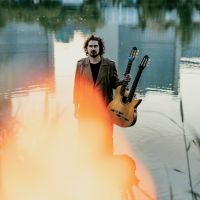 For me, John Coltrane showed the world that jazz belongs to everyone, transcending cultural and geographic boundaries. He approached music with an open mind and an open heart, drawing inspiration from musical traditions far beyond the American jazz canon. His curiosity led him to explore the blowing techniques and expressive qualities of wind instruments from Eastern cultures, incorporating new sounds and ideas into his artistic language.
 By embracing different musical traditions so deeply and respectfully, Coltrane expanded the possibilities of jazz and demonstrated that it could be a truly global art form. His influence continues to be felt throughout the world of jazz saxophone playing, inspiring generations of musicians to listen broadly, learn openly, and seek connection through music.
Sigurður Flosason, saxophone (Iceland)
 Growth. When I think about John Coltrane the first word that comes to mind is growth. I think about his amazing journey during his relatively short life—how he continued to explore and grow at an astonishing rate all through his career, always searching, never slowing down.
 I think about his strong personal voice which, in a way, remained consistent even though his style changed rapidly. I think about his ever-seeking mind, and I think about the spiritual depth of his expression. Finally, I think about his incredible work ethic, which was at the foundation of his achievements. To this day Coltrane remains unparalleled in these aspects. He is, and will be, an inspiration and a model to be lived up to by all of us who try to play improvised music.
Harold López-Nussa, piano (Cuba)
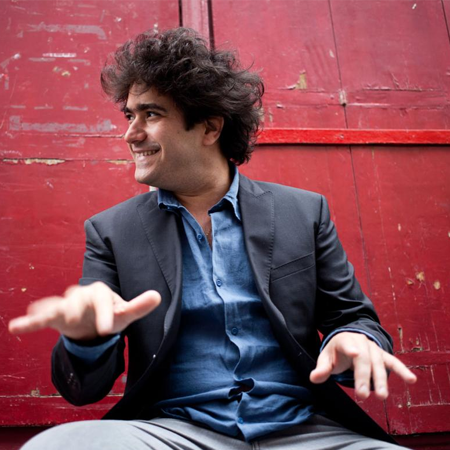 For me, John Coltrane represents far more than a musical genius; he embodies a relentless search for truth, freedom, and transcendence through music. His spiritual intensity, fearless artistic evolution, and ability to transform emotion into sound have deeply inspired my own artistic path.
 In my music, his influence is not necessarily reflected in a literal way, but rather in the constant desire to push beyond stylistic boundaries, embrace risk, and approach improvisation as an act of honesty and deep expression. Like Coltrane, I strive for each project to be a journey—an evolution that seeks to connect tradition, exploration, and emotion in an authentic and meaningful way.
Youn Sun Nah, vocals (South Korea)
 My journey with John Coltrane began with "My Favorite Things."
 My mother was a musical actress and performed in The Sound of Music in Korea. As a child, I often sat in the audience listening to her sing "My Favorite Things" in Korean. Without realizing it, that song became part of the soundtrack of my childhood.
Then, in my mid-twenties, I discovered John Coltrane's version. I was completely overwhelmed by what I thought was an entirely new piece of music. Imagine my shock when I realized it was the very same song I had heard countless times as a child—and that a familiar melody could be transformed into something so completely different.
I believe that was the day John Coltrane opened a door to a part of my soul I didn't even know existed.
It was as if he were whispering in my ear: No matter the theme. No matter the melody. Let the music flow through you.
That is what I hear throughout his recorded legacy. Whether in the lyrical intimacy of Ballads or the boundless freedom of Olé Coltrane (Atlantic, 1961), he always reminds me that music isn't meant to be controlled. Every time I listen, I simply let it wash over me and breathe in the scent of freedom.
Perhaps that is what A Love Supreme truly is: above all, a love for music itself.
So, my journey with John Coltrane began with "My Favorite Things." And, in many ways, it is still only just beginning.
Carlo Muscat, saxophone (Malta)
 At the age of 16, after four years of playing the alto saxophone, I managed to get my hands on a tenor saxophone. This moment defined my musical path because, as I later realized, I had been mostly listening to tenor saxophonists and that was the sound developing in my ears. John Coltrane was one of those major influences. As a teenager, I had already discovered Giant Steps (Atlantic Records, 1960), an album on which he played lines so complex that my ears could not grasp them, so I was content to just bask in these sounds.
 Eventually, as I expanded my listening library, I understood that there was another side to the saxophone giant; I discovered gems such as Duke Ellington & John Coltrane, John Coltrane's Ballads (Impulse!, 1963), and John Coltrane and Johnny Hartman (Impulse!, 1963). The main thing John Coltrane taught me is that intensity is non-negotiable; it is an integral part of this music, a foundation of artistic expression that has nothing to do with speed or volume. Even in his ballads, Coltrane defined intensity.
Conti Bilong, drums, (Cameroon)
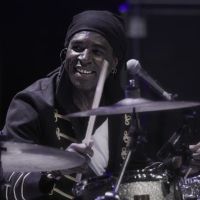 John Coltrane is a great source of inspiration for me. His work, particularly A Love Supreme (Impulse!, 1965), moves me through its African influences, its sometimes abstract world, and its profound spiritual dimension. Through his music, I feel a kind of inner revolution and liberation. His legacy continues to inspire many people around the world.
 Tri Pham, guitar (Vietnam)
 I first heard Trane when I was 15, listening to "In a Sentimental Mood." That led me to the Duke Ellington & John Coltrane album (Impulse! Records, 1963). I still remember Duke Ellington's impressionistic piano introduction and the way Coltrane entered with the melody—so expressive, profound, and spiritual that I was completely hypnotized.
 From there, I discovered more of his work, beginning with his recordings with Miles Davis and later exploring the different stages of his career, especially his later music. The deeper I went, the more I admired not only his mastery of the saxophone but also his relentless search for new sounds and new ways of expression.
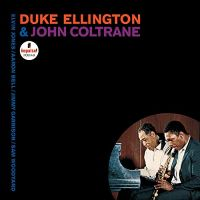 Later, I realized that the Duke Ellington & John Coltrane album was a true miracle. I still wonder how two musicians from different generations of the jazz lineage could come together so effortlessly and create something so beautiful. There is a sense of mutual respect, openness, and deep musical understanding throughout the entire record.
 To me, Trane represents the highest ideal of a jazz artist. He was never content to stay where he was. He kept pushing the limits of jazz and the saxophone, always searching, always growing. More importantly, he went beyond the mechanical side of music in pursuit of something spiritual. He was a true jazz master, a true innovator, and above all, a seeker.
As a musician, I hope to be a little more like Trane every day.
Melissa Aldana, saxophone (Chile)
 John Coltrane has always reminded me that music is not something we conquer... it is something we surrender to. Every time I return to his recordings, I hear someone listening beyond the notes, beyond the instrument, reaching for something that cannot quite be named.
 What moves me most is not only his brilliance, but his willingness to remain a seeker. Even after changing the course of jazz, he kept walking into the unknown with humility, allowing doubt, faith, love, and curiosity to exist in the same breath. That has become one of the greatest lessons of my own life as a musician: that our voice is never finished, and that the search itself is the music.
As I've grown, I find myself listening less to what Coltrane played and more to why he played. His sound carries an honesty that feels almost disarming—a reminder that vulnerability is not the opposite of strength, but its deepest expression. His music invites me to trust intuition, to embrace uncertainty, and to believe that every note can be an act of compassion. More than a century after his birth, his legacy continues to live not only in the language of the saxophone, but in every artist who chooses to keep asking questions, to keep listening, and to believe that through sound we can become a little more human.
Izabella Effenberg, harp (Poland/Germany)
 I still remember when I first heard John Coltrane. It was his album Coltrane's Sound (Atlantic Records, Rec.1960, Rel.1964). And the song the most fascinated me was "Equinox,." I still play it today sometimes, because I feel the freeness and openness there. His duo work with Rashied Ali on Interstellar Space (Impulse!, Rec .1967, Rel.1974) was a huge influence and inspiration for me. His spirituality, soulfulness and transcendence always made a great impression on me. My album Impressions in Colours, (Fine Music, 2024) with a lot of rare instruments like glass harp was notably inspired by him.
 Jeremy Rose, saxophone (Australia)
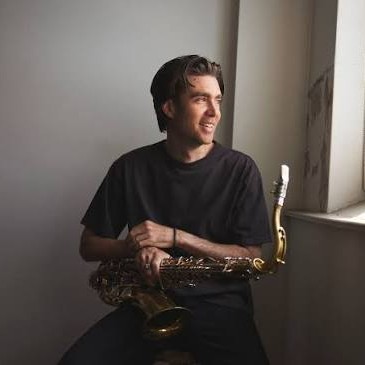 John Coltrane's influence and legacy stems not just from his harmonic devices and melodic lines, but his dedication to the art form and how he treated improvisation as an evolving science over exhibitionism. I remember listening to Miles Davis' 'Round About Midnight (Columbia Records, 1957) when I was a kid, marveling at the power of his solo on "Round Midnight." His entry was like a monumental force or a bright light—an entry into another world of sound.
 After digging deep into his catalogue, you realise you can hear his searching from very early on. He was always figuring things out on the horn, in the moment, never being completely resolved. As a saxophonist and composer, that's the standard I measure my own work against: whether the music is actually reaching for something.
There's also something to be said for how relentless he kept moving. It's quite staggering to think of his development as a composer and player from Giant Steps to A Love Supreme, to the freer territory of his final years in the space of less than a decade. Imagine what he would have achieved if he had lived as long as Sonny Rollins! It's a source of inspiration that as an artist, the journey is never complete, we should continue to keep pushing our vocabulary and compositions in new directions, keep asking what can come next. Discovering that the journey is the destination is the real inheritance that Coltrane leaves us.
Ayumi Tanaka, piano (Japan)
 John Coltrane took his first and only tour of Japan in July 1966, a year before he passed away. It is remembered through the live album Concert in Japan (Impulse!, 1973). The album captures not only the music but also the energy of the audience and the hot, humid atmosphere of Japan in July. The excitement of that time seems to become a part of the music itself.
 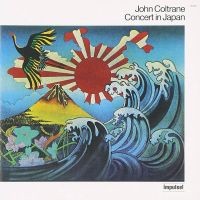 When Coltrane arrived at Nagasaki Station, he went straight to the Peace Park at the site of the atomic bomb hypocenter. A photograph shows him offering flowers and praying for the victims of the bomb. Someone who was with him said he stood quietly for a long time, looking up at the sky. He didn't even wipe away his sweat, and his calm, respectful presence deeply moved everyone around him.
 Listening to John Coltrane feels like searching for light. At certain moments, it hits you like a bolt of lightning, awakening something deep inside. The way the musicians play together in his music shows a kind of harmony that feels like an example of how we should live together with each other, with the world, and with nature. His music carries a message that we need to listen to closely.
Lao Dan, saxophone (China)
 Nearly all jazz practitioners and fans around the world are familiar with John Coltrane, and his music can be heard everywhere in China as well. What lingers most in my memory is that in 1966, one year before Coltrane's death, he undertook the only Japanese tour of his career, which was likely the closest he ever came to Asia.
 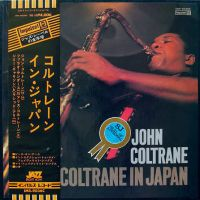 I first encountered these live recordings through the Japanese-released vinyl box set Coltrane in Japan (Impulse!, 1973) where every piece is stretched into sprawling, extended improvisations. Certain passages feature wild, explosive playing that strikes with tremendous force, yet these are exactly the elements I hold in particular fondness and esteem. May his music continue to inspire and empower future generations.
 Jure Pukl, saxophone (Slovenia)
 Picking just one favorite John Coltrane album is impossible because my appreciation of his music grew as my ears developed. I started with Africa/Brass (Impulse!, 1961) and later discovered the long live versions (Pablo Live) of "Impressions," "Lonnie's Lament" and "My Favorite Things." Since then, I've come to love every period of his career—from the orchestral vision of Africa/Brass, the lyrical beauty of Ballads and John Coltrane and Johnny Hartman, to the explosive creativity of Live at the Half Note (Impulse!, Rec. '63, Rel, '05) If I had to choose one favorite solo, it would still be "My Favorite Things" on soprano sax, as it was one of the first pieces that truly drew me into his music.
 More than any other musician, Coltrane shaped me spiritually. Through his music I began to understand that spiritual music isn't necessarily religious—it carries an intention beyond itself. Every note he played seemed to serve something greater than the performer, and that had a profound influence on both my musical and personal life.
His legacy is unmatched. He expanded the technical and harmonic possibilities of the tenor saxophone with works like "Giant Steps," "Countdown," and "Satellite," while constantly pushing music forward instead of settling into comfort. His classic quartet with McCoy Tyner, Jimmy Garrison, and Elvin Jones was a once-in-a-lifetime band whose individual voices became part of the language of jazz.
In his final years, Coltrane's music became even freer and more spiritual. I especially love the recordings with both Elvin Jones and Rashied Ali, particularly Meditations, (Impulse!, 1966) where his search for freedom and transcendence reached its most powerful expression.
Hayley Kavanagh, saxophone (Ireland)
 As a saxophonist, I always seem to come back to John Coltrane. Whenever I'm looking for inspiration—whether it's artistic, technical, or even philosophical—his music is never far away. It's almost impossible to put into words the impact he's had on generations of musicians around the world, and I doubt I could ever do it justice.
 So, I'll simply say that what continues to draw me to him isn't just his extraordinary command of the instrument; it's the complete dedication he brought to his craft and the spiritual depth that runs through his compositions and improvisations. That's not something you can imitate or recreate, nor should you try. But it's something I've always admired and aspired to in my own development as a musician—not to sound like Coltrane, but to approach the music with the same sense of curiosity, exploration and commitment.
Robert Unterköfler, saxophone (Austria)
 Thinking of John Coltrane, the first thing that pops into my head is his sound. Seldom can you tell who is playing after just one note. But with John Coltrane, this is exactly the case. Every note is loaded with so much meaning. Take "Naima," for example. If you are searching for a beautiful D (concert C), just listen to his first note over and over again. The same goes for F (concert Eb), his first note on "I Want To Talk About You."
 From a tenor player's point of view, a great example is his A (concert G), the second note on "You Don't Know What Love Is." This note has the tendency to be a bit weaker than others on the horn. But not if you keep this particular A from Coltrane in your mind.
I could go on and on with examples of notes played by Coltrane that are loaded with meaning, because that is true of basically every note he ever played.
The same sense of significance also applies for his solo arcs. Especially in his own projects, his solos possess an extraordinary logical and vital structure. This becomes increasingly evident throughout his career and provides another great example for musicians today.
Makram Aboul Hosn, double bass (Lebanon)
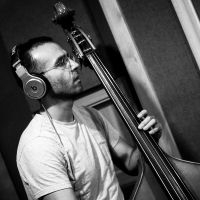 It's difficult to try and condense the vastness of John Coltrane into a few lines. One thing I have noticed about all my heroes is that they are capable of a wide range of emotional and spiritual expression with their art. Coltrane played love songs like a true lover, wild and intense improvisations like a fierce warrior, spiritual meditations like an old sage.
 He expressed grief, tenderness, anger, urgency, protest, and love with equal value. He employed his knowledge and technique, both in their highest development, to the expression of what is too grand for the human mind to bring forth in words. His work and collaborations shaped the modern sound that so many Jazz musicians have picked up and built on as an indispensable tool to express in sound what our modern world is telling us.
Efrem Roca, saxophone, founder-director Andorra Sax Fest (Andorra)
 John Coltrane's Blue Train (Blue Note Records, 1957) is probably the album of his that I have listened to the most. It was also through the title track that I transcribed one of my first complete jazz solos, an experience that taught me a great deal about phrasing, sound, rhythm and musical direction.
 What has always fascinated me most about Coltrane is not only his extraordinary musicianship, but his relentless desire to search for new paths. He was never satisfied with repeating what he already knew. Throughout his life, he constantly explored new forms of expression, challenged himself, and pushed beyond his own musical boundaries.
As a classical saxophonist, I have always felt a strong connection with that way of thinking. I believe that music should never become a comfortable place where we simply repeat what has worked before. We should always remain curious, keep learning, and continue searching for new ways to express ourselves. That philosophy has guided me throughout my career, both as a performer and as the founder and director of Andorra Sax Fest.
For me, John Coltrane's greatest legacy is not only the extraordinary music he left behind, but also the example he gave us: never stop searching.
Perico Sambeat, saxophone (Spain)
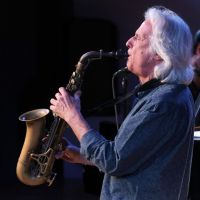 Although my instrument is the alto saxophone, I have always spent more time studying tenor players, trying to absorb the legacy of the great tenor saxophonists: Sonny Rollins, John Coltrane, Stan Getz, Joe Henderson...
 Of them all, I have to admit that Coltrane is the one I feel most drawn to. And I am referring not only to his technical mastery and extraordinary fluency. I believe his greatest quality was his profound spirituality—the deep beauty that radiates from his musical voice.
I have transcribed almost all of his solos from Crescent (Impulse!, 1964), my favorite album. Coltrane remains an example, a guiding light, and a mentor in understanding the true meaning of music.
Timóteo Cuche, saxophone (Mozambique)
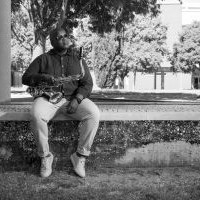 John Coltrane had a profound influence on my career as a saxophonist. When I went to study jazz at the Sibelius Academy in Finland, the first piece I was unexpectedly asked to play in a jazz repertoire class was "Moment's Notice." I wasn't prepared for its harmonic complexity, rapid changes, and technical demands. That experience was both a shock and an awakening. From that moment on, I began to study Coltrane more seriously and to listen closely to his recordings.
 Playing Coltrane's music taught me the importance of pouring all my feeling, energy, and conviction into every note I play on the saxophone. His strong and powerful tenor sound has deeply influenced my own approach to the instrument, particularly my quest for an expressive, intense, and personal tone. Coltrane showed me that technique becomes truly meaningful when it serves emotion, intention, and spiritual depth. Albums such as Blue Train, África/Brass, and A Love Supreme reveal an artist in constant transformation.
As an African musician from Mozambique, I am particularly moved by his engagement with ancestral African sounds. His legacy reminds me that artistic growth requires discipline, courage, sincerity, and the freedom to continue seeking the truth through sound.
Anais Drago, violin (Italy)
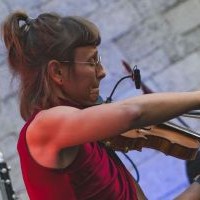 Things that come to mind when I think of John Coltrane:
 The first time I heard his name, I immediately went out and bought Lewis Porter's monumental biography. I never actually read it, though, because as soon as I came across the first mention of a particular tune, I thought, "Yes, but maybe I'd better listen to it if I really want to understand." So, I started listening—and never went back to the book. Every time I walk past the bookshelf at home, I know it's watching me and silently judging me.
The sense of wonder I felt the first—and only—time I listened to A Love Supreme. The memory of that listening experience is so vivid and profound that I'd like to preserve it forever exactly as it is. To me, it may be the ultimate expression of the duende that García Lorca wrote about—a pantheistic prayer.
The crazy and hilarious vocalese I wrote during the pandemic on his iconic "Giant Steps" solo, in which I sing about the Italian social security system, performers' employment certification, and withholding taxes. Beside me sits a little LEGO accountant.
Clinging to his performance of "Soul Eyes," transcribing and studying every single inflection, helped me reconnect with jazz during a period when life was leading me to play something entirely different.
Things John Coltrane taught me:
That you can play without vibrato. That when you feel an overwhelming need to cry something out, you have to do it. And if you can do it through music, so much the better.
Suren Kyaruns, saxophone (Turkmenistan)
 I did not get Coltrane when I first heard his music, but when I was finally ready to hear it. Sometimes great works enter our lives too early—we may play them, study them, but only years later begin to understand their true meaning. Sometimes music reveals itself to a person gradually. There are works we hear in our youth, study, and perform, yet are not fully able to grasp in their depth. For me, John Coltrane became such a musician.
 During my studies at music college and conservatory—first at the Turkmen State Music College and the Turkmen State Conservatory, and later at the Komitas State Conservatory of Yerevan and its postgraduate program—his works were a fundamental part of jazz education. We performed his standards because they were essential to every young jazz musician's repertoire. Yet at that time, much of his music did not fully resonate with me, as my understanding of harmony was still developing. I was more drawn to modal compositions with fewer harmonic changes, such as Impressions, where I felt more space, freedom, and inner meditation. This preference is likely connected to my cultural background. I was born and raised in Turkmenistan, I am Armenian, and my musical perception was shaped by Eastern traditions. The sound of mugham, modal systems, and the depth of Eastern music have always been close to me, so Coltrane's modal period naturally resonated with my inner world.
In contrast, works such as Giant Steps felt like a true Everest—a peak of harmonic thinking that I was not yet prepared to climb. My development as a musician was shaped not only by the complexity of this music but also by my environment. In my country, there was no developed jazz educational system, and access to information and modern resources was limited. The internet came into my life much later, and with it a broader view of the global jazz scene. Later, my studies in Armenia and my postgraduate training played a decisive role. There I received a solid classical and jazz education and met musicians with deeper access to international musical culture.
Eventually, the internet opened a new stage in my understanding of Coltrane. I immersed myself in recordings, masterclasses, interviews, and analyses by other saxophonists, approaching him not only as a performer but also as a composer, innovator, and musical thinker. This immersion gradually reshaped my musical language and understanding. As my knowledge of harmony and my experience as a musician grew, Coltrane's music revealed itself more clearly. At the same time, he seemed increasingly distant—in the best sense of the word. I became more aware of the scale of his thinking and the freedom with which he transformed modes, harmony, and improvisation into entirely new musical worlds. Studying Coltrane became less a technical exercise and more a search for his philosophy—his relationship to music and to life. He was not only a great saxophonist, but an artist in constant motion, always searching and pushing beyond familiar boundaries. My favorite album, A Love Supreme, reflects this understanding.
For me, music is not only technique or virtuosity, but a spiritual path—a continuous search and an attempt to express through sound what cannot be said in words. That is why, years after my first encounter with Coltrane's music, I continue to return to him. Each stage of my development reveals new meanings in his work.
Gregory Wong, trombone (Macau)
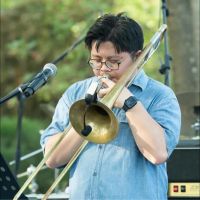 Growing up where I did in Macau, jazz was almost nonexistent. Even today, it remains a relatively rare art form. Opportunities to study jazz were scarce, so listening to records became my only way of learning and exploring this music. Among the many jazz musicians who have inspired me, John Coltrane has always been one of the artists I admire and continue to learn from. I still vividly remember the first time I heard A Love Supreme. The fearless and uncompromising spirit in his playing left me in awe and made me long to pursue music with the same sincerity and dedication.
 Yet the album that has influenced me most deeply is Coltrane Plays the Blues (Atlantic, 1962). Whenever I find myself searching for new inspiration, I return to that recording. Every time I listen, I discover something new. To me, that is one of John Coltrane's greatest gifts, music that continues to reveal new possibilities every time I hear it.
Samir Langus, vocals (Morocco)
 John Coltrane's music has always felt bigger than jazz to me. It is a search for truth, for freedom, for something sacred. As a musician from Morocco whose musical roots are in the Gnawa tradition, I feel something deeply familiar in his work. The repetition, the trance, the intensity, and the spiritual intention behind every note. Reminds me of my first encounter with music. It has always been a form of healing and connection.
 When I listen to A Love Supreme, obviously I know that this is a recognized masterpiece of jazz music, but like everyone I hear it as a prayer I think we call it a masterpiece because the work is prayer. It is a work, the transcendence of culture and language. Coltrane shows that the technical brilliance means little without honesty and purpose, and that the deepest music comes from a place of complete sincerity.
His later explorations were especially inspiring because they demonstrated fearlessness. He never stopped searching or questioning, even when it meant leaving behind what audiences expected. That courage continues to inspire musicians across the world to find their own voice instead of simply repeating tradition.
For me, John Coltrane's greatest legacy is not simply the music he left behind, but the way he lived as an artist: always searching, always listening, always growing. As I continue my own path, I hope to carry that same spirit, honoring my Gnawa roots while remaining open to new conversations, new sounds, and new ways of connecting through music.
Štěpán Flagar, saxophone (Czechia)
 I vividly remember the first time I heard John Coltrane. I was maybe 14 or 15 years old. It was on YouTube, and it was his album recording of "My Favorite Things." To be honest, I did not like it at first, although somehow I could not stop listening to it. I could not tell why, but it had a magnetic impact on me. The beginning, the tone of his soprano, and his improvisation—I literally could not stop listening to it over and over again. From then on, I started to explore his music.
 Years later, during my university studies, my friends and I performed A Love Supreme at our school festival. Even though I knew a lot of his music by then and had transcribed several of his solos, this performance was a completely new encounter with the depth of his work—one I had never experienced before. While preparing for the concert, I printed out the words to "Psalm," which Coltrane plays as a musical narration on his iconic recording. I had already known that fact, but actually trying to play those words myself made me realize the true depth of his music, as well as the meaning and power of art. There is just something magical about his sound and his approach to music that has had a profound effect on who I want to become as an artist.
Many people admire his technical abilities, harmonic sophistication, or perhaps his melodic flexibility. Obviously, I do too. But for me, it has always been his relentlessness in the search for freedom of expression. Life is full of distractions, temptations, and conflicting voices that can easily pull your focus and lead you off your intended path. Recognizing these is the first step toward staying grounded. This is exactly what I hear in his music—his mission and his focus... immensely inspiring!
Josean Jacobo, piano (Dominican Republic)
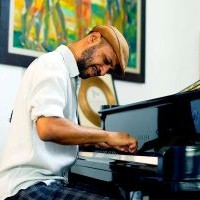 John Coltrane has been a profound inspiration, not only to musicians but to humanity more broadly. These are exactly the kinds of values I look for in other artists, because they offer us the tools to inspire meaningful change in both ourselves and others. What is it that truly moves people and encourages them to reflect on their own lives and strive to become better each day?
 Coltrane influenced countless musicians, and we were deeply inspired by him as well. While many admire and have sought to develop his extraordinary improvisational approach, I was personally captivated by his gift for composition. That is the aspect of his artistry with which I connect most deeply.
Crescent (Impulse!, 1964), for example, is an album that profoundly moved me in this respect. His ability to convey such melodic depth and tell a compelling story without uttering a single word is something that will endure forever.
Ricardo Andres Narváez Herrera, saxophone (Colombia)
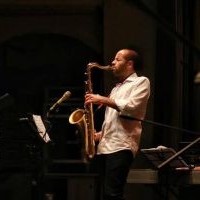 John Coltrane represents one of those musicians whose influence seems to grow the more deeply one listens to his music. His legacy lies not only in his extraordinary mastery of the instrument, but also in the profound honesty of his sound. He managed to take music to extraordinary levels of complexity while, at the same time, making even the most demanding passages seem natural and effortless.
 One of the most remarkable things about him is his ability to capture your attention with just two or three notes. There is something about his sound that is difficult to explain through technique alone. There is something deeply human and spiritual in the way he constructed a phrase, in the way he approached each note, and in the intensity with which he sought meaning through the saxophone.
Listening to him can feel less like hearing someone play an instrument and more like listening to someone speak with absolute honesty.
For any artist, studying Coltrane is also a lesson in dedication. His extraordinary musical freedom was built upon an equally extraordinary commitment to his instrument, to study, and to constant exploration. His evolution—from bebop and hard bop, through modal music and the development of his own harmonic and melodic language, to his profound spiritual exploration—reveals an artist who never accepted any territory he had already conquered as definitive.
Perhaps that is where the true strength of his legacy lies. Coltrane did not simply show us how far the saxophone could go; he showed us how far an artist can continue to search. His music reminds us that technique is only the beginning, that freedom requires discipline, and that the deepest musical expression comes from the search for something beyond ourselves.
Rachel Musson, saxophone (Wales)
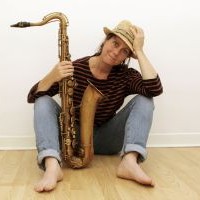 My introduction to John Coltrane was through the first jazz album I bought—Miles Davies' Kind of Blue (Columbia, 1959) as a teenager. I was already playing alto saxophone, and perhaps because it was so early in my exposure to jazz, I remember being completely blown away by the tonal quality of his sound and presence on that record. He then became a significant influence in subsequent years, and I was drawn to different periods of his work at different times, and of course his work from the mid-'60s on has had a big influence on what I and the musicians I play with do now.
 To describe him as a giant doesn't really do his phenomenal contribution justice. I've always had a particularly soft spot for Coltrane's work in the late '50s, though. During my twenties and into my early thirties I took a long break from playing for several years, and the headteacher in the school I was working in, on hearing I was thinking about picking up saxophone again, mentioned the relatively recent release of Coltrane and Monk At Carnegie Hall (Blue Note Records, Rec. '57, Rel. '05), and once again I was blown away—somehow that recommendation came at exactly the right time and before long I was back in it all again.
Luc Joly, saxophone (Reunion Island)
 It is difficult to say what I like about John Coltrane, because there are so many incredible elements in his playing. His energy, his phrasing, his harmonic knowledge, his commitment and sincerity, his instrumental mastery, his velocity, his sensitivity, his listening, his imagination, which seems limitless...
 But above all, it is the sound of his saxophone that hypnotized me from the very first time I heard it. On both tenor and soprano, his tone is extraordinarily rich—complex and complete—magically bringing together characteristics that might otherwise seem contradictory.
To be at once hard and tender, rough and silky, harsh and gentle: that is the miracle of John Coltrane, the greatest "J.C." in human history.
Lakecia Benjamin, saxophone (USA)
 John Coltrane has always represented fearlessness to me . The willingness to keep searching, spiritually and musically, no matter where that search takes you. A Love Supreme is one of those records that feels bigger than music; it feels like testimony. His sound, his discipline, and his constant evolution gave me and generations of musicians permission to dig deeper and tell the truth through their instruments. I'm still learning from that example everyday I'm alive.
 Hervé Samb, guitar (Senegal)
 I discovered Coltrane at fourteen, in Dakar, the year my mentor Pierre Van Dormael opened the door of jazz to me. "Impressions" was one of the first themes I played, again and again, in the jam sessions around the city. It was my entry into the modal world, and I never really left it.
 Around 19, my bond with him turned into an obsession, especially the final period of his life. I was overwhelmed by the power of his notes, by the emotional and spiritual intensity pouring out of them. It was as if he had become the voice of the divine. He went past all the technique, all the harmony, until only pure expression was left.
Later, travelling to New York, I met saxophone players who were true disciples, who tried to live the way he lived, who played far more than they spoke. That example of devotion pushed me to work, and to search for a kind of letting go, that absolute joy you reach only when you finally surrender to the music.
"Giant Steps" is the piece I always come back to. Years later, on holiday in Dakar, I was working through my standards and returned to it once more. That day I realized something that stopped me: its structure fit perfectly over the sabar, the traditional Senegalese percussion. I recorded that jazz sabar version on my album Teranga (Cristal Records, 2018), and the beauty of it was that I never had to bend Coltrane's writing. It respected every note. It was as if the piece had been waiting for those rhythms the whole time.
That is what Coltrane gave me: not a technique, but a direction. Music passes through us. Our job is just to be ready when it comes.
Visar Kuçi, Concertmaster, Kosovo Philharmonie (Kosovo)
 I am always fascinated and inspired by John Coltrane's commitment to seeking a deeper understanding and spiritual meaning in what he creates, and of why he creates it. His approach and his musical depth remind me more of J.S. Bach and other great composers rather than his contemporaries. The interconnectedness between the spiritual, musical, theoretical and the technical is for me one of the highest levels and a rare example.
 His song "Locomotion" from the Blue Train album has become one of my family's soundtracks as it was the first song our first baby "Lum" danced to. I feel we are blessed to have the opportunity to be able to listen to John Coltrane's music any time and feel that powerful energy and musical love and respect.
Yuhan Su, vibraphone (Taiwan)
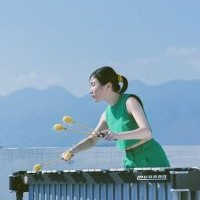 As I began writing these words, I was on a train headed to the MacDowell Residency in New Hampshire, listening to the album Dear Old Stockholm (GRP-Impulse!, Rec. 63, '66, Rel. '93)—one of my favorite John Coltrane records. Looking back, Coltrane has always held an important place in my memories of residencies. To me, his music is sacred and timeless, and that's the reason I always try to reconnect with it when my mind has the most space—not merely to learn his language, but as a reminder of his spirit.
 Last time, in the spacious highland cabin at Ucross Residency in Wyoming, I was composing the music for my album Over the Moons (Endectomorph Music, 2025)—about the tides and madness brought on by the two moons inside of my brain, one from my home country Taiwan and one from the United States. Besides the time spent working on compositions, I began practicing Coltrane's solo on the song "Crescent." There's an idiom in Mandarin that goes, "parting the clouds to see the sun," which means you gradually figure something out; this beautiful improvisation gave me the exact sensation of parting the clouds to see the "moon." As the musical phrases continued to deepen and develop throughout the piece, we were able to see the moon's various forms up close—its mysterious, serene, and immensely powerful nature. During my previous residency at the Cité des Arts in Paris, I was accompanied by the album Thelonious Monk Quartet with John Coltrane at Carnegie Hall—the brilliant convergence of two masterful composers and performers, each with their own unique style.
Eighteen years ago, I left Taiwan—the country where I grew up—and came to the East Coast of the United States to study jazz. To this day, John Coltrane's music has remained a constant presence on this long journey and will continue to guide me; his pursuit of possibility, excellence, and beauty serves as the ultimate North Star for how I approach music and improvisation.
Dimitrij Golovanov, piano (Lithuania)
 To me, John Coltrane was much more than a jazz musician. I see him as a person who, through both his life and his music, tried to replace fear with faith, darkness with light, and indifference with complete dedication. His music changed the history of jazz, but I believe the real reason was not only his talent. It was also the way he lived. His deep love for music, his humility, and his constant search for something deeper made him a truly unique artist.
 What inspires me most is his courage to follow his own musical path, even when many people did not understand it. Coltrane never stopped searching—for deeper meaning, new sounds, and a more honest way to express himself through music. He did not try to become a legend; he simply stayed true to what he believed in. To me, this is his greatest lesson: real artistic greatness comes not from the wish to be successful, but from giving yourself completely to something greater than yourself.
Manuel Huizar, flute, General Director of the National Jazz Orchestra of Mexico (Mexico)
 At one point, I started studying "Pursuance" from the album A Love Supreme. I was very excited to study that piece because it was very revealing for me at the time and for the sound I was searching for in my solos.
 Coltrane has always been an innovative figure, and his level of energy has continually inspired musicians.
Mamadou Ba, bass (Senegal)
 John Coltrane's influence on me as an African musician is very personal. When my brother and I were younger, we used to listen to John Coltrane's records at home. At first, I didn't like his music or understand it.
 But as I grew older and listened carefully, I started to feel something different in his rhythm and the way he played. To my ears, there was something deeply African in his rhythmic language, something that connected with me in a way that I didn't hear as strongly in many other jazz musicians. That's what first attracted me to Coltrane. Later, I began to feel the spiritual dimension in his music as well, and that opened another door for me. That's really how I fell in love with Coltrane's music.
In fact, one of my best friends, Mbaye Ndiaye, who used to listen to Coltrane with us, was so inspired by him that he named his son after Coltrane: Ndiagua Coltrane Ndiaye. I'm pretty sure he may be the only Senegalese person who has given his son that name.
Sanjay Divecha, guitar (India)
 When I hear his music I feel he is drawing from the universal spirit. It's beyond style and genres and his music has transcended time. Each time I hear the music it still feels fresh and innovative. A sound that's so unique—honest and fearless expression.
 Trish Clowes, saxophone (England)
 John Coltrane's 'In a Sentimental Mood' with Duke Ellington is one of my earliest memories of jazz, and I started on tenor saxophone, not alto. Blue Train is another of the first albums I listened to, and early on in my saxophone studies I attempted to transcribe the beginning of his solo on 'Blue Train' (which I finished years later... !).
 His iconic playing on Miles Davis's Kind of Blue is again one of my earliest listening experiences, along with the '58 Sessions (Phoenix Records, 2004) featuring "Stella by Starlight." For my eighteenth birthday, to my friends' surprise (and possibly dismay in some cases!) I asked for my group present from them to be Ashley Kahn's newly released book on Coltrane's A Love Supreme, and not a piece of jewelry, as was the case for everyone else!
Over the years, I have transcribed and returned again and again to Coltrane's artistic statements for deeper and deeper learning. I have many of his solos in my head and under my fingers and return to them regularly. I have also learned so much from hearing his influence on other players, in particular Joe Henderson. One of my favorite examples is Henderson's playing on 'Out 'N' In' from his album Joe Henderson in Japan (Milestone, 1973), where I can hear fragments / abstractions of Coltrane's solo on "Take the Coltrane" (from the same record with Ellington, mentioned above). These are just a few reflections on the impact that this great, great artist has had upon me thus far in my life.
Kristina Barta, piano (Czechia)
 John Coltrane has always inspired me with his endless search for something beyond the obvious. I especially love A Love Supreme. For me, it is much more than a great jazz album; it feels deeply personal and spiritual. What I admire most about Coltrane is his courage to keep evolving and searching, never settling for what he had already achieved. His music reminds me that being a musician is not about finding the final answer, but about remaining curious and open to what comes next.
 Lolivone de la Rosa, guitar (Puerto Rico)
 Imagine what this art form would be without John Coltrane's contribution... How would music sound? A new harmonic world wouldn't exist, and many artists shaped by his sound, spirituality and vision, would've been molded by other—probably more scattered—sources. Even today, six decades after his passing, when you walk into a jazz club and listen to a rising star, it's clear that his influence remains dominant.
 As a guitarist, I've always been attracted to the idea of phrasing and breathing like a saxophonist. Ballads (Impulse!, 1963) is one of his records I keep coming back to.
His influence on my playing is more about his approach to music itself—being inventive, studious and true to yourself in the search for your own sound!
Batuhan Aydın, kaval (Turkey)
 I come to John Coltrane from a very different musical geography, and this may be precisely why I have always felt so close to his sound. As a kaval player, I belong to a tradition in which notes are never simply pitches; they live through breath, inflection, ornamentation, and the subtle microtonal spaces between them. To me, Coltrane's music embodies a similar understanding of sound as something physical and alive. In A Love Supreme—especially in "Psalm," where his saxophone becomes a kind of recitation—the distinction between instrumental sound and the human voice seems to dissolve completely. For a wind player, this is deeply resonant: breath becomes syntax, and tone itself begins to carry meaning.
 What I have personally taken from Coltrane is not a set of phrases or harmonic devices, but a way of searching. His journey toward modality, spirituality, and musical worlds beyond the established language of jazz showed that curiosity does not dilute one's identity; it deepens it. This resonates strongly with my own work with the kaval, Anatolian and Balkan melodic traditions, microtonality, and contemporary improvisation. The goal is never to combine traditions for superficial effect, but to absorb them deeply enough that they eventually become part of your own voice.
A century after his birth, this restless integrity remains Coltrane's greatest legacy: the refusal to stop searching for a truer sound.
Karin Hammar, trombone (Sweden)
 I first encountered John Coltrane through his trombonist, Curtis Fuller; as a 17-year-old when I heard the track "Blue Train" and transcribed Fuller's solo. Later, I discovered his legendary compositions—"Impressions," "Naima," "Moment's Notice," and "Giant Steps"—all of which, along with so many other Coltrane works, have since secured an essential place in the modern jazz repertoire. What jazz student around the world hasn't grappled with the advanced chord progression of "Giant Steps"—a progression so characteristic of Coltrane, shifting tonal centers in a way that, to my knowledge, had never been done before in the genre?
 Then I discovered Coltrane the saxophonist, improviser, and innovator! With his utterly unique sound—on both tenor and soprano saxophone—and his groundbreaking harmonic and melodic language, he has had a profound impact on all jazz musicians who followed, and naturally, on saxophonists in particular. His mark on the history of jazz and music is indisputable; there is a "before" and an "after" with John Coltrane.
Cher Siang Tay, piano (Malaysia)
 My first impression of John Coltrane's music wasn't exactly positive; in fact, I was somewhat resistant to it. During my teenage years, while looking for a way to get into jazz, I would buy whatever jazz-related books I could find at prices I could afford. During a school holiday trip to Singapore, I picked up a copy of Essential Guide to Jazz on CD—compiled by John Fordham—at a bookstore for a bargain price. It was a hefty, treasure-filled volume, and to top it off, it even came with a CD! For someone with very limited spending power at the time, stumbling upon that felt like winning the lottery. I couldn't wait to listen to the compilation once I got home.
 The first track was a live recording of Duke Ellington's "Take the 'A' Train"—it was incredibly swinging and the improvisation was brilliant. The second track was John Coltrane's "Naima." To a jazz novice like me, the sound was earth-shattering and jarring—almost like wailing ghosts. I thought to myself, "If this is jazz, I'm going to have a hard time liking the genre... " Fortunately, the tracks that followed—Coleman Hawkins playing "Indian Summer" and Wes Montgomery playing "'Round Midnight"—restored my enthusiasm for jazz. Of course, even then, I realized my own lack of experience was the issue; if I couldn't appreciate that music, it wasn't the music's fault—I simply hadn't yet reached the level of understanding required to truly grasp it.
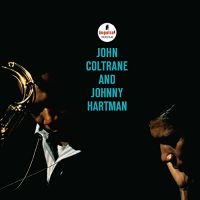 Fast-forward a few years to my college student days: I took a job at Tower Records specifically so I could listen to jazz every day. I was particularly captivated by the beautiful cover art of the John Coltrane & Johnny Hartman album (which Impulse had just reissued at the time) and by Hartman's voice, which had gained new exposure thanks to Clint Eastwood's film The Bridges of Madison County. I listened to that album almost daily and frequently recommended it to customers visiting the "Jazz Room." During this time, I grew familiar with Coltrane's distinctive tone and developed a deep admiration for McCoy Tyner's innovative improvisational passages. It remains an album I cherish; I still listen to it often and know it inside out.
 Shortly after arriving in the U.S. for college, one of the first things I bought was A Love Supreme, simply because I had read so many jazz reviews hailing it as an undisputed classic. My initial impression wasn't exactly one of awe; the chanting of "A Love Supreme, A Love Supreme" left me wondering what on earth was going on. It wasn't until years later—after I had lived more and accumulated more life experience—that I truly came to love the album.
Compared to Malaysia, the sheer abundance of books available while I was studying in the U.S. was staggering. I devoured everything that interested me—including biographies of Coltrane by authors such as Lewis Porter, Ashley Kahn, Eric Nisenson, Ben Ratliff, Frank Kofsky, Chris DeVito, and Bill Cole. I voraciously absorbed information about this musical giant while listening intently to his work. I was struck by how—during his all-too-brief life—he seemed to sense his time was running out, burning the candle at both ends as he constantly explored and pushed his boulder up the mountain. He practiced and contemplated ceaselessly, delving deep into musical concepts until he tore apart the very worlds that sound could construct, reaching out to outer space for inspiration.
Coltrane's career coincided with the perfect cultural moment, and Impulse Records producers Bob Thiele and Creed Taylor seemed to give him free rein; consequently, the massive volume of recordings left behind from those few short years offers a glimpse into the experimental music he created in his prime. My personal favorites are the recordings from 1963—1964: Ballads, Coltrane and Johnny Hartman, A Love Supreme, Both Directions at Once, Crescent and Blue World. Listening closely to these albums has been deeply enriching; I am particularly captivated by Coltrane's rich, full-bodied tone and his emotionally charged phrasing. The rhythm section—McCoy Tyner, Elvin Jones, and Jimmy Garrison—thrills me; the dynamic energy woven into their groove resonates deep within my very core. Ah, this is the true beauty of jazz!
I am glad that, back when I didn't yet grasp Coltrane's music, I didn't dismiss it outright. Instead, I patiently explored other sounds, and when I reached a certain point in my journey, the music I had once set aside suddenly became clear and meaningful. It is a wonderful feeling—realizing that this is music one can spend a lifetime understanding and experiencing.
Kossi Mawun, drummer (Togo)
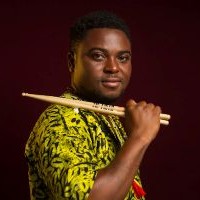 What strikes me about John Coltrane is that his music gives the impression of a spiritual quest. You really feel that he's connected. He's not just trying to play more notes or demonstrate his skill. In his piece, A Love Supreme, I, as an African jazz drummer, feel an African touch, like a kind of ceremony. In fact, I'm thinking of covering this piece on my third album. Coltrane is an avatar, I'd say. My favorite pieces are "My Favorite Things" and A Love Supreme.
 Ada Rave, tenor saxophone (Argentina)
 I first heard John Coltrane on his 1962 album Coltrane, a gift I received when I turned seventeen. I was already playing tenor saxophone. What captivated me first was his sound—as if he were singing through the tenor saxophone. The flowing rhythm of Elvin Jones and Jimmy Garrison, the blues, and the extraordinary sound of the quartet awakened a passion in me, and I listened to that cassette over and over again. That recording marked the beginning of a journey I could not yet imagine. I did not know where it would lead me, but I knew I had fallen in love with Coltrane's music. The album opened the universe of jazz to me. Only much later did I begin to understand that what had moved me so deeply was not only the music itself, but the spirit that inspired it.
 Looking at his career decades later, what fascinates me most is his willingness to keep transforming. Having mastered one language, he kept moving, absorbing new influences and experiences, questioning the language he had already forged. From A Love Supreme to Ascension (Impulse!, 1966) and the music of his final years, he continually expanded his own expressive possibilities.
He was not alone in this transformation. Musicians such as Ornette Coleman, Cecil Taylor, Sun Ra, Albert Ayler, and many others were also pushing jazz beyond its established boundaries, each following a different path. Coltrane took that language somewhere else, driven by an extraordinary impulse—a life devoted to the search for sound, where musical exploration became a form of spiritual discovery. That is what makes Coltrane so unique to me.
His music reminds me that creating is not always about reaching a final result, but about committing oneself fully to the search. In his life, the search for sound became a way of living—a continuous process of listening, questioning, transforming, playing, sharing, and remaining open to what we do not yet know. The intensity of that search gave his music a spiritual force that could profoundly move and transform those who heard it.
Marven Jean, piano/keyboards (Haiti)
 John Coltrane is not only a legend in music; his life is also a testimony of resilience and new birth. He only lived for 40 years but the music he created will keep touching and inspiring people for years and that is only because he was sincere in his love for the music and the way he expressed himself through it. His story reminds me that music can be a reflection of transformation, faith and the desire to become something greater than we once were.
 Yacine Malek, piano (Algeria)
 I discovered John Coltrane at the age of 22 through the album Olé, released in 1962, alongside a group of wonderful musicians.
 John Coltrane is one of the greatest musicians in the entire history of modern jazz, thanks to his creativity and his style, with its extraordinary sonic universe. His spaces for improvisation and his creativity continually pushed the boundaries of a jazz that, for me, became modern for its time.
I consider John Coltrane a researcher in pursuit of sonic experimentation, taking music towards a humanistic and spiritual dimension, making him also one of the greatest composers in the history of jazz.
His compositions have allowed so many others to grow, learn and immerse themselves in this jazz that influenced an entire generation of musicians and artists. Coltrane had a gift for transforming standards and ballads ("My Favorite Things). John Coltrane's music was marked by a creativity that went far beyond the avant-garde.
Tuva Halse, violin (Norway)
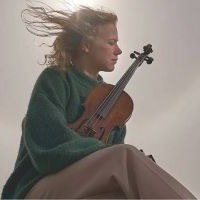 For me, John Coltrane has in many ways become a reflection of my own journey into jazz. I first immersed myself in jazz when I was eighteen, and Coltrane initially represented much of what felt overwhelming and foreign about this new musical world. During my years at the conservatory, I even found myself distancing myself from Coltrane, as he came to represent a side of jazz culture that I experienced as macho—playing fast and loud, shredding, and proving yourself through technical virtuosity. I was drawn instead to space, simplicity and melody.
 Only later did I begin to hear Coltrane differently. I realized that I had often heard the intensity of his playing as something mechanical and impressive, rather than as a vehicle for emotion and spiritual searching. Today, I think he has one of the most unmistakable identities in jazz. His sound and his ability to communicate emotion with such extraordinary intensity are deeply inspiring. Perhaps most inspiring to me is his relentless work ethic—the sense that he was never satisfied, constantly working to reach a deeper musical meaning and spiritual truth.
Salomão Soares, piano (Brazil)
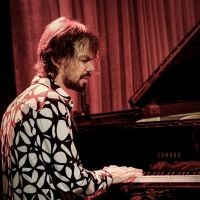 John Coltrane is synonymous with energy, creativity, sensitivity, virtuosity, and endless inspiration. I still remember the first time I heard him improvise—I wasn't just struck by his mastery of the instrument, but by how he and the music seemed to become one single thing. It made me ask myself: how does anyone reach that level of connection with music? How is that even possible?
 I have a deep love for Thelonious Monk: With John Coltrane (Jazzland), the album he shares with my hero Thelonious Monk. Recorded in 1957 during Coltrane's time in Monk's quartet—before either of them had become the towering figures we know today—it's a record I keep returning to. It sits permanently on my nightstand, so to speak; I never tire of revisiting it.
Yiorgos Bereris, piano (Greece)
 Every time I return to one of John Coltrane's albums, it feels like entering a place I've never quite been before. There is always something new waiting to be heard, understood or felt.
 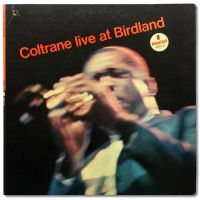 The album that has touched me the most is Live at Birdland (Impulse!, 1964). The whole atmosphere of the record feels both grounding and uplifting, as if the music somehow manages to ground you to the earth all the while it elevates you.
 "Alabama" struck me deeply when I first heard it. It felt like a profound, almost sacred prayer and at the same time, a fierce song of resistance. Only later, when I learned the story behind it, did everything fall into place. The weight of the music became clearer, and so did the feeling I had when I first heard it.
Mario Canonge, piano (Martinique)
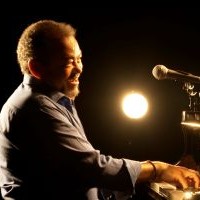 The first words that come to mind when I think of John Coltrane are: innovation, spirituality, and sound.
 The first Coltrane album I listened to, when I was only 16 years old, was My Favorite Things (Atlantic, 1961). I listened to the track over and over again, with Coltrane playing soprano saxophone alongside that legendary, intoxicating rhythm section—McCoy Tyner, Jimmy Garrison, and Elvin Jones—without ever tiring of it.
Coltrane emancipated himself from Dexter Gordon, another great master whom he admired, developing his modal approach to its ultimate expression in A Love Supreme. And what can one say about compositions such as "Giant Steps" and "Countdown," which were revolutionary in their time?
An absolute master who will never cease to inspire us.
Tony Whyton, jazz academic-author (England)
 I got into jazz through playing jazz piano, but it was the sound of John Coltrane that has had the most profound impact on me through the years.
 When I wrote Beyond A Love Supreme (Oxford University Press, 2013) over 10 years ago, I tried move beyond the usual fan-based literature (even though I remain a fan!) to explore why Coltrane has meant so much to so many people, to examine the way in which different groups have sought to claim him as one of their own, and to highlight how Coltrane's representation changed both during his lifetime and after his untimely death.
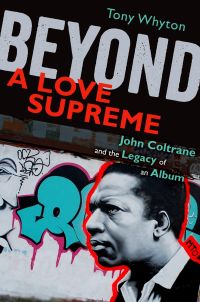 In writing that book, I continued to be drawn to Coltrane's sound world—for me, the work of the Classic Quartet remains amongst the most thrilling, sensuous, and engaging sounds in the history of recorded music—but I also wanted to convey the presence of Coltrane in everyday life; how his music and persona had inspired subsequent generations of musicians, artists, filmmakers, writers and poets.
 In my world, good academics strive to distill complex ideas into meaningful and understandable outcomes. Coltrane's music does this. Scholars try to reach audiences by encouraging critical reflection and a deeper understanding of all things human. Coltrane's music strives for this too. Whilst there might be messages that some find difficult, good academic work has the potential to change people's views of the world and of others, to encourage empathy and mutual understanding. Coltrane offers an approach to life from which we can all learn.
In today's turbulent and politically divisive world fueled by hatred, self-interest and anti-empathic sentiment, I suggest that we need Coltrane now more than ever.
Vladimir Kostadinovic, drums (Serbia)
 John Coltrane has been one of the most important musical influences on me, not only as a jazz musician, but also as a human being searching for something deeper through music.
 As a drummer, I have always felt a very special connection to Coltrane's quartet with Elvin Jones. Elvin's playing taught me that rhythm does not have to be a cage that contains the music, it can be a force that gives it freedom. His interaction with Coltrane was almost like a spiritual conversation: sometimes explosive, sometimes delicate, but always deeply connected. Listening to them, I learned that a drummer's role is not simply to keep time, but to listen, respond, challenge and inspire.
Among all of Coltrane's recordings, A Love Supreme has had perhaps the deepest impact on me. There is something about that music that goes beyond jazz, beyond technique and even beyond composition. It feels like a personal prayer. You can hear a human being searching, struggling, giving thanks and reaching towards something greater than himself.
That is what makes Coltrane so meaningful to me. His music reminds me that being a musician is not only about playing more notes, becoming more technically accomplished, or finding your own sound. It is also about finding your own truth. And perhaps the older I become, the more I understand that the most important thing in music is not what we play, but what we are trying to say through it.
Coltrane showed me that improvisation can be a form of spiritual exploration. Every time I sit behind the drums, I try to remember that music is ultimately about communication between musicians, with the audience, and sometimes, in the most profound moments, with something within ourselves that cannot really be put into words.
That is why Coltrane's music continues to live for me. I don't listen to A Love Supreme only as a jazz musician listening to a masterpiece. I listen to it as a human being. And every time I return to it, I discover something new not necessarily in Coltrane's music, but in myself.
Keenan Ahrends, guitar (South Africa)
 I first heard John Coltrane's music when I started learning jazz as a seventeen-year-old. I purchased one of my first jazz CDs which was the album Giant Steps. I remember not understanding much about the aural complexities I heard but what did stand out to me was Trane's melodic sense. All his solos were singable. This is a quality that I find in all his albums. This melodic quality can be heard throughout the various jazz genres he was pivotal in shaping on albums like Round About Midnight, Blue Train, Kind of Blue, Crescent, Live at the Half Note: One up, One Down, etc.
 Trane's music has always been a beacon for me throughout my musical career. I always come back to him and each time I do, I find something new yet familiar. The sincerity in Coltrane's performances along with his continual reaching in this art form inspires and humbles me.
Ali Riaz Baqar, guitarist in Jaubi (Pakistan)
 John Coltrane has always been a musical hero of mine. What I admire most about him is that his music feels like a lifelong search, not only for new sounds, but for something deeper and spiritual. He was an incredibly studious musician, constantly exploring scales, harmony and different musical traditions, while never losing the emotional and spiritual core of his playing. His openness to Eastern music and spirituality has particularly resonated with me and has been a major influence on my own musical journey.
 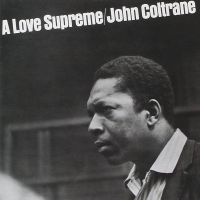 A Love Supreme is my favorite Coltrane album and one of the records that has influenced me most deeply. There is something incredibly powerful about hearing an artist use music as an expression of devotion and a search for inner peace. My favorite Coltrane solo is on "Resolution," while "After the Rain" is perhaps my favorite individual piece of his.
 Coltrane's influence also found its way directly into Jaubi's music. The title track of our album Nafs at Peace was inspired by A Love Supreme and dedicated to Coltrane. "Nafs" is an Arabic term referring to the self or soul, and the idea of the nafs at peace reflects a state of spiritual tranquility. In many ways, Coltrane showed us that jazz could be more than a musical language: it could become a vehicle for spiritual exploration, transcendence and the search for peace. That is a legacy that continues to inspire me profoundly.
Nidhal Jaoua, qanun (Tunisia)
 John Coltrane has a very special place in my musical journey, particularly because my own work has always been connected to the meeting point between different musical traditions. I come from the Tunisian and broader Arab musical tradition, with the qanun as my main instrument, but jazz has been an essential part of my musical language for many years.
 I studied Arabic music and qanun at the Conservatory of Tunis and later studied jazz and musicology, before moving to France. Since then, I have devoted much of my work to exploring the dialogue between Eastern musical traditions and jazz, particularly through Jazz Oil, the group I co-founded in Tunis with bassist and composer Slim Abida. Our music was born from the encounter between the qanun and jazz, and from the idea that musical traditions should not be separated by borders, but should be allowed to meet, transform one another and create something new.
This is one of the reasons why Coltrane's music resonates so deeply with me. Beyond his extraordinary virtuosity, I am fascinated by his constant search—his exploration of sound, harmony, modes, improvisation and, above all, the spiritual dimension of music. His journey showed that jazz could be much more than a musical language: it could become a way of searching, questioning and connecting with something universal.
Coming from Tunisia, a country at the crossroads of Mediterranean, Arab, African and European cultures, I feel particularly connected to this idea of music as a bridge between worlds. The qanun itself carries centuries of musical history, and my own artistic journey has been about bringing that heritage into conversation with contemporary jazz and other musical traditions.
Raphael Pannier, drums (France)
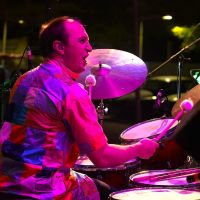 What I love about John Coltrane is the depth and integrity he inspires. An uncompromising integrity, of course: in intensity and in beauty. And a depth so profound that it brings us all closer to a spiritual state. A state of grace: fully connected to outer and inner elements alike—his group, his endless personal imagination, his audience, his community, his culture, his roots, his history, his faith. And like all masters: deeply connected to his past, but just as deeply connected to a future rooted in his imagination. That depth is especially what inspires me about him, and what pushes me to always dig deeper—within myself and in the world around me—to create something ever more beautiful.
 And speaking of connection with the group... as a drummer, of course, what I love about John is also Elvin Jones—the emotional power, the humility, the inevitability of every note, of every decision made. The freedom: on the instrument, in the interaction, in the music, in the conception of time, in the overall conception of improvisation. As a Frenchman, I can say he inspired an entire generation here, with drummers like Christian Vander and Simon Goubert, who had a considerable impact on the whole scene.
My favorite albums are all the live recordings—official and unofficial!—from the early '60s with Elvin and Eric Dolphy... like Live Trane: The European Tours. To me, they represent John's connection with everything I've described above.
Raul Sööt, saxophone (Estonia)
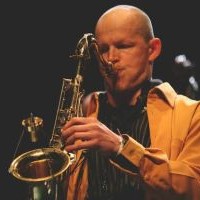 The first Coltrane album was A Love Supreme. I must have listened to it hundreds of times, from beginning to end, without stopping. Everything about it felt perfect to me—including its imperfections. The whole album is like a living, breathing organism. To this day I find it almost inappropriate to analyze it, because how do you analyze a living organism? By dissecting it, right? So I never really did.
 Over the years, however, I learned to appreciate many other Coltrane albums and his sideman appearances, particularly his playing on Milestones, 'Round About Midnight, and Kind of Blue. These I could—and did—analyze: by learning some solos and by delving deeper into the harmonic structures, the use of scales and chromaticism, and the composition and arrangement of the musical material. I find Coltrane's playing, especially on his 1950s albums, very accessible. It's no wonder that he is one of the most studied and copied musicians in the realm of jazz improvisation.
Peter Somuah, trumpet (Ghana)
 To me, John Coltrane stands as one of the true giants of jazz, a musician whose influence reaches far beyond the world of jazz and into the whole of music and culture. What moves me most about Coltrane is the sense that he takes us along with him on his personal, spiritual, technical, and experimental journey.
 Anytime I listen to Coltrane, I feel transported to a celestial realm, almost as if the music creates a connection between the human spirit and nature. There is something deeply inward about the sound he creates. The command of the saxophone, the intensity, the vulnerability.
Coltrane left behind a remarkable musical and spiritual legacy that generations of musicians continue to explore, expand, and build upon. For me, listening to Coltrane is not simply listening to jazz. It is experiencing a journey, a search, and a reminder of what it means to give oneself completely to music.
Sean Hong Wei, saxophone (Singapore)
 To dedicate one's being entirely to God through music is one of the most noble and inspiring life missions one can pursue, and John Coltrane did just that. I remember my mentor Christy Smith telling me, "Listen to Trane's intro on 'I'm Old Fashioned.' Listen to his sincerity in those notes."
 That was a profound experience for me. That was when I realized there are other elements and dimensions of music, such as sincerity, intent, spirit, and a feeling of truth.
When I listen to John Coltrane, I hear a man whose dedication to music was deeply spiritual. Yes, of course there is the element of his genius, but behind that genius was a man with a relentless work ethic who put more time and energy into practicing that horn than most people could imagine.
As my mentor, bassist Reggie Workman, who played with John Coltrane, said, "John told the world that it's important not to lose the spiritual aspect of whatever you do. This is the thing that's going to reach all people because spiritually we are all the same."
John is one of my biggest inspirations. Sometimes I think, how is it that we love so many of our musical heroes, yet we never met them? That's the power of music. His journey has inspired me to seek my own truth, not just as a musician, but as a human being.
I am moved by all periods of Trane. Some of my favorites include the 1960 European tours with Miles, John Coltrane and Johnny Hartman, Transition, and Live at the Half Note from 1965. It is astounding to me how he changed the course of music multiple times in just a ten-year period, from 1957 to 1967.
We are so blessed to have so many recordings of him. They will last a lifetime and serve as endless inspiration to us if we let our hearts be open. With eternal gratitude to John Coltrane!
Samudi Suraweera, drums, Founder—Musicmatters Sri Lanka (Sri Lanka)
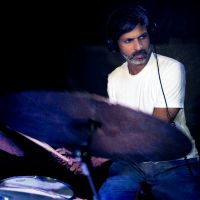 I first heard John Coltrane's A Love Supreme in my mid-twenties, and it made an enormous impression on me. What struck me most was the sheer raw energy and the sense of connection I felt—as though I was right there with them, Elvin Jones, Jimmy Garrison, and McCoy Tyner. All these years later, his music still inspires me, and it's been amazing to see young people I work with—kids from rural parts of Sri Lanka with no upbringing or exposure to jazz—genuinely resonate with Coltrane's music.
 Mina Nashaat Marie Gabra, saxophone (Egypt)
 John Coltrane stands as an monumental figure in the jazz pantheon, defined by a multi-faceted legacy that completely revolutionized the music's technical, harmonic, and spiritual boundaries. From a technical standpoint, his blinding velocity and dense harmonic overtones birthed the legendary "sheets of sound" phrasing style, permanently altering the saxophone's linear capabilities. Harmonically, his obsessive architectural genius led him to deploy symmetrical chromatic modulations—such as the four-tonic system and the iconic major-third cycles introduced on "Giant Steps." This innovative matrix, forever coined as the "Coltrane changes," defined his seminal Atlantic era and became an inescapable rite of passage for all modern improvisers.
 Yet, as his career progressed into the Classic Quartet and avant-garde years, this mathematical precision gave way to pure spirituality. As a pioneer of free jazz, Coltrane transformed improvisation into a profound meditative tool, bypassing traditional Western structures to use his horn as a direct conduit to the divine.
Despite the intellectual rigor of these pioneering harmonic ventures, Coltrane's music was never a detached academic exercise; it was delivered with an extremely heartfelt, touching, and undeniably genuine sonic expression. His mastery of complex theory never overshadowed his ability to communicate raw human emotion. Whether navigating a frantic, multi-key obstacle course or crying out over a static, open-ended avant-garde canvas, his tonal center retained a deeply vulnerable, vocal quality. It is this rare synthesis of uncompromising technical audacity and profound, universal emotional honesty that cements his work not just as brilliant music history, but as an enduring spiritual monument.
As a jazz saxophonist myself, I am constantly exposed to the overwhelming brilliance of Coltrane's late-career innovations—monolithic achievements that could easily fill volumes of musicology literature. However, what resonates most deeply with me, and never fails to touch my soul on a visceral level, is the tender lyricism of his early Prestige and Blue Note periods. There is an irreplaceable magic in his incredibly moving performances on tracks like "My Ideal," "Theme for Ernie," and "I'm Old Fashioned." Long before he dismantled the jazz landscape, his masterful control of the ballad and his elegant, searching phrasing laid the groundwork for everything to come. These specific, timeless recordings will forever shape how I listen to, appreciate, understand, and perform music on my own instrument.
Imran Ahmed, founder-managing director of Butternote Jazz Café, Dhaka (Bangladesh)
 John Coltrane has been a huge influence on the way I understand and approach jazz. Tunes like "Giant Steps" pushed me to understand harmony and melodic movement in a much deeper way. And "Naima" taught me how powerful space and simplicity can be. And "Miles Mode" taught me how sophisticated yet fun playing modal can be. The second part of the melody are the same notes played backwards. My mind was blown.
 Furthermore, John McLaughlin has always been my guitar hero, so discovering how deeply Coltrane influenced and inspired McLaughlin made my connection with Coltrane even more personal. In a way, exploring Coltrane helped me understand the musical roots of someone who had already been a huge inspiration to me. What I admire most about John Coltrane is that constant desire to explore, evolve and never stay in one place musically.
Elina Duni, vocals (Albania)
 There is a moment suspended in time, like an old photograph, where Coltrane's music plays endlessly:
 In my native homeland of Albania in the early 2000's, together with my dear friend and pianist Gent Rushi, I spent some time living in an old theatre, rehearsing onstage every day.
After dusk, when everyone else had gone home, there remained only us two and the old brick walls. The only CD I had with me at the time was John Coltrane's Ballads. Each song would resonate every evening, our very own call to prayer.
His unique tenor sound would haunt us for days and nights. We felt so privileged and thrilled to be able to enjoy his music in post-communist Albania, in a provincial town still slowly awakening from half a century of brutal dictatorship. This was a place where nobody had probably even heard the celestial music of John Coltrane before...
This old theatre, this small town and the genius of John Coltrane rising above us all.
Leon "Foster" Thomas, steel pan (Trinidad)
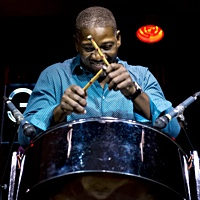 "In any situation in that we find in our lives, when there's something that we feel should be better, we must exert every effort to try and make it better. So, it's the same socially, musically, politically, in any department of your life."(Blank on Blank, 2015)—John Coltrane (interview with Frank Kofsky KPFK 90.7fm in Nov. 1966).
 My mentality as a musician is that I can always play better than my last performance. Whether it is the interpretation of a melody, the vocabulary and rhythm I use in my approach to the changes, or my connection to the theme itself, I can dig deeper. This has become something of a mantra. It is in this concept of digging deeper that I draw inspiration from John Coltrane.
Coltrane's playing was a journey into endless possibilities, so much so that it fascinated me every time I listened. He was not just playing an average lick over a 2-5-1, but rather a lyrical Giant Step that opened a new musical dimension. To Coltrane, improvisation was not an academic exercise—a point I feel strongly about—but rather a vehicle for the essence of self-expression. Music was spiritual to him, and therefore improvisation was a manifestation of his spirituality.
I have always been inspired by his extensive practice routine, a routine reflective of a bricoleur sorting through the immense fragments of playing methods and harmonic devices, knowing that there is a possibility of achieving a new musical path outside the ordinary. This form of musical expression is what I also try to emulate in my playing on the steel pan. John was a person on a mission, and in his interview with Frank Kofsky, he made that clear: "I'm trying so many things at one time... I have a whole bag of things I'm trying to work through and get the one essential... "(Orenstein 2010). For John, that one essential was his pursuit of universal truth. His spiritual journey to God.
"The truth itself doesn't have any name on it to me, and each man has to find it for himself." (Meditations, 1965)
As we celebrate the 100th birthday of John Coltrane, I am grateful for his inspiration and for the way his music continues to inspire me to dig deep into the depths of music and to manifest the levels of spirituality that the realms of music have stored in their chambers.
Samuel Laval, saxophone (Mauritius)
 As we celebrate the centenary of John Coltrane, I find myself returning to a composition that has always held a very special place in my heart: "Naima."
 For me, "Naima" represents the more tender and contemplative side of Coltrane. In a musical world often associated with his extraordinary virtuosity, relentless exploration and spiritual intensity, "Naima" reveals another dimension—simplicity, tenderness and profound emotion.
The melody is deceptively simple yet deeply moving. Coltrane does not need to overwhelm the listener with notes. Every phrase seems carefully placed, allowing the music to breathe. There is a sense of intimacy and serenity that continues to touch me every time I hear it.
What makes Coltrane so extraordinary is precisely this ability to combine technical mastery with humanity. He could push jazz towards unexplored territories while remaining connected to something deeply emotional and universal.
As a jazz musician from Mauritius, I am particularly inspired by the way Coltrane transcended geographical and cultural boundaries. His music belongs not only to America or to jazz, but to the world. His search for expression, spirituality and freedom continues to inspire musicians across generations and continents.
"Naima" is my favourite Coltrane composition because it reminds me that sometimes the most powerful musical statement is not the loudest or the most complicated one, but the one that speaks directly to the soul.
One hundred years after his birth, John Coltrane's voice remains alive—not simply in the history of jazz, but in the hearts and instruments of musicians everywhere.
Thank you, John Coltrane, for showing us that music can be both a journey of discovery and a prayer.
Lockie Bennet, guitar (New Zealand)
 John Coltrane—with the Miles Davis Quintet—was one of the first artists I heard when I was initially exposed to this music. His playing on these recordings was always the highlight for me, and I still find myself going back to them regularly.
 To me, Coltrane embodies absolute openness and freedom—just as much in his earlier years as his later years. Like his predecessors, Coltrane sounds human and honest. This is what draws me to him and players like Bud Powell and Charlie Parker. My current favorite John Coltrane album would have to be Mating Call with the great, Tadd Dameron. Just like the Miles Davis Quintet recordings, John Coltrane's sound and Philly Joe Jones' beat is one of the greatest dynamics in this music!
Christine Jensen, saxophone (Canada)
 Coltrane left his mark on me on so many levels through different periods of my life as an evolving saxophonist and composer. His personal saxophone sound is the most striking thing to me. I first heard him on the recordings with Miles Davis. HIs growth from the exercise of "Giant Steps" onward led to a spiritual exploration with meaning, and that period really captivates me.
 HIs performance on soprano was equally progressive with use of linear language and tone. I have a deep love for him as a composer, especially after exploring his modal choices that surely evolved from the Kind Of Blue sessions. I think the other mark he made with pushing sound forward was his combination of players with his classic quartet with McCoy Tyner, Jimmy Garrison and Elvin Jones. There is a certain magic in that quartet that pushes our ears into a new space.
My favorite recording is Crescent. I am late in my research in discovering his work Blue World (Impulse!) from the same period. There is a Canadian connection at that point. It is crazy that Coltrane only performed in Montreal a few times—he was there in 1963, 1964 and 1965 respectively—and even more interesting that in recent times NFB uncovered the recording he made to go with the film Le Chat Dans Le Sac by Quebec filmmaker Gilles Groulx from mid-'60s, thus Blue World... it is an album of 1964 sessions done between Crescent and A Love Supreme for the film, and released on September 27, 2019 after it was uncovered in the NFB archives.
Apparently the filmmaker was friends with Jimmy Garrison, thus the making of the magical recording. The quartet sounds so in sync on all of the tracks, and it's a really nice set of music with thrust and trust from the band.
Temidayo Balogun, saxophone (Nigeria)
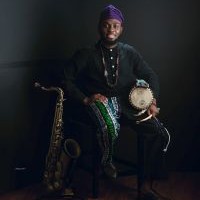 John Coltrane is the reason I play tenor saxophone today.
 I first encountered his music just after secondary school, while studying at Peter King College of Music in Lagos, Nigeria. A Love Supreme and Blue Train were among the albums that changed my life. Coltrane became a major influence on me, both as a player and as a composer, and he still is today.
Most of the solos I have transcribed are his. One of my favorites is his solo on "26-2." I have spent a lot of time listening to him and trying to understand what he was doing through those transcriptions. Coincidentally, I am currently transcribing his solo on "Satellite." Even after all these years, I am still learning from him.
A few years ago, while studying at Longy School of Music in Cambridge, Massachusetts, I made an Afrobeat arrangement of "Lonnie's Lament." I wanted to honor Fela Kuti and John Coltrane, two revolutionary musicians who are my greatest influences. Bringing Coltrane's composition into Afrobeat felt like a personal way to celebrate both of them. That arrangement will be part of my next album project.
I was also fascinated to learn about his connection with Babatunde Olatunji, a Nigerian-born percussionist. Listening to Africa/Brass deepened that feeling. These connections speak to how much he valued Africa, and as a Nigerian jazz musician, that means a lot to me.
When I think about Coltrane, I think about how much his music has shaped my journey, from my days at Peter King College of Music to what I am working on now. He is the reason I chose the tenor saxophone, and his influence is still very much present in the music I make.
Peter Erdei, bass guitar (Hungary)
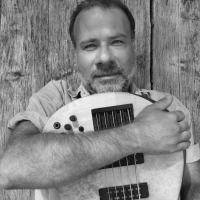 As a bass guitarist, John Coltrane's impact on my playing has been less about trying to imitate his tone or phrasing, it is more about how his music changed my views on harmony and improvisation.
 His music and playing always encouraged me to listen more deeply and to look past the obvious when figuring out a tune. "Giant Steps" has been particularly important to me. I remember practicing over the changes, connecting the two-five-ones together and trying to make sense of it. I still do time and time again, and it has been a great exercise in learning to hear and understand rapid harmonic movement. At first, the changes can seem almost impossible to create bass lines over that make sense while still being interesting. But as you practice more and more, you eventually begin to understand them. The challenge becomes less about playing the right notes and more about creating something musical to happen within the chord progression.
That was one of the lessons beside "26-2" I take most strongly from Coltrane: difficult changes aren't the purpose, instead they create opportunities for expression. Studying his music pushed me to be more adventurous, yet to remain disciplined. More than anything, I think it made me listen better. His musical legacy continues to be present in my playing, even though I'm no longer consciously thinking about it.
Sri Hanuraga, piano (Indonesia)
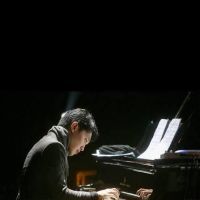 My encounter with jazz begins with my pre-teen obsession toward Keith Emerson, the keyboardist of '70s progressive rock group Emerson, Lake & Palmer (ELP). His subversive musical expression, stage act and raw energy propelled me to imitate him in any way I could. Witnessing my relentless endeavor, several prominent Indonesian musicians around me suggested that I needed to undertake a deep study of jazz in order to play like Emerson. Compelled by their advice, I forced myself to listen to some jazz—Charlie Parker, Chick Corea, Bill Evans, to name a few.
 The music interested me in some ways, but It wasn't until my encounter with John Coltrane's A Love Supreme in my teenage years that I really fell in love with jazz. The quartet's intensities, raw energy and unapologetic subversiveness intoxicated me. Despite my lack of deeper understanding of their musicality, spirituality and the discourse surrounding the music, it reminded me of ELP—only more intense.
A Love Supreme became my gateway to Coltrane's sound world. After encountering it I began to devour his earlier records and then his later ones. But throughout all these years, A Love Supreme is the one that I always go back to. Each listening reveals new perspective. It begins with the intense yet warmly welcoming energy that, to me, is unparalleled. Many groups within this tradition play with explosive energy, yet they can sometimes reek of testosterone, even of bloodlust of some sort. Trane's was different; there is grace, warmth and something majestic about it.
As my ear developed, my admiration shifted towards his harmonic fluidity, the way he gracefully danced in and out of harmony and created euphonic melodies over superimposed harmonic structures, as if the bar line did not exist. He sounded remarkably free while remaining highly structured at the same time.
Thereafter, I began to realize how McCoy, Elvin, and Jimmy operated interdependently alongside Trane. McCoy weaves harmonic threads that at times tread a different path from Trane's; Jimmy's hard-driving pulse occupies unlikely rhythmic and harmonic spaces; and Elvin's typhoon-like drumming encloses it all. It feels as if they are at ease in the presence of multiple harmonic spaces and temporalities compressed into the present. Undisturbed by nonrelation, untroubled by the need to find themselves reflected in one another, an openness to the exorbitance and underdetermination that result from bringing seemingly incompatible approaches together. This very approach captivated me, but there is something about it that I did not quite understand.
Finally, through my more recent encounter with Black Studies, particularly the writing of Fumi Okiji, I began to better understand my experience of A Love Supreme, and Trane's music in general. Okiji defines blues as an African way of life that is comfortable with containing unresolved contradiction. Something that can be observed in the encounter between African cosmologies and the arrival of Islam and Christianity in Africa, where the latter did not simply supplant pre-existing systems of belief.
In Africa, monotheism found its place within polytheistic worlds but certainly did not displace them. Another example is the contradictory nature of African American subjectivity, particularly the critical character of its obligatory retention of two conflicting positions: that of heterogeneous difference—inhuman, African, internally differentiated—and that of the hegemon—human, white, tending toward homogeneity and resolution. In music, blues becomes a materialization of this African way of relating to the world. At a most immediately recognizable level, this can be heard in the unresolved coexistence of the minor and major.
With this understanding, I began to interpret Trane differently. His freedom within tight structures, his harmonic and rhythmical superimpositions and the interdependent operation of his quartet began to appear to me as an extreme mutation of the blues. Trane understood the essence and generative potential of the blues, of Africanness, and was able to recognize and realize possibilities within it that had remained unexplored.
What ultimately captivates me is not simply Trane's radicalism, but his ability to stand firmly within a tradition while simultaneously pushing that tradition to its limits through the materials available to him at his particular historical moment. It is this tension between fidelity and transformation—between inhabiting a tradition and making its unresolved possibilities audible—that has come to shape my own understanding of jazz and, ultimately, my artistic approach.
Danylo Vinarikov, Saxophone, Bandleader of the Dnipro Big Band (Ukraine)
 I was once a first-year student at the music college in Bakhmut, studying classical music, and I hadn't even heard of jazz. I asked my teacher to get me some jazz recordings on CD. My teacher brought me one that contained two albums—Tutu by Miles Davis and A Love Supreme by John Coltrane. The first album I listened to was A Love Supreme. And that's when the magic happened. Back then, I didn't understand what jazz was or how to play it, but A Love Supreme defined the trajectory of my life. From the moment I first discovered jazz music to this day, John Coltrane's A Love Supreme remains my all-time favorite album.
 Joey Keysade, piano (Benin)
 John Coltrane's music has always meant more to me than notes and harmony; it represents a deep search for truth, freedom, and spiritual connection. In A Love Supreme, you can hear that search, the music feels like a prayer and a journey toward something greater. As a Beninese musician, I connect deeply with that spirit because jazz carries strong African roots.
 Coltrane inspires me to look deeper into my own roots and bring the rhythms and spirit of where I come from into my music. His journey reminds me that finding your own voice sometimes means returning to your source. A hundred years after his birth, his music still inspires us to search, question, and discover who we are and will impact generations to come.
Christina Dahl, saxophone (Denmark)
 John Coltrane has been, and continues to be, a profound inspiration to me through his endless curiosity and relentless search to develop and refine his musical voice—not only in sound, lines, and harmonic structures, but also in the philosophical and spiritual way he approached his role as a translator of the human spirit through music. There is a depth and honesty in Coltrane's music that touches something deep within my soul.
 Kibrom Birhane, piano-keyboards, (Ethiopia)
 John Coltrane's music is more than just sound it bridges different cultures. The first time I listened to him, it felt familiar right away. My favorite album, A Love Supreme, connects directly to my roots. It is full of real emotion, sounding like someone singing from the heart and telling a powerful story.
 Since Ethiopian music is built on pentatonic scales, Coltrane's heavy use of pentatonic scales, particularly in his later era, aligns perfectly with the spirit of Ethio-jazz. That is why his sound made sense to my ears immediately. The way he plays his lines, his embellishments, and his deep expression touch me like no other artist. Coltrane is one of the main reasons I fell in love with jazz.
Rahim Alhaj, oud (Iraq)
 Growing up in Bagdad at that time, only what I would call serious musicians knew about John Coltrane, and it was really hard to find these records. When I was at school I was obsessed with jazz. I thought, 'Wait a minute, this is maqam with different variations to it.' I studied the connection between improvisation in our world and improvisation in jazz and I found a lot of similarities, particularly with standard jazz; there is a seam then an improvisation and then back to the seam. But John Coltrane took a different path. He invented a new voice. That was his genius. His ability to combine innovation and imagination was absolutely fascinating. He was not obsessed about proving himself. He was obsessed about improving himself and that's why he's a genius. He changed the face of jazz.
 Toms Rudzinskis, saxophone (Latvia)
 What I admire most about John Coltrane is the depth and spiritual dimension in his music. He seemed to be searching for something beyond music itself, creating a language that can reach very deep and feel universal.
 To me, Coltrane represents someone who completely transformed the way the saxophone could be played and understood. His harmonic, rhythmic and melodic innovations opened new directions for generations of musicians and changed the trajectory of jazz.
What inspires me most is his constant search and willingness to follow his musical vision wherever it led him. In his relatively short life, he managed to keep evolving, taking enormous creative risks and leaving an influence that is still deeply present in music today.
Leopoldo Osio, piano-keyboards (Venezuela)
 With Coltrane for me there's always the sense that the music is reaching for something. You can talk about pentatonic scales, modes, substitutions and sound, all those things are there, and he had an extraordinary command of them. But then there is the question of what they are all leading towards. Listen to A Love Supreme and the question becomes part of the music itself.
 There's a spiritual purpose there, a search of something, perhaps god or meaning. You don't have to understand what he is playing to feel that something matters deeply to him. This is what draws me to his music, the search for something that's bigger than music, the ability to move so deeply through it that it opens into something beyond itself, and this is such an important source of inspiration to me.
Gabriel Alegría, trumpet (Peru)
 John Coltrane taught us that a melody can travel much farther than the place where it was born. That idea hit me hard when I decided to record "My Favorite Things" with the Afro-Peruvian Sextet, putting Coltrane's concept over a festejo rhythm. Suddenly, when we Peruvian musicians were in the studio with Ron Carter on bass... something deeply American was speaking in the rhythmic language of the Black music of coastal Peru. A festejo was exploding through "My Favorite Things."
 And there was something else happening in that recording that meant—more subtly—that Coltrane was present: hearing Laura Andrea Leguía play soprano saxophone on it. There is a particular power in hearing a woman's voice on that instrument, carrying a melody that Coltrane made so personal, and then hearing Laura make it her own. She didn't imitate Coltrane. It was as if she took the door he opened and walked somewhere new.
That recording empowered all of us. It reminded the Sextet that we don't have to choose between honoring the music that shaped us and transforming it through our own musical culture. Coltrane showed us what it means to search beyond what seems possible. For Afro-Peruvian jazz, that search continues—with our own rhythms, our own voices, and our own questions.
Maria Manousaki, violin (Greece)
 Listening to John Coltrane specifically play the beautiful tune "In a Sentimental Mood," makes time feel like its slowing down as the melody unfolds. The noise of the day fades into the background, leaving a warm tone that fills the room. It is a quiet, comforting sound that invites you to relax and simply listen.
 Lejla Alimanović, vocals (Bosnia and Herzegovina)
 "If I should write a... " few thoughts on John Coltrane from this timeline, a century after the birth of this singular saxophonist and composer, my thoughts inevitably return to the Coltrane Changes, which even today resonate with remarkable brightness in our understanding of the full spectrum of musical art.
 John Coltrane's artistic oeuvre—his approach to the instrument, melody, harmony, and composition—reflects his " Impressions" of the world he lived in. Deeply inspired by art and his exploration of different cultures and Eastern religious philosophies, he strove for a pure aesthetic concept in which everything had to serve the harmony of the music itself. Trane, as he was called, articulated these impressions of sound by developing them into complex, mathematical, and harmonic structures, through which his soul shimmered at every moment. By breaking through these sonic "Spirals," he paved the way for his " Giant Steps," which remains open today, though only those rare few are able to follow it to the end.
Coltrane belonged to that unrepeatable generation that included Miles Davis. As time has shown, they were true aesthetic kinsmen, despite possessing completely different poetics. For each of them to develop that rare gift, their paths had to branch out into different sonic landscapes. Two distinct paths, yet the same sublime goal—Music.
Trane would "stretch" time like dough, filling it with complex content. In the words of Ira Gitler, he created sheets of sound: dense layers of sound and endless curtains of notes from which, though they moved along wondrous paths, balance always emerged. A pioneer. In an artistic sense, Trane knew how to utilize complex systems elegantly, making them serve equilibrium. Libra. With him, it was precisely the ear that spoke (to borrow a synesthetic play on words inspired by Roland Barthes). For any great musician, the ability to hear deeply is a prerequisite, but with Coltrane, the ear became an organ of perception and knowledge, attuned to an order that transcended technique itself. Relying on the giants who preceded him, he fused precision with raw emotion. Imagination.
He learned composition and harmony from Thelonious Monk, which is highly significant because Monk was a genius whose authentic, enigmatic vision would only be understood and appreciated with the passage of time. I believe that working with that Monk gave John that hidden knowledge that complexity could be the deepest expression of clarity.
Through this rigorous, higher artistic order, Coltrane's work began to resonate on a universal plane, catching echoes of the Pythagorean "music of the spheres." Simultaneously, in an instrumental sense, he pushed the boundaries of human capability, which is perhaps best recognized through his approach to the rhythmic and melodic deconstruction of the phrase. He developed a new approach to the instrument, placing all that filigree work at the service of the whole. It was never mere, cold theory. On the contrary, systems never suppressed emotion in his music; rather, they gave it greater depth and space. Simultaneously a scientist and a shaman, John Coltrane succeeded in entering the very heart of real time, filling it with complex systems and the relationships of harmony and melody. Music simply pours from his playing.
Although he created in the previous century and lived a short life, his music remains vital today. Trane still sounds avant-garde, as if he had arrived from a time that has not yet come. He found inspiration in the music of his peers, whose playing sounded technically complex yet spiritually close to him. That is precisely how I perceive him today: technically elusive, yet spiritually near, in direct resonance with my heart.
In today's era of technological determinism, Coltrane's oeuvre can serve as a reminder that no system, no matter how complex, produces meaning on its own. Technology is a product of the human spirit, whereas music is an artistic medium through which something speaks that cannot be reduced to a function, a data point, or an algorithm. His music reminds us that the spirit cannot be reduced to matter alone. His "Giant Steps" have traversed the 20th and 21st centuries, leaving us a legacy that tells us that our most important capital is spiritual—if we can overcome the ugly discomfort of placing the words "capital" and "soul" in the same sentence. Ultimately, Coltrane's music, at its cosmic peak and destination, is nothing less than a quest for "A Love Supreme."
His timeless legacy lives on through a lineage of saxophonists who continued to follow his tracks, walking the path mentioned above. When we recognize that unique Coltrane-esque fire in the technique and expression of a master like Michael Brecker, whose own legacy continues to resonate long after his passing, we recognize not only the depth of Coltrane's influence but also the highest compliment one musician can pay another: to carry a part of their voice into the future.
A century later, the union of Coltrane's extraordinary technique and sublime soul continues to emit, without end, its most beautiful, eternal sheets of sound. And somehow, "If I should find a twinkling star (... ) that star would be" John Coltrane.
Liber Galloso, saxophone (Uruguay)
 My experience with the music and work of John William Coltrane goes back to the beginning of my studies as a musician, to my very first steps. The person who introduced me to, and first made me listen to, the music of John William Coltrane was my first teacher, Álvaro Armesto.
 From that moment to the present day, now that I have been on this musical journey for thirty years, I have never stopped listening to his work, I have never stopped admiring his work, and every time I hear his music it is like a feeling of renewal. Coltrane's music brings about a renewal in my spirit, a profound sense of contemplation, of joy, and also of impetus—a desire to continue making music.
Music is a supreme, primordial element that makes us human beings more compassionate, that gives us empathy for one another, that brings us together as brothers and sisters. That is what John William Coltrane's music awakens in me.
If I have to talk about a particular album, I cannot say that this is the one I like most, but I have four albums that are reference points for me: Coltrane, Olé, Africa/Brass... Obviously, the period with Jimmy Garrison, McCoy Tyner and Elvin Jones is the one that resonates most strongly with me. I believe that those four people created, within jazz and the wider world of music, a new way of conceiving listening and feeling.
Vladimir Karparov, saxophone (Bulgaria)
 What impressed me most about John Coltrane was his unique sound on the tenor saxophone. Unlike all the other great tenor saxophonists of that era, he was the first to draw a sound from the instrument that was very different—brighter, more singing, and seemingly closer to that of the alto saxophone. It was precisely this sound that later influenced musicians like Michael Brecker and gave a whole new direction to tenor saxophone playing.
 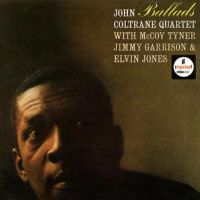 I've always heard in Coltrane's sound—especially in the second octave—how the timbre of each individual chromatic note differs from that of the others, and I've imagined it as beads of tone, like an orchestra performed by a single musician. This is perhaps most vividly felt on my favorite album of his, Ballads (Impulse!, 1963).
 Coltrane's compositions are exceptionally powerful and diverse in character, and they have greatly influenced my own work through their unique melodies and harmonies. I imagine that if Coltrane had had the opportunity to experience Bulgarian folk music—which strongly influenced Michael Brecker's later work—in the same way that Indian music influenced his own work, he would have created even more unique compositions and perhaps developed an even more distinctive style of playing the tenor saxophone.
Despite his short life, Coltrane left behind a great musical legacy that set a new direction for contemporary music and continues to inspire so many musicians and artists to this day. His message is beauty, love, and divinity!
Amina Figarova, piano (Azerbaijan)
 Some of the most important musical lessons in my life have come through conversations rather than concerts. One of those conversations was with the late, great Toots Thielemans.
 My husband is Belgian, and he knew Toots quite well. About twenty-five years ago, I was performing at a festival with my sextet, and Toots was there with his quartet. One evening, the festival invited all the performing artists to dinner at a beautiful restaurant. By chance, I found myself sitting next to Toots.
We started talking about music—about the records that had inspired us, the musicians who had changed us, and those moments when something you hear suddenly opens a door you didn't know was there.
At some point, Toots began telling me about a period in his life when he had felt stuck. Toots was born in 1922, and in the early 1960s, when he was in his forties, he had already developed such a distinctive musical language that he was known around the world. But he told me that, despite all of that, he had become frustrated with himself. He felt that he was always playing the same language, the same vocabulary, and he had become tired of hearing himself repeat it. He felt stuck in his improvisation.
Then he heard John Coltrane's solo on Some Day My Prince Will Come.
Something happened.
Toots told me that he transcribed the solo, learned it by heart, and then played along with Coltrane over and over again. For him, that solo contained something he had been searching for. It represented what modern jazz meant to him—freedom, intensity, direction, and the possibility of going somewhere he hadn't been before.
He told me that learning that solo changed his playing significantly. It helped him become more free.
I never forgot that conversation.
When I returned home from our tour, I decided to do the same thing. I transcribed that particular Coltrane solo and learned it. It became a turning point for me as well, opening the door to a deeper exploration of Coltrane's music.
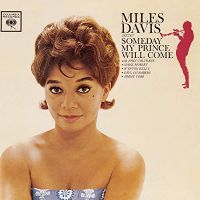 Some Day My Prince Will Come, recorded in 1961, came at an unusual moment in Miles Davis's musical life. John Coltrane was no longer touring with Miles's band; Hank Mobley had taken his place. Yet Coltrane was still invited into the studio for this recording, appearing on a few tracks.
 There is something almost mysterious about the way the session unfolds. On the title track, Miles plays the melody, and after he has played the head out, Coltrane enters. It feels almost like Coltrane is arriving from another world—suddenly bringing a completely different energy and language into the music.
The song itself is already an unlikely vehicle for this kind of jazz. Originally written for Walt Disney's 1937 Snow White and the Seven Dwarfs, Some Day My Prince Will Come is an innocent, wide-eyed love song. But in Miles's hands, it becomes something altogether different.
Paul Chambers's throbbing bass and Jimmy Cobb's cymbal work create an opening vamp that builds a quiet tension. Then, almost at exactly the right moment, the music opens into waltz time and Miles enters with the melody—delicate, elegant, and just a little sly. There is innocence in the tune, but also something sensual underneath it.
Miles's solo is lyrical and rhythmically masterful. Ira Gitler described it in the original liner notes as "sweet and sour," and that seems exactly right.
Then there is Hank Mobley, relaxed and lyrical, followed by Coltrane, whose improvisation feels more intense, searching, and cerebral. Hearing the two saxophonists on the same track is extraordinary—two very different musical personalities, meeting for a brief moment in the studio. It was a meeting that could only happen once. And it never happened again.
But for me, the most important part of that recording is not only the history of Miles, Coltrane, or the remarkable musicians on the session.
It is the memory of sitting next to Toots Thielemans at that dinner, listening to him talk about the moment when John Coltrane changed the way he heard himself.
Years later, I still think about that conversation.
A great musician told me about another great musician who had helped him find freedom. And then, in a small way, he passed that freedom on to me.
David Lyttle, drums (Northern Ireland)
 When I think of the giants I'm always brought back to my earliest experiences of jazz. I remember driving around in my Ford Fiesta listening to cassettes I'd recorded, Trane's solos on Kind of Blue, Blue Train and later A Love Supreme taking my intrigued mind to new places.
 Even with inexperienced ears I recognized his incredible modes of intensity and sensitivity, his distinct tone and his commanding style. After a few notes, or even one long note, you know it's John Coltrane, more so than many of the greats. When I hear Trane now and reflect on his greatness, I still think of these simple observations, knowing that they are the qualities of the giants and the aspirations of us mortals.
Yacoub Abu Ghosh, bass guitar (Jordan)
 John Coltrane's music played a profound role in helping me find freedom in my own musical expression. Coming from a musical tradition where modal music is at the very heart of Arabic music, his approach to modes opened up a whole new way of thinking for me. He inspired me to search for new ways of approaching our own musical language and gave me the freedom to look at it from different perspectives, whether melodically, harmonically or rhythmically.
 More importantly, he taught me that true musical freedom does not come from abandoning knowledge and tradition, but from knowing them deeply enough to be able to move beyond their expected boundaries. That idea has stayed with me throughout my life as a musician.
My two favorite Coltrane albums are A Love Supreme and My Favorite Things. I have probably played "My Favorite Things" in one form or another with almost every musical outfit I have founded or been part of. There is something endlessly liberating about the way Coltrane takes a familiar melody and uses it as a starting point for exploration rather than a limitation. That, for me, is one of the most enduring lessons of Coltrane: knowing the language deeply, then finding your own voice within it, and eventually discovering places the language itself had not yet taken you.
Jerry Hakeshimana, guitar-vocals (Burundi)
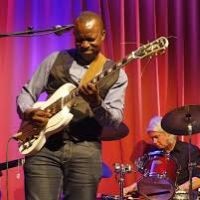 I was born in Burundi, a country where, at the time, music schools were almost non-existent. So I learned music in another way: by listening. I searched through records and cassette tapes, discovering many great jazz musicians, and among them was John Coltrane.
 Coltrane accompanied me throughout my musical journey like an invisible teacher. In many ways, he became one of my mentors, guiding me along this path of jazz. I discovered his music while surrounded by the sounds of Burundi—the sounds of nature, the voices of everyday life, and the rhythmic pounding of women preparing cassava in the evening.
Somehow, Coltrane's sound found its place among all those sounds. His music spoke to me, guided me, and helped shape the musician I became. Even without ever meeting him, I felt that I was learning from him.
That is the extraordinary legacy of John Coltrane: his voice continues to travel across generations, cultures and continents, reaching musicians in places he may never have imagined.
William Parker, bass (USA)
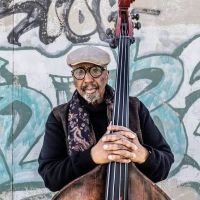 We praise John Coltrane for showing us the possibilities of sound and texture, and how these elements integrate into prayer. He took us to the door of the cosmos; unfortunately, it is a door that very few musicians want to open these days, with the focus on jazz education and imitating and trying to codify the music. The giant step is opening the door to find our own" LOVE SUPREME" which should sound totally different than Coltrane's A Love Supreme. Trane was a visionary who was following the path of spirit music. Influenced by Cecil Taylor and Ornette Coleman among others. Coltrane like Pharoah Sanders, Albert Ayler, John Gilmore, Frank Wright, Frank Lowe, Edward Kidd Jordan, Charles Gayle, David S. Ware was part of the Holy Family Which also included Yusef Lateef , Coleman Hawkins, Sonny Rollins Charlie Parker, Jimmy Lyons, Eric Dolphy, Roscoe Mitchell. And there are many more. John Coltrane inspired us to go all the way to go inside ourselves.
 Aly Keïta, balafon (Côte d'Ivoire)
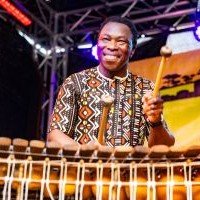 I discovered the music of John Coltrane around 1987. At that time, jazz programmes were broadcast on Ivorian television, particularly on RTI, every Friday evening. On the last Friday of each month, there was also a live radio programme called Radio Jazz Club, which brought together jazz enthusiasts from across Côte d'Ivoire.
 A few years later, I had the opportunity to take part in a jazz masterclass led by another legendary saxophonist, Pharoah Sanders. I also performed with him in two concerts in Abidjan, Côte d'Ivoire, in 1992, during his African tour.
During the masterclass, Pharoah Sanders spoke to us about John Coltrane, particularly addressing the local saxophonists who were taking part.
I still remember some of the things he told us about Coltrane, the legendary saxophonist who transformed the language of jazz through the complexity of his style and his extraordinary musical discipline. He explained how Coltrane had opened up new harmonic horizons through his remarkable technique and a musical approach deeply rooted in spirituality. His virtuosity was always guided by a spirit of freedom, spirituality and innovation. He took his improvisations extremely far, exploring an exceptional range and depth. He rarely repeated the same musical phrases in his improvisations, something that few musicians before him had achieved in quite the same way.
Whenever I listen to John Coltrane's music or watch recordings of his concerts on YouTube, I am deeply moved and impressed not only by his virtuosity, but also by his gestures and the expression in his eyes. On stage, he gives me the impression of being a rather shy man, completely immersed in a mysterious and profoundly spiritual world.
I think particularly of a video of "My Favorite Things" in which he signals the beginning of the introduction by stamping his foot twice on the floor. This gesture has always fascinated me. To my eyes, there is something deeply spiritual in its simplicity.
I also listen frequently to the traditional pentatonic balafon music of the Senufo people in northern Côte d'Ivoire. Certain passages and pentatonic sonorities in this music remind me of John Coltrane's work, particularly "My Favorite Things."
As a balafonist—and sometimes a very, very curious one—I also try to interpret the famous composition "Giant Steps" on the balafon through my own improvisations. To the best of my knowledge, no other African balafonist of my generation had attempted this before. I find it rather amusing, but above all, deeply exciting.
I would simply say that John Coltrane had a unique and immediately recognizable sound. For me, he remains one of the great pioneers and innovators who profoundly influenced the history of jazz.
Jazzique Chiverton, piano-keyboards (St. Kitts & Nevis)
 I first encountered John Coltrane's music in my keyboard book, The Contemporary Keyboardist by Navela. There, on the page, was his masterpiece "Giant Steps." I was spellbound. I had to master it.
 The rabbit hole had officially opened. I had been a pianist for most of my life at that point, but Coltrane's music pulled me into a completely new world. I bought a saxophone and started practicing. I wanted that sound, the sound that had blown me away when I first heard A Love Supreme.
From that moment on, I wasn't just listening to Coltrane. I was chasing the sound.
Blessed Ogbum, saxophone (Nigeria)
 When a saxophone was first placed in my hands during my orchestra days back home in Nigeria, the instructions from my mentors were clear and immediate: "Listen to Charlie Parker, and definitely listen to John Coltrane." Because I started on the soprano saxophone, the specific directive was to find Coltrane's "My Favorite Things."
 Hearing him play for the first time was a spiritual awakening. There was a profound sense of "knowing" and absolute "awareness" in his tone. It didn't sound foreign; it sounded like he could deeply relate to my African environment. As I grew as a musician, the puzzle pieces of Coltrane's global impact began to fall into place: As a young boy growing up in Nigeria, I initially thought Coltrane sounded like {{Fela Kuti{{, the patriarch of Afrobeat. I soon learned it was the other way around—Fela was heavily influenced by Coltrane.
Another lightbulb moment for me was discovering that Coltrane wrote a song named "Tunji" (a distinct Nigerian name) changed everything for me. As a Nigerian child growing up in the early 2000s surrounded by peers playing music instruments, it made us feel seen. To know that the great Coltrane was impacted by someone from our continent, so much so that he wrote a song about it. That was monumental.
For me and many other African musicians, this Black music established a profound sense of reconnection across the Atlantic through the years. Proving that the creative dialogue between Africa and the diaspora is still very much alive today. Coltrane's legacy proves that music travels in a beautiful, continuous loop. Coltrane's enduring impact goes far beyond the saxophone, reaching past the boundaries of genre, age-group, political affiliation, and race.
 FOLLOW Ian Patterson
and get notified whenever a new article published.
FOLLOW Ian Patterson
and get notified whenever a new article published.
Ian is dedicated to the promotion of jazz and all creative music all over the world, and to catching just a little piece of it for himself.
About John Coltrane

Tags
PREVIOUS / NEXT


Become a Sustaining Member

Since 1995, All About Jazz has championed jazz as an art form and supported the musicians who create it. Over three decades, it has grown into one of the world's leading jazz resources, serving hundreds of thousands of readers, musicians, presenters and industry professionals each month.
Help Build the Future of All About Jazz
Your support helps us continue building All About Jazz for the next generation—expanding our editorial coverage, preserving jazz history, developing new community features and creating better ways to discover the music and the people behind it.
Become a sustaining member for as little as $20 per year and you'll immediately enjoy an ad-free experience along with access to subscriber features and future articles for a full year.
Together, we're not simply sustaining All About Jazz—we're building its future. Thank you for being part of the journey.