Home » Jazz Articles » In Tribute To... » Points of View: Celebrating Dave Holland
Points of View: Celebrating Dave Holland
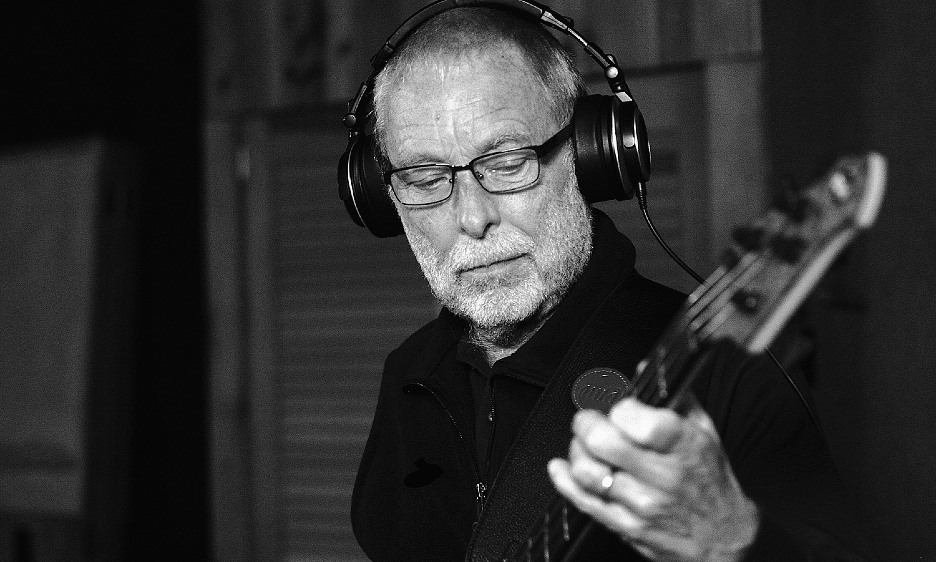
Courtesy Edition Records
A musician puts something into the world--a composition, a bass line, a recording, a way of playing, of listening, of collaborating, or, more importantly, of treating people--and lets it travel. Where does it go? Who does it reach? What does it become in the hands, ears and lives of those who encounter it?
A comprehensive interview could tell part of the story. An in-depth analysis of a discography could tell another. But perhaps the most tangible, and personal, way to understand the world an artist has created is to ask the people who have inhabited it, or simply spent enough time listening to it to feel that they know it.
On October 1, 2026, Dave Holland celebrated his 80th birthday. To mark the occasion, we reached out to his friends, colleagues, students and, perhaps most importantly, fans. Because musicians are fans first.
What began as a cyber-birthday card quickly snowballed into the preparation for an impromptu virtual surprise party of sorts, attended by a who's-who of the jazz world and beyond. The response was extraordinary, with everyone enthusiastically carving time out of their busy schedules to share memories, stories and reflections on what Dave Holland has meant to them.
If there are hundreds of ways of playing a standard, it turns out that there are just as many ways of celebrating Dave Holland—nearly 200 (click here for the list of contributors). And one of them is an improvised composition recorded for the occasion by Ernst Reijseger while another is an interview that Anthony Tidd was inspired to do with Steve Coleman on his decade-long collaboration with Dave Holland!
And that's why we kept casting our net wider and wider. With every new contribution, new insights emerged, and together they began to trace the path of a message-in-a-bottle: a musician puts something into the world—a composition, a bass line, a recording, a way of playing, of listening, of collaborating, or, more importantly, of treating people—and lets it travel. Where does it go? Who does it reach? What does it become in the hands, ears and lives of those who encounter it? As you will read, Dave's playing offered the inspiration to establish The Necks; it could silence the chatter at the old Knitting Factory's bar; it moved Charles Mingus to tell Dave Holland that he "played some nice notes" at the Village Vanguard; it made so many things possible.
The journeys of that message-in-a-bottle map a Dave Holland ecosystem extending well beyond the music itself. Again and again, these stories speak of generosity, curiosity, preparation, encouragement, friendship and an innate inclination to make room for others. Dave Holland's music has changed the way people hear, practice, compose, collaborate, teach, lead and, sometimes, the direction their lives have taken, turning them into luthiers, festival organizers, or label founders.
In an era when leadership is often confused with visibility or authority, and too often disconnected from merit and competence, seeing a leader whose influence is rooted in a rare combination of talent, hard work, humility and empathy feels like a breath of oxygen.
That is what makes the stories that follow more than a tribute.
They can be read by the obsessive, one contribution after another; by the curious, scrolling through our table of contents; or by someone discovering Dave Holland for the first time and looking for a path into his vast body of work.
In that sense, this is perhaps a kind of Lonely Planet Guide to the World of Dave Holland—written by those who have traveled there before.
This article is only one part of this All About Jazz birthday celebration. While reading, you can listen to a selection of Dave Holland's music with the suggestions from those who contributed to this tribute, in the player at the bottom of the page with a description available here. You can also explore galleries of archival pictures as well as photos of Dave Holland by Roberto Cifarelli and Luciano Rossetti, read about the stunning box set Freedom Call (Edition Records) or revisit interviews with Dave Holland published by All About Jazz over the years (1999, 2001, 2004, 2006, 2008, 2021).
Happy 80th birthday, Dave! See what you've done to us? Thank you for that!
NOTE: We reached out to an extensive network of contacts, including musicians directly or through their management. We did not have contact information for everyone we hoped to include, however, so if you are reading this and would like to contribute a tribute to Dave, please send it our way.
Anna Abondolo
Musician Dave Holland is one of the absolute greats in my book. I had the pleasure of studying with him at the New England Conservatory, where he offered valuable teachings to players with an open heart.
He prepared us for the school of life, emphasizing the importance of self-guided learning and honesty as a young musician.
He demonstrated the power of routine and disciplined practice, highlighting detailed warm-ups that would keep the fingers nimble and active. His philosophy was to always remain curious and open, encouraging us to dig into our specific musical interests with dedication while enjoying the complexity of the work ahead.
The musical landscapes Dave has traversed throughout his career are ones I've greatly admired. From Miles to Braxton, the sheer versatility and singularity of his playing are masterful.
One of my absolute favorite records of his is the solo cello album Life Cycle, which he released on ECM in 1983.
Thank you for the music and the wisdom, Dave... A very merry 80th birthday to you!
Prime Pick
Anthony Braxton "Composition 40 (O)" Dortmund (Quartet) 1976 (hat ART)Claudia Acuña
Musician It is almost impossible to choose just one Dave Holland recording that has stayed with me. There are so many. If I had to pick one, it would be Prime Directive with the Dave Holland Quintet—an album that continues to inspire me every time I return to it.
As much as I admire Dave's recorded work, however, my most treasured memories are the ones we shared making music together. Having him play on my second album, Rhythm of Life (Verve Music Group, 2002), remains one of the most treasured and honored experiences of my career. Hearing him bring songs that mean so much to me—especially Violeta Parra's "Volver a los diecisiete"—to life with such depth, energy, and generosity is something I will always cherish. This song, written by Violeta Parra, is deeply rooted in Chilean tradition, and Dave honored that tradition completely—learning it and putting his sound and himself in true service to the music. It was one of the most beautiful lessons in humility, mastery, and commitment I have experienced, and his playing driving this song is simply incredible. His solo on that piece remains one of my favorite musical moments. My only regret is that we never recorded a duet together.
What has always amazed me about Dave is not only his artistry, but the way he approaches every musical situation. When he agreed to record with me, he wanted to understand the music completely. He was genuinely curious about the songs, about what they meant to me, and about how he could best serve them. He never arrived as a star. He arrived as a collaborator.
That is what makes Dave so unique. He is an exceptional bandleader with a huge heart, deeply humble yet uncompromisingly professional. He is always thinking about the music first, always listening, always trying to make everything around him better. There is no ego—only complete dedication to the music and to the people he is making it with.
Like all the true masters, Dave's influence will continue long after our generation. He will be listened to, studied, and admired for decades to come. For those of us who have had the privilege of sharing the stage or the studio with him, his greatest lesson goes beyond music itself: remain open, stay curious, keep learning, and always put the music first. Dave's career—from Miles Davis, Herbie Hancock, Chick Corea, and Sam Rivers to the extraordinary body of work he created under his own name—shows us what it means to find your own voice while never stopping your musical journey.
For me, Dave Holland represents freedom, dedication, humility, and endless curiosity. There could be no greater example for any musician.
Prime Pick
Claudia Acuña "Volver a los diecisiete" Rhythm of Life (Verve)Ralph Alessi
Musician The four records by the Dave Holland Quintet —Jumpin' In (ECM, 1984), Seeds of Time (ECM, 1985), The Razor's Edge (ECM, 1987), Extensions (ECM, 1990) —were formative recordings for me.
They fundamentally shaped me as an improviser and composer. The band was exciting, the improvising daring and compositions (whether by Dave Holland, Steve Coleman, or Kenny Wheeler) absolutely compelling.
When I was in college, I began composing music most of which was written very much in the spirit of this music almost to the point of plagiarism!
Prime Pick
Dave Holland "Uhren" Seeds of Time (ECM)Tyrone Allen II
Musician Like so many of us, I first heard Dave Holland at a formative moment as a musician and upright bassist. Hearing someone play with such fluidity, command, and discernment is always a lesson, and Mr. Holland's expertise stood out to me then, just as it does now. Early on, I studied every video of him I could find, but eventually there came a long period when I was not checking out much new or old Dave Holland.
Fast-forward to just last year, I saw that his band was playing at Smoke Jazz Club. Fifteen years had passed, and I realized I still had not heard the master play live—and that had to change. So I got my ticket and went to the club, excited to hear the band, which included Nasheet Waits, Kris Davis, and Jaleel Shaw.
As I walked through the entrance, I was greeted by Nasheet at the bar. He says to me, "Do y'all know each other?" As he changed position, I realized Mr. Holland was standing right behind him. Nasheet left, and three seconds after entering the club, I was standing face-to-face with the Maestro himself.
Dave was curious about who I was, what was happening on the New York scene, and what I was doing at his performance. After the initial nerves wore off, we had a really nice—and longer-than-expected—conversation, especially for a man who could have been doing any number of things during his set break.
As soon as the band started, I was completely reminded of the sound, feel, and intense energy I had been missing all those years. Mr. Holland appears only to be maturing with class, precision, and the kind of knowledge that comes with a lifetime of experience. He sounded better than ever.
I personally attribute a generation of fascination with odd meters directly to Mr. Holland's expertise as a composer and performer.
Long live Dave Holland—and happy birthday!
Prime Pick
Dave Holland "Homecoming" Seeds of Time (ECM)Ben Allison
Musician My earliest memories of hearing Dave Holland on record came through his work with Miles Davis on In a Silent Way (Columbia), and later through his small-group recordings with Sam Rivers, Anthony Braxton, and the Gateway album (ECM) with John Abercrombie and Jack DeJohnette. But the record that stood out to me most in those days was his solo album Emerald Tears (ECM). It blew me away. Not just because he had the confidence to release an album of solo acoustic bass—which still feels daring to me—but because he had the musicality to pull it off. Actually, he did much more than just "pull it off." It's a complete album, full of intimacy, subtlety, and invention. You can almost hear his musical ideas unfold as the tape rolls. It is one of my favorite albums—a unique statement by a great improviser.
I've had the chance to meet Dave and hear him play many times over the years. As fellow bassist/composer/bandleaders, we've occasionally shared the bill at festivals, which is always exciting.
One time, his daughter Louise called me in an emergency to ask if I would sub for him in his band, which was in Europe at the time. Dave had been called away unexpectedly, but the promoter and the band still wanted to do the concert. My first thought was what an honor it was to be considered someone who could step in for Dave. But in truth, I was also relieved to have to politely decline. I was on the road in the U.S. with my own band, and going to Europe would have meant cancelling shows and stranding my bandmates, which I never would have done.
Had I actually been available, it would have created a real dilemma. Filling in for a bandleader in their own band—even for a single concert—is a very tall order. To do so for one of my musical heroes might have been too much. Dave's music is complex, sophisticated, and full of twists and turns—in other words, it can be challenging to sight-read. Then there's the question of how much of my own musical personality to bring to the music. I don't think I could have emulated Dave's playing even if I'd wanted to. But should I even have tried? My instinct is always to sound like myself, not someone else. But would my approach have worked in his band? All of this flashed through my head in an instant. It's literally the kind of scenario I have nightmares about. But, then the realization that I couldn't accept, and for the best of reasons, brought me back to reality.
In addition to being one of the great bassists in our music, Dave is also one of the nicest people you'll ever meet: down-to-earth, generous, and genuinely friendly. A few years ago I was playing at SFJAZZ with Michael Wolff's trio. We were in the Joe Henderson Lab while Dave's quartet was performing in the Miner Auditorium. We were all having dinner backstage when I casually asked Dave about the bass he was going to play. I remembered that he often toured with a David Gage Czech-Ease, a heavily modified acoustic bass with the lower bout cut away to make it more compact and easier to travel with. But at that moment I couldn't remember the name Czech-Ease and instead asked something like "Are you still traveling with that thing?"
"That thing?! That thing?!" he replied with mock offense and a smile.
We went down to the theatre so he could show me the instrument. We each played it for a few minutes. I explained why I found it awkward to play. Dave wasn't defensive in the slightest. He simply wanted me to understand why it worked for him and how he was able to get such a beautiful sound from it.
It was a true bass-player hang. We spend so much of our lives thinking about tone that, whenever we get together, the conversation inevitably drifts toward woods, strings, bows, setups, amplification, and all the other details that shape our sound—rather like saxophonists discussing reeds.
It meant a great deal to me that Dave cared enough to share his thinking with me. I felt a genuine sense of camaraderie with one of my heroes, and it reminded me of what I love most about this music. We each have our own way of doing things—that's what gives jazz its individuality and character.
But jazz is also about community and fellowship, and Dave Holland has always been one of its brightest examples.
Prime Pick
Dave Holland "Spheres" Emerald Tears (ECM)Barry Altschul
Musician I had a wonderful number of years with Dave, when we were the rhythm team for the likes of Chick Corea, Sam Rivers, and Anthony Braxton, to name a few.
He always played with great energy, swing, emotion, a very open conception, and great technique.
Playing with him was both an enjoyable and a very creative and challenging experience.
Happy 80th, Dave!
Prime Pick
Barry Altschul "You Can't Name Your Own Tune" You Can't Name Your Own Tune (Muse)Franco Ambrosetti
Musician When I first met Dave, he was spending a few days in Lugano between two engagements. It gave me the opportunity to get to know him—not only as the immense musician and bassist that he is, but also as a person. We spent time together and played a couple of concerts, including a television performance in Zurich.
Then, in 1985, I had the pleasure of recording Tentets in New York City with Dave, Daniel Humair on drums, Tommy Flanagan on piano, Michael Brecker on tenor saxophone, Steve Coleman on alto saxophone, Lew Soloff and Mike Mossman on trumpet, Alex Brofsky on French Horn, Howard Johnson on baritone saxophone and tuba, as well as George Gruntz as arranger, conductor, and pianist.
Dave was Daniel Humair's favorite bassist and, together with Ron Carter, he is also the finest bassist I have ever had the privilege of playing with.
I will never forget his playing, his kindness, or his remarkable musical vision.
Prime Pick
Chick Corea, Dave Holland, Barry Altschul "Vadana" A.R.C. (ECM)Stefano Amerio
Sound engineer I had the privilege of working with Dave Holland during the recording of Anouar Brahem's 2025 ECM album After the Last Sky, and it was one of those experiences that leaves a lasting impression—not only professionally, but above all on a personal level.
Our first meeting actually dates back about twenty-five years. At the time, I was the sound engineer for a concert where Dave performed as a duo with the great Ralph Towner. When we met again in the studio, I reminded him of that evening. He smiled warmly, remembered that period, and from that moment there was an immediate sense of mutual trust.
Everyone knows Dave Holland as one of the greatest jazz bassists of all time. What impressed me even more, however, was the person behind the musician: a true gentleman. Gracious, respectful, and deeply thoughtful, he showed genuine consideration for everyone involved in the creative process.
I vividly remember what he said after listening to the very first take I recorded. He turned to me and said: "The sound you've captured is good, but I think we can make it even better." What struck me most was the word "we." There was no distance between the artist and the recording engineer; we were simply two people working together toward the same goal.
He then added, with remarkable humility: "My travel bass doesn't sound quite the way I'd like it to, but together we can make it sound really good." That was the attitude of a truly great musician—not someone issuing demands, but someone inviting collaboration in the search for the best possible result.
We walked together into the live room, where he played his instrument acoustically so I could hear its natural voice. He explained the kind of tone he was looking for and asked me to find the best microphone placement. After the first test recording, he thanked me and asked if we could listen back together. After listening, he politely suggested that perhaps one of the two microphones could be moved slightly. We returned to the live room, and, following his suggestions and the sound he was seeking, I adjusted the microphone position. When we listened to the second take, his face lit up. He thanked me sincerely and said: "That's exactly the sound I wanted to hear from my instrument."
Throughout the recording session, he would occasionally turn to me with a smile, thanking me and telling me that the sound was exactly what he had hoped for. It is difficult to describe how much this meant to me. Dave Holland's greatness lies not only in his extraordinary musicianship, but also in the way he treats people—with humility, kindness, elegance, and genuine respect. He has the rare ability to make everyone around him feel valued and fully involved in the creative process.
It was one of those encounters that reminds you why you love this profession: an extraordinary artist, and an even more remarkable human being.
Prime Pick
Anouar Brahem "Never Forget" After the Last Sky (ECM)Arild Andersen
Musician The first time I met Dave was at Paul Bley's house in New York, back in 1973. I was staying with Paul, and Dave came by to go through some music with him for the recording of Paul Bley & Scorpio. Dave showed me some fingering techniques to practice, as well as some double-stops that inspired me to explore those ideas further. He was very kind and generous with me.
I went along to the recording session, and I remember being struck by the way Dave had changed the role of the bass. He brought the bass right into the band; it was no longer simply a rhythm-section instrument.
Recently, when we met, Dave told me a story about Miles saying to him, "Remember, you are a bassist." But Dave managed to do both: he could provide all the support the music needed while also placing himself right in the middle of the interplay within the group.
The Miles Davis Quintet of 1969 was very loose and open, especially during the piano solos, and Dave's bass playing from that period is incredible. For me, it is a perfect example of how adventurous a bassist can be while still providing essential support to the band.
It was also around that time that we first began to get reasonably good pickups for the bass. Suddenly, you could really be heard, and the old "bom-bom" approach to bass playing was beginning to fade away.
Dave used an Ampeg B-15 on his European tour with Miles in 1969. Some years later, he came to the Molde Jazz Festival in Norway with that same amplifier, which had been specially adapted for European 220-volt power. There was little point in taking it back to the United States, so he let me have it for a very reasonable price.
I still use that amplifier in my rehearsal room today. Whenever I look at it, I think about how many wonderful bass phrases must have passed through it over the years.
One other record I must mention is A.R.C., with Chick Corea and Barry Altschul. It remains one of my favorite records from the early 1970s and made a deep impression on me.
Dave and I have met many times since then, mostly at festivals, and it is always a pleasure to see him. He is a very kind person, and I wish him all the very best for his 80th birthday.
Happy birthday, Dave!
Prime Pick
John Abercrombie, Dave Holland, Jack DeJohnette "May Dance" Gateway (ECM)Julian Argüelles
Musician What a musician! What a man! What an incredible example of dedication, talent, and kindness he is to us all!
Dave has been an important part of my musical journey—firstly through all those wonderful recordings, including his own, and then listening to him live, and occasionally performing and recording with him.
I feel incredibly fortunate to know Dave and to have shared some of that musical journey with him.
Prime Pick
Kenny Wheeler "'Smatter" Gnu High (ECM)Or Bareket
Musician Dave Holland's influence permeates modern upright bass language. Anyone who has attempted to grapple with the instrument in the past fifty years has had to reckon with Holland's reshaping of what is expected from a bassist—not only in terms of sheer virtuosity, but also in terms of some of the most fundamental attributes of musical and artistic expression: clarity, precision, forward motion, creativity, assertiveness, and generosity.
As a bandleader and composer, Holland's biography represents an archetypal "hero's journey"—a blueprint for longevity and maturity in this music. His recorded catalog documents constant evolution, reinvention, and exploration, alongside a distinct personal voice that has been evident from his earliest recordings as a young prodigy with the Miles Davis "Lost Quintet" to his current collaborations as an elder, mentor, and living legend.
Holland's work has been one of my North Stars as I navigate the first few decades of my own life with the bass.
There are three tracks, in particular, that have had an immense influence on me. Each instigated a different kind of epiphany or breakthrough in my understanding of the music.
"Badhra" (Thimar by Anouar Brahem with Dave Holland and John Surman—ECM, 1998). Holland's playing on this album is a lesson in speaking a foreign language fluently with your own voice. I hear the unaccompanied bass interlude here as Holland's personal take on a taqsim—a solo melodic introduction typical of the maqam tradition. His lyrical, melismatic playing feels both entirely personal and completely appropriate in the context of Brahem's music.
"Bring It On" (Overtime by the Dave Holland Big Band—Dare2, 2005). I was eighteen when this album came out. I had no idea what was happening rhythmically and spent months listening and counting along until I figured out it was in 15/8 (or a 5/4 triplet feel), which then modulates to a double-time feel that can be described as 10/4 (or 4+4+2). Holland's playing is unbelievably creative and propulsive, pushing the limits of how to groove through complex time signatures. This track had a profound influence on my rhythmic conception.
"Mr. P.C." (Ones All by Dave Holland—VeraBra, 1993). Being able to outline a full picture of the underlying form, harmony, and rhythm while improvising an unaccompanied solo line is an ultimate feat of mastery in this musical language on any instrument. Doing it on the bass is fiendishly difficult. On this recording, Holland achieves this over multiple choruses while maintaining constant momentum, cohesion, clarity, and tastefulness—an absolute masterpiece of solo bass playing. Hearing this in my teens was probably the first time I truly heard a bass played like that, and I've been attempting to approach that level of expression ever since.
I hope you listen to these and enjoy them as much as I did.
Happy 80th birthday, Maestro!
Prime Pick
The songs described above.Kenny Barron
Musician The first time I met Dave Holland was in the studio, recording a trio album, Scratch, with Dave and drummer Daniel Humair for Enja Records. It was released in 1985. We played some of his music and some of mine, and everything was set up perfectly. The music was prepared, the atmosphere was easy, and we immediately connected. I enjoyed playing with him and being around him from the start.
Dave is such a kind, sweet person. I remember running into him in Paris when we were both trying to get to the airport. My ride was delayed, and without missing a beat, he offered me a seat with his band. That's who Dave is—not only a great musician, but a genuinely thoughtful human being.
As a composer, he writes incredibly lyrical music. I think some of that comes from his connection with Kenny Wheeler, whom he played with and greatly admired. There's a similar sense of lyricism and beauty in their music.
Musically, Dave and I are kindred spirits. We both value melody and thoughtfulness in our playing. I'm always drawn to musicians who listen deeply and make intentional choices, and Dave certainly does that. He also has a beautiful sound on the bass that complements the piano so naturally.
One time, we were performing together in London at Ronnie Scott's, and I had the chance to meet some of the people who knew him when he was a kid. A vocalist came to the club and absolutely sang his praises. Dave has the sensitivity, timing, and instinct to support singers while still bringing his own voice to the music, which is something we both appreciate.
At the same time, Dave is remarkably adventurous. He once told me about a project he was doing with Roma musicians in Spain. Much of the music was not written down, so he learned it by ear—listening, rehearsing, and absorbing. He is always willing to explore new approaches and challenge himself creatively.
We are very much on the same wavelength, although Dave is probably more willing to take risks than I am. That's one of the things I have learned from him over the years: take a chance, try something, and see where it leads. I'm still working on that.
Prime Pick
Kenny Barron, Dave Holland "Dr. Do Right" The Art of Conversation (Verve)Gary Bartz
Musician I met Dave Holland when he joined Miles Davis's band.
He was the first bassist I encountered who played both acoustic and electric bass.
As for a favorite tune, it's difficult to single one out from that period. Miles rarely called specific tunes; the band would move from one piece to the next, with the music unfolding as it went.
For that reason, I'd recommend listening to the Isle of Wight performance or the live recordings from The Cellar Door Sessions 1970. They offer a glimpse of Dave in that extraordinary musical setting.
Django Bates
Musician Dear Dave,
I was only eight when you left England to play with "You Know Who," as you call him with characteristic modesty. So my first experience of you was 5:50 into "Heyoke" (from Kenny Wheeler's album Gnu High). That bass solo still stands as an edifice, built on a wealth of harmonic, melodic, and rhythmic knowledge—a totally unique statement that also demonstrates the primacy of interplay in our music.
Despite all your years in the USA, it always amuses me that, whenever we meet, we still find ourselves reflecting on the world from the perspective of two Englishmen abroad. Hearing your tales of adventure, it seems to me that you have the rare ability to accept and appreciate everything you have experienced. You embrace it all—from the most career-defining moments to the toughest and most life-changing challenges—without pride or complaint, despite having so much to be proud of.
Even being English is embraced—that dry humour is imprinted for life—but there is also a spiritual side to you that transcends humour, borders, nationalities, and experience. For me, that's what defines your presence in a rehearsal room, a recording studio, around a meal, or on the concert stage.
It has been wonderful to play with you in recent years and, if I may, I will try to learn from you the ability to stand back, take in the whole situation, and understand one's place within it; to be a reassuring presence for friends and colleagues without losing sight of one's own needs; and, borrowing from your wonderful story about Rumi's poem, to plant that banner in the midst of the desert.
Thank you for everything.
Django.
Prime Pick
Kenny Wheeler "Heyoke" Gnu High (ECM)On that album, Keith Jarrett is like a lone outlier, pushing everyone one outside their comfort zones and making Kenny's music his own. So it interests me that only in Dave's solo does Jarrett get pulled into an accompanying, listening role. For a moment Dave and Keith are completely in sync, reading each other's musical minds.
Elsa Bergman
Musician What stands out to me most about Dave Holland's playing is his clear, focused tone, rhythmic precision, and the clarity of his ideas.
The Dave Holland Quartet's Conference of the Birds, featuring Anthony Braxton, Sam Rivers, and Barry Altschul, was an eye-opener for me, leading me to explore free jazz more deeply. The compositions are brilliant, and I love the way they naturally invite improvisation and free-flowing interaction.
But my all-time favorite album featuring Dave Holland has to be the duo record Music from Two Basses with Barre Phillips. As a bassist, I may be biased, but the improvisations are astonishingly beautiful. They make use of all the timbral richness and quirkiness of the two wooden instruments, while carving out melodies so reassuring that I want to listen to them as lullabies.
Steven Bernstein
Musician Like many people of my generation, Conference of the Birds was a life-changing record. It seemed to capture everything that was beautiful during that particular era of music and community that I grew up in. Somehow, it was both inviting and challenging at the same time—a perfect combination of structure and freedom.
Dave Holland continued to be in my ears. From the duos with Sam Rivers to the classic ECM recordings, he is always the consummate musician and listener. But when the first quintet came out—with Kenny Wheeler, Julian Priester, Steve Coleman, and Steve Ellington—and then when Smitty joined the band... WOOOOOO! That's when he blew the door wide open for me.
Even in my "brokeass 20's," I always found the money to go to Sweet Basil and get my mind blown by that amazing band. When I'm at a festival and Dave Holland is there, I always make sure to be there, ears open—the big band, the quartet with Steve Nelson, the Trios with Kevin Eubanks and Eric Harland, the new quartet with Kris, Nasheet, and Jaleel... It's his magic: inviting and challenging!
Thank you, Dave Holland, for all you have given to the world. You make it a better place.
Prime Pick
Sam Rivers, Dave Holland "Ripples" Sam Rivers / Dave Holland Vol. 2 (Improvising Artists Inc.)Carlos Bica
Musician Dave Holland has had a profound influence on my musical life, both as a musician and as a double bassist.
His album Conference of the Birds was particularly important to me. I was deeply inspired by the way the music combines a strong melodic character with an extraordinary openness to improvisation.
Another aspect of Dave Holland's playing that has always fascinated me is the clarity of his articulation. Every note has a precise sense of direction and meaning. At the same time, he is able to be the rhythmic and harmonic foundation of a band while improvising with the same freedom and independence as a saxophonist. For me, this balance between deep musical responsibility and complete freedom is one of the most remarkable aspects of his playing.
Dave Holland is one of my heroes and undoubtedly one of the great names in the history of the jazz double bass.
Prime Pick
Dave Holland "Conference of the Birds" Conference of the Birds (ECM)Francesco Bigoni
Musician I have not had the chance to work or study with Dave Holland, but I have heard him live a few times, in different settings, and I was always struck by his personal energy. He is quiet and powerful at the same time; he has huge ears, and he plays with boldness and courage. He is open, but also very much aware of what he wants from the music.
Dave Holland has placed himself at the epicenter of some of the greatest bands, ideas, and movements I know. He spans an incredible range of generations, idioms, and musical worlds.
He has played on far too many records that are important to me to name them all, so I will just mention a few: Geri Allen's The Life of a Song, Bill Frisell's With Dave Holland and Elvin Jones, and his own Conference of the Birds and Triplicate.
He is one of those artists who never stopped having fun and always kept searching. I am very happy to celebrate him.
Prime Pick
Dave Holland "Life Cycle: Inception" Life Cycle (ECM)Johnathan Blake
Musician Man, I have so many great memories of Dave, but there is one that really stays with me.
My connection to Dave goes back to before I ever had the chance to play with him. I grew up knowing his music through my father, violinist John Blake Jr., who toured Europe with Dave back in the early '90s.
So, years later, when Kenny Barron—another great mentor of mine—gave me the opportunity to record with Dave, it was really something special. And then to go out and tour with him... man, that was a full-circle moment for me.
I remember we were listening back to one of the takes from the record, Without Deception, and Dave turned to me and said, "Johnathan, playing with you is like putting on an old pair of your most comfortable shoes that still fit."
I will never forget that.
Because coming from Dave, those words meant so much. Here was someone whose music I had known through my father, someone I had admired for years, and now we were making music together—and there was this sense of comfort and connection between us.
That is one of the beautiful things about this music: it connects generations. My father had his history with Dave, and then, years later, I was blessed to have my own.
So, Dave, happy 80 trips around the sun, Maestro.
Thank you for the music, the inspiration, the memories, and, most of all, the friendship.
Sending you lots and lots of love.
Happy 80th, Dave.
Prime Pick
Dave Holland "The Balance" Points of View (ECM)Terence Blanchard
Musician For me Dave Holland is one of the most inspiring musicians on the planet, who happens also to be a great bassist. The thing I love about Dave is his commitment to learning, experiencing, and exploring new things all the time.
When I first met him, he invited me to a rehearsal with his group. At the time, I wasn't really ready for that, artistically, but I appreciated the fact that he gave me the opportunity. Later in my career, I asked him to be a part of one of my recordings, and he graciously came on board.
I remember having a conversation with him around that time, and one thing he told me has stuck with me to this day: "Always make it about the music." That was really inspiring to me. Dave is such a sweet person and such a dear friend that I feel honored even to be asked to talk about him.
If you look at his career over the years, he has never stayed in the same place. He's always moved, always created, and always tried to grow as an artist. Even to this day, I still look to him for inspiration because I know he's going to bring something to the table that we haven't thought about. To me, Dave Holland is a treasure in the world of jazz. I feel very fortunate to know him, to have played with him, to have seen him play, and simply to have been in his presence and had conversations with him. He's one of the greatest of all time.
Jesper Bodilsen
Musician Dave Holland is an icon in my world, and he continues to have a profound influence on generations of bassists to this day.
One of my favorite albums is Extensions by the Dave Holland Quartet, released in 1990, the same year I started playing the double bass myself. As a Danish bassist, I was, of course, very much into NHØP (Niels-Henning Ørsted Pedersen), but this album and Dave Holland's bass playing really opened my eyes and ears to a more rhythmically advanced way of playing. His comping is open and, at the same time, totally in the pocket, and it was—and still is—hugely inspiring.
I have listened to so many of his recordings, both as a bandleader and as a sideman, and I am always amazed by how versatile his playing is.
In October 2025, I played at the Umeå Jazz Festival in Sweden and had the chance to attend his trio's concert. I loved every bit of it. He is a true master.
Prime Pick
Dave Holland "Black Hole" Extensions (ECM)Silvia Bolognesi
Musician Dave Holland is undoubtedly one of the musicians who has influenced me the most.
Beyond being an extraordinary double bassist—with his technique, melodic phrasing, rhythmic independence, and so much more—I have always greatly admired his work as a composer and bandleader. In fact, I think it is his work as a bandleader that has had the greatest impact on me.
I actually imagined my first band because of his quintet, the one featured on Prime Directive, an album I absolutely love. I saw the quintet perform in Poggibonsi in the early 2000s, and I was completely blown away.
I saw Dave several more times over the years, and he always captivated me, but that particular quintet concert was truly illuminating. It was the spark that set me on the path that eventually became my own Open Combo.
Years later, when I saw him again at the Grey Cat Festival, I even managed to give him a copy of our CD, Large—after stopping him in his tracks with a hug that was almost a kidnapping. I wonder if he ever listened to it!
His Big Band was another major source of inspiration for me. I practically wore out my copy of What Goes Around, and there are actually references to that album on Large.
So, thank you, Dave, for the inspiration, the music, and for setting so many of us on our own musical paths. Happy 80th birthday, Maestro!
Prime Pick
Dave Holland "The Razor's Edge" What Goes Around (ECM)Matteo Bortone
Musician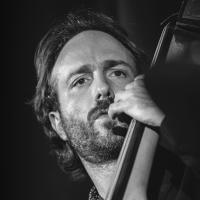 When I think about Dave Holland, the first thing that comes to mind is an experience I had at the conservatory.
My teacher gave me the enormous task of transcribing four very difficult solos, one of them being Dave's solo on "Question & Answer," from the eponymous album by Pat Metheny, Roy Haynes, and Dave Holland. Not only did I have to transcribe the solo, but I also had to play it along with the record during the exam.
It was amazing to work on this material in such detail and dig deeper into Holland's rhythmic phrasing. His harmonic and melodic precision, as well as his consistent sound, were always a great source of inspiration. Before that, I had studied his compositions at another music school. I had to work hard to deal with his rhythmic shifts and complex chord progressions.
When I hear Dave's sound, I can hear a logical thread connecting him to—and, looking backward, to—Ron Carter, Paul Chambers, Scott LaFaro, Charles Mingus, and Jimmy Blanton.
Looking in the opposite direction, I hear bassists such as Larry Grenadier and Matt Brewer walking in Dave's footsteps, developing their technical abilities in part thanks to Dave's contributions.
If I have to mention some of his releases that had a strong impact on me, I would say Conference of the Birds and Emerald Tears, the latter being one of my favorite solo-bass albums.
Unfortunately, I have never seen him live, but I hope to hear him on the road soon.
Prime Pick
Pat Metheny "Question and Answer" Question and Answer (Geffen)Anouar Brahem
Musician My collaboration with Dave Holland, which now spans nearly thirty years, holds a very special place in my life. From the moment we first worked together on Thimar, I was struck by the depth of his listening and by how naturally he found his place within a musical world that was new to him.
His sound is instantly recognizable, combining rare strength, clarity, and sensitivity. Every note breathes; every note feels both necessary and open. He gives the music a firm foundation while continually creating new possibilities within it.
I have often said that playing with Dave gave me wings. He is an exceptionally generous musician, attentive to everyone around him and always guided by the music. I feel a deep sense of gratitude for everything he has brought to my music and for all that we have shared over the years.
Prime Pick
Dave Holland "Processional" Extensions (ECM)Matt Brewer
Musician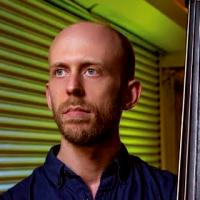 I have been listening to Dave Holland for as long as I have been playing the bass. As a ten-year-old kid, my dad bought me albums by just about every great bassist who was also a bandleader, and Dave's records left a lasting impression on me.
He somehow manages to exude a sense of refinement, class, and elegance while also channeling a raw spirit of freedom and adventure. It's that ethos I most admire: a breadth of musicianship that remains open to whatever beauty there is to be found in music, irrespective of "style."
The urgency and fire of an album like Triplicate, or the sophistication of Dave's accompaniment on Hank Jones's The Oracle, speak to what I mean. To me, this is what it takes to be truly "modern": having both the willingness and the ability to approach all music with a spirit that seeks to elevate the musicians around you, while constantly discovering new versions of yourself in the process.
Dave's music represents that ideal to me.
Happy birthday, Dave, and thank you for the example!
Prime Pick
Dave Holland "Take the Coltrane" Triplicate (ECM)Gary Brunton
Musician I moved from the UK to Paris in 1988 to study jazz. The first time I heard Dave Holland live was in 1989, when he performed with Hank Jones and Billy Higgins at a theatre in Paris. I will never forget the effect that concert had on me: the sheer swing, the beauty of the sound. I left the hall with an immense feeling of satisfaction, my whole being filled with joy by the music I had just heard.
In 1992, I had the privilege of studying with Dave for three days during a festival in Parthenay, France. I learned so much about jazz bass playing, as well as harmonic and rhythmic concepts. What struck me most was his ability to explain even the most sophisticated ideas with remarkable clarity, together with his openness and generosity.
Ever since then, I have continued to buy every new album he releases and to hear him perform live whenever I can. Dave Holland is not only a great musician, but also a great man.
Prime Pick
Dave Holland "First Snow" Jumpin' In (ECM)Manolo Cabras
Musician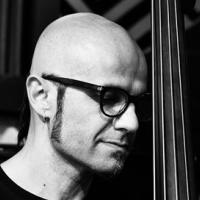 If I had to name the recording that most impacted and influenced me, it would be Trust, by the Richie Beirach Trio, featuring Jack DeJohnette on drums and Dave Holland on double bass. It is a unique work in the piano-trio genre.: Dave is simultaneously solid, creative, and unpredictable in the way he alternates roles with the other two musicians. It was through this album that I discovered the magical chemistry between Dave and Jack DeJohnette, a relationship that has remained a great example for me.
This discovery fundamentally shaped my approach to the jazz rhythm section.
From the very beginning of his career as a leader, Dave demonstrated an extremely virtuosic and fluid approach to the double bass, characterized by innovative technical solutions. Above all, he managed to create a perfect unity between his instrument and his compositions, which were themselves unique, influencing generations both contemporary to him and those that followed, right up to the present day.
In the early 1990s, I had the opportunity to attend a five-day workshop led by Dave in Cagliari, Sardinia. I had the privilege of being one of the five participants admitted to the workshop. Dave represented a true idol for us. It was an illuminating experience. Every day, he arrived with a smile, greeting us and trying to remember each person's name. One day, when his driver arrived late, Dave apologized and promised to "make it up to us." Before the lessons began and again at their conclusion, he would always perform a standard solo on the double bass for us—perhaps the most important lesson of all.
What struck me most was his simplicity and pragmatism in sharing what he had learned throughout his career, without dogmas or hierarchies of importance. He often reiterated that everything he knew had been acquired almost by chance, thanks to other musicians and experiences in various fields. He spoke frequently about form and the different possibilities offered by the double bass. When someone asked him theoretical questions, he would respond by demonstrating solutions that were often simple, without placing too much emphasis on conventional jazz theory. The message I took away was one of personal exploration within the vast and infinite theoretical world of jazz, with the intention of sculpting one's own universe without dogmatic restrictions.
At the end of the workshop, Dave gave a solo double-bass concert at a small festival in Sardinia. During the performance, a technical problem caused the sound system to crash, and it seemed the concert might have to be canceled. Dave remained calm and smiling, just as I had always seen him. After a while, he decided to leave the stage and play in the middle of the audience. I still get goosebumps just thinking about it.
Years later, by pure chance, I crossed paths with Dave at the train station in The Hague, in the Netherlands. Excited, I called out to him loudly. He turned around and waited for me to approach. I asked him, without really expecting an answer, if he remembered me. He looked at me for a moment and then said, "I think that we met in Sardinia; you are also a musician?"
He didn't remember my name, but remembering my face—and his smile—was enough for me.
Knowing Dave guided me toward a stress-free journey filled with joy in the life of a musician.
Thank you, Dave.
Prime Pick
Richie Beirach Trio "Jamala" Trust (Evidence)Obed Calvaire
Musician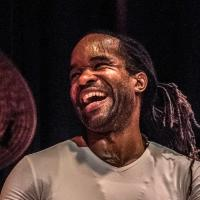 I got called to sub for Eric Harland, and then Dave sent me music to study.
As I was setting up my cymbals to prepare for our first rehearsal, Dave asked me if I had gotten a chance to check out the music. "Of course," I replied.
He proceeded to tell me, "Wonderful. Now forget everything you heard. I want to hear you!"
Dave welcomed my voice and taught me to be fearless in my musical thoughts and in my attempts to bring them to life.
It's always a journey performing with him!
Happy birthday, Dave!!
Ilaria Capalbo
Musician I first started listening to Dave Holland by accident. I think my generation was the last to grow up before the streaming era. I was a teenager, helping out in a local record shop by giving out flyers to passers-by in exchange for records, when I found an album that initially captured my attention because of its cover: Conference of the Birds. I ended up listening to it on repeat for a whole summer, in particular the title track, which is my favorite song on the album.
The second time I encountered Dave's music, not much later, was through a friend who had made me a cassette with some music and a blank sleeve. The very first song on it was a mesmerizing solo piece. After some research, I found out it was "Inception (Life Cycle)" from the ECM album Life Cycle, where Dave played not the bass but the cello. I took it as a sign and proceeded to dive into the discography of a bassist who would later become one of my great influences.
Extensions, Prime Directive, and Dream of the Elders are all inspirations that I often come back to. What has always struck me as unique about Dave's work—aside from his out-of-this-world musicianship—is the way he leads his bands. His music always comes through as the organic result of a collective mind, where each voice has its own weight and importance. He picks musicians who can take his compositions in unexpected directions, and he leads while letting each of them shine.
As a bassist, composer, and bandleader myself, I deeply relate to this way of making music and have learned a great deal from listening to Dave's bands, both on record and live.
And thanks to him, I took up the cello, which I still play now and again!
Prime Pick
Dave Holland "The Oracle" Extensions (ECM)Josemi Carmona
Musician I have so many memories of working with Dave Holland. One that I will never forget is the 2010 FIFA World Cup final, the first one Spain ever won. We were performing at the North Sea Jazz Festival that day, and after the concert we celebrated the victory together. It was great fun and a very special moment that I will always remember—not only because Spain had won the World Cup, but because we were all together to enjoy it.
Another memory that says a lot about Dave came when we first introduced him to a flamenco rhythm, an alegría. At first, he found it difficult to understand the rhythm and the way we measured it. He asked me for a recording and went back to the hotel. The next day, he showed up without having slept: he had spent the entire night trying to figure out the way we understood the rhythm. To me, that says a great deal about the artist he is. Even someone as accomplished as Dave has an extraordinary curiosity and desire to learn. That commitment and willingness to keep exploring are among the most important qualities in music.
Hands, the record Dave made with my father, Pepe Habichuela, on which I had the opportunity to work as a producer, was a real lesson for me. I had the chance to see up close how Dave organized the music, how he approached it, and how he worked with my father. Beyond the album itself, it was an enormous learning experience. Working with Dave was also a lesson in humility. He takes every note he plays, every song he composes, and every solo he performs very seriously. There is an incredible depth to the way he understands music.
The combination of Dave and my father was particularly special. My father was more explosive and instinctive, while Dave approached the music in a more deliberate way. Their commitment was the same, and their humility was the same, but each expressed them differently.
That tour gave me the opportunity to see two artists I admire enormously, both of whom have taught me so much, working closely together while bringing such different musical personalities to the music. It was a wonderful experience, and one I will always treasure.
Prime Pick
Dave Holland, Pepe Habichuela "Camaron (Taranta)" Hands (Dare2)Terri Lyne Carrington
Musician Dave Holland is the "GOAT"—a term I rarely, if ever, use, but in this case it truly fits. He has been one of my favorite musicians from the beginning, but I did not have the opportunity to play with him until this past decade. When the time finally came, I remember being so excited—kind of a bucket-list moment. I also felt that it would be a particularly meaningful connection because Jack DeJohnette was so influential to me, and the Jack/Dave partnership was iconic, providing an archetype for bass-and-drums connections. We first played together in a tribute to Geri Allen shortly after her passing, and then again on several other occasions over the following nine years.
What I love about Dave is, first and foremost, his sound. There are no overpowering lows, displeasing highs, or "boingy" mids—just a warm, inviting, full sound that matches perfectly with the drum set, sounding both modern and classic at the same time. The length of his notes is perfect, allowing the drums to dance. His sound does not occupy too much space or weigh the drummer down; instead, it helps the drummer soar. The bounce in his time feel just works. It is individual and infectious, and you can see it in his body when he plays. He also plays circularly, rather than simply in horizontal and vertical lines. This is why his playing in odd time signatures feels so good: it embodies the feeling of having no beginning and no end. Two of my favorite compositions of his are "Lucky 7" and "How's Never," both in 7/4. They helped me think differently about how to approach odd meters musically.
He is, of course, world-class as a soloist and composer, having created his own unmistakable style and voice. His innovation and musical vision have helped move both bass playing and bandleading forward. He has supported up-and-coming musicians throughout his career, always at the vanguard of what—and who—is to come.
But most importantly, he is a world-class human being. You can tangibly feel his warmth and see the care in his eyes. Dave Holland is singular, and I feel fortunate to have had the experiences I've shared with him in my lifetime.
Prime Pick
Dave Holland Quintet "Lucky 7" Critical Mass (Dare2)Baikida Carroll
Musician I have had the pleasure and honor of collaborating with Dave Holland on my recording Shadows and Reflections.
He truly embodies musicianship.
His masterful approach to performance, composition, and leadership has brought out the best in some of the most exceptional musicians to ever take the stage. Dave's sharp intellect, unmatched creativity, and commitment to excellence serve as an inspiring model for aspiring artists striving to maintain the highest standards in music.
Ron Carter
Musician The first time I met Dave Holland was after a Miles Davis concert.
I was so impressed with how quickly he had learned the jazz library that the Miles Davis Quintet was playing at the time.
I knew he would be a good person, not just for the band, but for the band members. He always had a good sound, a very interesting harmonic concept.
I miss Dave and hope to talk to him soon, and talk about how he got to where he is on bass.
To Dave, keep playing F sharp on the B flat. I don't care what those guys tell you.
Prime Pick
John Abercrombie, Dave Holland, Jack DeJohnette "Back—Woods Song" Gateway (ECM)Pete Churchill
Musician I first met Dave in his capacity as a visiting professor at the Royal Academy of Music in London, where I teach Composition and Arranging. He came into my classes and immediately put us all at ease. He proceeded to participate with such profound humility and showed us all what it meant to be an eternal student of this music—how the learning never really stops.
That we all, students and staff alike, benefited greatly from his insights is without question, but I feel we also gained immeasurably from simply having him with us here in the building as a "presence." I learned so much just by observing his way with the students—his endless patience and generosity.
On a personal note, I feel very privileged to have worked with Dave over the last five or six years on a lengthy recording project, bringing the posthumous poetry settings of Kenny Wheeler to fruition—the music that became the album Vital Spark.
The time spent in the recording studio with Dave was a profound experience for me—a lesson in how to "be" in the midst of all that intense music-making and, additionally, how important empathy and trust are in the act of creating something together. The days that followed, as we mixed each track, were similarly inspiring: a Masterclass in listening.
I am proud to call him a friend, and I wish him all the very best for his 80th birthday. I look forward to many more years of music-making.
Prime Pick
Dave Holland, Norma Winstone, London Vocal Project "Will You Walk a Little Faster?" Vital Spark (Music of Kenny Wheeler) (Edition)Bruno Chevillon
Musician Unfortunately, I have never had the chance to meet Dave Holland personally, and I have had very few opportunities to see him play live. To be precise, only twice: the first time with Gateway, and the second at the Moers Festival, around the time of his extraordinary album Extensions.
So I have mainly discovered him through his records.
I believe I remember that it was when I was still studying at the conservatory that I came across his duo with Barre Phillips, Music from Two Basses.
I already knew Barre's musical world quite well, as he lived not far from me in the south of France.
That record was a shock to me: two double basses alone, making music that was not exactly easy to access for the young double bassist I was at the time, still learning my instrument.
But something powerful was happening.
It was really from that recording onward that I began to take a deeper interest in Dave.
Then came the records I devoured. Emerald Tears, where I discovered the extraordinary double bassist he is, and who became one of my models. His playing belongs to an idiom that is at once rooted in the history of the double bass after Scott LaFaro, while also having a more open quality that certainly comes from his earlier "free" background. I am thinking, for example, of Improvisations for Cello and Guitar, his duo with Derek Bailey.
Many British musicians seem to have this ability to move through and evolve within very different musical contexts.
I am not going to talk here about his extraordinary technical qualities—everyone knows about those. What strikes me most about him is his confidence and his rhythmic inventiveness.
Whatever the situation, he has an absolutely incredible ability to bring something to the music. He can bring that strength of proposition into any situation.
Listening to Dave Holland on a record is always, for me as a double bassist, a source of inspiration, surprises, precision of thought and expression—and all of this is so incredibly difficult to achieve.
I could mention so many records that have marked my musical life, records on which he plays and where, every time, I felt an immediate urge to pick up my instrument and try—and I mean try—to reproduce this or that phrase of his.
Sometimes I catch myself playing and thinking: this is, in a way, a bit of Dave Holland.
It is difficult to find your own identity when you hear a master like that. He has had such a profound influence on the double bass players of my generation that it is difficult to move away from him.
At one point or another, we all wanted to play like Dave Holland.
Too bad there was already one...
Prime Pick
Dave Holland "Hooveling" Emerald Tears (ECM)Alexander Claffy
Musician Mr. Holland has been a large influence on, quite frankly, any bassist who has come after him. He exemplifies all of the qualities that we bassists hope to have: impeccable time, sound, facility, and, of course, ingenuity.
His ability to develop a singular voice that is instantly recognizable across so many different facets of improvised music is a great inspiration. His pen as a composer has moved me greatly, alongside his trailblazing work as a bandleader.
One of my all-time favorite examples of his playing comes from the "It's About That Time" section of Miles Davis' In a Silent Way. Mr. Holland holds down the fort with an absolutely rock-solid foundation and groove, allowing one of the most important moments in music to take shape. It's a perfect example of the power and importance of his contribution: never simply supporting the music, but giving it the foundation it needs to become something greater.
Thank you, Dave, and happy birthday!
Prime Pick
Miles Davis "It's About That Time" In a Silent Way (Columbia)Avishai Cohen
Musician I have always liked and enjoyed Dave's sound and groove, which are so essential to me as a fellow bassist and band leader.
I remember meeting Dave some years ago, he's definitely a master of his craft but also a beautiful human being.
Prime Pick
Herbie Hancock "Mercy Street" The New Standard (Verve)Vinnie Colaiuta
Musician Dave Holland is, to me, the quintessential example of a musician whose mind is so open and creatively expansive that he inspires the same openness in everyone with whom he makes music.
I have fond memories of touring with him in Herbie Hancock's band, an amazing ensemble that also included the great Chris Potter. We did a very long and quite grueling tour of Europe, which we joked about as "surviving," but the music we made along the way was wonderful and deeply memorable.
Dave's personable demeanor is matched by his impeccable musicianship. He is a true gentleman, a musician who has traversed so much ground in jazz and beyond. His writing for big band should never be overlooked, either—it is simply great writing.
From Circle, with Chick Corea and Anthony Braxton, to Miles Davis, Dave has done it all. One of my personal favorites is Conference of the Birds , a seminal and hugely influential record in my own life as a young musician and student.
One thing I learned from Dave is the importance of listening to one another with openness, diplomacy, and respect; of being completely immersed in the joy of the musical moment, without judgment; and of transmitting that feeling to create a feedback loop among the musicians. There is a beautiful kinetic energy in that process. Dave Holland is a true gentleman of jazz and of music—and an absolute giant.
Steve Coleman
Musician What surprised me was that Dave would come all the way down from Woodstock with his bass and come to my little apartment and play with us. This was not some fancy rehearsal studio. It was this little apartment in Bed-Stuy, and Dave would drive down from Woodstock with his bass because he wanted to check out what was happening.
That told me something about him. He was already an established musician. He had played with Miles Davis, Anthony Braxton, Chick Corea, Sam Rivers—all these people. He didn't have to come down there. But he was interested enough in the ideas to do it.
That was the beginning of how he began to see the M-Base thing, because this was before we were even calling it M-Base. It wasn't like there was an organization yet. It was just a bunch of us playing together, exchanging information and trying to develop things. But Dave was seeing that community at a very early stage.
He was coming around and hearing where some of these rhythmic ideas were coming from. He met Doug [Hammond]. He heard the drum-chant thing. He was seeing how these different musicians were connected.
Steve Coleman's Prime Pick
Dave Holland "New-One" Jumpin' In (ECM)Anthony Tidd's Prime Pick
Dave Holland "Black Hole" Extensions (ECM)Click here for the full interview by Anthony Tidd with Steve Coleman about Coleman's work with Dave Holland.
Scott Colley
Musician I was 12 years old and had only been playing for a few years when I discovered Conference of the Birds, Dave's first recording as a leader. I wore that record out! It made a deep impression on me.
I was incredibly inspired by how much rhythmic and melodic information could be communicated on the bass and through the quartet, without a piano or guitar. Listen to "Now Here (Nowhere)" on that recording, it is a great example of deep musical conversation.
Dave is a true innovator, both as a bassist and as a composer and bandleader. In addition to his incredible expression on the instrument, he has forged a path showing my generation and those that have followed how to compose structures and communicate those structures from the pen and then through the bass.
To lead a band from the bass is not easy, but Dave makes it seem so.
Beyond all of that, he has always been incredibly generous and encouraging to me, ever since I met him way back when I moved to New York and was just starting out.
Happy birthday, Dave!!!
Prime Pick
Dave Holland "Now Here (Nowhere)" Conference of the Birds (ECM)Giulio Corini
Musician The music of Dave Holland has always been a constant presence in my life.
One of the things I appreciate most about him is his versatility: from big bands to solo performances, from the freest forms of improvisation to rigorous composition, his musical language is always impeccable.
As a double bassist, I consider him simply perfect in terms of tone, intonation, and timing.
Throughout his career, he has always maintained an exceptionally high standard and has always been—and will always be—an unattainable benchmark for me.
Prime Pick
Dave Holland "Rivers Run" Triplicate (ECM)Vincent Courtois
Musician I met Dave Holland when I was very young, in 1994, when I recorded Michel Petrucciani's album Marvellous which featured Tony Williams and a string quartet.
I remember very well how friendly Dave was, even with young French musicians who were fairly new to jazz. Like him, I was ahead of schedule... He was already there when I arrived, practicing the Michel Petrucciani pieces that he did not know. He stopped, chatted with me for a bit, and showed me a few tricks on my cello. He was really kind, without trying to prove anything—just for the pleasure of sharing.
For me, it was a very memorable moment because I was a big fan of his. As a cellist, I was already on the lookout for all the bridges that great musicians could build between classical music and jazz. Dave was especially important to me through Conference of the Birds, which was one of my go-to albums, just like Michel Portal's Turbulence. I should also mention that the first album I ever heard when I was 15 was Bitches Brew! So Dave has always been among my favorites.
Of course, his solo album on ECM, Life Cycle, was also a great inspiration, particularly for his use of double stops in the lower register.
From time to time, I have run into Dave at festivals or when we have shared the stage. He is a great man, both musically and as a person.
Prime Pick
Michel Petrucciani "Besame Mucho" Marvellous (Dreyfus)Anthony Cox
Musician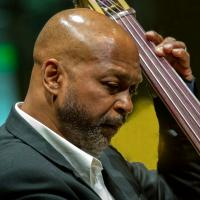 I first saw Dave Holland live in Minneapolis at the Rainbow Gallery, performing in Anthony Braxton's quintet alongside George Lewis, Barry Altschul, and Muhal Richard Abrams. From the very first note, Dave's playing anchored the ensemble. After the show, I approached him and was deeply touched by his generosity. Although I had only been playing upright bass for two years at the time, I was already well aware of his work with Miles Davis, Sam Rivers, Jack DeJohnette, and Anthony Braxton.
Hearing his solo on "Nefertiti" from Circle's Paris Concert was a defining moment for me. It was lyrical, fluid, and brilliantly woven throughout the piece.
Years later, after moving to New York, I worked up the courage to call and ask if he was taking students. He invited me upstate for a lesson and was remarkably generous with his time. The wealth of knowledge he shared significantly refined my technique and sound, making me a much better player.
This is just a brief snapshot of my experience with Dave—I could write volumes about his teaching and the time we spent hanging out, playing bass, and discussing music. Dave Holland is truly one of the greats.
Happy birthday, Dave!
Prime Pick
Circle "Nefertiti" Paris Concert (ECM)Stephan Crump
Musician I couldn't overstate the degree to which Dave Holland has influenced me. I have been deeply inspired by his compositions, his ensembles, and his bass playing, all of which I studied intently, especially during the formative period from my teens into my early twenties.
Not that I didn't have other influences and heroes, but at a certain point Dave came to represent everything I felt a contemporary bassist should offer. I actually had to force myself to stop listening to him for a number of years, just to leave room for other sources of inspiration—and especially for my own ideas to develop.
Dave's harmonic sophistication and clarity of phrasing, whether in straightforward or more oblique rhythmic structures, have always been captivating. But of course, none of it matters without the groove. His unique, slinky, turn-on-a-dime feel is what makes it all so infectious. He pulls the band together like a tractor beam.
In my personal interactions with him, Dave has always been warm, generous, and very encouraging to me, confirming what I'd long felt through his music: that in addition to being one of the great artists, he is a good human being.
Prime Pick
Joe Henderson "Pfrancing" So Near, So Far (Musing For Miles) (Verve)Alexis Cuadrado
Musician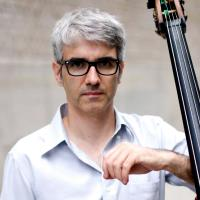 As a young, up-and-coming musician in my twenties in 1990s Barcelona, my musical inner world was forever changed when I heard Question and Answer, Pat Metheny's trio album with Dave on bass and Roy Haynes on drums. Dave's taste and musical choices blew me away. I immediately connected with his deceptively simple way of playing. This was how to "do it" here and now. It raised my standards instantly.
I became a fanboy and spent quite a lot of money on Dave Holland's CDs in the years that followed. Every album was a treasure: his quintet recordings, records with Kenny Wheeler, Feed the Fire with Betty Carter, the trio with Bill Frisell and Elvin Jones, the old Miles records... Dave's playing inspired me to be better at every turn.
When I discovered Emerald Tears, though, it was another step toward the summit. "Solar" became my North Star in terms of concept, sound, freedom, and expression. To this day, I often ponder how one can play with that tone, elasticity, drive, and sophistication. He was not flashy; he served the music at the highest level. It gave me the freedom to approach my instrument in another way and to find my own voice.
After I moved to New York in 1999, I had the chance to see Dave perform quite a few times. I remember a show at the Iridium with ScoLoHoFo that I attended with my colleague Danton Boller. Before the show, Danton said, "Dave always seems to be cruising, but at some point he'll pull out some insane bass trick that will elevate the music to another plane." I remember when Dave played a harmonic—a note produced by lightly touching, rather than pressing, the string—and slid the note. Boom! It was the exact stroke of genius the music needed at that moment. This was probably about 20 years ago, and it is still etched in my musical memory.
In 2013, I was at the International Society of Bassists convention in Rochester, where Dave played a solo concert. I approached him, trying to just "be normal," and asked him about flamenco music, since he had been working with Pepe Habichuela. He immediately got excited about the subject, and we chatted for a good 15 minutes. Five minutes into the conversation, I was just talking to "Dave," not Dave Holland. He was such a gentleman—one of the nicest, kindest, and most curious artists I've ever encountered. It seemed that he saw himself simply as another member of the bass community: no one special, certainly no genius. I'm not sure he knew what a gift he was to us all.
Thank you for all your contributions to our music, Dave. Have a wonderful and very happy 80th birthday!
Prime Pick
Dave Holland "Solar" Emerald Tears (ECM)Luques Curtis
Musician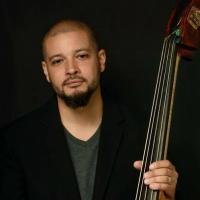 The first time I met Mr. Holland, he was incredibly encouraging. I walked up to him, introduced myself, and he told me that he knew exactly who I was. I remember being completely shocked!
At the time, I was transcribing "Mr. P.C." from Ones All, and the fact that someone of his stature—one of the greats of this music—not only knew who I was but took the time to speak with me meant so much.
That simple conversation had an amazing impact on me and my development as a musician. Despite everything he had accomplished and his place in the history of our music, he treated me with genuine kindness and respect.
He showed me something that goes far beyond playing the bass. His humility, generosity, and professionalism demonstrated what it means to carry this music forward.
I have never forgotten that interaction and will always appreciate him!
Prime Pick
Don Grolnick "Weaver of Dreams" Weaver Of Dreams (Blue Note)Ben Davis
Musician I spent the summer of 1989 at the Banff Centre, where Dave Holland and his quintet were teaching. He had just released Triplicate.
I spent a month with him in his rhythm section class, learning how to settle into the groove. I remember him swaying from side to side when he felt that the groove had arrived.
At the time, he was transcribing Wilbur Ware with Sonny Rollins at the Village Vanguard, and I was struck by how genuinely excited he was about it. He kept practicing phrases from the transcription whenever time allowed. He said the one person he'd love to play with was Sonny Rollins, but acknowledged that job was taken.
As a cellist, I realize now that he got it right: play it solo in a nice room with a good mic.
A humble and wise fellow. Happy 80th, Dave Holland.
Prime Pick
Dave Holland "Vedana" The Razor's Edge (ECM)Kris Davis
Musician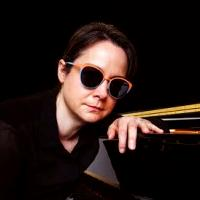 Dave has a positivity that radiates both on and off the bandstand. I loved it when he would look up and smile, saying with his eyes, "I hear you!"
Dave is an anchor on the bandstand, providing a foundation that allows everyone around him to take risks and move freely. He creates a space where the musicians can dance around him, knowing that the music is grounded and secure. And then, when it is his turn to solo, he steps out of that role and reaches for the stars.
It was deeply inspiring to spend time with Dave, both on and off the bandstand. He is an artist who continues to grow and learn, even at 80. Happy birthday, Dave!
Prime Pick
Dave Holland "Make Believe" Prime Directive (ECM)Benoit Delbecq
Musician I had the good fortune to participate in the Banff Jazz Workshop in Canada, which Dave Holland led in July 1987. During an ensemble workshop, we were playing his "Q&A," and he told us that, for him, the conscious part of his playing was devoted to acute listening to the whole, while the unconscious part was the playing itself.
In addition to his wonderful teaching, Dave's statement has been a guiding principle throughout my musical life. And that is something for which I can only be deeply grateful, just as I am for Dave's extraordinary contribution to music history.
Thank you so much, Dave. Happy birthday!
Prime Pick
Dave Holland "Walk-a-Way" Seeds of Time (ECM)Karl Denson
Musician I became an avid jazz fan at the age of 12 in Southern California. Every night, I would finish my homework and then fall asleep listening to KBCA, Los Angeles' incredible jazz station. I was fortunate to hear jazz evolve through many transformations: traditional jazz, spiritual jazz, Black jazz, fusion, and the avant-garde.
In the mid-1970s, Manfred Eicher launched ECM Records, and that was my introduction to Dave Holland, along with his longtime musical partner Jack DeJohnette. They quickly became my musical dream team.
Then, in 1993, Stephen Minor, the owner of Minor Music, the label I was signed to, suggested that I make a trio album and asked me who I wanted to record with. My answer was immediate. As impossible as it seemed, he actually hired Dave Holland and Jack DeJohnette to make the record with me. So I got right to work writing music that would show off my intimate knowledge of their style.
A few months later, I found myself in the studio with my heroes. What I hadn't fully realized was that I was, in some ways, in over my head. I had written the music, but I had never actually played it. Now I was learning it in real time alongside two of the greatest musicians alive. Tune after tune, they were flawless and lightning-fast, while I worried about the fact that we were recording live to two-track with no opportunity for fixes.
As if that weren't humbling enough, during the breaks Dave and Jack would take turns sitting at the piano, casually playing "Giant Steps" and then "Countdown"—at tempo.
Through it all, they were generous, supportive, and seemed to genuinely enjoy playing my music. The album was warmly received, but I came away having learned an important lesson: be careful when you walk with giants—you might get stepped on, because they have very big feet.
Prime Pick
Kenny Wheeler "'Smatter" Gnu High (ECM)Zeno De Rossi
Musician Dave Holland has been a constant presence ever since I first started listening to jazz.
There are countless records I have devoured over the years featuring him, but I can mention a few that have been truly seminal in shaping my musical journey.
I particularly loved the period of his quintet with Steve Coleman and Kenny Wheeler, and the three albums they produced: Jumpin' In, Seeds of Time, The Razor's Edge.
Then there is Triplicate, the trio with Steve Coleman and Jack DeJohnette, and Extensions, again with Coleman, this time alongside Kevin Eubanks and Marvin "Smitty" Smith.
And, of course, his fundamental presence on albums such as Pat Metheny's Question and Answer, in a trio with Roy Haynes; all the Kenny Wheeler records he appears on, among which I would especially mention The Widow In The Window and Music for Large & Small Ensembles, as well as the extraordinary Angel Song.
Then there's Steve Coleman's Rhythm in Mind, Joe Lovano's From the Soul and Trio Fascination, Edition One, the incredible live recording of Betty Carter's Feed the Fire with Geri Allen and Jack DeJohnette, the Gateway albums with DeJohnette and John Abercrombie, Bill Frisell's With Dave Holland and Elvin Jones, and so many others. The list could really go on forever.
I was also lucky enough to see him live in Milan many years ago, in the summer of 1990, at a historic concert featuring Jack DeJohnette's Parallel Realities project, alongside Herbie Hancock and Pat Metheny, where Holland also played electric bass.
In 1999, in Verona, I also had the chance to attend one of his workshops. It was both enlightening and great fun: he talked about his musical history, the time Miles Davis hired him, and many other hilarious and fascinating anecdotes.
The seminar focused mainly on complex meters and odd time signatures. Holland explained the method he used to approach them, the Gamala Taki system, which he had learned from Don Cherry.
If I think of someone who simultaneously embodies the roles of master instrumentalist, formidable composer, and enlightened bandleader, Dave Holland is one of the first names that comes to mind.
Thank you, Mr. Holland, for showing the way.
Prime Pick
Dave Holland "Homecoming" Seeds of Time (ECM)Chris Minh Doky
Musician As a young kid growing up in Denmark, half Danish and half Vietnamese, I heard Niels-Henning Ørsted Pedersen everywhere, and naturally he inspired me greatly. But it was through the great American bassists—Ron Carter, Paul Chambers, Ray Brown, and Scott LaFaro—that I first fell deeply in love with this music. I loved their sound, their feel, their expressive range and command of the instrument—and, above all, how naturally and completely they belonged in the music. As a young aspiring bassist who was not American, I wondered whether I could ever find that same sense of belonging.
Then I discovered Dave Holland, playing with Miles Davis on In a Silent Way. His sound, his groove, and the way his playing felt so free yet so grounded drew me in. Here was everything I aspired to on my instrument. And he was from Europe! He belonged so naturally in the music, and hearing him changed what I thought was possible for myself.
I began studying his playing relentlessly. So much of what I learned from listening to Dave is still an important part of me today. Through his music and his example, he gave me the courage to imagine a life in this music.
When I moved to New York at eighteen, I wanted to be closer to the music I loved so deeply and to the people, traditions, and places it came from. Dave's example had made that step feel possible. I had no idea I would stay, build a life there, and eventually find my own place in the music.
I can honestly say I don't think I would ever have dared—or even dreamed of—making that move at eighteen without him.
That is a very important part of what Dave's extraordinary legacy means to me. Through his music and his example, he reached a young bassist far away and helped me believe there could be a place for me in this music, too. That belief led me to a life in music that, to this day, continues to exceed my wildest dreams.
Thank you, Dave, and happy 80th birthday.
Adam Dorn aka Mocean Worker
Musician When I hear the name Dave Holland, I immediately think of tone. Man, I love his tone and touch. All you have to do is listen to Memories of Home, the amazing duo album he made with John Scofield in 2025, and you hear a lifetime of storytelling—and TONE—through his effortless playing. It's gorgeous. It's what it's all about. His hands on that bass: lights-out tone, feel, and knowledge.
Listen to the duet he recorded with Kenny Barron, "Rain." Nuff said. So gorgeous. Titans.
There is also something beautiful about the sheer number of duo recordings Dave has made. It speaks to something else: making a bass sing like this requires a particular kind of conversation and trust, a willingness to create and interpret together in such an exposed space. It's stunning work, and it tells me a lot about Dave without my ever having met him. That level of listening says everything.
I love a story like Dave's: music reaching across the globe and inspiring musicians to join the conversation. England, while going through its "trad jazz" movement during Dave's youth, wasn't exactly known for sending players to the United States. Dave broke through that barrier on the basis of pure merit. Miles taps you? End of story. Can you play? Yeah—that's all that matters. That's what it's all about.
What a career it has been. I could mention the many greats he has collaborated with—the list is mind-numbing—but this isn't about that. It's about appreciating the work and the journey, through what, even in the best of times, can be a career path akin to rollerblading up a mountain covered in Vaseline. Dave has navigated that path while maintaining the highest levels of composing, playing, and collaboration.
And don't get it twisted: Dave isn't even remotely slowing down anytime soon. Apparently, 80 is the new 50. As I write this, Dave has just released "Easy Did It" from the upcoming box set Freedom Call—vibrant, energetic, and yes... tone, tone, tone.
Happy, healthy, amazing, spectacular 80th birthday, Dave Holland. You are loved, celebrated, and cherished. That's what it's all about.
Prime Pick
Kenny Barron, Dave Holland "Rain" The Art of Conversation (Impulse!)Dezron Douglas
Musician Happy birthday, Dave Holland. Thank you for your massive contribution to the progression of this art form and for your continued artistry at the highest level.
I have been a fan from the moment I became obsessed with this art form. The period Dave spent with Miles brought forth so much creativity from everyone involved, and it remains, to this day, uber-inspiring.
The record that drew me in closer and blew my mind is Triplicate, with Steve Coleman and Jack DeJohnette. I used to listen to that album three times a day, on CD and even after I found it on vinyl. I also love all the Quintet records. I feel like Dave's pen was on next-level display with those groups.
I finally saw the group with Steve Nelson, Robin Eubanks, Chris Potter, and Billy Kilson at UConn in 2003, and it was a "come to Jesus" moment for me. Dave's tone and rhythmic sensibility have always blown my mind, but it was his harmonic prowess that was really showcased in those groups.
I also love his playing in Roy Haynes's Birds of a Feather band. As a matter of fact, all of my students at NYU are studying that album this semester. Roy and Dave have such a great hookup and affinity for each other.
I have to tell this story...
A few years back, I was playing the Rochester Jazz Festival, and the supplier of basses told me he had Dave's original bass, which he had played in the '70s and into the early '80s. I got to play that bass that night, and let me tell you, I still dream about that bass.
Talk about wearing your hero's shoes!!!
Dear Dave, I want this bass!.
Happy Earthstrong. Love, Dezron.
Prime Pick
Dave Holland "Looking Up" Prime Directive (ECM)Trevor Dunn
Musician Conference of the Birds (1973) released when I was five years old, hit me hard in my formative years as a music student. Probably the trajectory went: Introduction to Jaco and Stanley Clarke, learning Charlie Parker heads, playing gigs with the Real Book and seeing composers' names I'd never heard of.
The bassist-as-composer, tunes written in odd meters, a chordless quartet—all of these things appealed to me. And then I heard the album and did my best to make sense of it. This was one of the first jazz records for me that blurred composition and improvisation. What I'd seen on the written page only told part of the story.
Despite none of these guys being from California, the tune "Conference of the Birds" itself has a "California Dreaming" vibe to its folkish groove and, at the same time, something British and medieval. Then there's "Q&A" which at moments sounds like something from the world of AACM. Not to mention there are very distinct Messiaen-like themes that permeate from the head to the improv. "Now Here (Nowhere)" taught me a lot about counterpoint. Throughout this album there harmonic counterpoint which I had not been exposed to yet, not in this context anyway. There is mixed orchestration, call-and-response and collective freedom. It kinda has it all.
I've said nothing of Mr. Holland's bass playing and I don't think I need to. His flawless dexterity, intonation and driving walking lines get the point across. But, more importantly, this is a perfectly balanced composer's album. Of course, the rabbit hole was opened and I ventured into his later quintet records with Steve Coleman and Marvin "Smitty" Smith, as well as his solo cello recording, his work with Miles, Chick, et al.
I can't really think of an aspect of my career as a bassist and composer that wasn't directly affected by this leader, so, thank you Mr. Holland.
Prime Pick
Dave Holland "See-Saw" Conference of the Birds (ECM)Dominique Eade
Musician Dave Holland's music has been some of the most important music in my life. I first heard Conference of the Birds when I was 18 and became a devotee. We would drive down the Taconic from school in Poughkeepsie to hear Dave perform duo with Sam Rivers at Studio Rivbea, and, honestly, it was a near-mystical experience.
Some years later, I was lucky enough to study with Dave at the New England Conservatory, and then to record with him on my second record for RCA Victor, The Long Way Home. I remember the first time we played duo together in a lesson. His sound, time, and feel were such a powerful presence that I almost couldn't begin to sing! In 2014, we performed a bass and voice duo set in NEC's Jordan Hall. He played the first set of the evening solo bass, and to hear Dave Holland play alone in the acoustic splendor of Jordan Hall was something truly magnificent.
We've been fortunate at NEC to have had a long association with Dave Holland. After serving on the regular college faculty for a few years, he now comes back for a residency every semester. The impact he has had on generations of students has been monumental.
When I studied with him, we worked on all aspects of improvising and composing, from free improvisation to songs with changes, and everything in between. We worked on tone rows and pentatonic scales, beyond familiar major and minor ones, both as tools for improvising, and to use as material for composing, endless permutations of groupings of eighth notes in two's and three's across cycles of even and odd meters, further explorations of rhythmic feel, and plenty of repertoire, from Duke Ellington to Ornette Coleman. Everything he taught theoretically, he expected you to try to put into practice right away. It was challenging, and rewarding.
I remember one lesson in which he wanted me to improvise with him while attempting to modulate seamlessly between the three diminished scales. All of these concepts were so valuable and really stretched my ears, but even more important was the way he modeled the process of creating structures in practice that leave room for the real-time decision making and improvisation that happen in performance.
Dave has an incredibly vast and varied discography, both as a leader and as a collaborator. I know everyone has their own favorites, from his recordings with Muhal Richard Abrams, Sam Rivers, Kenny Wheeler, Steve Coleman, and so many others, to his more recent work with Kris Davis and John Scofield. I would also like to highlight an extraordinary video available on YouTube: Betty Carter, Live at the Hamburg Jazz Festival, 1993, featuring Geri Allen and Jack DeJohnette.
Dave's sound, exemplary musicianship, discipline, flexibility, beautiful improvising, deep compositions, devotion to musical collaboration, and steadfast integrity in every situation make him one for the ages. I know my own sense of awe and profound gratitude is echoed in the stories of countless other musicians.
Thank you, Dave, for the decades of incredible music and for the generosity of spirit you have shared with all of us. Congratulations on this milestone!
Prime Pick
Dave Holland "Rivers Run" Triplicate (ECM)Petter Eldh
Musician I keep coming back to Dave Holland's Conference of the Birds, and to the title track in particular.
My dad is a big fan, and this was one of the first Dave Holland pieces he introduced me to when I started taking an interest in jazz and improvised music. My dad played the melody on flute, and I played the bass line.
The fact that it's in 5/4 also carries some weight, considering how I subsequently developed a special interest in rhythms outside of the norm.
Dave Holland remained an inspiration throughout my formative years, and discovering his incredibly heterogeneous discography, both as a sideman and a bandleader, was a journey in itself.
Hearing him in so many different settings was intriguing and led me down new paths, helping me discover artists and music outside the jazz mainstream. His nonlinear trajectory, moving freely between very different musical worlds, was definitely an inspiration when I started shaping my own.
Prime Pick
Dave Holland "Conference of the Birds" Conference of the Birds (ECM)Moppa Elliott
Musician For my entire life, Dave Holland has been a perfect example of the bassist/composer/bandleader. His small groups of the 1980s and '90s, featuring musicians such as Steve Coleman, Kenny Wheeler, Steve Nelson, Chris Potter, and many others, were models for me as I tried to write for my own bands. While the lineage from the Miles Davis quintets leads directly to Dave and his bands, the Dave Holland Quintets always had a personal sound, much in the same way that great soloists develop an individual voice.
It was only later, after high school, that I began exploring much of Dave's earlier work, especially his solo albums and the short-lived Circle quartet. Circle, in turn, led me to the first classic Anthony Braxton quartet.
Looking back, I see one of the threads running through the last 75 years of American jazz, experimental music, and Black American music in the evolution of particular bandleaders' ensembles: the Miles Davis Quintets, Art Blakey's Jazz Messengers, Anthony Braxton's Quartets, and Dave Holland's Quintets. These long-running, continually evolving groups depend equally on the vision of the bandleader and the collaboration among their members.
Dave Holland has been on both sides of that equation in arguably three of the most important band lineages in music history.
Prime Pick
Dave Holland "Take the Coltrane" Triplicate (ECM)Peter Erskine
Musician Growing up listening to Dave Holland playing with Miles, Chick Corea, and his own band (that first ECM album!), you can imagine the thrill of eventually getting to meet and make music with him.
My first extended project alongside Dave was the Kenny Wheeler big band—or "Large Ensemble," as the ECM label deigned to call it on Music For Large & Small Ensembles. His playing was always direct, grounded, and profound, much like the man himself. I've only known Dave Holland to be both a complete gentleman and a complete musician.
If I had to choose two words to describe his playing, I would choose three: stalwart, swinging, and dependable.
My favorite memory of Dave involves an early-morning check-in for Kenny's quintet at a European airport. We were traveling with a fair amount of musical gear, including Dave's full-sized acoustic bass, which was in a hard case. Dave knew the dimensions of the bass case as well as the cargo capacity of every plane we would be flying on. The young woman checking us in, however, did not share his knowledge, and the band's road manager had reached his wit's end trying to convince her to accept Dave's bass as checked baggage.
He finally went over to Dave, who was standing with us near the check-in counter, and explained the situation. I couldn't resist the opportunity to listen in and see how Dave would handle it.
Dave walked over to the counter and addressed the woman. He smiled.
"Hi. You know, you're doing your job and you're doing it very well."
Pause. That smile again. It doesn't hurt that Dave is drop-dead handsome—and that English accent, which he has dialed in perfectly.
He continued: "But you are trying to prevent me from doing my job, and I simply cannot allow that."
Simple as that. No raised voice, no projection of entitlement. Just the same grounded presence I had seen him bring to the bandstand night after night. She slowly nodded in acknowledgement and then checked in his bass, almost as if he had hypnotized her. An elegant solution to a mundane problem that could have derailed our day as well as the concert that night.
We all try to be cool. But when I grow up, I want to be Dave Holland cool.
P.S. Dave travels with a smaller bass these days.
Prime Pick
Dave Holland "Part V—Know Where You Are" Music for Large & Small Ensembles (ECM)Duane Eubanks
Musician Dave Holland did a lot for my career and development as a musician. I was a fan of his music and the many bands he assembled, and my brothers, Robin and Kevin, were members of several of them. I was in awe of his bandleading skills—an art in itself.
He assembled a big band of individuals from very different backgrounds who connected around an "elusive" downbeat, with a deep respect for the art form and for the writers of so much incredible material. The days on the road felt like being part of a big family. His writing and arranging gave everyone in that family the opportunity to be themselves musically. It was truly genius-level work. I also applaud his courage to pursue what he heard musically. The risk-taking and open concepts within the complexities of the rhythm made us all better musicians, and you could hear and feel the band grow as we performed.
With all his experience and technical ability, his quintet ranking among the greatest bands in jazz history, and the popularity and respect he has earned around the world, Dave's humility was another huge lesson for me. He was a guest at my wedding reception and did not hesitate to perform alongside my uncle, Ray Bryant. We played a set of music for the guests.
Dave checks all the boxes: an incredible musician and one of the kindest human beings.
Robin Eubanks
Musician Dave has been a major force in modern jazz for more than half a century, and I was fortunate to spend about 20 years making music with him. I played in his amazing quintet, sextet, octet, and big band, and he was open and supportive enough to invite me to compose music for all of those projects. He also has a strong historical connection to my family, just as I do to his: my brother Kevin played guitar in several bands with Dave, and my brother Duane played in Dave's big band.
The quintet, in particular, came along at a fascinating time for jazz. We were certainly not the first to explore these ideas, but that band helped bring odd time signatures and groove-centered music into the mainstream of jazz. Even today, as I travel around the world, musicians often tell me how influential that band was in their own musical development.
Although we have not played together in about ten years, I feel eternally indebted to Dave for the time we shared, including his performances on several of my own recordings. I'm still looking forward to the possibility of making music together again. So it's not over yet!
Prime Pick
Dave Holland "Global Citizen" Not for Nothin' (ECM)James Fahey
Programming Consultant I believe I first met Dave at an conference organized by the International Association for Jazz Education, following a session in which he reflected on his extraordinary career. While I no longer remember exactly when that was, I have never forgotten how warm, gracious, and approachable he was that day.
Dave Holland has been an integral part of our Chicago Symphony Center Presents Jazz series since his first appearance in Chicago in 2003. Over the years, he has returned in many remarkable settings, including with his Big Band and Octet, his Overtone Quartet, alongside Zakir Hussain, and in a memorable duo performance with Kenny Barron. He has also helped us celebrate milestone birthdays for two jazz legends, Herbie Hancock's 65th and Jack DeJohnette's 70th. We are delighted that Dave will return to Chicago this February for a duo performance with John Scofield.
Prime Pick
Dave Holland Big Band "Happy Jammy" Overtime (Dare2)James Farber
Sound engineer I can think of nothing more pleasurable than reflecting on knowing Dave for close to half of his life.
Early on in my engineering career, when I received the call to record Dave Holland's Triplicate (ECM, 1988), I flipped out with excitement. Since my high school days, I had been digging Dave's playing with Miles Davis, Chick Corea, and Circle; on his own seminal release Conference of the Birds; and on countless other collaborations and sideman recordings.
Already a supreme master of the bass as a young man, Dave would go on to become one of the most important and influential band leaders in the history of jazz, continuingly nurturing young talent along the way.
Aside from Dave's obvious musical and leadership gifts, he has always been a mensch of the highest order, with a directness of purpose, the utmost integrity, and a serious sense of humor. Since recording Triplicate, I have recorded 18 albums for Dave and his various ensembles—each one a gem, and 2 of them Grammy winners.
Whether Dave is swinging with Betty Carter, Hank Jones, Kenny Barron, or Don Grolnick; grooving with Miles or his own Quintet, Sextet, Octet, or Big Band; fronting Prism or Aziza; playing free in Uncharted Territories; or playing solo, he's always both swinging and grooving at the same time.
As fortunate as I've been to collaborate with Dave on his recordings, it's our enduring friendship that I treasure above all.
Happy 80th Birthday, Dave!
With much love and respect, James.
Prime Pick
Dave Holland "Jugglers Parade" Prime Directive (ECM) / Extended Play: Live at Birdland (ECM)Ingebrigt Håker Flaten
Musician My first encounter with Dave Holland's music came in the early '90s, when I heard his trio album Triplicate with Steve Coleman and Jack DeJohnette. Me, Paal Nilssen-Love (drums) and Bjørn Ole Solberg (alto saxophone) tried playing a version of "Segment" from the album, and that sent me down a beautiful musical wormhole that has continued to this day.
It led me to Dave's quartet work with Sam Rivers, Anthony Braxton, and Barry Altschul on Conference of the Birds, and then to the music he made with Chick Corea, Barry Altschul, and Anthony Braxton in Circle. That band was absolutely the hippest! I was incredibly lucky to play with Chick Corea at a festival in Norway, where we performed our version of "Nefertiti." Having the Circle version from Paris Concert so strongly in my mind made that experience even more amazing. I have listened to Dave's bass solo on that version so many times—I have no idea how many—it is still incredibly inspiring to me.
And then there was the live 1969 recording of Miles Davis at Juan-les-Pins, 1969 Miles: Festival de Juan Pins, which blew my mind wide open.
Later, I was introduced to Dave's work with John Stevens and the Spontaneous Music Ensemble through the Karyobin album, with Evan Parker, Kenny Wheeler, and Derek Bailey. I love that album so much, and it has informed my playing in a million different ways.
I was also lucky enough to see Dave's classic quintet live several times. The first time was at Ronnie Scott's in London, when he was touring Prime Directive in 1999. Hearing Chris Potter in that quintet actually led me, Paal Nilssen-Love, and Håvard Wiik to ask Chris to play with us in a quartet at the Oslo Jazz Festival two years in a row, in 1999 and 2000. We were incredibly stoked!
Years later, I also got to hear Dave's new quartet with Kris Davis, Jaleel Shaw, and Nasheet Waits at North Sea Jazz, and it was a total blast.
I also love all of Dave's solo work, both on bass and cello. Looking back at all these different encounters with his music, I realize just how deeply it has informed my own musical journey. Dave Holland has been one of my most important sources of inspiration, and he is truly a bass giant.
Thank you for the inspiration, Dave, and happy 80th birthday!
Prime Pick
Dave Holland "Hooveling" Emerald Tears (ECM)Erik Friedlander
Musician I was at the Knitting Factory on Leonard Street. We'd just finished a gig and were lingering at the bar, talking, unwinding, letting the night stretch a little longer. The bartender had music on—an eclectic, unpredictable mix—and then "Resolution" came through the speakers.
Its opening, all jagged edges and atonal tension, cut cleanly through the room and caught everyone's attention. We quickly figured out who was playing—Dave Holland—and almost without noticing it, the conversation began to fade. The music demanded something from us: not just to hear it, but to follow it.
I was especially captivated by the sense of not knowing where it might lead. Then, somewhere around the halfway mark, everything shifted. The cello moved from arco to pizzicato, and the musical language opened into something more tonal.
The talking stopped completely.
Out of that atonal landscape, a vamp began to emerge, pulling us toward a kind of home we hadn't realized was waiting for us. Then, after a brief ritard and what felt like a knowing wink, the piece was over.
We sat there in silence, still listening somehow, wanting more.
It felt as though an old friend had stepped into the room, said something profound, and then slipped away before anyone could ask them to stay.
Prime Pick
Dave Holland "Life Cycle: Resolution" Life Cycle (ECM)Bill Frisell
Musician Dave is one of the fathers of the way I think about music now.
Since I first heard him in the late '60s/early '70a, I felt like he was showing the way, leading the way, into the future. I was hearing these things right as they were happening, and at the same time, through them, you could feel the whole history of the music. It was definitely connected to what had happened in the past, but it was also really looking ahead.
Dave has always been such an inspiration because he set an example of just staying so true to his own vision. He's one of those people I look to and think, "Wow, how did Dave do it?"
He's really so honest about just staying in touch with what he believes. That's not always easy. There are so many forces in the world that try to push you one way or the other. So to know that there's someone like that, who still hasn't strayed off the path—it just helps everyone.
Click here for the full interview with Bill Frisell concerning his work and friendship with Dave Holland.
Prime Pick
John Abercrombie, Dave Holland, Jack DeJohnette "Back—Woods Song" Gateway (ECM)Michael Formanek
Musician I could write a lot about Dave Holland's influence on me as a bassist, composer, and bandleader, but I'd like to keep it brief. When I started playing the bass in the mid-1970s, Dave Holland was everywhere—with everybody and on everything. Miles, Braxton, Kenny Wheeler, Sam Rivers, Gateway, Circle, etc., and, of course, Conference of the Birds.
I first got to see him play with Sam Rivers's trio at the Keystone Korner in San Francisco, around 1975 or 1976. The Keystone Korner was not a large venue, and there were limited places for the artists to hang out without going into the small dressing room. Dave was standing near the little kitchen they had and was clearly just decompressing after a very intense, an hour-plus, maybe 90 minutes, set of blazing and beautiful improvised music.
I really wanted to say something to him, but at 17 or 18, I didn't really have anything to say that might mean anything to him. So I said, "I really like your playing with Jack DeJohnette," who, by the way, was not on the gig that night—it was Bobby Battle. Dave looked at me and, in a very calm and kind voice, said, "I like playing with Jack." Then he calmly turned around and continued to just stand there quietly.
That was it. I still felt like an idiot, but he was as nice as he could be in that situation.
Another memory for me was when he came to hear my set with my quartet—Tim Berne, Craig Taborn, and Gerald Cleaver—at the International Society of Bassists convention at the Eastman School, around 2011, I think. He stuck around after the set and had some very nice things to say. He's always meant a lot to me as a bassist and composer, so that really meant a lot.
Thank you, Dave Holland, for all the years of inspiring music and playing. I wish you a very happy 80th birthday—and many, many, many more!
Paolo Fresu
Musician I have had the pleasure of meeting Dave Holland on three different occasions.
The first was many years ago, I believe in the late 1980s, when he conducted a small orchestra in Scandicci, Tuscany. The ensemble included several musicians from that region, among them the wonderful Luca Flores, and I was fortunate to be part of that experience. I later had the privilege of inviting Dave to my festival, Time in Jazz, in Berchidda, Sardinia, where he performed a memorable duo concert with Kenny Barron in 2015. The third occasion was at the Nuoro Jazz Seminars, where he gave a master class and performed in concert.
Long before meeting him in person, however, I had already encountered Dave through the legend of Miles Davis and the revolutionary Bitches Brew sessions. Later, during the second half of the 1980s, I followed his magnificent quintet, featuring a young Steve Coleman, with great admiration.
Dave Holland is an extraordinary artist: a double bassist of immense power and lyricism, a wonderfully inventive composer, and a bandleader of exceptional intelligence. Above all, he is a man of great humanity. Those qualities are rare enough on their own; to find them all in one person is rarer still.
Dave Holland is an artist—and a human being—who lives fully in the present. As it should always be in jazz: a music that is dynamic, constantly evolving, and forever in motion.
Prime Pick
Dave Holland "Double Vision" Seeds of Time (ECM)Tia Fuller
Musician One of the most memorable experiences I had with Mr. Dave Holland was during the recording of my album Diamond Cut, produced by Terri Lyne Carrington.
Terri assembled an incredible group of musicians—Dave Holland, Jack DeJohnette, Adam Rogers, Bill Stewart, and James Genus. I remember walking into the studio feeling both excited and humbled. These were musicians I had listened to, studied, and admired for years. I was simply grateful that they had agreed to play my music.
On the first day of recording, Dave called me into his booth. Sitting in front of him was one of my compositions, covered with rehearsal markings and notes. He asked me a question about the music, and suddenly it hit me: Dave Holland had practiced my music. That moment deeply moved me. Here was one of the masters of this music—someone whose legacy was already firmly established—and yet he had taken the time to study my composition, come prepared, and ask me a question about my music.
It taught me something about true greatness: no matter how accomplished you become, you are never above preparation, never above learning, and never above asking questions.
I walked into the studio honored that Dave Holland was playing on my record. I walked away understanding a little more about why Dave Holland is Dave Holland.
His greatness was not only in the notes he played; it was in the humility, respect, and intention he brought to the music before he ever played a note.
That is a lesson I will carry with me for the rest of my life.
Prime Pick
Tia Fuller "Queen Intuition" Diamond Cut (Mack Avenue)David Gage
Luthier On October 1, 1976, my wife Judy and I went to the Village Vanguard in New York City to hear my bass teacher, Dave Holland, play with Betty Carter. It was his 30th birthday. We had secured two seats way in the back, where Dave had recommended as the "best sound spot." The place was packed, but not just with the regular audience. Many of those who were usually up on stage were there as well—Max Roach, Cecil Taylor, Charles Mingus, and more. For some reason, they were filming the concert. The band was on fire, and the place was electric. Betty was really enjoying the whole thing, and Dave was driving it all!
I remember that, at the end of the set, Betty Carter was singing when she walked off the stage with a huge smile all the way to the dressing room. The band followed, and as Dave walked by Mingus's table, Mingus jumped up and said something to him. Dave is a huge Mingus fan, and I asked him what Mingus had said. Dave recounted that Mingus smiled and said, "You played some nice notes." Dave said this was the best birthday present he could have received.
I had heard of this English bassist, Dave Holland, whom Miles Davis had famously hired after hearing him at Ronnie Scott's in London. It was a great surprise when, in 1972, while walking by the Newman Catholic Center at the University of Massachusetts, I noticed a small, handwritten Xerox copy of an ad for Steve Marcus's Count's Rock Band playing there that night. It listed Dave Holland as the bassist! I was surprised—but not disappointed—that he was playing a new white Fender Precision Bass rather than the string bass I was expecting. They sounded unrestrained and sensational, and Dave was amazing.
He told me about a new album that was coming out soon with a new quartet he had formed. I got his phone number and planned to get together with him for a lesson. I was inspired.
That album, Conference of the Birds, came out the following year. While playing in Rochester, New York, I bought it at a record store and listened to it all through the night. Conference of the Birds turned on a light in me—and, I must say, in my bandmates as well—and showed us a new way of seeing and hearing.
In 1977, I planned to go to New York to continue my studies with Dave. Dave, however, was subsequently offered work in Europe with Sam Rivers. He then offered me his loft to house-sit and take care of his dog, Grok. I also became his informal answering machine. My instructions were: if people called about doing a gig or recording, I was to ask, "Are there any rehearsals?" If the answer was no, Dave was not interested in doing it.
Dave wasn't expecting extra money for rehearsals; he was expecting the extra quality in the music that could be achieved through more thoughtful arrangements. I know he turned down some lucrative jobs because of this, but it was never about money with Dave. It was a great education for me—not only in music, but also in seeing what it took to strive for excellence in your craft.
While living at Dave's loft, I became a luthier apprentice at Charles Traeger's Bass Shop in Greenwich Village. Eventually, through Dave's and others' encouragement and support, I opened my own shop, which is still in operation in New York City.
No understanding of Dave Holland is complete without knowing about the love and support he has always received from, and given to, his family. His late wife Clare was his and "the music's" strongest supporter. I believe that Clare thought that "the music" could bring about positive cultural change. So do I. It was in London, while Dave was in his late teens, that Clare and her family introduced him to the arts scene, hosting all kinds of artists' salons at their home. Dave was developing a taste for a wide range of the arts.
Clare was direct, honest, and loving, and we all miss her greatly. His children, Louise and Jake—hence LoJac Music, his publishing company—grounded him. The wonderful Louise is a vital member of Dave's team today. I remember Louise as a feisty seven-year-old who mounted a Sex Pistols bumper sticker on Dave's car!
I find it impossible to choose just one album in Dave's incredible discography, as there are so many. As I already mentioned, Conference of the Birds, with its melodic energy and nod to the future, is especially noteworthy for me. Another choice would be Extended Play: Live at Birdland, which captures the combined essence of Holland's composition and the excitement of a live performance. It is simply a great band. My final answer as to what is my favorite Dave Holland recording is: the next one, a three-box vinyl release of previously unreleased performances.
If I were to pick one song that combines beautiful composition, supple sound, and warm emotion, it would be "Blues for C.M.," recorded solo on the album Ones All, Dave's nod to his musical roots.
Dave is a naturally spiritual person who transcends life's twists and turns through his actions and his music. Dave has always been a beacon in my life.
Happy birthday, Dave, and here's to many more to come.
Prime Pick
Dave Holland "Blues for C.M." Ones All (VeraBra).Danilo Gallo
Musician As a bassist, with the possible exceptions of Charlie Haden and Charles Mingus, I have never been a die-hard fan of other bassists in the sense of sitting down to transcribe their walking bass lines or solos, or trying to emulate them. I have always preferred to be a fan of composers or other instrumentalists, of musicians in the broadest sense, and Dave Holland is one of those: a great composer, a great visionary, a great bandleader, and a truly free musician.
The fact that he uses the bass as his means of expression is, to me, a secondary detail.
Of course, Dave Holland is also a tremendous bassist—one of the most creative and distinctive—possessing a huge, powerful, elegant sound that can also be raw and instinctive.
All of this makes Holland a unique musician, with a distinctive artistic voice, and I would say an influential one precisely because of how deeply personal that voice is.
I discovered him many years ago through Conference of the Birds, and since then I have listened to and absorbed much of his musical journey.
Yet I still consider that album his masterpiece—if I had to name just one—for its directness, its childlike spirit, its unpredictability, its bucolic sound, its sense of freedom; for improvisation as an instinctive reconnection with nature, where nature becomes music and music becomes nature.
I can only thank Dave Holland, a great example of freedom, integrity, and the ability to transcend genre boundaries.
Prime Pick
Bill Frisell "Strange Meeting" With Dave Holland and Elvin Jones (Nonesuch)Devon Gates
Musician Dave Holland was the first artist I ever heard live at the Village Vanguard. I was 16 years old, spending my first couple of weeks exploring New York City while attending a summer jazz program at NYU. When I arrived in the city, I immediately recognized his name on the lineup from the recordings I had been listening to back home in Atlanta, trying to voraciously devour as many great bassists as I could between my Saturday morning lessons at the local guitar shop and high school jazz band rehearsals.
My roommate in the NYU dorms, and still a very close friend, Mary, and I excitedly bought our tickets at the historic venue and settled into the small, dark listening room. It was like watching a real-life superhero in action, hearing the way Dave effortlessly commanded his instrument—and the band alongside him—with grace, lyricism, and groove all at once. And his sound! I'll never forget the star-struck awe I felt when we nervously approached him after the show, gushed about the incredible set, and asked to take a photo. Not only was he a superhero in my eyes; he was also kind, approachable, and humble, even with two bright-eyed teenagers at the very beginning of their musical journeys.
Years later, I encountered him again in a masterclass while studying abroad in London at the Royal Academy of Music. Eager and anxious to meet him and play for him in that intimate classroom setting, I was once again struck by his generosity and compassionate spirit. He brought copies of his own compositions for us, the students, to play for him, sometimes even playing them alongside us. Even when we struggled to execute his uniquely constructed ostinatos and odd time signatures, he offered words of encouragement and seemingly genuine gratitude simply for being there and making music.
My teachers have always cited Dave as an example of how to hold down a band and the bass line of a tune while knowing exactly when to embellish and propel the music forward. He does this across an extraordinary range of musical settings, from his work as a sideman with bandleaders like Miles Davis and Geri Allen to his own work as a big-band leader. His language effortlessly combines melodic, lyrical sensibilities with a bluesy attitude, making each improvised moment compelling and surprising, challenging yet somehow familiar. Some of the best examples of this range can be heard in the way he emulates a guitar with the infectious main figure of "Back—Woods Song" on Gateway or in the way he glides alongside Kenny Barron through a harmonically dense standard like Billy Strayhorn's "Daydream" on The Art of Conversation.
I heard Dave most recently in 2024, at a masterclass at Bard College. Listening back to a phone recording of a short solo improvisation and a duo version of "Solar" with pianist Kris Davis, I am struck by the sheer intuition alive in his playing and their interaction, weaving through the melody and co-creating accents and new time feels from chorus to chorus, all the while maintaining a strong, steady foundation that anchors the essence of the original tune.
When I hear Dave Holland, I think about what it means to play fearlessly and decisively while remaining completely open and flexible; how to be both exploratory and incredibly centered, gracious, and giving to others. How to reach for the sky while keeping both feet firmly on the ground. How to move between two worlds at once so fluidly that it feels like dancing.
While it is always hard to pick a single favorite composition, "The Empty Chair" from Prism holds a special place for me, as it exemplifies Mr. Holland's ability to expand and develop a single motivic idea across the arc of an entire song. The powerful combination of his rock solid time feel and organic, soulful phrasing make the entire track undeniably satisfying from start to finish, and one I return to again and again.
Prime Pick
Dave Holland "The Empty Chair" Prism (Dare2)Laszlo Gardony
Musician After the success of my U.S. debut album, The Secret, my record label, Antilles, invited me to record a second one. At the time, I was playing frequently with drummer Ra Kalam Bob Moses, and I asked him if he would join me on the session.
I wondered whether Dave Holland might also be willing to take part. Bob offered to put in a good word. Since they were both teaching at the New England Conservatory at the time, they had an ongoing friendship as well as a musical relationship. After listening to The Secret, Dave said yes. I was over the moon.
The budget was approved and, before long, I found myself meeting Dave and introducing him to the music. It was a transformative experience. From the very beginning, he was warm, encouraging, and completely immersed in every detail of the music. He did not arrive as a star, but as a wise and generous collaborator whose only concern was serving the music—while playing magnificently throughout the entire recording. I also remember our conversations about our shared admiration for Béla Bartók and the folk traditions of different cultures.
Bob, Dave, and I agreed that recording live to two-track was the right approach, with no opportunity to alter the mix afterward. In 1988, Pro Tools didn't yet exist, so there was no possibility of editing performances either. It was all about concentration, communication, and trust. What you heard was exactly what you played.
I will always be grateful for the opportunity to record with Dave and for the generosity and encouragement he showed me at such an important moment—right at the beginning of my American career. Nearly forty years later, I still return to The Legend of Tsumi. Every time I listen, I am reminded of the extraordinary music Dave, Bob, and I created together, and I continue to be amazed by Dave's remarkable playing.
Thank you, Dave.
Prime Pick
Dave Holland "Claressence" Dream of the Elders (ECM)Marcus Gilmore
Musician Dave Holland is one of the greatest bass players and musicians of the 20th and 21st centuries.
He has been the anchor on many of my favorite recordings, which happen to include many of my favorite drummers.
Listening to and studying his playing over the years has expanded my vision of what I know to be possible on the bandstand.
I was so honored when I finally got the opportunity to tour with him in 2024 and 2025, in a chordless trio setting at that. For me, it was one of the great highlights and joys of my career.
It was especially fun because the degree of openness, freedom, and joy with which he plays is exactly what I had hoped it would be like to finally play with him.
Outside of that, he is also one of the most pleasant people to be around.
I'm very thankful for, and cherish, the memories I've shared with him, both on and off the bandstand.
Pedro Giraudo
Musician Ever since I became a jazz bassist, I have been a huge fan of Dave Holland. I still remember the shock of hearing Emerald Tears, his first solo double bass album, which was also the first solo bass album I had ever heard. It completely opened my mind to the possibilities of the bass.
But the thing I carry with me every day came from a masterclass Dave gave at the Manhattan School of Music in the late 1990s, while I was a student there. He talked about thinking of each note as an arrow being sent out, with the finger and string working like the arm and bow. The point, he explained, was not the pulling, but the releasing.
That idea has stayed with me ever since and deeply affects the way I feel every time I pluck a note—which is a lot!
Prime Pick
Kenny Wheeler "Nicolette" Angel Song (ECM)Ruth Goller
Musician Dave Holland's music has been a constant companion throughout my musical life. One recording in particular—the trio album with Bill Frisell and Elvin Jones—has stayed with me ever since my university days. I spent countless hours transcribing Dave's bass lines from that record, and in the process I learned not only about his extraordinary technique, but also about his remarkable musical intelligence.
What has always inspired me most is the way Dave approaches music. His playing is never about drawing attention to himself; it's always about serving the music. Whatever the setting, he has an uncanny ability to make the best musical choice for the moment, supporting everyone around him while elevating the entire band. That generosity and selflessness have become an ideal that I continue to aspire to in my own playing.
Beyond being one of the greatest bassists of our time, Dave is also a remarkable composer. I have always loved his music as a bandleader, and Conference of the Birds remains, for me, an absolute masterpiece. His compositions, his unmistakable sound, and his deep musical knowledge have all had a profound influence on the way I think about music.
Ironically, the only time I have actually shared a moment with Dave was after a festival, when we happened to ride back to the hotel together in the same van. After spending years studying his music, I suddenly found myself sitting next to him—and I was far too shy to say a word. Looking back, I think that's perfectly okay. Sometimes the deepest admiration doesn't need many words.
Prime Pick
Bill Frisell "Twenty Years" With Dave Holland and Elvin Jones (Nonesuch)Yuri Goloubev
Musician Although I have never had the opportunity to meet or work with Dave, it would be impossible, especially as a jazz bassist, not to recognize the extraordinary breadth of his contribution to music.
What has always distinguished him is the completeness of his musical identity. His sound, rhythmic authority, and clarity of purpose are immediately recognizable, yet his playing has never been confined to a single role or stylistic territory. He has demonstrated that the double bass can simultaneously provide the foundation of an ensemble, act as an independent voice, and become part of the music's organizing intelligence.
Dave has also been remarkably important as a composer and bandleader. His ensembles have brought together musicians with powerful personalities and given them the freedom to remain themselves while contributing to a clear collective vision. That is a rare quality in a leader.
His sustained exploration of odd and shifting meters has also been an important strand of his work. Through his compositions and long-standing ensembles, he has demonstrated how considerable rhythmic complexity can be absorbed into the natural flow of the music, rather than becoming merely a technical or intellectual exercise.
Perhaps that is one of the most significant aspects of Dave's legacy: he has continually expanded the possibilities of the music while maintaining a strong sense of identity, curiosity, and openness. His influence reaches far beyond bass players, and his work has helped open doors through which several generations of musicians have subsequently traveled.
Happy 80th birthday, Dave—and thank you for everything you have contributed to this music.
Sander Grande
Program Manager I started playing the drums when I was 13 years old. After diving into genres like reggae, funk, soul, and pop, I was introduced to jazz when I was 17 and considering a career in music.
I learned about and appreciated many of the legends of swing and bebop, but frankly, one album grabbed me completely because it felt so fresh. This music felt like something for my generation, and that was Extensions by the Dave Holland Quartet, featuring a young Steve Coleman. "Nemesis" is the track that made me want to work in the jazz business! This music opened my ears and left me hungry to dive further into contemporary jazz. That search led me to the place where I'm still today: North Sea Jazz. Playing drums became a hobby, and I started working as a programmer for the festival.
We have been very lucky to present Dave Holland many times, and I have special memories of the year Dave was Artist in Residence. Dave played at the festival in a small group with Herbie Hancock, Jack DeJohnette, and Chris Potter; with the Dave Holland Big Band; and in a duo with Trilok Gurtu. Those were three special days, and I remember spending time with Dave and his daughter and manager, Louise, and how much we connected.
Over the years, I've also been involved as a booking agent for many shows in the Netherlands outside the festival. One of my highlights was Thimar by Anouar Brahem with Dave Holland and John Surman at the Muziekgebouw in Amsterdam.
One crazy memory I want to share is North Sea Jazz 2010. On the Sunday of the festival, at 9 p.m., we had the World Cup final. Soccer is huge in the Netherlands, and, believe it or not, the final was Netherlands versus Spain. The whole country was upside down.
Now comes the weird part. Dave Holland was presenting his Spanish flamenco project at the festival during the match! We were showing the match on screens, and some concerts were being delayed, but we asked Dave if his concert could continue during the match, as some people would prefer music to soccer.
Dave was playing with four Spanish musicians who wanted to see the match, but he agreed on one condition: he wanted me sitting in the front row! LOL.
Much love Dave, Happy Birthday
Prime Pick
Dave Holland "Nemesis" Extensions (ECM)Larry Grenadier
Musician Dave Holland is a true master of the double bass, an influential composer, and a bandleader who has been at the vanguard of modern jazz for decades.
I first heard Dave Holland before I was even aware of who was playing bass. The sound of the bass on In a Silent Way and Bitches Brew caught my ear early on. The instrument was so present and clear, and the bass lines were crucial to the mood and flow of the music.
A bit later, when I began to pursue the instrument more seriously, I could see how Mr. Holland had carved out such a special place in its development. His talents allowed him to fit perfectly with both Hank Jones and Herbie Hancock, or with Billy Higgins and Jack DeJohnette. He is able to combine absolute clarity with unconditional freedom, steadiness with a wide beat that moves with the music. Dave Holland can go from the freest free jazz to bebop, odd meters, traditional Indian music, and solo bass concerts. Come on!
His decades of devotion to the music and the instrument have been a huge source of inspiration to me. He is also a beautiful example of how the music can be an extension of the man. His warmth and sincerity are reflected in every note.
If I were to pick one song that represents Dave Holland in all his colors, and one that has had an important influence on my own playing, I would choose a piece from Triplicate, his 1988 ECM trio album with Steve Coleman and Jack DeJohnette. On "Segment," Dave channels the whole history of the instrument while showing us its possibilities for the future as well.
Prime Pick
Dave Holland "Segment" Triplicate (ECM)Drew Gress
Musician Dave Holland has been an exemplary bassist, composer, bandleader, and conceptualist for decades now, and he remains a significant role model for me, showing the way to lead engaging ensembles from the bottom up.
Aside from his extraordinary ability to bring structure and focus to the musical chaos that sometimes surrounds him, he seems always to provide what the music most needs, whether playing with Miles, Sam Rivers, Chick Corea, Kenny Wheeler, or leading one of his own myriad groups.
Conference of the Birds, A.R.C. with Chick Corea and Barry Altschul, Kenny Wheeler's Gnu High, and Dave's own Jumpin' In are all highlight albums for me.
On Jumpin' In, Dave's playing, composing, and bandleading genius are all on full display in his contrafact "You I Love," based on "I Love You." His quarter note lights the way through the fascinating, space-age Dixieland counterpoint that erupts between Steve Coleman, Kenny Wheeler, and Julian Priester, while his hookup with Steve Ellington is happening. The choice of these bandmates is inspired: the horns are timbrally related yet distinct, and the language they speak is fresh. That is likely due in part to Dave's arranging, with many of the voicings stacked in fourths. This approach opens the door to some wonderfully adventurous improvising—which is the very thing I think of when Dave Holland comes to mind.
Wishing Dave many more trips around the sun.
Prime Pick
Dave Holland "You I Love" Jumpin' In (ECM)Mark Gross
Musician Dave Holland. Jazz Legend; who's still out here doing it. To think that he's one who's worked with {Miles Davis, Chick Corea, Herbie Hancock, Sam Rivers, Anthony Braxton; he's covered such a wide range of musical genres under the umbrella of jazz.
For me to have had the opportunity to work in his big band for as many years as we did, almost ten years, it was an absolute joy. Dave Holland is the kind of band leader that really knows who his band is and wants that individuality to be the strength of how he writes and plays. That was certainly the case with the big band that won two Grammy Awards—and I'm proud to say that I'm a two-time Grammy winner because of him.
He writes to the strengths of the individuals in his band, much like Duke Ellington did. He doesn't just write something and then say, "Okay, here band, play this." He writes for the individuals. That was true of his other ensembles as well, as he currently tours in duo, trio or quintet settings; but I have to come back to the big band Dave Holland, that was beautiful!
Ultimately, joy comes to mind when I think about Dave Holland. Great cat.
Prime Pick
Dave Holland Big Band "First Snow" What Goes Around (ECM)Barry Guy
Musician There is little that I can add about Dave's illustrious and inventive bass playing, except to say that his work has been an inspiration for countless musicians and audiences alike. So, Happy Birthday Dave. I will join you in the big 80 club next year.
We both studied at the Guildhall School of Music and Drama and playing in the symphony orchestra was mandatory. One event sticks in my mind from those far off days. Rudolph Schwarz conducted us in Tchaikovsky's 4th Symphony in F minor. He was surprised when we got to Movement III, a pizzicato ostinato Scherzo. Our section: Dave, me, Chris Laurence and —I think —Laurie Louvelle tackled the pizzicato with an energetic swing that had maestro Schwarz unusually short of critical words for our efforts.
Tchaikovsky had never grooved so much!
Herbie Hancock
Musician Some of my greatest memories with Dave Holland are from the concerts we performed as a trio in Toronto with Jack DeJohnette. There are YouTube videos available of some of those performances, which we shared together.
Dave is an extraordinary composer, orchestrator, conceptualizer, and bassist. Whether playing acoustic or electric bass, he has done it all. His musical senses are incredibly acute—almost telepathic. It often seems as though he knows where you are going before you get there, whether you are playing a series of chords or a sequence of notes. He always finds a way to fit perfectly into whatever you are doing, completely in sync.
We performed together at several other concerts in different places around the world, and it has always been a great pleasure to make music with Dave Holland. He will always be a great friend of mine. I can happily say, welcome to the 80's club!
Happy 80th birthday, Dave.
Billy Hart
Musician It has always been a pleasure for me to work with the great Dave Holland. We go back to the early '70s, when I would see him playing chess in Washington Square Park with Anthony Braxton.
Dave has a lot of strength grounded in humility. Of course, he is also very confident, and always supportive of any worthy musical endeavor.
I have heard Dave play wonderful free music with Sam Rivers, lay down great electric bass with Miles Davis, and help expand the modern language through his work with Chris Potter and Zakir Hussain.
Indeed, Dave directly encouraged me to begin my own journey as a composer.
His stature has grown in this music to the point that I consider myself very lucky that Dave Holland has played on a couple of my own records!
Prime Pick
Billy Hart "Shadow Dance" Enchance (A&M)John Hébert
Musician My first introduction to Dave Holland's bass playing was from a cassette tape that was given to me by my first bass professor. On this recording was a masterclass given by Dave at the Banff Centre Summer Workshop, probably from the late 1980s. It was primarily a solo bass performance. I remember him playing "Solar" and "Mr. P.C." It was the first time that I had heard anyone play the instrument unaccompanied this way. What an eye-and ear-opening experience for me. His use of melody, rhythm, crazy intonation, and harmonic navigation was nothing like I had heard before. I, of course, wore that cassette out.
It was after this discovery that I began to do more research. This was before the internet, so I would go to the record store and find recordings with Dave as the leader. I believe the next record I checked out was Conference of the Birds, recorded in 1972 and released in 1973. It was Dave's first album as a leader, and his first recording for ECM. Listen to his incredible bass playing as well as his compositional style taking shape, with the use of odd time signatures and distinctive harmonic progressions. Overall, it features amazing playing by the quartet of Holland, Sam Rivers, Anthony Braxton, and Barry Altschul.
There were many other recordings that stood out to me: Miles Davis' Bitches Brew (Columbia), Dave's solo bass recording Emerald Tears (ECM), and one of my all-time favorites, Triplicate (ECM), a trio featuring Holland, Steve Coleman, and Jack DeJohnette.
It would be hard to discuss all of the recordings as a sideman and leader that Dave Holland has contributed to over the past 50-plus years. His work with Miles Davis, Kenny Wheeler, Hank Jones, Chick Corea, Anthony Braxton, John Abercrombie, Sam Rivers, Steve Coleman, and the numerous dates for ECM is a study in accompaniment and ingenuity. Dave Holland's legacy is cemented in the jazz canon as one of the most influential bassists of his generation.
Prime Pick
Dave Holland "Hooveling" Emerald Tears (ECM)Pablo Held
Musician So many of my all-time favorite albums all have Dave Holland on bass!
I immediately think of Miles Davis's Filles De Kilimanjaro, Kenny Wheeler's Angel Song, or Herbie Hancock's The New Standard. Okay, some more: Herbie's River: The Joni Letters, Geri Allen's The Life of a Song, Chick Corea's The Complete "Is" Sessions, ScoLoHoFo's Oh!, The Monterey Quartet's Live at the 2007 Monterey Jazz Festival, Dave's Not for Nothin', Gateways's Homecoming, Betty Carter's Feed the Fire, Joe Henderson's So Near, So Far (Musing For Miles), Bill Stewart's Think Before You Think, Chris Potter's Unspoken... I could go on for ever.
Dear Dave, I thank you for all the beautiful music and inspiration! You are my hero. Happy Birthday!
Prime Pick
Herbie Hancock "Norwegian Wood" The New Standard (Verve)Mark Helias
Musician Dave Holland and I share the same birthday, but four years apart. I met him in 1976, when he was collaborating with Anthony Braxton, with whom I started playing a year later.
When I asked him for a few lessons, he generously offered them without any charge. He also invited me to come over and play duo at his house in Saugerties, New York.
Dave and his wife, Clare, were always incredibly kind to me, and that kindness will never be forgotten. It's no secret that he has been one of the most influential bass players and composers in jazz and improvised music for the past six decades.
On his 80th birthday, I extend my warmest wishes to Dave.
Daniel Hersog
Musician When I was a student at the New England Conservatory, I had the privilege of performing Kenny Wheeler's Music for Large and Small Ensembles with Dave Holland and Nick Smart in Jordan Hall. After the soundcheck, the whole band took a dinner break and left the theater. I had forgotten something, so I went back inside and found Dave there by himself, practicing the music.
Here was the man who had played on the original recording—the one person who might have had the least need to practice—working through the music while everyone else was taking a break.
I found it incredibly inspiring. It was a simple moment that said so much about Dave's musicianship, humility, and dedication to the music.
Prime Pick
Dave Holland "Celebration" Seeds of Time (ECM)Jasper Høiby
Musician I became aware of Dave Holland very early in my journey into this incredible music, as my musical path gradually evolved from hip-hop and fusion toward acoustic jazz.
Some friends introduced me to Extensions, and it completely blew me away. I was captivated by the musical universe this band opened up for me, and the more I listened, the more I began to appreciate the depth of thought, study, and experience behind such an original sound.
Without even realizing it, I had discovered a sound world that would shape my taste and understanding of music for years to come. Perhaps even more importantly, Dave gave me an early example of what true musical understanding can mean, and of how a band can be led from the bass.
His playing was, and remains, of the highest caliber, but what struck me most deeply was his compositional vision. Extensions remains, to this day, an absolutely phenomenal record, and I will always be grateful to Dave for sharing his vision with us through the countless recordings that have followed.
Congratulations, Maestro.
Prime Pick
Dave Holland "The Oracle" Extensions (ECM)John Hollenbeck
Musician I first met and had the opportunity to play with Dave Holland when he was the artistic director of the Banff Jazz Workshop in the late 1980s. The year I attended, Dave brought Muhal Richard Abrams as one of the guest artists.
My interaction with Muhal was life-changing, so I first have to thank Dave for that! Muhal's composition workshop introduced me to the idea of cellular composition, an approach that has remained deeply influential in my own work as a composer ever since.
Looking back, I think Dave modeled an open aesthetic rooted in the foundations of jazz but always looking forward. As a leader, I saw how he brought musicians together who could push each other into new spaces.
The two Dave Holland recordings that demonstrate this and had a particularly strong impact on me are Seeds of Time and Triplicate.
Seeds of Time features a ridiculous band—in the best possible sense—with Kenny Wheeler (the harmonic master) and Steve Coleman (the rhythmic master) in the same group! They are such radically different musicians, and hearing them together opened up a whole world of possibilities for me. I was also fascinated by Marvin "Smitty" Smith's expanded drum setup—woodblocks, cowbells, etc.—which sent me back to listening more deeply to Baby Dodds and the early history of the drum set. The record was also my introduction to the one and only {Doug Hammond, including his piece "Perspicuity," which is a gem.
And then there is Triplicate, definitely one of my favorite Jack DeJohnette recordings. There is something incredibly free and alive about that record, and Dave's playing and his hookup with Jack are a big part of what makes the album sound so organic and fresh, even when they are playing "standard jazz."
What I love about these records, and what I experienced firsthand at Banff, is Dave's extraordinary ability to create an environment where very different musical voices can coexist without being homogenized. He seems to have an instinct for bringing musicians together whose individual languages remain completely intact, while the resulting music becomes something larger than any of them could have made alone.
That quality has had a profound influence on me—not only on my playing and composing, but also on how I think about leading a band, creating a musical community, and putting musicians together in ways that can open unexpected doors.
Happy birthday Dave!
Prime Pick
Dave Holland "Triple Dance" Triplicate (ECM)Lindsey Horner
Musician I first became aware of Dave Holland when I was in high school in the late '70s. I heard his collaborations with Sam Rivers, which were a revelation of what jazz and music could be, and of all the possibilities and freedoms to be found. My first mentor was the great Milt Hinton, and along with other masters, including Eddie Gomez and Ron Carter, Dave inspired me to take the bass seriously and try to find my own voice.
In addition to listening devotedly to his recordings, I was fortunate enough to study with him privately in the mid-'80s. Dave has always been a player of the highest rank, but he is also an excellent and committed teacher. He always found a way to positively reinforce my strengths while pointing out what I could improve and how I could do it, something I watched him do with many players of all levels and on all instruments. A paragon of positivity.
Since Dave can do it all and has been a part of so much essential music of this era, both his own and with others, it is hard to choose just one recording. But hearing the title track of his first solo bass album, Emerald Tears, was a very liberating experience for this young bassist. The idea of making even one solo bass album is daunting enough, but Dave went on to make two—Emerald Tears and Ones All—and, as if that weren't enough, a brilliant solo cello album, Life Cycle. Many years later, that first experience inspired me to make a solo bass album of my own.
Dave Holland has helped me become a better musician and a better person. Happy birthday, Maestro. Long may you walk!
Prime Pick
Dave Holland "Emerald Tears" Emerald Tears (ECM)Nikki Iles
Musician For me, Dave has been a touchstone—one of the most vital and extraordinary figures in the history of the music, and somebody who has been part of the soundtrack of my life. I first heard him on In a Silent Way and Bitches Brew, and then with Anthony Braxton, Sam Rivers, the groups with Kenny Wheeler, and his own bands.
At a time when musicians are trying to find relevance and meaning, Dave's consistent and unnerving commitment to exploration and artistic integrity, with no musical boundaries, is something I find incredibly inspiring and admire so much. Dave's role in the music is very significant. He is a wonderful storyteller, with such a personal language and a deep reverence for the roots of the music, yet he has shifted it forward, bridging tradition through a very individual, open, and uncompromising path—and still, at this point in his life, with a visceral love for the music and a continuing drive for growth. To be around this has deeply touched me.
We have been so fortunate to get to know him over the last few years as Artist in Residence at the Royal Academy of Music in London. It has been wonderful to hang out in London and a real privilege to play with him on a few occasions. Dave as a person, his tunes, and his playing are deeply intertwined, and I have been taken by his generosity, respect, inclusivity, and enjoyment of the community.
Two recent projects have been unforgettable: playing piano with him, Norma Winstone, and the London Vocal Project on the recent release of the last work of Kenny Wheeler, Vital Spark (Edition Records), and conducting the NDR Bigband at the Elbphilharmonie in Hamburg, reuniting Dave and Norma for a special concert of Kenny's music. Both were a dream come true!
Have the happiest of birthdays, Dave—we love you madly!
Prime Pick
Kenny Wheeler "'Smatter" Gnu High (ECM)Mark Isaacs
Musician In 1988, at age 30, I found myself at the Power Station (now Avatar) studios in New York City, about to record a trio album with Dave Holland and Roy Haynes, later released under the title Encounters. I was visiting the city for the U.S. premiere of a chamber work of mine at Carnegie Hall, and in the ebullient aftermath of that, I wanted to undertake a dream jazz recording project.
I was thrilled when Dave agreed to record with me, and when I suggested that Roy Haynes join us, Dave said simply, but with deep authority, "Roy is a master drummer." Dave had not previously played with Roy, and I was honored that they met for the first time musically at my session. (A year later, Dave and Roy recorded Question and Answer with Pat Metheny in the same studio, and with the same engineer, Rob Eaton.)
Dave was warm and personable in our foyer chat, telling me about Steve Coleman's M-Base collective, which was then rather new. He took focused care in setting up his instrument and getting his sound, and when he heard a soundcheck sample of the isolated bass sound played back in the control room, he felt that it did not reflect his soundworld. He asked Rob to step out and stand right by his bass while he played. I was impressed by Dave's quiet authority outside the music, too.
I had designed a session of free improvisation, and we only played individually for Rob during the soundcheck, so the first time we actually played together, the tape was rolling. Our first piece together became the first track of the album, "First Encounter."
Knowing Dave's free improvisation work in Anthony Braxton's Circle, and Roy Haynes' work of that nature with Chick Corea, I knew I was in for a treat, but I came away especially impressed by Dave's ears. In free improvisation, it is natural that a fully chordal instrument like the piano sets the harmonic agenda, and Dave seemed able to read my mind. The track "Incantation" is effectively a freely improvised lyrical jazz ballad, with changes, and Dave played as if I had composed the tune beforehand and put a chart in front of him.
What happens a split second after 2:40 never ceases to amaze me. Dave seemed to know the unexpected chord I would play as it was played, reaching it at exactly the same moment I did within what was very rubato time, and playing the third of the chord with a color that morphed into mine as if it were one instrument. Not only did it sound scored; it sounded conducted.
In an age of AI, what Dave gave forth in that little moment of telepathy is a salutary lesson in the sensitive metaphysical prescience that humans "in flow" are capable of.
I would like to wish Dave a splendid 80th birthday celebration, and long may his remarkable musical journey continue, adding to a legacy that is already protean and profound.
Prime Pick
Mark Isaacs, Dave Holland, Roy Haynes "Incantation" Encounters (Gracemusic)Gene Jackson
Musician Working with Dave Holland was such an important experience for me. I had the great opportunity to work with Dave in Herbie Hancock's Trio and Quartet, as well as in his own quartet, during the same period. Looking back now, that was such a blessing—an amazing period in my career that helped define who I am as a drummer today.
We recorded Dream of the Elders with Dave's quartet, and the experience was so profound. I learned so much from Dave, and his music really opened me up to music that otherwise I probably would not have had the opportunity to experience. We also spent countless hours together on bus tours all through Europe and around the world. Those were some very special musical and personal experiences for me.
I consider Dave to be family, and in many ways a father figure. It was such an honor to have had the opportunity to work with this unique bass giant. I am so grateful for all the musical moments we shared during that period, and for the profound impact Dave had on me.
Prime Pick
Dave Holland "Claressence" Dream of the Elders (ECM)Tim Jackson
Artistic Director Emeritus My friendship with Dave dates back to the late 1970s, when he performed in a duo with Sam Rivers at the Kuumbwa Jazz Center in Santa Cruz, where I was a founder and longtime Artistic Director. From that point on, Dave returned to Kuumbwa every two or three years with different projects. I was recently reminded, following the release of a new recording, Kuumbwa, of a great concert there in 1987 featuring Dave in a trio with Michel Petrucciani and Eliot Zigmund.
When I began my 33-year tenure as Artistic Director of the Monterey Jazz Festival in 1991, my relationship with Dave deepened as we continued to work on some great projects. The most meaningful to me was the commission of Monterey Suite, which we produced and presented at the 2001 Monterey Jazz Festival with the Dave Holland Big Band. The festival took place just 10 days after the September 11 attacks on the World Trade Center and the Pentagon. It was a high-intensity, high-stress festival, with everyone's nerves on edge. Yet we were grateful to be producing and creating music and, in our own way, bringing some joy back into the world.
Dave's project was a highlight of the weekend, as our commissioned works always are, and he was a total professional during a very trying time. We got his full 13-piece band safely to Monterey and began rehearsals. Dave has a remarkable way of making things flow and creating a sense of ease among the people around him, and that quality was a real bonus that year at Monterey. The performance was the highlight of the festival, and I remember the joy and relief we felt afterward as Dave, his wife Clare, his daughter Louise, and I gathered in the hotel bar to celebrate. This is just one of many joyful and heartfelt experiences I have shared with Dave in the beautiful world of music.
As a musician, his tone, sense of time and feel, and overwhelming musicality create a rock-solid foundation in every setting. As an esteemed elder with an impeccable pedigree, Dave commands attention not through overt theatrics but through a quiet magnetism that radiates strength and kindness.
I want to congratulate Dave on 80 years of making the world a better place, and for allowing me, in some small way, to participate in his magic. Much love, Tim.
Prime Pick
Kenny Barron, Dave Holland "The Oracle" The Art of Conversation (Impulse!)Bob James
Musician I am a long admirer of Mr. Holland's superb musicianship amd adventurous creative spirit.
I regret that I have only had one opportunity to work with him.
That once was a memorable experience.
He interpreted my music beautifully.
Prime Pick
Bob James "Autumn Nocturne" Dancing on the Water (Warner)Chris Jennings
Musician Dave Holland, for me, represents one of those rare musicians whose influence extends far beyond the bass. I consider myself extremely lucky to have discovered his musical world at the age of 16, when I attended the Banff Arts Centre Summer Jazz Program. That experience transformed me and changed my musical path forever.
I immersed myself in his extraordinary and diverse body of work, from Extensions and the Gateway albums to Kenny Wheeler's Gnu High. A large part of my musical journey has been deeply shaped by Dave Holland, and his influence has become an important part of my own musical voice.
Dave has been a pioneer in expanding the possibilities of the double bass for many decades. The instrument would not be played or perceived in the same way today without his artistry, vision, and extraordinary contributions.
I also vividly remember driving from Toronto to the Montreal Jazz Festival during the year Dave was the festival's featured artist. I was fortunate enough to sit in the front row for an intimate duo performance with oud player Anouar Brahem, and I also had the chance to hear the legendary Gateway trio live. I was in heaven.
Prime Pick
Gateway "Waltz New" Homecoming (ECM)Marc Johnson
Musician My four years at the University of North Texas, from 1972 to 1976, were filled with intense listening and playing. I was slightly behind the curve of "current" jazz exposure and was devouring the recordings of Bill Evans, mid-'60s Miles Davis with Ron Carter, Oscar Peterson with Ray Brown, and just about anything on the then-new ECM label, including Miroslav Vitous and Eberhard Weber. I first heard Dave on Miles Davis's Filles De Kilimanjaro, In a Silent Way and Bitches Brew. Still a novice jazz bassist, I was listening intently, trying to absorb something in the way of "bass knowledge" and understand how what Dave was playing affected the music.
Conference of the Birds came out when I was in my second year at the university. The title track remains one of my favorite of Dave's recordings, for its conception, composition, clarity of thought and interplay within the quartet. Having digested a lot of piano-trio music by then—my dad was a jazz pianist with a nice collection of records—I was intrigued by Dave's choice to create an ensemble with no piano or guitar, relying only on the bass to provide harmonic grounding while simultaneously serving as a contrapuntal voice in motion in support of the other musicians. It was a revelation.
The first time I met Dave was in 1978, though I cannot say for sure if one would characterize it as a "meeting." It was more like being in his proximity. I was in San Francisco to perform with the Bill Evans Trio, with a night off, so I went to the Keystone Korner to hear Sam Rivers and Dave Holland in duet. I was already a fan of Dave's and in awe of his playing, and I owned the first volume of their self-titled duo album. I really wanted to meet him, but I was there alone and intensely shy.
After their first set, I ventured to the back of the club, where musicians hung out, to introduce myself. The backroom seemed chaotic, with boxes and crates and things crowding the space. Dave was very cordial, but also quiet. I did not want to be one of those guys who badgered an artist right after they performed and, in some other way, seemed a nuisance. I remember sitting on a countertop ledge next to him, in silence, for what seemed like an eternity, but was probably only five or ten minutes. Eventually, I thanked him and walked back into the club to hear the second set, having exchanged no more than five words with him.
Shortly after that, I moved to New York. I had a wonderful audiophile stereo system set up in the front room. For over a month, I kept Side B of Dave's solo bass album Emerald Tears on the turntable and played it for anyone who might come by to visit. I remember being blown away by the sound that erupted from the first note of "Under Redwoods," astonished by Dave's playing on "Solar," and mesmerized by the music and the sound of the recording. It was liberating to me that a bassist would undertake and sustain a whole album's worth of unaccompanied improvised music.
At that point in my research and development, Dave was the bassist I was really tuning into. His sound, his vocabulary and the different contexts he was performing in were all so compelling and inspiring. Informed by tradition, he was adhering to structure but amenable to stretching it, allowing it to be free while remaining cohesive at the same time. I applied this conception to the solo bass moment I was given in the Bill Evans Trio every night we played "Nardis."
By 1984, I was performing with a former band mate of Dave's, John Abercrombie. Around the same time, I had put together a band called Bass Desires with guitarists John Scofield and Bill Frisell and drummer Peter Erskine. During this period in the mid-'80s, I was finding my way in these and other musical settings that conceptually, and somewhat, paralleled the jazz ensembles Dave was in. We were exploring freedom within structures, rubato, freedom from structure, bending forms on the fly in group improvisation, and I was growing in confidence about my own playing.
I was aware of Music from Two Basses, the duo recording Dave Holland had made with bassist Barre Phillips, so, through a mutual booking agent in Europe, I proposed a duet concert or two. Dave agreed to extend a tour he was doing there for an extra week to play a few gigs with me as a duo. I was beyond thrilled.
One of the gigs involved taking a train to the next venue. Dave had some experience managing a bass on a train. He positioned the two basses over our heads in the train compartment, straddling the instruments on opposing luggage racks. Right after that he pulled out a couple of beers and said, in his charming British accent, "OK. Let's get this party started."
Dave would probably like to forget that the party that evening involved me having him listen to the whole Bass Desires album! But he was congenial and magnanimous. I learned a lot during that week with Dave. He helped organize a set of music for us to play, wrote out parts for me and was very encouraging. The music we played was organized in three parts: each of us played some solo bass pieces, and then we came together for some duets.
It was a masterclass in sound production, bass technique, vocabulary, concepts of organizing solo pieces, and sheer professionalism. In 2021, almost 40 years later, Manfred Eicher at ECM Records helped me fulfill a personal ambition that had begun in the late '70s with Dave's Emerald Tears, by releasing a solo bass album of my own, Overpass. Thanks to both Dave and Manfred for lighting the way.
Over the years, I have returned to many of Dave's recordings that first inspired me, the ones I previously mentioned along with Gateway, Circle with Chick Corea, his early quintet albums, his big band, and his work with Kenny Wheeler, John Scofield and Kenny Barron.
Two personal favorite tracks are the title tracks from the aforementioned Conference of the Birds and Kenny Wheeler's Angel Song. "Angel Song" is a beautiful example of sensitive rubato playing over the form, and then, midway through the track, Dave sets up and provides a wonderful, steady, dancing pulse for the band.
You can be sure that on just about any recording Dave is on, you are going to hear musicianship of the highest order from the whole band. He is one of the most sought-after bassists by the best of the best for a reason: he totally supports the music and the musicians and helps bring out the best in them and in the music.
Happy Birthday, Dave! Wishing you much health and happiness and many more birthdays to come. And thank you for your vision, imagination, determination, commitment, perseverance, musicianship, courage and humanity.
Prime Pick
Kenny Wheeler "Angel Song" Angel Song (ECM)Anders Jormin
Musician Dave Holland was certainly one of my main influences when I was young. I remember hearing his album Conference of the Birds and realizing that I had found my first truly rewarding encounter with free improvisation. I also remember the confidence I slowly gained when I managed to transcribe his composition "Four Winds"—even if my handwriting was pretty terrible! Among all my old scores, I happened to find that early attempt of mine only a few weeks ago.
Over the years, I have met Dave several times at festivals and other occasions, and I always tried to express my gratitude to him for his great musical contributions.
Some people may think of Dave primarily as an American bassist, but over the years I have become increasingly aware of his importance to the early British jazz scene as well. Dave, Kenny Wheeler, John Taylor, Norma Winstone, and others helped make the British scene something truly unique and a model for musicians throughout Europe.
Congratulations on your birthday, Dave!
Prime Pick
Dave Holland "Four Winds" Conference of the Birds (ECM)Logan Kane
Musician Dave Holland has been a lodestar for me as a 29-year-old bassist, composer, and bandleader. Now, as he turns 80, I'm honored to reflect on an artist whose music has shaped my own musical path in countless ways.
From his landmark stint with Miles Davis from 1968 to 1970 to his first album as a leader under his own name, Conference of the Birds, recorded in 1972 when he was just 26, Holland was already creating truly groundbreaking music as a young bassist. I have always felt deeply inspired by what he accomplished during this period, establishing himself as a generational voice by both perfecting and defying the conventions of modern upright bass playing—managing, at once, to be supportive, conversational, and forthright, with incredible energy.
As bassists, we are often called upon to embody a familiar set of expectations: checking the boxes of endless support and a deep commitment to restraint. Building upon the famously robust and distinctive approaches of his contemporaries, Dave Holland showed the world a fearless new vision of what the bass could be—checking all the boxes while creating new ones.
Prime Pick
Dave Holland "How's Never?" Pathways (Dare2).Donna Khalife
Musician I came to know Dave Holland through his recordings. To me, he is a true pillar of bass playing.
His vast discography—both as a leader and collaborator—makes him feel like family to any bassist or jazz musician.
I have always felt like he is everywhere: from Miles Davis and Pat Metheny to Chick Corea, John Scofield, and his duo with Barre Phillips—the list is endless!
His sound, particularly over the last 20 to 25 years, became first an unconscious and then a conscious reference point for me. In that sense, he has become something of a bassist of our unconsciousness: a presence that is there even when we are not consciously thinking about it.
I am forever grateful for his generosity and for his incredible contributions to bassists and to music as a whole.
Prime Pick
Gary Burton, Chick Corea, Pat Metheny, Roy Haynes, Dave Holland "Like Minds" Like Minds (Concord)Billy Kilson
Musician Shortly after graduating from Berklee, I occasionally played in a group at the New England Conservatory called the Jazz Composers Alliance. About two years into the project, Dave Holland was one of our guest artists. Here I was, a couple of years out of Berklee, begging for an opportunity. Yet when I looked at Dave Holland's sheet music, I thought to myself, "What in the hell did I get myself into?"
Dave could sense that I was struggling with the concept, but more importantly, he could see that it was a lack of confidence more than a lack of competence. After that winter concert in Boston, I told him how grateful I was for the opportunity and that I hoped to play with him again in the future. He graciously complimented me and said, "Oh, we'll meet again."
In 1995, at Sweet Basil, six or seven years later, I had my next "meet again" performance with Dave. Two years later, I would become a member of the Dave Holland Quintet. Destiny? Perseverance? Perhaps both.
My early training under Alan Dawson and Ahmad Jamal illuminated my work with Dave Holland. Alan and Ahmad's extensive schooling prepared me substantially for Dave Holland's asymmetrical and odd-meter-based music. Dave would consistently speak of finding the "target," the axis—the central point—in an uncommon, odd-metered tune. Alan had taught me years earlier that the "axis" can be established by the bass line, melody, and/or harmonic rhythm. A full grasp of this concept is essential for grounding oneself, especially when performing music with irregular forms.
Dave fostered freedom and support within the band. Having this unrestricted platform allowed us to expand our potential and creativity. He encouraged the band to make choices openly—choices that enhanced the compositions and elevated our fellow bandmates. Like King Oliver/Louis Armstrong or Miles Davis/John Coltrane, exceptional dialogue is key to musical elevation. The attentive listener can hear this dialogic communication between the musicians.
Dave inspired each member, on and offstage, to freely express our "points of view" on the music and the performance. It was quite liberating. This approach left an indelible imprint on my artistry and, now that I teach at Berklee, on my shape-shifting pedagogy.
Around 1997, we were performing at a small jazz club in Ann Arbor, Michigan. It was a very fluid performance. The club was almost like a living room, with no stage monitors—an intimate setting, with the horns directly in front, vibes to my far right, Dave in the middle, and me to his left.
During those early days, Dave would travel with a small amp. For him and the band to properly hear his bass, particularly at this gig, he precariously placed his small amp on top of a larger bass amp. We had a quick sound check, readjusted our instruments, and everyone agreed we were good to go.
At the beginning of the first set, and throughout it, the band was very sound-conscious. After the first set, Dave said he thought we could dig in a little more during the second set.
About five to ten minutes into the second set, euphoria had kicked in. We were feeling really good—locked in. I was nowhere near as conservative during the second set as I had been during the first. Nelson started channeling his Roy Ayers, Robin was in his Latin/funk mode (my favorite), and Dave was playing more fusion-like bass lines.
Then came the bass solo.
I would normally break the dynamics down to a whisper at the beginning of the bass solo. Dave, sensing this potential dynamic adjustment, shook his head vigorously from side to side, saying no, so I kept the volume at the level he preferred.
During his bass solo, when he is feeling good, Dave's body would sway. This particular night, his small amp began to mimic his movements. As he moved left and right, the small elevated amp moved forward and back, as if the amp itself were agreeing with him—dancing with the vibe.
As the energy of the solo increased, so did mine, and so did the amp's. The intensity reached its peak when the small amp violently flew off the larger amp. With his quarter-inch cable still miraculously plugged in, and without missing a beat, Dave kept swaying and I kept playing.
After the gig, I said to Dave, "This is the perfect fit for me."
And Dave said he wouldn't have had it any other way.
A truly free, odd-metered, rock/funkadelic, traditional-swing, go-go type of thang. That's my shit!
What an honor it was to contribute to the unique sound of his music and bands during those years.
Thanks, Dave. Congratulations, and happy 80th!
Prime Pick
Dave Holland "Shadow Dance" What Goes Around (ECM)Larry Klein
Musician, Songwriter, Producer I first heard Dave Holland on the Miles Davis records he played on: In a Silent Way, Bitches Brew, and Filles De Kilimanjaro. Then I heard him on Chick Corea's The Song of Singing. Then came Joe Farrell Quartet and Lee Konitz's Satori. I heard the Circle albums, then Kenny Wheeler's Gnu High. One record led to another.
I listened to Conference of the Birds exclusively for about a week. I wore that album out.
Then came Sam Rivers' Paragon, Gateway with John Abercrombie and Jack DeJohnette, and Wayne Shorter's beautiful Moto Grosso Feio. So many others.
At a certain point, I found a black-and-white photo of Dave, framed it, and put it on the spinet piano that was in my bedroom at my parents' house. As I was practicing and listening, I can recall countless times when I would sit back on my stool and look at that photo.
His playing has always represented a blend of freedom and precision to me. No clichés. No simple, regurgitated bebop lines. Beautiful intonation, but with elasticity. He had his own musical language, seemingly from the very beginning. I could hear that he played without regard for the lines between stylistic boxes.
As I was figuring things out, I saw the value of a more conventional approach to the bass, learning Oscar Pettiford lines like "Tricotism" and Ray Brown solos. But I was always more compelled by what bassists like Dave, Eddie Gomez, and Charlie Haden were doing—playing and writing with their own melodic sensibility.
Like the other musical heroes who sat on the highest stratum—Herbie Hancock, Tony Williams, and Wayne Shorter—Dave's playing and compositional sense was without genre.
Prime Pick
Kenny Wheeler "Heyoke" Gnu High (ECM)Hélène Labarrière
Musician I never had the privilege of meeting Dave Holland personally, but I have heard him play many times over the years and, of course, listened to many of his records. He has always impressed me enormously—not only as an incredible bassist, but as a musician with such precision, clarity, and control in everything he plays. There is always a sense that every note has its place, while the music remains completely alive.
One performance I remember particularly well was seeing Gateway in Paris in 2000. Hearing Dave in that setting was a wonderful experience. He was a real master—calm, assured, generous, and completely at ease, with a sound and presence that seemed to give the music its foundation without ever weighing it down.
And then there is that bass line on "Back Woods Song." So groovy, so deeply in the pocket, and so unmistakably Dave. It is the kind of playing I can return to again and again and always enjoy.
I may never have had the privilege of meeting meet Dave personally, but his music has been a constant source of admiration and inspiration. Happy 80th birthday, Dave!
Prime Pick
Dave Holland "Blues for CM" The Razor's Edge (ECM)Joe La Barbera
Musician I have been a fan of Dave Holland since he first came onto the scene with Miles Davis in the late 1960s. I particularly remember hearing Miles's quintet with Dave, Wayne Shorter, Chick Corea, and Jack DeJohnette live. What made that band so fascinating was the way its music spanned two eras in Miles's music: the straight-ahead pieces from the earlier quintet, such as "All Blues" and "Agitation," alongside newer compositions like "Sorcerer" and "Masquelero." That line-up had a distinct personality, due in no small part to its rhythm section, and Dave was a big part of what gave it that character.
Since striking out on his own, I have continued to admire his work, both in his small groups and with his big bands.
I have only had one opportunity to play with Dave, at a jazz festival in Toronto about 30 years ago. Kenny Wheeler was being honored with an award, and the band included Lee Konitz, Don Thompson, and Norma Winstone. It was a great experience.
I also had the pleasure of hearing Dave and John Scofield play as a duo under the stars at Banfi Winery in Italy a few years ago. It was a glorious evening.
Wishing you continued good health and success, Dave Holland!
Michael League
Musician When I was asked to write about Dave for his 80th birthday, there was no doubt in mind what story I felt compelled to share. We can talk endlessly about Dave Holland, the bassist, Dave Holland, the composer, Dave Holland, the innovator... but I want to share something about Dave Holland, the person.
I was in my third year at the University of North Texas when I developed tendonitis in both of my arms. I was unable to play for almost a year and was distraught, as one might imagine. My bass professor, Lynn Seaton, was generous enough to allow me to continue our private lessons on the condition that I do a transcription and research project on a specific bassist. I, of course, chose Dave.
I spent four months transcribing his solos ("Question and Answer" stands out to me), walking lines, and compositions. At a certain point, Lynn recommended that I try to get in touch with him for an interview. The idea of a legendary bassist living in New York taking the time to respond to a 20 year-old kid for a school project seemed absurd to me. But, as a dutiful student, I emailed his manager, Louise (the only point of contact I could find on the internet), and didn't think more of it.
Within a day or two, I got a response. Dave had answered every single question I asked and, beyond that, wished me well on my recovery. I remember staring at the screen with my mouth open for God-knows-how-long. The responses were thoughtful, thorough, and caring. So often, we're told to not meet our heroes. From that moment until the moment I met him in the flesh at a festival in England 15 years later, I knew he was one hero that I would not be disappointed to meet.
Thank you for the music, Dave, but above all, thank you for the person that you are. Happy birthday!
Prime Pick
Pat Metheny "Question and Answer" Question and Answer (Geffen)Anja Lechner
Musician I first met Dave Holland in 2024 at the ECM recording of Anouar Brahem's After the Last Sky in Lugano, alongside Django Bates.
His warm, grounded, and flexible tone left a deep impression on me.
Dave Holland captures the moment, reflecting not only the energy of our quartet but also his open and thoughtful personality. He is a great listener, and storyteller.
Prime Pick
Dave Holland "Conference of the Birds" Conference of the Birds (ECM)Jay Leonhart
Musician Dave Holland is one of my favorite people.
Besides his brilliant bass playing and composing, he is just a nice guy.
He and I meet occasionally and his positive spirt is always there.
Once we were playing together backstage and smiling and enjoying letting each other play. It was not a cutting session. Then during his performance I heard a couple of my licks thrown in. He smiled and I loved it!
Welcome to the 80's Dave!
Prime Pick
Miles Davis "Frelon Brun" Filles De Kilimanjaro (Columbia)Michael Leonhart
Musician I first discovered the name Dave Holland while listening to a vinyl copy of the 1968 album Filles De Kilimanjaro by Miles Davis. I was a teenager, sitting in my childhood bedroom, and was hypnotized by the album's sinewy bass lines. I soon discovered that Ron Carter was playing electric bass on three songs, while a guy I had never heard of, named Dave Holland, played acoustic bass on the other two. I was blown away by Dave's rich tone and delicate touch.
Over the years, I've grown accustomed to hearing Dave play a vital role in various iconic groups and recordings, such as Wayne Shorter's Moto Grosso Feio, Joe Henderson's Porgy & Bess, Kenny Wheeler's Music for Large & Small Ensembles, and Carla Bley's Tropic Appetites, to name a few.
Thank you, Dave, for your profound artistry, your ability to listen so deeply to others, and your grace and calm.
Prime Pick
Don Grolnick "Heart of Darkness" Nighttown (Blue Note)Charles Lloyd
Musician Happy Birthday, Dave!
I am grateful for the years we have spent making music together around the world. Our first occasion was in 1995, when we were scheduled to play the Red Sea and Saalfelden Festivals with Master Billy Higgins, who became too ill to travel. Idris Muhammad ended up filling in for Billy on those dates.
The resonance of your beautiful sound and wonderful propulsion stayed with me long after we returned home. When Master Higgins regained his health, it was a beautiful thing to bring you and Billy into the studio to record with me, along with the inimitable John Abercrombie.
Thank you for your contribution to my music, and for your ongoing contribution to the music of the world.
Yours in the music, CL
Zack Lober
Musician For me, there is no doubt that Dave Holland's contributions to music have had a profound influence on my own voice as a double bassist.
During my formative years, the breadth of his musical vision opened my ears to possibilities on the instrument that I could never have imagined. Among the recordings that shaped me most are Conference of the Birds, Jumpin' In, Triplicate, and the solo masterpiece Ones All. Add to those Circle's Paris Concert, Hank Jones' The Oracle, Sam Rivers' Waves, and Kenny Wheeler's Music For Large & Small Ensembles, and you have an extraordinary range of musical settings in which Dave always seems to play exactly what the music requires, whether it is completely free or meticulously structured.
Although I have never had the opportunity to meet Dave personally, I would like to express my deepest gratitude for everything he has given to music and to the art of the double bass. His voice has become part of my own musical language, standing alongside those of Ron Carter, Ray Brown, Charlie Haden, Gary Peacock, Paul Chambers, and the other masters who continue to inspire me.
Prime Pick
Dave Holland "Jumpin' In" Ones All (VeraBra).Mark Lockheart
Musician I first heard Dave Holland when I was about 14, after my trumpet-playing friend bought a copy of Miles Davis's In a Silent Way. We became hooked on Dave's iconic bass line on the second side of the album and spent many hours improvising collectively around it. Soon after, I discovered Dave's ECM recordings with Kenny Wheeler (Gnu High), Circle with Chick Corea, and, later, his quintet recordings for the label.
It wasn't until 2013 that I finally met and played with Dave, on a jazz course where we were both teaching. We played a tutors' concert featuring some of Dave's compositions, and I was immediately struck by how relaxed and welcoming he was.
IOn another occasion during the same course, I asked Dave to drop into the combo I was teaching to help us with the groove of a piece we were working on. The tune was Pat Metheny's "Song for Bilbao," and we were trying to play it in the spirit of the Michael Brecker version on Tales from the Hudson. As soon as Dave started playing the bass line, the whole group lifted off. The music suddenly became buoyant and groovy, the drummer started smiling—we were all in heaven.
In 2021, we began working together on Vital Spark, an album with Norma Winstone and others. It was an amazing experience for me, with Dave both playing and producing. His playing in the studio was particularly inspiring: he was incredibly consistent and creative in his soloing, and every suggestion he made to the musicians was delivered with warmth and support.
While recording Vital Spark, Dave and I became friends. He told me many stories about my heroes—Miles, Stan Getz, Wayne Shorter—and about his move to the United States. I also discovered that Dave lives in the same upstate New York town where I lived when I was 10 years old, when my family moved there for a year. It was a lovely and unexpected connection.
Prime Pick
Kenny Wheeler "'Smatter" Gnu High (ECM)Andrea Lombardini
Musician Dave Holland has always been one of my greatest musical reference points. Few musicians have embraced such a broad musical landscape with the same depth, versatility, and authority. Whether in straight-ahead jazz, jazz-rock, fusion, or free improvisation, equally at home in deep swing and odd time signatures, Dave has always been a beacon for me and, often without realizing it, a source of encouragement as I developed my own musical voice across different genres.
Although he has delivered remarkable performances on electric bass as well, I believe his most distinctive voice emerges on the double bass. In a way, that realization also helped me embrace the opposite path for myself: choosing the electric bass as the instrument through which I could most honestly express my own musical world.
One of the performances I remember most vividly is a Gateway Trio concert that I was fortunate enough to attend during my formative years. I also treasure a few moments backstage, when Dave kindly looked over my transcription of his composition "Homecoming." It wasn't free of mistakes, but those were the days when finding scores by contemporary musicians was nowhere near as easy as it is today.
Prime Pick
Gateway "Homecoming" Homecoming (ECM)Lionel Loueke
Musician Dave Holland. I always call him Maestro Dave Holland, or Master Dave Holland. I am always having a hard time just saying "Dave Holland," because I have so much respect for him, and I am still learning so much from him.
He is one of the most humble musicians I know, just like Herbie and Wayne. That generation of musicians—they got it. They are giants—not just by name, but by the way they play and by the way they live. They are some of the most humble people I know. I feel incredibly lucky to have had so many opportunities to learn from them. They are humble, they share, they are always passing on stories, music, knowledge: everything we musicians from my generation need.
When I asked Dave if he would record a duo album with me, United, he did not hesitate for a second. I went to his place, stayed at his house, and we rehearsed together before going into the studio for the whole week. I mean, that tells you how giving he is. And it was not just about the music. Can you imagine being at Dave Holland's beautiful house and having him cook for you? Are you kidding me?
He was also involved in mixing and mastering the album. He took it as seriously as if it were his own record, even though it was not. That touched me so much. And touring with him has been one of the best experiences I have had as a musician.
I have never seen him get angry with an audience. People come up to him, and he is always so warm and generous. He is a sweetheart.
I could talk for an hour about Dave because I have so many stories, but I'll stop here and just say: Dave, you deserve everything and more. Love you, Dave. Always. See you soon on stage for more music.
Prime Pick
Dave Holland Big Band "Happy Jammy" Overtime (Dare2)Joe Lovano
Musician The first time I heard Dave Holland was in the early 1970s, at a solo bass concert at the New England Conservatory of Music. From the very first note, he captivated me and forever changed the way I practiced and approached unaccompanied playing on my instrument. He, along with a handful of other pioneers of that era, opened the door for me as far as following through in a melodic, rhythmic, harmonic expression. From that moment on, Dave's influence on my direction in music helped propel me forward into the joyous mysterious journey ahead.
We first met in Thessaloniki, Greece, at a festival there in the early 80's. Dave was playing in a trio with Karl Berger and Ed Blackwell I was there with Paul Motian and Bill Frisell. One of my early projections was to play with Dave and Blackwell. It happened on my second release on Blue Note Records From the Soul also featuring Michel Petrucciani on piano in 1991.
We became fast friends and started playing together in different settings which led to another landmark release for me on Blue Note Trio Fascination, Edition One with Elvin Jones in 1997. In the early 2000's we formed a collective quartet with John Scofield and Al Foster, ScoLoHoFo, with which we recorded Oh! in 2002 for Blue Note as well.
Dave's embrace and friendship personally and musically has been a high point in my life and my wife Judi Silvano's.
Happy Birthday Maestro with countless years ahead sharing the blessings with all of us!
Prime Pick
Joe Lovano "Evolution" From the Soul (Blue Note)Shawn Lovato
Musician I came to Dave Holland's music at a very impressionable and formative time in my musical development. I discovered jazz relatively late, while I was an undergraduate, and my exposure to the music was nonlinear and somewhat unorthodox. My teacher at the time, the late bassist Bob Bowen, kept his entire CD collection in an office as an open library for students. He encouraged us to listen as much as possible, without prejudice or expectation and free from any dogmatic pedagogical agenda. He simply wanted us to explore the vastness of our creative world and pursue whatever moved us.
That library led me to Dave Holland's leader debut, Conference of the Birds, and it opened my ears to an entirely new approach to the music. At the same time that I was learning the foundations of sound and feel from giants such as Oscar Pettiford and Paul Chambers, Dave showed me that the bass could swing, sound, and express itself in kaleidoscopic ways, twisting and turning in every direction while still swinging exceptionally hard, as on the opening track, "Four Winds." There, Dave and Barry Altschul dance around the quarter note without ever obscuring the pulse, even when they abandon rhythmic clarity altogether in favor of pure sonic gesture.
Compositionally, "Four Winds" taught me that a melody can feel natural, singable, and groovy without relying on a predictable rhythmic pattern or fixed meter. Every track on the album introduced me to a dizzying range of approaches to composition and improvisation. I spent years digesting the vast ground covered by those pieces, and they continue to inform the way I hear music to this day. The record was also probably the first time I fell in love with the way the relationship between a particular bassist and drummer can propel music with such passion and spirit.
Even now, knowing the deep lineage that informed this album, it continues to carry enormous weight for me because of the individual musical DNA and chemistry of the four masters involved. Conference of the Birds remains one of the greatest influences on my own musical pursuits, and I am forever grateful to Dave for the gift of this album and to Bob for introducing it to me so early in my development.
Prime Pick
Dave Holland "Four Winds" Conference of the Birds (ECM)Alycia Mack
Owner/Agent Early on in my career in jazz, I was struggling to feel truly part of the community. I didn't know half as much about the music and the history as the people around me and I wasn't a musician.
It wasn't until I saw Dave's quintet at the Birdland in the early 2000s that something clicked. The set that night changed me forever.
The care that Dave took with each note, the joyfulness in the music the freedom, his generosity, it carried me through and made me feel part of it. All those things that describe Dave's music describe him as a person as well and is what makes it an absolute honor to work for him.
Kaisa Mäensivu
Musician The first time I saw Dave Holland live was in Finland, at the Tampere Jazz Happening. His work as a bandleader really widened my view of what a bassist can do as a bandleader, and literally inspired me to put my own group together in New York.
I especially love Points of View and Pass It On. The collaborative all-star album with Gary Burton, Chick Corea, Pat Metheny, Roy Haynes "Like Minds" Like Minds was the source of inspiration for the instrumentation on my latest Kaisa's Machine album, Moving Parts.
Dave is such a deep and thoughtful person. I remember playing at the same festival as Dave's trio, and the next morning I happened to sit next to him at the hotel breakfast. At 8 in the morning, after a somewhat late night at the festival, Dave was already deep into a serious conversation about the ethics of jazz education in the U.S. today. Meanwhile, the only thought I could muster was, "What is taking so long with my coffee?"
Just a perfect illustration of Dave's thoughtfulness and curiosity.
Prime Pick
Dave Holland "Prime Directive" Prime Directive (ECM)Adam Makowicz
Musician It was more than twenty-five years ago—perhaps even thirty. We were about to record an improvised set based on Gershwin songs. Before heading into the studio, Dave came over to my place and we spent about an hour and a half playing together.
I already knew what an extraordinary musician he was, but what struck me most was how naturally everything fell into place. We agreed to meet at the studio later that day, and I remember thinking that Dave was the kind of artist who needed no direction or advice. He simply understood the music instinctively. Musicians like that are incredibly rare.
Once we started recording, we were completely in sync. We simply played—that's what making music with a true master feels like. Over two days, recording just a few hours at a time, Dave filled every space with imagination and sensitivity, becoming an essential part of the musical narrative. It felt as though he had been born to play that music.
I can only say that Dave Holland is one of the greatest—perhaps the greatest—double bass masters I have ever had the privilege of working with.
I am very grateful to be able to look back on those days with such affection. They remain among my fondest musical memories. I wish Dave, with all my heart, good health and many more years of music making.
Tito Mangialajo Rantzer
Musician I discovered Dave Holland's music in the early 1990s. I had started listening to jazz as a teenager. At the time, I was playing electric bass in fusion and funk groups, as well as some jazz, but by the age of 20 I had switched to double bass, drawn above all by the sound of the instrument I was hearing on the records that fascinated me, featuring Ray Brown, Paul Chambers, Scott LaFaro, and others.
After listening to a lot of bebop, a lot of the Bill Evans Trio, and a lot of Miles Davis—particularly his Prestige recordings—I gradually began to broaden my listening. Somehow, I came across one of Dave's records, Triplicate, his trio recording with Steve Coleman and Jack DeJohnette, which I bought the year after it was released. It was a revelation: the way Dave played, his sound, the compositions, everything about it. From that moment on, I began buying everything I could find featuring Dave on bass—his own projects as well as his collaborations with other musicians, including his first solo album, Emerald Tears.
Following his work became a way for me to discover countless extraordinary musicians and records, including some true masterpieces. His music was a door, a key that opened the way to a wealth of beautiful and stimulating musicians that were enormously formative for me: Kenny Wheeler, Sam Rivers, Anthony Braxton, Michael Brecker, Barre Phillips, Betty Carter, Circle, Gateway, Steve Coleman, and so many others.
I saw Dave's group of the late 1990s and early 2000s—the one featuring, among others, Chris Potter—three times, and every performance was an incredible experience. I was equally fortunate to hear him twice in more unusual settings: once in a trio with John Surman and Anouar Brahem, and once in a duo with John Scofield.
And then there was Dave's solo performance, which I heard in Nuoro in July 2014, when I had gone there specifically to attend a seminar he was teaching over several days. That was when I discovered another side of Dave: the teacher. He is an exceptional educator, and he gave me ideas and material to work on that I still practice today. But, above all, I discovered the person behind the music: someone warm, profound, kind, and generous with his time and knowledge.
One of the things Dave conveyed to me during that seminar was the importance of believing in yourself and in what you do. He told us about leaving Miles Davis's group at the height of its success in order to pursue his own musical path, initially playing in a trio with Chick Corea and Barry Altschul—the group that would become Circle with the addition of Anthony Braxton. It was a very different path from the one he had been on with Miles, and it did not bring anything like the same level of recognition or financial security. Yet Dave was determined to follow his own musical convictions. His subsequent encounter with Manfred Eicher and his work teaching at the Creative Music Studio in Woodstock opened important new chapters in his life and career, helping set the stage for the extraordinary artistic journey that followed.
Thank you, Dave, for all the music you have given us, and for the example you have set.
Prime Pick
Dave Holland "Prime Directive" Prime Directive (ECM)Hannah Marks
Musician Dave's contributions to this art form have been a consistent part of my musical life. Someone asked me recently, "If you had to pick only one bassist to sound like, who would it be?" I realized that, for me, the answer was Dave.
A mentor showed me Conference of the Birds when I was 14. It was over my head at the time, but I pulled the record out again a few years ago and was absolutely blown away. My favorite track on the album is "Interception." I play it for my students as part of a reflection on how the role of the bass in jazz has been transformed over the years. Dave's virtuosic solo, combined with his active comping behind Anthony Braxton and Sam Rivers, is a masterclass in free improvisation on the bass.
When I was in high school, Dave and Kenny Barron were touring their duo project. They performed in my hometown of Des Moines, Iowa, for a local performing arts organization that I was involved with. Dave was not happy with the bass that had been provided for him, so at the last minute, I handed him my bass—a beat-up upright that I was borrowing from my high school. He made that instrument sing in ways I didn't know were possible.
My trio was playing nearby after his concert, and Dave and Kenny stopped by. I couldn't believe that they would make the time to hear some local kids play.
Prime Pick
Dave Holland "Interception" Conference of the Birds (ECM)Joe Martin
Musician Dave brings so much joy and positivity to the bandstand. My introduction to his playing came through recordings with Miles Davis, Kenny Wheeler —in particular Gnu High) —and his own albums Triplicate, and Conference of the Birds. But his album Extensions really struck me, for the way that band was writing music that explored different time signatures and playing with such fluidity.
Once I moved to New York City in the '90s, I finally had the chance to hear him live: everything from his trio with Marvin "Smitty" Smith and Kevin Eubanks playing adventurous originals at the old Knitting Factory, to a standards set a few months later at Bradley's with Steve Nelson and Kevin Eubanks, playing tunes like "Stablemates" and "Hot House." Then there was a particularly memorable gig with Joe Lovano at the Vanguard, where Dave's walking time was just ferocious.
The scope of Dave's music, whether as a bandleader or sideman, is what floored me then and continues to inspire me today.
Prime Pick
Tomasz Stanko "First Song" Balladyna (ECM)Wojtek Mazolewski
Musician As a young guy listening to records and watching concert videos, I was in awe of that Big Red Guy named Dave, who held down the bass alongside incredible jazz musicians. The first album I ever got my hands on featuring him was probably Tomasz Stańko's Balladyna.
When I formed my first serious band, Pink Freud, I became fascinated with playing music in odd meters. At that time, my biggest inspiration was the Dave Holland Quintet, and later the Quartet. During that period, his group featured Steve Coleman, Kevin Eubanks, and Marvin Smitty Smith, creating unbelievable music based on irregular rhythmic structures. I listened to it on headphones so that I could learn how to do it.
In the early 2000s, my bands started touring in Europe and around the world. I was lucky enough that, very often, the Dave Holland Quintet played at the same festivals. What they did on stage seemed impossible. Dave himself and his musicians expanded the music and the level of performance to such a degree that they seemed to be from another planet. The solos had no end, and they appeared to have inexhaustible energy and imagination.
This was right after the quintet's albums Points of View (1998), Prime Directive (1999), and Not for Nothin' (2001), and finally Extended Play: Live at Birdland (2003), the live album that showed the full range of the quintet's possibilities and its incredible live energy. Since then, I've been closely following everything this great master of the double bass and composition does.
I never had the chance to collaborate with Dave. Only during a certain period did I often met him at breakfast in hotels after festival concerts, where we opened the evenings as young, up-and-coming players and the Dave Holland Quintet headlined. Dave always radiated good energy. He was attentive and smiling. It was nice to see that he sometimes recognized us, said hello, and offered a few words of approval for our playing. That meant a lot to us; it was important and necessary.
I could go on about my inspirations and experiences with albums like Conference of the Birds or Memories of Home. To finish, I will mention that while working on my album Solo recorded on double bass, I drew inspiration from, and kept listening closely to, Dave's beautiful solo recording Life Cycle.
Prime Pick
Miles Davis "Pharoah's Dance" Bitches Brew (Columbia)Christian McBride
Musician Dave Holland has been one of my greatest inspirations since I first heard him on Kenny Wheeler's Double, Double You. I must have been around 11 years old. Every record I heard him on after that impressed me more than the last. I became a super fan after hearing him on Pat Metheny's Question and Answer, and I was lucky enough to meet him for the first time not long after the release of that CD.
It was the summer of 1990. I'd just turned 18, and I was touring with Roy Hargrove's quintet. Dave was touring with Jack DeJohnette's Parallel Realities, an all-star band with Pat Metheny and Herbie Hancock. In Vitoria, Spain, they performed the night before us. All of us in Roy's band were in attendance. We could not wait to see these masters scorch the earth.
Backstage after their outstanding performance, I got to meet the great Dave Holland. What I will forever carry with me is how incredibly kind he was. He seemed genuinely excited to meet this 18-year-old kid who was in awe of him. He never made me feel intimidated or unwelcome. Many of the older masters I had met by then were not always so kind.
For the next 36 years, Dave has continued to be one of the most golden-hearted, humble human beings I have ever known. When we finally got to play TOGETHER in Tokyo in 1997, in an all-star tribute to John Coltrane, I was over the moon, playing free improvisations next to someone I deeply admired.
His musical legacy speaks for itself, and it will be studied for generations. But his kindness is what will always make him not only one of my favorite musicians, but one of my favorite people.
Happy Birthday, Dave!
Prime Pick
Dave Holland "Blues for CM" The Razor's Edge (ECM)John McLaughlin
Musician My life's destiny is shared by Dave.
He was a brother to me in 1967 and in 1968. His suggestion to Jack DeJohnette to invite me to jam at Ronnie Scott's with both of them resulted in me moving to New York and playing not only with Tony Williams, but also Miles Davis.
Dave will always be a brother to me and I love him dearly.
Happy birthday Dave!!!
Danny Melnick
Festival and Concert Producer As a festival and concert producer, rather than a musician, my experiences with Dave Holland have come through that relationship—but I am a fan first.
I grew up on Long Island in the 1980s and discovered Dave through a deep dive into ECM Records, while also listening to and learning about Miles Davis.
It blew my mind that the same person who had played on Filles De Kilimanjaro, In a Silent Way, and Bitches Brew had also made those brilliant Gateway albums with John Abercrombie and Jack DeJohnette, as well as so many remarkable ECM recordings as a leader.
I first had the opportunity to hear Dave live and meet him when I was working at the Blue Note in late 1989. I later moved to Festival Productions, Inc., George Wein's company, and had the great honor of working with Dave on countless occasions at Newport, Saratoga, JVC New York, Carnegie Hall, and in many other settings.
Dave is a consummate artist, a fabulous bassist, and a groovy and sublime composer. And, above all, he is a lovely person.
Happy 80th Birthday, Dave Holland. I love you.
Prime Pick
Dave Holland "Prime Directive" Prime Directive (ECM)Matt Merewitz
Manager, publicist-in-recovery, erstwhile saxophonist I first heard Dave Holland on record during my junior year of high school, on Miles Davis's Filles De Kilimanjaro. The way Dave was playing with Tony and Ron and Herbie on that record was mind-boggling. I couldn't believe it.
After that came Prime Directive and Extended Play: Live at Birdland. Those records were hugely important to me as a young person coming up and playing the music. Hearing Chris Potter, Robin Eubanks, Steve Nelson, Billy Kilson, Nate Smith, and the rest of those amazing musicians basically formed the foundation of my modern jazz knowledge. Then came the big band record, the sextet, the octet with Mulgrew Miller, and later Prism with Kevin Eubanks, Craig Taborn, and Eric Harland. I'll never forget a show by that band at the Highline Ballroom. Later on, I went back and got into The Razor's Edge, Triplicate, and all the records with Steve Coleman, Marvin "Smitty" Smith, and that crew.
Other records that were pretty big for me and that included Dave's bass playing were Pat Metheny's Question and Answer with Roy Haynes; Joe Henderson's So Near, So Far (Musing For Miles); Betty Carter's live album Feed the Fire (1993) with Dave and Geri; Herbie Hancock's The New Standard, which was huge for me as a burned CD from a close college friend; Michael Brecker's Tales from the Hudson; and Joe Lovano's Trio Fascination, Edition One with Elvin Jones. And, above all, two records that I continue to hum from to this day: Birds of a Feather: A Tribute to Charlie Parker, the supergroup led by Roy Haynes, which may have been the first time I saw Dave live, and Geri Allen's The Life of a Song on Telarc with Jack DeJohnette, which was huge for me.
I eventually got the chance to work with Dave, which was literally a dream come true. I have to also thank Louise Holland for that, as she has been in my corner since I started in this business just over 20 years ago. I want to thank Dave for his trust, and for 60 years of amazing music.
Thank you, Dave. There will never be another you.
Prime Pick
Dave Holland Big Band "Happy Jammy" Overtime (Dare2)Lisa Mezzacappa
Musician When I first started playing upright bass in college, Dave Holland was my biggest source of inspiration to play this music. I wore out my copies of Dream of the Elders and Conference of the Birds (still so perfect!), and had a real affinity for the trio record The Oracle with Billy Higgins and Hank Jones. Years later, I discovered his playing with Anthony Braxton and Sam Rivers, recordings that continue to dazzle and delight. I took some master classes, workshops and lessons with Dave about 30 years ago, when I was just starting out.
A few things he said then still resonate with me to this day:
- -Stand at the bass planted with your feet in the ground like someone is going to charge at you. I think that came from his martial arts practice—it's deep!
- -After my first lesson with him, he told me to go home and learn all of Ray Brown's basslines on the Oscar Peterson record Night Train—every tune a blues! I still tell myself students to do this.
- -He warned not to get too caught up in technique for its own sake—"technique should serve your ideas."
- -I still do his pizzicato warmups whenever I pick up my bass.
Prime Pick
Hank Jones, Dave Holland, Billy Higgins "The Oracle" The Oracle (EmArcy)Edgar Meyer
Musician Dave has been in my ear since I was young. I have always loved his strong sense of self and his ability to trust his own path.
His intersection with bluegrass showed that it was possible to be genuinely interested in music outside of jazz without compromising one's integrity—perhaps even gaining something from it.
I have found the breadth of his musical interests directly inspiring.
Happy 80th, Dave, from an admirer.
Adi Meyerson
Musician I am always in awe when I think about the fact that I get to exist in the same lifetime as artists I admire, let alone share space with them, experience them live, and play music with them or with some of their collaborators.
The first time I did a deep dive into Dave Holland's music was after hearing him on Geri Allen's The Life of a Song, shortly after moving to New York.
His playing is grounded yet very free at the same time. His solos on that record are so melodic. His sound is clear and precise, yet remains full and round.
I quickly went into research mode and realized that I had been listening to Mr. Holland's bass playing since I was in my late teens, without even realizing it, through his work with Miles Davis, Sam Rivers, and Michael Brecker.
After that, I made a point of going out to see him live in New York whenever I could, and I have even had the privilege of working with some of his collaborators over the years.
His projects as both a bandleader and a sideman have impacted me not only as a player, but also as a bandleader and composer who plays bass. He is an inspiration, with such a wonderful voice on the instrument and in the music, and I feel truly lucky that I get to be around at the same time as him.
Prime Pick
Geri Allen "The Life of a Song" The Life of a Song (Telarc)Federica Michisanti
Musician Dear Dave,
You have been such a great inspiration to so many musicians—not only bass players, but anyone who has been touched by your music.
Your music has been a precious gift to all of us. I still remember Conference of the Birds, one of the first jazz albums I bought when I was discovering this music. It made a profound impression on me and remains a record I return to with great pleasure.
And then there is your playing on "Old Folks," from Pat Metheny's Question and Answer. Your bass line and solo are pure poetry—another performance I know by heart, and one that reminds me of the extraordinary sensitivity, freedom, and beauty you can bring to the music.
Thank you, Dave, for all the music, inspiration, and beauty you have given us over the years.
I wish you all the very best and a truly special 80th birthday!
With admiration and affection, Federica
Prime Pick
Dave Holland, Barre Philips "Song for Clare" Music from Two Basses (ECM)Billy Mohler
Musician I was in my first year of college when I first heard Dave Holland's Extensions. The opening track, "Nemesis," totally blew me away. I instantly connected with the way Dave led as a bassist and bandleader, leading from the bass as a foundational instrument. That really made an impression on me.
I was lucky enough to meet Dave a few years later, when I was attending the Thelonious Monk Institute of Jazz. We played the Cleveland Jazz Festival, where Dave's group was also performing. I only had a brief interaction with him backstage, but he couldn't have been cooler. It was one of those small moments that has always stuck with me.
What has continued to impress me most about Dave is his incredible ability to make every group he plays with sound like a band. They never feel like a collection of musicians assembled for a project. There's a depth, identity, and sense of history to everything he's involved with. I really admire that.
For me personally, Dave's fearlessness and his drive to keep pushing forward are what inspire me and will continue to inspire me. As a bandleader, he's done everything from solo bass albums to large ensembles, and somehow, through all of it, there's a singular voice. No matter the setting, you know you're hearing Dave Holland.
Through years of listening to Dave's music, I've learned that I need to practice a lot more! But seriously, he's set the bar incredibly high, both artistically and as a player. There's so much to learn from the level of musicianship, commitment, and consistency he has demonstrated throughout his career.
He's truly an inspiration to me, and I'm incredibly grateful for his music.
Prime Pick
Dave Holland "Nemesis" Extensions (ECM)Chris Morrisey
Musician It is impossible to be an improvising and composing bassist of my generation and not be shaped by the music he's made. I grew up in Minnesota and studied with Anthony Cox, himself a student of Dave's and his successor in Joe Lovano's band. Through Anthony, I discovered Dave's playing on From the Soul and, of course, I was blown away by "Fort Worth" with Dave's iconic intro and devastating quarter note.
What looms largest for me, though, is the first time I heard Dave live, in 1999 at the Dakota in Saint Paul, Minnesota, before that venue moved across the river to Minneapolis. My college friends and I had already been obsessing over, debating, and transcribing Prime Directive, and we drove from the University of Wisconsin—Eau Claire that night to see Dave, Chris Potter, Billy Kilson, Robin Eubanks, and Steve Nelson. That night is seared into my musical being. The dim light in the room, where they stood, how they stood, what they wore—the band's sound, with these insanely wide-ranging personalities, seemed impossible. And it was all stated with the perfect combination of authority and lightness: dead serious and funny. That is a sweet spot that lights me up when I find it, and that I aim for myself.
As I write this, I'm on tour with the band of Nate Smith, a Dave Holland alum, and I've told Nate about that night at the Dakota more than once. Nate would join that Prime Directive band only a couple of years later.
I have never met Dave, but the folks I've mentioned here who have spent time with him have left me with the impression that the wonderful personality we know in the music is a reflection of the man. So I'd like to wish that man a very happy 80th birthday.
Thank you, Dave Holland.
Prime Pick
Joe Lovano "Fort Worth" From the Soul (Blue Note)Ra Kalam Bob Moses
Musician I first became aware of the brilliance of Dave Holland in the late '60s, when Jack DeJohnette played me a tape of a trio with Jack, Dave, and John McLaughlin. I remember thinking, "Who are these super badass Englishmen?" This was before either of them was well known in the U.S.
Later, shortly after Dave moved to New York, he needed a place to stay and wound up staying at my loft on Bleecker Street for a while.
Obviously, Dave is one of the greatest of the great bass players—strong, incredibly creative, and comfortable in any musical situation, from country music to extreme avant-garde free jazz. He is also a warm and funny cat, always a pleasure to be around.
May he continue to bless the world with his great music for many years to come.
Love always, Ra Kalam Bob Moses.
Prime Pick
Dave Holland "First Snow" Jumpin' In (ECM)Wulf Müller
Executive Producer and A&R I first discovered Dave Holland through my Miles Davis records and then through his ECM recordings, but I didn't meet him until 1996, when he was on the road with Herbie Hancock, promoting and performing The New Standard, which also featured Michael Brecker, John Scofield, Jack DeJohnette, and Don Alias. I encountered a kind and humble human being, open and caring. Our paths would cross again at many festivals over the years, until I had the opportunity to work with his music for the first time, when he launched with Dare2, his new label, which had a deal with Universal France. I was responsible for coordinating the international marketing for the label together with the French team.
Then, in 2010, Dave released Hands through a deal with Universal Spain, an unusual and captivating collaboration with flamenco guitarists Pepe Habichuela and his son Josemi Carmona. The Habichuela family had taken Dave into their fold while he was working on the album, at a particularly difficult time following the death of his wife, Clare, and their support helped him immensely. Dave had to learn how to play flamenco for the project, and Pepe was the best teacher he could have asked for.
Hands was a wonderful blend of compositions by members of the Habichuela family and Dave, and the music reached incredible heights on tour, with Juan Carmona and Bandolero on percussion. As I was handling the album's international marketing and promotion, I went to several shows. The first was in Cheltenham, where my wife, Yolanda, and I both loved the performance and had a great time with the guys. We saw them many times after that, and it was fascinating to watch the band become tighter and tighter. I was very happy to be working with Dave again, and on many occasions we would go for a chat or a meal, enjoying long conversations about life and music.
One unforgettable show took place on the day of the 2010 FIFA World Cup final between Spain and the Netherlands in Johannesburg. At exactly the time of the match, Dave Holland and his Spanish musicians were scheduled to perform at the North Sea Jazz Festival in Rotterdam. They had a television set up at the mixing desk next to the stage, so that musicians who were not playing could keep an eye on the game. The stage crew had also set up a small area outside the venue with a television where they could watch.
After 90 minutes, the score was still 0—0, and Dave, Pepe, Josemi, Juan, and Bandolero had finished their set. They rushed backstage, found seats in the outdoor area, and settled in to watch extra time, with me hanging around there too. When Andrés Iniesta scored for Spain in the 116th minute, the Dutch contingent went silent, while the four Spaniards and I erupted in celebration. Four minutes later, it was all over: Spain had won the World Cup.
Back at the hotel later that night, the final evening of the festival was unusually quiet. The only people one could hear celebrating were four Spaniards wearing their national team shirts, a British gentleman, and one very happy German.
In 2013, while I was responsible for Okeh Records, I released Dave's Prism, a powerful and captivating album featuring Kevin Eubanks, Craig Taborn, and Eric Harland. The band was incredible live, and their music was a perfect meeting of rock feel and jazz expression.
Since then, whenever Dave comes to Madrid, my wife and I have tried to see him and have lunch or dinner together. And every time, it feels as though we had seen each other only the day before.
Happy birthday, Dave—and many, many more to come! Yolanda and I look forward to seeing you again, hopefully very soon.
Prime Pick
Dave Holland, Pepe Habichuela "Hands" Hands (Dare2)Misha Mullov-Abbado
Musician I only had the chance to meet Dave once. I was in my second and final year at the Royal Academy of Music when Dave came as a visiting guest artist. I had been very much looking forward to his visit, but my father passed away in Italy that same week, and I went to be with my family. I therefore missed the entire week, although thankfully I was able to meet Dave outside the Academy the following week for a one-on-one lesson.
I was still relatively new to the double bass at the time, and I remember being struck by how calm, humble, and approachable he was. He gave me a number of useful technical exercises to work on, many of which stayed with me.
As for the music of Dave's that has left a lasting impression on me, it is difficult to choose from such a vast body of work. One recording that immediately comes to mind is Kenny Wheeler's Angel Song, which was one of the first jazz records I really got to know when I started at the Royal Academy. It was also one of my first experiences of a jazz recording without drums, and I was fascinated by the way Dave's bass provides such a strong rhythmic foundation for the ensemble without ever sounding forceful. I learned a great deal simply from listening to the way he played on that record.
Prime Pick
Kenny Wheeler "Kind Folk" Angel Song (ECM)Sarah Murcia
Musician I don't know Dave personally, but I've listened to him extensively.
I still know at least three or four of his solos by heart, even today, and for me, Triplicate remains one of the most beautiful trios I've ever heard.
I love his incredibly dynamic playing, his powerful bass sound, and that infectious, joyful groove.
I remember hearing him in Brazil with his quintet. I arrived at the venue before seeing him, and as soon as I heard that unmistakable sound, I knew it was him. It sounded as though he were playing a €150,000 double bass, when in fact he was playing a travel bass.
I have my students work on his music a lot, and he will always be a role model for me.
Prime Pick
Dave Holland "Games" Triplicate (ECM)Yasushi Nakamura
Musician The first time I heard Dave Holland live was at the Regatta Bar in Cambridge, MA, with his Quintet in the early 2000s. The impact was so strong that I was blown away by his presence and sound. He was just rock solid and smiling all the time, even while Billy Kilson was playing some intricate stuff. He grooved the whole time. I think they were playing music from Prime Directive. After that, I went back to see him whenever he was in town.
Of course, I've heard him on many recordings with, among others, Miles Davis and Roy Haynes. I particularly loved watching a video of him playing with Pat Metheny, Herbie Hancock, and Jack DeJohnette in concert. I used to go to the media center at Berklee every day to watch that video, back before the days of YouTube.
I don't know if he remembers this, but I met him for the first time at Euphoria Studios in New YOrk City many years ago. I introduced myself, and he said, "You play with Lew Tabackin, right?! I heard about you." He was so generous and welcoming.
Dave has done so much and added so much to jazz, and his legacy is forever and timelessly inspiring to generations of musicians.
Prime Pick
Dave Holland "Take the Coltrane" Triplicate (ECM)Meshell Ndegeocello
Musician Dave Holland is an amazing composer, and to me that's part of what makes great bass players unique. The bass is often a foundational instrument, yet I find that Dave uses it as a lighthouse for the music.
I hear that in so many of his recordings.
On Charles Lloyd's "God Give Me Strength," Dave is an Accompaniment God—his support gives me strength. There's something about the way he holds and illuminates the music that feels almost spiritual.
Then there's "RBHM" with Anthony Braxton. I was struck by Dave's tone, his freedom, and the flow in the feel. The walk is strutting.
"Ascent" by Miles Davis has been a big influence on my approach to playing ballads, too. And then there's "Run the Voodoo Down" with Cassandra Wilson: so groovy and fucking cool. Austere, high-class, and gut-bucket all at once.
These are just a few of the places where I hear what makes Dave so special. The bass isn't simply holding the music together. It's illuminating it.
Prime Pick
Charles Lloyd "God Give Me Strength" Voice in the Night (ECM)Steve Nelson
Musician Dave Holland is one of the most inspiring humans to ever walk this planet, there is no doubt.
After all these years of contributing such wonderful music to the universe, his absolutely inimitable playing is still going strong—and he is still doing it!
Happy birthday from us all who are so blessed to call you a friend.
Federico Nuti
Musician I had the pleasure and honor of meeting and playing with Dave Holland during my second year of the Master of Music program at New England Conservatory. He had a weeklong residency there, and two or three student ensembles were scheduled for rehearsals and one final concert with him.
I remember him as a very kind person, very calm, but also very direct. He had his way of making his point clear, but he would never dictate something unless you had the wrong attitude. If he sensed something fishy in the music, he would always make you understand with just one look, and you knew you had to reconsider what you were doing right away. In rehearsals, he was very helpful and open to questions.
I remember having trouble following his rhythmic playing on the tune "The Balance," and he had simple but precise advice that I still carry with me today. That's probably what really stuck with me about his playing and composing: the complexity of his rhythms, and yet the earthiness and soulfulness of it.
Surely the best experience was the final concert. I can still recall the joy of comping while he was soloing on his tune "Mr. B." Regardless of whatever he played, everything that came out of his bass sounded so beautiful, effortless, clear, and engaging that it felt easy to listen and contribute to the music.
My favorite tune is "Prime Directive," from the album Prime Directive by the Dave Holland Quintet. I just love that groove. The night of the concert, though, he played it with one of the other ensembles!
Thank you, Mr. Holland.
Prime Pick
Dave Holland "Prime Directive" Prime Directive (ECM)Linda May Han Oh
Musician Dave Holland is a musician whose breadth, depth, and generosity have left an indelible mark on countless musicians, myself included.
He is one of the bassists who truly inspired me to strive to become a solid, in-demand sideperson—someone every bandleader wants in the room—as well as a prolific leader whose ensembles have consistently featured some of the most creative voices in the music. That combination of servant leadership and bold artistic vision is something I have tried to carry into my own work. Some of the recordings as a sideman that continue to blow me away are Betty Carter's Feed the Fire and the recordings of a 26-year-old Dave playing with Thelonious Monk at the Village Vanguard in 1972.
Dave's body of work as a leader and composer pushed me to think differently about music. His embrace of odd time signatures encouraged me to work in those spaces. On albums like Conference of the Birds and Emerald Tears, his explorations of chordless and solo-bass contexts showed me the possibilities of taking command of the instrument—of allowing the bass to carry an entire musical world on its own.
His work with Miles Davis at the Isle of Wight in 1970 shows that, whether on upright or electric bass, Dave brings an authority and musicality that can anchor a festival stage without ever losing subtlety or intention. His lines have melodic purpose and a grounded sense of time.
And then there is the person himself. Dave Holland is one of the warmest, most genuinely supportive presences I have encountered in this community. For a young bassist trying to find her voice, that kind of role model matters. He shows that excellence and generosity are not in conflict.
For all of that, I am deeply grateful.
Prime Pick
Dave Holland "Prime Directive" Extended Play: Live at Birdland (ECM)Eivind Opsvik
Musician I remember the first time I was blown away by Dave Holland's bass playing. I was in my late teens in Norway when a drummer friend of mine got hold of a bootleg recording of Miles Davis at the Antibes Jazz Festival in 1969, with Jack DeJohnette, Chick Corea, Wayne Shorter, and Dave holding it all down on bass.
I was struck by how Dave made the upright cut through and work in this more electric, and probably very loud, setting. I think he must have been one of the pioneers of this approach, bridging the gap between the acoustic and electric sounds of the late '60s and early '70s. I also loved the connection he had with DeJohnette—it seemed as though they instantly found their thing. It was ferocious.
Later, I listened a lot to the Gateway trio, again with DeJohnette and the great John Abercrombie. His quartet recording Extensions, from 1990, was also on heavy rotation around this time.
It wasn't until I moved to New York in the late '90s that I heard Dave live. While I was a student at Manhattan School of Music, we used to go see his quintet with Steve Nelson and Chris Potter at Birdland. What stuck with me most were his bass solos, sometimes completely unaccompanied. I often found them to be the most inspired and soulful part of the entire set. That's not always the case—sometimes bass solos can feel like an afterthought—but not with Dave. It was inspiring to see that he always gave it his all, never phoning it in.
And perhaps what stood out most was the natural, relaxed authority with which he led the band from the bottom up. Which brings me to my final thought.
For me personally, one of Dave's biggest impacts—and I'm sure this is true for many other bassists—has been showing from early in his career that bass players are natural bandleaders and composers. You do not have to be a horn player or pianist to lead a band. On the contrary, bassist bandleaders can often have a more holistic view of the music and a more relaxed, less ego-driven approach to leadership. Dave Holland was one of the first musicians of his caliber to lead bands from the bass, and in doing so, he showed the way for so many of us.
For my track, I decided to pick "Old Folks" from Question and Answer, the trio recording with Pat Metheny and Roy Haynes. Jazz standards may not be the first thing we think of when we think of Mr. Holland, but of course he is a master of this repertoire as well, as his understated and beautiful playing on this track demonstrates. I always come back to this one for its mood and beauty.
Prime Pick
Pat Metheny "Old Folks" Question and Answer (Geffen)Tony Overwater
Musician When I started playing double bass as an eighteen-year-old and was admitted to the Royal Conservatoire in The Hague, Dave Holland was one of my earliest influences. His album Seeds of Time was a direct inspiration for my own first record with my group Scapes, Changes in Time. His playing and composing were such a breath of fresh air to me that he became one of the biggest influences on my own playing.
My other great influence, Charlie Haden, stands in such contrast to Dave: an intuitive, emotional player, whereas Dave is more intellectual and constructive. Having both masters in my mind has kept me from ever becoming a copy of either. They balance each other like yin and yang in my artistic development.
In 1988, a few years into my conservatory studies, I was fortunate enough to have a few lessons with Dave at Bassweek at the IJsbreker. in Amsterdam, a once-in-a-lifetime event that brought together some of the best bass players from around the world, from classical, jazz, and early music. There were players like Ray Brown, Niels-Henning Ørsted Pedersen, Bertram Turetzky, Jordi Savall on viola da gamba, and Dave Holland himself.
In my lesson with Dave, he taught me his right-hand technique: hitting the strings the way a drummer hits cymbals. It was an eye-opener at the time, and to this day I still use that method when teaching my own students at the Royal Conservatoire in The Hague.
Looking back, I realize how deeply Dave has shaped me—not just as a player, but as a composer and teacher as well.
Happy 80th birthday, Dave.
Prime Pick
Dave Holland "Uhren" Seeds of Time (ECM)Evan Parker
Musician Dave Holland—my lifelong friend—in one word: generous!
As the dictionary says "giving or willing to give help unselfishly."
This quality is there in every note he plays and every step he takes in life.
William Parker
Musician Once, in Europe, I had dinner with Dave and his wife Clare. It was a lovely evening of conversation and stories. About life and music.
Dave Holland is an historic musician (bassist, composer, improviser), a sound scientist crossing and connecting music spheres showing that there are no styles just sound.
Prime Pick
Dave Holland, Barre Philips "Song for Clare" Music from Two Basses (ECM)John Parricelli
Musician Dave is a constant source of inspiration for so many of us.
Since his years with Miles, he has remained at the forefront of the music, continually evolving as a player, composer, and bandleader. Dave is at the heart of so much of the music I love, and it's been a real joy and privilege to work with him on Kenny Wheeler's vocal music for the album Vital Spark (Music of Kenny Wheeler).
To witness his energy, focus, and creativity up close is something very special.
A truly generous spirit, he has shared so much with generations of musicians.
Prime Pick
Lionel Loueke, Dave Holland "Essaouira" United (Edition)Alan Pasqua
Musician In the early '90s, I had the privilege of recording for a very cool boutique label out of New York City, Postcards. My producer, Ralph Simon, asked me to compile a list of musicians I wanted to play with. My shortlist included Jack DeJohnette, Michael Brecker, Randy Brecker, Gary Bartz, Paul Motian, and, last but not least, Dave Holland.
My first recording for Postcards was Milagro, and the band included myself, Dave, and Jack, with Michael appearing on a few tracks. We recorded everything at Sound on Sound in Midtown Manhattan.
The first day in the studio was rather hectic for me. This was my first record date as a leader, and I was wearing many different hats—pianist, composer, and also assisting in the production of the record. I found myself in a recording studio with three of my heroes, showing them my original compositions and explaining my vision, while trying not to step on anyone's toes. The guys were great with me, very welcoming, and genuinely cared about the music.
Of course, I had my hands full. During a listening break, Dave and I were talking, and he started telling me about his first night with Miles. He said that John McLaughlin came up to him and greeted him. Then Dave recalled that John looked at him and said, "Man, this is a pretty big stage, isn't it?"
Dave replied, "Yes, it is."
Then John said to Dave, "Why don't you carve out a piece of it for yourself?"
At that point, Dave just looked at me with a big grin and gave me a hug.
What an icebreaker. What a beautiful guy. (1) There is a track on my CD "Dedications" entitled Mr. Softee. Piano trio track with Dave and Paul Motian. What's interesting here is I was told that Paul and Dave had not recorded much together (if at all) before this date. I think the interplay between Dave and Paul is extraordinary and it swings hard. Dave's solo is has deep roots. (2) The last composition on "Dedications" is Grace. I love this track because we play free at the intro and then time starts once we play the head. Dave's playing is incredible, really orchestrating with a piano trio. Pauls' approach is uncanny (!...I almost stopped the take, but I am so glad I did not) and his interpretation of the song is nothing I could have ever dreamed, but everything I ever wanted!! :)
Thank you, Dave. Happy birthday!
Lots of love, Alan
Prime Pick
Alan Pasqua "Mr. Softee" Dedications (Postcards).John Patitucci
Musician The first time I had the chance to hear Dave Holland up close was at the Lighthouse Jazz Club in Los Angeles. It was 1979, and I was a student at California State University, Long Beach. Dave was performing in a trio with Sam Rivers and Steve Ellington, and it was unlike anything I had ever heard. Sam played saxophone, flute, and piano; Dave played bass and cello; and Steve was on drums.
Dave's command of the music, his powerful bass playing, and his complete freedom with the instrument were staggering. His sound was thick, rich, and unmistakable, and I found myself watching everything he did. The communication among the members of the trio was seamless and deeply beautiful.
A friend of mine, bassist John Hettel, had lent Dave a German bow to use for the performance. After the concert, a small group of us bassists went backstage with John to thank Dave and tell him how inspired we were by his playing. He was incredibly generous with his time and invited us back to his hotel, where we spent hours asking him all kinds of questions about the bass and his approach to music. I was especially intrigued by his sound and his right-hand technique, and at one point Dave smiled and said, "Wow, you were watching me very closely."
I was only 19 years old at the time, and I had no idea that years later I would come to know Dave personally, have many more opportunities to hear him perform, and enjoy conversations with him about the bass and music in general. He has always been generous with his encouragement, and that has meant a great deal to me.
Dave's uncompromising artistic integrity, his remarkable bands, his extraordinary playing, and his compositions have been—and will continue to be—a constant source of inspiration. He has been not only a musical hero, but also an exceptional role model.
Happy Birthday and Much Love to you, Maestro Dave!
Eric Person
Musician In 1993, I joined what would become the Dave Holland Quartet. It was a long journey from receiving Dave's phone number, scheduling get-togethers around his busy schedule, and finally beginning our first rehearsals. The band consisted of Dave Holland, myself on alto and soprano saxophones, Steve Nelson on vibraphone, and Gene Jackson on drums. We rehearsed once a month for three months before giving our first performance in early 1994.
It was exciting to be part of a real band, and one that would quickly develop its own unique identity. At the time the Dave Holland Quartet was formed, I had been on the New York City jazz scene since mid-1982. I had performed with quite a few musicians, including John Hicks, Chico Hamilton, Ronald Shannon Jackson, and Michael Carvin. Ironically, I joined the World Saxophone Quartet at exactly the same time I became a member of the Dave Holland Quartet. For me, it was an exciting time to be playing music.
I was also ready for the challenge that Dave's music offered. The thought-provoking quality, openness, and energy of the music were very appealing to me, and I relished the many challenges it presented. The band took to the road, playing in Canada, Europe, and throughout the United States.
In 1995, the band recorded what would be its only album, Dream of the Elders. The record was well received. The celebrated jazz writer and critic Scott Yanow wrote, "Although the general sound of the ensembles is light, the music is often filled with inner heat, a little reminiscent of a Wayne Shorter record." Over the years, many musicians have expressed to me personally how much they like this record and the band, saying it was one of Dave's best bands.
Dave's leadership style was akin to that of his former boss, Miles Davis. He was not one to tell a player how to navigate changes or how to phrase a melody. He was a leader who encouraged self-discovery.
While on the road, traveling long hours on the tour bus, Dave and I would spend hours talking about many things. I would ask him about his time with Miles Davis and his associations with other famous musicians. Out of these conversations, a collaborative relationship between Dave and me developed. We discussed the direction of the band and shared concepts that he was interested in exploring. Over the years, I came to realize that the best music is usually, in some way, collaborative.
The Dave Holland Quartet lasted approximately three years, ending in early 1997. My time performing with Dave Holland continues to radiate positively throughout my life. Dave, thank you for the music and the opportunity.
Prime Pick
Dave Holland "Lazy Snake" Dream of the Elders (ECM)Francesco Ponticelli
Musician I never met Dave Holland in person. The first time I heard him live was in 2002. I drove to the gig with Gabriele Evangelista. Back then, Charlie Haden was my one great reference, and although the concert fascinated me, I wasn't ready to take it all in.
My way into Dave's music came later, through Kenny Wheeler's Angel Song Bill Frisell's record With Dave Holland and Elvin Jones, and then his work with Miles. From there, I kept digging and discovered the whole breadth of his work: the composer and bandleader, from Conference of the Birds to his quintet and big band, music writing that is as deep as his playing.
When I think of Dave, I picture a tree. Its roots run deep into the tradition: sound, timbre, dynamics, phrasing, time. Its branches reach across some of the defining moments of jazz history, growing in countless directions, and yet it remains unmistakably itself. Very few musicians have managed that.
That's why he's such a powerful model. As musicians, we often look for our identity in an aesthetic. Dave shows that identity comes from an approach, and with the right approach, you can go anywhere.
Happy 80th, Dave.
Prime Pick
Dave Holland "Solar" Emerald Tears (ECM)Chris Potter
Musician Dave Holland has been such an important person in my life, for so many years, that I hardly know where to begin. I have been fortunate to play thousands of concerts with him all over the world, in many different contexts, and I still learn something every time I play with him.
I remember when I first joined his quintet in the '90s, seeing how he was able to create a band environment with a clear focus based on his vision, while also giving us maximum space to express ourselves creatively. This is a difficult balance to achieve, but to me it is the ideal way to lead a band.
We used to play a tune of his called "Prime Directive," and he would always say that the prime directive was to enjoy ourselves. His ability to combine a spirit of play and open-heartedness with an attitude of serious musical focus is a quality I've always tried to emulate.
Beyond all that, the warmth, love, and strength you hear in his playing are a reflection of his entire being. He puts his whole heart and soul into every personal interaction, both on and off the bandstand, and I cannot begin to express how lucky I am that he is in my life.
Prime Pick
Dave Holland "Prime Directive" Prime Directive (ECM)Carmen Quill
Musician I haven't yet had the pleasure of meeting Dave Holland, but I have been deeply inspired by his lyricism and the clarity of his ideas, especially on Conference of the Birds and Kenny Wheeler's Angel Song. His playing is so melodic and clear, yet completely free.
I hear this same quality in his compositions on Conference of the Birds: the melodies are strong and singable, the textures deeply evocative, and the playing full of intent. Even within the freedom of the forms, the music maintains a sense of groundedness—and, dare I say, FUN—that I find irresistible.
These are qualities I deeply admire as a bassist, improviser, and composer, and they are qualities I will continue to strive toward in my own music.
Prime Pick
Dave Holland "Q&A" Conference of the Birds (ECM)Harish Raghavan
Musician I first saw Dave Holland live around 1999 at the Jazz Showcase in Chicago. I had only recently started playing the upright bass, and his playing was far beyond my depth at the time (and still is!). But the way his band played, and the music itself, had a profound effect on me. So much so that I modeled my first record after a similar instrumentation. Points of View (ECM, 1998), Prime Directive (ECM, 1999), and Not For Nothin' (ECM, 2001) became part of the soundtrack to my early college years, and they remain essential listening for anyone interested in a contemporary approach to improvised music.
As I progressed on the instrument, I began exploring solo bass playing, and Emerald Tears (ECM, 1978) became a blueprint. I often return to that record for inspiration, especially for its extended techniques. I would play along with the album, hear a sound or technique, try to figure out how Dave was producing it, and then find a way to incorporate it into my own playing. It remains an endless source of inspiration.
When I think about Dave Holland's artistry, one phrase immediately comes to mind. It's something I've often heard older musicians say about one another in interviews: Dave is a "natural musician." Whenever I study musicians I admire, I like to start with their earliest recordings and work my way chronologically, listening for growth and evolution. When I first heard Dave's recordings from his early twenties, what struck me most was the extraordinary maturity of his artistry. At such a young age, he already possessed a fully formed musical identity.
Dave is that rare artist who excels in every facet of improvised music. He is not just a remarkable bassist, but also an exceptional composer, sideman, bandleader, and solo artist. For most musicians, mastering just one of those roles would define a lifetime of artistic achievement. Dave has lived several artistic lives, each at the highest level. He has been an archetype for me—not only as a bassist, but also as an example of how to lead from the bass through accompaniment, improvisation, composition, and sound.
His influence reaches far beyond the instrument itself.
We all love Dave Holland! Wishing you the happiest of birthdays, and many, many more!
Prime Pick
Betty Carter "All or Nothing at All" Feed the Fire (Verve).Bonnie Raitt
Musician What an honor it was to have the legendary Dave Holland as a guest on my second album, Give It Up.
Recorded in Woodstock, NY, in 1972, the album features Dave on three of my favorite tracks: two of my originals, "Give It Up or Let Me Go" and "Nothing Seems to Matter," and a wonderful Sippie Wallace classic, "You Got to Know How."
Dave's deep soul and artistry brought such a great feel to all three.
I have followed his extraordinary career with great admiration, and was so glad to reconnect with him when he was touring with his amazing Big Band.
He is one of the greats.
I send my heartfelt congratulations and best wishes to Dave on his 80th birthday.
Prime Pick
Bonnie Raitt "Nothing Seems to Matter" Give It Up (Warner Bros.)Ernst Reijseger
Musician Ernst Reijseger contributed an improvised composition in honor of Dave Holland, click here to listen to it. Below is a transcripion of the spoken part, which starts around 4:10, followed by some comments and observations that Reijseger shared after the improvisation.
So Dave!
I saw you play when I just turned 17
In Amsterdam with Circle
You played cello and bass in Circle
With Antony
Barry Altschul
Chick Corea
...On top of the building, high, lot of stairs
And I try to use my memory...
You played a lot of...little bit of cello with barree grips, paralell fifths
But you had great rhythm and I loved it
And then I found out, only recently, because I don't do a lot of research
That you played w o n d e r f u l with Derek Bailey
And of course, when I played with Derek, ten years later, or about 8 years later, he never told me...
That you guys played together
And also, we never played together, which I truly regret
A few notes from the author:
I could have congratulated Dave in this message, so it was, once again, a little too much about me and not enough about him. Sorry, Dave!
Happy birthday. I hope you keep enjoying playing.
And when my attention gets away from the music, and my focus on the music is "at risk."
A few corrections and additions: I was actually 16 when I first saw Dave play. It was at the Shaffy Theatre, located inside the Felix Meritis building in Amsterdam, on December 2 or 3, 1970.
I basically shouldn't talk when I play. My English skills are already limited, and my grammar and diction sometimes get in the way. The "use my memory" line was one of those moments.
And, of course, Dave played both cello and bass in Circle. In retrospect, perhaps I should have said bass and cello.
As for "But you had great rhythm and I loved it": I realize that this could sound as if I were criticizing Dave for the "forbidden" use of parallel fifths, as though only the rhythmic part of his playing was worth listening to. That was certainly not what I meant!
Language is clearly not my strongest medium. We both prefer the music.
Dear Dave, I hope you like what I play for you.
Ludovico Granvassu picked the track, as I recorded four tracks with respect and admiration for you and your music.
Prime Pick
Dave Holland "Nemesis" Extensions (ECM)Mike Rivard
Musician I had the good fortune of studying with Dave for a period in the late '80s, and the impact he had not only on my playing but also on my growth as a human being was immense.
At that time, he was director of the jazz program at the Banff Centre for Fine Arts, where I received a scholarship, and the following fall he began teaching at New England Conservatory. Every week, he would spend an extra day in Boston and stay at my house in Jamaica Plain, where he would teach private lessons. Getting to spend one-on-one time with one of my musical heroes was amazing, especially one who was such a wonderful person as well as obviously being one of the baddest cats on the planet.
The thing that immediately impressed me during the sessions at Banff was that even in a room with a handful of students, when he played he was IN it—just totally present, committed, fully open, and engaged with the music. Eyes closed, foot stomping, continually searching for something new, in a way that felt like a religious experience—one that he participated in with his entire being, regardless of whether it was a concert hall with thousands of people or a workshop with half a dozen students having their minds blown.
Another thing about Dave is that he exemplifies that rare thing: a jazz master who not only has ascended to the highest level on his instrument, but is also a consummate educator, with the ability to articulate and explain concepts in a way that many cannot. In those classes at Banff, he told it like it was and was brutally honest about what deficiencies you had. It wasn't easy, but that kind of tough love was so important to my development as a player, and I'm so grateful for it.
As someone who has had more than his fair share of challenges in his life, he spoke about consciously making the decision not to let any of the hardships define his life, but to move beyond them. We would take walks around Jamaica Pond, and those times together, when he would impart some pretty deep wisdom, were as important to me as the bass lessons were. When my beloved bass was destroyed in a car accident, he helped talk me back from the edge of despair, having once lost his bass as well. His words, "The music is in you, not the instrument," were really important to me at a very hard time, and I ended up buying a bass from him—the one he used on Ones All.
Happy birthday, Dave! Thanks for the amazing playing, songs, and life lessons. You're showing us all how to age gracefully and with dignity, while still kicking major ass.
Prime Pick
Dave Holland "Under Redwoods" Emerald Tears (ECM)Claire Ritter
Musician Dave Holland is not only a great bassist, but a genuine composer's composer. His collaborations have become touchstones for originality and creativity, past, present, and future.
He so graciously embraced and supported my earliest work, which proved to be a springboard for hundreds of original compositions, 14 recordings, and the founding of Zoning Recordings, named in honor of one of my former teachers, the great Mary Lou Williams.
Happy birthday, Dave, and know that your genius, virtuosity, and fortitude will continue to help us sustain our own dreams in this small world we call jazz. Thank you!!!
Prime Pick
Claire Ritter "In Between [Dave Holland solo]" In Between (Zoning)Jason Roebke
Musician I must have listened to the Extensions CD a thousand times over the years.
The music makes me feel like anything is possible and inspires me to keep searching for my own voice on the bass.
Dave Holland was, and is, a huge inspiration to me as an artist.
Prime Pick
Gary Thomas "Strode Rode" While the Gate Is Open (JMT)Jorge Roeder
Musician Dave Holland is the paradigm of both a complete musician —one with a broad skill set and remarkable adaptability —and a true "bass artist," one that challenges the instrument's dogma and pushes its boundaries.
I first saw Dave in a video of a Miles Davis concert in Paris. The band was playing "All Blues." I was new to jazz and the upright bass, and watching Dave play gave me my first real image of how a bassist should approach the instrument. I tried to mimic his posture and his hands, and that helped me get started.
Over the years since, whether in his unaccompanied bass playing, his swing feel, his odd-meter prowess, his transfer of the bebop language into the bass, his avant-garde approach, or his compositional style, he has been a source of inspiration every step of the way.
Prime Pick
Dave Holland "The Balance" Extended Play: Live at Birdland (ECM)Ferdinando Romano
Musician Dave Holland is one of the great masters of the bass and, in my opinion, one of the deepest and finest composers in jazz history. Beyond the instrument itself, he has always been a great inspiration to me for his way of being both a double bassist and a bandleader. He can bring his bands to incredibly high peaks, and I always feel that he can bring out the best in every musician.
I admire his deep knowledge of jazz double-bass playing, from its origins to contemporary practice.
His longtime collaborator Robin Eubanks, with whom I had the chance to perform and record, once told me about Dave's love for Leroy Vinnegar, a master of walking bass lines and a bandleader himself. At the time, I didn't know much about Leroy's albums, and this conversation led me to go deeper into his music and to explore more and more of the bass players of the jazz tradition.
I also had the chance to meet Dave personally and have some nice conversations with him a couple of times after his concerts. The impression I had was of a very kind, elegant, and humble person—human qualities that I believe are often connected with deep musical expression.
Prime Pick
Dave Holland "Conference of the Birds" Conference of the Birds (ECM)Joe Sanders
Musician Master Dave Holland is an exemplary figure in music and on the bass, a gentleman who has always carried the groove into every facet of music he has entered. Not only is he a magnificent electric and acoustic bassist, with a personal sound on each instrument, but he is also a master bandleader and composer.
Across decades of recordings, Dave has assembled some of the most inventively configured ensembles, composing music that defines the sound from within, together with meticulously chosen band members. That approach gives the bass space to be more than just a timekeeper, allowing it to function as a melodic and rhythmic source, balancing harmony, melody, and rhythm in ways that delicately affect the band with every choice.
Every time I have encountered Dave, he has been gracious and attentive, even making the effort to listen to bands I play in when he is not on the road. This generosity mirrors the way he leads: with humility, clarity, and a deep respect for the music and the people who make it—a trait I try to embody in my own ensembles.
In his playing, his writing, and his conduct, Dave offers a model of the consummate bassist, musician, and human being.
Prime Pick
Dave Holland "Prime Directive" Prime Directive (ECM)Michelangelo Scandroglio
Musician Dave Holland has always been one of the musicians who made me understand how powerful the double bass can be—not only as the foundation of a band, but as a voice with its own identity, personality, and incredible freedom.
What I admire most in Dave is the extraordinary balance between his deep knowledge of jazz tradition and his constant desire to explore new musical territories. His playing is incredibly precise and powerful, but at the same time, it always feels natural and spontaneous.
As a young double bassist, his music has been an important reference for me, especially in understanding how to combine groove, melody, and interaction within a group. His compositions have also taught me a lot about how strong and sophisticated musical structures can still feel completely organic.
Dave represents, for me, one of those rare musicians whose influence goes far beyond his own recordings. His sound, his approach to composition, and his way of leading and listening to a band have influenced generations of musicians, myself included.
Prime Pick
Dave Holland "Nemesis" Extensions (ECM)Ken Schaphorst
Musician When I teach students how to write for three horns, I often use Dave's compositions as a model. He has a great sense of how to balance expressing the harmonies while keeping each voice independent and singing. One of my favorites is "First Snow," from the 1984 ECM recording Jumpin' In.
The first time I worked with Dave was through the Jazz Composers Alliance, producing a concert with him at the Old Cambridge Baptist Church in 1988. I remember driving Dave and his bass around in my beat-up Chevy Chevette. I also remember Dave playing with the drummer Billy Kilson for the first time and being struck by their connection.
Dave can be very sweet, and we have always gotten along fine. But he can also be a real hard-ass. If he feels that a student is not prepared or is not doing the work required, he lets them know it in no uncertain terms. He is my model for musical tough love.
Dave is always on. I have never seen him do anything halfway.
And I think that is part of what makes his influence so enduring: his stylistic breadth and depth. From the most straight-ahead settings to the most avant-garde, Dave has not only done it all, but has been a master and a leader in almost every style of jazz.
Prime Pick
Dave Holland "The Balance" Points of View (ECM)John Scofield
Musician The first time I played with Dave was in 1978, at a rehearsal for the Charles Mingus album Three or Four Shades of Blues. Mingus did not come to the rehearsal himself; instead, he sent Dave. It is funny because Dave does not remember that occasion, but I certainly do.
Over the years, I have had the opportunity to play with Dave in a number of different situations. We recorded together on Herbie Hancock's The New Standard in 1996 and then went on the road after its release—an incredible band with Herbie, Dave, Mike Brecker, Jack DeJohnette, and Don Alias. No matter how far into abstract territory we went, Dave was always completely on it and never lost his place. He was unflappable. I would sometimes find myself completely lost, but Dave was always there.
More recently, Dave and I have been playing together as a duo, and that has been wonderful. It has given me the opportunity to really appreciate his mastery. I know it is a cliché, but we do not need a drummer. Dave is a whole band unto himself, and he is so easy to play with. He is a master musician and a wonderful person to work with, with an extraordinary knowledge of how to get the music where it needs to go.
Dave's experience is rooted in jazz, but he has always been a master at incorporating elements of Indian music, odd meters, and other musical languages into his work. His openness and curiosity are a huge part of what makes playing with him such a rewarding experience.
I am deeply grateful to Dave for all that I have learned from him over the years.
Jaleel Shaw
Musician I've had the privilege of touring with the great Dave Holland for the past three years. He's one of the most creative, generous, and dedicated musicians I've ever had the honor to know, let alone play with.
On the bandstand, Mr. Holland has a very commanding, authentic sound on the bass, which consistently inspires me to explore as many creative options in the music as possible through my own instrument. You truly feel his love for humanity, for people, for life, just from the way he plays his instrument. He always gives his all, from my experience, has the ability to evoke a very strong, spiritual energy from the crowd as well as the musicians that are on the stage with him. He embraces the moment and makes sure you're present and embrace it as well.
From the amazing stories on the road, to the knowledge of music, theory, and life, I always come home from a tour with Dave with a wealth of information about not only music to check out, but books and films to check out as well. I'm thankful to know him on and off the bandstand and extremely thankful for the amazing music he's contributed to the world.
Prime Pick
Dave Holland "Triple Dance" Triplicate (ECM)Alex Sipiagin
Musician One day in September 2000, my phone rang. It was Dave Holland. He was inviting me to join his newly formed Big Band, which was an absolutely stunning development. That call began a new stage in my career and, indeed, in my life as a whole.
For several years, from 2000 to 2006, Dave's music was my primary and, most importantly, my new motivation for moving forward. There were endless tours, concerts, and festivals: the first three years with the Big Band, followed by the addition of the Octet and Sextet.
Playing regularly with musicians such as Chris Potter, Billy Kilson, Nate Smith, Robin Eubanks, Antonio Hart, Mulgrew Miller, Mark Turner, Eric Harland, Steve Nelson, and, of course, Dave Holland himself, gave me an incredible boost of inspiration and self-confidence.
This was a period of major growth in my musical career.
The touring trips followed one after another, many lasting a month or more, and they really helped me get to know the musicians as people. Over the years, we gradually became like one big family, constantly asking one another for advice and sharing life experiences and stories. It was a true school of life. Of course, Dave was at the center of everything, and his advice and thoughts were greatly valued by everyone. Thanks to his insight and intuition, he always seemed to know who needed his attention and when.
At the same time, he never imposed his opinions or point of view. He always sensed how to help and provide direction in any given situation. His style was very laconic, calm, and tactful. His short answers always hit the mark.
He made no secret of the fact that he had learned a great deal from Miles, and now he was passing that same wisdom on to all of us.
One of our conversations helped me through a very difficult period in my life.
At the end of January 2004, our Big Band had a concert scheduled in Amherst, in upstate New York.
Early that morning, we all met at Avatar Studios on 53rd Street, piled onto the bus, and headed to Amherst. The mood was amazing, the weather was beautiful and sunny, and the anticipation of the evening concert was overwhelming. Two weeks earlier, I had completed a month-long tour of Japan with the Michael Brecker quindectet/sextet, and many different projects were lined up for the future. In short, the situation couldn't have been better.
About halfway through our trip, my phone rang. I saw my mother's number on the screen and immediately thought it was unusual to get a call from her at that time of day; she and my family lived in Russia.
When I picked up the phone, I didn't recognize her voice. She told me of the tragic death of my younger sister, Marina. Her death was entirely due to medical error; she was 33 years old at the time.
I can hardly describe the shock I experienced. I remember sitting motionless for twenty minutes, barely breathing, completely at a loss as to what to do or how to move forward. Without realizing it, I instinctively made my way to Dave, who was sitting up front near the driver, reading a newspaper. I felt that he was the only person I could confide in at that moment.
I told him I desperately needed to talk to him and began to describe the situation in fragments. After listening to me, he calmly began to express his thoughts, looking me straight in the eye. Our conversation lasted about two hours. Somehow, he managed to convince me that what had happened could not be undone and that there was no turning back.
His main point was that you can't help the deceased, but you can help yourself and your loved ones by maintaining a positive attitude. Instead of falling into depression, you can try to find the positive side of everything. Instead of feeling only sadness about what happened, you can celebrate the life of the person who has died. Of course, this takes work.
I sincerely believed Dave, knowing that several years earlier he had experienced a similar tragedy, which he had endured with strength and dignity. A conversation with Wayne Shorter had helped him through his own situation.
Three hours later, I felt my mind returning and, with it, the desire to live and create with even greater pleasure and love for what I do. I still remember that I played the concert that same evening, and it was a special, spiritual concert for me. I was very worried, but I felt that something new was beginning in my life.
Ultimately, after some time, I realized and felt that I had grown up and become a different person and musician. This was a turning point in my life—a turning point for the better, thanks to the direction Dave gave me.
Another episode with Dave, this time related to music, also taught me a great deal.
About three years later, Dave decided to form a Sextet, which included Mulgrew Miller, Eric Harland, Robin Eubanks, Antonio Hart, and me. This was another important era in my life. After several tours and a successful run of performances, Dave decided to record an album, which was later released on Dare2 Records as Pass It On. The recording took place at Avatar Studios.
Of course, for me, this was another hugely important event, and I took it incredibly seriously.
Dave usually recorded two, at most three, takes of each composition. When recording the first track of one of the compositions, I remember trying to control myself down to every note, trying to construct my solo as logically as possible and incorporate everything I could—everything I'd learned over the years. In short, I tried to show my best in every way: knowledge of the changes, form, high register, technique, and so on.
And I succeeded. My solo turned out logical and structured exactly as I had imagined it. I was pleased with it and felt confident about the composition.
When recording the second take of the same composition, I felt very different—more relaxed, knowing that the first take had been recorded exactly as I wanted. I was confident that Dave would choose it.
As a result, during my solo I tried to experiment and be more spontaneous, and at some point I realized that I had lost the form for a moment.
The strangest thing, as it seemed to me at the time, was that Dave chose the second take when listening back and selecting the tracks. I tried to explain to him that my first solo was much more logical and stronger in every way. He replied, "On the second track, you played in a way I've never heard you play before; you took a risk and went into unknown territory, and that's the most important thing that I appreciate in my music."
Of course, a few years later, I realized he was absolutely right. And when I listen to the recording now, I am very happy that Dave chose the second take.
There was another occasion when I performed with the Dave Holland Quintet at the Portland Jazz Festival, where I was subbing for trombonist Robin Eubanks. The quintet included Chris Potter, Steve Nelson, and Nate Smith.
At the very last minute, late in the evening before my flight to Portland, Dave called me and said that, unfortunately, Chris Potter could not join the band due to unforeseen circumstances. He also said that he had decided not to look for a substitute for Chris and that we would play as a quartet.
This was an incredible challenge for me. The music of a quartet was very different from what I was accustomed to playing in the Big Band, Octet, or Sextet, and now we had to perform the quartet version of the music with me as the only horn player. But knowing that Dave believed in me gave me a lot of confidence.
I tried everything I could to calm my nerves. I meditated and closed my eyes, but when I walked onstage and saw Dave's calm smile, all my nervousness disappeared.
The concert lasted two and a half hours, with two encores.
The next morning, I got a call from Claire, Dave's wife, who had not been at the performance. She said, "I heard you kicked your little ass yesterday!"
And that was the biggest compliment I could have received.
Prime Pick
Alex Sipiagin "With the Tide" From Reality and Back (5Passion)Alan Skidmore
Musician I was fortunate enough to form a trio for a brief period in the late 1960s with the young Dave Holland and Tony Levin. It was a pleasure and a privilege to work alongside him. Even at that early stage, his extraordinary talent was unmistakable, and it was soon recognized by Miles Davis.
One particularly amusing memory is a BBC broadcast we did in 1967. Alongside Bob Cornford on piano and Alan Jackson on drums, we performed "What Is This Thing Called Love" and "Autumn Leaves." It wasn't a jazz program but a teatime show on the BBC Light Programme (now BBC Radio 2). We only played two short pieces, but it still amazes me to think that the rhythm section featured the bassist who would join Miles Davis the following year. Dave was just 20 years old at the time.
A couple of years later, I caught up with Dave again while he was touring with Miles. I was in the United States with Georgie Fame and the Blue Flames. After playing the Fillmore West in San Francisco, we arrived in New York just as Miles was performing one of his legendary concerts at the Fillmore East. Dave kindly took us in through the artists' entrance. As I walked down a dark corridor backstage, I suddenly realized there was someone standing in the shadows dressed entirely in black. The only thing I could make out was the glint of a trumpet. Then came the unmistakable growl: "What you lookin' at?"
It was Miles.
I don't think I managed much more than an embarrassed grunt before hurrying down the corridor. Thanks to Dave Holland, though, I can always say I shared a room with Miles Davis—even if only briefly.
In my opinion, Dave Holland is one of the greatest bassists ever to grace the jazz scene.
Prime Pick
Alan Skidmore "Autumn Leaves" A Supreme Love (Confront Recordings)Nick Smart
Musician It has been one of the great honours of my musical life to have got to know Dave Holland over the past almost twenty years, and to be able to call him a friend. As Dave reaches this milestone birthday, he stands among a small group of important and unique musicians whose history extends back to some of the great pioneers of this art form, yet whose vision continues to look to the future with the same passion with which he began his journey.
It has been an enormous privilege to witness him at work in so many different performance and teaching settings, and in every one of them I have seen, without fail, Dave embody the very best qualities of an outstanding professional musician, a truly world-class jazz artist, and, above all, a remarkable human being. I will be forever grateful for Dave's tireless generosity and selflessness throughout his life and career. As we wish him the happiest of 80th birthdays, I know he will be looking forward, as always, to more exciting music to come—and I know we all cannot wait to hear it.
Among the many examples of Dave's artistry throughout his vast discography, Kenny Wheeler's "Miold Man" stands out to me. It opens with a tour de force of bass playing, with Dave improvising first over open harmony and then over the changes, before stating the theme across the instrument's extreme register and leading the band into the piece. It has everything: swinging, walking bass and soloing, as well as open-form sections. It's vintage Dave Holland.
Happy birthday, Dave Holland!
Prime Pick
Kenny Wheeler "Miold Man" Flutter By, Butterfly (Soul Note)Ches Smith
Musician I first encountered Dave on the road in 2016 and 2017, when I was touring with Tim Berne, as well as with my trio with Mat Maneri and Craig Taborn. Craig was playing with Dave's band Prism at the time, and I was thrilled to meet him.
Dave was a huge influence on my peers and me—all of the eras, from '60s London to Miles Davis to Circle to Sam Rivers; his free playing alongside his form-based, odd-meter improvising on original compositions; and, of course, his standards playing, which ran concurrently. His overarching inspiration to us was the way he approached improvisation broadly, with a thorough knowledge of each context.
I was quite surprised when Dave reached out to me to make a record with Craig and Evan Parker. Around that time, Evan and Dave had been reconnecting musically. I guessed the focus was going to be open playing, but the whole situation turned out to be all the way open. He encouraged me to write for the session, so I brought in a few pieces based on conversations we had about composing minimal material for a freely improvising group.
Although free improvisation was in the background, at least to me, because of Dave and Evan's history, it was clear that Dave was tapping into his whole range of experience as a rhythm-section player and soloist. It was a gas to watch Evan and Dave interact as two longtime musical compatriots and colleagues. Then, by adding Craig and me, we had an interesting mix of two distinct generations, albeit with Craig and me having deeply studied the work of their generation, of course.
Dave, thank you for all the music, and happy birthday!
Prime Pick
Dave Holland "Games" Triplicate (ECM)Nate Smith
Musician I met Dave Holland in 1997 at Virginia Commonwealth University in Richmond, Virginia. He came to the school as a guest artist-in-residence, and he performed with the student small group and big band. At the rehearsal, shortly after we started playing the first few notes, Dave glanced over the bridge of his bass and smiled at me—a moment I will never forget. We formed an immediate musical connection.
Over the next few years, Dave would occasionally call me to play a few spot dates with the quintet. Then he offered me a three-week European tour in the spring of 2002, before offering me the full-time gig in August of 2003.
I entered the band as a relative neophyte on the jazz scene, succeeding the great Billy Kilson, who was such an integral part of the band's sound. Billy is a virtuoso and an immediately identifiable voice on the drums, and I was intimidated to follow in his footsteps. Sensing this, Dave pulled me aside one day after soundcheck.
"I want you to play the music your way. I hired you because I like the way you play. Play your beats," he said.
It was a crucial lesson that really stuck with me and shaped the way I would eventually lead my own bands: let the musicians be themselves; let the music live.
The fact that Dave could have called any drummer in the world—and he chose to call me—still feels surreal after all these years. Dave, thanks very much for taking a chance on the guy nobody knew and extending the opportunity of a lifetime.
Happy 80th, Dave. Many happy returns.
Prime Pick
Dave Holland "Prime Directive" Prime Directive (ECM)Walter Smith III
Musician Friday night is pizza night at my house.
I had just picked up the pizzas and was walking to my car when my phone rang. It was Dave Holland, and I instantly got nervous—we had an upcoming recording session for In Common III, with the band Matt Stevens and I co-led. I prepared myself for Dave to say he had to cancel.
Instead, when I picked up, he asked about my family, how I was doing as pandemic restrictions eased, shared a few updates about his daughter Louise, and simply wanted to chat.
I stood outside the pizza place, holding two large, very hot pizzas, for fifteen minutes, talking with Dave, until I finally asked if everything was okay with the session and whether he had any concerns about the dates or the music.
His answer summed up everything I know to be true about him.
He said he had spent time with the music and had plenty of notes and ideas to explore in the studio—but that wasn't why he called. When he is part of a project, he wants to be fully connected to the people involved. The music matters, but so do the relationships. That warmth and generosity shaped the entire session and brought so much joy and ease to those days in the studio.
By the time I got home, the pizza was cold—but because my family loves Dave's daughter Louise so much, I got a pass...
Prime Pick
Walter Smith III, Matthew Stevens, Kris Davis, Dave Holland, Terri Lyne Carrington "Loping" In Common III (Whirlwind)Gary Smulyan
Musician Dave's music is firmly rooted in the great big-band traditions of the past—especially Ellington and Strayhorn in his orchestrations—while pointing the way into the future with a sound that is uniquely personal and instantly recognizable.
I have held down that chair in a lot of big bands, and playing Dave's music was a particularly rewarding experience. He also writes beautifully for the baritone, and just playing those parts was a joy. And hooking up with his time and playing vamps together was about as great as it gets!
His music is incredibly challenging and definitely made me stretch as someone deeply entrenched in the bebop tradition. Playing in odd time signatures is definitely not my forte, and every time Dave would pass out a new arrangement, I would look at the time signature and think to myself, "Please don't ask me to play on this."
And he got it. He knew everyone's sound, personality, style, and concept in the band, and wrote to their strengths.
We had quite a run, and I hope another opportunity to reunite and perform Dave's incredible music with this stellar ensemble presents itself in the future.
Prime Pick
Dave Holland "The Razor's Edge" What Goes Around (ECM)Dave Stapleton
Musician / Founder of Edition Records
In my early twenties I listened to Dave's quintet album Extended Play: Live at Birdland non-stop in the car. This was before I'd started Edition, and it had never crossed my mind that I might one day work with Dave and help release his albums. It is the defining album for me. It captures the spirit and energy of his music, his bandleading, and how he wants his music to be heard. That blend of writing, freedom, and communication between the musicians was, and still is, an endless source of inspiration.
It influenced my own music and was part of the listening that made me want to start a record label. Listening back now also reminds me of the journey I've been on since then, which gives it an even deeper emotional resonance.
It's the small, personal moments we've shared that stand out. We've had so many coffees and conversations about music, and hearing Dave talk about Miles, Herbie, Wayne, and Chick always stays with me. There's a personal connection in those moments: hearing him reflect on his journey, the people he's played with, and what the music means to him. I always feel I learn so much.
Dave embodies so much of what I value in a person. He's generous with his time and energy, and his passion for creativity runs through everything he does. He'll never cut corners when it comes to the music or the musicians making it. That care is something you feel in both his work and his company.
For me, what makes Dave unique as a musician is his ability to adapt to whatever the music needs. He can play with complete freedom, exploring and experimenting, but also with extraordinary control and restraint. There's a real openness in his playing, alongside a clear sense of purpose. Whatever the setting, he serves the music.
Dave will always be one of the legends of this music. His influence lives in his playing and compositions, and in the example he sets: how to lead a band, give other musicians space, and keep exploring while remaining true to yourself. That combination has had a profound impact on me, and I'm sure it will continue to inspire generations of musicians.
What I've learned from Dave is to stay true to the music. To move at a pace that feels right for you, resist external pressures, and remain focused on what you want to create. Dave has shown me how much strength there is in that approach. He's a gentle giant of the music, with such humility and character.
Prime Pick
Dave Holland "Prime Directive" Extended Play: Live at Birdland (ECM)Mike Stern
Musician I had the pleasure and honor of working with Dave Holland a few times, but the most memorable was a week we spent with Joe Henderson at the Blue Note in New York City. The band also featured Al Foster on drums. Dave sounded incredible with Al. Then again, he sounds incredible with whoever he plays with.
I remember that week particularly well because I was really nervous about working with Joe Henderson, and Dave was so supportive. He said a few things that really helped me with my anxiety. And, of course, he played so beautifully that it was impossible not to be inspired by him.
Dave also recorded on a few tunes on one of my records, All Over the Place. One was "Blues for Al," which I wrote for Al Foster, who was also on the record. They played together on three tunes. Another was the ballad "You Never Told Me," and the third was "OCD," a really fast, up-tempo tune I wrote over the changes to "I Love You."
Needless to say, Dave sounded fantastic—not only on the takes we kept, but also on the outtakes. I cannot say enough positive things about him. He is an amazing composer and bassist, and an extraordinarily intuitive musician. He plays with so much heart and soul, and that's simply the way he is as a person. He's a wonderful human being.
It has been a real pleasure to have the opportunity to play with Dave whenever possible. I sure hope to do it again sometime.
Luke Stewart
Musician The weather on the Island of Britain always changes, swirling in the same fickle climate. One moment, the sun struggles to peek through the clouds, as if allowing its radiance to be protected from too much shining light. In another moment, the rains come, first like spittle from the sky, followed by a mild torrent like a gentle shower, then drifting away as the clouds seem to hold any drops spilled along their journey across the sky. Of course, the triteness of the weather is yet a struggle for the Sun, which creates a tenuous beauty that oversees the island's people's tenacity and vitality.
This was my introduction to Vortex in London, where the name "Dave Holland" seemed to whisper from the walls. Perhaps it actually did, as I walked through the door to meet the woman who was the manager of the venue. This was my second time in London with an outfit led by James Brandon Lewis. This time, it was a quartet version, with Anthony Pirog on guitar, fomenting the bridge between the trio music of "Say What" from No Filter and the eventual quintet music of An Unruly Manifesto. Warren Crudup, always steady on drums and in presence, filled out the group. As we arrived, all of our English heroes seemed to greet us. For me, it was the name of Dave Holland that seemed to come back again and again.
The venue manager introduced herself as "Dave Holland's girlfriend," a fact I found odd as a young bassist discovering the humanity of a musical hero. "Yes, Dave Holland can have a girlfriend," I thought, as she gracefully and pleasantly took care of us during our stay.
In the office, various CDs of Holland's many Quintet records were scattered around, the universal reference still looming.
You see, the year before, we (JBL Trio) performed at Ronnie Scott's, opening for John McLaughlin. Knowing the famous story of Miles' discovery there, I couldn't help but relish the moment that Dave Holland (and McLaughlin) would get the call to join, to my ear, one of the most revolutionary bands to exist. This would also be at the same time as working with the radical English jazz musicians, influential contributors to the canon of so-called Free Improvisation.
In fact, it was through Holland that I would learn another aspect of the boundlessness of Improvisation. To so many, "Free Improvisation," or any other nom de plume given to the Music, has a specific sound and fits within a genre distinction. Perhaps it is indeed the sound of Evan Parker and John Stevens, but for Holland and many others, it is also the sound of Miles Davis in the late '60s and early '70s, and it is Sam Rivers and Anthony Braxton. The latter two especially prove the point of Improvisation as Composition, and vice versa.
The recurring moments at Ronnie Scott's and Vortex provided the place, space, and experience to create the opportunity for revelation about Dave Holland and the many musicians from England who would move to the US, following the Music. He is a gateway to deeper understanding about Music, and a strong example of how broad musical taste and sensibility, coupled with disciplined virtuosity, can result in a wealth of powerful contributions to the canon and the cosmos.
A year or so before Ronnie Scott's, a couple of years or so before Vortex, the Trio (JBL) made a number of dates throughout Italy. In Europe, this was one of the main countries where we cut our teeth as a touring outfit and as a band of brothers. Whispers were heard here throughout, but specifically in Rome, where we had performed at Casa del Jazz for the first time. After traveling to a few more places on the tour, specifically the beautiful seaside twin town of Formia-Gaeta, we stopped in Rome for some days off.
At the suggestion of a friend we had just made in the town, we visited a jazz club where some people he knew were playing. For us, in these early days of touring, we discovered some of the meanings of "traveling while Black." That, or our reputations had already preceded us. As soon as we stepped into the almost-empty club, it was clear that the band either knew of us already or were stunned by the presence of three young Black guys who looked like they might be jazz musicians who were unknown to them. They played through some standard tunes rather skillfully, though at that time we, as a group, were charting a path through the music without the perceived constraints of jazz dogma's demands for playing standards. We sat down for some beverages at the bar as the band came to an end. Clearly, this would be the time when we would meet.
The band of Italians was joined by an English bassist who was introduced as "the next best thing," at that time running the jam session at Ronnie Scott's (almost like a foreshadowing). He proudly proclaimed himself to be a student of Dave Holland, similar to the ways young musicians name-drop their famous teachers as a way to prove superiority over another young musician. There is often an air of arrogance among many jazz musicians and in how they speak to one another when they do not know each other and/or are not playing together. "Vibing" is a part of the culture, one could say. Every country has its own flavor. "Where are you from? What musical legend did you study with? At which famous school? In what city? In what country? Did you get laid? How much? With whom? Were they Black?" The inevitable inquiry into the root of the music, where Jazz is Black Music when touted through the interaction with and sexual domination of Black bodies and minds. "You know what Negroni means? It means Big Black Man," the drunken drummer mentioned, as if admitting the Italian surname's deeper origin. These sorts of interactions are more common than one may think. All of it goes into the Music. At times, it feels like the elders are playing cards for the children to Game each other. Dave Holland in conversation has been one of those. Like so many, it is through no fault of his own, but rather the often-toxic conditions and spiritual battles that all great musicians must face.
It made me think of the Music; it made me think about Dave Holland even more. It inspired me to think deeper about bass technique and the fluidity of ideas that Mr. Holland has expressed throughout his career. As a musician in my time and place in the continuum of the Music, influenced by so many, it was always clear to me that one should find their own voice. This, of course, is one of the most difficult aspects of Artistry: finding one's voice, nurturing it, and expressing it in the most original fashion possible. It is true that I have been compared to many bassists, including Dave Holland.
Earlier this year, I was touring with my Trio (Silt Trio) in Europe with saxophonist Brian Settles and drummer Paal Nilssen-Love. Paal remarked that I played like a young Dave Holland. Of course, these comparisons are flattering in a way, as he and others have been influential to my development as a musician. It is in the ways in which I choose to approach improvisation, expressing all that I have learned from and been influenced by along the journey in conversation with the Music in the moment. For a keen jazz aficionado, perhaps one may hear similarities.
However, I think that Mr. Holland would appreciate the influence to work towards my own sound and concept. Perhaps subtly noting the muscle-memory tendencies influenced by Dave Holland and employing techniques to move away from those tendencies and create new ones. This is always the task of the studied improviser: to play against our repetitive tendencies when playing. Especially for double bass players, where so often our roles are rigidly defined. Each of us, in our own time and era, must find our influences and inspirations to guide and motivate us through the journey towards self-discovery by doing just what Dave Holland did: Play!
As I get older, transitioning from a young man to just a Man, I think about Dave Holland in this time. At my age, he was just beginning his run with his amazing Quintet featuring Steve Coleman, Kenny Wheeler, and Julian Priester. His trajectory led him to recruit an intergenerational ensemble that seemed to work quite a bit in the '80s heyday of international jazz touring and recording. It is a reminder for me to continue to reach across generations for musical interaction and influence.
Holland is a teacher and a nurturer, as well as a student in his own band. As I cross the threshold of numerical middle age (do the math), I find his influence still through the continued investigation of the Music and of touring as a jazz bassist and bandleader. Like Mr. Holland, I hope to continue to be a student as well as a teacher.
I have never met him in person and have only seen him play live once. However, his legacy is well documented for people like me who have been affected. In this similar way, I must think about the ways in which my own musical legacy has an effect on those whom I may never meet in person or even hear about. This is the beauty of the Music, which is exemplified in the work of Dave Holland.
Prime Pick
Dave Holland "Perspicuity" Seeds of Time (ECM)Stan Sulzmann
Musician I first heard Dave play around 1965 or 1966 with the Mike Westbrook Sextet, depping for Harry Miller at a pub club gig in Guildford. The gig with Westbrook stayed in my mind because of Dave's incredible strength and drive in playing music I had not heard before.
Then I met Dave when he shared a flat with drummer John Marshall in Archway, North London, around the late 1960s or early 1970s.
I met him properly in 1987, when I was thrilled to be asked to do a month-long tour with the Kenny Wheeler Quintet, with John Taylor, Billy Elgart, and Dave. We rushed around Europe on first-class, valid-for-one-month tourist tickets that only Americans could buy. Dave had a U.S. passport, and Billy was American. The journeys were extremely funny and eventful, including switching trains in the middle of the night to get from Italy to Munich for gigs on consecutive nights.
We also made a record, Flutter By, Butterfly, a rogue album on Soul Note. Whilst in the dining car on one trip, the train split at a stop, and we watched the rear end heading off with all the instruments and cases. Dave was on the platform and had unloaded it all just in time, as he had been resting in our seats.
But the lingering memory is of that wonderfully strong, supportive playing, with such great time and feel. He was always inspirational with his enthusiasm for the music and playing. I've worked with him a few times since then, and he has never lost that enthusiasm. He is also a great "team" player, which is so important in a band.
Happy Birthday, Dave. Love, Stan.
Prime Pick
Miles Davis "Mademoiselle Mabry" Filles De Kilimanjaro (Columbia)John Surman
Musician Dear Dave, Congratulations on joining the over-eighties club! But don't panic.
As they say, "There's many a good tune played on an old fiddle"—although, to be fair, that doesn't say much about the bloke playing the fiddle.
Anyway, it does seem a long time ago since we first met in the 1960s. From jamming with Mike Osborne's 4tet at the Peanuts Club in 1967 to joining Miles in 1969—if that doesn't qualify as a meteoric rise to fame, I don't know what does!
Even more importantly, you have carried your youthful enthusiasm and energy through the years, inspiring and delighting generations of listeners and musicians.
I was at one of your gigs earlier this year, and I saw and heard the same Dave Holland energy and commitment that I knew all those years ago—only now accompanied by the wisdom and experience of the years and the roads you have traveled.
Hang in there, Dave—there's more to come.
Helen Svoboda
Musician I have never met Dave personally, but his music and sound has profoundly shaped me -particularly his solo album, Emerald Tears (1978).
I remember being deeply affected when I first heard it, close to ten years ago. At the time, I was just beginning to coax my own solo voice from the double bass, and there was Dave, making the bass sing.
The album is remarkably versatile, as though no aspect of the bass has been left unexplored.
I regularly return to two tracks, "Emerald Tears," for its patience and honesty, and "Flurries," because it leaps and sparkles in multiple directions like a firecracker.
Thank you, Dave, for inspiring us all!
Prime Pick
Dave Holland "Flurries" Emerald Tears (ECM)Lloyd Swanton
Musician Dave Holland had a formative effect on me twice.
The first time, I was only about 19 or 20, just finding my way into jazz, and Dave visited Australia with the Sam Rivers Trio, with Steve Ellington on drums. They performed three, possibly four nights at Sydney's premier jazz club, The Basement, and I caught every one of them.
My jaw was on the floor. I had never seen a bass played like that!
The second time, a couple of years later, I tuned in to his bass playing on Miles Davis's seminal "Shhh/Peaceful," from In a Silent Way. I was again completely bowled over by Dave's playing, but this time by his resolute simplicity—playing mostly dominant to tonic, dominant to tonic, for the bulk of the track, with only occasional, tasteful, and spare fills. I place it alongside Steve Davis's equally resolute bass playing on Coltrane's My Favorite Things.
Dave's steadfastness on this beautiful track set some cogs whirring within my head about forming an ensemble to make music that was content to just sit, to be purely about being in the moment, with no obligation to any particular destination—and a few years later, The Necks was born.
So, in congratulating Dave on his magnificent 80th milestone, I would like to thank him sincerely for helping to bring The Necks into being.
Prime Pick
Miles Davis "Shhh/Peaceful" In a Silent Way (Columbia)Lew Tabackin
Musician I first met Dave at the Edmonton Jazz Festival—I've forgotten exactly what year. He and Muhal Richard Abrams were performing an afternoon duo concert: challenging, adventurous music of the highest order. That evening, I invited them both to sit in at my regular gig at the Yardbird Suite.
It turned out to be one of the most memorable sets of the festival. Dave played Neil Swainson's bass and absolutely killed it alongside Jerry Fuller on drums. Muhal did what only Muhal could do, and Dave laid down the most incredible 4/4 before taking the music somewhere entirely his own. It was one of those magical encounters that can only happen when nothing is planned.
A few years later, Dave and I toured Japan as a duo for two weeks. It was a wonderful experience—just the two of us, with no amplifiers, no microphones, only the natural acoustics of each room. The better the room sounded, the better the music became. It was the perfect acoustic world. I'll never forget Dave's incredible sound, his generosity of spirit, and the unwavering support he brought to the music.
Later, he also played on my first Concord recording, Desert Lady, alongside Hank Jones and Victor Lewis. My only regret is that we didn't have more opportunities to perform together, but the times we did share remain unforgettable.
Prime Pick
Lew Tabackin "Desert Lady" Desert Lady (Concord Jazz)Don Thompson
Musician I do not remember exactly when I met Dave. I feel like I have known him forever. The first time I heard him play was with Miles in Toronto, in December 1969, with the band featuring Chick Corea, Wayne Shorter, and Jack DeJohnette. I remember sitting there at the Colonial Tavern, listening to the band and being knocked out by everything Dave was doing. His sound was so clear and in tune, and his time feel was amazing. No matter what was going on, he managed to hold it together and make everything sound easy.
He came to Toronto a few times after that, but for one reason or another I never had a chance to meet him. One day I got a call from a friend, John Norris, who told me that Dave was playing a concert that night and the pickup on his bass was broken. This was in 1975, and I think he was playing with Anthony Braxton. I took the pickup off my bass and gave it to John, but I was unable to go to the concert.
Seven years later, in the summer of 1982, Dave and I wound up together at the Banff Centre for the Arts. We would be co-heading, along with Kenny Wheeler, their summer jazz program.
It was a three-week program, and during that time I really got to know Dave as the great person he is. Everyone knows his playing, so I won't go on too much about that. He is the greatest bassist I have ever played with, but his playing is only a part of who he is.
I remember the very first day, at ten o'clock in the morning, sitting in a room with Kenny Wheeler and about forty young musicians. Dave had not arrived yet, and everyone was pretty excited just to be there. When Dave walked into the room, it was like all the lights got brighter and they were all shining on him. Before he said a word, you could feel the energy coming from him.
He started by saying how he had been walking around the night before and heard some great musicians practicing, and how excited he was to be there with them. He went on about jazz and the history of the music. He talked about his favorite musicians and how he himself got started in this music that he so clearly loved. It was not a rehearsed speech; he had nothing prepared. He was just speaking from the heart. He was there for these students and was ready to teach them everything he knew.
Kenny and I just sat there and listened to him. Neither of us had done much teaching, and we were happy to let Dave take charge of everything. At that point, I felt like a student myself.
I have to say that I have only known a couple of other people who could inspire a whole room full of people the way Dave did that day. By the time he had finished speaking, everyone there was so wired they could hardly wait to get started. He did not just teach bass; he taught music and everything you need to know to be able to play. He knew the past—he loved Duke Ellington—he knew the future, from Anthony Braxton and beyond, and he knew everything in between. He could play it all.
A couple of days later, the three of us played a concert that, to this day, is one of the greatest concerts I have ever played. That was when I found out what it was like playing with those guys. They had played together for years, but I had only known them for a couple of days.
Playing with Dave and Kenny for the first time was an amazing experience for me. We played a couple of Kenny's tunes, some of Dave's music, and some of mine. I could not believe how Dave played my tunes. It was as though he had written them himself. He just totally understood the music and played exactly what was needed. When we played "free," it was as though he was reading my mind. I found myself wondering if what I was playing was my idea or if I was just responding to what he was playing. It was the same with Kenny.
I sat in on some of Dave's classes at Banff and learned things about music I had never dreamed of. He had figured out things about rhythm that made my head spin, but for him, it was just a part of the way he played. The things I learned from him are a big part of what I have been teaching my students for the last forty years.
This concert was only the first of many, and the following weeks were non-stop music. It was like we were in jazz heaven. We went back to Banff every summer for the next seven years, but then Dave got busy with his band and could no longer do it. We did keep in touch, though, and got together whenever possible. We made two records and played a couple of great concerts.
I have not seen Dave for a while, but there is seldom a day that I don't think of him. He has been one of the most important and most inspiring people in my life for many years. I would like to take this opportunity to say, with great love and respect: Happy Birthday, Dave, and remember this: no matter how old you are, I will always be older.
All the very best to you, Your friend and fan forever, Don Thompson
Prime Pick
Milcho Leviev, Dave Holland "Jumpin' In" Up and Down (MA)Nicolas Thys
Musician Growing up as a musician, Dave Holland made a big impression on me.
His work with Miles Davis and his work as a leader, particularly in the 1990s, which was the decade when I really started to get into jazz, had a strong and profound impact on my musical development.
The fact that he is also one of the very few European-born jazz musicians who "made it" in the U.S. set an example for all of us.
I remember meeting him in Germany, when I was playing with the opening act for the band he was playing with, featuring Betty Carter, Geri Allen and Jack DeJohnette. He was very kind and supportive after hearing me play that night.
We talked about getting together at his place in upstate New York for some lessons. Unfortunately, it never happened.
His dedication, commitment, and devoted energy have always been a source of inspiration for me, both as a musician and as a human being.
Dear Mr. Holland, thank you for everything.
Prime Pick
Dave Holland "Processional" Extensions (ECM)Andrea Veneziani
Musician When I think about Dave Holland, I think of his extraordinary ability to make the double bass seem limitless, revealing how a single instrument can convey the depth, color, and architecture of an entire ensemble.
Recorded in 1977 and released by ECM in 1978, Emerald Tears remains one of the landmark solo double bass recordings. More than a showcase of technical mastery, the album demonstrated that the double bass could sustain a complete musical narrative on its own—with remarkable depth, imagination, and lyricism. As I prepare to release my own solo double bass project in the coming months, I find myself returning to Emerald Tears with renewed appreciation. It continues to inspire me and reminds me of just how much can be expressed through a single instrument.
One of my most vivid memories is hearing Dave perform in a duo with Trilok Gurtu in Rome many years ago. What captivated me was hearing music I had come to associate with the power and richness of his large-ensemble writing come alive through nothing more than double bass and percussion. The essence of his compositions—the rhythmic vitality, lyricism, and architectural strength of the music—remained completely intact. It was a powerful reminder that great composition is never defined by the size of the ensemble, but by the strength of the musical ideas themselves.
Throughout his career, Dave has shown that virtuosity is always in service of the music. Whether performing solo, leading a big band, or playing in a small ensemble, he combines clarity, imagination, and unwavering musical purpose. His artistry has expanded the expressive possibilities of the double bass and inspired generations of musicians, myself included.
Happy 80th birthday, Dave, and thank you for continuing to inspire us with your music.
Prime Pick
Dave Holland "Solar" Emerald Tears (ECM)Nasheet Waits
Musician My first recollections of Dave musically originate with Triplicate, the trio album with Steve Coleman and Jack DeJohnette. It is still one of my favorites.
I've crossed paths with Dave and his various bands frequently over the last 30 years, hearing such empathetic musicians interpret his compositions. On a personal level, his daughter, Louise Holland, is Jason Moran's manager. Working with Jason Moran and The Bandwagon gave me the opportunity to be in the room with Dave over the past several years. Through those interactions, Dave always projected a humble confidence. He is truly a kind soul, but he doesn't suffer fools easily.
At times, he would say, "I'm going to find an opportunity for us to work together." It actually happened! Having the opportunity to work with him in his quartet and trio over the past four years has been an honor. Every aspect of touring has been thoroughly enjoyable and enlightening. The respect Dave has for the music and for himself permeates whatever environment he inhabits.
The last tour I did with Dave was in the fall of 2025. We were on the road when Jack DeJohnette passed. The way Dave handled his brother leaving the planet was with honesty and grace. His holistic understanding of universal law was met with loving acceptance. The spirit he expressed in those most difficult times is what defines Dave for me: two feet down on the Earth, solid as rock, when the storm is at its peak.
Prime Pick
Anouar Brahem "Blue Maqams" Blue Maqams (ECM)Bennie Wallace
Musician Dave and I have been friends since the '70s, when we were neighbors downtown.
When I recorded with Dave and Elvin Jones, Elvin, who had never heard Dave play before, gave him one of the highest compliments I have ever heard one musician give another. Unfortunately, it is far too obscene to print in this article.
That said, I would have to agree with Elvin's assessment.
Dave, congratulations on your 80th birthday.
Ellen Andrea Wang
Musician Sometimes in your life, you have this rare moment while listening to music that really catches you, pulling you into a different time and space, and it feels spiritual.
The first time I heard "Kind Folk," from the album Angel Song, with Dave Holland on bass, was one of these rare moments. It was so inspiring to me that I somehow figured out what kind of bassist I wanted to be.
Dave has a unique way of being the glue—the glue between the different instruments, being the timekeeper while also playing harmonically and melodically. He has this push, this energy in the music that says so much about his musicality and his ears. Angel Song is still one of my all-time favorite go-to albums for inspiration, and Dave's playing on it is like a school in how to play bass when you do not have a drummer in your band.
Besides being such a great bassist, he is also a wonderful composer. I love listening to his interplay with other musicians, and especially the way he grooves with Jack DeJohnette in their different projects—not to forget Gateway.
Happy birthday, Dave, and thank you for being such an inspiration in music!
Prime Pick
Kenny Wheeler "Kind Folk" Angel Song (ECM)Steve Wilson
Musician Every night with Dave's quintet (1996—98) was a thrill and a lesson. Dave is a master musician who is always evolving and constantly searching.
Through his playing, compositions, and leadership, he continually led me into new territory. He is a very giving and warm spirit, and he encouraged me to tap into the sum total of my musical experience.
I loved touring with the band—we were all great friends then and remain so to this day—and sharing engaging conversations with Dave and his wonderful wife, Clarie, who often traveled with us. It was one of the highlights of my career and some of the best times of my life. I am eternally grateful to Dave for the opportunity and for trusting me with his music.
He is deserving of every honor, and surely there are more to come.
Prime Pick
Dave Holland "Homecoming" Seeds of Time (ECM)Martin Wind
Musician While initially influenced by Ray Brown, Dave Holland developed into one of the most personal and recognizable voices on his instrument. He has always been rock solid while also being one of the most stylistically flexible musicians on the scene. That has always impressed me so much: how he could team up with pre-bebop pianist Hank Jones and sound just as at home as he did with avant-garde saxophonist Anthony Braxton. Of course, there is also the fact that he grew up in Europe and moved to the United States—a path that resonated with me personally, since I would make the same move several decades later.
I have only had a few encounters with Dave, most of which occurred at the Jazz Baltica Festival in my home state of Schleswig-Holstein. The first time I met him, Dave delivered a breathtaking solo set on the main stage—he played some of his "hits," such as "Homecoming," and captivated the audience for an hour all by himself! A few years later, I got to play one song as part of a tribute to the recently deceased Hank Jones on that same stage, while Dave listened backstage as he was getting ready to play a duo with McCoy Tyner.
He has been a great role model for me, proving that you can be a bandleader as a bassist, that you can be an important composer, write for big band, and be a musical chameleon while always sounding like yourself.
Happy Birthday, Dave!
Prime Pick
Kenny Barron "Scratch" Scratch (Enja)Norma Winstone
Musician Dave Holland is the musician I have known almost the longest. In 1966, he was renting a room in the same house as John Taylor, with whom I sang once a week in a London pub.
Dave would sometimes come and sit in with us and was, of course, immediately recognised as an exceptionally gifted bassist. He was, and remains, a lovely person who has weathered many storms in his life but has somehow always managed to remain upbeat, kind and encouraging.
He has never forgotten where he came from, despite reaching the absolute peak of his profession after being asked to join Miles Davis. I feel honoured to call him a friend.
He sounds wonderful on so many recordings, but I have a particular fondness for "Infant Joy," from the recent album Vital Spark (Music of Kenny Wheeler), featuring the last poem settings by Kenny Wheeler, with whom Dave—and I—had a long friendship.
I was having trouble with my voice on a particular note, and it happened that I had to sing that note repeatedly. I thought I should re-record my contribution, but Dave said the note was perfect and that if I did, he would never speak to me again. So, of course, the note was left unchanged!
Happy birthday, dear Dave.
Prime Pick
Dave Holland, Norma Winstone, London Vocal Project "Infant Joy" Vital Spark (Music of Kenny Wheeler) (Edition)Daniel Yvinec
Musician The first time I met Dave Holland was at a seminar I attended as a student. Like most of the bass players there, I arrived expecting to spend the day wrestling with odd time signatures and sophisticated rhythmic concepts, an area in which Dave was widely regarded as one of the leading innovators at the time, particularly through the music of his band with Steve Coleman.
Instead, he had us play a simple I—IV—V blues for what felt like hours.
At the time, some of us were probably a little disappointed. Looking back, it was one of the most valuable lessons I ever received. Without ever saying so explicitly, Dave reminded us that music does not become meaningful because it's complicated. More importantly, he made us understand that unless the fundamentals are truly secure, there's little point in venturing further. Everything more sophisticated has to grow from a foundation that's already completely solid.
Years later, while touring with saxophonist Mark Turner, I asked him who the best bandleader he had ever worked with was. He didn't hesitate. "Dave Holland."
What struck me was that Mark hardly talked about the music. Instead, he spoke about the way Dave looked after everyone on the road—travel arrangements, meals, everyone's comfort—but, above all, about the confidence he gave his musicians. He trusted them completely, and they could feel it.
Another memory has stayed with me.
In 2008, Herbie Hancock was playing the Jazz à La Défense Festival in Paris with Vinnie Colaiuta, Lionel Loueke and Dave on electric bass. I went with my old friend James Genus, who had played in Paris the previous evening. On our way to the venue he smiled and said, "I think I'm going to get the gig. I should probably show up." After the concert we spent quite a while talking with Dave. I mostly listened, to be honest. The ease with which he accepted the situation made me think that this was probably something he and Herbie had already discussed. Yet there wasn't the slightest trace of competitiveness or disappointment. If anything, he seemed genuinely happy for James. The warmth, generosity and encouragement he showed that evening made a deep impression on me. It confirmed something I had already sensed: there was complete harmony between the man and the musician.
What fascinates me most, especially when Mr Holland plays as a sideman, is his remarkable ability to become part of the music without ever drawing attention to himself. He never imposes himself, yet his presence is unmistakable. Rather than filling every available space, he creates one in which everyone else can flourish. Very few musicians possess that kind of confidence.
One record illustrates this beautifully: River: The Joni Letters, by Herbie Hancock. The first time I heard it, I was almost struck by how unproduced it sounded. Everything feels so natural that you could imagine the music simply unfolded that way. Of course, I suspect the opposite is true. Every detail seems to have been considered with extraordinary care. I wasn't surprised to discover that this delicate balance between the musicians had been captured by engineer Helik Hadar and produced with such elegance by Larry Klein, whose attention to detail and instinct for sonic alchemy have always impressed me.
The space, the restraint of the arrangements and, above all, the sound of Dave's double bass reveal remarkable musical judgement. No one ever competes for attention. Every musician occupies exactly the right place, allowing the music to breathe naturally. Dave's bass is never pushed forward, yet it quietly gives the entire album its warmth, depth and foundation. To my ears, it remains one of the most beautifully recorded double bass sounds I know.
Oddly enough, despite my admiration, I've never thought of Dave as a direct influence on my own playing. That's probably a matter of sound. I've always been drawn to a drier tone with less sustain. But influence isn't always about imitation.
Sometimes it's about values.
I also admire Dave's writing, and perhaps even more the way he assembles a band. His compositions seem designed to reveal the personalities around him rather than his own. Even in his most rhythmically sophisticated music, complexity never feels like the point. It always serves the music rather than the concept. His groups never feel like vehicles for a leader's ego. They feel like conversations.
When I think of Dave Holland, I can't help feeling that he chose exactly the right instrument. The double bass seems perfectly suited not only to his musical voice, but also to his character: quiet strength, generosity, humility and integrity.
Looking back, I realize that Dave Holland has been teaching me the same lesson ever since that afternoon spent playing a simple blues.
The greatest musicians are not necessarily those who occupy the most space, but those who know how to create it.
Prime Pick
Herbie Hancock "Amelia" River: The Joni Letters (Verve)Attilio Zanchi
Musician
The first Dave Holland album I owned, and the one that introduced me to his music, was Conference of the Birds from 1973, on which he played with Sam Rivers, Anthony Braxton and Barry Altschul. The title track was the piece that I internalized most deeply, although I never had the opportunity to play it live.
Later, I had the chance to hear Dave live in Milan, and I was captivated by his mastery and musical imagination. After the concert, I approached him and rather shamelessly asked if he would be willing to spend some time the following day with me and three other double bassists to give us a lesson. With great generosity and kindness, he agreed, and we had the opportunity to watch him work up close and ask him all sorts of questions.
At the end of the lesson, I asked if there might be a possibility of studying with him in the United States. He helped me obtain a scholarship to attend a masterclass he was teaching in Banff, Canada, and in Woodstock.
One memory that particularly illustrates his generosity goes back to one Christmas, when I was studying with him. During the holidays, I found myself alone at the school because all the other students had gone home to celebrate with their families. Dave invited me to spend Christmas and have dinner at his home with his family and Barry Altschul.
When I returned to Italy, I spent a great deal of time listening to the recordings I had made during his lessons and transcribing the exercises he had given us. They later proved extremely useful when I began teaching myself.
From Dave, I learned to devote a great deal of time to refining both my technique on the double bass and my approach to composition, drawing inspiration from listening to his compositions, which are rhythmically complex and highly articulated.
When I hear Dave in concert, beyond his extraordinary musical imagination, what strikes me is his confidence and his ability to interact with the other musicians and guide them securely through his compositions.
Prime Pick
Dave Holland "Conference of the Birds" Conference of the Birds (ECM)Louise Holland
Owner, Vision Arts Management, and Daughter
Choosing my favourite Dave Holland composition? Impossible. A favourite Dave Holland memory? Also impossible. I'm beyond blessed in that I've got an overflowing treasure chest of wonderful lifetime memories thanks to my Dad and his music.
One of them is the Monterey Jazz Festival in 2001—as in the September of 9/11. Dave was the commissioned artist that year and was working on a suite for big band, which later became the "Monterey Suite." As we all experienced, everything after 9/11 was uncertain and scary, so when we were finally able to reach the folks in Monterey and learn that they were planning on forging ahead with the festival, it gave us an immediate goal and sense of purpose.
The band opened the festival from the main stage. It was a packed house, and everyone there was coming to celebrate life. And the atmosphere and the reaction was electric! It was one of the most intense and positive experiences I've ever had, and I'm certain everyone there felt the exact same way.
And the music—that wonderful and joyous MUSIC!!! The opening piece of the suite is called "Bring It On." And EVERYONE involved and present sure did! But none more so than my badass Dad and his brilliant music.
So keep bringing it on, Dad. We're ready!!
 FOLLOW Ludovico Granvassu
and get notified whenever a new article published.
I'm the Editor-in-Chief of All About Jazz Italia, host of Mondo Jazz on Radio Free Brooklyn and was once visited by Frank Zappa's ghost.... he was funny too.
About Dave Holland

Tags
PREVIOUS / NEXT

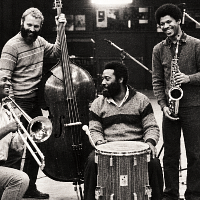
Become a Sustaining Member

Since 1995, All About Jazz has championed jazz as an art form and supported the musicians who create it. Over three decades, it has grown into one of the world's leading jazz resources, serving hundreds of thousands of readers, musicians, presenters and industry professionals each month.
Help Build the Future of All About Jazz
Your support helps us continue building All About Jazz for the next generation—expanding our editorial coverage, preserving jazz history, developing new community features and creating better ways to discover the music and the people behind it.
Become a sustaining member for as little as $20 per year and you'll immediately enjoy an ad-free experience along with access to subscriber features and future articles for a full year.
Together, we're not simply sustaining All About Jazz—we're building its future. Thank you for being part of the journey.