Home » Jazz Articles » Multiple Reviews » Dave Holland: Freedom Call
Dave Holland: Freedom Call
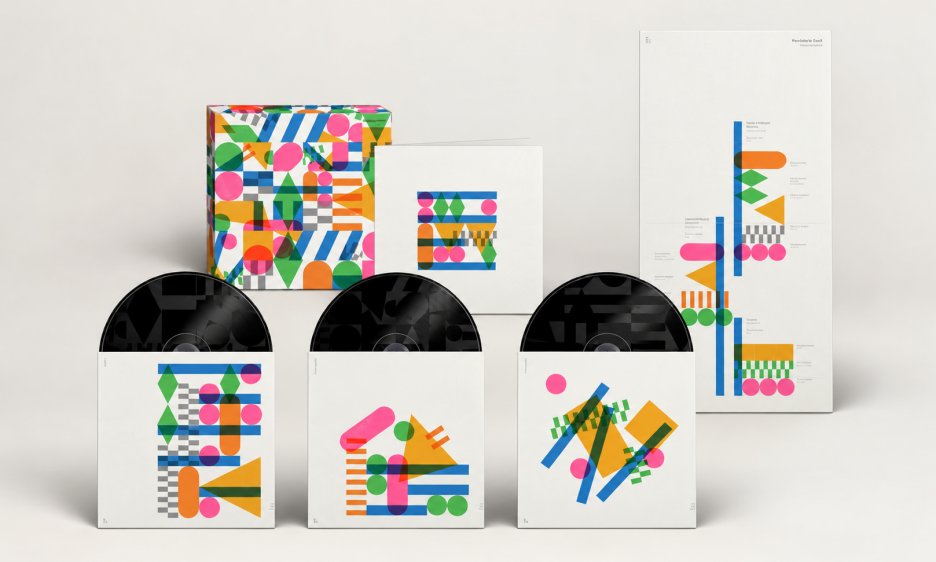
5 stars are really granted for this album which is a masterpiece and a pinnacle in Dave Holland's discography. Definitely one of the most remarkable releases of the year.
The box set offers new and compelling examples of the master bassist's gifts as a composer and leader. Those qualities were already taking shape in the early 1980s with the quintet featuring Steve Coleman, Kenny Wheeler and Julian Priester, and have developed ever since through a succession of strongly individual ensembles. Holland has built a rhythmically propulsive approach to Mingus-inflected modern mainstream, always balancing the freedoms of post-free jazz with the forms of the African American tradition and bebop.
It is music rich in surprises, with improvisation playing a central role through a succession of exhilarating solo statements. The groups led by Holland over more than 40 years have been laboratories for building shared musical experiences with highly compatible musicians, capable of moving with great empathy as they explore new paths. There is little need to recall the numerous accolades from audiences and critics alike.
Sextet: Unity
 In the liner notes, Holland introduces the three chapters of the box set, starting with Unity, a collection of live performances by the sextet that recorded Pass It On (Dare2 Records) in 2007. Holland had expanded his long-running quintet with a new lineup, retaining Robin Eubanks on trombone while bringing in alto saxophonist Hart and trumpeter Sipiagin, both of whom came from his big band. The most striking addition was pianist Miller, alongside drummer Harland. The presence of piano significantly transformed the group's palette, introducing a harmonic and timbral dimension different from that of the quintet with Nelson on vibraphone. As Holland recalls in the liner notes to the box set "I was a huge admirer of pianist Mulgrew Miller's playing and although we had played together a few times I had always wanted to do more with him, so I invited him to join us."
The sextet debuted at Birdland in 2006 and continued performing over the following years. The live performances included in this box include three tracks that did not appear on Pass It On ("Step to It," "Ebb and Flow" and "Mr B") and allow the remaining compositions to develop in new, more exuberant and extended directions.
Examples include the live version of "Lazy Snake," with two long and compelling solos by Sipiagin and Hart, and the breathtaking sequence of fours in "Fast Track." It would have been very interesting to hear a live version of "Rivers Run" as well, the most innovative piece on the studio recording.
Quintet: Synergism
 The quintet was the longest-running ensemble led by Holland and one of the most recognizable of his career. After the first quintet with Coleman and Wheeler came to an end in 1987, Holland led two quartets in the late 1980s and 1990s, recording Extensions (ECM Records, 1990) and Dream of the Elders (ECM Records, 1996), before forming the quintet that would remain active, with several changes in personnel, until 2010 and was documented on three ECM Records releases, Prime Directive (1999), Not for Nothin' (2001), Extended Play/Live at Birdland (2003) along with Critical Mass (Dare2 Records 2006). "The quintet featured on this recording was formed in 1997 and toured extensively until 2010. All the members of the band were musicians that I'd already played with prior to forming the group. (...) The quintet became a breeding ground for growth and musical development for all of us, both as players and composers. There was a lot of common ground between us musically but also a healthy diversity of concepts which led to the whole being much more than the sum of its parts. That's why I've called this album Synergism. (...) I wanted compositions that provided structure and direction while simultaneously allowing each musician the freedom and opportunity to fully explore their creative ideas and musical individuality."
The lineup underwent several changes over the years. Synergism presents the group in its mature configuration, with Eubanks on trombone, Potter on tenor and soprano saxophones, Nelson on vibraphone and marimba, and Nate Smith on drums. The recordings, made in 2010, capture the quintet at an advanced stage in its development, revisiting pieces from Critical Mass and later repertoire. Performances built on shifting meters and asymmetrical rhythms unfold in forms that are at times sinuous and at others convulsive, an adventurous blend of mainstream and avant-garde: complex music that the five musicians make sound fresh and compelling. Holland alternates the incisive rhythmic drive of a Mingus lineage with finely crafted personal statements.
The journey begins with "Pathways," a composition Holland had entrusted to the octet on the 2010 album of the same name (Dare2 Records), and which is revisited here by the quintet. Compared with the octet's orchestral version, the piece is more concise and characterized by long, passionate solos from Potter and Holland. All the compositions have a clear melodic identity while developing surprising solutions: dialogues that constantly intertwine and fall out of alignment, pervasive rhythmic fragmentation, magnetic solo statements, particularly those of Potter on tenor saxophone. Among the most imaginative and exhilarating moments are "The Eyes Have It," "Full Circle" and "Souls Harbor."
Prism: Freedom
 Formed in 2012 as a cooperative group with Kevin Eubanks on guitar, Taborn on piano and keyboards, and Harland on drums, the Prism quartet released its eponymous album in 2013, marking a clear shift—above all in terms of timbre and rhythm—from the bassist's previous leader dates. Prism is a hard-hitting electric band capable of bringing a contemporary perspective to the jazz-rock of John McLaughlin (that of Extrapolation (Polydor Records, 1969) and the early Mahavishnu Orchestra) as well as to some of the ideas of Weather Report, without giving up moments of greater openness and more serene atmospheres.
Many simplistic readings have reduced the music of Prism to the term fusion, overlooking the originality of a sophisticated approach deeply rooted in the aesthetic foundations of jazz. As Holland recalls, "in the live performances the sets were loosely constructed around the written compositions which allowed for a great deal of freedom and spontaneity in how we might interpret them. Introductions and transitions would be different from one performance to another and whole new sections would often be created on the spot. The tracks on this album capture some of that freewheeling spirit and have been extracted from performances in 2014."
The set list is reduced to just five pieces, but four extend between 16 and 18 minutes, highlighting the ensemble's exploratory capabilities: long solos, carefully crafted timbres and expansive solutions constantly trace new and surprising paths. The previously unreleased closing piece, "Confirmation Bias," is a phenomenal sequence of Hendrixian tensions and chamber-like releases, with the imaginative interplay between Eubanks and Taborn standing out. For those who love this band, Freedom is an essential listen.
 FOLLOW Angelo Leonardi
and get notified whenever a new article published.
Critico musicale interessato agli aspetti socio-antropologici del jazz
About Dave Holland

Tags
PREVIOUS / NEXT
Become a Sustaining Member

Since 1995, All About Jazz has championed jazz as an art form and supported the musicians who create it. Over three decades, it has grown into one of the world's leading jazz resources, serving hundreds of thousands of readers, musicians, presenters and industry professionals each month.
Help Build the Future of All About Jazz
Your support helps us continue building All About Jazz for the next generation—expanding our editorial coverage, preserving jazz history, developing new community features and creating better ways to discover the music and the people behind it.
Become a sustaining member for as little as $20 per year and you'll immediately enjoy an ad-free experience along with access to subscriber features and future articles for a full year.
Together, we're not simply sustaining All About Jazz—we're building its future. Thank you for being part of the journey.