Home » Jazz Articles » Interview » A Language of His Own: Bill Frisell on Dave Holland
A Language of His Own: Bill Frisell on Dave Holland
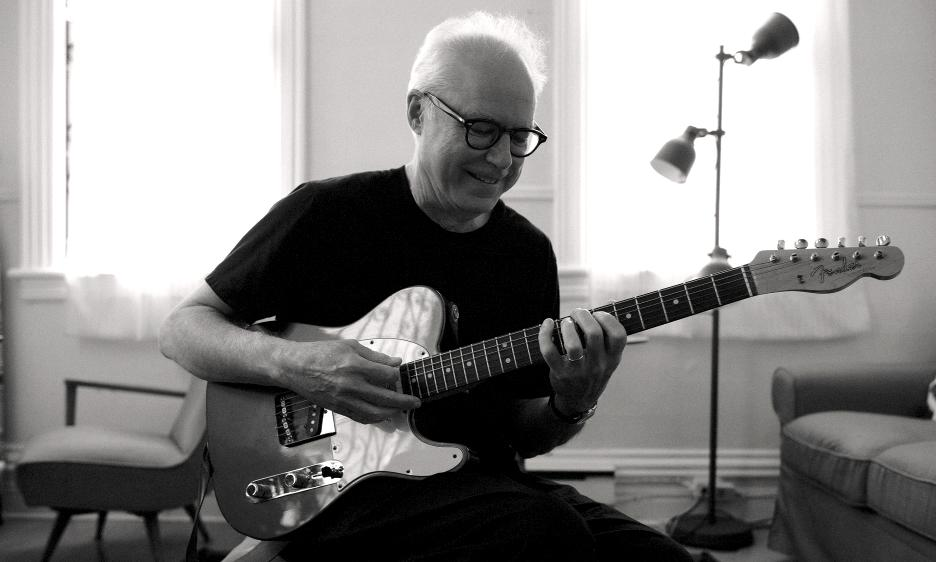
Courtesy Marko Mijailovic
Dave is one of the fathers of the way I think about music now
—Bill Frisell
So, rather than squeezing Bill's reflections into the format of the other contributions to this tribute, we decided to let the conversation unfold.
All About Jazz: When did you first hear Dave Holland's music?
Bill Frisell: At the end of high school. It was an intense period for me, when I was first discovering all this incredible music. My mind was exploding, really.
I always talk about when I heard Wes Montgomery, because that was sort of the moment when everything changed. It was like the door opened to all this other music.
Almost right away, that led me to Miles Davis. It was around 1969, when I discovered In a Silent Way (Columbia, 1969). That was a life-changing moment. And that's when I first heard Dave's sound. Everything was evolving so fast...
Then I bought the album Joe Farrell Quartet (CTI, 1970), featuring John McLaughlin, Chick Corea, Jack DeJohnette, and Dave Holland. I still listen to that album!
Dave is one of the fathers of the way I think about music now. He was such an inspiration and set an example of just staying so true to his own vision.
AAJ: Did you have a chance to see him live around that time?
BF: In 1971, I saw him play as a member of Anthony Braxton's group, with Kenny Wheeler and Barry Altschul. Again, it was like my mind was being split apart. I had never heard anything like that music!
The same thing happened when a couple of years later I discovered his album Conference of the Birds (ECM, 1973).
All these experiences had such an impact on so many things that I think about in music. And back then, I never even dreamt that someday I would meet him and have a chance to play with him.
AAJ: As you were going through this process of discovery, what was it that really struck you about Dave Holland? What set him apart from other bass players?
BF: It felt like he was showing the way, leading the way, into the future. I was hearing these things right as they were happening, and at the same time through them you could feel the whole history of the music. It was definitely connected to what had happened in the past, but it was also really looking ahead.
Another big one for me was the album Gateway (ECM, 1976), with John Abercrombie and Jack DeJohnette. So many things about that were important to me. "Oh my God!" Dave and Jack DeJohnette together? It just seemed like everything they did was another step into the future somehow. All three of those guys were really big influences on me, and if you listen to that record, I think you can hear how I stole a lot from it.
AAJ: Throughout his career Dave Holland has collaborated with a who's who of guitar players, including John McLaughlin, John Abercrombie, John Scofield, Pat Metheny, Kevin Eubanks, Lionel Loueke, you... Is there something, in your view, that explains this almost privileged rapport with guitar players?
BF: I don't know. I think it's more than the instrument. Sometimes it's more about the personality of the players, their way of thinking and their way of having a musical conversation.
I guess the first time I played with him was on Billy Hart's Oshumare (Gramavision, 1985). A few years later, we played again on Kenny Wheeler's Angel Song (ECM, 1997). And around that time, there was this festival in France... Now I don't recall exactly where and when it was, and if we even played together. But I remember that Paul Motian was there. Kenny Wheeler was there. And so was Dave, who played an incredible solo concert. What I do remember is that we spent a lot of time together, in a social way. We had a lot of time just to talk and have meals together. I got to know him more as a person.
And that's also the thing: when we talk about what instrument somebody plays, it's not so much about that. It's more about the personality, the humanity of the person that matters. I remember during that time I really got a sense of what a beautiful human being he is. And it became clear to me how committed and uncompromising he was—how he really stayed true to what he believed in all along.
Then, when we did that Kenny Wheeler record, that's where I felt like I really connected with him in a really, really strong way, in that small group.
AAJ: Is that when you started flirting with the idea of inviting him to record with you, which ultimately led to the album With Dave Holland and Elvin Jones (Nonesuch, 2001)?
BF: Yes. I just felt so connected with Dave on that Kenny Wheeler record. It sounded like he was interested in playing together more... Then this opportunity came to play with Elvin, and I knew that Dave had played with Elvin before. So I thought, "Oh, man, this is kind of a dream thing to try." When I think about that, it just seems like a dream to me. I can hardly believe that it really happened.
AAJ: Did you also go on tour with that line-up?
BF: Unfortunately, that was a studio thing. It really was just a couple of days that we were together.
I wish we had had more chance to play, but I couldn't be too selfish. I remember talking with Elvin about doing more recording, but then he started to get sick after that, and it just never happened. I just feel so lucky that I had at least that opportunity.
AAJ: Having known Dave Holland's music for so many years, what did you expect from that recording session?
BF: I try to go into these situations without expectations. I don't want to have a preconceived idea. I want to be open to whatever happens.
What mattered to me was that Dave was so supportive of the whole idea, even though it was very unusual to imagine having me, Elvin, and him. We had never played together as a trio, so we had to really be able to trust each other a lot.
AAJ: Is there something in particular that stayed with you as a result of playing together, something that you still come back to in your own experience of playing with other people?
BF: There's that sound, you know... ? He doesn't sound like anyone else. There's that, and then just as a person, how he has stayed so true to what he believes in. He's one of those people I look to and think, "Wow, how did Dave do it?" He's really so honest about just staying in touch with what he believes. That's not always easy. There are so many forces in the world that try to push you one way or the other. So to know that there's someone like that, who still hasn't strayed off the path—it just helps everyone, I think.
He's just clearly a good person, you know. It would be nice to have met him as a young child. He probably was already like that.
 FOLLOW Ludovico Granvassu
and get notified whenever a new article published.
FOLLOW Ludovico Granvassu
and get notified whenever a new article published.
I'm the Editor-in-Chief of All About Jazz Italia, host of Mondo Jazz on Radio Free Brooklyn and was once visited by Frank Zappa's ghost.... he was funny too.
About Bill Frisell

Tags
PREVIOUS / NEXT

Bill Frisell Concerts

Become a Sustaining Member

Since 1995, All About Jazz has championed jazz as an art form and supported the musicians who create it. Over three decades, it has grown into one of the world's leading jazz resources, serving hundreds of thousands of readers, musicians, presenters and industry professionals each month.
Help Build the Future of All About Jazz
Your support helps us continue building All About Jazz for the next generation—expanding our editorial coverage, preserving jazz history, developing new community features and creating better ways to discover the music and the people behind it.
Become a sustaining member for as little as $20 per year and you'll immediately enjoy an ad-free experience along with access to subscriber features and future articles for a full year.
Together, we're not simply sustaining All About Jazz—we're building its future. Thank you for being part of the journey.