Home » Jazz Articles » Musician 2 Musician » Steve Coleman on Dave Holland
Steve Coleman on Dave Holland
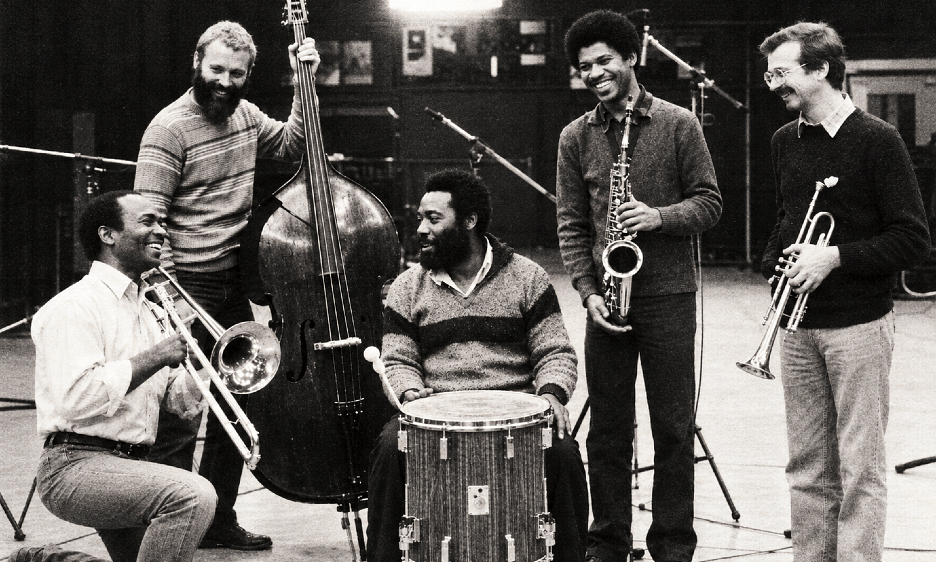
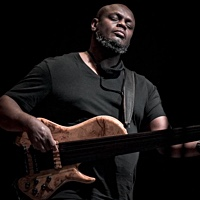
After playing together for all those years, there’s a shared experience. You’ve dealt with each other’s music. You’ve dealt with the open stuff. You’ve dealt with the structured stuff. You’ve dealt with all these rhythmic things. So all of that is present even when there are only two people playing.
—Steve Coleman
Prologue
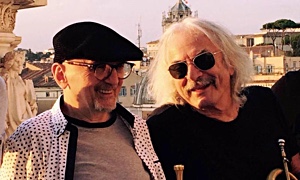
On September 16, 2026, I sat down with groundbreaking saxophonist and composer Steve Coleman at a penthouse apartment on Manhattan's Upper West Side. Coleman was four days shy of his 70th birthday, which itself was just three days before the great John Coltrane's centennial birthday. However, our conversation focused largely on another musician, and a relationship that had played an important role in Steve's development: bassist, composer and bandleader Dave Holland.This conversation holds particular significance for me. I played bass with Steve for some 25 years and have enormous admiration for both him and Dave. There is also a certain parallel between Dave's journey and my own: we are both bassists from the U.K. who crossed the Atlantic and eventually made our lives in the United States, albeit more than two decades apart.
Coleman has been one of the most distinctive musical thinkers of his generation. Born and raised on Chicago's South Side, he moved to New York in 1978 and quickly found himself working with many of his heroes, including Thad Jones, Sam Rivers and Cecil Taylor. He would go on to become one of the founders of M-Base, an important and scene-defining collective of young Black creative musicians prominent in the mid-eighties. He is also the longtime leader of his own band, Steve Coleman and Five Elements, through which he developed a fresh, ensemble-based approach to rhythm, improvisation and composition that has influenced generations of musicians.
Holland's path to New York had begun a decade earlier. Born in Wolverhampton, England, by his early 20s he was already working professionally in London when Miles Davis heard him at Ronnie Scott's in 1968 and invited him to join his band. Holland subsequently appeared on landmark Davis recordings including In a Silent Way and Bitches Brew, before working with musicians including Chick Corea, Anthony Braxton, Sam Rivers, Jack DeJohnette and John Abercrombie. By the beginning of the 80s, after years spent contributing to the music of some of the period's most consequential bandleaders, Holland was ready to establish a working group of his own.
Steve Coleman would become a central part of that group.
Beginning with Jumpin' In, recorded in October 1983 and released in 1984, Coleman appeared on a sequence of Holland recordings that included Seeds of Time, The Razor's Edge, Triplicate, and Extensions. Holland also participated in a number of Coleman's projects, and in January 1991 the two recorded Phase Space, an album consisting entirely of duo performances—bass and alto saxophone. Their association occupied much of the 1980s and the beginning of the 1990s.
Dialogue
Anthony Tidd: How did you first meet Dave?Steve Coleman: I met Dave playing with Sam Rivers, in the Studio Rivbea Orchestra, the big band. I think near the end of 1978, or the beginning of 1979, because by 1979 I was already touring with Sam. So I must have started rehearsing with them before that. It was almost immediately after I got to New York—some months.
Chico Freeman, who I knew from Chicago, came up to me and said, "Hey man, can you read?" I was like, "Yeah, I can read." He said, "I mean, can you really read?" I was like, "Yeah man, I can read. I've been playing in big bands and stuff." He said, "Okay, because I don't want you to embarrass me. You have to really be able to read."
So he took me down to Studio Rivbea, Sam Rivers' loft on Bond Street. I went in and there were all these cats—Hamiet Bluiett, George Lewis and all these guys. I hadn't been in New York that long. I was pretty much on the playing-tunes, jam-session scene. I wasn't on the creative music scene yet.
I sat down in the alto chair and it was this crazy-looking music. I'd never seen anything like that before. But it was readable. I didn't understand it, but I could play it.
All these cats were older than me. I was the youngest guy in the band. There's actually something on YouTube of us playing the North Sea Jazz Festival in 1979. It's one of the earliest videos of me that I know about. There's audio of me with Sam and with Thad Jones from around that period, but this is the earliest video I've found. I look like a baby.
Dave was only about ten years older than me. So when I was 21 or 22, Dave was 31 or 32. That's not old, but at the time they all felt older to me. These were people who had already been out there doing this music.
Dave was playing bass. He noticed me and I noticed him, but we didn't really communicate that much because I was just overwhelmed by all of it. But three or four years later he told me he had been checking me out—checking out how I dealt with the music, how I handled it, checking out the improvising, everything.
That's how I met Dave. We weren't really close then, but he knew about me from that band. We did gigs, we went on the road, and while we did he was checking me out. So by the time he was thinking about putting his own band together, he had already been hearing me for a few years.
AT: Was Dave already on the scene for a while by then?
SC: Yeah. Dave came to America because Miles Davis brought him over. He's from Wolverhampton, England. He played with Miles, and then after Miles he was in Circle with Chick Corea, Anthony Braxton and Barry Altschul. They were playing very uncompromising, progressive music.
Braxton, to me, is one of those really conceptual musicians. There are certain cats like that—Anthony Braxton, Cecil Taylor, Sam Rivers, Monk, Coltrane—people who create their own languages. It's not just one thing they create; it's like a whole world of stuff, all working together. You have a concept of harmony, a concept of rhythm, a concept of form, a concept of improvisation. The different parts are connected.
Dave tended to align himself with cats like this. To me, Miles, Braxton and Rivers were all like that. Miles was a little different, but as a leader he always aligned himself with musicians who had that almost universal way of thinking about music.
Then Dave played with Sam Rivers for a long time. So these were the kinds of musicians he was around. When I met Dave, he had already been through Miles, Circle, Anthony Braxton, Sam Rivers—all these different situations where the music was being pushed in different directions.
Between the time I first met him and the time he asked me to join his band, Dave had a serious heart problem. He had open-heart surgery and almost died. We played a big benefit for him. When he came through that, from what he told me, it changed the way he was thinking. He had wanted to start a band for a while but had kept putting it off. After going through that he decided, basically, "I'm going to start this band. You never know what's going to happen."
He already had his relationship with ECM and Manfred Eicher. He had been recording for the label and working with all these musicians. But now he wanted to make his move and establish his own band.
AT: So, when did he actually ask you to join his band?
SC: It was 1982. We were at a festival in Europe. I was playing with Sam Rivers and Dave was touring with John Abercrombie. We ran into each other on the road, and he said, "I'd like to talk to you about something." I said, "What is it?" He said, "I'm starting a band and I'd like you to join the band."
Now, I was suspicious because I don't think I had ever really been in a band with a white leader. I had been in Thad Jones—Mel Lewis, but Thad was there when I joined. So I was frank with Dave. I asked him, "Why did you pick me?" He told me who he was thinking about having in the band: me, Kenny Wheeler, Julian Priester and Steve Ellington.
I asked him why he had picked three Black musicians. Dave said, to be frank, that he had been playing this music and couldn't imagine the music without Black people involved because, as far as he was concerned, Black people had created the music and were still creating the music.
I was shocked that he said that. I wasn't used to hearing white musicians say it that directly. I remember thinking, okay, at least this cat is being straight with me about what he thinks.
Then he told me to come up to Woodstock, visit his house, play together and talk, because he wanted to make sure. So I went up there.
We played, but we also talked a lot. And that's when we really started talking about concepts. I was pretty hard-headed at that time. I had very definite ideas about what I thought music should be doing and what I was trying to develop. Dave had his own experience, coming out of Miles and then Braxton, Circle, Sam Rivers and all this open music. So almost from the beginning there was a dialogue between the two of us about how the music could work.
AT: What do you mean by, "how the music could work?"
SC: Well. Dave started talking about playing open, and I said, "Well, it's not really open, is it?"
He said, "What do you mean by that?"
I said, "If you tell musicians that they can do whatever they want to do, they're always going to do what they can do. They're not going to do something they can't do, because they can't do it."
And they're probably not going to do something that's difficult for them when they have the choice between something difficult and something easy.
He said, "Can you give me an example?"
I said, "Yeah. Let's say I play something that's in 15. Are you going to choose to play that if I just tell you that you can play whatever you want? Not unless you've practiced it."
That was my argument then. If you let people do what they want to do, they're going to do what they can do, and probably what's easiest for them. The only way they're going to do what they can't do is if they work on it.
That was the thing I was trying to get across to Dave. If you're saying everything is open, then theoretically you can choose anything. But in reality your choices are limited by what you've developed. You can't spontaneously choose a language you don't have.
So I told Dave, in order to learn these different languages, you have to work on these different languages. It's not just going to happen.
I used Coltrane as an example. He didn't just wake up one day and say, "I'm going to play 'The Father and the Son and the Holy Ghost,'" after playing rhythm changes. There was a process that led to that. It wasn't sudden. You can hear the development through the music.
So I said, you have to write things and think about things that put you outside of your comfort zone, that force you over into something you haven't done already. Otherwise, you'll never do what you haven't done.
That didn't mean I was against open playing. What I was questioning was what "open" actually means. If you really want more possibilities available to you, you have to develop those possibilities first.
AT: So Dave liked the compositions you began bringing into the band, which I guess were pretty challenging?
SC: Yeah. I started bringing my tunes in, and they proved the point because there were things in the music that he hadn't been doing. It wasn't because he couldn't do it. He just hadn't been doing it.
There was one tune I brought in that gave him some trouble rhythmically, and to me that proved what I was talking about. I had been playing that kind of thing for a while. The fact that he had to work on it didn't mean he couldn't play it. It meant that this was an area he hadn't spent as much time dealing with.
We had a lot of these talks even before I joined the band. I was pretty hard-headed about it. Then when we actually started playing together, Dave asked me to bring my tunes into the band.
At one point, when some of the rhythmic structures were causing problems, I said, "Well, don't play my tunes. It's no problem." Because Dave's tunes at that point were much more open in the blowing sections. You had a lot more freedom in terms of what you could play. My tunes had these rhythmic structures that came out of the drum chants, and everybody had to negotiate those structures.
He said, "No, man, I want to play your tunes because that's where the music's going."
I said, "I don't know if that's where the music's going. I say that's where I'm going! Hahaha."
But he said, "No, I want to play your tunes."
That was the thing with Dave. He wanted to deal with the music. He could have simply said, "This is my band, we're going to play my music." But he wanted those pieces in there, even though they required everybody—including him—to work on some things differently.
AT: Where were those ideas coming from? I know drum chants were already a big part of your concept when I joined Five Elements later on.
SC: A lot of it came from Doug Hammond. Doug changed my whole life rhythmically. I'm still using drum chants now.
Before I played with Doug, I wasn't really thinking about rhythm that way. I was thinking about harmony and melody and all this other stuff, but Doug opened up this whole other area for me.
Dave asked me where I got the concept from, and I said, "I play with this cat named Doug Hammond. He opened me up to all these ideas. I wasn't really thinking about rhythm before I played with him."
So Dave wanted to meet Doug.
I introduced them when I was living in Bed-Stuy, Brooklyn. And what surprised me was that Dave would come all the way down from Woodstock with his bass and come to my little apartment and play with us. This was not some fancy rehearsal studio. It was this little apartment in Bed-Stuy, and Dave would drive down from Woodstock with his bass because he wanted to check out what was happening.
That told me something about him. He was already an established musician. He had played with Miles Davis, Anthony Braxton, Chick Corea, Sam Rivers—all these people. He didn't have to come down there. But he was interested enough in the ideas to do it.
AT: Wow!
SC: That was the beginning of how he began to see the M-Base thing, because this was before we were even calling it M-Base.
It wasn't like there was an organization yet. It was just a bunch of us playing together, exchanging information and trying to develop things. But Dave was seeing that community at a very early stage.
He was coming around and hearing where some of these rhythmic ideas were coming from. He met Doug. He heard the drum-chant thing. He was seeing how these different musicians were connected.
So by the time people later started identifying this thing as M-Base, Dave had already been exposed to a lot of the musicians and ideas that were part of it.
AT: So Dave sort of became part of that Brooklyn scene, or spent a lot of time with you guys?
SC: Yeah. In the beginning it was me and Doug Hammond, Jean-Paul Bourelly and people like that. Graham Haynes was around. Eventually Cassandra Wilson came on the scene. Geri Allen was around. Greg Osby was around. These were some of the earliest people.
Dave met a lot of those musicians through me. Cassandra sang with him. Graham played with him. There's even some rare footage where Graham is playing trumpet with Dave's group. Robin Eubanks came into the band. But the cat he really hired from my association was Smitty, Marvin Smitty Smith.
Dave was curious. That's the thing I remember. He would come down from Woodstock and play with us. He wasn't just standing on the outside saying, "What are these younger musicians doing?" He would bring his bass and actually get into it.
And remember, Dave was almost ten years older than me, and he had already been through all this stuff. Miles, Circle, Braxton, Sam Rivers. So I respected the fact that he was still interested in what these younger cats were doing.
He was trying to understand what we were doing. Not everything was necessarily coming from the same place he came from, but he was checking it out seriously. That curiosity was important.
AT: So how did Marvin "Smitty" Smith join Dave's band?
SC: Dave asked me to get some drummers to audition, so I brought Doug Hammond, Ronnie Burrage and Smitty.
At that time Smitty wasn't playing with my band yet. He had just come onto the New York scene. Smitty, Jeff Tain Watts, Branford Marsalis and those cats were a little younger than me. They started arriving in New York around '81, '82, '83.
Dave liked Doug's concept, and Smitty saw that. Smitty was smart. He asked me questions about Doug, and I told him about the drum-chant thing. Then he got together with Doug and had Doug show him the drum chants.
Smitty was like a sponge. He could absorb things really quickly. He heard the concept and grabbed it.
Then Smitty asked Doug who influenced him, and Doug told him Ed Blackwell. So Smitty got together with Ed Blackwell too. Blackwell had these rhythmic things—what I call proto-drum-chant things—and Doug had taken that and developed his own version of it.
There was this lineage of rhythmic information being passed along. Smitty was checking all of it out. And he already knew the tradition. He knew the different ride-cymbal things, he knew the funk stuff, he knew all of that. So he had a broad base to begin with, and then he started absorbing these other rhythmic concepts.
Smitty grabbed all of that stuff very quickly. That was one of his strengths. You could show him something and he could internalize it.
Then Dave hired Smitty. Steve Ellington is on Jumpin' In, and after that, on the records I was involved with, it was Smitty. So the rhythmic character of the band started changing too. [Interviewer's note: Marvin "Smitty" Smith played on Seeds of Time, The Razor's Edge and Extensions. The 1988 trio album Triplicate, which also featured Steve Coleman, was recorded with Jack DeJohnette on drums.]
AT: Can you say more about how the character of the music and his band changed?
SC: Well, we carried on that debate of open versus structure even in his band, and the tunes had both things.
If you listen to Dave's music from that period, a lot of the blowing is open. It was still connected to what he had been doing with Sam Rivers, Barry Altschul, Braxton and those cats. A lot of open playing. My stuff was the beginnings of what my music eventually became, with all these structures.
One thing that happened that I think was good was that we started playing the structure stuff with more of an open feeling, and we started playing open stuff with more of a structure feeling.
Even when I play open now, I'm thinking the same way I'm thinking when there's structure. I'm listening to the notes somebody's playing. I'm listening to what the bassist is playing. I'm thinking about voicing. I'm not thinking randomly. I'm still thinking what I consider to be music.
Playing with Dave gave me a chance to get that together because he had all this open stuff, and then you had to figure out: how are you going to play on this? You could close your eyes and guess at the notes, but to me that wasn't really happening.
I had already thought about that from playing with Sam Rivers, because Sam's stuff was open. He would point to you and it was time for you to solo. There wasn't necessarily a structure there.
One of the reasons I developed my symmetry thing was to be able to have something to play in those kinds of contexts. I didn't want my only response to open music to be a collection of gestures. I thought, if there's no structure there, you need to have a way of creating your own structure.
That really helped me with Sam, and it helped me with Cecil Taylor too. The same year I talked to Dave about joining his band, I played four weeks with Cecil's big band at Lush Life on Bleecker and Thompson. That was transformative for me.
Cecil would create things spontaneously onstage. I had never really seen anybody do what I would call spontaneous composition like that—making up a composition right there and being able to develop it and remember the material. At first I didn't understand how he was doing it. Then I realized he had a system. Sam had his own system too. These cats knew what they were doing.
So all of that fed into how I approached Dave's music.
By playing the really structured stuff, when we got to the open stuff we could bring some of those skills into it. And the same thing the other way around: we could play the structured stuff, but it could sound open.
I liked it when you couldn't necessarily tell what was happening structurally. To me, that meant the musicians were doing a good job. The structure didn't have to sound like a cage.
Dave preferred to call it "open." He didn't call it "free." For him, open meant you could make whatever choices you wanted to make. That's what it meant for me too. We were just in disagreement about what those choices would be.
I prefer to call it "not preconceived"—not a form that you thought of ahead of time and are now following. And Dave was the kind of musician whose ears were good enough to do that. You could play something that wasn't preconceived and still make music that sounded like it had relationships and structure. He was a musician on that level.
AT: Were there things that Dave introduced to you that became important to your own development as a composer?
SC: Definitely. Dave introduced me to two books that really influenced me.
One was a book about the music of Bartók and Kodály, which is where I learned about the golden mean and those kinds of things. The other was a book about Bartók by Elliott Antokoletz, about tonality and progression in twentieth-century music. I don't remember the exact title off the top of my head, but Dave introduced me to that book too.
[Interviewer's note: The first book Coleman refers to is likely Ernő Lendvai's The Workshop of Bartók and Kodály (Editio Musica, 1983), in which Lendvai discusses proportional structures, including the golden section, in Bartók's music. The second book is Elliott Antokoletz's The Music of Béla Bartók: A Study of Tonality and Progression in Twentieth-Century Music (University of California Press, 1984).]
Those two books influenced me.
George Lewis introduced me to two other books that influenced me. One was Harry Partch's Genesis of a Music and the other was Helmholtz's On the Sensations of Tone. Those influenced me a lot in terms of learning about tuning and thinking about sound in a different way.
There was also Dizzy Gillespie's book, To Be, or Not... to Bop, which came out around 1979. I went out and got that right away. There were things in there that influenced me too.
So information was coming from different people. Muhal Richard Abrams had all this information. George Lewis had information. Dave had information. I was absorbing things from different places and then trying to figure out how they related to what I was already doing.
Dave was one of the people who gave me information that became important to the way I developed.
I had already started thinking about symmetry before I joined Dave. That goes back to around 1977 or '78. I was studying Coltrane, particularly "Ogunde" from Expression, and trying to understand certain relationships in that music. I was looking at what Coltrane was doing and trying to figure out what the underlying thing was—not just copying the surface.
So I already had my own direction, but Dave introduced me to information that helped me develop it further. That's the kind of exchange I'm talking about. I was bringing him information about rhythm and some of the things I was working on, and he was turning me on to information that opened up other areas for me.
AT: And Dave was about ten years older than you, which meant he arrived on the scene ten or so years earlier too?
SC: Right. We had different ideas, and part of that was generational. And it wasn't only Dave influencing me or me influencing Dave. You had all these musicians in the band bringing their own information. Julian Priester and Kenny Wheeler were contributing with their playing and compositions. Smitty comes in with everything he knows, and then he's checking out Doug and Ed Blackwell. Robin comes in. Everybody is bringing something.
That's what happens with a working band. If the leader allows it to happen, the musicians start affecting the music.
Dave allowed that to happen. He asked me to bring tunes. He wanted to deal with the rhythmic structures even when they were difficult. He was interested in where the ideas came from. So the band could change.
That's one of the main things I got out of playing with Dave.
It wasn't that one person was right and the other person was wrong. We were dealing with the music and figuring out how those things could coexist. After you do that for years, the distinction between "his thing" and "my thing" isn't always so simple anymore. You've developed some information together.
Julian Priester also brought in a composition that I think was called "Celebration" that was very hip. Julian had played in some very creative groups with Max Roach, Booker Little, Eric Dolphy, Mal Waldron, Sun Ra, Dinah Washington and others, and those cats influenced me too. Julian picked up on some of the early M-Base-like ideas quickly—which were influenced by Roach, Booker, Blackwell and them anyway—and I can hear some of that in Julian's compositions.
AT: As a bassist, one thing that has always struck me about Dave playing is the breadth. He was part of that 70s creative scene, with the skill set to play with cats like Braxton, but he was also very comfortable in far more traditional settings.
SC: Yeah. Like I said, people would ask me, "Can Dave play tunes? Can he play changes?" And I would say, "Yeah. Can't you hear it?"
I could hear that a cat could play tunes just by the way he was phrasing. I didn't even need to hear him on a tune. I could hear it just from the phrases he played. Some people couldn't hear that. If you weren't playing the language of Bird, Dizzy, Monk and them in front of them, they didn't necessarily know that information was there.
People thought that because Dave was associated with Braxton and Sam Rivers and all this stuff, maybe he couldn't play tunes. But I heard right away, even in Sam's band, "This cat plays tunes." I could tell by his phrasing.
And later he played with Hank Jones, Tommy Flanagan, Kenny Barron. You can't play with those cats if you don't know tunes. When Dave played with those musicians, he played their music. He respected what the situation was.
I understood that because later people did the same thing with me. They heard Five Elements and assumed I didn't know tunes. But that was what I came up playing. When I first came to New York I was on the jam-session scene. I knew Charlie Parker tunes. I knew rhythm changes. I knew that language. I just wasn't necessarily presenting it onstage with my own band.
What somebody presents onstage isn't necessarily everything they know how to do.
That's one of the things about Dave. He could deal with different situations without pretending that every situation was the same. He could play with Braxton and Sam, and he could play with Hank Jones and Kenny Barron.
Dave is a consummate musician. High level.
AT: By the time you recorded Phase Space, you and Dave had been playing together for close to a decade. What was it like playing duo with Dave after all those years?
SC: By that point we had been playing together for years, so there was a lot of information there.
Dave was the kind of musician whose ears were good enough that you could play something that wasn't preconceived and still have it sound like music with structure. That was something I had become very interested in.
I never thought of open playing as just playing randomly. Even when there isn't a preconceived form, I'm still listening to the relationships—the notes, the rhythm, the voicings. I'm trying to hear how one thing relates to another.
That was what all those years of dealing with open music and structured music had been about for me. With Sam Rivers I had to figure out what I was going to do when there wasn't a predetermined structure. With Dave, we were constantly moving between his more open material and my more structured material.
So after years of that, you develop ways of hearing each other. You know how the other person phrases. You know where the rhythm can go. You know that if somebody makes a certain move, there are a bunch of possibilities for how you can respond.
So when you play duo, all those years of experience are still there. You don't have to explain everything. The information is already in the relationship.
AT: Yeah, when I first heard that record I soon realized, "Hold on. There are only two musicians playing!." Much of it went over my head at first, but I still felt like I could clearly hear what was happening rhythmically, almost like there was a drummer. And all the harmony was there, but there wasn't a pianist. It was as if the two of you were a whole band!
SC: Right. Because you're dealing with the musical relationships.
So the harmony doesn't disappear just because there isn't a pianist, and the rhythm doesn't disappear just because there isn't a drummer.
You can create those relationships between two instruments.
That's part of what I mean when I talk about creating your own structure. If there isn't a structure already there, that doesn't mean there's nothing there. You're making decisions based on what you hear.
With somebody on Dave's level, you don't need every function to be literally played by a separate instrument. His ears were good enough that we could get into that kind of thing.
And after playing together for all those years, there's a shared experience. You've dealt with each other's music. You've dealt with the open stuff. You've dealt with the structured stuff. You've dealt with all these rhythmic things.
So all of that is present even when there are only two people playing.
AT: Almost like a distilled version of a larger band?
SC: Yeah. Because by then we had years of playing together. That's the advantage of a working band, or of playing with somebody over a long period of time. You develop information together.
You're not just learning somebody's tunes. You're learning how they hear. You learn what they do with time. You learn what kinds of things they respond to. And they're learning the same things about you. With Dave, we had been dealing with the structured stuff, the open stuff, my tunes, his tunes, all of these different things for years.
We had also spent years having these conversations about the concepts behind the music. So it wasn't only something happening on the bandstand. We were talking about what "open" meant, what structure meant, what choices were available to you.
Over time all of that becomes part of how you play together.
So when you get down to just two people, all of that experience is still there. In some ways you can hear it more clearly because there's nothing else around it.
AT: When you look back now, nearly four decades after the beginning of that relationship, where do you place Dave in your own musical development?
SC: He was important. No question.
I was grateful for those years because they gave me experience and confidence. Dave worked hard. His musicianship was really together.
And he was curious.
So yeah, Dave was important to my development.
AT: Which brings us back to something you said earlier: that eventually the structured music became more open, whilst the open music developed more structure.
SC: Yeah. That's really what happened.
So when I got into Dave's music, I could bring that way of thinking into the open sections.
And then, when we played the structured music, all that experience playing open meant the structures didn't have to sound rigid.
You could have something that was highly structured, but the listener might not necessarily know it was structured. That was something I liked. I didn't want the structure to announce itself all the time.
So the two things fed each other.
AT: Eventually, you stopped playing what I guess were sideman gigs and began to concentrate on your own band?
SC: When I left Dave's band near the end of 1991, I was 35 years old.
Economically, it wasn't necessarily the smartest decision because Dave's band was doing well. It was probably one of the best-paying playing situations I had been in. His band was getting more attention, and I had a stable economic situation.
And at exactly that time I had just bought a house. After the down payment and buying a car to get around, I didn't have much money left. Sophia Wong had just started managing me, and I didn't know whether I was going to be able to survive just doing my own thing.
I had never really tried to make it only with my own band.
But I knew I wanted to spend all my time on my own music, and I thought, "It's now or never."
Coltrane was born exactly 30 years before me, so I always used his life as a kind of yardstick, at least up until the age when he died. It was easy for me: whatever year something happened for Coltrane, I could add 30 years and see where I was.
Around that age was when Coltrane really stepped on the gas pedal with his own music. McCoy and Elvin came into the band around 1960, and by the Village Vanguard period in 1961 the music was really changing.
So in 1991 I was thinking, "You've gotta make a move."
About Dave Holland

Tags
PREVIOUS / NEXT

Become a Sustaining Member

Since 1995, All About Jazz has championed jazz as an art form and supported the musicians who create it. Over three decades, it has grown into one of the world's leading jazz resources, serving hundreds of thousands of readers, musicians, presenters and industry professionals each month.
Help Build the Future of All About Jazz
Your support helps us continue building All About Jazz for the next generation—expanding our editorial coverage, preserving jazz history, developing new community features and creating better ways to discover the music and the people behind it.
Become a sustaining member for as little as $20 per year and you'll immediately enjoy an ad-free experience along with access to subscriber features and future articles for a full year.
Together, we're not simply sustaining All About Jazz—we're building its future. Thank you for being part of the journey.