Home » Jazz Articles » Interview » Boney James: A Simple Man And A Lifetime Study
Boney James: A Simple Man And A Lifetime Study
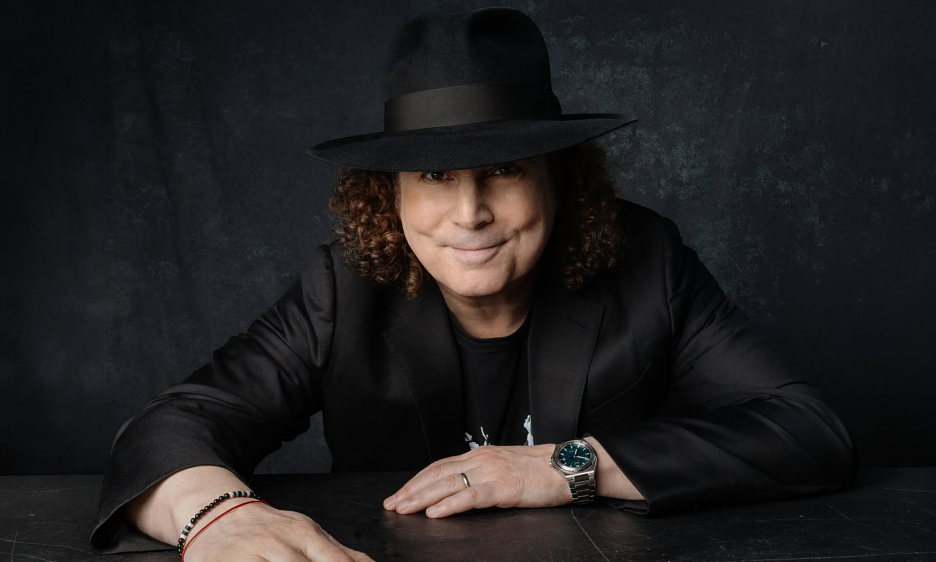
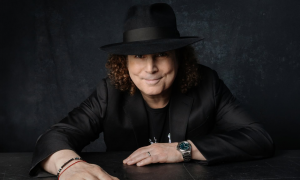
Courtesy Describe The Fauna
I’m just trying to be me. I’m trying to make Boney James music, and I’m grateful there are radio stations that play it on the R&B side and the contemporary jazz side, or whatever you want to call it. That’s really how I think about it.
—Boney James
In this conversation, James discusses the labels that have followed him throughout his career, the singers and saxophonists who helped shape his sound, his R&B-inflected interpretation of Duke Ellington's "In a Sentimental Mood," and why, after more than three decades of recording and touring, he still considers playing the saxophone "a lifetime study."
All About Jazz: You have quietly amassed over two billion streams and are releasing your 20th album—numbers most artists never see. Do you feel like a "living legend hiding in plain sight," or does that massive, quiet ubiquity just feel like normal life to you?
Boney James: It feels like normal life, but it is wild when I can sometimes get some perspective on it. When I get recognized out in the world or people recite these accomplishments back to me, it's kind of a trip. It's hard to believe it's me. "Wild" is really the word for it.
AAJ: Your music is deeply woven into the fabric of everyday life for millions of people, yet you've managed to maintain a relatively low-key public persona. Was that a conscious choice to protect your art, or did it just happen naturally?
BJ: I don't think of myself as that big of a star. I'm not Taylor Swift or anything like that. It's more of a niche of people who know who I am, and hopefully it's growing. That's part of the fun of what we do—trying to grow the audience. At the same time, I know some people think of me that way. I'll run into somebody who's a crazy fan and they look at me like I'm a star. So there's this weird duality of not really feeling like one, and yet knowing that to other people that's what I represent. It's interesting.
AAJ: When you look at the sheer longevity of your career compared to how fast the music industry moves, what do you think it is about your sound that keeps people anchoring themselves to it for decades?
BJ: I hope it's the honesty. I'm really just trying to make music from the heart, and I hope that's what people are responding to. I know I can occasionally write a melody that's memorable, and that's something I'm always trying to do. If I'm not feeling it, I don't let other people hear it. All the music I've put out has sort of passed my test of, "Is this speaking to me?"
AAJ: 20 albums is a massive milestone. When you look back at the beginning, did you ever envision building a catalog that would become a cornerstone of modern instrumental music?
BJ: I was just glad to be doing it, man. I thought my mom was going to be the only one who bought my first record. The fact that I'm still here and all these things have happened is pretty amazing, and I'm very, very grateful. I don't think I pictured the life that I've had. I often sit back and feel very fortunate.
AAJ: What is the biggest misconception people have about your career or your level of impact when they look at you from the outside?
BJ: A lot of people think of me as a smooth jazz artist, and I don't necessarily think of myself that way. I think there are people who maybe haven't spent a lot of time listening to my music and might lump me in with a certain sound or genre. I would hope people can actually listen to my music and just hear it for what it is.
AAJ: You spent years on the road backing icons like Morris Day, Teena Marie and The Isley Brothers. What did you learn on those tours about moving a crowd that you couldn't have learned anywhere else?
BJ: There were a lot of great entertainers that I was able to stand behind and watch, and I really set out to try and learn from those experiences rather than just be out there collecting a paycheck or trying to party or whatever. I was always very serious about practicing my horn even on the road. Guys in the band would make fun of me because they were having a different experience. But I kept my eyes open and tried to learn about show business and about being an entertainer from all of those gigs. I'm very grateful that I was able to pay those dues and have those lessons.
AAJ: Instead of treating Duke Ellington's "In a Sentimental Mood" like a museum piece, you rebuilt it around a D'Angelo-inspired neo-soul groove. What made you look at a traditional jazz standard and say, "This needs a hip-hop pocket?"
BJ: That's just how I heard it. Honestly, that's how I heard it in my head as I was playing the melody. That was the groove I was feeling behind it, so when I made my demo, I created it that way. Then my touring drummer Omari Williams came in and gave it even a little more juice, Javance Butler played keyboards and Alex Al played bass. We created something that I think is really, really special.
AAJ: Your saxophone playing often mimics the phrasing, breath and emotional delivery of a soul vocalist rather than a traditional horn player. Who were the singers you were listening to when you were developing that signature "voice?"
BJ: I always really loved Marvin Gaye, Stevie Wonder and Philip Bailey. Earth, Wind & Fire was a huge influence on me—Maurice White, Curtis Mayfield, Aretha Franklin, Chaka Khan. There's such a great lineage of music. There were also great horn players channeling that kind of thing: Grover Washington, Jr., Wilton Felder, Ronnie Laws. These were people out there doing it when I was developing, when I was in my early teens. It was just a great cauldron of music when I was coming up, and I think that really set up the music that's in my head now.
AAJ: You've collaborated with absolute giants—from George Benson and Al Jarreau to Lalah Hathaway and Bilal. What is the common thread that connects you to all of those different eras of Black music?
BJ: I think most of the singers I've collaborated with have some kind of retro or neo-soul influence. Even a young cat like October London is clearly responding to Marvin Gaye. I think I'm responding to singers who are also responding to music that I grew up loving. There are continually new generations of people hearing this music, realizing how great it is, being influenced by it and then taking it into the era we're living in now and adding to it. It's like jazz—it's constantly evolving and based on a tradition, but it keeps changing. I think R&B is a similar situation.
AAJ: How does your new album, A Simple Man, honor the broader tradition of jazz-informed R&B and soul that you've been a steward of for over thirty years?
BJ: I guess that's something other people are going to have to say. I don't know. I know I love it. I think it's really dope, and I felt like I was really connected with the music as I was writing it and performing it. To me, that's what makes it work—feeling the music when I'm playing it and getting that down on tape in a way that when I listen to it through the speakers, I'm feeling it again as if I'm a listener. It's all about the grooves, the melodies, the feel and the emotion coming out of the speakers. That's what making a record is all about for me.
AAJ: Labels like "Smooth Jazz" or "Urban AC" have followed you around your whole career. How have those industry boxes helped or hindered your creative freedom over the years?
BJ: The main thing is that I'm really grateful. To me, those names are radio formats. That's how I think of them. I'm really grateful that smooth jazz radio plays my music, and I'm really grateful that Urban Adult Contemporary radio has accepted me and plays my music. But I don't think those terms refer to styles of music. Both formats play a lot of different artists with various gradations of style. I'm just trying to be me. I'm trying to make Boney James music, and I'm grateful there are radio stations that play it on the R&B side and the contemporary jazz side, or whatever you want to call it. That's really how I think about it.
AAJ: Have you ever felt a tension between traditional jazz purists who want things a certain way and R&B audiences who just want to feel the groove? How do you navigate that line?
BJ: I can be peripherally aware of this conversation that goes on on the internet or in the press or whatever, and I do my best to ignore it. I don't think it's important. People can have their opinions, but I'm just not with a lot of that stuff. I resigned from the debating society a long time ago.
AAJ: When you look at A Simple Man, you have Marquis Hill from Chicago's modern jazz scene alongside guitar legend Larry Carlton. How do you see your music bridging those completely different worlds and generations?
BJ: That's kind of one of the fun things I get to do. I can imagine these worlds connecting, and then I have the great privilege of having this forum where I can make that stuff happen and release it for other people to hear. That's one of the great things about having done all the work I've done to build this career. Now I can just have fun playing in this paint box of music and see what comes out. If it gets to the point where I'm saying, "That sounds cool to me," then I'm going to share it with other people and everybody can make up their own mind about it.
AAJ: When you sit down to write a melody, do you ever actively think about genre, or is it a conscious effort to completely strip away those boundaries until it just feels right?
BJ: I'm just following the music, and I'm often surprised by what it is that I'm working on. I'll think, "Oh wow, that sounds kind of Latin," or whatever it might be. It's really about hearing where the music is going, and then my job as the artist and producer is to create it and make it. I'm following the music as it happens. It's almost like uncovering the music, because a little shred of melody isn't a song. It's the seed for a song. Then I have to do all this work, experiment, see where it's going and use all these tools I've amassed over the years to make it into a real record.
AAJ: If the industry labels never existed, how would you describe the space your music occupies to someone who has never heard a single note?
BJ: Oh man, I don't really know. I know I've got an R&B influence because I grew up loving that music, and I play the saxophone, which definitely leads people to imagine that it's going to sound like jazz. I studied saxophone players, so that vocabulary is somewhat in me, although I don't really speak the traditional jazz language that fluently. I've spent a lot of time trying to work on my own sound and build Boney James music. That's really what I'd prefer to call it.
AAJ: You mentioned that even 35 years into this career, you still feel like you're actively getting better. What does "getting better" mean to you at this stage? Is it technical, emotional, or something else?
BJ: I think it's all of that, truly, but it starts with the instrument itself. I play this piece of metal and I've got to make it sing. It's a very physical thing, so there's a certain maintenance that goes into playing the saxophone just to keep all these muscles doing what they're supposed to do. I'm still interested in the horn and in growing. There's a great quote from Pablo Casals. He was in his 80s and practicing hours every day, and an interviewer asked him why. He said, "I think I'm making progress."
I had a teacher, Bill Green, when I was young who told me, "It's a lifetime study." That's how I look at it. There's always more to learn in music. It's a huge language. There's always something to practice, something to fix or something to grow. I love it. This is what I do for fun.
AAJ: Many artists with your track record eventually switch to autopilot or lean heavily on nostalgia, but you're still pushing out fresh, collaborative studio albums. Where does that hunger to keep growing come from?
BJ: That's a good question, but I don't know that I know the answer. It's just in me.
AAJ: What is something you discovered about your own playing or writing while recording A Simple Man that completely surprised you?
BJ: I was really pleased with the way "In a Sentimental Mood" came out because there are a lot of chord changes in that song. It's been recorded by many, many people and it's a straight-up jazz standard. To do it in my voice and still make the changes—I'm soloing and hinting at this jazz tradition, but with a Boney James/R&B flavor to it—I thought it was really interesting how it turned out. I wasn't sure it was going to be as great as I think it is.
AAJ: Think back to the younger version of yourself touring as a sideman in the '80s. If that guy could hear this new album today, what do you think would surprise him the most about the musician he grew up to be?
BJ: I always wanted to be this kind of musician. I wasn't a child prodigy. I knew some cats when I was younger who were playing incredibly, and I'd think, "How do they do that?" Some people are just born with an innate ability that I didn't have. I put a lot of effort into it, and I can really hear the improvement in my sound. I think the younger me would be proud to hear what we've become.
AAJ: As you prepare to share this 20th album with the world, what are you still trying to prove to yourself when you pick up the saxophone?
BJ: I don't think about proving anything to myself. I'm just enjoying this whole journey of music and discovery. That's mainly what I'm thinking about: What can I learn today?
About Boney James

Tags
PREVIOUS / NEXT


Boney James Concerts
Become a Sustaining Member

Since 1995, All About Jazz has championed jazz as an art form and supported the musicians who create it. Over three decades, it has grown into one of the world's leading jazz resources, serving hundreds of thousands of readers, musicians, presenters and industry professionals each month.
Help Build the Future of All About Jazz
Your support helps us continue building All About Jazz for the next generation—expanding our editorial coverage, preserving jazz history, developing new community features and creating better ways to discover the music and the people behind it.
Become a sustaining member for as little as $20 per year and you'll immediately enjoy an ad-free experience along with access to subscriber features and future articles for a full year.
Together, we're not simply sustaining All About Jazz—we're building its future. Thank you for being part of the journey.