Home » Jazz Articles » In Tribute To... » Miles Davis At 100: A Global Perspective
Miles Davis At 100: A Global Perspective
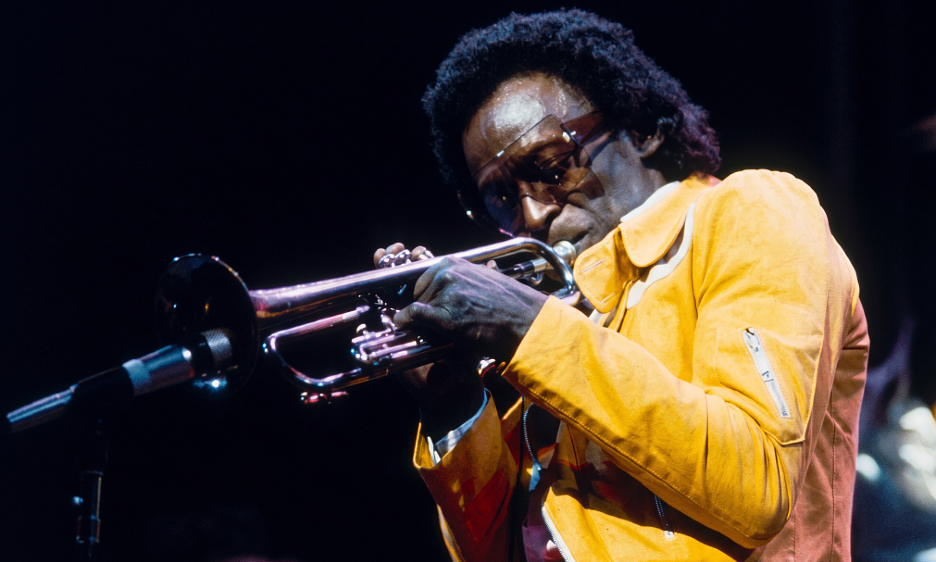
Courtesy Miles Davis Estate

A driving force behind many of the changes in direction jazz took during his 65 years on Earth, Davis was also a leader who inspired—one way or another—a host of young musicians who took wing in his various ensembles from the 1950s to the 1990s. Many of them will be paying tribute to Miles Davis on the great jazz stages of the USA and Europe.
Beyond these concert tributes, the jazz ecosystem has gone into overdrive to mark Miles Davis' centenary, with countless festivals and venues celebrating the trumpeter with exhibitions and panel discussions. Tribute albums, articles, and books are no less numerous—testimony to Davis' enduring appeal and commercial clout.
From the vantage point of America and Europe, where most jazz is presented and consumed, it is too easy to forget that Miles Davis' influence stretches to every corner of the world. It was ever thus.
All About Jazz's tribute to Miles Davis is not just a celebration of the great musical chameleon; it is also a celebration of the global jazz community. We asked musicians from 100 countries around the world to share their thoughts on Miles Davis. The answers are revealing.
Some write about their favorite Davis album or solo. For others, the connection runs deeper still. Many musicians describe the ways in which Davis influenced and inspired them musically. Others open up about the strength they drew from Davis' music—and from his indomitable example—in difficult times: during apartheid, at times of armed conflict, or in the face of discrimination, culture shock, hostility or self doubt.
Cherished memories of Miles Davis concerts from the '60s, '70s, and '80s—as well as from his final tour in 1991—serve as reminders not only of his musical prowess, but also of his enduring charisma.
Inevitably, the Miles Davis anecdote, both first-hand and the much-loved second-hand variety, is also alive and well!
Several of Miles Davis' former musicians shed light on their one-time employer. Musicians famous and less famous alike, from the USA and Europe, contribute their opinions. Yet most participants in this small book of homage—far more than a regular article—hail from Africa, Asia, the Caribbean, and South and Central America: places and people often underrepresented in tributes to the passing giants of jazz.
And in recognition of the essential role jazz industry professionals played in supporting Miles Davis' career over nearly five decades, this AAJ tribute also includes contributions from print and radio jazz journalists, club owners, a photographer, and festival directors. Nor is the audience forgotten: the symbolic reminiscence of one veteran fan serves as a reminder that regular gig-goers are the lifeblood of the live jazz circuit.
The one word that crops up time and again in these individual tributes is "courage." Nearly every stage of Davis' dramatic evolution divided critics and fans alike, yet that mattered little to him. For any young musician just discovering the music of Miles Davis, these homages underline an enduring truth embodied by Davis himself: reinvention and bravery in music-making will never satisfy everyone, yet they can become their own reward.
Faris Ishaq, nay (Palestine)
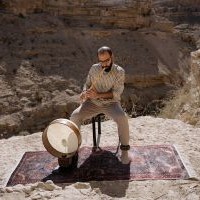 As a Palestinian artist, Miles's musical genius—particularly his lyrical expressiveness and sense of space in improvisation—opened a doorway for me into jazz, helping me find my own voice through the Nay and the language of Arabic tetrachords within this music.
 When I listen to him, I feel how deeply connected music from around the world can be. There's a universality in his sound that reminds me that anything is possible when the intention is to connect and create beauty.
Francesca Han, piano, (South Korea)
 During my time in New York, I felt a deep sense of inadequacy. It was as if someone was constantly telling me: "You are neither Black nor White, and furthermore, since you are a woman, it is preposterous for you to play this music! Go back to your country immediately!" Perhaps it was just me talking to myself. One day, however, after I finished reading Miles's autobiography, I felt a strange sense of relief and intimacy. It was as if I could hear his voice telling me: "No matter what color or gender you are, as long as you can swing, it doesn't matter. This is not the kind of music you think it is. Jazz is music that constantly evolves."
 When facing obstacles while taking a new direction with my music, I think of all the stories and music that this pioneer crafted all his life, and it helps me overcome fear and anxiety. I have entrusted myself to the flow of time and I am grateful to play the music I am capable of playing now.
Miles Davis, he played in a style true to himself, he is original, and originality transcends time. I pay tribute to his unwavering originality that comforted me as I am sure it has also guided so many other musicians.
.
Richard Bona, bass guitar, (Cameroon)
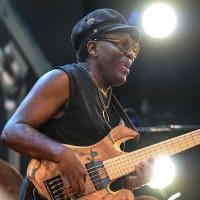 Miles Davis was more than a musician—he was a bridge. A bridge between generations, between cultures, between what music had been and what it could dare to become. His genius was not only in the notes he played, but in the space he created for others to find their own voice. For those of us who grew up on the African continent, Miles represented something profound: proof that Black music, rooted in heritage and ancestry, could speak to the entire world without ever losing its soul.
 What moves me most about his legacy is how alive it remains. Young musicians today are still discovering Miles, still being transformed by him. That is the mark of true greatness: music that does not age, but instead keeps finding new hearts to inhabit. He played for all of us, across time.
Kateryna Ziabliuk, piano-vocals, jazz journalist (Ukraine)
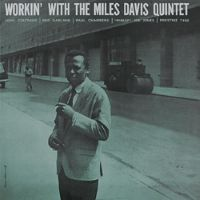
 I remember the first time I heard Miles—it wasn't the kind of conscious initiation people like to romanticize later, the moment of revelation carefully framed in memory. My teacher brought in Workin' with the Miles Davis Quintet (Prestige, 1960) while we were practicing the tune "Four." I must have been fourteen, maybe fifteen. I was already deep inside jazz by then, though not yet in love with the mechanics of it—the notes themselves, the virtuosity, the architecture of solos. I knew too much or thought I did: how many records had been made through exhaustion, through addiction, through pressure from labels and schedules and the endless machinery of expectation. None of this diminished the beauty of the music for me, but at that age I wanted art to arrive from some pure and incorruptible place.
  What fascinated me more was the atmosphere surrounding the music—the period it emerged from, the lives around it, the reason it sounded the way it did. I carried a persistent feeling that I had been born into the wrong era, that somehow my role was to mourn or preserve that vanished belle époque of jazz before it disappeared entirely into mythology.
 The albums that affected me most consciously were In a Silent Way (Columbia, 1969) and Sketches of Spain Columbia, 1960). In my mind they remain deeply connected, less as stylistic companions than as documents of resilience, of fidelity to one's own instinct. There is something profoundly moving to me in the fact that, despite the severity of Miles's physical condition in the late sixties, he still pushed himself toward that spacious, electrified experiment of In a Silent Way. The impulse was always movement—the refusal to remain enclosed within an already perfected language.
And yet the connection between those two records feels obvious to me. Both are built on an immense respect for the singularity of sound, for silence, for tradition approached without nostalgia. They sound modern not because they reject the past, but because they move through it slowly enough to transform it. There is courage in allowing a piece of music to unfold almost minimally for thirty minutes, resisting climax, resisting urgency, until it becomes meditative. The listener is given room not simply to listen, but to drift in thoughts.
I drifted there often. I thought about myself inside that music.
What Miles taught me during that period was that even the most radical shifts in music history happen gradually, almost invisibly at first—transformation requires duration. Time, more than innovation, may be the most valuable element music possesses. The only choice we really have is whether to fight against it or surrender to its torrent.
William Ellis, photographer (England)
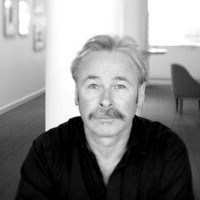 The turning point for me was in '89 when I read that Miles Davis was coming to play in England. I just had to go and see him, though I never thought I'd be able to photograph him. I was scrabbling all over Manchester with my contacts to get accreditation to shoot, and I couldn't. Everybody wanted to photograph Miles Davis.
 I eventually tracked down the promoter, I don't remember how, there was no internet then! He was obviously impressed with the fact that I had actually paid for my tickets for both nights and very kindly agreed to leave a compliment slip for me to collect at the booking office. I turned up covered in Nikons and a Hasselblad—I had the necessary permission to photograph Miles.
Getting in was one thing, getting pictures that work—in a very short space of time—under the pressure I had placed myself was another. The black and white image you see [see slideshow at top of article—ed] is a single shot—not a burst on the camera's motor drive. It was used for the program of the trumpeter's concert in Glasgow the following year and opened all the doors for me—if you get the chance you have to take it.
I spoke with Miles on the phone that night in Glasgow—that's another story.
The photos of Miles gave me some credibility and the accreditation to shoot at jazz events and festivals and initiate other related projects. A few months later I photographed another absolute legend—Dizzy Gillespie and from there I was able to build up my archive, the body of work of many other great musicians—thank you, Miles.
Sometimes I ask myself, can a photograph represent the subject fully? Is the head-on image of Miles the quintessential Miles Davis? Direct, dramatic and challenging, confrontational almost. Or is the square image, shot on Hasselblad—Miles contemplative, alone in space the quintessential Miles Davis?
To me, these two very different photographs taken minutes apart are representative of this unique and complex multi-faceted artist whose music still connects us all over the world.
Kristjan Krajnčan, drums-cello (Slovenia)
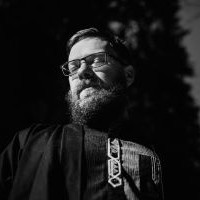 To me, Miles Davis is more than just a groundbreaking musician across many genres: he is a lasting inspiration for how one can embed a personal vision of life into music and carry it through improvisation. It was through encountering his music and musicianship that I began to think about the deeper dimensions of what music can communicate.
 In Miles Davis's work, I'm especially drawn to the power of collective improvisation on stage—how each musician carries their own responsibility for creativity and ideas that shape and elevate the music. In that sense, the goal becomes something greater than the individual ego; it transcends into a more spiritual realm. That's why I could never choose a single favorite Miles Davis album—it's his overall artistry and vision that continue to inspire me.
Jovino Santos Neto, piano—flute (Brazil)
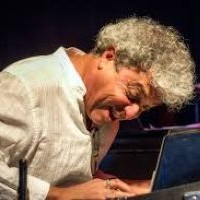 I have to say In a Silent Way (Columbia Records, 1969). The way the music moves like a snake, taking its time to weave in and out of the groove impressed me the very first time I heard it. All the musicians on this session demonstrate their deep listening skills, more than their playing skills. Having three keyboardists (Herbie Hancock, Chick Corea and Joe Zawinul) and a guitarist (John McLaughlin) creating textures without crashing into each other is quite a feat. An outstanding band. Teo Macero's editing lets the music flow without slipping into sameness.
 On May 25, 1974, Miles played with his octet at the Municipal Theater of Rio de Janeiro. I was 19 years old and went to the concert because I had heard about Miles being an outstanding musician. I was not a jazz fan—I was into prog rock and blues at the time. What I heard that night left an impression in me. It was a kind of rock music, but without the familiar goalposts of songs and solos. I had heard Hermeto Pascoal live for the first time one year before, and this felt like a continuation of that constant stream of sound, which continues to this day.
Tommy Halferty, guitar (Northern Ireland)
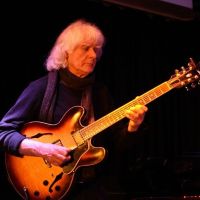 "My Favourite Miles Davis album is In A Silent Way (Columbia Records, 1969). It is in the way Miles changed Joe Zawinul's theme to allow space—transforming a simple song to an exalted form of expression. It's like a shimmering tone poem.
 Malika Zarra, vocals (Morocco)
 What has always touched me most about Miles Davis is his constant search for something new. He never repeated himself or followed expectations—he had the courage to take risks, evolve, and reinvent his music throughout his life.
 What also inspires me deeply is the way Miles stayed connected to what was happening around him—musically, culturally, and socially. He had a rare ability to absorb the energy of his time, the influence of other artists, and new environments, then transform all of it into something original. He understood that creation also comes through openness and exchange.
I was fortunate to see Miles Davis live during his final tour in the south of France, a memory that remains very special to me. Years later, I also had the honor of participating in SHorTer Way To MarraKecH the tribute album by Jowee Omicil released in November 2025 in homage to Miles Davis.
For me, Miles Davis' greatest legacy is not only the music he left behind, but the example he gave artists: always evolve, stay open, and never be afraid to reinvent yourself.
Grégory Privat, piano (Martinique)
 Miles Davis is without question one of the greatest jazz musicians in history. When people talk about jazz, his is often the first name that comes to mind. Yet he was not always understood during his lifetime and was often criticized by the press or the public because of the artistic risks he took in his music.
 That is how the work of Miles Davis has influenced me, because I believe an artist must take risks and not always go where they are expected. Being able to keep an open mind about the world in order to constantly redefine one's music, surprise oneself, and reconnect with one's childlike spirit in the face of creation. It is a path that requires a great deal of courage, and one that continues to inspire me every time I decide to make a new album.
Maria Graspa, piano (Greece)
 I love Sketches of Spain: it feels less like an album and more like stepping into a landscape. The atmosphere is deep and haunting—Miles lets the notes breathe over Gil Evans' orchestration like distant echoes in a cathedral. The Spanish folk melodies have a raw, ancient character that Miles doesn't try to overpower; he simply inhabits them, creating something both intimate and cinematic.
 Rain Sultanov, saxophones (Azerbaijan)
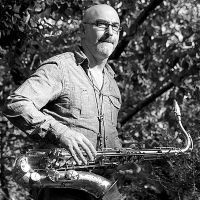 A significant period of my creative development in jazz—from the age of 18 to 21—was deeply influenced by Miles Davis. I was especially drawn to his philosophy of playing and his way of thinking. He seemed to build sentences out of sounds, turning each note into a meaningful statement. I studied his music in depth, analyzing his phrasing and approach to chromaticism, and for a long time I aspired to play in his manner.
 Over time, this immersion became more than imitation—it turned into a process of inner exploration. I came to understand something essential: there are no wrong notes—only the way you relate to them. In jazz and improvisation, individuality is what truly matters, because it is individuality that gives sound its meaning.
In 2020, I released my album Influence (Ozella), which I dedicated to my beloved musicians who have passed away—John Coltrane, Michael Brecker, Joe Zawinul, Kenny Wheeler, Dexter Gordon, and Jaco Pastorius. One of the tracks on the album, "I Know That You Will Never Come Back," was dedicated to Miles.
Enrico Rava, trumpet (Italy)
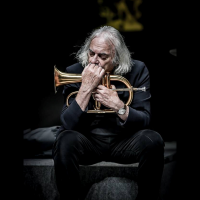 I love Miles. I love him madly. He is my favorite musician, and I love everything he did. But there is a solo that for me is one of the highest moments of the history of music. I'm talking about his solo in "Stella By Starlight," from the live record My Funny Valentine (Colombia, 1965). The depth of his sound, his expression, the marvelous timing and most of all his sense of dramaturgy makes this solo an absolute masterpiece and I can still listen to it over and over and every time is total joy.
 Alune Wade, bass guitar (Senegal)
 Miles did not come to me directly at first—he arrived through Marcus Miller, like a river found by following one of its tributaries. It was We Want Miles (CBS, 1982) that opened the door. And I still remember with absolute clarity the first notes of "Jean Pierre," that simple, spiraling melody that suddenly carried me back to the courtyards of Senegal, to songs we sang as children under the open sky. Miles had reached across continents and decades to touch something I had always known, without ever knowing it had a name.
 Choosing a favorite Miles Davis album feels like being asked to name your most beloved season—each one carries its own light, its own silence, its own storm. Miles was always a mirror, a barometer of the times he moved through, a quiet guide through the shifting currents of history. That is what makes the choice both impossible and necessary. Yet two albums rise like landmarks from distant shores of the same ocean: Kind of Blue and Tutu—one a whisper at dawn, the other a pulse at midnight.
Miles Davis did not simply leave behind music. He left behind a way of being—restless, searching, unafraid of transformation. He reminds us that greatness is not a destination. It is a perpetual departure.
Benjamin Jephta, bass (South Africa)
 One of the earliest Miles Davis solos that really stayed with me was his solo on "So What." It was also one of the first jazz solos I transcribed when I was still in high school. That experience taught me a great deal about space, phrasing, and especially modal music. In many ways, modal thinking is one of the tenets of South African jazz, so encountering Miles in that way gave me an early bridge into understanding something that would later feel very close to home in my own musical world. Beyond that, Miles' electric era also had a major influence on me. His openness to sound, texture, groove, and reinvention continues to be deeply inspiring.
 .
Fanfan Cheung, drums (Macau)
 I can always recognize Miles' music instantly, no matter where I encounter it. His phrasing breathes naturally, and the duration and dynamics of each note reflect his distinct musical aesthetic. This has greatly inspired my performance—I craft my own phrasing and dynamics to convey my personal artistic perspective, drawing from my understanding of jazz.
 Daniel Toledo, bass (Ecuador)
 Miles Davis has been part of my life since I was a kid, long before I had the language to understand what I was hearing. There was something in his sound that stayed with me, something spacious, intentional, and deeply human. As I grew into jazz, his music became a kind of compass. I remember discovering Nefertiti (Columbia, 1968) and being completely struck by its depth, the way the roles seemed to shift, the way repetition created tension and freedom at the same time. It wasn't just the notes, but the space, the phrasing, and the sense that the music was constantly breathing. That experience reshaped how I listened, and eventually, how I approached the bass.
 What continues to resonate with me is his ability to shape music and people at the same time. Miles didn't just lead bands, he created environments where musicians could evolve, where entire generations found new directions. That idea has influenced me profoundly, both as a performer and as an educator. He showed me that music is not static; it's a process of constant transformation, of trusting your voice even when it's uncertain. In that sense, his legacy lives not only in his recordings, but in the courage to keep searching and that is something I carry with me every time I play.
John Rae, drums (Scotland-New Zealand)
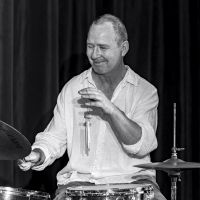 I've loved Miles Davis all my life. I first heard him when I was about 15, Miles Davis in Europe, July 27,1963, Festival Mondial du Jazz d'Antibes, Juan-les-Pins. I'd put my headphones on and be completely transported somewhere else. I had no idea what was going on musically, and it didn't matter. Tony Williams, Ron Carter, Herbie Hancock, George Coleman, with Miles out front, wailing and speaking through the horn. And then sometimes Tony would just... stop. At the time, it felt completely revolutionary.
 Years later, I found myself playing a 'Tribute to Miles' gig in Bristol with the wonderful pianist John Holler's quintet. During the interval, someone came up and said they'd just heard Miles had died. The second set felt different—quieter, heavier. Like something had shifted.
Miles' influence on jazz is still everywhere, and probably always will be. Though I've often wondered, half seriously, how different it all might have been if he'd stuck with Bucky Pizzarelli in his bands.
.
Yuri Honing, saxophone (The Netherlands)
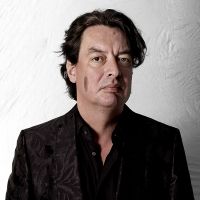 There was a radio broadcast in May 1982, where Miles was performing with Mike Stern, Marcus Miller, Bill Evans, Al Foster and Mino Cinelu live at the Congresgebouw in The Hague. It knocked me out, it still does actually, and this band released the record We Want Miles. I was 17 at that time and started to show serious interest in a music career.
 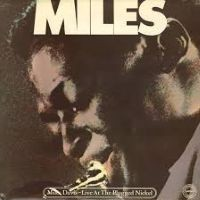 Later on, in 1986 or 1987, I was halfway my studies and Live at the Plugged Nickel was released as a double vinyl album. It changed my life forever. I didn't listen to anything else for a year and I copied all of Wayne Shorter's solo's which opened up a whole new universe to me.
 While driving to a gig with my band we would always sing along with these recordings: on the way to the gig I would sing along all of Wayne's solo's and my pianist would sing along with Herbie and so on. On the way home though we switched roles, so I would sing along with Herbie Hancock or even Miles or Tony Williams, it was great fun. It taught me that you could be free at all times long as you can produce freedom within. Miles maybe didn't play at his finest, but with Miles it was never about the trumpet; you would always hear Miles first and then a trumpet. I kept that one with me for the rest of my life.
If it comes down to brilliant trumpet playing the beginning of the '70s was unbelievable—one of the highlights is Miles solo on this blues, "Right Off," on Jack Johnson (Columbia, 1971). Hard to beat.
.
Greg Osby, saxophone (USA)
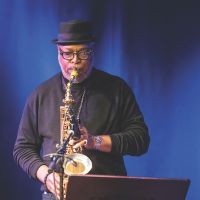 Miles Davis always thought ahead and made it a point to surround himself with players that were perhaps not the most popular, celebrated or even respected musicians to much of a notable degree. As singular players, his sidemen were often not very highly favored as individuals but when combined as a group, they fashioned ensembles that were unprecedented in their innovations, flair and fearlessness. Based on various accounts, Coltrane, Tony Williams, Red Garland, Philly Joe Jones, etc. weren't the most popular choices among their peers and received some of the harshest criticisms ever written. But as a band, they were untouchable and set timeless standards for ensemble playing and group logic. This was my biggest takeaway from the genius of Mile Davis' vision as a bandleader and conceptual visionary.
 Cenk Erdoğan, fretless guitar (Turkey)
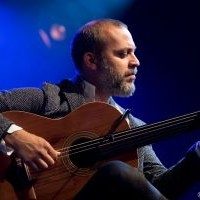 There is no doubt that my favorite Miles Davis album is Kind of Blue. When I was a student at the jazz conservatory, we had a listening and analysis class, and that was the first time I experienced that vibration. I analyzed every detail of the album, both harmonically and rhythmically. There is not only a profound conversation among the musicians, but also a deep connection with the listener.
 His unique way of playing through chord changes and his use of silence taught me a great deal. His compositional approach is incredibly fresh and far from mainstream jazz. I remember thinking that if someone can break the rules while preserving aesthetics once, it can be done again. Even after all these years, whenever I listen to that album, I feel the same things: courage, self-belief, and the confidence to transform one's musical path. He is a powerful source of inspiration, illuminating our musical journey.
Ellen Cranitch, flute, RTE broadcaster (Ireland)
 It was one of those "Where were you when JFK?... "' moments. I had visited a little record shop in Dublin, as a freshman classical music student in search of a recording of Haydn String Quartets. The man behind the counter had just put Kind Of Blue on the turntable, the unique bewitching sounds stopping me in my tracks. I had never heard anything like it, its elegance, its clarity and almost baroque grace, the soaring lines, the meaning and depth contained in each phrase, the architecture of the rhythm and grooves, insouciant, beguiling and achingly beautiful. It was the first few moments of a massive change in the direction of my life. I left the shop not with Haydn, but with Miles.
 Arturo Sandoval, trumpet (Cuba-USA)
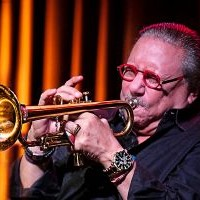 To speak of Miles Davis is to speak of an artist whose natural language was evolution. He was not only a great trumpet player, he was a true pathfinder, always searching, always moving forward. Among all his works, Kind of Blue holds a very special place for me. It is an album that lives beyond time, with a serene beauty and freedom that continues to inspire me deeply every time I hear it.
 What I have always admired most about Miles is not just what he played, but how he thought. He was never interested in playing more notes, only the right ones. His sound, especially with the mute, carried an intimacy and honesty that changed the way I understood the trumpet. That idea, that intention matters more than quantity, has stayed with me throughout my entire life.
With great respect and humility, I have at times tried to approach his musical universe. On my album Trumpet Evolution (Crescent Moon Records, 2003), I recorded his version of "'Round Midnight" by Thelonious Monk, a piece he transformed into something truly timeless. If even for a moment I came close to touching his spirit in that recording, I feel deeply grateful.
In 1989, when I was performing with my mentor Dizzy Gillespie at the North Sea Jazz Festival, Dizzy asked me if I had ever met Miles. When I told him no, he smiled and said, 'Come with me, you are going to meet him tonight.' He took me to Miles's dressing room and introduced us. It was a brief moment, but one I will never forget!
Miles Davis was, and will always remain, a true innovator, an artist who understood that greatness comes from transformation, not repetition. His legacy lives in every musician searching for their own voice, in every note played with honesty and intention. With respect, admiration, and gratitude, I can say that I am his admirer, and I always will be. May God keep him in His eternal glory.
Miklós Lukács, cimbalom (Hungary)
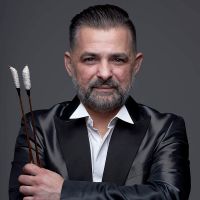 I encountered the music of Miles Davis relatively late. My roots are quite different, and I play the cimbalom—an instrument that is still little known in the world, and when it is recognized, it is most often associated with Hungarian Gypsy music. I myself come from a Hungarian Gypsy musician family, although I was trained in classical music.
 It was only in my twenties, after completing my classical studies, that I began to truly understand and appreciate Davis's significance, when I started engaging with improvisational music, particularly jazz.
For me, Davis's most important message is one of freedom, courage, authenticity, and the power of rethinking—overcoming limitations and stereotypes. This gave me the faith and strength to explore previously uncharted territory on the cimbalom within the world of jazz, to develop my own sound, and to fully embrace who I am as an artist.
It would have been a great dream of mine to see and hear him perform live—something that, unfortunately, was not possible—and, had life allowed it, to meet him and perhaps even play together. Perhaps he, too, would have discovered the unique possibilities of the cimbalom, as many other musicians have since—though, in my view, still not nearly enough.
.
Moreira Chonguiça, saxophone (Mozambique)
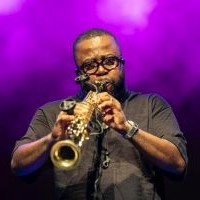 Miles Davis has been a profound influence on my musical journey. I had the privilege of performing my own version of one of his songs with Manu Dibango on out album M & M: Moreira Chonguiça and Manu Dibango (Morestar Entertainment, 2017) that carries deep emotional meaning for me. The song is "Tutu," written by Marcus Miller and featured on the album Tutu by Miles Davis. The composition is a tribute to the late Archbishop Desmond Tutu, and it resonates with me on many levels.
 For me, the song represents more than music—it reflects a powerful historical narrative. It speaks to the struggle and suppression that Black people endured in South Africa. Coming from Mozambique, a neighboring country that played a significant role during the liberation struggle—and later studying in South Africa shortly after the political transition—I witnessed how deeply those experiences shaped the people around me. I also had friends connected to the ANC who lived in Mozambique during their exile.
So, this music influenced me not only artistically, but emotionally and historically—because its story goes far beyond the notes.
Miles Davis' greatest legacy, for me, was his openness to the next generation. He always created space for young musicians and drew energy from them. He never remained in his comfort zone—he was constantly reinventing himself, constantly looking ahead.
He also taught us that music is a form of expression beyond sound. As a painter, he experienced music visually; he saw music in colours—blues, greens, and shades of emotion. That artistic vision reminds me that creativity has no boundaries, and that true innovation comes from curiosity, courage, and the willingness to evolve. As a huge fan of his genius, I carry this with me constantly.
Ranjit Barot, drums (India)
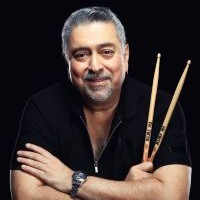 In 1982 I had the privilege of seeing Miles and his band perform live at the Berlin Philharmonic. We had finished a gig in Zurich and had driven to Berlin the next day. Having engine trouble on the bus, getting into the city was delayed, and I didn't want to miss seeing Miles. I remember not checking into the hotel, just leaving my bags on the bus and heading straight to the venue. As I reached the hall, my hands were shaking as I pushed through the doors to backstage. It was as if a fever had gripped me, a fever of what was to come.
 Coming from India, the only access we had to the world of jazz was through Down Beat, available at only one bookshop that kept the magazine. We had no access to radio or TV in those days, just through albums or cassettes that someone's father or uncle brought back with them from their travels. We all kept a track of these activities and would immediately head over with a boom box to make copies.
The band with Miles then was Al Foster on drums, John Scofield on guitar, Bill Evans on saxophones, Darryl Jones on bass, Minu Cinelo on percussion and I can never remember the keyboard players name. It was a transcendental experience. I had never seen a drummer have such a relentless groove such as Al had. I remember in one interview Miles always asked why he liked Al so much, and in his gruff, almost disappearing voice, he said, 'Al has great time.'
Needless to say the band was on fire. I remember, while playing with Bill Evans on a tour we did in India, telling Bill about what happened that night. He remembered, only too well. I saw Miles motion each member in the band to stop playing, one by one, while Bill was soloing, leaving Bill playing all alone by the end of it. That's a tough spot to be in, for any musician. Bill told me that he was furious with Miles, for creating a musical situation where he felt so exposed. He then went on to tell me that Miles' reply was, 'well, you'll never be scared again.' That's some trial by fire!
At the end of the gig, two bodyguards came to escort Miles and Al, with a cape that they wrapped both of them in. Like boxers leaving a fight. I can still vividly remember them both strutting past me, feel the wind of the capes they were wearing. I felt like I had witnessed the ultimate swag of all time.
Miles, through his music and persona, impacted musicians worldwide. The fact that I got to play with John McLaughlin, one of Miles' most famous colleagues, for almost fifteen years, has left me knowing that this world of music saved my life.
.
Gent Rushi, piano (Albania)
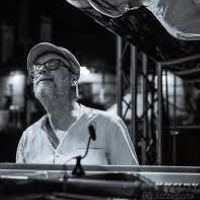 It is both difficult and easy to define Miles Davis's music. The first thought that comes to mind is: "Miles Davis is jazz, and jazz is Miles Davis." Few jazz musicians have brought as many innovative ideas and such a rich palette of sound throughout their careers as he did.
 As both a composer and a brilliant trumpet player, Miles brought a unique sense of depth to music. I especially feel this when I listen to the album Nefertiti. From the beginning to the end of his career, his solos remained instantly recognizable in their musical essence. He was one of the rare jazz musicians capable of expressing original ideas through compositions built on only two or three notes.
I think of Ascenseur pour l'échafaud (Fontana, 1958) as a brilliant musical monologue that contains everything within it. His protest against reality emerges far more powerfully through his sound than through direct speech.
Andrea Keller, piano (Australia)
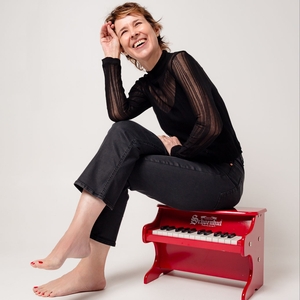 As a 14-year-old girl growing up in Sydney, Australia, I was already committed to life as a musician, although the possibilities and the path were still very much forming.
 My first listening experience of jazz was in live contexts in Sydney. Sneaking in, under-age, to listen. I started buying records and cassette tapes recommended by the musicians I was meeting and hearing live, and I'd come home from school to sit in the lounge room with vinyl on repeat for hours. Posters of Bird, Coltrane and Miles on my wall. It never occurred to me then how different my life was from theirs, that kind of questioning came later.
As I grappled with the music through my teenage years, trying to play it and understand the tools and the protocols in a largely self-taught, trial and error kind of way, it was Miles who became my primary guide. I started with his 1950's albums: Walkin,' Bag's Groove, Cookin' Relaxin', Steamin,' etc. Then came Kind of Blue, and Coltrane, and Circle in the Round, and the 1964 concert, and then Wayne Shorter and ESP, Nefertiti, and Bitches Brew, and so on.
Decades later, as I continue to learn and explore this unique and extraordinary art form, I still carry the lessons I gleaned from Miles in those early years; in fact, they remain central to my approach: less is more, intention, placement, invention with simple structures, blurring the lines with anticipation and delay, 'virtuosity' as demonstrated in a myriad of ways, nuance, sound, sound, sound, renew the context around you, the path continues to move forward, the intrinsic link between the artist, the music, and their story...
Others have reiterated and cemented the lessons, but I heard them first through Miles Davis.
Mike Stern, guitar (USA)
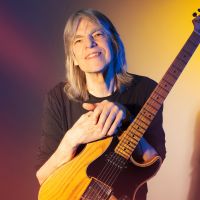 I started trying to write some stuff about my experience playing with Miles Davis and too many memories came to mind. But of course, some most important memories for me was just getting to hear his amazing improvising night after night. He was always searching—trying to find some new stuff. And he did that throughout his career, of course, with different concepts. But no matter how many different ways he shaped the music around him, he always sounded like Miles. There was always so much blues in his playing. No matter how far out some of his concepts got, he had a way of keeping it on the ground at the same time. I'll always be grateful to have been given the opportunity to play with Miles Davis. It was an amazing experience.
 Stephane Mercier, saxophones, (Belgium)
 When I think about the genius of Miles Davis, I'm reminded of a quote by Thelonious Monk: "A genius is the one most like himself." Miles never tried to present himself as the greatest trumpeter in purely technical terms. Instead, he found his path by being unmistakably himself.
 He was perceptive enough to recognize the value of every opportunity. When, at around twenty-three, he was made to carry the banner of cool jazz, he realized it was also a powerful form of positioning and identity. He embraced that idea throughout his career, continually reinventing his sound and image—right up to his final album, Doo-Bop (Warner Bros, 1992).
Miguel Zenón, saxophone (Puerto Rico)
 I had to think really hard about this one, but I finally settled on his solo on "Straight Chaser" from Live at Newport (also on the Miles and Coltrane compilation). Miles plays so beautifully here, with so much creativity, rhythm and control. It's also always amazing to hear Miles play over a blues form; I think that we can really trace his evolution as a player and as a conceptualist by studying how he played over many blues forms over the years.
 I find this period with his sextet (with Coltrane, Cannonball Adderley and Bill Evans) specially inspiring. It was the first Miles I ever heard, specifically the compilation '58 Miles (CBS, 1974) which is mind-blowing in every way and such an underrated testament to his genius.
Rute Mbangwa, vocals (Zimbabwe)
 Music is indeed a universal language. From Zimbabwe in the Southern part of Africa, Miles Davis' music reached across oceans and generations and profoundly shaped my sound and identity. I fell in love with his musicality... his tone, his fearless experimentation, and refusal to be boxed in. His muted trumpet was mellow yet full of clarity; subtle, but it invoked something deep. That artistry resonates across ages, cultures, and races. Miles gave me the courage to be fearless with rhythm, harmony, and style.
 My music is Afrocentric at its core, fused with strong jazz elements, an Afro-jazz fusion heavily influenced by his adventurous spirit. He was a trendsetter, a deep listener, and a remarkable team player; studying his recordings with his bandmates has been a masterclass in itself. Even though he never formally left us one, his music is the masterclass. His legacy lives on, and the sound now synonymous with the name Rute Mbangwa exists in large part because of him. I owe that to Miles.
Aleka Potinga, vocals-cello (Romania)
 It's so hard to pin down how Miles has influenced me as he has such a monumental body of work that has influenced every single jazz musician both current and past. But if I have to choose, I would go with the Second Quintet period, which has probably been my biggest influence. I used to spend hours watching their live performances in Europe on YouTube, there's something about the way that group played, so loose, interactive, and forward-thinking that grabbed me. They were playing standard forms in a way I had never heard before, stretching the boundaries of what these classic jazz tunes were. Another thing that amazes me most about Miles was his ability to choose exactly the right musicians to bring his vision to life. More than that, he always seemed to have his finger on the pulse of where jazz was going next, constantly evolving his sound and staying ahead of the curve.
 .
Marta Bellomo, vocals (Argentina)
 His style changed how the trumpet is played. Davis abandoned fast, pyrotechnic solos. He sought an economical sound, with few notes, plenty of silence, and the Harmon mute as his trademark. He used to say that silence was as important as the music. His legacy wasn't technical—it was conceptual: teaching how to be cool, to play with space, with attitude.
 Franco D'Andrea, piano (Italy)
 I followed him from the beginning—I was just a kid. I listened to his records with the quintet that included Coltrane. I also followed him through his "journeys," the electric Miles, especially those from '85. I loved those records in particular. There was Jack DeJohnette, and Keith Jarrett, who once said he hated keyboards, but in my opinion they were beautiful.
 I attended one of his concerts in Rome—the one at the Teatro Sistina in 1969 with Dave Holland, Chick Corea, Wayne Shorter and DeJohnette. It was a superb concert. Whenever Miles is there, things always happen.
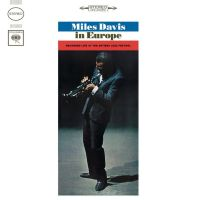 Another concert I attended was the one in Juan-les-Pins, which was recorded and released as Miles Davis in Europe: Live at Antibes (Colombia, 1964). I was at that festival because I was playing bass in an Italian group, so I had the chance to go backstage. I had a brief but intense period as a bassist. During that concert, the drummer Tony Williams played a solo—something he never usually did. It was magnificent. Miles, with his back to the audience, was watching this seventeen-year-old kid play that unforgettable solo. It was '63 in Juan-les-Pins. They seemed like aliens to me. I listened to Herbie Hancock, and I remember not understanding anything at all. Then I studied everything later by listening again on the record. The sound wasn't great.
 Miles was also an exceptional talent scout, to begin with. Depending on the period, he was always still Miles, but the musicians who played with him kept changing—and they were always fantastic. He was the guiding light; he created the group's special mood. He could be very melodic, but also very fierce when hitting certain high notes. He was like a coach on the field. They're one-of-a-kind figures—that's all there is to it. Like Monk.
Nicole Johänntgen, saxophonist (Germany)
 When I think about Miles Davis, I hear human nature. The song "Human Nature" but him as human nature as well. He didn't write this wonderful song but played it in a such a simple way—straight from his heart. Concentration, meditation, breath, flow. All in one. He knew about jazz improvisation but placed these notes with such feel.
 In the '50s Miles was boxing beside his music life. He had a big passion for that. I see here a connection between playing a solo and boxing. Both are based on high concentration and on knowledge of technical skills. Concentration—to be ready to let it go—and then the sound. With the result of high concentration and time, I experience in my own playing a kind of trance, because I go to the limit of time. This brings freedom in my playing. Miles knew his instrument, the jazz language—he was flying in the moment of playing a solo. For all these reasons I am definitely inspired by Miles Davis.
Luis Muñoz, percussion (Costa Rica)
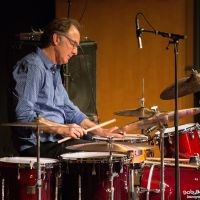 I was still living in San José, Costa Rica when I heard Miles Davis' music for the very first time. It was December of 1968, and I was a 15-year-old boy playing drums with The King Kats, a band that had recently recorded their very first single which had gone to the top of the rock 'n' roll charts in the country. Just four years before that, The Beatles had convinced me that music was my calling.
 My musical world was already extensive then. At home, my parents would play Chopin, Ravel, and Tchaikovsky. I would soak up the tangos of Carlos Gardel, the mambo of Dámaso Pérez Prado and the boleros of Agustín Lara, el Trio Los Panchos and Toña La Negra emanating from the radio or the cantinas and stores around the city. With my friends, the sounds of The Stones, The Who, The Kinks and The Animals were our music of choice.
One afternoon, while waiting for a foosball table to free up at the local teenage hang, a friend invited me to his house across the street to listen to a record he had just brought from the US. It was Miles' Miles in the Sky (Columbia, 1968) record, and It transformed me.
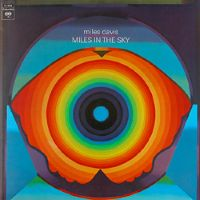 I remember listening to the opening few bars of "Stuff" which came out blasting, with Tony Williams' backbeat and Ron Carter's baseline hinting at bossa nova and boogaloo, and Herbie Hancock's chromatic runs on the Rhodes setting up the pulse. The horn melody came in and after that, the magic started, the musical dialogue, the dynamics, the improvisation, the interplay and Tony continuing to fly everywhere over that perfect groove.
 It was a brand-new musical language for me, full of possibilities, a brand new sound and concept, fresh and alive. And then there was the beauty of Miles' trumpet, his phrasing, his choice of notes, and the overall sound of the band. It was hard for me to relate or understand what was going on in that music, but I knew that it was making me feel something I had never felt before, and I loved it! That was the beginning of my moving into Miles Davis' world, where I still reside. It is a world that has inspired me so often, that has opened so many doors within me, that has created so many questions and offered me so many answers. And as his world would change, as it so often did, I too would change with it.
My musical interests shifted after listening to that album. Soon after, I was exposed to Eric Dolphy, Monk, Bobby Timmons and John Coltrane—I must say I was very lucky, since Jazz was rarely available in Costa Rica then. In 1974 I would make the decision to move to the United States in order to be with a woman that eventually would become my wife and muse. Also, I wanted to learn about and immerse myself into that wonderful musical world that Miles Davis had introduced me to just six years before.
In 1985 I finally had the opportunity to see Miles live for the very first time. It was at the Queen Mary Jazz festival in Long Beach, CA. where I was performing with Airto Moreira, a Miles alumnus, his wife Flora Purim and the Latin Jazz All Stars, a group that included flutist Dave Valentin, percussionists Bill Summers and Poncho Sanchez, pianist Kei Akagi—who would eventually become Miles' keyboardist for a few years—and Joe Farrell on sax. This was late-period Miles, and his repertoire then was a peculiar collection of tunes, Michael Jackson's Human Nature, Cyndi Lauper's Time after Time, etc.
However, that night, the dream of that 15-year-old Costa Rican boy who had found immense beauty and inspiration in Miles Davis' music, and who had been shaped as an artist by him finally had come true. Miles' sound and spirit were there, and so was the magic behind every single note he chose to play. At the end of the concert, a deep sense of gratitude came into me. Forty years later, that feeling remains...
Tich Makalisa, piano (Zimbabwe)
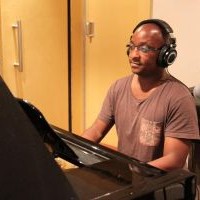 Miles Davis's My Funny Valentine (Columbia, 1965) album had a profound influence on me as a jazz performer, particularly in the way the band interacts in such a sensitive and conversational way.
 From a pianist's point of view, what stands out most is how Herbie Hancock approaches comping—not as constant accompaniment, but as a responsive dialogue with the soloist. His chords are sparse, carefully placed, and often leave space for the horns to shape the direction of the music. Rather than filling every moment, he listens deeply to Miles and the rhythm section, responding with colors, voicings, and rhythmic gestures that support the emotional arc of the performance.
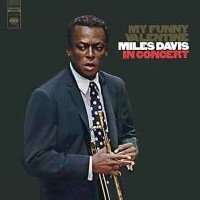 That level of interaction taught me that great piano playing in a small jazz ensemble isn't about dominating the harmony, but about shaping the texture of the music and helping the band breathe together. Listening to that recording pushed me to think more intentionally about space, timing, and how my comping choices can influence the entire band's sound. Miles Davis's solos are defined by restraint, using space and silence as powerfully as the notes themselves. Rather than overwhelming with speed, he crafts melodic, emotionally rich phrases that shape the mood of the entire performance. This has had a major influence on how I approach my own solos.
 Hong Chanutr Techatananan, drums (Thailand)
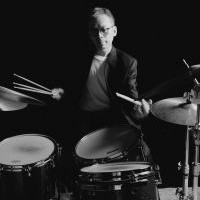 Without a doubt, my all-time favorite Miles Davis recording is the double-live album, Four & More/ My Funny Valentine, recorded live in 1964.
 Growing up in Bangkok, Thailand, during a time when jazz was still finding its footing in the city, I was just beginning to discover and make sense of jazz, I would pop both of these albums into my CD Walkman every night before bed, completely captivated yet utterly lost in the music. I had absolutely no idea what these musicians were doing, but I was blown away by it. What struck me most was the incredible role that Tony Williams, Herbie Hancock and Ron Carter played in defining the band's rhythmic feel and in interpreting Miles' great vision for the band's composition and musical direction. Their deep and sophisticated sense of rhythm and harmony, combined with their ability to create magical moments on the spot, was truly groundbreaking.
Looking back, I can honestly say those late-night listening sessions had a strong impact on me, and in many ways, helped lay the foundation for me and the style of my playing I would eventually develop over the years.
Tomos Williams, trumpet (Wales)
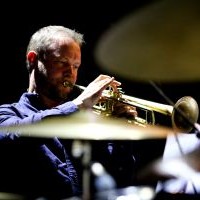 I've chosen to contribute an 'underrated' album by Miles. But anything with Miles on it is worth listening to, and not necessarily under-rated either. In the '60s Miles released a slew of incredible live recordings; My Funny Valentine and Four and More, the legendary Live at the Plugged Nickel, as well as the swinging Blackhawk residency, but I've gone for Miles Davis at Carnegie Hall (Columbia, 1962). Two solos by Miles on this album stand out to me: "So What" and "Teo." Both give us a foresight into the maximalist Miles which would come to full fruition on the Live at Fillmore dates and Live Evil in the early '70s. But here is Miles in full flight, in complete control of his horn and his ideas, smearing and searing his way into the highest registers of the trumpet.
 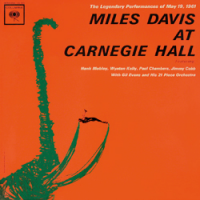 His solo on "So What" is his defining live solo on that tune—to my ears—while he is having such a great time on "Teo," with the Spanish tinge that Miles did so well. He jumps back in for another bite at the cherry at the end of the song. These two solos are backed by his band of the time (Wynton Kelly, Paul Chambers, Jimmy Cobb, with Hank Mobley on saxophone). The presence of the Gil Evans Orchestra at the concert adds an element of grandeur to many of the other songs and the orchestra's introduction to "So What" sets the scene before Miles and his quintet take flight.
 I've always found these two solos by Miles on "So What" and "Teo" particularly inspiring. You can't beat 'live Miles.' His presence and commitment to the 'now' bursts through with every phrase and gesture. Thank you for the music Miles.
Sunna Gunnlaugs, piano (Iceland)
 My favorite album of his is My Funny Valentine, half of the 1964 Town Hall concert with Herbie Hancock, Ron Carter Tony Williams and George Coleman. My parents bought the album for me when I was getting into jazz.
 It is funny to think back to that very first listen because at that time it was too advanced for me and I did not get it. I did not understand what was happening. My first thought was to put it aside but then I decided to stick with it and of course I totally fell in love with it. Herbie's solo on "All of you" became my absolute favorite and I transcribed it and still have my handwritten copy of it. There is so much shape to the music, so much forward motion and always something happening... and the transition from Miles' solos to Coleman's are always so amazing. I have always thought that it was magical how the solos would build in intensity, come back down a little bit but then build again, and the vocabulary is the perfect mix of catchy phrases, interesting colors and the blues. I still love it.
Jerry Léonide, piano (Mauritius)
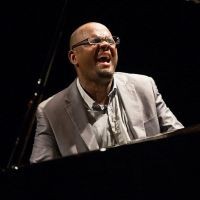 For my album Heritage: A Tribute To Miles Davis (2024), I chose to depict him as a pharaoh. He is, for me, the pillar that jazz stands on, and his contribution to modern music is simply invaluable. Miles showed us that jazz is not just a musical style, it is a universal language. He reminded us that improvisation is the essence of being human, and that playing music is one of the most powerful experiences there is.
 Every time I sit at the piano and revisit his repertoire, I feel both the weight and the gift of that inheritance. That is his greatest legacy, and it is why, more than thirty years after his passing, musicians from every corner of the world are still in conversation with him.
Sandy Gabriel, saxophone (Dominican Republic)
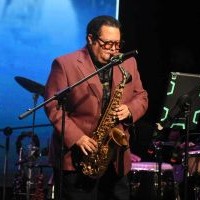 The greatest legacy of the legendary musician Miles Davis goes beyond his music—it also lies in the way he transformed how music is thought about and created. He was an extraordinary trumpeter who continuously revolutionized jazz, bringing his knowledge and brilliance to every recording he made. Simply embracing the idea that "less is more in music" opened the minds of musicians around the world. It led us to approach improvisation with greater awareness, teaching us that a single, perfectly placed note at the right moment is worth far more than a thousand notes played without intention.
 He was constantly reshaping and redefining the many styles of jazz, leaving his mark across the wide range of recordings he produced—from bebop to electronic jazz. In conclusion, I consider Miles Davis to be one of the five greatest jazz musicians in the history of humanity. I'm deeply grateful to God for blessing us with an artist of such creativity and musical genius.
Jaak Sooäär, guitar (Estonia)
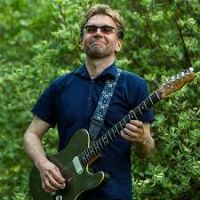 I like so many albums by Miles. When I was a young musician, I really liked his late '50s albums, especially Kind of Blue. I still think that it is a real masterpiece. I was introduced to his late '60s electric albums many years later and from the beginning I really loved Live Evil (Columbia, 1971) the most. I guess that this album gives an idea about the possible co-operation of Miles and Jimi Hendrix which unfortunately never happened. The flow and energy of this album are so natural and strong. Great groove and wonderful solos. John McLaughlin is incredible on electric guitar. I have played some tunes from the album myself and these grooves are such inspiring starting points for improvisation.
 Yazz Ahmed, trumpet (England-Bahrain)
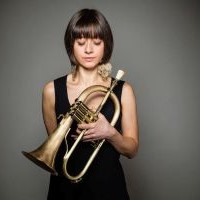 Live Evil is the follow up to Bitches Brew—also one of my favorites. The album is a mixture of live and studio recorded material, whereas Bitches Brew was purely created in the studio. The band sounds really fluent, like they've been on a spiritual journey from their very first experiments, defining this new genre of jazz.
 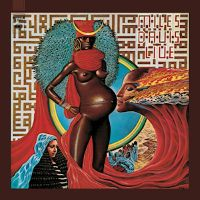 I'm still totally blown away by the power, the raw energy and the telepathic communication between the wonderful band Miles assembled. I'm also really inspired by the editing process, the physical cutting of tape with a blade, essential in creating these compositions, which carry such strong narratives and compelling moments from all the musicians. Miles's use of space is perfect—he never plays too much, just the right amount. It's so easy to overplay free music. I've learnt from him the importance of leaving space, letting the music breathe. I listen to my fellow musicians, make a statement when it feels right, and if I don't have anything to say, just let the music evolve around me.
 Cote Calmet, drums (Peru)
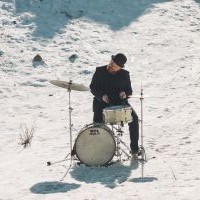 To me, Miles Davis' most important contribution wasn't just a single album or style, but his incredible ability to constantly reinvent himself and create music that reflected the world around him. It's mind-blowing how he could completely shift gears—from the 'cool' era to something as wild as electric fusion—and still be the best at it every single time. He had such an intense, clear vision that no matter what direction he took or what was happening in the culture, the music always worked. That's really his greatest legacy: showing that an artist can have the courage to change everything without ever losing their edge. He proved that if your vision is strong enough, you can lead the music anywhere and it will always be brilliant.
 Linley Hamilton, trumpet (Northern Ireland)
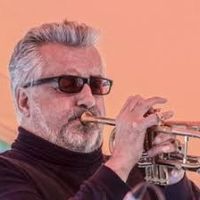 Miles Davis' solo on "So What" has to probably be the one I was most influenced by as a young player. In terms of its influence, the contrast to bebop where chords move quickly and lines are constructed more vertically in essence, to this horizontal modal approach with straight, no vibrato, sound and intent again reinforced dynamically, is profound.
 It was almost as if bebop—which had its glory days over a decade before, with melodies reworked mostly over better known tune—was forcing musicians to progress through directional change... Ornette Coleman's "free" movement, Dave Brubeck's academic and odd-meter approach and Miles' modal period with space, as well as the orchestrated work with Gil Evans, and his nonette with Gerry Mulligan in the Birth of the Cool era.
"So What"—two chords or modes for the entire form, 16 bars D Dorian, eight bars Eb Dorian, then back to eight bars of D Dorian. The chords don't do as much of the work as they do in other forms of modern jazz, so the creativity, the partnership with tone, the impact of range on target notes, the dynamic contour across the approach phrases, the use of space, the motivic development of motivic ideas—these are all magnified at the slower speed and the simplicity of the rhythm section. It is also highlighted by the contrast to the other soloists, especially Coltrane.
Bassekou Kouyate, ngoni (Mali)
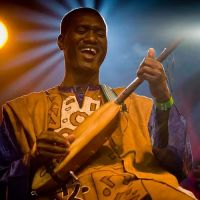 Miles showed me that you don't have to stay in one place with your music. You can always change and try new things. That gave me the courage to explore new sounds with my ngoni, without forgetting where I come from.
 Khadijah Simon, piano (Antigua and Bermuda)
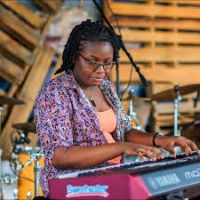 Miles Davis has influenced me through his fearlessness and confidence as a musician. He was always willing to push musical boundaries, unconcerned with challenging expectations or receiving criticism from others. He trusted his artistic vision deeply, and that has influenced my artistic approach. His ability to lead with conviction, take creative risks, and remain unapologetically authentic inspires me to approach music with greater confidence, to trust my instincts, and to continuously grow as both a pianist and an artist.
 Gerald Situmorang, guitar (Indonesia)
 In 2006, while I was still in college, my guitar teacher handed me two things about Miles Davis: the Relaxin' with the Miles Davis Quintet album and John Szwed's biography So What: The Life of Miles Davis (Penguin Random House, 2003). I didn't know it then, but those gifts would fundamentally shift how I perceived jazz—and Miles himself.
 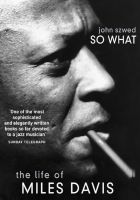 Since then, I've listened to his entire discography, tracing the steps of a pioneer who was always breaking the boundaries in all eras. That spirit of evolution is what I carry with me every time I make a new album. I strive to follow his footsteps by constantly changing, yet I always try to be honest and keep my authenticity when I'm creating my music.
 And Miles as an improviser? He remains my G.O.A.T. I find myself chasing that Miles style, the deliberate choice of notes, the masterful use of space, and a tone so singular that it's recognizable from the very first breath. Even now, my goal remains the same: to have my own sound in playing and improvising.
Holman Alvarez, piano (Colombia)
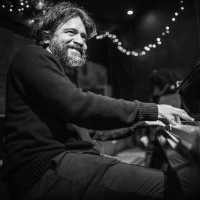 Of the many contributions Miles Davis made to music, the one I admire most is his desire to explore new territories. Whenever something caught his attention, he would try to experiment with it; he was open to change, to being influenced by the transformative forces of chaos. Miles knew how to generate energy from the friction between opposing forces—steady groove versus free playing, classical music versus jazz. This layering of elements, tested over intense periods of touring and studio sessions, resulted in something entirely new and intense.
 This openness to play and to change—so natural in children—is the greatest contribution Miles Davis has made to my career as a musician.
Donna Khalife, bass-vocals (Lebanon)
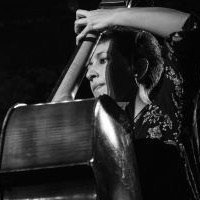 When I think of jazz and its eclecticism, its different currents, styles, and infinite horizons, I think first of Miles Davis—the artist who kept pushing both his own boundaries and those of everyone around him. The albums he left behind are so diverse and extraordinary, each one unique in its own way.
 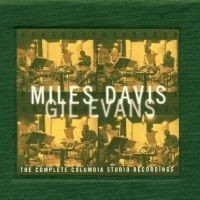 There are still so many I have yet to discover, but two albums in particular had a profound influence on me: Kind of Blue, which introduced me to jazz and from which I transcribed my very first solos, and Miles Davis & Gil Evans: The Complete Columbia Studio Recordings Columbia, 1996), which deeply inspired me through its incredible arrangements. The compositions, the orchestra, the melodies, and Miles's unmistakable sound all resonate with me in a powerful way. What a gift it is that he left us all of this music.
 Dexter Stanley Tauvoa, drums (Samoa)
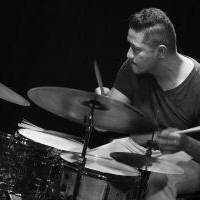 In his readiness to pursue new ideas, push boundaries, and remain true to his own artistry, Miles Davis gave countless others the permission to let our own lights shine and to realize our own visions. His impact parallels the great Louis Armstrong in how he shaped jazz and consequently all else around it. Miles' vast body of work lets you find belonging in whichever sense of jazz appeals to you, and if not, his essence implores you to find it!
 Vasil Hadžimanov, piano (Serbia)
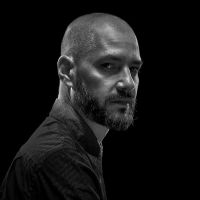 Miles Davis is perhaps the only musician whose entire work is indescribably dear, inspiring and important to me. During his career, Miles managed to bravely and without compromise enter into new musical adventures, while in the process of creation he pushed all possible boundaries, created revolutionary musical genres, and completely new styles, within jazz music and beyond. Each album is a lesson in itself. You can dissect and analyze each one for years to the point of exhaustion and you will always find something new and beautiful.
 At the same time, we can listen to each of his albums without paying too much attention to the details, which is especially difficult for us musicians, surrender to the entire sound and the atmosphere it carries. The effect will be the same. Every time we listen to it, we'll discover new things and experience something fresh and special. That unique special experience only he was able to create.
Miles also had a gift to get the most out of every musician who plays with him, no matter their mastery level. This is just proof of how gifted and skilled he was, not only as a trumpet player and composer, but also as a band leader. A true musical guru. I am very glad to have been invited to write about this giant, and deeply honored to do so. It feels impossible to fully express what he has left behind for all of us. Perhaps the clearest understanding of his greatness and how precious he was can only come through listening to his music. All that remains to be said is: Thank you, Miles. We love you.
Tots Tolentino, saxophone (The Philipines)
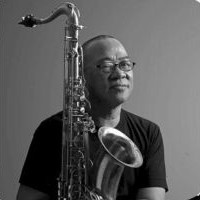 Miles albums were like the hip thing to listen to for jazz musicians of my generation. I loved each listening experience, trying to figure out the "space" in every Miles melody and solo.
 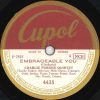 I couldn't figure it out in my younger years, always distracted by the busy sax solos on the recordings. But the solo that got me the most wasn't on a Miles album—it was on Bird's "Embraceable You." Lyrical and radical. I am still learning from that solo. A lot. Miles lives!
 João Barradas, accordion (Portugal)
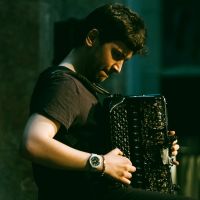 Miles Davis is synonymous with expression, precision, rhythmic prowess, and bandleading at the highest level. His influence is inseparable from the very history of jazz. It is nearly impossible to imagine contemporary music without his discography. As through these recordings, Davis shaped not only the course of modern jazz—consider the interplay within standard forms of Wayne Shorter, Herbie Hancock, Ron Carter, and Tony Williams, where fixed chord changes become springboards for virtuosity and innovation; from advanced comping impositions to metric modulation and the reshaping of formal quadrature—but also left a profound imprint on other musical traditions, from classical to pop music. A cultural icon.
 David Laborier, guitar (Luxembourg)
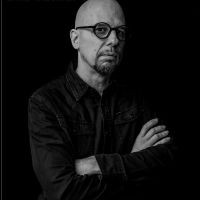 The first time I consciously encountered Miles' music was the year before going to college, when I entered the jazz department of the Luxembourg Conservatory. I later realised I had been listening to his alumni for quite some time, as Sting's Bring On the Night (A&M, 1986), with Kenny Kirkland, Darryl Jones, Branford Marsalis and Omar Hakim, had already been one of my favourite records.
 Like most rock guitarists getting curious about jazz music, my gateway into the language of jazz was "So What" and the Kind of Blue album. It's the combination of the incredible recording, the out of this world musicianship of that band and the overall accessibility to the music for jazz neophytes and the general public that makes this particular album so impactful. At least it was to me. Also, it challenged my ears to want to understand the sounds they were discovering and, most of all, attempt to express them on an instrument.
Then came the acquisition of jazz repertoire and the discovery that Miles' work spanned as many stylistic currents as music history had to offer. He seemed to be as much at ease in a bop setting as he was playing with hip-hop loops and a full-blown electric band. His trademark playing style and sound seemed to effortlessly serve every single one of the situations and lead the charge of the band, to sing on top of Gil Evans' many colorful arrangements or be as incisive as needed to hold the ground shaken by Marcus Miller's fat groove. Or to play such beautifully crafted, clear and concise arrangements of jazz standards (the four "-ing" albums), when just a minute later, he leads "Four and More" to a deconstruction of the standard he had just helped in setting! Imagine the awe when discovering that all of this could be done with only metal pipes and air, without a constant stream of words, dance or pyrotechnics. Just that sound, feel, sense of space and adventure! Oh boy, I could not imagine an ounce of this was even thinkable.
There's this whole legacy of players who went through his bands and went to become major influences on others themselves. Quite a few of them seem to have walked away from the experience with a heightened hunger for exploration of the uncharted waters of music. For me, the biggest takeaway of Miles' body of work is the fearless confrontation of set standards and of the criticism that comes from breaking with the expected. Facing the "that's the only way it's supposed to be done" demon is no small feat, and I think that most musicians long for a small piece of the courage Miles had over decades.
Polycarp Kyagulani, multi-instrumentalist-conductor (Uganda)
 Bitches Brew (Columbia, 1970) is a work that continues to challenge and inspire me as both a conductor and a musician. What draws me most to this album is its bold, unapologetic fusion, reshaping the direction of modern music by merging jazz with rock and experimental textures.
 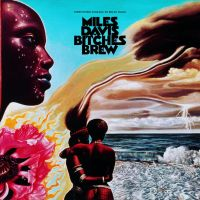 As I work to fuse jazz with traditional Ugandan music, I find Miles's approach both liberating and instructive; it is a reminder that true innovation lies in the courage to bridge seemingly distant worlds. I am equally fascinated by his use of space and silence. How he allows the music to breathe, creating a profound emotional focus. For me, Bitches Brew is more than an album; it is a creative compass that guides my own artistic exploration in Africa.
 Anton Stavnichy, saxophone (Kyrgyzstan)
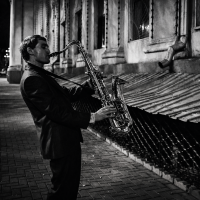 My favorite solo by Miles Davis is "Stella by Starlight" from the album My Funny Valentine, recorded live at Philharmonic Hall in February 1964. When I was first immersing myself in the world of swing and post-bop, like many saxophonists starting out, I wanted to play fast and impressively, filling every bar with notes. Miles, on that performance of "Stella," on "So What," and on "My Funny Valentine," made me rethink that approach. On that recording, he plays as if every note must first earn the right to be heard. And between the phrases there is space in which Herbie Hancock, Ron Carter, and Tony Williams respond to him almost telepathically.
 That solo taught me that silence in improvisation is not emptiness but part of the statement. Every pause becomes tension, and every note that follows it lands with impact. Ever since, whenever I pick up the saxophone and think about soloing on a ballad, I return to that "Stella" as a point of reference: a reminder that a musical idea carries exactly as much weight as the silence surrounding it.
Vangthanousone "Lao Jazznova" Bouaphanh, guitar (Lao PDR)
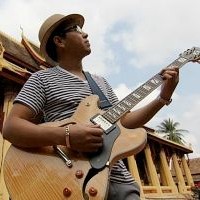 Miles Davis has been more than just a legend to me—he's a reminder to always search for new sounds and never stay comfortable. On his 100th anniversary, I'm grateful for the way he shaped not only jazz, but the way we think about music.
 Warren Galea, guitar (Malta)
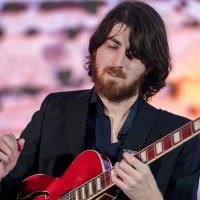 Miles Davis was one of the very first jazz artists I ever heard on record. A central figure in the history of this music, he has influenced me in a number of ways. I remember reading his autobiography as a teenager and that had quite an impact on me, especially the way he talked about Charlie Parker's genius and the heights music can rise to. At that age, the book really showed me how deep the art form is and how dedicated to their craft the masters were.
 In addition to his staple compositions, over the years I also transcribed and studied some of Miles' solos. One which comes to mind is his solo on "The Serpent's Tooth" from Collector's Items (Prestige, 1956), which I learned while I was at the New School. Even on a harmonically rich form like rhythm changes, Miles plays melodically all the time. As much as I love those earlier records, especially his first quintet—on heavy rotation in my car—I'd have to say my favorite Miles Davis era is the '60s: Live albums like Four and More, My Funny Valentine (Live at Philharmonic Hall), and of course the great second quintet records—Live at the Plugged Nickel, E.S.P., Miles Smiles and Nefertiti.
To me this band really epitomizes the idea of playing freely within form. This is always one of my primary musical goals and I'd say it has probably been the main way Miles has influenced me. Another thing I learned from Miles' constant innovation is to always be reaching artistically; on each one of my records, I've tried to use a different approach.
Chanx Mussa, guitar (Zambia)
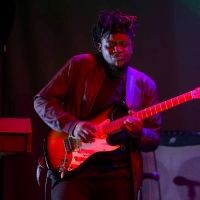 As an Afro-fusion guitarist, I got really inspired by the fusion of jazz, classical and traditional Spanish influences on Sketches of Spain Colombia, 1960). It opened up a whole different world for me as a composer, more freedom and fearless fusion. Kind of Blue had a significant impact on how I interpret harmony after listening to and studying the great Bill Evans' way of playing.
 Towfiq Arifin Turjo, drums (Bangladesh)
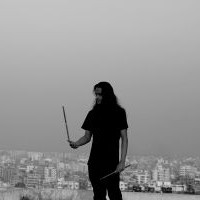 My favorite Miles Davis album is Kind of Blue. "So What" was the very first jazz tune I ever performed live. Even today, I still play the record regularly at my café, and every time I listen to it, I discover something new within the music, a different texture, a new conversation between the instruments, or a deeper sense of space and restraint.
 Listening to Miles Davis shaped the way I approach music and collaboration. Through his playing, I developed an understanding of the importance of space, knowing where not to play, and how to remain present and supportive while performing with other musicians. His music taught me that silence and restraint can be just as powerful as the notes themselves.
Enji, vocals (Mongolia)
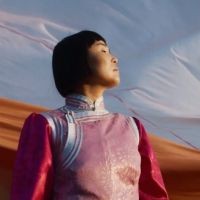 The very first time I listened to Miles Davis was through the album Kind of Blue (Columbia, 1959). Though it is a classic, for me it was a new, mysterious world of sound—yet one I could relate to in some ways. It sometimes sounded like "long-song," a Mongolian traditional singing that takes its time and moves with precision.
 In fact, all I could compare it to was singing. He sings. And you are drawn into his universe. A visionary universe of freedom.
Silvano Monasterios, piano (Venezuela)
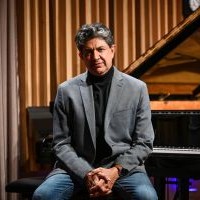 As a child growing up in the city of Caracas, music was always in the air in our home. My father, the very reason why I became a pianist, was a pharmacist and played the piano by ear. His repertoire consisted mostly of his favorite melodies and rhythms from Venezuela and Latin America.
 My mother, while she was in the kitchen, always had a transistor radio playing popular music. AM radio was still king at the time, and it always played an eclectic mix of songs from all over the world. In our family gatherings, the adults always danced to Cuban music, Salsa, Merengue and Cumbia. Thanks to my dear older sister, I was introduced to The Beatles, Queen and Carlos Santana among others. However, Jazz was not in the air.
My first encounters with this music occurred thanks to my childhood friend who lived in my building, and who for some reason happened to have at home a copy of George Benson's Breezin' (Warner Bros., 1976). That record changed my very young life and made me very curious about this style of music. Then I found out that the only FM radio station in Caracas at the time had a weekly one-hour show that played jazz. A discovery that I couldn't take advantage of as much as I wanted since it was broadcast late in the night.
One Christmas, my sister sent me from Boston, where she was studying English, what it turned out to be an invaluable present. It was one of the first editions of The Real Book. A collection of jazz compositions and composers that I never heard before and knew nothing about. I managed to somehow learn how to read chord symbols with some friends at the conservatory where I was studying (jazz education as we know it didn't really exist at the time), and I could read the melodies, so I started exploring all these interesting songs and composers. That is when I first saw the name Miles Davis. And right there and then, without having any knowledge about its profound and dramatic history, I fell in love with this music.
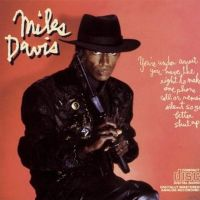 The Information Age had not arrived yet. My only other source for jazz was a handful of music stores that would import to Venezuela jazz records. A few years later, that was how I bought my first Miles record. Curiously, without me knowing it, it was perhaps one of his more unorthodox works. I bought You're Under Arrest (Columbia, 1985), and it made a huge impression on me.
 Surely, I then later discovered and studied Kind of Blue, fell in love with Bill Evans and Herbie Hancock thanks to their collaborations with Miles, and learned more about the history and tradition of this genre that is obviously so crucial and critical to the formation of any aspiring jazz musician. However, I will always remember that first record I bought because it makes me think about how impactful that was in the development of my own vision and voice as an artist.
Having the opportunity to write about my own experience with Miles Davis's music, in retrospect, has made me reflect deeply on how he showed me the way to my own artistry. He demonstrated to me and to the world that the possibilities in this style of music are endless. That in jazz, tradition can be intertwined with other influences, that inclusion, in its true meaning, it's an integral part of this genre, as it should be in any society, and that your culture and idiosyncratic roots can not only coexist with the jazz vernacular but also enrich it. He taught me. Remotely. Miles away.
Christine Kamau, trumpet (Kenya)
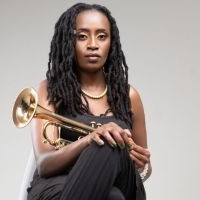 Reflecting on Miles Davis' legacy, I would say that he became a quintessential jazz artist. His musical career reflected his life experiences, and his music continues to resonate with listeners worldwide many years after his passing. His compositions span different stylistic eras, demonstrating his ability to redefine himself and experiment with diverse musical styles. He left behind an extensive discography that continues to influence subsequent generations of trumpet players. It comes as no surprise that his groundbreaking album Kind of Blue, released in 1959, is recognized as the best-selling jazz record of all time. Not confined to music, he also addressed sociopolitical issues during the civil rights era, earning distinction as a musician attuned to the current affairs of his time. It is my hope that this centennial celebration will spark greater interest in Miles Davis's music around the world.
 .
Marta Sanchez, piano (Spain)
 Miles Davis has probably been the musician I have listened to the most throughout my life, especially when I first began discovering the history of jazz. I spent countless hours listening to the recordings of the 1950s and, above all, the second great quintet of the 1960s. Those records shaped my understanding of what a group can be. For me, that quintet represents the possibility of magic in music: the feeling that harmony, rhythm, melody, space, and interaction can all be transformed in real time into something alive and unpredictable. Listening to that band opened up an entire world of possibilities for me as a musician and composer. It taught me that music can be both deeply structured and completely free at the same time.
 Beyond his playing, Miles influenced me profoundly through his vision as a leader. One of his greatest strengths was his ability to recognize and bring together extraordinary musicians, trusting them enough to shape the music collectively. The musicians he chose for his bands are, in many ways, the same musicians who went on to shape the history of jazz. Many of the compositions associated with those groups came from the musicians around him, and Miles created an environment where those voices could flourish. That ability to curate, guide, and inspire without controlling every detail is something I deeply admire. He showed me that leadership in music is not only about direction, but also about intuition, trust, personality, and the courage to constantly evolve.
Sanjar Nafikov, piano-keyboards (Uzbekistan)
 The melodic contour of Davis' lines, especially from the modal period, always reminded me of the maqam players of my region—he never played the melody directly, but always hinted at it, singing with its neighbor tones. And the intuitive signature "underblowing" of some notes gives a reference to the quarter-tone scales of Eastern music. The Dark Prince continued the line of mysticism in the music of the second great quintet, where his sound was not the trumpet of Jericho, but rather the meditative call of the muezzin to prayer. The influence of his music, like a silent Buddhist monk-teacher, continues on me to this day when it is necessary to organize the time and space of my sound world...
 Monty Alexander, piano (Jamaica-USA)
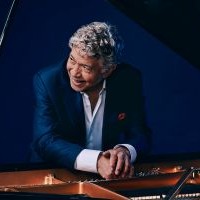 Miles Davis was a musical genius and a restless spirit who constantly sought new musical expressions. Each time he did, it was a powerful statement. When he played the trumpet, he played life. He didn't play music, he played life. But the main thing is, he needed it to be grooving or swinging.
 I will never forget that special moment at the Village Vanguard back in the late 1960's when Miles spoke over the microphone in his raspy voice: "Monty, come up and play something!" and I did.
Sinan Alimanović, piano (Bosnia)
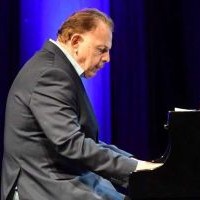 As a young boy in the 1960s, I heard the album Kind of Blue on my home turntable for the very first time. It was my initial encounter with Miles Davis' oeuvre, and it changed the course of my life forever. Even then, through his artistry, I intuitively felt that music was my life's path. Miles Davis sealed my decision to dedicate myself to music, which I consider to be the most beautiful calling in the world.
 Through his visionary work, from the early days of bebop with Charlie "Bird" Parker to pioneering cool jazz and modal forms, Miles constantly pushed boundaries and inspired every musician around him. My favorite artists and musical role models learned directly from him or were profoundly shaped by his influence. Among them are pianists Wynton Kelly, Bill Evans, Keith Jarrett, Herbie Hancock, and Joe Zawinul, as well as organist Joey DeFrancesco. Alongside them stands a constellation of genius musicians who either passed through his ensembles, such as John Coltrane, Wayne Shorter, the brothers Cannonball and Nat Adderley, or created parallel to him, such as the magnificent Clifford Brown, Lee Morgan, and Freddie Hubbard... The spirit of Miles Davis is deeply embedded within all of them, and that flame still burns today, nurturing the very heart of jazz through new generations.
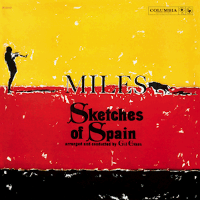 Alongside the seminal Kind of Blue, my favorite Miles Davis album is Sketches of Spain (Columbia, 1960), a masterpiece he recorded in collaboration with the brilliant composer, arranger, and conductor Gil Evans, whose influence on Miles' musical sensibility was exceptionally profound. Miles Davis left humanity a monumental discography that continues to resonate across most of contemporary music in unpredictable ways, through latent and lateral connections; it remains absolutely indispensable to contemporary art music.
 He was a visionary who established the aesthetic foundations upon which new generations can lean and continue to build, expanding musical art for the benefit of the entire humanity. I perceive Miles as a complete, fully rounded artistic personality. This is vividly reflected in the visual identity of his later albums, the covers of which he often painted and designed himself. This intermedial synergy, of truly Renaissance proportions, resonates powerfully today; in fact, it has never been more necessary or relevant. He was a born leader and a conceptual catalyst; when he plays just one long note, every musician in the band instantly sticks to him, and the music just takes off. That is the eternal inspiration.
Miles Davis' legacy is definitive proof that jazz is not merely a genre, but an authentic contemporary art music.
Christine Salem, vocals (Reunion Island)
 My favorite album is Kind of Blue. There are quite a few tremendous tracks on it—it's hard to choose just one—but from this album, one among many others, I'd pick "Freddie Freeloader."
 I'm a fan of blues, and I think Miles Davis's contribution of the trumpet to blues music was something entirely new. His inspiration was innovative for music; to me, his trumpet is the trumpet of the gods. I discovered Miles Davis through friends when I was about 12 or 13 years old. In fact, that's when I discovered a lot of jazz, blues, rock, and traditional music from all kinds of cultures.
His greatest legacy is his albums, but also this sense of freedom and boundless inspiration in music, while always remaining simple. He was a genius both with the trumpet and in composition.
Nina Feldgrill, bass guitar-vocals (Austria)
 For me, Miles Davis stands for musical reinvention and growth while still always staying true to himself artistically. From my point of view, only very few have played such an important role in so many different periods of jazz history or have influenced the music as much as he did. No matter which recording and therefore which phase in his career I am listening to, it always feels unmistakably like Miles Davis. I never get the impression that he changed styles to try something new or to follow trends. This development of musical periods seems to have evolved naturally through his curiosity about and openness towards music in general—which, to me, is a big part of his legacy.
 Kinan Azmeh, clarinet (Syria)
 It was an early evening in Damascus—my hometown. I was 17 and had just begun studying at the Higher Institute of Music as a classical clarinetist. Already, I felt like a grown-up walking into my favorite record shop. Most of my collection at the time consisted of Western classical music, and that little shop on Hamra Street had a huge selection of cassettes of every genre—all pirated, of course.
 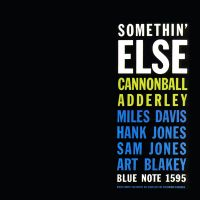 Feeling adventurous, I asked the shop assistant, an old friend, for an American pop record. He looked at me dismissively and said, "I'm not selling you that unless you buy this with it. You need to hear this." He handed me Somethin' Else—the first time I ever heard the sound of Miles Davis's trumpet. What struck me then was the clarity of thought in his playing, and that same clarity continues to inspire me to this day. I firmly believe that some of the greatest composed works are the ones that sound spontaneous, as if improvised, while some of the greatest improvised music sounds so inevitable and structured it could have been composed. To me, that was Miles.
 Antoine Souris, piano (Seychelles)
 Miles Davis is, without any doubt, one of the most influential jazz musicians of all time. I believe it is fair to say that his contribution has gone far beyond musical boundaries, transcending cultures, jazz eras, and even genres of music.
 As a musician coming from one of the world's smaller countries, Seychelles, I have been inspired by his life and work in many ways. During my first year of studies at Royal Welsh College of Music & Drama, I remember an occasion when many of my colleagues were eagerly anticipating a performance of Sergei Prokofiev's Piano Concerto No. 3 by a renowned orchestra and soloist. During that conversation, I felt somewhat like an outsider. In order to overcome the negative feelings this created in me, I ended up adding lyrics to Miles Davis's famous composition "So What." I still remember the opening line: "I never heard of Prokofiev... so what?" In many ways, "So What" became my personal motto for overcoming the inferiority complex I experienced throughout that challenging period.
When listening to Miles Davis and comparing his playing to that of musicians such as Charlie Parker, Dizzy Gillespie, John Coltrane, and Oscar Peterson, it becomes clear that his style was not built on virtuosic displays. However, his playing never lacked artistic mastery. In many ways, the subtle beauty and soulful phrasing of his music capture the listener's ear and touch the heart and soul of anyone willing to listen deeply. This is perhaps the greatest inspiration I have gained from Miles: the encouragement to fully embrace one's own individuality and create a unique artistic legacy.
Miles also left us with a powerful example of resilience. The story of how he overcame heroin addiction is remarkable and deserves to be passed from generation to generation. Thank you, Miles, for your music and your inspiration.
Dainius Pulauskas, piano-keys (Lithuania)
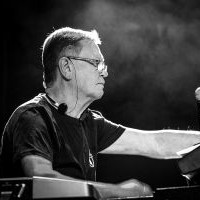 Miles Davis created a unique musical style that has influenced countless musicians, including me. He was a true genius who opened new horizons in jazz. He spread magic that hypnotized and drew listeners into his musical world of rhythm, harmony, and distinctive solos. His playing style was unique, and the sound of his trumpet remains inimitable. While participating in the Pori Jazz '87 festival in Finland, I had the rare opportunity to see Miles Davis perform live with his band. His "fusion" program left a deep impression on me and influenced my own creative path.
 Layth Sidiq, violin (Jordan-Iraq)
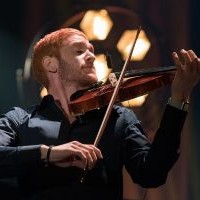 Miles Davis's influence on me comes largely through his melodic thinking and his relationship with space. The way he solos reminds me deeply of the spirit of taqasim (structured improvisations) in Arabic music, where every phrase carries emotional weight and silence is part of the expression itself. Like a master of taqasim, Miles understood how to unfold a mood gradually, how to let a single note breathe, and how to say something powerful with very little. His improvisation felt structured yet completely alive, which resonates strongly with the maqam tradition, where spontaneity exists within a deep melodic architecture and emotional weight. Listening to Miles reinforced for me that true improvisation is not about displaying ideas or technique, but about storytelling and human feeling in real time.
 Jeremy Monteiro, piano-vocals (Singapore)
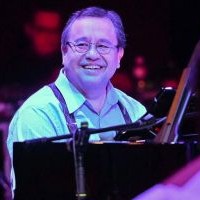 In 1989, the year after I'd played on the main stage of the Montreux Jazz Festival, Keyboard magazine—for whom I was Southeast Asia correspondent—assigned me to cover that year's festival. The press pass came with privileges: every show at the casino, the artist's lounge, the after-hours jam sessions at the Jazz Café.
 One night, I found myself sitting in the Warner Music balcony with Australian trumpeter James Morrison and singer Dianne Reeves, waiting for Miles Davis. My album Jeramzee Faces and Places (1988) was on WEA at the time, which is how a Singaporean kid ended up in that particular row of seats, watching the Prince of Darkness—back when the word "legendary" was still reserved for real legends.
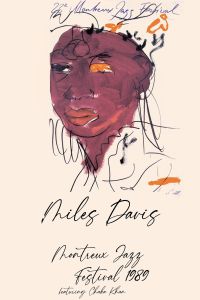 As soon as the band started—Adam Holzman and Kei Akagi on keyboards, Rick Margitza on sax, Foley on piccolo bass, Benny Rietveld on electric bass, Ricky Wellman on drums, Monyungo Jackson on percussion, Chaka Khan guesting—I turned to James and said, "Let's go down to the monitor mixing board and catch the show there." He nodded, grabbed Dianne, and we worked our way through the throng. The security guard at the barricade glanced at our passes and waved us in. We stood so close I could see the sweat on Miles' forehead and the spit he blew out of the spit-hole of his trumpet.
 After the show, Miles walked offstage with his road manager in front and two burly security guys on either side. I slipped in behind him, making it look like he was being escorted by four bouncers. One of them glanced back, clocked my all-access pass, and kept walking. For about thirty seconds, I walked the walk with Miles. Then I broke formation and ran ahead to the artist's café.
It was surreal in there. All the big jazz stars were drinking and talking loudly, like a classroom with no teacher in it. Twenty meters away, huddled together, were George Duke, Stanley Clarke and Palle Mikkelborg.
Then the Prince of Darkness entered the room. An instant hush descended. Nobody moved. As he passed the three of them—who suddenly looked like naughty schoolboys—Miles leaned over and rasped, "What's the matter, you guys too big now to get up and give me a hug?" They sprang up and embraced him while the rest of the room watched in silence.
Miles walked to his dressing now. The door clicked shut, and the noise rushed back in.
Arnaud Dolmen, drums (Guadeloupe)
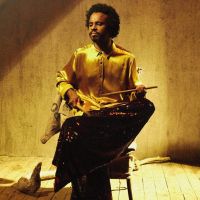 Choosing just one Miles Davis album is almost impossible, considering how many eras he went through and how many times he reinvented jazz. But Sorcerer (Columbia, 1968) is certainly one of the albums that moves me the most. I deeply love the mysterious vibration of this giant of music, his freedom, and that feeling of constant movement running through all of his work.
 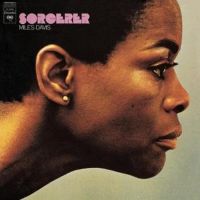 To me, Miles Davis was an eternal creator. What fascinates me most about him is his ability to constantly reinvent himself. Throughout every period of his life, he surrounded himself with the right musicians in order to create new sounds and open new musical directions. His playing kept evolving until the very end. He never stayed fixed in one aesthetic or one era.
 As a musician, this is probably what inspires me most about him: this permanent questioning of oneself. To keep searching, exploring, taking risks, and never being afraid of change. Miles Davis reminds us that music is a living movement and that we must always remain in search.
Laura Jurd, trumpet (England)
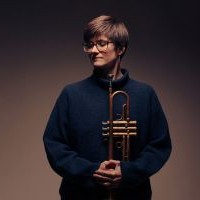 It might sound a little far-fetched, but the soloing of Miles Davis is something I think about and channel on a daily basis. His depth and commitment to the moment is a constant source of inspiration, in both life and music-making.
 A perfect example of this is his solo on "Miles Runs The Voodoo Down" from the iconic Bitches Brew. I could probably write an essay about this—it represents everything I love about Miles; the pacing, the intent, the deep sense of groove. The track begins with a slow-ish, deeply blues-laden bass line, from which the entire track is built. Having soaked up thirty seconds of groove, Miles enters with a characterful longish note, with his unmistakable sound, to begin his first melodic phrase. Whilst fairly understated at this early stage, the rhythmic placement of his entry and depth of intention, is just a hint of the radical assertion that is to come.
The magnetic pull of his rhythmic feel immediately gets the attention of John McLaughlin on guitar, who responds with Hendrix-esque fireworks in his accompaniment. The dynamism of this interaction, and the way he ignites energy from the whole band throughout the solo is incredible. The pacing of his playing over this kind of one-chord landscape is a masterclass in narrative and structure. He always finds the moment. Laying low until the music reveals the entry point—the dynamic, the attack etc.
It's the variation of character in his phrases, so perfectly placed, that make for such an exciting ride. Sometimes playing a few notes that sit casually amidst the groove—other times pouncing on the music with an arresting attack that only a trumpet, or perhaps a drummer could deliver, and always rhythmically knock-out. Each choice he makes is deeply meaningful and utterly serving the journey of the track.
It makes sense to me that Miles loved boxing. I don't know much about the sport, but you can absolutely hear Miles going in with some earth—shattering left—hooks in this solo—and the whole band is floored, in the grooviest way imaginable. I can only imagine how amazing it would have been to be in the ring with the guy. Wow!
Bill Frisell, guitar, (USA)—from Never Ending Revelations
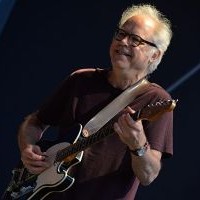 When I think of Miles Davis I don't really think of trumpet. It's a sound that I hear, not an instrument. Again, it's that thing about the melody and the way he treats the melody... He'll play an idea and he gives you a chance to ponder it. Like, 'What does that mean?' Same with Monk. They have this way of showing you things. It's like they bring you into the music. Like a fine watch maker, he'll open up the back of the watch and say 'Now look at that, see that? There's this little thing there that turns around... and this does that,' and it's like these guys are not just showing you what they can do but they're showing you something that they love...
 That's the other thing, that first Wes Montgomery record we talked about and there's Ron Carter, and I think the next record I got was a Kenny Burrell record and Ron Carter was on that. Then I found a Sam Rivers record and Ron Carter is on that. I was like, 'Who is this guy?'
Ron Carter, bass (USA)
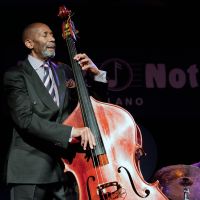 All About Jazz: What was Miles Davis like as a band leader from your vantage point?
 Ron Carter: He was as instructional as all the band leaders I played with. I learned something from all of them and he was no exception.
AAJ: Have you incorporated any of the lessons from your time with Miles Davis in your own projects?
RC: Yes. The recording process, how to do it without any preparation or rehearsal. We just showed up and played. I learned how to dress up for the gig and perhaps most of all how important to hire people who could help you make your musical concept come to fruition. Even if you can't express verbally what you're looking for, you need to find people whom you have confidence can give you what you need.
AAJ: How would you describe the relationship between discipline and freedom in Miles Davis' band?
RC: We had plenty of freedom and we also understood the bar lines and the form and were disciplined. Freedom is a mis-used word in my opinion, and I always resist using that word describing that band. We were as disciplined as someone like Duke Ellington. We just had our own way of rearranging the molecules.
Dimbo Makiese, piano-director Angojazz (Angola)
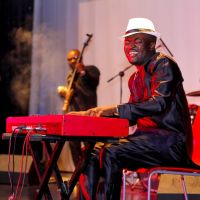 As a pianist and director of Angojazz, the influence of Miles Davis is profound and is reflected both in the philosophy of creative freedom and in the very technical structure of the fusion between jazz and traditional Angolan rhythms such as semba, kilapanga, and massemba. Miles Davis was not merely a trumpeter; he was jazz's greatest chameleon, driven by the desire to break barriers and continually redefine the genre. For Angojazz, this avant-garde stance serves both as a beacon and as an aesthetic validation.
 Miles's legacy legitimizes the idea that jazz is not a static museum piece, but a living organism that must feed on other pulsations—in this case, the syncopations and ancestral rhythms of Angola. Miles's iconic albums, such as Kind of Blue (1959), popularized modal jazz, in which improvisation is based on modes/scales rather than on complex and rapid harmonic progressions. In Angojazz, this modal approach is an essential tool. Traditional Angolan rhythms, such as semba or massemba, are often built on bass and percussion ostinatos, allowing Angojazz soloists to float and improvise freely over these Angolan grooves without being bound by the strict rules of American bebop. This creates a space of trance and spiritual connection that is deeply present both in Miles's jazz and in traditional African music.
One of Miles Davis's greatest trademarks was his economy of notes: he understood the importance of silence and of allowing the music to "breathe." In my own approach to piano and arrangements, I employ a similar sensibility. In order for the traditional instruments or the percussive nuances of the dikanza, the ngoma, or the characteristic phrasing of semba to stand out, the jazz practiced by the project cannot be overcrowded. Miles's influence is reflected in the choice to play the right note at the right moment, thereby allowing the Angolan groove to become the true protagonist.
Miles Davis used to say: "Don't play what's there, play what's not there." Angojazz embraces this attitude of constant exploration. The project is neither limited to reproducing American jazz classics in Luanda nor to producing folkloric music dressed in sophistication. It is a search for a third path ("sembajazz"), creating a contemporary language that projects Angolan music onto the international jazz scene while preserving the rebellious and innovative spirit that Miles always championed.
Annamaija Saarela, director, G Livelab Tampere (Finland)
 I was really taken when asked me to be part of his article, but at the same time I felt insecure because I don't consider myself a Miles Davis expert. Fortunately, the question was not posed as: what is the most important or significant album of Miles Davis's career, but the more subjective, what is my favorite Miles Davis album.
 Many people might mention cornerstones like Kind of Blue or Bitches Brew, but my honest favorite of Miles' albums is Sketches of Spain. I know that many people think that album is more of a Gil Evans's work than a Miles recording, but it is very important to me personally. Sketches of Spain is the first jazz album I have ever bought for myself. My own background in my youth is not in jazz music, but in the world of classical music and opera. My mother loved opera and orchestral music and took me to listen to them from a very young age. My favorite album as a child was Prokofiev's Peter and the Wolf, and my dream when I was taking piano lessons was to become a classical pianist.
I probably first heard the Miles and Evans version of "Concierto de Aranjuez" on the radio, but I immediately wanted the album for myself, and I listened to it a lot. Sketches of Spain has therefore served as an important gateway for me, in my twenties, from classical music to the world of jazz, to becoming a jazz lover and event producer, and to the career in which I still get to work
Patricia López, saxophone (Uruguay)
 I have always admired Miles's style, for his immense and authentic personality both in music and in life. His sound conveys to me a direct connection with his soul, a unique warmth and depth that at times become sharp and visceral. A constant swing between light and darkness, an inexhaustible search that expanded every boundary.
 From a compositional perspective, he is a musician who embraced many facets within the history of jazz, and I admire each one of them for his versatility and the enormous legacy he left not only to trumpeters, but to all instrumentalists and composers. It is difficult to choose just one Miles album, so I would like to mention two records that, every time I listen to them, I continue learning from, and that have shaped me as a jazz musician to this day: Kind of Blue and Birth of the Cool (Capitol Records, 1957). There is not much that needs to be said about the first one, because it is a foundational album for almost all of us who love this musical style, and it is a landmark work for many reasons.
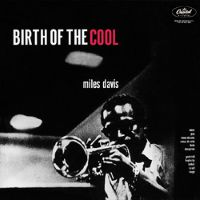 On the other hand, the album Birth of the Cool represented a tremendous learning experience for me because I had the opportunity to be part of a nonet in which we performed these arrangements, and I played baritone saxophone. It was the first group experience where I played complex jazz lines and where I learned bebop phrases within an ensemble setting.
 On this album, the instrumentation is very particular because there is no tenor saxophone, and the sonority is a hybrid between classical music and jazz. It is also the first work in which Miles appears as a leader, and his idea was to imitate a vocal choir with this nonet. From a compositional standpoint, you can hear phrases that define a style and a new post-bebop interpretation, integrating sonorities between cool jazz and modern jazz. In improvisation, Gerry Mulligan stands out for the prominence of his solos, being one of the most active soloists throughout the album, something quite uncommon for a baritone saxophonist.
Miles' music, his sound, and his improvisations left behind an enormous and essential legacy, one through which you can hear much of the history of jazz, and above all, its essence.
N'famady Kouyaté, balafon (Guinea)
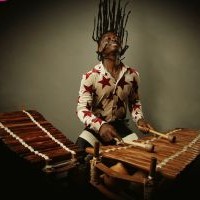 I had listened to Miles Davis occasionally in the past, and I've now spent some more time listening to his music. All I can really say is that his music is truly great and very inspirational. It still feels alive and continues to inspire people across generations.
 Navin Chettri, founder-artistic director "Jazzmandu" Kathmandu Jazz Festival (Nepal)
 Kind of Blue is one of my favorite Miles albums. Such a classic and groundbreaking record—it resonates with people from all walks of life, even if they are not jazz listeners.
 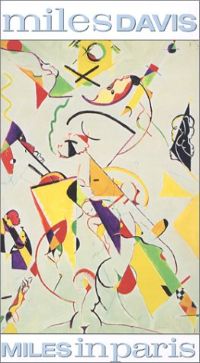 Miles always had great musicians play with him, but the lineup on Kind of Blue had a special organic flow that created a timeless sound. It is always refreshing to listen to this album, and it is my go-to recommendation for students or folks who are new to jazz and would like to get into it.
 I got into Miles Davis in the late 1990s in Kathmandu. Jazz was unheard of in Nepal at that time. The first time I saw Miles live was on a VHS tape in 1999 at a friend's place in Kathmandu. He was an expat from the Netherlands who had a VHS of Miles in Paris (Warner, 1990). My bandmates and I watched live jazz on a screen for the first time. That was monumental for us in a place where there were hardly any jazz resources at the time.
In the summer of 2000, we arranged "All Blues" and other classic jazz standards with Nepali traditional musicians on tabla, ishraj, bamboo flute, and sarod. Cadenza & Friends performed these arrangements at the first Jazz at Patan concert, celebrating 100 years of jazz in 2000. Now part of the Kathmandu Jazz Festival, Jazz at Patan is an annual concert and was really the origin of Jazzmandu, now in its 22nd year. We still arrange and perform tunes from Kind of Blue.
Dhafer Youssef, oud (Tunisia)
 I love every note that comes out of Miles' trumpet. He was a musician with a different vision, not only in music, but as a source of inspiration as a band leader. The way he selected musicians, the way he shaped a band. He brought people together and gave each formation a body and soul. Every band became a unique world with its own identity, its own breath. I am learning from him every day.
 Giveton Gelin, trumpet (The Bahamas)
 There are three tracks by Miles Davis that I've become obsessively drawn to: "Fall," "Sanctuary," and "Filles de Kilimanjaro." That same feeling extends to the corresponding albums, but these particular tracks have shaped my musicality and artistic vision unlike anything else I've ever heard.
 It was clear this music had been brought down to us from the heavens. I constantly return to them, spending time with the music and discovering something new every single time. It's comparable to a cookie jar that replenishes itself after every visit. We haven't even progressed far enough into the future to invent such a thing in 100 years.
The way Wayne Shorter's compositional structures merged with Miles' interpretation and leadership stands as one of the greatest collaborations in doing justice to a century's worth of musical evolution. What would 100 years of music be without Miles' vision? Miles' sound? Miles' spirit? We lucked out in this timeline. We were given a sorcerer-like, uncontainable individual who saw 100 years into the future.
Miles Davis is now and forever. Happy Birthday, Miles.
Rana Farhan, vocals (Iran)
 Miles's music has always been the sound of New York for me. Growing up in Tehran, I would listen to his records and feel the spirit of the nightlife of Manhattan. It always wowed me how huge and unmistakable he sounds. How it took over the atmosphere and changed the soundtrack of our lives forever. And that is why he will always remain a legend.
 Rosse Aguilar Barrascout, saxophone-vocals (Guatemala)
 What inspires me most about Miles Davis is the level of influence he had on the history of jazz in terms of resilience and adaptability, since he made sure to leave an important mark and legacy across different eras of change in jazz, including bebop, hard bop, modal jazz, and the jazz fusion movement.
 It is admirable how Miles listened to what was happening around him and kept adapting and evolving without ever losing his distinctive and incomparable sound; he adapted his improvisation and musicality to each era. The three important lessons I take from this legacy are applicable to all musicians, regardless of the instrument we play. First: Your sound is the most important thing—it is your signature. And that signature should be recognizable in every musical production you take part in. Second: It is important to know how to improvise with great virtuosity, but it is also important to leave space... to stop playing in order to listen and interact with other musicians in different ways. Phrases with fewer notes also contribute and inspire. Third: Agility is important in order to continue growing in our careers, so we should never stop practicing, no matter our age or the moment in history in which we are playing.
Yuwen Peng, piano-keys (Taiwan)
 Among Miles Davis's vast discography, the soundtrack to the film Dingo (Warner Bros., 1991)—a collaboration with Michel Legrand—has had the most profound impact on me. In this 1991 film, Miles himself portrays a trumpet master named Cross. During a brief stop in the Australian outback, his band's electrifying performance inspires a local boy to devote himself to jazz. Years later, that boy travels to Paris to find his mentor and eventually shares the stage with him.
  When I first watched this film, I had just begun my own journey into jazz. I was deeply captivated by its lyrical melodies and diverse musical styles. At that time, jazz education in Taiwan was still a 'desert,' and I saw my own reflection in that Australian boy. Drawing inspiration from Miles's presence on screen, I pushed through every obstacle to pursue my jazz dream—a journey that continues to this day.
 Dimitar Budurov, piano (Bulgaria)
 Miles. A name that has come to symbolize progress and transformation. A name that stands as an icon—revolutionary, mentor, and a true milestone in 20th-century music history. The influence of Miles Davis is immense, shaping not only jazz but also the language of pop and rock. You encounter Miles differently at each stage of life. Just when you think you've grasped a fragment of his artistry, another album appears—another facet of his genius that catches you off guard and reshapes your understanding.
 I remember vividly those wow moments in my teenage years when I first discovered him. It began with the bebop era alongside Parker—his phrasing, timing, and tone cutting straight through me. Then came Birth of the Cool with Gil Evans; the refined fusion of jazz and modern classical composition struck me deeply. But it was Live at the Plugged Nickel that truly overwhelmed me—a radical reimagining of harmony, form, and sound. The energy of those performances felt almost unreal. The synergy among the five musicians, their freedom, the way the music shifts from fragile to fierce, the elasticity of structure—through it all, Miles' sound shimmers like a lighthouse in a dark, stormy sea. I couldn't place it in any category. It felt entirely its own.
I became obsessed. Eventually, I immersed myself in The Complete Live at the Plugged Nickel. It was transformative. With each listen, I sank deeper into that small Chicago club. I began to notice everything—the clink of coins, the murmur of the crowd, the clatter of glasses—details that made it feel as though I were there. And above it all, Miles' sound: focused, exacting, guiding me like a hiker across shifting musical terrain. The band felt both disciplined and playful, constantly reshaping the material in new forms and colors. As a listener, I was no longer just observing—I was part of the act of creation. That is what made it so powerful. When it ended, I felt drained. I just sat there, staring into space. And then it struck me: this is what music is for.
Like the Buddhist saying—it's not about the destination, but the journey. What I didn't yet realize was that Miles' own journey—his relentless artistic evolution—continued until his very last day. Perhaps that is his greatest lesson: stay curious, keep exploring, protect your sense of wonder, and never stop believing in the power of music.
Marquis Hill, trumpet (USA)
 When I reflect on the impact that Miles Davis has had on me, a wide range of thoughts and emotions surface. But above all, one idea stands out: Miles embodies the archetype of pure originality.
 His originality wasn't limited to sound—it extended to concept, composition, approach, bandleading, and beyond. Through his work, Miles shows us that one of the most essential elements of this music is an unapologetic knowledge of self.
Thank you, Miles, for everything you gave and for the legacy you left behind.
Ella Zirina, guitar (Latvia)
 Kind of Blue is the first Miles Davis and jazz album that I truly dived into the depths of. When I was sixteen, I had a CD player and would play this album on repeat every day for at least two months. At some point, I could hear the solos ringing in my head while just going about my day.
 This album deeply moved me and changed how I hear music. There's so many little nuances that catch you off guard and really make you listen, like the Jimmy Cobb's ride cymbal crashes in "So What," the colorful and unique comping and voicings of Bill Evans in "Blue in Green" and "Flamenco Sketches."
This album has so much breath to it , each note that Miles plays feels so intentional and has its own subtle character. So much is said in the spaces that Miles leaves—he is a true master of that.
Victor Morel, drums (Paraguay)
 Seven Steps to Heaven (Columbia, 1963) is undoubtedly one of my favorite Miles albums—an exquisite record without question—where the sonic aesthetic and the unique, exclusive dynamics of a quintet that would later shape the future of jazz in such a singular and powerful way demonstrate Miles's influence across every sphere, both human and artistic.
 Rami Attallah, piano (Egypt)
 As a jazz pianist and composer, Miles Davis's influence on my work isn't found in a specific lick or a particular era, but in his profound mastery of space and economy. He taught me that the notes you choose not to play are often more powerful than the ones you do. In my own compositions and performances, I constantly strive for that "Milesian" courage—the willingness to let a single melodic line breathe against the silence.
 What truly resonates with me is his incredible artistic flexibility. Throughout his career, Miles was a chameleon of sound, fearlessly pioneering entirely new sub-genres—from The Birth of the Cool to modal jazz and into the electric frontier. He never allowed himself to become a museum piece; he was always moving forward, always listening to the "now." That restless spirit of innovation, and his ability to find a new "voice" in every decade, is what I try to bring to my trio and my students—the idea that jazz is not just a genre, but a constant state of becoming.
Terri Lyne Carrington, drums (USA)
 I toured opposite Miles Davis twice in the '80s. Once when I was playing with David Sanborn and once when I was playing with Wayne Shorter. Other bands on the tour were {Jack DeJohnette's Special Edition and the Pat Metheny Group. One thing I noticed was how many people were trying to have words with Miles, or reflect on his old albums, or when they met him before—just a desire to talk to him about anything, really. I felt like he was bored and slightly annoyed with these encounters, though he tried to be polite, he was not really engaged. I didn't want to be another one of those musicians, so I chose not to talk to him at all. And I think this created a bit of a mystery about me for him, as we travelled for weeks from city to city in Japan.
 Then one day, which happened to be my birthday, I was sitting by myself at the airport. While he was walking to the restroom, he paused to wish me a happy birthday. Those were the first words of exchange between us. We were relatively friendly after that, sometimes talking on the side of the stage during the shows. But this experience showed me the value of drawing people in and not being overly anxious or too excited to be in someone's orbit for what could end up being superficial exchanges, especially if the person is used to that behavior due to being a celebrity. I would have been just as happy observing him from afar if he didn't find me interesting enough to talk to. I felt that he was a person—just like the rest of us—though truly great and flawed as well. He was human!
There is much conversation now around his treatment of women. Patriarchy, capitalism and other societal malignancies have been around before and after Miles Davis. They are systemic issues that need to be addressed holistically and radically. I'm not excusing any wrongdoing of his, I'm just saying that citing Miles Davis's behavior is not putting a dent in the serious work of eradicating misogyny and sexism.
Ilir Bajri, piano (Kosovo)
 Tutu (Warner Bros. 1986) was my first true encounter with Miles Davis. I was hooked. The music was so inviting, so curious, provocative and contradictory, yet so joyful and so inspiring. The sounds, textures, arrangements, and that energetic, persistent playfulness that was pouring out—this was irresistible to me. It excited my curiosity. I listened to that album over and over again for a long time, deeply wanting to understand what was happening in the music and how could one learn to replicate it. Tutu became a reference point—something I could rely on whenever I lost my footing. What I realized much later on is that its influence is much deeper and beyond the artistic domain.
 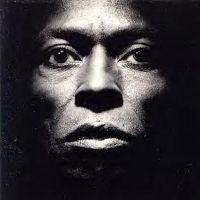 At that time my people were oppressed, persecuted, discriminated and kept in isolation. The world felt unreachable—somewhere behind tall, unreal walls. This broken communication with the world, and the resulting inferiority complex, were suffocating and traumatizing. And Tutu, with its colorful, inclusive atmosphere, its rule-bending aesthetics, the collision of acoustic and electronic sounds, the daring ideas delivered with almost playful mastery—became a platform that provided a unique perspective for me and my community.
 It was an invitation to look and think differently, to explore and find news ways for communication and collaboration, to challenge norms and rules, and to create space for inclusiveness, friendship and exchange. It became a strong point of support, reference and motivation whenever things became tough or confusing—a beacon and a reminder of what is really important in life. Merely showing gratitude for all that still feels insufficient.
Niwel Tsumbu, guitar (Congo)
 It's very difficult to choose a favorite Miles Davis album. I love all the ones I've heard, but if I had to choose one, it would be Bitches Brew. It's the album that completely shattered my sense of what music could be. At first, I couldn't understand what was happening at all. It took me days just to get through the first track because it sounded so alien and disorienting. But that's exactly why it stayed with me—it felt like my brain was expanding in real time.
 Miles Davis' music expanded my mind and showed me that there are virtually limitless possibilities in music. You don't have to fall into the norm—there will always be critics when you break boundaries, but there will also always be someone out there who would appreciate what you create. For me his legacy is that of an innovator who constantly followed his artistic muse, a true jazz pioneer.
Khachatur Savzyan, bass (Armenia)
 In the world of jazz, few figures are as influential as Miles Davis. He opened so many doors and forged so many new paths that his impact on the music's evolution is undeniable.
 One of the first jazz records that I kept spinning repeatedly, trying to transcribe every solo, was the vinyl of Bags' Groove (Prestige, 1957).
Later, during a difficult period of military service, his music became a lifeline. In the oppressive, dark atmosphere of the post-Soviet, post—war Armenian army, listening to The Complete Blackhawk Sessions on a cassette player sent by my brother was both an escape and a relief. Till today, I continue to discover new things in his music; but his most inspiring quality remains that unwavering courage to change!
Ronald 'Boo' Hinkson, guitar (Saint Lucia)
 Miles taught us all about leaving space in the music. That a hundred notes at 180 BPM don't move your audience like twenty well chosen ones.
 His apparent musical restlessness and defiance of rules created his genius and contributed to the consummate ease with which he moved from jazz to pop to funk to hip hop. Who else could transport you from Kind of Blue to Bitches Brew to On the Corner, Cyndy Lauper and Michael Jackson. That's a master class on how to remain relevant.
Tamara Obrovac, vocals (Croatia)
 As we all know, for a genius like Miles Davis, music is an unlimited playground in every sense, and each of his albums is marked by a strong individuality and refined communication between the musicians, regardless of style or genre, so of course choosing just one of his albums is not at all simple...
 I remember the feeling that an entirely new world had opened up to me when, as a young jazz musician inclined toward searching for new sounds, after hearing several of Miles's first acoustic jazz albums, I heard Bitches Brew.
But I also remember that Kind of Blue was the album that played the most on my cassette player... and my favorite moments are Miles's anthological solo on "So What," and the fantastic groove on "All Blues."
Etienne Charles, trumpet (Trinidad)
 Miles Davis' influenced me in several ways: be in the moment, be in the pocket, trust the band, keep it moving, allow the magic to happen, keep growing and searching. Make time for listening and experiencing new styles as they develop. That's one of the main ways to bring new generations to this music. Play the blues and put rhythmic conviction in your lines. Record everything.
 Exercise: Miles was an avid boxing fan and trained—allegedly with Sugar Ray Robinson's trainer. To me, Miles' stylish looks on stage always complemented the music he was playing, from the crisp suits in the '40s to mid-'60s to the funk/rock styles of the late '60s to '70s. Then with the bright colors of his fits in the '80s and early '90s.
Miles showed the value of investing in the youth, giving them a platform—they have fresh ideas and new styles of composition, improvisation and more. You see this throughout Miles' career with Herbie Hancock, Tony Williams, Ron Carter, Chick Corea, Keith Jarrett, Michael Henderson, Daryl Jones, Robert Irving III, Kenny Garrett, Marcus Miller, Vince Wilburn Jr., Munyungo Jackson...
Miles was also very open to fresh sounds and techniques from outside the US, famously advocating for non-American musicians such as Hermeto Pascoal, Badal Roy, Victor Feldman, Dave Holland and many others. These are just some of the ways Miles Davis has influenced me.
Fergus McCreadie, piano (Scotland)
 My answer for my favorite Miles Davis record changes probably every day, but while writing this I have to say that the live album from the Olympia Theatre in Paris in 1960 holds a really special place in my heart.
 It epitomizes so much of what I love about jazz—there's a real fizz of energy in the air, the time feel and synergy in the rhythm section is incredible and Miles is on great form. Check out in particular the solo on "On Green Dolphin Street"—I think it really sums up both his approach as a bandleader and as a soloist; the solo has an incredible sense of space, feels completely organic to the moment (like all Miles there's no sense of anything being pre-worked out), and sets up the energy for the solos that follow in the perfect way.
We can't mention this album without talking about John Coltrane either; he's on absolutely blistering form and is really starting to pull away musically in his own direction... you can hear the audience in the second half of the gig starting to feel divided—very vocally—on how they feel about this new sound, and to me it's so Miles how, regardless, he continues to give Coltrane the space to be absolutely himself in that moment in time. One of the all-time great bandleaders and players.
Eva Cortés, vocals (Honduras)
 Miles Davis taught me that music does not have to scream to be powerful. He could play just a few notes and somehow say everything. There is a simplicity in his phrasing that feels almost impossible.
 I also admire how fearless he was with change. He trusted his vision even when people did not understand where he was going, and he was always listening for what was next. He surrounded himself with younger musicians, with new energy, and kept evolving instead of repeating himself.
Beyond music I connect with his contradictions as well. The strength, the fragility, the curiosity, the rebellion. I don't believe he was trying to be perfect. I think he was trying to be true, and I feel that gave a lot of us permission to own our wounds and search for our own sound without apologizing for it.
Athanase Obed Dehoumon, trumpet, Gangbé Brass Band, (Benin)
 So immense is his legacy that we could spend hours talking about the illustrious Miles and still not finish. I was influenced by his charisma, his determination, and above all his spirit of fusion and bringing together the musicians of his generation with the younger ones who emerged during the era of electric jazz—Herbie Hancock, Chick Cora, Tony Williams, Dave Holland and John McLaughlin, among others. The great legacy of Miles is his style, his compositions, and the revolution he introduced into jazz.
 Saso Popovski, guitar (Macedonia)
 Miles' influence on me? His originality. Originality is the key. He was really different—you can tell it's Miles with only two or three notes played. His approach to the music, his phrasing and his emotional depth. From his music I've learned the importance of developing a personal sound.
 Emil Viklicky, piano (Czechia)
 The very first Miles LP I owned—and my favorite—was My Funny Valentine. I bought it from known local rock guitarist Joe Karpaty. It was horribly scratched, because—as Joe told me—girls at his rock parties hated that music. Miles and the band on that recording immediately grabbed me with an intensity I had never experienced before. I was fascinated with the musician's interplay.
 To get the Four and More LP, with faster tunes from the same concert at Avery Hall in NYC, took me quite a while. Of course, I heard some low—quality cassette's copies of earlier Miles, but I had never felt the same intensity as with his second quintet. Throughout the time I collected probably all available recordings with Miles' second quintet—Plugged Nickel, Nefertiti, Miles in Berlin, Miles in Tokyo with Sam Rivers—these are my favorites.
Camila Meza, guitar-vocal (Chile)
 I have chosen "Fall" from Nefertiti. This whole album is a masterpiece but this particular song I remember when I first encountered it, I had to put it on repeat—I think I did for over an hour!—and I keep coming to it for a type of healing of sorts.
 Miles was able to create and lead such deep and unique universes with the groups he'd put together, allowing each of the voices to fully bloom and express themselves in an evident free and playful way. You can hear the vulnerability and risk in every second. Being Wayne Shorter's original composition, I love how much it was a perfect vehicle for the language of the second great quintet.
Kic Barroc, piano (Andorra)
 One of my favorite Miles Davis solos is his performance on "Blue in Green." What moves me is the fragility of his phrasing: each note feels suspended, almost hesitant, yet completely intentional. In that space, deeply connected to Bill Evans' harmonic world, Miles doesn't try to resolve anything. He simply exists through the sound, letting silence and tone carry the emotion. A perfect example of the moto less is more.
 Mardochée William, bass (Haiti)
 Among all of Miles Davis' musical pieces, "So What" from Kind of Blue remains one of the pieces that has marked me the most. What fascinates me about Miles' compositions is his ability to create musical spaces where each musician is freely expressing themselves harmonically, rhythmically, and emotionally with remarkable freedom. "So What" perfectly embodies this philosophy.
 Miles's solo feels like a journey in itself: every note and especially every silence carries weight and intention. There are relatively few notes, yet their placement is often unexpected, creating a constant sense of surprise as one melodic idea unfolds into the next. In that way, the piece truly embodies the essence of jazz: improvisation as spontaneous storytelling. Meanwhile, Paul Chambers' walking bass and Jimmy Cobb's swinging pulse provide the foundation that allows the other musicians to move freely, explore, and interact without restraint.
Miles Davis often said 'less is more,' and "So What" helped me deeply understand what that means in jazz. It taught me to see a jazz composition not simply as a song, but as a platform for dialogue, a space where each musician can say what they think while respecting the ideas of each other. That spirit of freedom, listening, surprise, and mutual respect is what makes Miles Davis' music timeless, and why "So What" continues to influence the way I understand jazz today.
David Little, inveterate gig goer (Northern Ireland)
 My all—time favorite LP is In a Silent Way, and I had just bought Bitches' Brew, so when I learned Miles was playing at Isle of Wight Festival in August 1970, I was determined to go.
 From my distant position in the 500,000 crowd, I just about recognized Miles (bright red jacket and shirt) and Dave Holland but did not know the rest of the musicians until I read the next week's Melody Maker. Short set, under 40 minutes, 'Call it anything' said Miles. No video screens or decent sound system—or facilities—back then. Apart from Miles and one or two others, the weekend was the most dispiriting live experience. I eventually bought the DVD to see what I had missed—Miles Electric: A Different Kind of Blue (Eagle Eye Media, 2004). Strongly recommended [see YouTube video at foot of article—ed].
Paul Augustin, bass-director Penang Island Jazz Festival (Malaysia)
 I don't really have a favorite album. I like his earlier works—Birth of the Cool, 'Round about Midnight, Milestones and Kind of Blue Later ones too, like Nefertiti and Bitches Brew. He was always evolving and I guess that's what makes it exciting to listen to him!
 What I really like and remember are stories told about him by others who worked with him and knew him, like Steve Thornton. I never had the pleasure of meeting Miles or seeing him in concert. Stories of him are what made him cool and real for me. Some I heard and remember are : When at a concert, the band was playing a song and he just played one note because he said that the song just needed that one note.
Another story I heard was after a festival, the band went out but Miles went back to the hotel. When the band returned to the hotel they saw people coming out because there was a bomb scare—there were people in pajamas, nightgowns—and there was Miles walking out dressed to the 'Ts' in his coat carrying his horn like he was about to go up on stage to perform. Stories like that are gems; whether true or not I can't really confirm, but they were told by people who knew him and played with him.
Delphine Joussein, flute (France)
 His thirst! It's his insatiable thirst that moved me the most. A thirst to drink the nectar of life at every stage of his life, every stage of jazz, of music! Each time, he dared, he experimented, he put his art at the service of something much greater than himself. That is surely what influenced me as a musician—constantly searching; and sometimes, even losing sight of that search, but simply living it, is quite delightful. That's the feeling Miles gave me, at times.
 Haja "Hajazz" Rasolomahatratra, guitar (Madagascar)
 "Jean—Pierre" was our first Miles tune. We used to play it like a kind of pass when we were young musicians in the rough neighborhoods of Tamatave or Tananarive in Madagascar. If you didn't know "Jean-Pierre," you weren't a real jazzman. For me, this playful piece expresses freedom—the whole feeling of Miles telling us: "Set your knowledge and technique free—have fun!"
 When I sit in the sun, my skin turns brown like his, and I think of him, my big brother.
Florian Arbenz, drums (Switzerland)
 My favorite recording of Miles Davis is a bootleg from the Berlin Philharmonie from November 4, 1967. This recording is for me an absolute highlight of the great quintet with Shorter, Williams, Hancock and Carter. Not only that all those giants play at their highest level, they also shape a completely exciting set, the tension and release, playing in and out of the tunes and the shape of energy levels is so perfectly balanced, it could almost be composed! It's also one of the few bootlegs where Ron Carter's bass can be heard very well, it shows the absolute crucial input of Ron's playing on the music!
 Dima Loginov, trumpet (Kazakhstan)
 Growing up in Almaty, Kazakhstan, the first time I heard about Miles Davis was through my teacher, Valeriy Bannov, who shared recordings with me that I would transcribe and study. Miles' playing became important to me early on because his solos showed how much emotion, melody, and clarity can be expressed with just a few notes. I also remember hearing that during Soviet times his autobiography had already been translated into Russian by pianist, jazz theorist, and educator Mikhail Yermolov, giving many musicians in Kazakhstan the opportunity to discover Miles' artistic world even without knowing English.
 After moving to Amsterdam, I started reading the book myself and it gave me a deeper understanding of Miles not only as a trumpet player, but as a visionary artist and bandleader. His courage to constantly search for something new, take risks, and push your limits and boundaries strongly influenced my own approach to music and improvisation. Listening to his early recordings taught me the power of simplicity and phrasing, while albums like My Funny Valentine and Live at the Plugged Nickel showed me a new level of freedom, interaction, and collective experimentation within a band. Every now and then I continue returning to his recordings to learn and be inspired.
Chenxi Pan, Vocals (China)
 Among the many extraordinary albums by Miles Davis, Kind of Blue is undoubtedly my favorite. It has accompanied me throughout my journey of studying jazz and growing into a professional musician, and it holds a deeply personal significance for me. "So What," "Freddie Freeloader," and "All Blues" were among the very first jazz tunes I learned. As I developed further in improvisation and composition, "Flamenco Sketches" opened up an entirely new world of color and expression in music. More recently, I've found myself returning again and again to "Blue in Green," getting lost in its endless form and unmatched beauty. Each time I revisit this album, I discover new details I hadn't noticed before. There is a profound depth within its simplicity—it truly is a timeless masterpiece.
 Samuel Batista, saxophone (Panama)
 I first heard Miles Davis on the Night Music television show with David Sanborn. I had only been playing saxophone for about a year at the time, listening to artists such as Charlie Parker, Dizzy Gillespie, Paquito D'Rivera, and David Sanborn. However, I was still searching for more...
 Then Miles appeared.
I remember being completely stunned by the sound, the phrasing, and the rhythmic freedom in his playing. There was something dangerous and deeply alive about it. I could not sleep that night. That performance sent me directly into Tutu, and from there into Miles' vast universe.
As a student of Danilo Pérez, I often think about the artistic lineage connecting Miles, Wayne Shorter, Danilo, and musicians like myself who continue learning from that tradition. It is both humbling and encouraging.
What has influenced me most about Miles is not only his sound, but his fearless artistic vision. The way he led bands, trusted silence, shaped dynamics, and embraced constant evolution changed the way I think about music. Albums like In a Silent Way, Amandla, and Sketches of Spain continue to inspire me deeply.
Miles also taught me that music should never live inside categories. One of the greatest lessons I learned from him is the importance of staying open, curious, and unafraid of transformation. His music reminds us that artistic growth begins the moment we stop trying to protect labels and start listening without boundaries.
Tord Gustavsen, piano (Norway)
 Kind of Blue remains my most deeply cherished Miles Davis album. It is also probably the most influential one for my own music, with its profound focus on musical space, the relaxed modal playing, and all the brilliant micro-timing in slow tempos. However, the Miles solo that has probably left the most lasting impression on me must be his incredibly cool and creatively bluesy hard-bop improvisation on "Walkin.'"
 During my student years in Trondheim, Norway, there was an annual, full-day festival (!) dedicated to this tune, with jam sessions, bands performing, and a climactic ritual session in which the old recording was played from vinyl, and everyone present sang along with the trumpet solo. You had to know the solo—or at least a good part of it—to get in.
Learning a long solo by ear, and both singing it and playing it on your instrument, is of course a great pedagogical tool: it is important not to go directly to writing it down and reading while playing, but instead to stay with your inner ear and your singing mind. But this festival took it further: into an almost tribal sense of belonging, eruptive energy, and communion around an iconic solo—a solo that I still remember almost to perfection 30 years later...
Simin Tander, vocals (Germany-Afghanistan)
 The albums that have stayed with me the most are Kind of Blue and Sketches of Spain. I remember sitting in my room during my first years of jazz studies in the Netherlands, Arnhem, 20-something years ago, listening to those two albums again and again, being very drawn to the depth of the slowness of some of the tunes, and also to the story telling of the albums as a whole. Loving Miles' phrasing and melodic choices so much that I had the sensation of almost being able to touch his phrases, so clear, so bold, like an evolving painting. Often bringing me into a contemplative state of joy, but very much trembling from the intensity of each note. So What" was then the first solo I transcribed for a theory lesson at the conservatory, first singing, feeling the phrases evolving, the deep swing, then notating.
 Two years later I dived into the songs "E.S.P." and "Blue in Green," having discovered Cassandra Wilson's Miles tribute album Traveling Miles (Blue Note, 1999) with beautiful lyrics set to several of Miles' tunes. Those two songs became a part of my first jazz repertoire. "Blue In Green" truly shaped and heavily influenced my first compositions, realizing how much I loved rich, floating harmonies.
Martin Eberle, trumpet (Austria)
 His phrasing and his sound! There's so much emotion, elegance, and personality in every single note he plays. The way he shapes melodies feels effortless and timeless—subtle, expressive, and instantly recognizable. That unique combination of tone and phrasing is one of the reasons why his music still sounds so fresh and inspiring today and truly touches my heart. And the way he brought bands and musicians together was incredible; he had a unique talent for surrounding himself with musicians who pushed each other to new heights.
 George Telek, vocals-guitar (Papua New Guinea)
 As a Papua New Guinean artist based in Rabaul, the Gunantuna lands, I am always drawn to proud strong black creative artists. Miles Davis' wild and wonderful trumpet playing, and song arrangements certainly reached our ears in Melanesia. His approach to music and performing was one of total belief in his own style, of forging his own unique style. It was that attitude that gave our country independence fifty years ago.
 John McLaughlin, guitar (England)
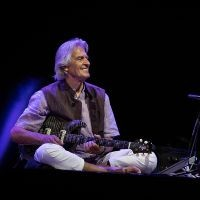 John: "Miles, where are you?" Miles: "I'm here" John: "I don't see you!" Miles: "Play the tape John!"
 About Miles Davis

Tags
PREVIOUS / NEXT

Become a Sustaining Member

Since 1995, All About Jazz has championed jazz as an art form and supported the musicians who create it. Over three decades, it has grown into one of the world's leading jazz resources, serving hundreds of thousands of readers, musicians, presenters and industry professionals each month.
Help Build the Future of All About Jazz
Your support helps us continue building All About Jazz for the next generation—expanding our editorial coverage, preserving jazz history, developing new community features and creating better ways to discover the music and the people behind it.
Become a sustaining member for as little as $20 per year and you'll immediately enjoy an ad-free experience along with access to subscriber features and future articles for a full year.
Together, we're not simply sustaining All About Jazz—we're building its future. Thank you for being part of the journey.