Home » Jazz Articles » Chats with Cats » The A&R Producer: Matt Pierson
The A&R Producer: Matt Pierson

Over time, the A&R staff lost most of the hands-on creative folks and replaced them with marketing people and data analysts.
—Matt Pierson
Few people have occupied that space as successfully as Matt Pierson. Over the years, Pierson has worked with an impressive range of artists, helping guide projects that balance artistic vision with the realities of the modern jazz business. His work spans producing, A&R, and artist development, giving him a unique perspective on how records are made and how careers evolve.
At a time when labels, streaming, touring, and audience-building are all rapidly changing, Pierson's experience offers valuable insight into what still matters in developing artists and creating meaningful work.
I spoke with Matt Pierson to learn more about his approach to producing, the changing role of A&R, and the current state of the jazz business
About Matt Pierson
Award-winning producer/executive Matt Pierson's discography reads as an overview of the best that contemporary jazz has to offer, including the likes of Samara Joy, Brad Mehldau, Joshua Redman, Pat Metheny, Bob James, Kirk Whalum, and countless others.As an executive, Matt led Blue Note's marketing and A&R departments before being called on by industry legend Mo Ostin to run Jazz A&R for Warner Bros. Records. He signed and in most cases produced a roster of heavyweights, eventually being elevated to Executive VP/GM for the label while making Warner an industry leader, garnering dozens of Grammys and countless number one singles and albums.
Since leaving Warner Bros., Pierson has focused on record production and independent consulting work, with clients including Sony Music Masterworks, Apple, Rhino, Legacy Recordings, and Mosaic Records. His latest production work includes Samara Joy's Grammy-winning Linger Awhile, pedal steel master Robert Randolph's Grammy-nominated Got Soul, Broadway star Laura Benanti's self-titled debut, and a series of acclaimed recordings by jazz guitar virtuoso Pasquale Grasso. Recently, Matt expanded his efforts into artist management, and currently represents Stella Cole, Bria Skonberg, and Lucía.
All About Jazz: How did you first get into the world of jazz production and A&R?
Matt Pierson: I started out as a trumpet player, studying at the University of Miami, putting myself through school, and staying for a couple of years after graduation. I was mainly a lead player and "jack of all trades" rather than a soloist. I had also worked in radio, did some writing for the school paper, played on sessions, worked as a logger for BMI, etc., so I always had a well-rounded understanding of the music biz.
A turning point was when I took a part-time gig at Peaches Records & Tapes—I was one of their best customers, and by working there, I could get my stuff at a discount. I eventually moved up to Head Buyer, got to know a lot of label folks in New York, and began considering a shift from playing into the creative end of the music business, production, and A&R. I moved to NYC in 1988 and, within a couple of months, landed an entry-level gig at Blue Note Records. My bosses and mentors, Bruce Lundvall and Michael Cuscuna, immediately gave me opportunities to do A&R work and gave me my first record production assignments. Once I got into the studio, my playing took a back seat—I found the process much more creative and lasting than what my playing opportunities offered.
AAJ: What does a producer actually contribute to a jazz record beyond simply documenting the session?
MP: It's very complicated, and every project is different. As I've said, there are four basic elements of record production that mirror the elements of filmmaking: script, casting, shooting, and editing. I'll spend time with an artist to determine what story it is that they need to document at that particular time, evaluating how it fits into their desired career arc. Then you settle on the script (repertoire and concept), cast (players, arrangers, etc.), and then plan the best way to document the project. Then once it's on tape, you edit and mix in a way that puts the most important emotional content front and center. Along the way, there are numerous ways the producer can contribute.
Some recordings are very complicated and take a lot of pre-production work, with months of detailed planning. Others just entail going into the studio with a band that has been touring and is prepared to document their thing, which still presents many opportunities to contribute in a variety of ways as well.
AAJ: When working with an artist, how do you know when to guide the process and when to stay out of the way?
MP: I just show up with my particular set of skills and experience and serve the artist's vision as best I can. As a producer, and in life in general, it's always important to ask yourself three basic questions: First, does it need to be said? Second,. does it need to be said by me? Third, does it need to be said by me right now?
AAJ: What qualities make an artist stand out to you beyond musicianship alone?
MP: An artist's musicianship is only relevant as it relates to their ability to realize their artistic vision. What stands out to me is singularity. I think the term "originality" is misused and outdated—much too much music has existed at this point for an artist to be defined as "original." But to have a singular voice that combines the inspiration and influence of music that has come before and the artist's personal artistic vision is the key. Most importantly, is the artist telling an honest, emotionally vulnerable story that an uninitiated audience can relate to, and can that story be put front and center in a way that tugs the ear of the listener?
AAJ: At what point do you feel an artist is truly ready for you to get involved?
MP: This also varies, because involvement can take many forms. There are cases where I've come into projects that were already locked in terms of repertoire, players, etc., and I've shown up to contribute from that point forward. However, what is more common is for me to develop a relationship with an artist over time, having general discussions about music, their life, and how they see their career developing over the next 3-5 years. Then the creative part grows more naturally out of a common understanding and bond. As someone with an extensive A&R background, I feel that I can be most useful to an artist when I get into things earlier and stay involved later than some other producers might.
AAJ: What are the most common mistakes you see artists make when trying to build momentum?
MP: Taking their eye off the ball in terms of making sure that they always lead with the most connective and singular elements of their music. This usually takes the form of releasing music that documents the artist's development and/or will impress their friends and/or other insiders. This is not to suggest that an artist shouldn't do this material, it's more about whether it's actually released as their product. Gigs, collaborations, side projects, etc., are cool, just keep aware of what is perceived as a part of your actual brand.
AAJ: How has the role of A&R in jazz changed over the course of your career?
MP: I've been around long enough to basically see close to the complete erosion of what I experienced as the function of A&R, in particular when I worked at Warner Bros. We were a team of creative people, most of whom were musicians and/or active record producers. Over time, the A&R staff lost most of the hands-on creative folks and replaced them with marketing people and data analysts. Of course, those functions are essential, but an artist's streaming history and social media profile should be secondary when making a decision about whether that artist should be signed—it needs to be about the actual music, and the A&R person/team's passion for the artist and belief that they can connect with the rest of the company and the consumer on that passion and turn that passion into revenue.
AAJ: In today's landscape, what still makes a label valuable for a jazz artist?
MP: The value labels have always been finance and access. If a label is willing to invest in recording and/or marketing costs, taking that weight off the artist's back, there is certainly value in that. The question is always whether getting that support is worth giving up ownership rights to the master, and for how long. The access issue is trickier. If the label partner can show that they will effectively build the artist's profile on the DSPs (digital service providers), increase their social media profile, connect with licensing and branding partners, etc., they can be very valuable. But the gamble is always determining the odds of the partner is actually delivering on their promises, a challenge since the beginning of time.
AAJ: Do you think artist development still exists in jazz, or are artists increasingly expected to arrive fully formed?
MP: It seems that there is much less artist development taking place at labels. Twenty plus years ago, it was more frequent that labels would have a vision for what an artist could become rather than needing proof that they were buying into an existing product. But artist development is still essential—the difference is that the responsibility now mainly lands on the artist and management team. Of course, the lack of experience, vision, and institutional knowledge all around means it's not taking place nearly as effectively as it had in the past.
AAJ: What concerns—and perhaps encourages—you most about the current state of the jazz business?
MP: The business? To be honest, nothing much really encourages me today. Drying up revenue streams, a passive audience, competition for disposable income in a shitty economy, etc.—yikes. In terms of the music, it's encouraging that there are many great artists out there who, with some direction and vision, could move the music forward in ways that build the business. Also, I'm encouraged that social media offers opportunities for artists to connect with consumers and fans if they are honest and willing to be vulnerable. This connection is a relatively new thing, and can certainly be used to build followings and monetize recordings.
AAJ: Tell me about a project that you are most proud of?
MP: To be honest, all of them. If I had to name a few, Robert Randolph's Got Soul, Kirk Whalum's Everything is Everything, and the Midnight in the Garden of Good & Evil soundtrack come to mind, plus Samara Joy's Linger Awhile, Brad's Art of the Trio recordings, and so many others. But ask me tomorrow and the list will change. Some of the most obscure and commercially unsuccessful projects, which I won't name, were actually even more satisfying.
AAJ: What advice would you give younger jazz artists trying to build sustainable careers today?
MP: Commit to your craft, take every gig, play with everyone you can, develop connections with other like-minded and unlike-minded musicians, remaining open to all types of music and influences. Experience film, art, dance, all cultures, and life, and let those experiences become a part of your music. Study all aspects of the business and stay up-to-date about all trends in business and music, and keep an eye out for where opportunities exist to connect with and develop a fan base that gets you.
AAJ: What does a successful release look like now—is it streams, press, touring, something else?
MP: Streams can be nice if they aren't passive. Press is cool if it isn't just preaching to the converted. But real success is always going to be about gigs and merch.
AAJ: Tell me about any projects you have coming up.
MP: New releases this year from Stella Cole, Bria Skonberg, and Dida Pelled, and I'm in the process of finishing up Lucía's next project, which is going to slay.
 FOLLOW B.D. Lenz
and get notified whenever a new article published.
FOLLOW B.D. Lenz
and get notified whenever a new article published.
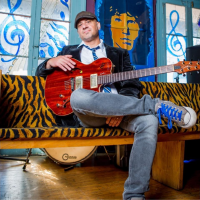
B.D. Lenz is a New Jersey–based guitarist, composer, and writer who has released 14 recordings as a leader, toured internationally, and had his music featured on television programs including Breaking Bad, Chicago Fire, and Young Sheldon.
About Stella Cole

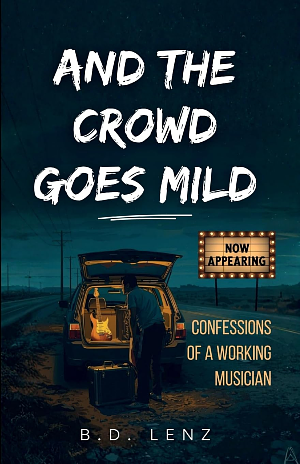
Get 'And the Crowd Goes Mild'
And the Crowd Goes Mild, B.D. Lenz’s debut collection of essays on music, mindset, and the realities of a life in music. Blending humor, honesty, and hard-earned perspective, these reflections capture the quiet victories, absurd moments, and personal growth that come with chasing a creative path. And the Crowd Goes Mild is available on Amazon (paperback and Kindle) and most online booksellers.
Tags
PREVIOUS / NEXT
Stella Cole Concerts
Become a Sustaining Member

Since 1995, All About Jazz has championed jazz as an art form and supported the musicians who create it. Over three decades, it has grown into one of the world's leading jazz resources, serving hundreds of thousands of readers, musicians, presenters and industry professionals each month.
Help Build the Future of All About Jazz
Your support helps us continue building All About Jazz for the next generation—expanding our editorial coverage, preserving jazz history, developing new community features and creating better ways to discover the music and the people behind it.
Become a sustaining member for as little as $20 per year and you'll immediately enjoy an ad-free experience along with access to subscriber features and future articles for a full year.
Together, we're not simply sustaining All About Jazz—we're building its future. Thank you for being part of the journey.