Home » Jazz Articles » Chats with Cats » Al Naffah: The Filmmaker
Al Naffah: The Filmmaker
I think she [Emily Remler] deserves to have her rightful place in the history of jazz guitar. And I think that I would like people to see the enormous impact she's had for underdogs in general
—Al Naffah
Take Emily Remler. I'm a guitarist; I've spent most of my life listening to and playing jazz, and yet, embarrassingly, I knew very little about Remler before learning about Firefly: The Emily Remler Story, an upcoming documentary from British filmmaker Al Naffah. And I suspect I'm not the only musician who has a few significant gaps in their jazz education.
Remler was a remarkably accomplished guitarist who emerged in the '80s, earning a reputation as one of the most exciting young players of her generation. Her career was relatively short—she died in 1990 at just 32—but her playing and influence have continued to resonate with guitarists and jazz musicians.
Firefly aims to tell the larger story behind that career, drawing on rare archival footage, interviews, photographs, recordings, and conversations with people who knew and worked with Remler. The film explores not only her remarkable musicianship, but also the challenges she faced as a woman in the male-dominated jazz world, as well as her struggles with addiction and the pressures that accompanied her rapid rise.
For Naffah, this passion project represents a departure from much of his previous work, which has often incorporated comedy and lighter subject matter. A filmmaker, writer, producer, and jazz pianist based in London, Naffah was drawn to Remler's story after recognizing a much deeper and more complicated narrative beneath the music.
In this edition of Chats with Cats, I spoke with Al Naffah about his own path into filmmaking, his connection to jazz, and what inspired him to take on Firefly—the story of a remarkable musician whose life was cut far too short.
About Al Naffah
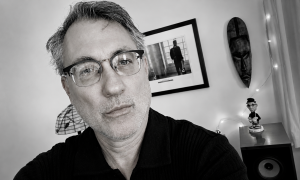
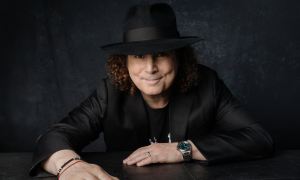
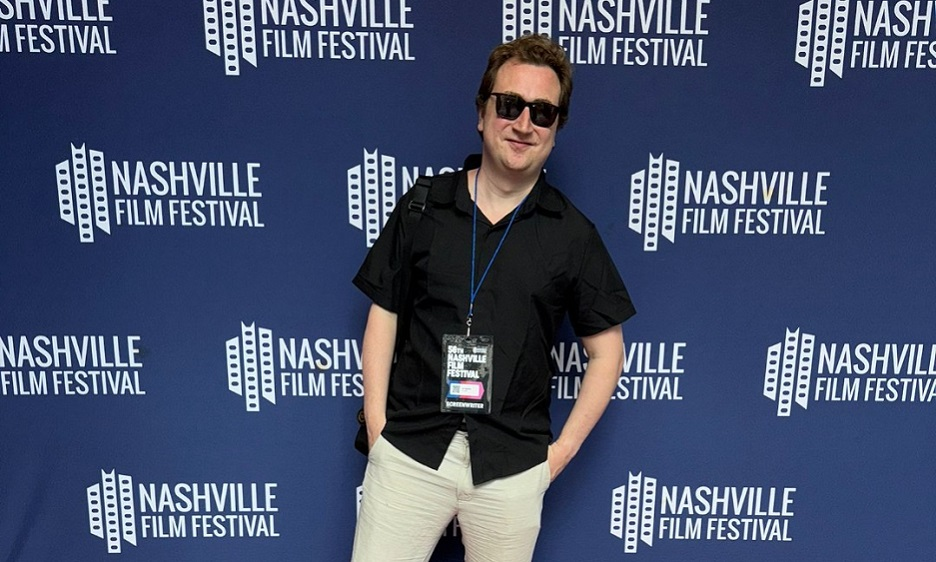
Al Naffah is a London-based writer, director, and producer, and the founder of Aletheian Pictures. He is the writer-director and producer of Firefly: The Emily Remler Story, the first feature-length documentary about the pioneering jazz guitarist Emily Remler. Developed in cooperation with the Emily Remler Estate, Berklee College of Music and Musicians Institute, the film draws on rare archival material, previously unseen footage, and interviews with leading musicians to explore Remler's artistry, ambition, and complex inner life.Al is also the writer of Stephanie Dellacosta, a contemporary romantic-comedy feature about a disillusioned London psychologist who unexpectedly reconnects with the woman who broke his heart—now a Hollywood star. The screenplay was a finalist at the 2025 Nashville Film Festival and has received recognition from international screenplay competitions in New York, Chicago, Oxford, London and Barcelona.
A jazz pianist for more than 20 years, Naffah makes character-driven films exploring music, identity, psychology, and the gap between who we are and who we wish to be.
All About Jazz: How did you get started as a screenwriter and filmmaker?
Al Naffah: So, a few years ago, I was working in strategic communications for organizations and stuff. I have a background in political science, and I started really becoming interested when I watched films and what makes a good story, because it's the same thing. The filmmaker is trying to communicate something. So it's the same thing as what I was doing in my day job.
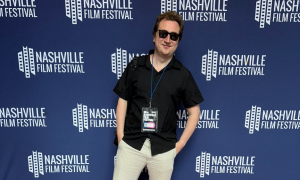
I wrote a romantic comedy screenplay that did quite well and won some awards. I was a finalist in the Nashville Film Festival, which I went to with my girlfriend. We were just amazed at how developed the ecosystem around being a screenwriter is. There were so many producers there and so many amazing filmmakers. I just decided that if I wanted to learn the next step of doing this, I actually had to try and make my own film. I was told, "Well, if you don't have the money to do it, don't do it as a feature."
But a documentary was quite interesting because, you know, it's generally much cheaper to do. And you can do a lot of it by yourself without actors and without cameras and stuff.
Having been a jazz musician for, well, over 20 years, I was always drawn to the story of Emily because I feel she's very underrepresented and overlooked in the wider musical field, despite being an extraordinary player and also being a trailblazer. You know, she was really the first woman of that time to do it. And when I saw the documentary about Amy Winehouse that won an Oscar in 2015, I thought, you know, this is very similar to Emily's story. Emily lived it 30 years before: Jewish woman, sexism, drug addiction, untimely death, and a massive legacy. Massive amounts of people say, "Well, if it wasn't for Emily, I wouldn't have picked up the guitar."
Emily was the one who showed the way. And that's kind of where the title Firefly comes from. It's the idea that a fly is a light that burns brightly, but it only burns brightly for a short period of time. Not only is it the title of Emily's first album, but it's also a very good metaphor for her life because she was a trailblazer. And she is a trailblazer. So that's kind of how I got started on this project.
You know, I had the idea, and there wasn't a lot of archival material around. So I went to a Facebook group and started trying to get in touch with people who knew her. One thing led to another, and I managed to get the phone number of her sister, who's the manager of her estate. She lives in New York City, and she said to me, "Look, a lot of people have tried to make a movie before about my sister. It's a very, very tragic story. It's not something I enjoy going over and over again. But if you think you've got a good approach, then I'd be very happy to talk to you and work with you."
And I came up with the idea of basically making Emily the narrator of the film and trying to use as many recordings of her speaking to allow her to tell the story of what it feels like to decide you want to be a guitarist. And what obstacles you get when people are like, "Well, your time is not that good, your feel is not that good, you need to groove, you need to play with the metronome more," et cetera, et cetera.
So I started mapping out this idea and just reaching out to people to interview, talking about Emily, and pretty much everyone said yes. So all of a sudden, I was talking to the greatest jazz guitarists who were alive, whether it was Martin Taylor or Stanley Jordan or Jocelyn Gould or Eleonora Strino, Sheryl Bailey. I mean, all of these people would just be like, "Sure, I'll give you an interview."
And then it was like mapping out with that, like, who knew who, who could put me in touch with this person and everything. And then we managed, through Sheryl, to get both Berklee and Musician Institute in California to basically donate a whole lot of archives that no one's ever seen before of Emily—not just of her playing, but also her talking backstage about everything from her career to her relationships to her drug addiction.
I mean, it's very raw and sad footage. And then the ball just really started rolling because we've got all these amazing people saying, "This is such a special person," and then the special person herself giving us enough archive to tell the story.
And then it just became a question of, well, how are we going to budget this? Because music documentaries, you know, the copyrights can be very expensive. So then it was like, "Who owns the copyrights? Talk to Concord Jazz. Who's still working at Concord Jazz?"
And what was amazing was, as this process went along, I started just as one person, but then a friend of mine came on to be a producer and just loved the idea and loved the story of Emily. And then more and more people just wanted to help and would say, "We should get this person," or "We should get that person." And so now we've got basically an inner circle of about 30 people who have all kind of rooted for this project.
And, you know, we feel that it's meant to be something that everyone can empathize with. You don't have to be a guitarist. You don't have to be a woman. You don't have to be a Jewish person. You don't have to be a jazz musician. It's like, this is a story about someone who wanted to be excellent. And she got that, and she could have gotten even better. And she had so many obstacles in her way. You had people saying, "Well, you don't look like you can even lift the guitar. You're too weak." Or people being like, "What's a girl like you doing playing jazz guitar? You should be singing like Joan Baez." That kind of stuff. And obviously, that imposter syndrome that comes from being a drug addict and being so focused on your own faults and your own imperfections, when the audience just wants to love you and wants you to rise higher and higher and higher.
I just found that contradiction really amazing about her because, you know, she's just so many contradictions. She was one of the world's greatest guitarists of her era and yet didn't think she was good enough. She was loved by thousands of people and yet couldn't find a long-term boyfriend that she was happy with. She's an icon for women, but she wasn't really a feminist. And it's all of these things in the mix that make her a really engaging person to watch on screen. And the fact that we've got so much of her talking is just beautiful.
AAJ: How did you personally become aware of Emily? I mean, were you a fan of hers when she was around?
AN: She died the year before I was born. I lived in Paris for a while, and I was quite involved in the jazz scene there. And there was a French radio station—I think it's called Paris Jazz Radio—and they used to play her a lot at around sort of the late slot, 11 p.m. or something.
So I would come home and put on the radio, and I was just amazed that this person was playing. I just thought that she had such a weird sound, and it was very interesting. But obviously, I didn't assume it was a woman. I assumed it was Pat Martino or something like that. And then I was like, "Oh my God, she's amazing. Where can I see her play?" And I was like, "Oh, she's dead." And she died a while ago. And she was very young. She was 32 when she died.
And that made me really curious about her life because it was also like, she's a Jewish woman. She says it herself in the film. She says, you know, "I may look like a nice Jewish girl from New Jersey, but in my heart I'm a 50-year-old African-American guy like Wes Montgomery," you know.
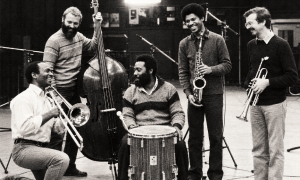
And yeah, that was how. And it was like I got a lot of her albums. She played with some really great musicians that we talked to—Ra Kalam Bob Moses, John D'Earth, Robert Jospe, some of these really, really great jazz musicians at that time.
And she put out some killer records, really did. And with Larry Coryell as well. She was in a romantic relationship with Larry Coryell. But her duet album. Together (HighNote, 1985), with Larry Coryell, I think, is one of the greatest jazz guitar albums of that era.
AAJ: Wow. I'm embarrassed to say I had never heard of it, but obviously I've got some listening to do.
AN: Yeah, it's great. It came out in 1985. She and Larry Coryell were an item at that time. So it's interesting. You can hear the dynamics in the music, basically.
AAJ: What have you learned about her through this whole process that you didn't know before?
AN: That she was really one of a kind. She was an extremely driven and committed jazz musician and jazz guitarist. I mean, I think a lot of people who have heard her earlier stuff would say, "This is a clone of Wes," and that was something that she fought very hard at the beginning because her idols were Wes Montgomery, Pat Martino, George Benson, Tal Farlow. And she wanted to have her own sound. She fought very hard to claim her own sound over people saying, "It's just a woman playing. It's a gimmick," which she got a lot of. And she, I think, was very good at staying true to herself, staying true to her objectives, and rising above adversity.
AAJ: Now, I'm a jazz guitarist, and I am embarrassed to admit to you that I had barely heard of her before doing this interview. I had never seen or heard anything about her before. Why do you think that is?
AN: I think there are two reasons. The first is that she didn't have a very long career. I mean, she basically only had a 10-year career. She died at 32.
And I think the second reason is because women have generally been underrepresented as instrumentalists of that era. You have a lot of male musicians who have died of drug overdoses—Jimi Hendrix, Kurt Cobain, what have you.
I think Emily kind of fizzled out at a time when there wasn't the internet; there wasn't any social media. But now she's having a resurgence. She is the number-one listened-to female jazz guitarist on YouTube. She's got something like 30,000 Spotify streams a month. You've literally got hundreds of young women transcribing her. I'm not talking like 25; I'm talking like 15-year-old girls, 16-year-old girls transcribing Emily's stuff and putting it on YouTube.
And so I just kind of thought, you know, she does have this following. And when we started to make the film, it wasn't like, "Why are you making a film about this obscure jazz musician?" It was like, "Finally, someone's making a film about this obscure jazz musician," which kept me motivated through the harder times.
AAJ: This has sparked my interest for sure, and I'm definitely going to check her out. What would you hope that people take away from this film?
AN: I think she deserves to have her rightful place in the history of jazz guitar. And I think that I would like people to see the enormous impact she's had for underdogs in general. And to watch the film and believe that it's thanks to people like her who fought the battles that make change. And I'm not saying everything is different now. I mean, I've spoken to quite a lot of female jazz guitarists who say that many of the barriers still exist today.
But it's thanks to people like Emily who continued fighting and who continued breaking down barriers that people are not reacting in the same way anymore. They don't say, "Oh, when are you going to start singing?" Or, "Who did you sleep with to get that job?" Because she was really the only one at that time. And I think that that should be recognized because someone's got to break the mold.
AAJ: What have been the biggest obstacles in making this film?
AN:Well, you know, I think that when you decide to make a film because you believe in the idea, you've got to be able to separate criticism that helps your film from criticism that is just noise.
And I think at the beginning, it was taking a bit of a risk to do this without the financing lined up, without the proper idea of how much everything was going to cost, what we had available, and everything. But I think the confidence in the mood of the project has meant that we've got some really good institutional partners now. Like Berklee is going to promote the film next year, and MI as well has come on board. Beth Marlis has been absolutely amazing.
So I would say, yeah, the obstacles are just kind of like keeping up belief in this project.
And I hope that we'll be able to raise the money. We're hoping to raise about $20,000 in a Kickstarter, which we think could make a very lean version of the film. We would like to raise more already. We've had quite a few donors to achieve some of that. So we're hoping that we will reach the target, but I think that's going to be the hardest challenge.
AAJ: Do you want to tell me more about the fundraising for it and how people could help?
AN: Yeah, so we're basically trying to raise anything between—you know, first round, we're trying to raise about $20,000.
And what does $20,000 get you in this kind of film? Well, it buys you the post-production edit, which allows all the archive material to be remastered, to have all of the audio mixing done in 5.1, to make a DCP master, to submit it to festivals around the world, and just to create something which looks impressive on screen. That's what our first round of fundraising is.
The next round of fundraising, which we're actually hoping to get mainly from grants—so Jewish organizations, jazz organizations, and a few private donors—will be just clearing the copyrights to the 10 or so Emily tracks that we use in the movie, which are really, really superb.
And also, we're using a lot of still photography from the great Veryl Oakland and his Jazz and Available Light series. And the Oakland family have been very, very generous to us in giving us extremely high-resolution images of Emily from all eras of her life.
I mean, the more money we raise, the more we can start thinking about, you know, big promotional campaigns. And someone has even offered to do a benefit concert with all these great musicians who have joined in, which would be quite cool to see everyone playing together.
But yeah, we're just doing it step by step, and that's the initial phase, that $20,000.
AAJ: I take it, you've gotten a pretty enthusiastic reaction from the music world, the jazz world, guitar world...
AN:You know, in announcing this project and talking about it, a lot of people feel that this is a film that is overdue. There was even a Reddit post that said, "Why does Emily Remler not have a documentary film?" I feel like there was always going to be an inbuilt audience.
Whether the film is going to be a commercial overnight success, it's not really the point. The point is that this was someone who made an extraordinary contribution to the world of music and has a very, very big fan base within jazz. And I think it's growing.
But it's just been wonderful getting to know her sister, her best friend from school, and some of the people who really knew her growing up. I really feel that their support has been immense. They've given us tons of photographs and letters that she wrote. So there's a lot of unreleased archive material in there.
AAJ: Forgive me for this question, because I don't know much about how the world of filmmaking works, but do you have any kind of commitment from, say, Netflix or Amazon to distribute it?
AN: Not at this stage. What we're doing at this point, which is quite common for documentary films, is making it with a view that it will do a festival run for a year. And we intend to submit it to festivals all around the world because Emily had a huge fan base in South America, in Japan, in Australia, and in Europe, as well as the U.S.
So, the goal is basically to do a festival tour next year. And then, hopefully on the back of that, to sell it to a distributor.
I mean, it would be great if Netflix or Amazon wanted to buy it, but it may be a more specialist media [outlet]. The reason that that is how things are done is because when you negotiate music licenses in particular, it's much more expensive to buy out the license forever to distribute it. Normally, what you do is negotiate for festivals for one year, which brings the budget down, and then you sell it, and then the distributor renegotiates the rights.
AAJ: Is there anything else I missed or that you want to tell me?
AN: Not really. Just, I mean, it would be great if you could sort of spread the word about the film before we launch. Friday, September 21 is when we launch the Kickstarter.
I think that, you know, having All About Jazz's support is just so great because we want to reach the audience that you guys have. And we also just want to, you know, involve as many people as possible.
So if anyone, you know, wants to contribute or talk to me or be involved in the film, just send them my way.
 FOLLOW B.D. Lenz
and get notified whenever a new article published.
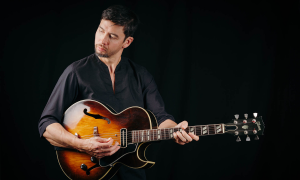
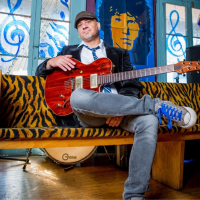
B.D. Lenz is a New Jersey–based guitarist, composer, and writer who has released 14 recordings as a leader, toured internationally, and had his music featured on television programs including Breaking Bad, Chicago Fire, and Young Sheldon.
Get 'And the Crowd Goes Mild'
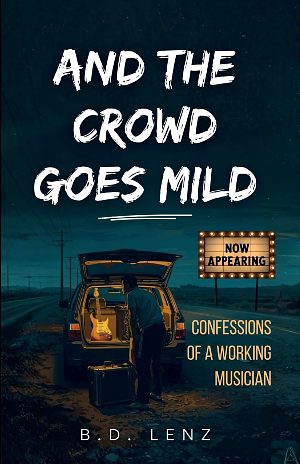
And the Crowd Goes Mild, B.D. Lenz’s debut collection of essays on music, mindset, and the realities of a life in music. Blending humor, honesty, and hard-earned perspective, these reflections capture the quiet victories, absurd moments, and personal growth that come with chasing a creative path. And the Crowd Goes Mild is available on Amazon (paperback and Kindle) and most online booksellers.
Tags
PREVIOUS / NEXT
Become a Sustaining Member

Since 1995, All About Jazz has championed jazz as an art form and supported the musicians who create it. Over three decades, it has grown into one of the world's leading jazz resources, serving hundreds of thousands of readers, musicians, presenters and industry professionals each month.
Help Build the Future of All About Jazz
Your support helps us continue building All About Jazz for the next generation—expanding our editorial coverage, preserving jazz history, developing new community features and creating better ways to discover the music and the people behind it.
Become a sustaining member for as little as $20 per year and you'll immediately enjoy an ad-free experience along with access to subscriber features and future articles for a full year.
Together, we're not simply sustaining All About Jazz—we're building its future. Thank you for being part of the journey.