Home » Jazz Articles » Chats with Cats » Michael Ricci: Still Building a Home for Jazz
Michael Ricci: Still Building a Home for Jazz
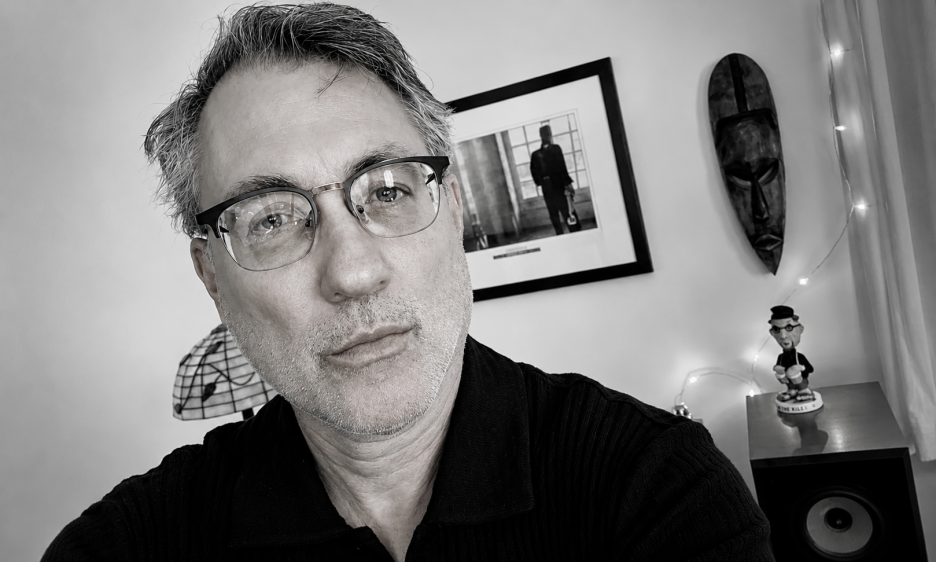
For me personally, I have found that it’s about remaining curious, asking questions, listening, dreaming big, and having the desire to press on.
—Michael Ricci
As the founder and publisher of All About Jazz, Michael Ricci has spent decades building one of the most respected destinations for jazz journalism, discovery, and conversation. What began as a passion project grew into a global resource connecting musicians, writers, and listeners while documenting the ever-changing landscape of jazz.
Over the years, All About Jazz has become more than just a place for reviews and interviews. It has served as a meeting point for the jazz community, helping introduce artists to new audiences and providing a platform for stories that might otherwise go unheard.
In this special edition of Chats with Cats, it was an honor to speak with Michael about the origins of All About Jazz, how the site's relationship with the jazz industry has evolved, the challenges of maintaining independent jazz media, and his perspective on where the music—and the conversation surrounding it—is headed.
About Michael Ricci
Michael Ricci is the founder of All About Jazz and an early pioneer in online cultural publishing whose work has helped define how jazz is documented, discovered and experienced on the internet.Since launching All About Jazz in 1995, Ricci has transformed an independent jazz publication into the world's leading jazz platform, serving millions of users annually and connecting musicians, audiences, venues, festivals, educators, broadcasters, labels and organizations through one of the internet's most comprehensive jazz resources.
With a background in software development and a lifelong passion for jazz, Ricci recognized early that the internet could become far more than a publishing medium—it could become the foundation for an interconnected jazz ecosystem. That vision has guided the creation of Jazz Near You, All About Jazz Media, and a growing suite of community, discovery and educational initiatives that continue to expand how people engage with jazz.
Today, Ricci leads the platform's long-term strategic vision, focusing on technologies and experiences that strengthen the global jazz community while preserving its rich history. His work is driven by a simple belief: jazz deserves a destination where its music, artists, stories and community can be discovered, connected and celebrated for generations to come.
All About Jazz: How did you come to be such a fan of Jazz?
Michael Ricci: It's a combination. Like most kids, it started with a parent's record collection and, in my case, my dad's jazz records. He always had a serious stereo system and played records; it seemed like every day. Though he listened to all kinds of music, he built an impressive jazz and classical music collection.
I also played the trumpet growing up and was blown away by Maynard Ferguson's band when I saw them in the '70s. The energy and sound of that concert made a lasting impression on me. It was exciting.
As a collector—rocks turned into baseball cards, baseball cards turned into comic books, and comic books eventually turned into vinyl records—I started buying records when I was 11. My collection really took off when I went to college. At the time, Columbus, OH had at least a half dozen used record stores within walking distance, and I spent many hours digging through bins, mostly looking for progressive rock, classic rock, and jazz.
I regularly caught shows in Philadelphia and New York in the 1980s and '90s. One weekend I saw Mulgrew Miller in Philadelphia, then caught him the next weekend at the Village Vanguard playing with Joe Lovano. Trips into Center City and up to New York were way more common back in the day.
AAJ: What made you want to publish a website about jazz?
MR: I first came to the web when my business partner at the time, Mike Lorenz, and I decided to move our DigiDay software business online. Getting distribution for DigiDay was a challenge, though it did appear in a box on the shelves at stores like Micro Center. The web immediately appealed to us because it eliminated print costs, inventory considerations, and distributors. It was a no-looking-back situation for me.
Once we moved to the web, Mike focused on app development and I worked on how to build a web-based business around it. Along the way, I began sandboxing two websites: one about jazz and another about cartooning, which was also an interest of mine. As I experimented with both sites, they helped inform what I could do with DigiDay.
In the end, jazz won out because I had a slightly deeper connection to it and because I felt there was an opportunity to build something meaningful that was largely absent from the web. At that time, the web was a bit like the Wild West, with few rules and even fewer standards, which definitely appealed to me because the early web rewarded experimentation and I was always curious about the possibilities. This predated Google, banner ads, and high-speed internet access.
AAJ: How much of the technical end did/do you do by yourself?
MR: I did my part and was essentially the architect with the vision guy. In the beginning, AAJ was a crudely drawn collection of static HTML pages that we created one by one, that I uploaded manually.
The site grew so quickly that a database became inevitable, and both Mike and I had experience with them, so it wasn't a huge lift for us. What still impresses me today is that the database we designed back then continues to serve us. It has proven remarkably scalable and has never limited what we've wanted to do. We started with Microsoft Access, but quickly outgrew it and migrated to MySQL, where we remain today.
I produced the site and handled much of the work myself. What I didn't do, Mike did. We also relied on the occasional contractor when additional help was needed. Even in those early years, All About Jazz was a substantial undertaking, and I had to balance it with the work I was doing for my company, Vision X.
What I didn't fully appreciate at the time was that being a DIY web publisher required wearing many hats. You had to understand technology, design, content, marketing, business operations, and more. Fortunately, I was competent in enough of those areas to make All About Jazz possible.
Fast forward to today, and we've assembled a solid technical team spanning multiple organizations, each bringing specialized expertise to the table. One thing hasn't changed, though. I still dream up the ideas, write the specs, assign the work, and manage projects from conception to completion. And I still write code when needed because sometimes it's faster to build something myself than to explain it to someone else. The recent overhaul of the member page is a good example. I'm proud of how it turned out.
AAJ: Do you still enjoy managing the site?
MR: Heck, yeah. Especially now. My runway isn't what it was, so I'm working with more urgency and feel like the site has really hit its stride. We're seeing some significant improvements in 2026, as we did in 2025, and I continue to feel that our best days are ahead of us, which helps keep my interest level up. Life at AAJ never gets dull as technology constantly changes, and we have to change along with it.
AAJ: What's your favorite part about what you do?
MR: I love the staff. They are funny, care about the music, and bring their collective personalities to the website, which makes us, us. For me personally, it's about the ideas and building stuff that people respond to positively, and that helps musicians. I always put the artists first, though at this point, I have a good sense of balancing what helps them with what keeps me engaged. We have a lot going on right now, and 2026 is shaping up to be more impactful than 2025, which is hard to believe, because we accomplished a ton last year. As I mentioned, sometimes I feel like we are just getting started, and that keeps me motivated.
Rebooting the Cool Vic Files has been fun. My brother Dave mentioned the reboot of the Rockford Files, and it got me thinking about what I could reboot on AAJ. It took me two seconds to arrive at Vic, a collaboration with Chris M. Slawecki and C. Michael Bailey that ran from 1997 to 1999. I fleshed out the characters this time around and introduced a new one.
At times, keeping pace with technical changes can make your head spin, but I'm all-in, always, and I think that is what separates AAJ. I'm cautious and thoughtful about how we approach AI. We use it to extend the work of our journalists, editors, developers, and administrators, making us more productive while allowing our people to focus on what they do best. And I'm personally having fun experimenting with it—I even used it to help write two jazz sci-fi stories, including one about a jazz band on the U.S.S Enterprise. The feedback was great.
AAJ: Looking back, are there any particular artists or stories that felt especially important for All About Jazz to champion early on?
MR: Yeah. Lots. Guitarist Joe Beck was a cool guy with a coding background, and then I later learned, a dairy farmer. We had a great conversation between one of his sets many years ago. He walked up to my table and said, "Shouldn't you be home coding?" which was funny because it was true. Turns out Joe could code in C, which surprised and impressed me. I met Willie Nelson once. It was a long day; I was invited to hang with the band, they dedicated a tune to me during soundcheck ("All Blues"), and Willie walked up to me later and said, "Mike, my daughter said you do a million hits a month... I wish I could do a million hits a month." Willie with the double entendre. I was like, "touché, sir!"
AAJ: Has the site become what you had hoped it would be?
MR: It has. We have definitely created something special and established a new path and model. I'm starting to hear "the most influential platform for jazz journalism in the 21st century," and that talk makes me reflect as we're more than a quarter in. I understand how we got here, but still, I'm often amazed at what we have become. But there is no denying the talented people who have supported AAJ along the way. Their collective voices have helped shape us.
I plug away every day and continue to surround myself with talented, creative, and smart people who care. Really good people. And there is nothing we can't do. For me personally, I have found that it's about remaining curious, asking questions, listening, dreaming big, and having the desire to press on. There have been a lot of long days, some rough days, but in the end, I would not change a thing. I created a job, a lifestyle, and have grown as a person because of AAJ. I know AAJ changed a lot of lives and for the better, and that is what I'll take with me.
AAJ: How has the audience behavior changed in the streaming and social media era?
MR: Well, there's no way around the desire for immediacy and convenience. It goes against my "long-form" nature, but we're finding a balance. People still want thoughtful journalism and meaningful discovery; they just expect to find it more quickly and in different ways than they did twenty years ago. My hope is that when I eventually step aside, the vision and spirit the site was founded on remain intact, while AAJ continues to evolve alongside the community it serves.
AAJ: What challenges come with sustaining an independent jazz publication in today's landscape?
MR: What a question, as there are many ways to answer it. Sadly, we never received industry support, and the older I get, the more I understand the reasons why. That said, none of it made much sense to me then or now. One time, a record label owner told me he knew AAJ was the site that generated the most traffic and visibility and by a wide margin, but he liked seeing his ads in print. He way overpaid for them; that's funny logic right there but common.
AAJ: That said, how do you think the jazz industry's relationship with All About Jazz has evolved over the years?
MR: When I started, I was trying to convince industry people that the internet mattered. I remember attending my first IAJE conference, talking up All About Jazz and people looking at me like I had two heads.
But to answer your question, we've developed close relationships with musicians, publicists, presenters, and many writers because we all share a common goal, and those relationships have grown stronger over the years.
The business side has always been more complicated. Some organizations embraced digital early. Others were slower to recognize how audiences were changing. We certainly missed out on opportunities over the years, but being independent also meant we could stay focused on serving our readers and the music rather than chasing short-term trends.
Today, I feel like we're entering another chapter. The industry is changing again, and so are we. The encouraging part is that our relationships are stronger than ever, and I think there's a growing recognition that All About Jazz isn't simply covering jazz. We're helping connect it, strengthen it, and preserve it for future generations.
AAJ: Who are some of your favorite musicians?
MR: Besides your genre-fluid self? I list A through D on my member page. Click "MORE FAVORITES" for the rest.
AAJ: What's in the future for AAJ?
MR: All About Jazz Media is something I'm developing with John March. Though it's still in the early stages, we have several programming ideas we're excited about and are exploring different funding opportunities. Because AAJ has always been community-funded, we've taken an incremental and methodical approach to growth. AAJ Media represents a much more ambitious undertaking and a significant step forward for us, so outside funding will be important. As with every undertaking at AAJ, it's never if, but when. It's simply a matter of time.
We've always viewed All About Jazz as more than a publication. It's a platform for discovery, community, and opportunity, and many of the things we're building now move us further in that direction.
We recently rewrote our shopping cart to simplify the experience for our customers. Not exactly headline material, but an important improvement. We also overhauled the entire member experience and plan to introduce a badging system soon, which should be a lot of fun. We'll help students discover scholarships, concertgoers find more live music, and continue improving the ways readers discover artists, albums, and events. We've made significant improvements to our newsletter technology and hope to wrap up that project soon. We're also tinkering with a brand-new concept that visually depicts a musician's orbit of influences and related artists.
It may sound like a lot, but that's always been the way we've operated. The difference today is that we have a really solid team in place that can bring many of these ideas to life. That's an exciting place to be because All About Jazz has always been at its best when we're building, experimenting, and creating momentum.
 FOLLOW B.D. Lenz
and get notified whenever B.D. has a new article published.
FOLLOW B.D. Lenz
and get notified whenever B.D. has a new article published.
B.D. Lenz is a New Jersey–based guitarist, composer, and writer who has released 14 recordings as a leader, toured internationally, and had his music featured on television programs including Breaking Bad, Chicago Fire, and Young Sheldon.
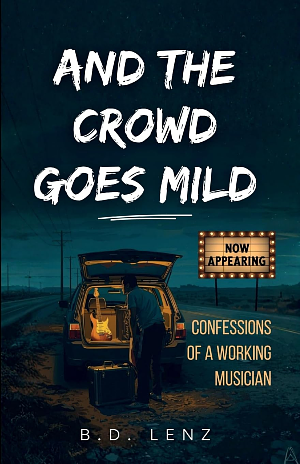
Get 'And the Crowd Goes Mild'
And the Crowd Goes Mild, B.D. Lenz’s debut collection of essays on music, mindset, and the realities of a life in music. Blending humor, honesty, and hard-earned perspective, these reflections capture the quiet victories, absurd moments, and personal growth that come with chasing a creative path. And the Crowd Goes Mild is available on Amazon (paperback and Kindle) and most online booksellers.
Tags
PREVIOUS / NEXT

Become a Sustaining Member

Since 1995, All About Jazz has championed jazz as an art form and supported the musicians who create it. Over three decades, it has grown into one of the world's leading jazz resources, serving hundreds of thousands of readers, musicians, presenters and industry professionals each month.
Help Build the Future of All About Jazz
Your support helps us continue building All About Jazz for the next generation—expanding our editorial coverage, preserving jazz history, developing new community features and creating better ways to discover the music and the people behind it.
Become a sustaining member for as little as $20 per year and you'll immediately enjoy an ad-free experience along with access to subscriber features and future articles for a full year.
Together, we're not simply sustaining All About Jazz—we're building its future. Thank you for being part of the journey.