Home » Jazz Articles » Catching Up With » Elias Haslanger: Music for 2026, Not 1956
Elias Haslanger: Music for 2026, Not 1956
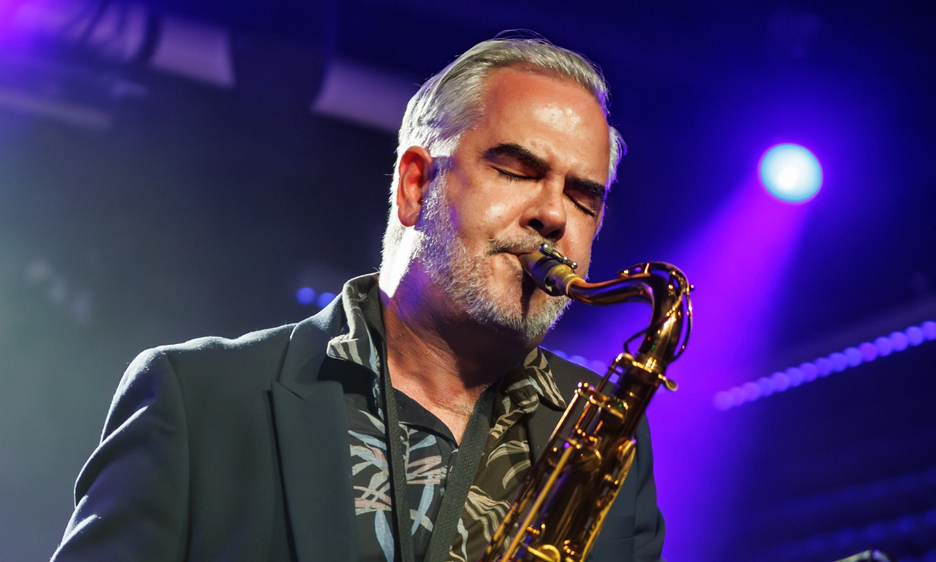
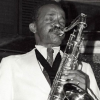
Courtesy Kim Yarbrough
The music has to be relevant to now. We’re playing music for 2026, not 1956.
—Elias Haslanger
The title suggests retrospection, but Haslanger does not view the project as an exercise in nostalgia. The music connects mentors, family, Austin, New York, years on the road, composition and the community that developed around his long-running Church on Monday residency. His distinction is simple and revealing: the tradition matters deeply, but, as he puts it, "I am creating music for 2026, not for 1956." In this conversation, Haslanger discusses what musicians inherit, what they pass forward and how a life in music becomes part of the composition itself.
All About Jazz: You called this album Legacy, and the word can mean both what we inherit and what we eventually leave behind. What does "legacy" mean to you at this point in your life and career?
Elias Haslanger: You are spot on. This record is not just a dedication to the mentors in my life who taught me about music and helped shape me into the person and musician I am today. It is also a reflection on my life over the past 25-plus years and the legacy I am leaving behind.
From my family and friends to my time living in New York City and Austin, this recording is an important document of the music and life that I have lived. Each song has a special memory and feeling attached to it, as well as a story behind it that captures my influences and my aspirations.
AAJ: You have said that you are a lifelong learner and that the music and artists who came before you naturally find their way into your writing. How do you honor that history without allowing reverence for the past to become nostalgia?
EH: This is a very important point. I have studied this music for years and have a great reverence for the past and the legendary figures who have played it. Naturally, those influences are reflected in my composing and playing.
But I believe that my music should—and does—capture the attitudes and ideas of today. I am creating music for 2026, not for 1956.
AAJ: You have had an unusual group of mentors—from Harvey Pittel and Dick Oatts to Ellis Marsalis, Dr. James Polk and Maynard Ferguson. Did each of them give you something fundamentally different as a musician?
EH: All of them served the music and put the music first. What I mean by that is that they instilled in me that music is a lifelong journey and that you will always be learning and humbled by the lessons music offers.
It is not the destination but the journey that is the reward. If you dedicate yourself completely to honoring the music and never take it for granted, you will be rewarded with the great joy that comes through the process of making music with others and, hopefully, touching others through music.
AAJ: You stood next to Dr. James Polk every Monday for more than a decade with Church on Monday. What did you learn from Polk that could not have been learned in a lesson, classroom or rehearsal?
EH: As you know, Dr. Polk was a unique person and was largely self-taught, so he had no pedagogy or strict method. I learned simply by listening to him play every week, but I also learned by listening to his stories and watching the way he carried himself on the bandstand and around other people.
He was a gentle and thoughtful man who had a great sense of humor, and he truly cared about other people. It is difficult to describe the impact he had and the feeling I got when I was around him, but I would say it just felt good all the time.
AAJ: Ellis Marsalis recorded with you relatively early in your career on Kicks Are for Kids. Looking back now, what did his presence—and perhaps his economy with words—teach you about being a serious jazz musician?
EH: I looked up to the entire Marsalis family because of their impact on the modern jazz scene, even to this day. When I first met Ellis, I was quite nervous, but when Martin Banks introduced me, he put me at ease as only Martin knew how to do.
As you mention, Ellis did not say much in our initial encounters, and we mostly just played music. I was quite humbled when he told me I sounded good and was even more surprised that he agreed to play and record with me.
During our recording session, he was quite serious about making the session as good as it could be. We talked about Duke Ellington and others who sacrificed everything to play the music. His elegance and phrasing were truly remarkable, and his lifelong dedication to his family and to the music was inspiring.
More than anything, I think his legacy and the imprint he left on the modern jazz scene made an impact on me.
AAJ: Your years touring with Maynard Ferguson clearly left a mark on you. You have spoken about what Ferguson taught you about performing and communicating with an audience. How did that experience change the way you carry yourself onstage and lead your own bands?
EH: Maynard welcomed everyone into the music, unconditionally. Every night, he performed with 100 percent of his heart and soul and loved to connect with people. He signed every autograph, every night, and even shook my hand and thanked me personally onstage after every single solo I took.
He was "old school" in every sense of the word and lived to perform onstage in front of an audience. He was a force of nature, but he was also very kind and respectful of everyone in the band.
The way he opened himself to the audience and welcomed them into his universe is something I take with me everywhere I go and every time I perform. Especially today, inviting people into the music is more important than ever because there are fewer and fewer outlets to hear jazz. He was truly an incredible person.
AAJ: Several pieces on Legacy—"A View of the City," "Going Home" and "Sweet Relief"—date from your years living in Brooklyn and touring with Ferguson. Why did those pieces belong on this record now, so many years after they were written?
EH: The title of the record is Legacy, and, as I mentioned, it is a reflection of my 25-plus years in music and my life experiences along the way.
Music is timeless, and those songs, even though they were written some years ago, still resonate with me today. They are an important part of my history and evolution as a composer and performer, so they are also an important part of the tapestry of my life and my music.
AAJ: "Faith in Family" seems to place something very personal at the center of the album. Has family changed the way you think about ambition, success and the life of a working artist?
EH: I have been married to Amy for 32 years, and we have two beautiful daughters together. My family is everything to me, and this song is my love letter to them, to my parents and to my extended family and friends.
When I was on the road, away from my wife, I had a realization that I wanted to be at home with her and that I wanted to build a family together. I made a conscious decision to get off the road and reimagine what my music and my life could look like.
Fortunately, Amy and I have been able to carve out a path that allows us to have a family together and also create art and music. I feel very lucky about that.
AAJ: The title track moves between hard bop and Afro-Cuban rhythms. When you compose, are those stylistic elements conscious choices from the beginning, or do they emerge as the piece begins to reveal its own character?
EH: I write at the piano, and I always start with what the rhythm of the song is going to be. Is it a swing tune? Is it a ballad? Is it a Latin song?
Once I have decided what kind of rhythm the song will have, I start with a melodic fragment and sketch out the melody. After about four to eight measures of writing a melody, I hang the ornaments, which are the chords.
As soon as the first section of the song emerges, I start thinking about transitions and possible stylistic or rhythmic changes within the song. It is an iterative process. Some songs write themselves quickly, and others take years to emerge.
When I am composing, I have a stack of tunes or sketches that I work with, and I rotate through them until I feel they are completed. Some are still in the stack waiting to be finished.
AAJ: "Gentle Giant" carries shades of Wayne Shorter. Shorter is such a powerful presence for generations of saxophonists and composers. How do you absorb a voice that important without simply imitating it?
EH: I think listening is the key. I have listened to thousands of hours of Wayne's music, so I have become very familiar with the sound and rhythm of his compositions.
I did not set out to write a "Wayne" tune here, but the influence is certainly there.
AAJ: You trained seriously not only as a saxophonist but also as a composer, eventually earning a master's degree in composition. How has thinking like a composer affected the way you improvise—and has improvising affected the way you write?
EH: This is so important to me. It took me a while to understand that the solos within jazz should always support the composition. If I am listening to a jazz band and the composition is not the focus, I lose interest quickly.
The melody and form of the song are the framework for the soloist to provide an interpretation of the composition. That is an essential part of the music and very important to me.
The entire band should be listening to one another and supporting the composition during the entire performance. The solos are simply an extension of the song. Once a soloist learns this, each solo becomes an interesting take on the composition instead of a collection of licks.
AAJ: Mike Sailors has become both a close friend and an important musical partner. After making Elias Haslanger Meets Mike Sailors (Bandstand Records, 2024), what had changed in your musical relationship when you came back together for Legacy?
EH: Mike is an amazing musician, and we are very like-minded in many ways. He is always serving the music and is a very serious trumpet player, writer and arranger. He is a family man and a very hard worker, and I really respect everything he has put into his life and music.
We are great friends, and we have only grown closer since our recording together. We are enthusiastic supporters of each other, and I am sure that will continue into the future.
AAJ: You assembled a band with Sailors, Andy Langham, Ross Margitza, Daniel Dufour and Ryan Hagler—players with strong individual identities. What were you listening for when you chose this particular group, and how did their personalities alter the music you had written?
EH: Each band member is a leader in his own right and has a very distinctive sound on his instrument. I am very fortunate to play with all of them, and I sought them out because of their technical and musical excellence.
They have all spent countless hours learning their craft and listening to this music, and I hear influences in their playing that resonate with me. We all come from the same musical "home base," so it is easy to play music with them.
Because we have been playing together for such a long time, and because we have all listened to the same music, we do not need to talk much about the music. Really, we just talk about the roadmap and how we start and stop. That is pretty much it.
After that, I am confident each player will bring his own personality to the song.
AAJ: You have now spent decades playing in Austin, including a weekly Church on Monday residency that became its own musical community. What does playing week after week in front of an audience teach you that recording sessions and occasional concerts cannot?
EH: Performing with the same group of people week after week and year after year is invaluable. There is no replacing it.
The trust you develop is everything because you know you can try new things and fail and the band always has your back. They can also anticipate where the music is going or take things in new directions, and everyone knows where the music is headed.
There is also the weekly interaction with the audience, which is so important. How they respond, and how the band responds to their energy, is what it is all about. We are there to communicate through music, so having that feedback and becoming familiar with the moods and feelings of the audience is really the name of the game.
AAJ: The press material describes Legacy not as a sentimental look backward but as a picture of an artist who is still evolving. After making a record so explicitly connected to where you came from, what do you hear pulling you forward now?
EH: Faith, family and music have been my mantra for many years now, and I do not see that changing anytime soon.
I will continue to focus on my family and hopefully have the opportunity to continue playing with stellar musicians in front of a receptive audience. Along the way, I will sit down at the piano and write and, if I am lucky, continue to document the process by recording in the studio.
 FOLLOW Hank Hehmsoth
and get notified whenever a new article published.
FOLLOW Hank Hehmsoth
and get notified whenever a new article published.
Hank Hehmsoth is a jazz pianist, composer, educator, and visual artist whose work bridges jazz performance, composition, cultural exchange, and abstract visual art.
About Elias Haslanger

Tags
PREVIOUS / NEXT

Become a Sustaining Member

Since 1995, All About Jazz has championed jazz as an art form and supported the musicians who create it. Over three decades, it has grown into one of the world's leading jazz resources, serving hundreds of thousands of readers, musicians, presenters and industry professionals each month.
Help Build the Future of All About Jazz
Your support helps us continue building All About Jazz for the next generation—expanding our editorial coverage, preserving jazz history, developing new community features and creating better ways to discover the music and the people behind it.
Become a sustaining member for as little as $20 per year and you'll immediately enjoy an ad-free experience along with access to subscriber features and future articles for a full year.
Together, we're not simply sustaining All About Jazz—we're building its future. Thank you for being part of the journey.