Home » Jazz Articles » History of Jazz » John Coltrane in Detroit: A Brief History
John Coltrane in Detroit: A Brief History
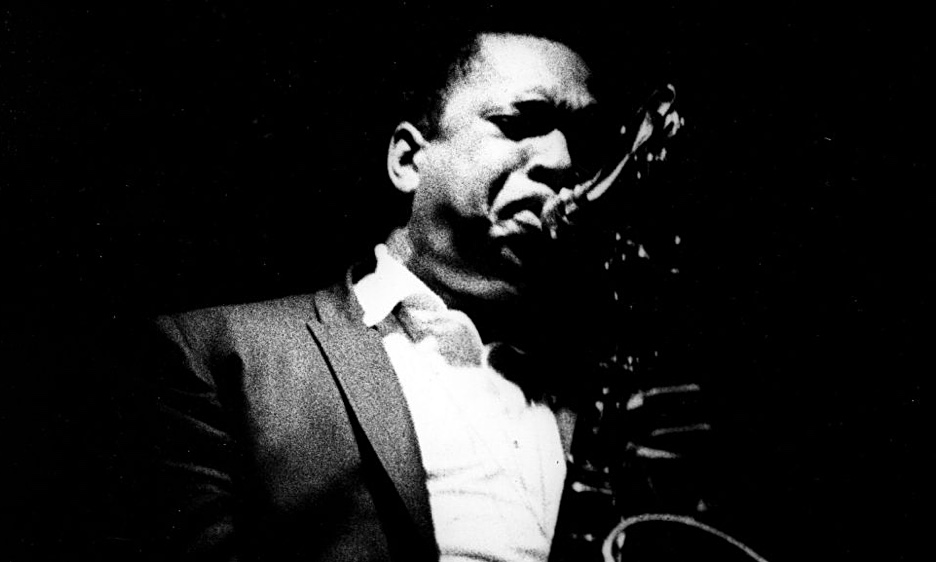
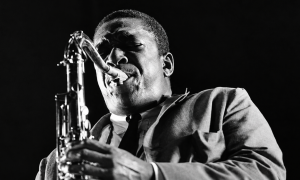
Courtesy Leni Sinclair
Detroit, was once again in a position of seeing Coltrane break new ground before one of the most knowledgeable audiences in jazz—a status Detroit audiences still hold today.
Davis "got the jump" on his 1926 counterpart at the dawn of the bebop explosion in jazz. While a young Davis was getting noticed on the bandstand alongside bebop pioneer Charlie Parker, Coltrane was enlisting in the US Navy, knowing a draft notice would inevitably arrive at some point. His enlistment was on August 6, 1945, just nine days before V-J day, and the end of World War ll. It would occupy a year of his time, spending it for the most part in Hawaii, playing alto saxophone and clarinet in the US Navy band, The Melody Masters. He would catch up with Davis in 1955 as a member of his band, a five-year run interrupted between 1957 and 1958 due to erratic behavior and addiction issues. Coltrane sequestered himself in Philadelphia and kicked his habit, returning in force to help record the classic, Kind of Blue (Columbia, 1959). When he departed Davis' band in 1960, he was honed to go on a seven-year journey that, like Davis' post-bop and fusion efforts, would change western music forever.
And so, as the century mark of these giants approached, they ran head to head in terms of innovation and fearless resistance to jazz tradition, all the while establishing a huge part of what would indeed be a part of that tradition. We live in an age where a jazz listener might identify themselves as a "Miles-Coltrane" kind of jazz fan—as a sub-genre within itself. It enabled a year jam-packed with concerts, tours and festival headliners touting their performances within the Miles-Coltrane 100 heading.
Artists such as saxophonist Lakecia Benjamin and pianist Emmet Cohen have traversed the club and festival scene nationally under the "100" banner and its enduring catalog, in Cohen's case, celebrating both Davis and Coltrane. Benjamin headlined a Coltrane tribute with orchestra at Hollywood Bowl. Two tours have been occupying larger venues, mostly classic theatres and cultural centers—most notably, Coltrane's son Ravi Coltrane has been teaming up with trumpeter Terence Blanchard in saluting both his father and Davis. Saxophonists Joe Lovano and Melissa Aldana have been messaging the Coltrane legacy at theatres alongside pianist Nduduzo Makhathini, bassist Linda May Han Oh, and drummer Jeff Tain Watts with the "Both Directions at Once" tour. Both tours settled in Detroit in September, a city with a very special relationship with the Coltrane legacy.
The Coltrane—Blanchard contribution is twofold. The Ravi Coltrane Quartet performed at the 2026 Detroit Jazz Festival, with the saxophonist slated to return to perform with Blanchard acting as the Detroit Symphony Orchestra's Fred A. Erb Jazz Creative Director in tribute to both Davis and Coltrane at Orchestra Hall two weeks later. Meanwhile, the "Both Directions at Once" band was one of Lovano's three performances as Artist-In-Residence of the Detroit Jazz Festival, reviving the spirit of Coltrane's extensive performance history in the Motor City, as well as one very personal connection.
Coltrane met Alice McLeod at Birdland in New York City in 1963. She was playing piano in a quartet led by vibraphonist Terry Gibbs, the opener for the Coltrane quartet that evening. They would eventually marry in 1965, and become musical partners in 1966 when she replaced a disillusioned McCoy Tyner during an explorative and equally tumultuous time in the saxophonist's career. Her family was pure Detroit—with Alice having her success as a pianist, composer and harpist and her sister Marilyn being a contributing songwriter at Motown. Her mother honed her musical spirit as a member of the church choir, her half-brother, Ernest Farrow, became a prominent jazz bassist. But before that chance meeting at Birdland in 1963, the saxophonist would perform many times in Detroit, those occasions essentially marking the timeline of Coltrane's career and artistic development.
Coltrane first set foot in Detroit as a member of the Dizzy Gillespie Big Band in March of 1951, performing on both tenor and alto. The site was the Paradise Theatre, then in its last days as a jazz and blues performance hall. Opening as Orchestra Hall in 1919, the original intention of the building was to house permanently, the Detroit Symphony Orchestra. The Great Depression plunged the building into economic despair, closing in 1939, and reopening in 1941 as the prime city location for Black jazz and blues artists. That run lasted ten years, before the building once again closed and sat dormant, rotting away until its restoration in 1989, and subsequent re-identification as the home of the Detroit Symphony. The theatre sat on the western edge of Paradise Valley, the Black business district in Detroit, and near midtown. The fact that Coltrane is part of the tail-end of the history of this major hub of Black entertainment is significant. Paradise Valley was demolished with the advent of the new interstate highway system in the US, displacing a Black cultural center with freeways that inevitably led to white Detroiters fleeing to the suburbs and Detroit becoming not a Black neighborhood—but a Black city. The Black entertainment district would be displaced to the west side of the city, along and near 12th Street, renamed Rosa Parks Blvd. in 1976 to honor the civil rights icon and fifty-year Detroit resident.
Coltrane performed multiple dates in 1958 at the Bluebird Inn on Tireman Avenue in Detroit, as a member of the Davis sextet, alongside pianist Bill Evans, alto saxophonist Cannonball Adderly, drummer Jimmy Cobb and bassist Paul Chambers—a son of Detroit and graduate of the lauded high school music program at Cass Tech. The tiny westside club had been a home away from home so to speak for the mercurial trumpeter, beginning in autumn of 1953 when Davis would brave a Michigan winter to kick a heroin habit, residing near West Grand Boulevard and Grand River. He frequently joined or sat in with the house band at the Blue Bird Inn. He would continue to play local gigs with Detroit musicians until the aforementioned dates in 1958, including some 1954-1955 dates with pianist Barry Harris, a member of the Bluebird house band. Davis embarked on a second multi-month stay in Detroit at that time, crossing musical paths with other Bluebird regulars in Billy Mitchell, Elvin Jones, Thad Jones and Joe Henderson.
When Coltrane arrived in 1958 with Davis, they had just released Milestones (Columbia, 1958) and were about to enter the studio for the Kind of Blue sessions. The Bluebird Inn, the tiny westside club, had become a major hub of the hard bop movement. On September 25, 1958, Coltrane and band mate Chambers attended a famous early-morning private jam session at the West End Hotel, a Black and Tan after hours club in the Delray section of southwest Detroit. There, they played alongside Detroit jazz icons Donald Byrd, Henderson, and Coltrane's future wife in McLeod.
While exact performance dates are not available, Coltrane honed his solo repertoire on tour, including stops in the late 1950s at the Crystal Show Bar on Grand River Avenue. These appearances preceded several residencies between 1960 and 1963 of his classic quartet with Tyner, bassist Jimmy Garrison and drummer Elvin Jones—the latter a son of Detroit and one of three iconic jazz-playing brothers. Elvin, trumpeter Thad and pianist Hank Jones would go on to impact jazz music in three, very different and original ways.
The site of Coltrane's Detroit activities in those years was the Minor Key, a legendary, non-alcoholic modern jazz coffeehouse and lounge located on Dexter Avenue. The club operated from 1959 to 1963, notably allowing underage jazz enthusiasts and teenagers to enter and listen to legendary national and local modern jazz musicians while seated just feet away. The atmosphere was described as casual, even "beatnik friendly."
A week-long stay from September 21-26, 1961, established the Midwest draw of the new quartet that was gaining international attention at that time. A five-night spring run followed between April 18 and April 22, 1962. Later that summer from July 31—August 6, 1962, Coltrane turned heads on a national scale by featuring his work on soprano saxophone. While the soprano was featured on Coltrane's biggest record to date, My Favorite Things (Atlantic, 1961), the Detroit residency saw the saxophonist seriously working some things through on the instrument that would later be seen as his next step in musical innovation. Detroit, was once again in a position of seeing Coltrane break new ground before one of the most knowledgeable audiences in jazz—a status Detroit audiences still hold today. It is notable and interesting that Davis saw the city in the same light. It was a place where a Black artist, even one as prominent as Davis in the 1950s, could grow musically and be accepted socially, finding a comfortable common ground for both in a time when the racial divide was immense and manifesting in a new segregation, that of whites exiting urban America for the suburbs.
The Coltrane quartet wasn't alone in their eagerness to play the Minor Key. Davis appeared during the same period, as did Art Blakey and the Jazz Messengers, and Detroit legends Yusef Lateef and Kenny Burrell. Ornette Coleman brought the free jazz movement to the club in 1960, famously playing a week-long engagement on his plastic saxophone.
There are no verifiable dates of Coltrane performances in Detroit in the years 1964 and 1965. This was the time that the quartet was recording the classics Crescent (Impulse, 1964) and A Love Supreme (Impulse, 1965). The touring schedule included extensive dates in Europe as well as the United States. While it is widely reported that the saxophonist performed at Baker's Keyboard Lounge during this period, it is more likely his appearances there were at a session, or sitting in with a Detroit artist such as Tommy Flanagan, Coltrane's pianist on the classic Giant Steps (Atlantic, 1960) LP. Trumpeter Donald Byrd and guitarist Burrell were also Coltrane allies.
The years 1966 and 1967, the last two of his life, were groundbreaking musically, and somewhat chaotic personally for Coltrane, to say the least. Musically, he changed direction towards the abyss of the avant-garde, prompting a change at piano from Tyner to his wife Alice Coltrane. This change was significant in so many ways, but most prominently, he lost a master of harmony, a musician who made his quartet more spacious, and blazed a harmonic trail that allowed the saxophonist to find his voice, and to know where to take it. The music became more spiritually based, though not through the lens of any organized religion or belief system—it was the music that was expressed like scripture, in sonic waves never experienced before in jazz. Of course, Coltrane was not taking a lead as an avant-gardist per se—but his sound, his voice made even the most "out" moments, the most aggressively persistent stretches of the music sound like a songbird creating melody within the sonic barrier of multiple launched jet-age projectiles. Detroit, for its part, was waiting for his return, with an openness to his startling innovations unlike most jazz cities.
It should be mentioned, that if there is a major difference between jazz venues in the 1950s and 1960s, and those operating today, it is this—jazz spaces that in the case of Detroit were personified by the Minor Key and others, were spaces where high art and working people crossed paths. Jazz enthusiasts did not have to pony up for high—end dinners and cocktails, along with exorbitant covers, to witness jazz performances. This allowed for working people to engage their culture's highest original art form—and experience it up close. The Drome Lounge, the site of Coltrane's final club performances in the Motor City, was such a place.
The club was the cocktail lounge of a bowling alley, but attracted the best of the best on a national and local scale to its stage. Tyner, Wes Montgomery, Lateef, Byrd and others visited the club during the time that Coltrane made it his new roost in Detroit. Coltrane played a ten day residency at The Drome, from June 17—26, 1966. His quintet that included saxophonist Pharoah Sanders, played a historic run at the Dexter Avenue club, and was heavily documented by iconic photographer Leni Sinclair.
Coltrane's last appearance in Detroit was on January 22, 1967, as part of a George Wein organized tour that also featured Thelonious Monk. The performance took place at Ford Auditorium, then the home of the Detroit Symphony. Coltrane sat in with Monk's band, reviving a relationship that was prominent during Monk's famed residency at the Five Spot in New York in 1957. Alice Coltrane briefly replaced Monk himself, as she paid tribute to the great bebop pioneer. Ironically, the Ford was demolished in 2011 for Detroit waterfront re-design. It stood where the current Hart Plaza is located—the site of the Detroit Jazz Festival, the largest free jazz festival in the world.
So the festival is on the land that once held the hall that once held the final performance of John Coltrane in Detroit. It is there where son Ravi honored the memory, legacy and music of his mother Alice during the 2024 festival. Entitled Translinear Light: The Music of Alice Coltrane, the performance included a fifty-five member string orchestra, along with a cast of brilliance that included bassist Reggie Workman and Brandee Younger performing on Alice Coltrane's harp. 2026, the year of Coltrane 100, the festival made Lovano its resident artist, an appropriate move to honor such a legacy, as that of Coltrane. In the spirit of the master, the music, of course, must be performed in an innovative way that suits the artist and the moment in time—any true homage to such an artist cannot seem like a cover band version of the same. To truly nudge the spirit of Coltrane, and unleash that divine life force to the benefit of humanity, one must take into account the moment in eternity, and appreciate the unique place that it is—though in such a fleeting way.
 FOLLOW Paul Rauch
and get notified whenever a new article published.
FOLLOW Paul Rauch
and get notified whenever a new article published.
I am a writer, producer and coordinator in the jazz community, living in Seattle.
About John Coltrane

Tags
PREVIOUS / NEXT
Become a Sustaining Member

Since 1995, All About Jazz has championed jazz as an art form and supported the musicians who create it. Over three decades, it has grown into one of the world's leading jazz resources, serving hundreds of thousands of readers, musicians, presenters and industry professionals each month.
Help Build the Future of All About Jazz
Your support helps us continue building All About Jazz for the next generation—expanding our editorial coverage, preserving jazz history, developing new community features and creating better ways to discover the music and the people behind it.
Become a sustaining member for as little as $20 per year and you'll immediately enjoy an ad-free experience along with access to subscriber features and future articles for a full year.
Together, we're not simply sustaining All About Jazz—we're building its future. Thank you for being part of the journey.