Home » Search Center » Results: Woody Herman
Results for "Woody Herman"
About Woody Herman
Results for pages tagged "Woody Herman"...
Woody Herman

Active since:
After early experience in Chicago with the bands led by Tom Gerun and Harry Sosnik, Woody Herman toured with Gus Arnheim. In 1934, he joined Isham Jones, and when Jones's group disbanded in 1936 Herman used its leading sidemen as the nucleus for his own orchestra. This band went through a number of changes of personnel, such as the inclusion in 1943 of Chubby Jackson and in 1944 of Neal Hefti, Ralph Burns, Flip Phillips, and Bill Harris (by the mid-1940s, under the name Herman's Herd, it was internationally famous for the force and originality of its music. Herman reformed the band in 1947, and the distinctive feature of the Second Herd was the group of saxophonists (three tenor and one baritone) who came to be known as the Four Brothers; among the musicians who played in the section were Serge Chaloff, Stan Getz, Zoot Sims, Al Cohn, and Gene Ammons. After the demise of the Second Herd in 1949, Herman continued to lead bands; these were perhaps less creative, but their consistently high level of musicianship assured his continuing reputation
The Sound Of America

By Norman Granz
Label: Verve
Released: 2026
Track listing: CD1:
Blues; Picasso; Tenderly; Like Someone in Love; New Basie Blues; Castle Rock; Con Poco Coco ; Louise; Taking a Chance on Love; Easy Living; Flamingo; You Won’t Be Satisfied (Until You Break My Heart); I’ll Never Be the Same ; Dale’s Wail ; That Old Black Magic
CD2:
Laura; Session #1 — Ballad Medley: All the Things You Are/Dearly Beloved/The Nearness of You/I’ll Get By/Everything Happens to Me/The Man I Love/What’s New?/Someone to Watch Over Me/Isn’t It Romantic; Thou Swell; Cocktails for Two; Why Was I Born?; On the Street Where You Live; Lullaby of the Leaves; Blue Room I Thought About You ; Chelsea Bridge — rehearsal; No Strings.
Fred Lipsius: The Blood, Sweat & Tears Sax Voice Still Resounds

by R.J. DeLuke
There's an alto saxophone sound that a huge percentage of the Baby Boom generation heard and enjoyed in the 1960s and into the 1970s, even though many may not have been jazz fans. And younger folks who appreciate great music and understand the value of sounds generated in that era have also heard the clean, quicksilver ...
A Time Capsule in Sound: Jim Pugh’s New American Symphonies

by Kyle Simpler
On the surface, Jim Pugh's New American Symphonies might seem like just another interesting new album release, but there is much more involved here. Behind the album cover lies a story of experimentation, loss, and rediscovery that adds a fascinating dimension to this well-crafted recording. To get the full picture, however, we have to ...
Lou Marini: A Solo Career Starting At The Age Of 80

by Mark McKergow
Saxophonist “Blue" Lou Marini came to the fore in the 1970s as a member of the Saturday Night Live Band and with The Blues Brothers on film, albums and stage. After a lifetime as an in-demand sideman (notably 26 years and counting with James Taylor), Lou has finally started to release albums under his own name, including Playtime (Hip ...
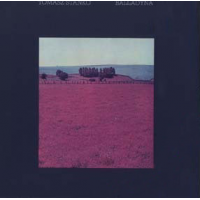
The Warm Glow of ECM Vinyl: Tomasz Stańko, Bill Connors, and Mick Goodrick
by C. Andrew Hovan
In an oft-quoted phrase from a 1971 magazine article, ECM founder and producer Manfred Eicher described the label's ethos as “the most beautiful sound next to silence." From the start, the label's eloquent sound--captured expertly by house engineers Martin Wieland and Jan Erik Kongshaug--transferred beautifully to vinyl, and original pressings remain highly prized among collectors. So ...
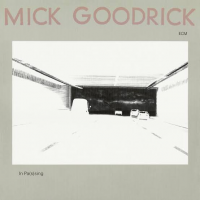
Mick Goodrick: In Pas(s)ing
by Jack Kenny
Let us start with the recording itself. For this album the quality of the recording is as important as the playing. It was made at Talent Studio in Oslo by Jan Erik Kongshaug--and is typically in the style of ECM Records: spacious, detailed, each instrument given room to breathe without being isolated from its neighbor. But ...
Alan Greenspan, 1926–2026: The Reedman Who Conducted the Economy

by Kofi Adjepong-Boateng
He kept the clarinet. Sixty years after he last played for money, the central banker still had the instrument from his dance-band days; when a television crew trooped in, he turned it over in his hands but would not play it, remembering too well how it was supposed to sound. Alan Greenspan, who died ...
The Dam Jawn featuring Jeremy Pelt: Triphasic

by Artur Moral
Philadelphians know 'jawn' well--a term embedded in their local slang that is not easily grasped by the uninitiated. So what are Joan Fort and Martin Diaz (two Catalans), Philip Lewin (a German), and Nitin Parree and Frank Groenendijk (two Dutch men) doing forming a band whose name fuses that Philly word with a wink at the ...
About Bob Graf
Results for pages tagged "Woody Herman"...
Bob Graf

Born:
Bob Graf (April 16, 1927 – August 27, 1981) was a St. Louis tenor saxophonist whose career placed him alongside some of the most celebrated names in jazz. Recommended to Count Basie by trumpeter Clark Terry, Graf performed in Basie's small group before joining Woody Herman's Third Herd, recording for both Capitol and MGM. He was a member of Howard Rumsey's Lighthouse All Stars, appeared on Chet Baker's Pacific Jazz recordings in 1956, and played with Gerry Mulligan's big band in the 1960s.
His most significant recorded document is At Westminster (Delmark Records), captured live in St. Louis on January 11, 1958 — reissued on CD in 1992 as part of Delmark's Underground Heroes series and still available today. In December 1959 he performed alongside guitarist Grant Green and organist Sam Lazar at the Holy Barbarian in St. Louis. In 1958 he appeared as a performing musician on the Universal Pictures film The Big Beat.

Trending
 Interview
Boney James: A Simple Man And A Lifetime Study
 Interview
Bill Bruford And Pete Roth: A One-Of-A-Kind Juxtaposition
 Interview
Miles Okazaki's Monkathon: The Complete Thelonious...
 Live Review
Isaiah Collier Plays Coltrane: Live at Jazz Alley in Seattle
 Reanimating Conversations Past
John Scofield: Meant To Be
 Interview
Scott Kinsey: Thought Distortions and the Art of the Left...
 From the Inside
The Quiet Cruelty of the Music Business
Featured Video
VOTE!