Home » Jazz Articles » Jazz Raconteurs » Julius Hemphill: Marty Ehrlich and Tim Berne Remember a ...
Julius Hemphill: Marty Ehrlich and Tim Berne Remember a Musical Visionary
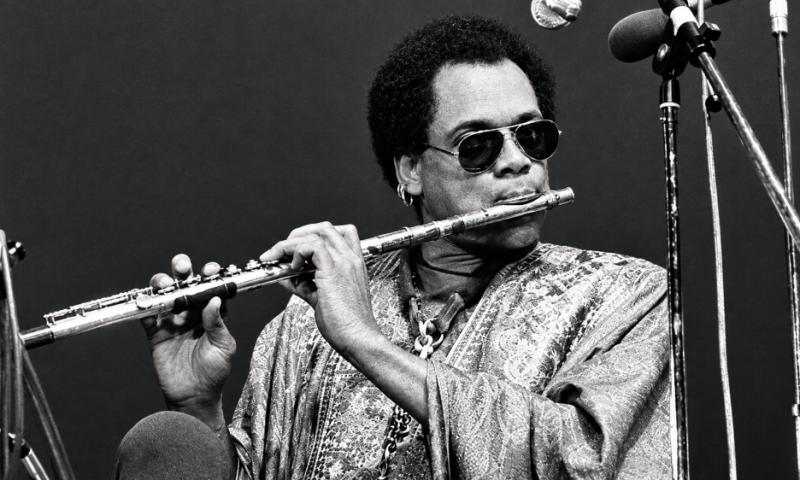
Courtesy Gérard Rouy

Another thing that fascinated me about Julius’s writing—and what attracted me when I first heard Dogon—was how he drew on so many musical styles without becoming a cliché. Even when he approached something recognizable, such as the rhythm and blues lineage of “Hard Blues,” it was still unmistakably Julius. Every kind of music I was listening to was in that record: soul, funk, free jazz— whatever that means. But it was all melodic. It was ninety-nine percent intensity through melody.
—Tim Berne
That landmark recording exhibited an already fully realized musical conception, combining blues feeling, complex composition, collective improvisation and unusual instrumentation. Although distinctly avant-garde, the music embraces funk and soul and is richly melodic, qualities that permeated much of his work and that made it remarkably accessible. Over the next two decades, Hemphill continued to expand that conception through small ensembles, big bands, solo performance, chamber works and compositions for larger groups. His best-known work came with the World Saxophone Quartet, which Hemphill co-founded in 1977 with Oliver Lake, Hamiet Bluiett and David Murray. Hemphill's compositions were central to the group's distinctive identity and helped establish it as one of the most important ensembles to emerge from the creative music of the 1970s. Although his life was tragically cut short at 57, he left behind a remarkable and highly diverse body of work. Far more than an exceptional musician, Hemphill was a composer and conceptualist with an expansive and highly individual artistic vision.
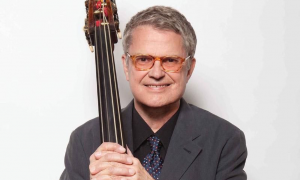
Two musicians who knew Hemphill well are Marty Ehrlich and Tim Berne—among the most distinguished and compelling saxophonists, composers and bandleaders to emerge from the creative music scene of the past half century. Both have been extraordinarily prolific, producing substantial and highly diverse bodies of work over careers spanning several decades. I invited Marty and Tim to participate in the Jazz Raconteur Series to discuss the life and work of Julius Hemphill from their unique vantage points. What follows is both a remembrance of Hemphill and an exploration of his music, creative process, influence and enduring legacy.
All About Jazz: Why don't you start by telling us a little about yourselves?
Tim Berne: I grew up in Syracuse, New York. I became an avid music fan in my early teens, probably through my brothers. One had very adventurous taste—he was the first one in our family to get into Hendrix. I remember hearing a Don Cherry and Ed Blackwell record coming out of his room. My other brother was really into soul music, and our friends had all these great tapes: Stax, Memphis, all kinds of soul music. I got into more adventurous jazz through my brother and through WAER, a Syracuse radio station. A guy named Joe Bova had this incredible show. He played Cecil Taylor and the Art Ensemble Of Chicago. There was also a really good record store. For a while, Syracuse University seemed to have been invaded by people with good taste. A club brought in people like Weather Report, Taj Mahal, and James Cotton. Syracuse had a good live-music scene, so all of that happened.
A friend's father managed Oakwood Cemetery, and we used to buy records we had never heard, go back to his basement, and listen until we liked them. We'd pick a record we knew was supposed to be good and sit there with it. I remember Ornette Coleman's Friends and Neighbors (Flying Dutchman, 1972) and John Coltrane's Kulu Sé Mama (Impulse! Records, 1967). At first it was, "Well, I guess this is good." By the end, it was, "Wow, this is great." We might have been smoking pot; I'm not one hundred percent sure. I followed music the way I followed sports. I collected baseball cards, and I was always looking for the most extreme independent label. I remember getting into the St. Louis musicians when they were putting out their own records—when Marty was on Under the Sun, which I still have, with the purple cover. At some point, I started playing.
AAJ: Okay.
TB: I hurt myself playing intramural basketball and couldn't play. I certainly wasn't going to replace it with studying. Coincidentally, someone was giving away an alto for a hundred dollars, so I bought it and started noodling in my room. I would put on Pharoah Sanders' Thembi (Impulse!, 1971). At the time, I think every tune was in F on alto or D on the alto—the only key I could even attempt to play in. I'd sit there and jam with the record. I got enough of a taste to think, "I should move to New York and take lessons." My first lessons were with Anthony Braxton. It's a long story I won't get into, but he was getting busy in 1974, when he had a contract with Arista, and he suggested that I call Julius Hemphill. For some reason, I thought Julius lived on the West Coast. I thought, "That's actually the person I like most." So, I called Julius and started taking lessons.
AAJ: I'd like to get into that, but let's hold off for a little while, because both your story and Marty's are really interesting. Marty, do you want to go ahead?
Marty Ehrlich: Sure. I'm Marty Ehrlich. Like Tim, I play saxophone, as well as clarinet and flute. I was born in St. Paul, Minnesota, and lived in Louisville, Kentucky, but my artistic story is all St. Louis.
I played clarinet and studied with members of the St. Louis Symphony. I lived in University City, the college town around Washington University, which was full of artists and politically progressive people. About 15 of us from junior high went to the Moratorium March in Washington. In eighth grade, someone said there was a new arts program called MECA in midtown St. Louis. We all piled into a station wagon and went down there. I was in a theater class taught by Malinke Elliott, who had established the Theatre department of the Black Artist Group in St. Louis.
Malinke told me years later that I kept getting distracted by the music he played; I would just sit and listen. One day he said, "Take these home," and handed me Ornette Coleman's The Empty Foxhole (Blue Note Records, 1966) featuring Denardo Coleman at about nine years old, and Albert Ayler Live at the Village Vanguard. Then my sister brought home the Eric Dolphy Memorial Album (Fontana, 1967) from the library, and I fell in love with the bass clarinet. I had no idea that "Alone Together" was an American Songbook composition—or even what an American Songbook composition was. But I got into the new jazz, and things took off from there. I was writing poetry and beginning to spend time with older poets—the Peace Eye poets—and with a musician named Jim Marshall, who was very important but is not widely known. Tim mentioned Under the Sun; Jim produced it.
TB: Yeah, he's on that, right?
ME: Jim was the one white musician who did concerts with BAG, and his house was where everybody gathered. In a time of deep racial segregation in St. Louis, I saw how comfortable the BAG musicians were around him. He never acted "hip," he was more non-Western in orientation, and quiet more than not. People would come by; there was smoke and food, and he had this amazing record collection. I went from studying with George Silfies, the principal clarinetist of the St. Louis Symphony, to playing with Jim every day. I can't tell you whether he knew the notes on the saxophone, but he had a vibe. He was soulful, right, Tim?
I went there every day, and we played and played and played. I met Lester Bowie at his house, and I began playing with Charles "Bobo" Shaw, Joe Bowie, the poet Ajule Rutlin, and others.
TB: How old were you?
ME: At that point, 15 or 16.
TB: Jesus.
ME: I heard Julius Hemphill and Oliver Lake live for the first time in St. Louis in the summer of 1971, when I just turned 16. I knew from Jim Marshall that both had been out of St. Louis-Oliver to Paris, Julius to New York City, I believe. Anyway, they both return to play, on the same day, and the same afternoon, in two different parts of St. Louis! I rush from one to the other, having just gotten my driver's license, and hear both. Julius performs at Washington University with Abdul Wadud and a drummer named Charley Payne, whom I will begin to play with in the coming year. What I remember most is the composition "Mirrors," the sound of those acerbic chords between alto and cello, sounds from that day still in my mind. I was one of a handful of listeners.
Oliver Lake played solo alto and performed his landmark work AltoViolin with three African-American violinists connected to the St. Louis Symphony. It is in a community center in Laclede Town, a new community in St. Louis. What I remember most is the visceral power of Oliver's alto playing. It really grabbed me, shook me up, and it has continued to do so to this day. I will not meet either Oliver or Julius that day. I will begin playing with Oliver in the coming year in St. Louis, within the Human Arts Ensemble umbrella, leading to the Under the Sun recording. Oliver is an ongoing inspiration.
I will really meet Julius in the summer of 1973, when Julius is driving a car from California back to New York, where he is living with his family. The car was given to him by his Aunt Gazzie, who he was very close with. He stops over for three days in St. Louis to get the car serviced and to visit Malinke Elliott. I spend all three days, all day long, at Malinke's house. Julius teaches me how to make a tuna melt sandwich, something he did with great relish. We don't play any music those three days, but there is a related story. Malinke is on my case, asking Julius questions about composing. He said, "No one ever asks Julius questions; they get intimidated." So one morning I'm driving Julius to the car mechanic, and I work up the courage. "Hey Julius, do you have any advice about composing?" I am met with complete silence. Thanks, Malinke. I wasn't sure what to think. The next morning, I am driving Julius again to the mechanic. Out of nowhere, Julius says, "Contrast." I say, "Excuse me?" He says, "Contrast. Always think of contrast when you are composing."
Many years later, sitting with him in the hospital, I tell Julius the story for something to laugh at. He smiles and says, "Oh man, I was probably just hungover when you asked me the first time."
I was accepted at New England Conservatory and went there starting in 1973-74, for what was the last four years of Gunther Schuller's groundbreaking presidency. I received an amazing education, studying with Jaki Byard, George Russell, Ran Blake, Joe Maneri—whom I was very close with—and the great clarinet and saxophone teacher Joseph Allard. Joe Allard taught Eric Dolphy, Stan Getz, Michael Brecker, and decades of students.
I did my first project with Julius, probably in 1975, when I was back in St. Louis in the summer: a theater piece with Malinke,' which was being filmed in a bar. Julius had me wear a cowboy hat, and my "prompt" was to try to teach him a simple melody on his horn, which he can't seem to get right. We both have soprano saxophones. There is an open casket, and Malinke is carrying on, but actually dead, except he can't get in the coffin because he didn't finish the payments. He keeps taking my hat on and off and interacting with us, but we pretend that we can't see him. Slapstick tragedy.
Julius hires me in 1976 or so to play with Baikida Carroll on trumpet, Famoudou Don Moye. Julius will soon start the Janus Ensemble with Alex Cline and Baikida Carrol to play and tour these pieces. They will make a recording that won't be released in Julius' lifetime, but it's now on The Boye' Multinational Crusade for Harmony box set on New World. I think Tim and I saw the premiere. We were about the only audience. I know we were both amazed by these works. (Tim has recorded some of this work.) When I graduated NEC, Tim kindly offered me a room at Chez Berne on Lawrence Street in downtown Brooklyn, which really helped me get started and gave me a friend in the big city, along with the St. Louis folk I knew.
TB: Marty saw his first cockroach.
[Laughter]
AAJ: Tim, do you want to pick up the Julius angle?
TB: I can. My story ended a little before Marty came to New York. I started studying with Julius in 1974. I met Marty in 1975 or 1976, maybe; I'm not good on the dates. I moved into that loft in 1977. I can't remember how soon after that Marty moved in with us. I started taking lessons with Julius. The first lesson was around nine in the morning. I had never been to Brooklyn. He was on State Street, and I remember walking through Brooklyn and thinking, "Wow, this is another world. I like it." There weren't many people on the street. I was coming from the East Village, where you could barely walk down the street without bumping into somebody—like jellyfish. I was extremely nervous. Julius was kind of my hero. But I should back up for a moment. My brother was friends with Julius's girlfriend and knew Michael Cuscuna, who invited me to a recording session. It turned out to be a Lester Bowie record , Fast Last! (Muse, 1974) but they were doing an overdub, so I didn't know who was on the record because it had not been released.
It was just me, Michael Cuscuna, and a tuba player either Howard Johnson, or maybe they were replacing his part, and it was Joe Daley.
ME: It was Bob Stewart. He told me he, too, had never met Julius or Lester until that day.
TB: Right. There was this tall guy in a brown leisure suit, conducting the tuba player. I immediately thought, "That must be Oliver Nelson." I have no idea why; I'd never seen a picture of Oliver Nelson. I didn't meet the guy. I was just being quiet and respectful. That night I went to Studio Rivbea, Sam Rivers's place, and heard this insane band with that same guy on alto, Lester Bowie, Charles "Bobo" Shaw, Abdul Wadud, Hamiet Bluiett, and a guitarist who was playing with Miles Davis at the time. It was an incredible set. I remember thinking, "God, this alto player is electrifying." He was a big, tall guy, just killing it. So, when I got to Julius's house, I realized that was the guy. I had seen Julius twice and did not know it was him, even though he was my hero. None of the records I had contained photos of him, and he certainly wasn't in many magazines.
Anyway, I walked in, and his son came flying down the banister—he was three or so and almost hit me. It was total chaos. Julius had obviously forgotten that we had this lesson. He was in his pajamas, and I was freaking out. He said, "Come on in." I sat down. He was on the couch. He said, "What can I do for you?" I said, "Well, I guess I need lessons. I'm a beginner. I took a few lessons with Braxton." There was about a 15-minute pause, and then he said, "I've been thinking a lot about magic lately." That's how it started, and that is more or less where it stayed for a couple of years. There were specific musical things, but most of the time he posed questions. The most specific work was on sound: tone exercises. I would be there for three hours doing long tones. I was obsessed with practicing and spent 45 minutes a day on long tones, using "Top-Tones for the Saxophone." If he had told me to stand on my head for twenty minutes, I would have done it. Luckily, he said, "Go through this book." I also started writing music because he did. I did not know I was supposed to be learning how to play first.
I wrote little duets and brought them in. I knew how to write eighth notes and quarter notes, and he would play them with me and make small suggestions. He treated me like a peer. There was no excessive positive reinforcement, but there was no "You suck; you're never going to be able to play." It was straightforward: two people having a conversation about music, one of whom knew a lot and one of whom didn't. But he never made me feel that way. I think he was happy to have a fan. At the time, he was doing three or four concerts a year. His wife was working, and he was not doing much. I kept thinking, "How is this possible?" But the effect on me was that I saw this genius I worship doing things himself: starting a label, organizing concerts. I began helping him, and I learned everything I know about releasing your own records, organizing a concert, getting people to come, making flyers, and getting a band together—although that was not his strong suit.
I got lessons in everything, probably twenty years before I understood what was going on. That's how it started—roughly 1974 to 1977.
AAJ: So that was a fallow time in the New York jazz scene?
TB: No, it was a fallow time for him. He was different from everybody else. Guys like David Murray were hustlers because they had to be. Julius was not a hustler. He might have been a pool hustler, but he was not going to go out, beg for gigs, or talk about himself. He was not going to sell himself. He was just sitting back: you had to come to him. That was a good influence on me. I was not around someone who spent half his time on non-musical concerns. It was all about music; it was all about life. There was none of that: "You've got to get into the music business and get a record label." I tried to advocate for him, but I had no power. Most of his peers were doing much more. They were going to Europe. He told me this hilarious story: everybody had gone to Europe, so he said, "I'm going to Europe." He was probably the only person whose career got worse after going to Europe, because he did not have that hustle muscle. He could talk about music; he could charm you. But he ended up in Sweden with Malinke. All those people, Oliver and the others, were hooking things up. Julius probably made five tours in Europe with his own band, if that. Unless Marty knows differently, he was not doing a lot of touring when everybody else was. Marty, correct whatever I said.
ME: No, I think I hear everything, and it's fascinating. A couple of things: what was unique about the Black Artists Group was that it was not just about music, and nobody pursued that more than Julius, especially in his work with Malinke. He focused a lot on theatrical works between 1973 and 1977. He made a film entitled Sweet Willie Rollbar's Orientation.He is still applying to Missouri grant organizations for theatre works. In 1976, Malinke and he put on The Coontown Bicentenial Memorial Servicein St. Louis, featuring Fontella Bass and other BAG musicians, and Ralph Ellison's Long Tongueat the Kitchen in NYC, which is represented on the New World box set. None of these projects were "moneymakers," but he was really committed to the need for this creative and political outlet. The archive has finally connected these projects. In a 1975 interview, he said, "I don't need a horn in my hand to validate my artistic participation."
Looking at the timeline on the website, https://wp.nyu.edu/library-hemphill_papers/, 1977 is when things finally begin to take off for him in musical representation. He made the two overdub records, The Blue Boye' and Roi Boye' and the Gotham Minstrels. The World Saxophone Quartet was right around the corner. He wrote Water Music for Woodwinds, for seven saxophonists, which we recorded posthumously on Tzadik, with Tim and Oliver Lake and J.D. Parran along. That four-movement piece is central to his saxophone choir writing. Dogon A.D. and Coon Bid'ness are by now released on Arista/Freedom records. Before 1977, Tim is totally right. He was constantly trying to do more; he was just not consistently leading a small-group context. He wrote amazing music for a quartet, all extending the ideas on Dogon A.D., and did a tour—documented in the boxes set—with Olu Dara, Warren Smith, and Abdul Wadud. Baikida Carroll, his BAG colleague on the Dogon A.D.recording, is the regular trumpet player, and they had a book of twenty tunes. But if Julius had tried to be the hot small group soloist in those years, it might have been different.
TB: Yeah, agreed. One more thing: Dogon was like the greatest record ever made, right? I managed to reach Gary Giddins, who was writing for The Village Voice. He had just done all this stuff on David Murray and other people. I called him and said, "You've got to check out this record by Julius Hemphill." He did not know the record, but I convinced him to let me come over, which I did. He did not know me at all. Then he reviewed it in The Village Voice and gave it a really tepid review. I was just like, "Wow." Little did I know this was going to be the theme: Marty and I were talking about Julius incessantly, and everybody else saying, "Oh yeah, I never really checked him out."
ME: That's great.
TB: Yeah. I thought, "Okay, this is going to work." Then I saw the review and thought, "How could you not get it? How could you write about all this other stuff and not get it?" I got it. What Marty said about soloists: half the record is collective improvisation. Julius was at the forefront of this quasi-rubato, collective melodic improvisation. That is where I got everything I have ever done—from hearing him do that, from hearing those little chamber pieces, and from people improvising melodically together with no one soloing. To this day, that is my mantra. That is why they did not get it. It was not one amazing solo on one tune; the rest of it is collective, basically.
ME: He was not meeting the paradigm. He was questioning the paradigm.
TB: Yeah.
ME: And he was this amazing composer who kept trying different contexts in which to compose. That was a huge influence on Tim, me, and many other people. Of course, Julius was not alone in this. The AACM and BAG opened the possibility that you could use any instrumentation; you did not need a rhythm section. A rhythm section is fine, but it was not required. Through all of this, Tim and I were the cellist Abdul Wadud Appreciation Society. Julius had met a musician who, in my mind, was off the chart. I have worked with many people, but I have rarely worked with an instrumentalist of Abdul Wadud's intensity and artistry. I toured with Abdul for numerous years with Anthony Davis and was fortunate to have him on my first Dark Woods Ensemble recording. I think Julius meeting Abdul at Oberlin College, introduced by painter Oliver Jackson, was a seminal connection for Julius as a composer and conceptualist. Part of Julius's frustration as an ensemble leader was that Abdul was a very busy, in-demand performer. He had orchestra work, Broadway work, and played with many people. Julius could not always get him, and he tried to substitute a guitarist, but no one was going to be Abdul.
What Julius was doing makes me think of something Wadada Leo Smith said to me: "Ornette gave us all permission to go onstage and just play our own music." That was the amazing thing about Julius. Now that I have archived all this material, aside from the two Ellington masterpieces and the Marvin Gaye and Junior Wells material on the WSQ recordings, he did not play music other than his own and the artists he collaborated with. He wrote tunes across the entire history of Black music: drop-dead bebop tunes, beautiful one-chord blues, funk tunes to die for, gospel tunes, tunes that sound like post-Schoenberg—everything. But he did it with his own music. That was not often how the industry worked. Let me hand it back to Tim.
TB: Another thing that fascinated me about Julius's writing—and what attracted me when I first heard Dogon—was that he alluded to all the styles Marty mentioned without becoming a cliché. Even when he approached something recognizable, such as the rhythm and blues lineage of "Hard Blues," it was still unmistakably Julius. Every kind of music I was listening to was in that record: soul, funk, free jazz—whatever that means. But it was all melodic. It was 99 percent intensity through melody. The other musicians I was listening to often got their effect through screaming or texture, which was all fine. Julius got the result by playing melodies with his tone. The harmonies were the same way. Even in collective improvisation and in his writing, everyone had their own part most of the time. I remember Baikida trying to sell him on unison, and Julius saying, "If you've got five guys, why would you have two of them playing the same thing?" I stole that from him.
I keep trying to write unison, and I can't. I always end up with another part. It's all from him. Of course I was inspired by a lot of other people, but I really took this prototype. At one point my mother said, "Honey, don't you think you should get your own thing?" She was talking about me following Julius around, not really about music. But to me it was like: Oh, yeah, I'm trying to be Julius Light, or Julius White. I just wasn't myself. Then it kicked in. I had to stop listening to him, and all this other shit, and start to hear myself. People say, "But Ornette, or this, or Threadgill... " Nope. It really is all from Julius. It's not embarrassing; it's just that he alluded to all this stuff in the way he wrote, and it was totally original.
AAJ: Can I ask a quick question? Dogon is an amazing record. Did it get any buzz at the time? When did people begin to discover it?
ME: We collected a lot of reviews in the archive, including some very positive ones. Robert Palmer said, "No other record sounds like it," and he wrote some quite beautiful notes. The recent reissue of Dogon A.D. sounds amazing. We were able to fix some key sonic things. My liner notes speak to how much more is known about the genesis of these compositions and this recording from videos and documents in the Hemphill Archive. The music began as part of a dance presentation, surrounded by Dogon sculpture and tapestries from Dr. Donald Suggs's collection in St. Louis.
Many people "get" the record; for many it is a lodestar, but it can also mystify people. Tim has put his finger on it: Julius was always stubborn, and he had a vision. It was a very big vision. I like the phrase, partly from George Russell, that jazz will always be pan-stylistic. In my own groups, I say I'm a pan-stylist who doesn't believe in style. Julius took that approach and innovated within it, using whatever musical material suited him, all through his unique ear.
Julius's musical ear was phenomenal. At the end of the archive, we went through every piece of paper, and I never found any corrections. It's all in pen.
TB: I saw it. Marty's absolutely right.
ME: The guy wrote like fucking Mozart from his head onto the page. That could be a parlor trick if, when you listened, it didn't make you think: Of course, that chord comes after that chord, after that melody, after that rhythm. He had this amazing gift.
After going through all the scores, one amazing thing is that whenever he got a new theatrical project or another opportunity, he got excited and wrote much more music than got used. Even for a 1982 collaboration of WSQ with M'Boom, Julius wrote and scored out this five-part suite. They didn't perform it—it was too much—but give him the chance to do something and he was writing and writing. Up through 1995, he never stopped.
TB: Do you have the first World Saxophone Quartet concert in St. Louis?
ME: I do. It's there. I was there too, because it was my first gig as a leader in St. Louis. I had a trio with Ernie Provencher and Sid Smart; we drove from Boston together! WSQ played a couple of pieces that did not get recorded on their records but are now on Open Air: The Complete Saxophone Quartet Music of Julius Hemphill (Out Of Your Head Records, 2026). The first music he wrote for the World Saxophone Quartet was technically hard. Tim and I have been talking about this: the guy was a phenomenal saxophone virtuoso. His fingers were ridiculous. In many ways, he was an extension of Charlie Parker; he didn't choose to do it in the expected way. I don't mean only Charlie Parker, but there's so much history in there. Julius worshipped Bird, and he worked hard to get that tight alto technique.
AAJ: Marty, I thought you might want to say something about the new record.
ME: The new recording mentioned above presents all the music Julius wrote for WSQ over 11 years or so, all on two CDs. It puts all these works close together, into six galleries of seven pieces each. While editing Julius's music for publication by Subito Music, I was even more amazed by the expression in the writing. I wanted to bring it all together in one home.
Of course, after his time in the World Saxophone Quartet, he formed the Julius Hemphill Saxophone Sextet. He wrote a whole new body of music, about half of it for his award-winning collaboration with the Bill T. Jones/Arnie Zane Dance Company, The Last Supper at Uncle Tom's Cabin: The Promised Land. We record these compositions on two Black Saint recordings, and I make two posthumous recordings with the Sextet, completing the book as it were. Tim, you're on Five Chord Stud, joining the group when Julius could no longer perform a full set. You are also a soloist when we perform with the Richmond Symphony in 1993 or so.
TB: Yes.
ME: Critics in the early years often didn't understand Julius, even some of the more influential writers like Baraka. It is interesting how people want to put him in a category, get frustrated in their attempts, and he resists when asked. He didn't fit their picture. He was ridiculously intelligent, but he protected that intelligence, he didn't wear it on his sleeve. He also didn't suffer fools. A businessperson might say something silly, and Julius would say, "Well, that doesn't make any sense to me."
TB: Yeah.
ME: And you'd think, "Julius, you could have just not said anything."
AAJ: Well, you could have let the guy give you a gig.
TB: A lot of record people and promoters want to feel smarter than you. You can't really say, "Yeah, whatever. I know how to do this. I can sell more records than you." They don't want to hear that. They want to think they're doing you a big favor, giving you an opportunity, and that they're as important as you are. Julius didn't have time for that shit. I saw situations where anyone else would have been kissing somebody's ass, and the opposite happened. He took everybody at face value. I think that's why I got along with him: he didn't read into it, and he didn't think I was trying to get something from him. Musically, he gave me far more respect than I needed or deserved. It didn't make me think, "I must be great because Julius is putting up with me." He just wasn't into that. I think younger musicians, and musicians in general, can get too much positive reinforcement. You benefit from having to move slowly up whatever this silly ladder is. A lot of people get quick success and then have to sustain it. They've skipped a lot of steps.
Marty and I were inspired by people from the '60s and '70s who stayed the course. They're doing the same essential thing they were doing then; people have simply caught on. They didn't say, "If I do this, maybe this will happen," or try to kiss somebody's ass. Musicians like Wadada, Henry Threadgill, and Roscoe Mitchell think: "I'm going to do the most interesting thing I can do. If people dig it, great. If they don't, I don't really care." It isn't that they're trying not to be popular. It's always been about the music. If you went through the whole process of doing things yourself, you appreciate that. But if you come up and suddenly you have a manager and a publicist, you don't get that experience. You start looking for the result from what you do, rather than thinking, I'm going to get better, and at the next gig I'm going to add two horns and try this other thing. I was guilty of saying to Julius, "What if you just do a quartet? People hear you play and it's going to blow their minds." But that wasn't the plan.
ME: Julius had gone to Max Gordon, who was a little paternal. Max said, " I don't think you're quite ready to have a whole week at the Vanguard." Julius said to me, "Marty, I don't care. That's not my ideal. I don't want just to do that. I want to do many things."
David, you asked what someone coming to Julius for the first time should hear. Dogon A.D. is essential—The record remains singular in the world. He made an early trio record, Raw Materials and Residuals (Black Saint, 1978), with the cover picture shot in Tim's loft, which is also a good introduction. There is the World Saxophone Quartet Live at BAM and Revue, and surely the Nonesuch WSQ plays Duke Ellington (1986) record, which is a wonder. What Julius does with "Lush Life" alone shows what an amazing talent he was.
His one recording with his JAH band, Georgia Blue, (Minor Music, 1984) is powerful, though that group grew and grew without a second recording. There is the big-band record on Elektra Musician with the two guitars, Jack Wilkins and Bill Frisell. I was fortunate to be in every big band from the first one onward, and then in the Saxophone Sextet. The duo records with Abdul Wadud are galvanizing. And Tim's wonderful recording Diminutive Mysteries (Mostly Hemphill)from 1992, with compositions written specifically by Julius for the recording. In the end, there is a great deal for people to hear.
What was it about his playing? He had a sound like no one else's—what Hamiet Bluiett called "Texas alto." He once said to me, "I want my sound to grab people and shake them." He loved to talk about directness. He would make a gesture with his hand and say, "I want a Coltrane sound—like this." Or he would point to Billy Harper on tenor, a fellow Texan: "Like this." He aimed for that kind of directness on the alto. I played second alto with him for many years.
Julius also had a vulnerable side in his playing. On "Pensive," from Wildflowers, is a theme and improvisation that presents this well. It was the opposite of macho. He could be incredibly vulnerable and lyrical, and it was touching. He was not a player worrying about applause or presenting himself as the brilliant figure above everything. It was the breadth of what he worked with. When you heard it, when you got it, you loved it.
TB: Yeah, yeah. It is amazing. I was always frustrated by the lack of documentation. I would tell people about him, and they would say, "Oh, really?" They had never seen him play. I am talking about the late '70s and '80s; people would ask which record to get, and you would say, "Well, this one"—and perhaps there would not be another for ten years. It was frustrating because he was never a flavor. Eventually I just said, "Fuck it."
About Julius Hemphill

Tags
PREVIOUS / NEXT


Become a Sustaining Member

Since 1995, All About Jazz has championed jazz as an art form and supported the musicians who create it. Over three decades, it has grown into one of the world's leading jazz resources, serving hundreds of thousands of readers, musicians, presenters and industry professionals each month.
Help Build the Future of All About Jazz
Your support helps us continue building All About Jazz for the next generation—expanding our editorial coverage, preserving jazz history, developing new community features and creating better ways to discover the music and the people behind it.
Become a sustaining member for as little as $20 per year and you'll immediately enjoy an ad-free experience along with access to subscriber features and future articles for a full year.
Together, we're not simply sustaining All About Jazz—we're building its future. Thank you for being part of the journey.