Home » Jazz Articles » Interview » Lou Marini: A Solo Career Starting At The Age Of 80
Lou Marini: A Solo Career Starting At The Age Of 80
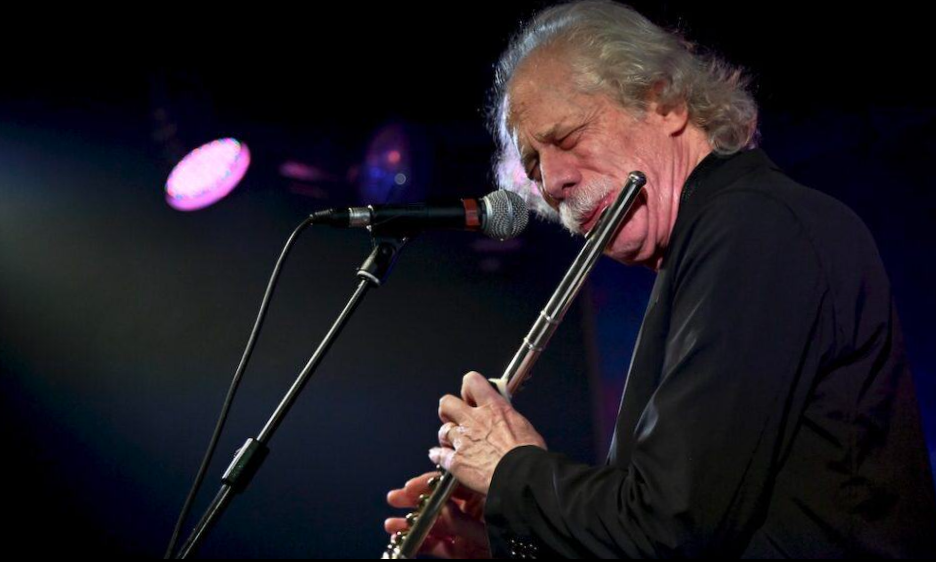
Courtesy Roberto Fontana
The music is ephemeral, it disappears, but the laughs and the friendship and the joy of making music together is, man… I'm a lucky guy. It's more of a treasure now than ever because I know that I'm getting toward the end of it and it's sweeter than ever.
—Lou Marini
All About Jazz: How did you get into playing the saxophone?
Lou Marini: I was fortunate to have a father who was a wonderful musician and also a great teacher. He was a saxophonist also and he started me off on the clarinet when I was 10. He had me studying the classical pedagogy of the clarinet, scales and arpeggios and the Henry Lazarus book. And at the same time, because he was a jazzer, he encouraged me to play along with records and play by ear. When he saw that I was committed and was practicing, he did a clever thing. He had a good friend, a wonderful, very natural saxophonist named Frank Corby.
When my dad was in the Navy, Frank was the arranger for the Navy band in the Charleston Navy Yard. When he came back home, he went to a college in Ohio called Mount Union College, where my dad and all his cronies including my Uncle Ed, his younger brother, were playing in his band every weekend. And so, that was the first of the many bands that he wrote entire books for. I have his book, almost 300 terrific arrangements. Frank Corby was a wonderful, natural improviser and a beautiful man. I was lucky to study with him, and by the time I was 15 or 16, I was playing in little bands and making extra money on my own.
I went to the Stan Kenton jazz camps, the first of the summer jazz camps. My roommate was David Sanborn; we've known each other our whole lives. Don Grolnick was there, Keith Jarrett, Randy Brecker, Peter Erskine... I heard the North Texas State University band. They were guesting, they had just won a jazz festival. I had a chance to go to Berkeley or to go to North Texas, and I chose North Texas in Denton TX.
I am not quite sure why when I think about it now, but it was a fortunate choice because in addition to being full of great musicians, there was tons of work there of every variety. I played everything from the Lipizzaner stallions, the rodeo, ice shows. One of the first big gigs was Gladys Knight and the Pips and Smokey Robinson and the Miracles. Then I got in the recording scene.
I heard Don Jacoby, the great trumpet player, do a clinic about wind instrument playing. I still think it was one of the best clinics I ever heard in my life. Then a few years later, I'm in North Texas at the end of my freshman year, and I get a phone call from Don's saxophonist saying that he had been in a car crash and he would not be playing for six weeks, and could I sub?
The trombone player was Bobby Burgess , who had been Stan Kenton's lead trombone player, Maynard Ferguson's and Woody Herman's, and I ended up later in 1968 playing with Bobby in Woody Herman's band. So at the same time that I was going to school, I was standing between these two master players six nights a week. It was a lifelong lesson for me in ensemble playing.
Tom Malone, my buddy from the Blues Brothers and many other gigs, we played together in Blood, Sweat & Tears, Frank Zappa, we've played thousands of gigs together. He used to say that by the time we got to New York in 1971, we were over-trained!
AAJ: Your new album is Playtime by Lou Marini and the Italian Groovers. What's your connection with Italy?
LM: Enzo Zirilli, the drummer, had a band that played in Ronnie Scott's in London after the main band played. It was after a gig and I heard them playing, I really liked the band and sat in. Enzo tells the story that I chose to play "Here's That Rainy Day" and he said up to that point, it was the slowest tempo he had ever played. But we made a connection and stayed in touch. Then after a while he asked me whether I'd like to come over to Italy and play some gigs with the trio. That was about four years ago.
I remember the first rehearsal. I had sent the music over, it's all my music, basically all my tunes, some of them new, some of them old, that I had never had the opportunity to play before. We rehearsed with Alessandro Chiappetta, the guitarist, and Gianluca Di Ienno, the keyboard player. I was surprised that there was no bass, but Gianluca had this little bass keyboard that he played with his left hand. After about the third tune, I remember saying, "I'm not sure why we were rehearsing," because I think we could have just gone up on the bandstand and played. They were so well prepared and I really felt an instant connection with them.
I love their playing. Alessandro Chiappetta is a very unusual guitarist, he has a different take on the guitar and improvising, very light. And I think Gianluca is brilliant, the way he can keep his left hand playing the bass lines. The funny thing is, I often thought that it would be great to have a bassist. Then we had a gig where there was a very fine bassist who sat in with us in addition to Gianluca, so he wasn't playing the bass parts. Afterwards I realized that I liked the band better the way it is, with just the trio. It has a very light feeling that I really love.
AAJ: What about the album are you particularly pleased with?
LM: One of the primary things I like about this trio is how open it is and how it can change and the way the guys explore. The basic material really changes so much night to night. I think we got that spontaneity in the recording. When we played "Row, Row, Row Your Blues," that was the one tune that we hadn't really played in public. All the other tunes we had played. We had rehearsed it, but I don't think we played it for an audience. But it instantly just went out and out and I just love what happened in it. But also, there were tunes that we played all the time that I thought would be sure to be on the CD and we never got good takes on them. We left them off the CD because we didn't get the same groove that we got on the other tunes. All the tunes apart from one are my originals, never recorded before.
AAJ: And it also features "Here Comes That Rainy Day..."
LM: We got a sweet take on "Here's That Rainy Day." I've heard some musicians say they were put off by the keyboard sound that Gianluca used and he had never used that sound before. There was one take, that's all we did. We just played it once and we thought, we're not gonna do it any better than this, so... But I like it myself, it puts it in a different place, you know.
AAJ: Do you have future plans to go back to Italy with this band and do more things?
LM: We just finished five gigs. This is our sixth little mini tour. This is the third one this year and I think I'm going to come back in December and play four or five more gigs. And hopefully we'll record another CD. We have enough material for another one. I've been bringing in new tunes and new versions of old tunes and in this next record, I'll probably sing two or three tunes too. I've been singing some of the concerts. I enjoy it. One of my old friends, the great drummer from New York, Allan Schwartzberg , told me once, he said, "you sound like the bebop Willie Nelson." (Laughs)
AAJ: Playtime is not by any means the only project you've released in recent times. Tell us a bit about the other albums.
LM: The first one is Out Of The Blue (Atlantic Records, 2025), which I should have called Out of the Blues. I missed a golden opportunity. Right before the pandemic hit, I started rehearsing a big band in New York and it was prompted by a tune called "Klong" that is on that album. And I called it "Klong" because the melody reminded me of a children's song but the harmony sounded like... it reminded me of one of those Indonesian gamelan bands, you know, sort of clangy.
It was a commission from Jim Widner, a music educator and jazz bassist who is no longer with us but was a friend for many years, and a band at the University of Missouri. I hadn't written any new big band music in a long time and that prompted me. I liked the way it turned out and so I started writing and putting a band together, and for many years whenever I wrote new big band music, I was always thinking of it. I had written material to play at clinics and when I go out and guest solo with a college band. So I decided to write for my lifelong colleagues in New York with no limitations about worrying about whether college guys could play the music or not. Then the pandemic hit and I wrote 13 new compositions during the pandemic. We started rehearsing again and the band sounded so good, I felt like we had to record it. I think it's really terrific. I'm very proud of it.
One thing I like about it is that the whole saxophone section is great. My lifelong friend Lawrence Feldman has a beautiful feature on a tune called "Dance Romance." There's a great younger saxophonist named Matt Hong who has a great solo. Andrew Gould, who is a brilliant young altoist, has a great soprano solo. Dave Rickenberg, the baritone player, has a beautiful solo. I really like that album.
Then I've been playing with this young Grammy Award-winning composer and pianist named Steven Feifke with a terrific trio. A young drummer named Jimmy Macbride who just kills me and his friend Raviv Markovitz on bass. Most of the music is his with a couple of my tunes. We called it Point Of View (La Reserve, 2026) because I thought that that was a good title for the tune. That CD was very challenging for me because Steven's music is harmonically complex. I felt like a kid holding onto the life preserver, you know. But people like it and I'm proud of that one too.
And then I've been playing in Spain for years with a great band called Red House. My wife is Spanish. The guitarist in that band, Fransisco Simon, is now playing with the Blues Brothers Band. He's a wonderful blues guitarist. Through him, I met a pianist named Lluis Coloma, who's a boogie-woogie pianist from Barcelona. Lluis is brilliant and he has a terrific quartet. I have been playing a lot with him; we just played four concerts around the start of August in France and Spain. We recorded an album We Like To Groove (Swing Alley) last year with that group. So I simultaneously have four new things out that are wildly different.
Jimmy Johnson is a virtuoso bassist with James Taylor. This is my 26th year with James. When he became aware of all this activity, he says, "Lou, you wait till you're 80 years old to start a solo career!"
AAJ: I have to ask about the Blues Brothers... When John Belushi sang "I'm A King Bee" on Saturday Night Live back in 1976, with you all dressed in bee costumes, did you expect the Blues Brothers to take off like it did?
LM: We were not happy wearing those bee outfits, you know. But that's when we first became aware of how musical Belushi was. He was unexpectedly talented. On the Made in America album, he sings a ballad just with piano with Paul Shaffer and it's called "Guilty." It's very poignant, you know, because it sort of presages his demise, his inability to control his wild side, I suppose. He had this romantic idea about living the life of a crazy poet or the author who drinks too much.
I've often said that the whole Blues Brothers thing was like a rocket ride. Dan Aykroyd and John had this idea for the blues guys, these sort of down-on-their-heels guys, and we did a version for SNL producer Lorne Michaels and he didn't like it. And the next week, we came up with another tune, Slim Harpo's "I'm A King Bee." Tom Malone arranged it and he didn't like that one either. But the show was short by like three and a half minutes. And so, faced with that, Lorne said, "You guys can do your silly song." And people went crazy for it. And then we ended up doing it again in a more full-fledged version.
Then the show was over for the summer and we got a call to go. Belushi said, "We're putting a band together" and we're going to go out to Los Angeles and play for 10 nights as the opening act for Steve Martin, and that was when Steve's stand-up was at its peak. So we just thought, well, it's gonna be a nice gig, we'll make some nice bread, we'll be in LA for a couple weeks, it's gonna be fun, you know? But two things happened.
That was such an unusual group of musicians. Donald 'Duck' Dunn and Steve Cropper from Memphis; neither one of them could read music. Matt "Guitar" Murphy, a profound, real, dyed-in-the-wool blues guitarist who also didn't read music. Paul Schaffer, who was like a musical sponge. Steve Jordan, who was just an absolutely brilliant young drummer. Alan Rubin, Juilliard educated, headed for the New York Philharmonic before he took a left turn into pop music, and Tom and I from North Texas and, you know, it was a wildly divergent band.
About the third night of rehearsal, there were all kinds of people coming by the studio to hear us rehearse. I remember Mick Jagger was there at one point and all kinds of people and they were just going crazy. Then when we were out in LA, we started playing and every night we were getting standing ovations and backstage, Robert De Niro, Danny DeVito, you know, who knew who you'd see backstage? I remember seeing Jack Nicholson look at me, catch my eye. He was sitting in the front row and he lifted up his sunglasses and he went, "Wow!"
Then we did a tour and the record Briefcase Full Of Blues (Atlantic, 1978) came out and it was a big hit and then we toured again and then we made the movie and did another tour and then Belushi was dead. And we thought that was the end of it.
Then about five or six years later, Donna Dixon, Danny's wife, surprised him and brought us all up to Kingston, Ontario, to his family home for his 40th birthday, I think. We had such a great time playing together again. And then Matt Murphy had been touring Europe and his promoter had inquiries about whether the band would like to come to Italy and play four or five gigs and I think we played seven, around March of 1988 maybe. And then the next summer we were in Europe for four or five weeks, I think. We played Montreux Jazz Festival and the North Sea Jazz Festival. So ever since then, we've been playing all over the world. I always say that The Blues Brothers is the world's best part-time gig.
AAJ: It seems like there's three horn players in the movie, but it sounds like four horns on the soundtrack?
LM: Yeah, that's it. Lou Delgado. You know, there's a couple things about the soundtrack. When Paul Schaffer couldn't make it because he was playing on Broadway with Gilda Radner with her one-woman show, he had to bow out of the Blues Brothers, I think painfully for him. When we lost Paul, we lost our musical director, our pianist and an actor in the movie. It took three guys to fill his position. When we were doing the recording without Paul, Steve and Duck suggested some Memphis guys but they were unable to play. And then we found some New York guys but they were also busy and unable to play.
So I suggested Larry Willis, who I had first played with in Blood Sweat & Tears. Larry was a great jazz player. It's actually Larry that's playing piano on the soundtrack. And then Lou Delgado, saxophonist who was the contractor for the SNL band, is playing baritone and he plays the baritone solo on "Peter Gunn" and on "Sweet Home Chicago." But on the Briefcase Full Of Blues album it's Tom Scott playing.
Over the years, so many great musicians have come up, younger musicians of course, have come up and told me that the Blues Brothers movie was the reason that they started playing.
AAJ: What is your saxophone setup at the moment?
LM: I've changed mouthpieces for the first time in many years. I'm playing a mouthpiece made for me by an Italian mouthpiece maker at Roberto's Music in New York. His name is Tommaso Troncon. It's a hard rubber mouthpiece and I really like it. And I'm still playing the Selmer Mark VI that I played in the first movie. I keep it highly maintained by a saxophone repairman in New York named Perry Ritter, who's been my repairman for 40 years, I suppose.
I don't change setups much. I'm still playing the same alto mouthpiece that a great musician, saxophonist in New York named Romeo Penque gave to me, a hard rubber Otto Link mouthpiece. I still play metal on tenor. I don't always play the new TT mouthpiece, I still play a metal mouthpiece made for me by Phil Barone, an eccentric mouthpiece maker in New York.
My flutes are Powell flutes that are older flutes. I just got new Powell head joints for them though, that's made a big difference for me. 1656 and 1874 are the serial numbers, they go back a long time. And I play a beautiful Haynes alto flute that I've had since college days.
AAJ: What's next for you?
LM: It's been a crazy summer. I played a week with Lluis in Switzerland in February at Marianne's in Bern, great jazz club. And then I did 24 days in Italy with the Groovers. I started a tour with James Taylor April 17th, finished in Las Vegas on May 11th, flew home the 12th and on the 13th, we headed for Italy again to play four or five more gigs with the Groovers. Then I went to Spain for a few days to a wedding and then came back to New York for a week and started on June 16th with James again, finished on July 4th in Tanglewood.
On July 5th, my wife and I were on our way home to New York and we were in a head-on collision. Our limo made a left turn into an oncoming SUV, which was... a unique experience. Luckily, both of us were unhurt. I had badly bruised ribs, which just now are finally not hurting so much. But the next day, I headed for Ireland with James and we did two and a half weeks in Europe with James and then I immediately went to France to play four gigs with Lluis. A couple days in Madrid with the family, we have an apartment in Madrid, then to Italy again with the Groovers. After tonight's concert, we go to Madrid for a couple days tomorrow and then back to New York and I start with another month with James. It's been a totally crazy summer, I can tell you that.
I'm not gonna do this again. It was too much. I overbooked myself. It's that freelance mentality, you know. A gig is a gig, I guess. We just go from the ridiculous to the sublime sometimes.
I talk about being a musician to my friends. I feel lucky that when I have to go to work, I tell my wife I gotta go play. I've been playing my whole life, you know, and I've been playing with great musicians and that is the gift. The music is ephemeral, it disappears, but the laughs and the friendship and the joy of making music together is, man... I'm a lucky guy. It's more of a treasure now than ever because I know that I'm getting toward the end of it and it's sweeter than ever.
 FOLLOW Mark McKergow
and get notified whenever a new article published.
FOLLOW Mark McKergow
and get notified whenever a new article published.
Saxophonist, clarinetist and writer living in Edinburgh, Scotland
About Lou Marini

Tags
PREVIOUS / NEXT

Become a Sustaining Member

Since 1995, All About Jazz has championed jazz as an art form and supported the musicians who create it. Over three decades, it has grown into one of the world's leading jazz resources, serving hundreds of thousands of readers, musicians, presenters and industry professionals each month.
Help Build the Future of All About Jazz
Your support helps us continue building All About Jazz for the next generation—expanding our editorial coverage, preserving jazz history, developing new community features and creating better ways to discover the music and the people behind it.
Become a sustaining member for as little as $20 per year and you'll immediately enjoy an ad-free experience along with access to subscriber features and future articles for a full year.
Together, we're not simply sustaining All About Jazz—we're building its future. Thank you for being part of the journey.