Home » Jazz Articles » Live Review » Detroit Jazz Festival 2026: A Gathering in a Great Jazz City
Detroit Jazz Festival 2026: A Gathering in a Great Jazz City
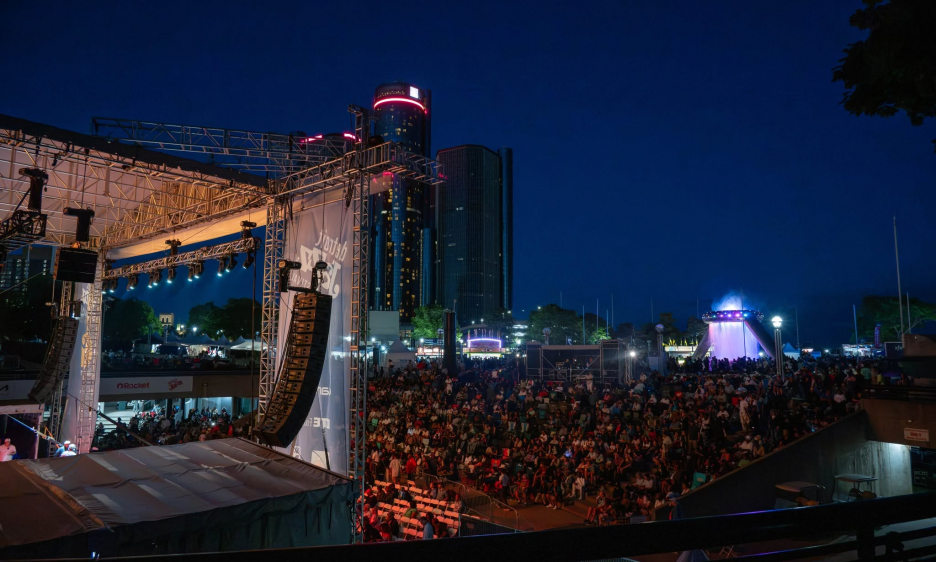
Courtesy Detroit Jazz Festival
Unlike most festival sites, Detroit is still a great music city after the event ends. It is the local scene in present times, and its colorful and important history from the past that has a foundational grip on each and every iteration of the Detroit Jazz Festival.
Hart Plaza
Detroit, MI
September 4-7, 2026
Thursday evening is when artists, media and event staffers begin to file into the Detroit Marriott, arriving from points around the globe. The common purpose is the 47th annual Detroit Jazz Festival, an annual tradition on Labor Day weekend. The largest free jazz festival in the world is four days of music, fellowship, celebration and counting one's blessings. In 2026, Mother Nature decided to make her presence known in an emphatic way before yielding to warm but comfortable weather.
Late Thursday afternoon, a tornado touched down on the east side of Detroit, not all that far from the festival grounds at Hart Plaza. Flights arriving in Detroit were being diverted to places like Columbus, Ohio, while Detroiters fled to basements for safety. Many homes lost power. The lights were on at the Marriott when festival artist-in-residence Joe Lovano arrived, beginning a trickle of artists checking in, one by one—and, most notably, safe. Still, there was excitement in the air of another sort, of the type that occupies the soul for four days in Detroit, year after year. It's about jazz music, our culture's true original art form, and the height of musical artistry. Opening night was tonight, with Lovano, Julian Lage and the Miles Electric Band set to get things started. There was an air of hope and confidence that the weather would evolve from a steady rainfall to a perfectly cool and comfortable evening.
Day 1: Miles / Coltrane 100 Revisited
And so the weather fell into a favorable place, with the sun peeking through scattered clouds and a cooling breeze cast off the Detroit River, allowing the spectacle of opening night to take place. Lovano was on hand with his Paramount Quartet, with the Miles Electric Band set to hit the opening chords of the festival. But first, a Detroit tradition, with the city's New Orleans connection leading Dr. Valade's Brass Band, a collection of young musicians from the festival's JC Heard Week program. Shannon Powell, he of NOLA pride and tradition, in past years led the group by way of a second line, but his tender health at this point necessitated a stage entrance for the band. Yet Powell was ebullient, vociferous, leading the band with a joy that sets the precedent for the festival year in and year out.The Miles Electric Band has been doing its thing for such a time that personnel changes have become commonplace and easily accomplished. Put together by Davis' nephew Vince Wilburn Jr., the contingent of mostly Davis alumni is led by music director and keyboardist Robert Irving III. The band uses music from Davis' electric period as a framework for improvisation, employing exceptional solo work from saxophonist Antoine Roney, guitarist Jean-Paul Etienne Bourelly and, new to the band, popular trumpeter Theo Croker. Taking over the trumpet chair from Keyon Harrold, Croker employed a broad array of electronics and exploding clusters of notes to fill the Miles void in the band, no easy task. But to the band's credit, an identity has been formed, giving the band a sound that alludes to Davis and his approach, all the while allowing the individual contributors to play naturally with intent. In Croker's case, his preoccupation with electronic assistance denied the audience access to his formidable, unadorned, natural sound. Percussionists Monyugo Jackson and Mino Cinelu were the crowd favorites, and understandably so. The duo played an expert supporting role before being given solo time that sent the first jolt of unrefined energy through the assembling crowd, instigating the true beginning of the 2026 festival.
Artist-in-residence Lovano offered his Paramount Quartet, featuring guitarist Lage, bassist Santi Debriano and drummer Will Calhoun. Opening with the spacious "Congregation," the tenorist displayed the most subtle aspects of his playing right out of the gate, supported by scant chordal references from Lage. Sporting a large kit with two bass drums and three floor toms, Calhoun used the low end of his dynamic range to add color and shattering nuance. Lovano switched over to soprano for "Amsterdam," leading the melody line within the subtle polyrhythms of Calhoun's almost orchestral sound. With Wayne Shorter's "Lady Day," the four musicians seemed to play in orbit, revolving around a common center. Lage's lush harmony and agile single-note runs were a perfect medium for Lovano's tenor to snake in and out of the band's attention to the core quality of the maestro's tender ballad. Bassist Debriano was brilliant throughout the set, including conjuring nature sounds with his bow work, at one point sounding like a talking drum. But he can swing too, and did so when the moment arose, teaming with Lage in harmonic support of Lovano's brilliant discourse. Lage, for his part, continually displayed fleet skills that never seemed hurried and were always drawn from a broad sense of being.
The evening began as a humid, partly sunny affair, with puddling water still visible from the previous day's deluge. The natural phenomenon provided a hatch of some sort of winged insects that descended on the amphitheatre in large numbers. Soon, with nightfall, the breezes kicked in, the night air cooler and less ideal for the hatch, which magically seemed to disappear. It seemed like a portal from weather that, at its worst, included a tornado landing in the city to a pleasant, mostly sunny weekend for the forty-seventh edition of this wonderful event.
Day 2: A New Voice Emerges
On Saturday, the sun decided to show up, providing a sunny but comfortable day, with a fine Great Lakes breeze blowing courtesy of the adjoining Detroit River, bordering the south end of the festival grounds at Hart Plaza. It was a day when Kurt Elling joined the Yellowjackets for a run at the music of Weather Report. The afternoon saw college bands and headliners alike, with the all-female supergroup Artemis front and center on the Waterfront stage. Young Detroit saxophonist Jeffrey Trent led a set on the amphitheatre stage that presented some of the great young voices arising from Detroit—trumpeter Trunino Lowe, drummer Louis Jones III, bassist Michael Abbo, guitarist Ian Blunden and pianist Andre Crawford. The band's sound was very Detroit, with a blues-tinged edge to very sophisticated playing. Trent himself has fire and thunder, with a sense of leadership as a bandleader that exudes respect and gratitude. Front-line mate Lowe played with great energy and intent, while Blunden was a pleasant surprise with his unhurried, agile approach that produced some of the finest moments of the set. A row of American flags adjoining the stage flapped vigorously in the southerlies blowing off the river. The day was on, and the weather was fine.The rest of the afternoon and evening saw luminaries in Elling, Artemis and a John Coltrane tribute from his son Ravi, but the strongest and most joyous standing ovation of the day belonged to twenty-year-old trumpeter Skylar Tang. When Detroit radio legend Linda Yohn introduced the San Francisco native, few in the crowd knew what to expect. She fronted a young quartet that included a marvelous pianist in William Schwartzman. Bassist John Murray and drummer Ethan Oliver proved worthy of their place on a stage at a festival of this regard, supporting and soloing with ease and virtuosity. Tang performed an hour-long set of tunes that were visual and seemed to tell stories, often merging into what amounted to movements and returning to the melodic point of origin somehow in a better place. Described by titles such as "May" and "FBM," Tang's compositions paralleled her playing in terms of dynamic flow and gently cascading melodies. "Nobody Belongs to Anybody" began almost in a pastoral or folk-like vibe before rising in emotion to a peak that displayed Tang's finest playing of the set. It was all there: articulation with a beautiful, round, full, natural trumpet sound. Her playing, while sophisticated and technically brilliant, also has great intent and emotional honesty. From the stage perched above the Detroit River, Tang played with an intensity, or an assertiveness, that somehow was communicated with fire that gave light rather than scorched earth. Even in quiet moments, her vision of melodic beauty held its course without repose. There were those in the crowd who remarked that despite her age, she had an "old soul," but that would be missing the point. While she may have a profound maturity in her playing, her vibe expresses her tender years, with an enthusiasm and gentle spirit. As a bandleader, she definitely acted beyond her age and experience by being a part of her band and allowing her bandmates to shine as well. Every festival has its transcendent moments—this hour-long set in the shining five o'clock hour was certainly all of that.
With 2026 marking the centennial of Coltrane's birth, one might suppose that a tribute at a major festival would be best articulated by his son, Ravi Coltrane. Ardent Coltrane fans may have been expecting him to delve into lesser-known Trane tunes and add his own innovative twist as one of this era's top tenorists. Yet none of that happened. The set was well played between Coltrane and pianist David Virelles, bassist Dezron Douglas and drummer Johnathan Blake—one could not ask for a better foursome. But the expert run-through of parts of "A Love Supreme" and the classics "Equinox" and "Naima" somehow seemed less than expected. Coltrane turned up the hip factor in a significant way, using the entire range of his instrument for "Expression," his father's last session being represented by its title track. A fine all-around effort for what may be a very difficult task for the son of John Coltrane, despite his obvious virtuosity and great spirit. One interesting fact of note: Hart Plaza, the festival site, is where Ford Auditorium once stood and is adjacent to Cobo Hall, a longtime sports and events hall. John Coltrane played his last notes in Detroit on that very piece of earth, accompanied by Alice Coltrane, Jimmy Garrison and Elvin Jones. It was a George Wein-produced tour that also included Thelonious Monk. Public research provides text that states the performance took place at the Ford. Producer Don Was, a native Detroiter, has been quoted as saying the concert took place at Cobo, with a young Was in attendance. In either case, the Coltrane 100 celebration had landed in Detroit at or near the site of the master's final performance in the Motor City. In that context, it felt like we were standing on holy ground.
The all-female supergroup Artemis seems to be at every major festival—they've become a brand people are drawn to, being an ensemble of strong female artists. After all, how many great bands have been lauded in jazz history that are dominated by male personnel? The musical reasons to see the band are paramount, however, when you have a lineup such as this. As a composer and pianist, Renee Rosnes is the consummate artist—combined with bassist Noriko Ueda and drummer Allison Miller, she leads one of the finest rhythm sections of the modern age. Portland-born tenor saxophonist Nicole Glover has risen to the heights of the best players in jazz on a global scale, while virtuoso trumpeter Ingrid Jensen is not only a rare talent but a mentor of great significance who has been surfing the male-dominated waters of the jazz world since the 1990s. The overall results on a breezy, star- studded evening in Detroit were frankly stunning.
Along with the well-engineered stage shift to Hart Plaza, there was another pleasant change at this year's event. Gretchen Valade, the angel of all things jazz in Detroit, made one final gift to the Detroit jazz scene before her transition. She financed the renovation of a building at Wayne State University and, in turn, the creation of a jazz-specific performance center. The upstairs of the building includes a 240-seat performance hall, fully equipped to stream and record. In the basement of the building is a rapidly evolving jazz club, with a great piano, more than a hundred theatre seats and room for cocktail tables and, eventually, a cafe. Dubbed "Dee Dee Bridgewater's" in honor of this historic sister of Detroit, the naming is in reference not only to her career as a jazz artist but to her role as an essential mentor to the young musicians of the city. This great Detroit tradition of mentorship, which includes Harris, Belgrave and Whitaker, recognizes Bridgewater's invaluable assistance to female jazz students in the cause of gender justice in the jazz community.
On Saturday evening, B-3 organ virtuoso and Seattle native Delvon Lamarr settled in upstairs at the center for a late 10:45 PM set. Lamarr's funky set, which moved from originals to R&B classics, provided new energy at the tail end of a long festival day. Joined in a trio by Oklahoma-born guitarist Brice Calvin and Kalamazoo's own Ashley Ickes on drums, the band got the late-night, sit-down audience to get up and dance a bit, with Lamarr employing his formidable chops, welcoming personality and high-end ability to flat-out groove.
Day 3: The Merging of Tradition and Magic
Sunday began with a group of Detroit-area high schoolers participating in the festival's JC Heard Week, named in honor of the legendary Motor City drummer. Seventeen-year-old pianist Jacob Hart offered a beautiful original piece titled "Stars Fall," in addition to his brilliant playing. Hart is someone to keep an eye on as he evolves and makes career decisions. He is already a prominent member of the scene here, as he has been since the tender age of fourteen. A gifted musician, hard worker and humble human, Hart understands forward movement in music, as well as having a deep understanding of the jazz tradition. Ava Noecker, winner of the Detroit Jazz Festival Youth Vocal Jazz Competition, joined for a nice interpretation of "This Will Be My Shining Hour."The afternoon amphitheatre set at the Carhartt stage was a tribute to veteran Detroit trumpeter Karim Gideon. The local jazz legend passed on Christmas Eve 2025. Gideon, after serving in the US Navy, attended Wayne State University and became a central figure on the Detroit jazz scene. His trumpet style was forged by this great music city and its hard-working attitude, his mentorship of younger musicians an invaluable community asset. The set was performed by The Search, a band led by bassist and close Gideon friend Alex Webb. They offered Gideon originals, along with tunes that the trumpeter just liked to play. Young saxophonist Houston Patton doubled on tenor and alto, playing long, flowing lines and bluesy, biting short bursts. Patton was a captivating force before a continually swelling amphitheatre bowl. Gideon's homage to his fallen brothers in the Navy, "Echoes of the Fallen," was an emotional highlight, with fleet and thunderous playing from drummer Chris White and beautiful harmonic mastery from pianist Kavon Williams. Detroit trumpeter Allen Dennard interpreted the piece with the grace and spirit of the late trumpet great, echoing his round tone and powerful, assertive approach.
Those attending the Detroit Jazz Festival over time have come to know pianist Sequoia Snyder. The Washington, DC, native found her musical voice in Detroit while attending Rodney Whitaker's acclaimed program at Michigan State University in nearby East Lansing. Her set at the festival this year featured her new project, Inner Knowing, and was certainly a highlight in the young artist's career. From the start, she seemed intent on presenting the entirety of her musical persona in a one-hour set—usually not a good idea. Yet Snyder, who also goes by her childhood nickname of Redwood, had a few surprises for her audience. Her set included piano trio, an aspect of her musical persona that Detroit audiences are accustomed to. Her strong harmonic sense extends to her solos, employing chordal movement between flowing single-note clusters. Her jazz piano chops as leader and sideperson have been well noticed. But Snyder was a vocal major prior to her fascination with the keyboard. She added that skill set and electric piano to the mix, settling into a soul-jazz groove. Especially poignant was her vocal interpretation of the Tony Williams composition "Lawra," which she referred to as "There Comes a Time," in direct reference to the lyrics. Snyder was joined by a young gathering of superb talent, including the dynamic drummer Brian Allen. Bassist Tyson Femister was the youngest of the lot, hanging on to the groove and displaying a solid and unimpeded assertiveness to his playing. Guitarist Marc Malsegma stood out between fleet single-note runs and chordal mastery that never crossed wires with Snyder's penchant for using chordal figures in not only her comping but her solo work as well. Grand Rapids native Kevin Brewster was the primary melody source on alto saxophone, his solo work valuing memorable melody lines as a priority. His work personified the notion of improvisation being spontaneous composition.
While Snyder was holding down a dedicated audience at the JP Morgan stage on the river's edge, artist-in-residence Lovano was playing before an overflowing crowd at the Carhartt Amphitheatre with his Soundprints quintet featuring trumpeter Dave Douglas. The band articulated a stunning seventy-five-minute set, highlighted by material from the band's recording history. There was nothing new here, and there didn't need to be. Drummer Rudy Royston is always a true marksman of excellence, while bassist Yasushi Nakamura was a dynamic force, aggressively pushing the music into new space. Pianist Lawrence Fields was the smooth edge of this finely sharpened musical journey, soloing brilliantly but, more so, providing harmonic support artfully for his mates. Fields truly was the glue that kept the vessel afloat.
Dee Dee Bridgewater's set with Bill Charlap lit up the Detroit night sky like a barrage of Roman candles arching overhead. That sounds like a bit much for a piano-voice duo, but this is Bridgewater we are talking about. The three-time Grammy-winning artist is lean, strong and focused into her seventies, with her voice unaltered by time and seemingly growing stronger and more expressive with age. A native of Flint, Michigan, Bridgewater is not only a Grammy-and Tony-winning performer; she is a major mentor to emerging female artists and a role model without peer. There was one extraordinary moment in the duo's performance that stood as emblematic of this year's festival and of the vocalist's ardent humanity and open-mindedness.
Bridgewater received a request from an audience member to dance with the duo on stage. As she would say after the performance, "Something about her spirit said yes." Charlap then asked, "How about this," launching into the Ellington classic "I'm Beginning to See the Light." Then she began to move to the music. The audience member was a woman named Brooke Taylor, who had just finished her run with Moulin Rouge on Broadway. "While I was singing the lyrics, she was telling the story through her body and moves," said Bridgewater, obviously moved by the experience. "It was magical, absolutely magical. That is the beauty of the music. It's based on improvisation, it's based on inclusiveness— sometimes you have to take the chance when someone wants to join you." Taylor was magnificent in her interpretation, making Bridgewater happy to have accepted her offer. She intimated that she asked her management to take her information for a possible collaboration in the future. To many audiences in music, this would have been seen as a security breach. To the pure spirit of one of jazz music's legendary performers, it was seen as an opportunity to achieve and dispense beauty. It was an extraordinary moment and one that will not soon be forgotten in the annals of Detroit Jazz Festival history.
As is always the case for any festival attendee or press member, you simply cannot see it all. While the above-mentioned sets took place, veteran vocal masters Take 6 performed, as did iconic jazz singer Catherine Russell. Pianist Vijay Iyer added trumpeter Adam O'Farrill for a night-ending set on the Waterfront Stage.
Late Sunday night at the Valade Jazz Center at Wayne State, the festivities included the opening of Dee Dee Bridgewater's, a basement club in the building named for the Flint, Michigan, native. The room includes both theatre seating and an area for tables. Still in a state of evolution, it will be interesting to watch the club evolve and adapt to modern business models that are trending away from expensive jazz dinner clubs. It just may be the space the Detroit scene needs to complement area clubs like Cliff Bell's. The festival winner of the Collegiate Combo Competition, the LoEnd Quintet from Berklee in Boston, performed, led by a remarkable talent on bass, Lois Majors. Drummer Hassan Sabree and trumpeter Noah Allen stood out as well in this combo born at the Berklee College of Music in Boston. Alto saxophonist Tia Fuller, also a professor at Berklee, sat in and provided a scorching take on Coltrane's "Equinox." The evening further emphasized the incredible impact of young female performers at this year's festival. Majors, as both a double bassist and composer, is not only technically brilliant but has a genuine emotional connection with the music that is rare and beautiful.
Day 4: On Being Spiritually Guided and Fond Remembrances
Mondays at the Detroit Jazz Festival are always bittersweet. As one prepared for this year's final day, Cindy Blackman Santana, Joe Lovano's Both Directions at Once band, Roberta Gambarini, Joey Alexander and Detroit legend Ron Carter were in sight. Yet it is also a day of checking in for flights and arranging car service, which become a dull reality in the early morning hours of Tuesday. But for starters, a trip to the festival is never complete without legendary bassist Whitaker and his Bebop Spartans from Michigan State University.The band is always swingin,' a testament to Whitaker's historic mentorship. The bassist was himself mentored by Barry Harris and Marcus Belgrave, and continues to nurture his students, bearing the same traits of personality. Spartan alum Ruben Stump guested for a run-through of Ellington's "Do Nothin' Till You Hear From Me," beginning a parade of singers associated with the program. Olivia Van Goor was next, appropriately delivering "I Love Being Here With You." Two major highlights of the set were a jaw- dropping solo from trombonist Michael Dease and an appearance from vocalist Carmen Bradford, both on the staff at MSU. Bradford dug deep into Whitaker's dynamic composition "A Mother's Cry." Her remarkable intonation, soul and absolute control of her instrument stood out and left the audience in awe and wanting more.
Blackman Santana's set at the main amphitheatre took place just as the sun began to offer a reminder that summer was not quite over. She played with powerful strokes and relentless energy, leading her band through music from her new album Coherence (Mack Avenue, 2026). Blackman was joined by Zaccai Curtis on keyboards, bassist Rashaan Carter, guitarist Aurelien Budynek and saxophonist Emilio Modeste. The band had an electrifying presence, beginning by playing to a scant few in the amphitheatre bowl before that overwhelming presence drew festival-goers in to ultimately fill the Carhartt stage area with an overflowing crowd.
The marvelous Italian vocal artist Gambarini performed alongside an all-star collection of Detroit musicians on the JP Morgan stage on the Detroit River. This stunning setting was the perfect match for Gambarini's collective effort with this large ensemble that provided an orchestral, full-bodied presence. Behind the stage, the sun danced off the blue-green waters of the Detroit as a long and thin freighter glided on the waterway that is the connector between Lake Erie and Lake St. Clair. Gambarini's voice seemed to rise into the breeze and scatter into the afternoon sky that itself was a connector of atmospheric blue between Detroit and its Canadian neighbor to the south, Windsor, Ontario.
The final two sets of the 47th annual Detroit Jazz Festival carried great emotion and a spiritual presence that every patron filling Hart Plaza felt and carried with them into the Detroit night and to every destination thereafter. The maestro and son of Detroit, Carter and his Foursight quartet, and artist-in-residence Lovano and his Both Directions at Once quintet would pave the way for the spiritual exit of the Detroit audience that, over the course of the weekend, amounted to better than 300,000 souls. They were two sets that made those in attendance reflect on the wonder of the past four days along the mighty Detroit and look forward to the gathering to come a year in the distance.
For those arriving a few minutes early to the Carter set on the Waterfront stage, the focus was onstage, where the most recorded bassist in history was gathering with saxophonist Jimmy Greene, pianist Rosnes and drummer Payton Crossley, dressed to the max, peering into the late-afternoon sun. Yet when these early-arriving patrons looked away from the goings-on on the pre-set stage, they witnessed a giant crowd gathering, covering the tree-dotted lawn between the river and the stage and well beyond. Fire marshals gathered to be sure the crowd was orderly enough for everyone's safety. It was a reminder that all weekend, crowds normally associated with more popular entertainment forms of music in the rock, pop and hip-hop worlds were gathering in peace in the name of jazz music. It spoke to how a free festival removes barriers to accessing the music, financial and otherwise, and allows music lovers to gather united in this great art form.
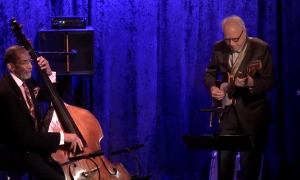
Carter's band, from the opening bass line of "Seven Steps to Heaven" to a modern interpretation of the classic Davis tune "All Blues," delivered for this gigantic gathering. More important than the tunes played was the simple fact that the eighty-nine-year-old legend still plays so well, rendering the same distinct bass sound and always laying down the perfect bass line. Rosnes, her white hair flowing in the strong, cooling breeze that suddenly appeared, exuded her usual elegance and harmonic genius, the orchestral tie that bound the foursome as one. When the quartet landed on "Blue in Green," there was a collective gasp in the large crowd, all astounded by the profound beauty of the moment. The tenor of Greene was both warm and penetrating—his dynamic, lightning-quick runs, accentuated by luxurious long tones, provided the melodic context through which Carter moved, utilizing the full dynamic range of his instrument. Crossley was intricate, reactive and leading all at once, seemingly playing with the great reverence the performance required in light of Carter's saintly presence.
The gathering at the Carhartt Amphitheatre for Lovano's final stint as artist-in-residence was huge, prompting remarks from longtime festival attendees that it was the largest such assemblage ever witnessed during the festival's magical forty-seven-year run. It represented the final homage to Coltrane, one last offering to the heavens, its fate tied to a quintet of great magnitude. Lovano was joined by fellow tenorist Melissa Aldana, soulful pianist Nduduzo Makhathini, the great Linda May Han Oh on bass and Jeff Tain Watts, perhaps the most influential drummer of his generation. It seemed the sparks would fly, and indeed they did, sparking and fanning a spiritual flame that acted as though it would burn eternally.
Beginning with "Locomotion," both Lovano and Aldana soloed side by side, a trait repeated throughout the evening, with the two tenor styles clashing, embracing and rising in unison in the spirit of the master Coltrane. The band actually traveled from an opening ostinato that led into the classic from Blue Train (Blue Note, 1957). After a stunning and soulful solo from Makhathini, the band worked its way into "Naima," the Coltrane piece devoted to his love for his first wife. The melody is the essence of beauty, a hymn to the heavens one could apply to any spiritual theme in life. With Aldana's creative evolution that parallels her time spent performing Coltrane's music, and Oh's mastery that counts her among the finest bassists in jazz, we were once again reminded of what could amount to the major evolutionary contribution of this year's festival to the overall progression of jazz music—the incredibly important contributions of strong female artists over the course of the festival's four days. While Aldana and Lovano reached for the heavens, Oh was the musical and emotional counterbalance that pulled it all together, gathering and redirecting energy at an amazing pace. She teamed with Watts to form a fluid, dynamic bond that was spiritual in nature and progressive musically. Aldana's solo followed the melody line loosely, a melody that is hymn-like and sacred in the annals of Coltrane's legacy.
The quintet flowed into "Acknowledgement" following an intro that included finger drums and bells, as well as beautiful bow work from Oh and Watts' vibrant rumblings on timpani. Lovano played the band into the thick of this mantra that vibrates in tune with the human spirit like no other piece in the Coltrane legacy or, for that matter, within the history of Western music. The two tenors playing in unison were reminiscent of a comment once made from the festival stage here by bassist Whitaker, stating that it takes two tenors today to match Coltrane's singular sound. That may not be such a bad thing. Lovano and Aldana have evolved into an entity of musical and spiritual freedom that has graced their time together and left a vapor trail of love, devotion and spiritual clarity behind them during this centennial of Coltrane's precious few years among us.
Tuesday: Leaving in Such Sweet Joy
Even a 6 AM flight, accompanied by a 4 AM car service to the airport, cannot dim the positive vibrations gathered and held internally over the preceding four days of music, sunshine, fellowship and spiritual growth. Those departing at that early hour on Tuesday morning were surprised and delighted to see Carter experiencing the same fate. To see this great son of Detroit perform was otherworldly. To see him on the legendary "hotel hang" in the Detroit Marriott's bar and restaurant, and his subsequent early-hour departure, allowed us to know him better, to penetrate a perceived veneer of privacy that the maestro has seemingly always preferred. Yet what we saw and experienced was his dignity, his love and surrender to humanity and all of its frailties, his sublime mastery of his art. We need not ask him for anything; he gives the very best of who he is and what he has learned over nearly ninety years of life. His generosity has always been accessible to those who understand, to those who listen and approach human relations with respect, honor and dignity. And so it seemed appropriate to see this grand master in the TSA line at DTW at such an hour, while we who knew who stood before us stood in awe and supreme gratitude for the time he lent us in Detroit. It was a final understanding that this festival stands head and shoulders above the rest. It brings us the best of a new generation, along with the opportunity to express our love for a living master like Carter. It leaves us with the realization of how this music can enrich our lives on so many levels, how it checks our humanity and allows us to gather in love with so many. Unlike most festival sites, Detroit is still a great music city after the event ends. It is the local scene in present times and its colorful and important history from the past that have a foundational grip on each and every iteration of the Detroit Jazz Festival. Detroit angel of jazz Gretchen Valade once made festival creative director Chris Collins promise to keep the festival free and to keep it jazz. Collins has hit the nail on the head in both cases, allowing all of us to dip into the waters of great tradition and great innovation moving forward. Even more so, Collins has opened the festival's embrace to welcome us back next year and many years thereafter.
 FOLLOW Paul Rauch
and get notified whenever a new article published.
FOLLOW Paul Rauch
and get notified whenever a new article published.
I am a writer, producer and coordinator in the jazz community, living in Seattle.
About Joe Lovano
Tags
PREVIOUS / NEXT


Joe Lovano Concerts
Become a Sustaining Member

Since 1995, All About Jazz has championed jazz as an art form and supported the musicians who create it. Over three decades, it has grown into one of the world's leading jazz resources, serving hundreds of thousands of readers, musicians, presenters and industry professionals each month.
Help Build the Future of All About Jazz
Your support helps us continue building All About Jazz for the next generation—expanding our editorial coverage, preserving jazz history, developing new community features and creating better ways to discover the music and the people behind it.
Become a sustaining member for as little as $20 per year and you'll immediately enjoy an ad-free experience along with access to subscriber features and future articles for a full year.
Together, we're not simply sustaining All About Jazz—we're building its future. Thank you for being part of the journey.