Home » Jazz Articles » Live Review » North Sea Jazz at 50: Three Days of Music, Memories and ...
North Sea Jazz at 50: Three Days of Music, Memories and a Living Legacy
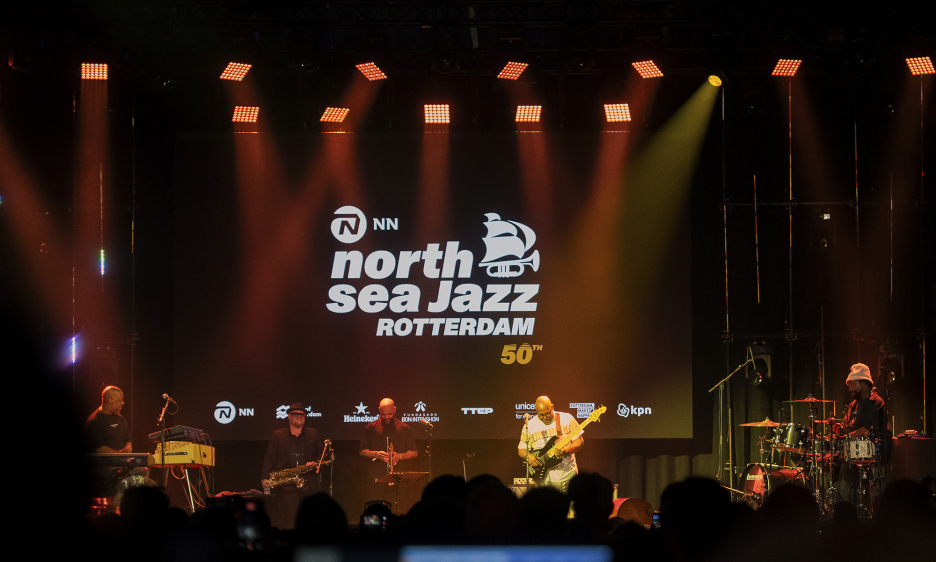
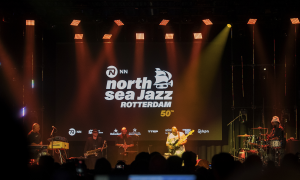
Courtesy Giovanni Guadalupi
North Sea Jazz is not simply a festival that looks back at its history. It is a living event, constantly renewing itself through the artists it presents and the audiences it brings together.
Rotterdam, The Netherlands
July 10-12, 2026
The fiftieth edition of the North Sea Jazz Festival brought three days of music, encounters and celebration to Rotterdam Ahoy, reaffirming its position as one of Europe's most important meeting places for generations, cultures and musical languages. From July 10 to 12, 2026, established jazz masters, influential voices from soul and hip-hop, adventurous young musicians and major international performers shared the festival's many stages. Jazz remained at its heart, but its boundaries were never allowed to become limitations.
Officially opened by Queen Máxima, the anniversary edition looked back at five decades of musical history while keeping its eyes firmly on the present. Jazz, soul, funk, blues, hip-hop, R&B, Afrobeat and contemporary sounds existed side by side, reflecting the open-minded spirit that has always distinguished North Sea Jazz. As ever, the greatest challenge was not finding something to listen to, but deciding what to miss. With concerts taking place simultaneously across the different venues, audiences had to choose between intimate jazz performances, major international acts and unexpected musical encounters. This abundance of possibilities is part of the festival's identity.
Friday, July 10—A Golden Anniversary Begins in Style
The opening day offered a convincing introduction to the musical breadth of the festival, moving between classic soul, adventurous jazz, hip-hop and exuberant live performances.One of the afternoon's most engaging performances came from Jalen Ngonda, whose sound is deeply rooted in the golden age of Motown and classic American soul. With an expressive voice and smooth falsetto, the British-based singer-songwriter moved naturally between romantic soul, infectious rhythms and blues-oriented passages. Songs such as "Come Around and Love Me," "If You Don't Want My Love" and "Hannah, What's the Matter?" sat comfortably alongside his spirited interpretation of Jimmy Reed's "Baby What You Want Me to Do." Supported by a tight band and two backing vocalists, Ngonda made for a warm and inviting start to the festival, with the audience responding readily to the music's effortless groove.
At the Darling, drummer, producer and DJ Questlove joined Robert Glasper and Christian McBride for a meeting of three musicians whose work has consistently crossed the boundaries between jazz, funk and hip-hop. The room was packed, with people also queuing outside. Opening with Herbie Hancock's "Butterfly," the trio established a musical conversation built on rhythmic precision, freedom and instinctive interaction. Questlove's relaxed but precise drumming, McBride's powerful bass lines and Glasper's inventive keyboard work created a flexible foundation for improvisation. The arrival of trumpeter Dave Guy and saxophonist Neil Sugarman, both associated with The Dap-Kings, added another dimension. Moving through "Fire Eater," Miles Davis' "In a Silent Way" and Freddie Hubbard's "Red Clay," the musicians eventually brought the set to an infectious conclusion with "The Chicken." More than a gathering of celebrated names, it was a spontaneous exchange in which each contribution opened new possibilities. The enthusiastic response confirmed it as one of Friday's most memorable encounters.
At the Amazon, Cecile McLorin Salvant offered a more intimate and reflective experience. This year's Artist in Residence, she appeared with pianist Sullivan Fortner, bassist Yasushi Nakamura and drummer Kyle Poole, presenting material from her album Oh Snap alongside carefully chosen interpretations. Salvant's approach goes far beyond vocal technique: each song becomes a small dramatic world, shaped by subtle changes in phrasing, tone and emotional intensity. "I Am a Volcano" and "Second Guessing" sat alongside Léo Ferré's "Est-ce ainsi que les hommes vivent?" and Margaret Johnson's "Changeable Daddy of Mine," revealing the eclectic nature of her musical imagination. Fortner was an especially sensitive partner, responding to her phrasing with harmonic invention, while Nakamura and Poole provided a supple rhythmic foundation. It was a thoughtful highlight, contrasting beautifully with the more extroverted performances elsewhere.
The Nile later welcomed De La Soul, whose playful spirit, inventive sampling and positive outlook have distinguished the group since the late 1980s. Familiar favorites such as "Me, Myself and I," "The Magic Number" and "Say No Go" gave the audience an opportunity to reconnect with music that helped redefine hip-hop by bringing jazz, funk and experimentation into the genre. The group's continued presence on stage also carries an emotional dimension following the death of founding member Trugoy the Dove in 2023. His spirit remains an essential part of De La Soul's identity, making the performance both a celebration of their legacy and a tribute to a much-missed voice. The audience embraced the familiar grooves and witty exchanges, creating an atmosphere of collective celebration.
On the Maas, British seven-piece collective Kokoroko brought a warm blend of Afrobeat, soul and vintage funk. Drawing on West African musical traditions while retaining a contemporary London identity, the group balanced infectious rhythms with more relaxed, atmospheric passages. The interplay between Sheila Maurice-Grey's expressive vocals and trumpet and Anoushka Nanguy's vocals and trombone was particularly engaging. Supported by a tight rhythm section, fluid keyboards and percussion, Kokoroko created music that felt organic and generous. Their performance relied less on sheer intensity than on groove, musical chemistry and the pleasure of playing together; the audience responded warmly to both the danceable passages and quieter moments.
As the evening progressed, Jon Batiste turned the Nile into a vibrant celebration of musical freedom. Moving between piano and vocals, he blended jazz, gospel, soul, blues and R&B with an exuberant, almost theatrical energy. His spontaneous gestures and generous interaction established an immediate connection with the audience, transforming the concert into a communal celebration. The Nile was filled with enthusiasm, applause and movement, making this one of Friday's most warmly received highlights.
The Maas then hosted a particularly meaningful reunion: Roy Hargrove's RH Factor, bringing the spirit of the late trumpeter's adventurous fusion project back to the stage. The line-up included Wayne Tucker, Renée Neufville, Reggie Washington, Jason “JT” Thomas, Willie Jones III, Bobby Sparks and Batiste. Occupying the space between jazz, funk, soul and hip-hop, the music offered a reminder of Hargrove's ability to bring these worlds together without sacrificing the sophistication of his jazz language. The reunion carried an emotional weight, but it was also a celebration of music that remains full of energy and relevance.
Friday reached another high point with The Roots, joined on the Nile stage by special guests Bilal and Batiste. Led by drummer Questlove and rapper Black Thought , the Philadelphia collective demonstrated its remarkable combination of rhythmic invention and live- band spontaneity. Batiste's return created a pleasing connection with his earlier performance; his virtuosic melodica interpretation of Michael Jackson's "Human Nature" was one of the evening's memorable moments, while Bilal added his distinctive vocal presence. The audience responded enthusiastically. More than a hip-hop concert, it was a celebration of Black American music and of the connections that had run through the entire opening day.
Saturday, July 11—From Intimate Jazz to Monumental Performances
Saturday offered another journey through the many directions jazz and contemporary music can take, bringing together established figures, adventurous improvisers, contemporary soul artists, African rhythms and major international names.Glasper opened the day at the Darling with a performance combining jazz improvisation and hip-hop sensibilities. Accompanied by Burniss Travis on double bass, Justin Tyson on drums and DJ Jahi Sundance on turntables, he moved between delicate melodic passages, rhythmic explorations and electronic textures. A tribute to J Dilla provided an early point of reference, while his interpretation of Herbie Hancock's "Daydream (Soul Power)" brought out the quartet's playful side. The audience responded enthusiastically, particularly to the exchanges between Glasper and Tyson, whose inventive drumming continually pushed the music in unexpected directions.
At the Nile, Incognito delivered one of the day's most irresistible celebrations of groove. Led by the charismatic Jean-Paul 'Bluey' Maunick, the London collective showed that its blend of acid jazz, soul and funk remains as infectious as ever. Opening with "Talkin' Loud," the band moved through favorites including "Hats (Make Me Wanna Holler)," "Still a Friend of Mine" and "Colibri." Vocalists Cleo Reign Stewart, Joy Rose, Natalie Duncan and Tony Momrelle combined soulful lead performances with beautifully interwoven harmonies. The rhythm section—Francis Hylton on bass, Francesco Mendolia on drums and João Caetano on percussion—provided a powerful foundation, while an extended exchange between Mendolia and Caetano became one of the set's most exciting moments, turning the Nile into a dance floor.
Bluey's presence also gave the concert a touching dimension. Although Parkinson's disease has increasingly affected his ability to perform on guitar, he remained a warm and engaging figure on stage, contributing vocals, percussion and his unmistakable personality. Speaking about the divisions in today's world and music's capacity to bring people together, he gave the performance an added emotional resonance. At the end, the audience joined the band in singing Bob Marley's "One Love," with voices continuing even after the musicians had left the stage. It was one of Saturday's most moving moments.
The Maas offered a different emotional register with Joy Crookes, whose contemporary soul sound and distinctive voice brought an intimate quality to the afternoon. At the Murray, Noha Saré offered a personal, atmospheric approach drawing on soul and jazz, while Belgian trombonist Nabou Claerhout and her project NABOU brought an adventurous instrumental perspective to the program. These performances were reminders that the festival's identity is shaped not only by headline attractions, but also by artists who invite audiences to discover new musical languages.
One of Saturday's most compelling instrumental performances came from Brazilian pianist Amaro Freitas, whose trio with bassist Sidiel Vieira and drummer Rodrigo Braz brought a distinctive rhythmic intensity to the Madeira. Drawing on Brazilian musical traditions while embracing the freedom of contemporary jazz, Freitas approached the piano as both a melodic and percussive instrument. Intricate rhythmic patterns, unexpected accents and striking harmonic ideas gave the trio's performance a physical energy, balanced by more open improvisational passages. It was a vivid example of how jazz can absorb local traditions and transform them into something entirely individual.
At the Murray, Tomoki Sanders, accompanied by Keyanna Hutchinson, Ian Finkelstein and Christian Napoleon, explored contemporary jazz through improvisation and rhythmic possibility. The Madeira later welcomed the Bill Frisell, featuring bassist Thomas Morgan and drummer Rudy Royston, with saxophonist Greg Tardy. Frisell's unmistakable guitar language—delicate and spacious, yet capable of unexpected intensity—provided the starting point for a performance built on listening and interaction. Drawing on jazz, folk, blues, country and experimental textures, the music found its strength in atmosphere, nuance and the subtle evolution of ideas. Tardy added another melodic voice, while Morgan and Royston offered responsive support.
Saturday evening expanded the festival's musical geography still further. At the Congo, Adekunle Gold brought contemporary Afrobeats to the program, connecting Nigerian popular music with an international audience. At the Darling, Alex Isley offered a more intimate encounter with contemporary R&B and soul, her warm vocal delivery placing the emphasis on melody and emotional expression. Later, Burna Boy took over the Nile with the scale and energy of one of the leading figures in contemporary Afrobeats. His appearance reflected the increasingly international character of North Sea Jazz, although audience reactions varied across the large venue. MARO, Charlie Puth and Rymden added further contrasts to a program that never settled into one mood.
Saturday's strength lay precisely in this coexistence of different musical worlds. Incognito brought audiences together through familiar grooves and collective singing; Freitas and Frisell invited more concentrated listening; Glasper explored the meeting point between jazz and hip-hop; while contemporary African and R&B performances brought different audiences and traditions into the same festival environment.
Sunday, July 12—A Finale of Contrasts and Musical Encounters
The final day moved from African musical heritage to experimental jazz, from intimate soul performances to large-scale shows, providing a fitting conclusion to a weekend built around diversity and musical exchange.Youssou N'Dour and Le Super Étoile brought the sound of Senegal to the Nile, combining the rhythmic vitality of mbalax with the melodic richness that has made N'Dour one of Africa's most internationally recognized artists. Songs such as "7 Seconds" and "Shaking the Tree" resonated strongly with the audience, while the older material generated some of the warmest responses. It was a powerful reminder of the importance of African music within the wider history of North Sea Jazz.
At the Madeira, Shabaka Hutchings offered a very different experience. Moving between saxophone, clarinet, flute and electronic sampling, he created a shifting musical landscape that resisted easy categorization. Rather than presenting a conventional sequence of compositions, he explored sound, rhythm and texture, allowing the music to develop through experimentation. The approach was compelling for listeners drawn to his adventurous musical language, even if its exploratory nature was not necessarily to everyone's taste. Artistic risk, after all, remains an essential part of a festival such as North Sea Jazz.
At the Hudson, the Charles Lloyd Quartet delivered one of the weekend's most absorbing jazz performances. At 88, Lloyd continues to play with remarkable energy and imagination, combining a lyrical approach to the saxophone with an openness to unexpected directions. Accompanied by pianist Gerald Clayton, bassist Harish Raghavan and drummer Kweku Sumbry, he moved between introspective passages and more rhythmically charged improvisations. His occasional use of the flute added another color, while the sensitivity of the quartet allowed each musician to contribute to the evolving conversation. Lloyd's performance was a reminder that musical maturity need not mean standing still.
The Amazon welcomed Dee Dee Bridgewater with We Exist, a project giving the performance a clear artistic and personal focus. Accompanied by an all-female band, the celebrated vocalist explored themes of recognition, representation and women's contribution to music. Her interpretation of Roberta Flack's "Trying Times" was particularly moving, while her revisit of Ray Charles through "Danger Zone" brought a different intensity. Bridgewater combined musical authority with personal vulnerability, creating a performance that felt both intimate and purposeful.
At the Darling, Adrian Younge brought a distinctive cinematic quality to the evening. Joined by Loren Oden, Jack Waterson, Sam Raid and Marcelo Bucater, he explored a sound rooted in soul, funk and vintage recording aesthetics. His carefully constructed arrangements and interest in atmosphere offered a welcome alternative to the larger concerts taking place elsewhere. The Nile later welcomed Giveon, whose rich baritone and contemporary R&B sound brought a more intimate emotional dimension to the evening.
At the Amazon, Hiromi's Sonicwonder brought a very different kind of energy. The pianist's extraordinary technique, restless imagination and explosive stage presence drove a performance moving between intricate jazz passages, rock-inflected intensity and moments of almost orchestral scale. The ensemble shifted between tightly arranged passages and open improvisation, giving the concert a dynamic character that was demanding but exhilarating.
At the Darling, drummer Nate Smith presented a quartet featuring saxophonist Josh Johnson, keyboardist James Francies and bassist Anna Butterss. Their music combined precise, pulsing grooves with electronic textures and melodic interplay. Smith's energetic drumming and Francies' imaginative keyboard work added depth to a performance that rewarded close attention. Although the room was not as full as might have been expected, with several major concerts taking place simultaneously, the audience that gathered responded warmly to the musicianship on display.
The Murray hosted Theon Cross, whose distinctive approach to the tuba has helped redefine the instrument's role in contemporary jazz. Drawing on improvisation, dub, grime and Afro-Caribbean rhythms, Cross created a powerful sound that was both physically engaging and exploratory. Joined by James Akers, Nikos Ziarkas and Nate Ricketts, he used the tuba's weight and resonance as the foundation for music that was rhythmic, atmospheric and adventurous.
One of the final evening's most historically significant performances came at the Hudson, where Terence Blanchard and Ravi Coltrane presented MILES / COLTRANE—Legacy. The project celebrated the centenaries of Miles Davis and John Coltrane, both born in 1926, bringing together two musicians whose artistic identities are deeply connected to the legacies of these giants.
Blanchard on trumpet and Coltrane on saxophone shared the leadership of a sextet featuring Charles Altura on guitar, Julian Pollack on keyboards, David Ginyard on bass and Oscar Seaton on drums. Rather than attempting to recreate the sounds of the 1950s and 1960s, the project approached the music of Davis and Coltrane as a living tradition, open to reinterpretation. Blanchard brought blues-inflected expressiveness and rhythmic invention, while Coltrane approached his father's heritage with an individual voice, favoring lyrical exploration over imitation. Their exchanges created a dialogue between trumpet and saxophone, at times reflective and spacious, at others more forceful and rhythmically adventurous. The arrangements also incorporated contemporary influences from funk, rock and hip-hop. Among the musical highlights reported from the project were Blanchard's "Flow" and a medley connecting "All Blues," "Someday My Prince Will Come" and "Teo," followed by "Two Bass Hit." The performance's greatest strength lay in treating jazz history not as something to be preserved behind glass, but as a source of inspiration for new ideas.
As the weekend approached its conclusion, the Maas welcomed John Legend, who brought a personal dimension to the final program. Sharing stories and photographs from his childhood, he spoke about family, loss and the experiences that had shaped him. His emotional interpretation of Simon & Garfunkel's "Bridge Over Troubled Water" became a collective moment, with the audience joining in. The personal character of the performance made the large venue feel considerably smaller.
Nile Rodgers & CHIC then provided a celebratory close to the festival's main program. With a catalog of timeless disco, funk and pop anthems, the band brought the anniversary weekend to a joyous conclusion.
North Sea Jazz at 50—A Living Legacy
Beyond the concerts, the fiftieth anniversary offered an opportunity to reflect on the history of the festival and the musicians who have shaped it. The North Sea Jazz 50 Years Experience provided an interactive journey through five decades, bringing together memories, images and stories from an event that has continually evolved while maintaining its commitment to musical discovery.Photography played an important role in this retrospective. The exhibition 50 Years North Sea Jazz Photography, featuring the work of Rico D'Rozario, Paul Bergen and Andreas Terlaak, offered a visual journey through the festival's history. The photographs captured not only celebrated performers and memorable concerts, but also the changing atmosphere of the event, its stages and audiences, and the many expressions of creativity that have made North Sea Jazz such a distinctive institution.
For a music photographer, such images also reveal the particular relationship between music and photography. A concert unfolds in time, often unpredictably. A gesture, a glance, the movement of a hand across an instrument or a fleeting expression can communicate something that words alone may struggle to describe. The photographer's task is to recognize that instant and preserve it, knowing it may last only a fraction of a second. Across five decades, generations of photographers have documented artists at different stages of their careers, creating an essential visual memory of the festival.
The 2026 anniversary edition was more than a celebration of fifty years of music. It was a reminder of what makes North Sea Jazz special: its willingness to bring together different generations and traditions, its openness to new ideas and its ability to make room for established masters and emerging voices. Some performances invited reflection, others encouraged dancing and collective celebration; some looked toward the future, while others acknowledged the musicians whose work created the foundations on which contemporary artists continue to build.
After three days and countless musical encounters, one impression remained particularly strong: North Sea Jazz is not simply a festival that looks back at its history. It is a living event, constantly renewing itself through the artists it presents and the audiences it brings together. Fifty years on, its greatest achievement may be precisely this ability to honor its legacy without becoming confined by it. The music continues to move forward, and so does North Sea Jazz.
 FOLLOW Giovanni Guadalupi
and get notified whenever a new article published.
Photographing is a way of living and perceiving oneself and others.
Tags
PREVIOUS / NEXT


Become a Sustaining Member

Since 1995, All About Jazz has championed jazz as an art form and supported the musicians who create it. Over three decades, it has grown into one of the world's leading jazz resources, serving hundreds of thousands of readers, musicians, presenters and industry professionals each month.
Help Build the Future of All About Jazz
Your support helps us continue building All About Jazz for the next generation—expanding our editorial coverage, preserving jazz history, developing new community features and creating better ways to discover the music and the people behind it.
Become a sustaining member for as little as $20 per year and you'll immediately enjoy an ad-free experience along with access to subscriber features and future articles for a full year.
Together, we're not simply sustaining All About Jazz—we're building its future. Thank you for being part of the journey.
Near

Rotterdam Concerts