Home » Jazz Articles » Interview » Mike LeDonne: Where There’s Smoke
Mike LeDonne: Where There’s Smoke

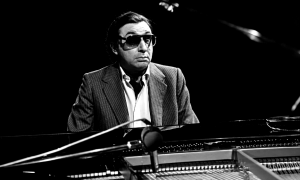
ML: Well, he was my first great teacher at college. He was a huge influence on me. He could just do anything—a genius. One of the greatest pianists of all time and a beautiful guy, full of love and life and warmth, and a party-time guy. Every lesson with him was a party. He would just play, and I would play. We had two pianos, and I'd stop him and say, "What's that?" And he'd show me voicings and whatever. I'd go and hang with him after our lessons. What a joy that I got to be around that guy. He helped me out when I came here to New York; he set me up with things, like letting me sub for him at the New School, where he also taught, and also at the Hartt Music School in Connecticut. I was just devastated when he got killed. He was murdered. Somebody came to his house and shot him right there, out in Queens—terrible disaster, a tragedy. He was still playing so great and had many, many years left in him.
AAJ: Can you talk about your first record as a leader, 'Bout Time (Criss Cross, 1988)?
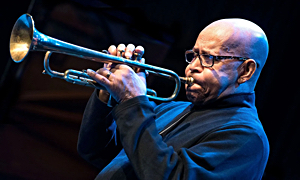
ML: Well, that first record was something. Everybody was trying to get a record date with Gerry Teekens in those days. His was the main label that was recording young artists, Criss Cross. Kenny Washington and a pianist named Michael Weiss actually got me the date. Gerry was listening to some other records I made as a sideman, but he wasn't convinced. Michael and Kenny said, "No, you've got to hear him live." They brought him to my gig and that was it; then he gave me the date. Tom Harrell was on it and Dennis Erwin on bass, and that was Gary Smulyan's first record date, I think.
We recorded it at Rudy Van Gelder's studio, and I had never been to Rudy's before. He still had the old piano, and he still was recording like the old days. I put those headphones on. I was so nervous—I mean, I could barely keep my composure. But once I heard that piano in the headphones, it all went away. One of the guys was an hour late, and that made me more nervous. But once we hit the first tune, it was like magic, man. Just everything fell into place. The band sounded fantastic right in the headphones. Usually headphones bother me. But the sound in the headphones was like the sound in all my favorite records. Like, "Wow! Is this me? Oh, my God! I sound pretty good," you know?
AAJ: Some people have been critical about his piano or the way that he recorded it.
ML: That he makes everybody sound similar. I don't agree. I can tell everybody apart when I listen. It's rhythm that separates everybody, really, and that sound that he got—it is similar, but Hank Jones got a different sound out of it than Thelonious Monk did. And Tommy Flanagan sounded differently on it than Cedar did. And McCoy sounded differently on it. To me, for each one of them, it's their classic sound. When I think of their records, I think of the sound they had with Rudy. Really, that sound is probably my favorite piano sound. I mean, it's got warmth, but there's also a bite to it. And he recorded it really loud so that it almost distorts. I love that sound. It's got this really warm, bluesy, soulful thing built right into it. It is a special instrument—an old Steinway B, made in a time when they had different felt than they use now. So it actually did sound different, and it sounded magnificent. Hank Jones wanted to buy that piano from him his whole life.
AAJ: Well, maybe you've got to find something like that for your solo piano record.
ML: I would love to. It's a great sound. It's a bit different now. Rudy had to change the hammers, and he doesn't record exactly the same way. But it's a great sound. I might be too intimidated to record solo on that piano after hearing that sound on all the great solo records I've heard.
AAJ: Can you talk a little bit about how you approach the piano overall and how you got to the point you're at now technically?
ML: Well, a lot goes into it. First of all, the piano is an orchestra. So you have to orchestrate. And you're a big band, too. So you've got the flutes, you've got the saxophones, you've got the trombones, you've got the bassist. You've got everything. The pianist, the trumpet player—everybody's there. But you have to hear those things and let them all come out. You can't just sit there and only play piano—that's all there is to it.
The main thing that I keep working on is relaxing. I studied with a guy, Nick Rodriguez, who taught a technique that I use. He called it "relaxation technique." He was a brilliant guy. He didn't play jazz at all, but he changed my life. I went to the New England Conservatory; I went to Manhattan School of Music Prep and everything, and I studied with great classical teachers. No one taught me the basic nuts and bolts of technique like this guy. And he did it in such a down-to-earth, easy-to-understand way. All of a sudden, everything just clicked. Nick was a pianist, but not a jazz musician. He loved jazz. He loved Phineas Newborn. But he was really a classical pianist and a theoretician—that's what he called himself. He was a character. He used to have a studio in the same place Barry Harris's studio was, at Charles Colin Studios, back in the day. His studio was a few doors away, and he and Barry knew each other; he loved Barry. He could come up with some jazz-like arrangements of tunes, but he couldn't really improvise. But he was a top-notch musician. He said, "When you relax, the music just comes out." And that is the truth. That's the truth, simple as it can be. When you relax, music comes out.
When you're playing, you can't get all caught up in thinking too much, trying to focus on something you've practiced and trying to fit it into what you're doing. You try that, and you're just going to have a problem. You're setting up a scenario for failure, right there. I know. I used to do it all the time. I'd be sitting there practicing something and listening to things—thinking, "I want to sound like that"—and you just can't do it. But when you relax and get all of that clutter out of the way, stuff starts coming out you didn't even know you could play. It comes from somewhere else in your brain.
There's a great book about the brain and music, Musicophilia, by Oliver Sacks. It's a study of the brain and how music affects it—not only by playing music but also just listening to it. What they found through many case studies and from X-rays and CAT scans of the brain was that the part of the brain that rests between the two lobes, that lets those two sides communicate—that gets developed specifically and in a special way through music. Music doesn't register in just one part of the brain. It takes place all over the brain. It's not like speech, where there's a speech center—or emotion, or other activities in the brain. Music takes place all over. The brain is firing all over the place, even when you're just listening to it. But when you're studying it and practicing it and playing it, it's really going. They've found that that part of the brain is actually larger and more developed in people who play music and listen to music. Music does that to the brain. Nothing else does, really. Well, I don't know about nothing else, but this guy proved that music does. It's amazing, when you think about it. Music is something we all really need; it's not something you can live without. You actually need it if you want to develop your brain all the way. You want to get smarter, listen to music.
The brain is just so unknown; there's so much uncharted territory there. I know this from my daughter, Mary, too. She had many problems when she was born. She's disabled, and yet her brain is developing in a different way, but it's developing. She could hardly walk for the first five years of her life, but now she can swim like a fish. She can get right in the pool, and we don't need to be with her; we don't need to give her a floatation device; she just does it. Where'd that come from? There are all these freaky things about the brain. And one very freaky thing about the brain with music is you've got to get out of its way, which is hard to do. We're all so inhibited and all over-thinking everything that it's hard to shut all that clutter down and get the music out. But that's what you're hearing when you hear Coltrane. That's what you're hearing when you hear McCoy Tyner.
That's what genius is, I think. It's just getting all that out of the way and letting that brain, some part of it, just explode. Let it out. I remember reading something McCoy said. Now, he's a very spiritual guy, and he was saying that when he plays, he just tries to let the creator flow through him and get out of the way and just let it out. Whatever it is, if it's terrible or if it's great, just let it out. Let it be. And that has had a big influence on my thinking. I thought, "Yeah, forget all these arrangements and all this crazy stuff—trying to play this, trying to play that—and just play. It takes a long time to get there with jazz music, because there's so much studying to do, there's so much theory you have to know, there's so much history to know. There are so many things you've got to embed in your brain just to get going; it's an awesome task right there.
AAJ: And physically?
ML: Physically, the technical demands are just the same as classical music. I know, because I've played both. But in jazz, you're composing spontaneously. Now, it's really something else to memorize music, like classical players do. That's another thing. That's another part of the brain. 'Trane said if they put a transcription of a solo of his in front of him to read, he just couldn't do it. But look what he could do when he improvised. There are different strengths and weaknesses in everybody. But, technically, you have to have everything at your command in jazz to get the music out. You've got to be on the top technical level and the top thinking level to be a great jazz musician.
About Mike LeDonne

Tags
PREVIOUS / NEXT


Mike LeDonne Concerts
Become a Sustaining Member

Since 1995, All About Jazz has championed jazz as an art form and supported the musicians who create it. Over three decades, it has grown into one of the world's leading jazz resources, serving hundreds of thousands of readers, musicians, presenters and industry professionals each month.
Help Build the Future of All About Jazz
Your support helps us continue building All About Jazz for the next generation—expanding our editorial coverage, preserving jazz history, developing new community features and creating better ways to discover the music and the people behind it.
Become a sustaining member for as little as $20 per year and you'll immediately enjoy an ad-free experience along with access to subscriber features and future articles for a full year.
Together, we're not simply sustaining All About Jazz—we're building its future. Thank you for being part of the journey.