Home » Jazz Articles » Interview » Francesco Diodati: Making Room for the Unknown
Francesco Diodati: Making Room for the Unknown
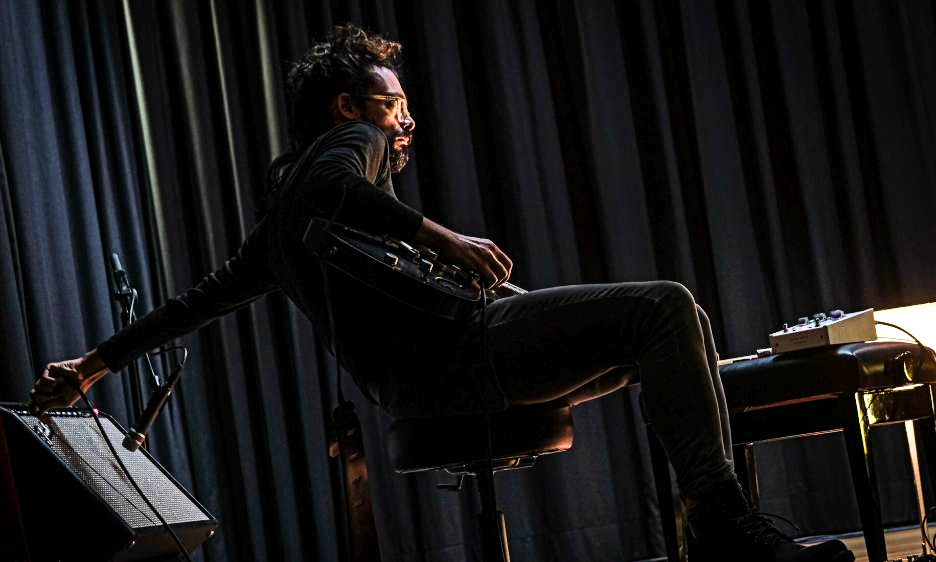
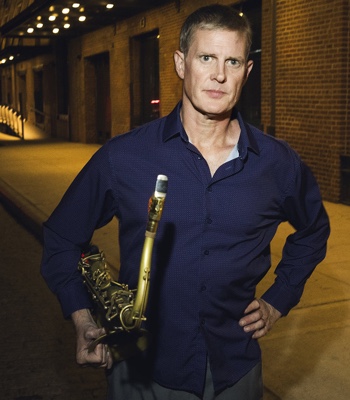
Courtesy Roberto Manzi
I am interested in making music with such a strong identity that it can always welcome stimuli from the world around it, without being afraid to engage with anything that might differ from the path it is following.
—Francesco Diodati
AAJ: Among the many groups you've been part of, which ones have been the most formative for you?
FD: An important moment was meeting Bobby Previte, which led to the group Plutino featuring saxophonist Beppe Scardino. When I was in New York, Previte contacted the agent Giovanna Mascetti, asking her to recommend a European musician he could hire. She suggested me, and I began working with him until we formed Plutino. Unfortunately, at that time the American market wasn't receptive to musicians outside the mainstream, and the group never really took off. We did a tour of Italy, played a concert in Saalfelden and recorded a very open-ended album on which Bobby encouraged me to use a rock sound and a more forceful approach.
That experience was important because it showed me that the work I had done up to that point could also function with musicians I would never have expected to work with. Another pivotal experience was Yellow Squeeds, the quintet with which I recorded two albums between 2015 and 2029, because it gave me the opportunity to work extensively on composition and rhythm. I had incredible partners alongside me, such as Francesco Lento, one of my favorite trumpet players, not to mention Enrico Morello, Enrico Zanisi and Glauco Benedetti.
Another important project for me came out of my long collaboration with Matteo Bortone's group Travelers, later renamed No Land's. I learned a great deal from the phenomenal musicians who were part of the group and from Matteo's compositional structures. He is a superb writer as well as an extraordinary musician. We recorded three albums and traveled all over the world.
Finally, I have to mention a truly extraordinary experience, both personally and musically, in which I took part for six years: Myanmarmeetseurope, a project conceived by Tim Isfort that took me to Burma many times between 2011 and 2016, before the recent political events. During those years, I participated in artist residencies and international tours with a group made up half of European improvisers and half of traditional Burmese musicians.
AAJ: Were the first guitarists you listened to as a young musician more associated with jazz or with rock?
FD: When I first started playing guitar, I was fascinated for a while by Joe Satriani, Robben Ford, Steve Vai and Scott Henderson. Then, during my early studies, I met Roberto Spadoni, who introduced me to Jim Hall and the generation of Bill Frisell, Bill Frisell, Pat Metheny, John Abercrombie and others. Later, when I was around twenty, I rediscovered a lot of music I had neglected, from Radiohead and Jeff Buckley to very different things such as hip-hop, traditional Cuban music and the indie scene. In more recent years, Stefano Calderano introduced me to a great deal of music from punk and the Chicago underground scene.
During the pandemic, I took online lessons with Jen Shyu and then studied privately with Steve Coleman, an extraordinary musician who has always pursued his own independent research. That was another important moment for me. He emphasized Charlie Parker and Von Freeman, while also giving me a wealth of rhythmic, melodic and extra-musical ideas. He changed many things about my approach to music.
All About Jazz : Turning to some of the most significant projects you are currently involved with, I would like to start from Weave4. Could you tell us how this collaboration with saxophonist Francesco Bigoni, pianist Benoit Delbecq and drummer Steve Arguelles came about, and what brought you together?
Francesco Diodati: My first contact with Benoît Delbecq was in 2019. I was looking for someone who could open up new paths for me in composition and improvisation, so I contacted him for a lesson. He was very welcoming and generous: he invited me to his home, we spent half a day together, and he shared many of his writing techniques and ideas about improvisation.
A couple of years later, Francesco Bigoni and I were talking about playing together regularly again, after the distant experience of my group Neko with Baron and Ponticelli. We thought of bringing Delbecq into the project, and an opportunity came up to play a concert at Sala Vanni in Florence. The drummer on that occasion was Sylvain Darrifourcq, but he was very busy over the following months, and Delbecq suggested Steve Argüelles, the drummer he had been working with for thirty years. The project took shape when we received funding from Creative Europe for a two-week residency in France. We played in Steve and Benoît's studio and immediately found ourselves on the same wavelength. Those recordings became our first album, released by Parco della Musica in 2023.
AAJ: Your artistic relationship has grown stronger over the years. What sustains it?
FD: I play with three people whose musical knowledge and intuition inspire me enormously. We share a great passion for rhythm, along with a desire not to be too explicit, whether in composition or improvisation. There is also our collective ability to reshape each other's compositions. I remember that, at first, I would bring the group pieces that were very elaborate, only to find that Benoît, Steve and Francesco wouldn't play them exactly as written. Instead, they would modify them, drawing ideas from them while respecting their underlying concept and sound. That approach has become our modus operandi: every piece we bring in immediately becomes a Weave4 piece, while retaining a strong authorial identity. It is, however, a very flexible identity, one that welcomes the others' contributions, especially in terms of sound.
The music often unfolds with a deeply embedded pulse that gradually reveals itself over time. I think this aspect is more evident on the second album. Another characteristic is the use of loops, both by me and by Argüelles, who can sample all of us in real time, creating a kind of double track between acoustic and electronic sounds. It makes the music playful, rich and full of motion. In this group, we approach the material differently every time, and we have no desire to draw firm boundaries around our collective explorations. We are more interested in uncertainty, in a kind of breathing space whose coordinates are not fully defined, leaving room for the imagination.
AAJ: Compared with the abstract chamber-music atmospheres that permeated the first album, the second seems to have more inner movement and more references to jazz and rock. I'm thinking, for example, of pieces such as "Kind Of," "Shoom" and "Spleen Turn..."
FD: That's certainly true. We have brought the group's sound into sharper focus on this second album. The compositions we have brought in have a collective conception. The wonderful thing about this group is that we are constantly talking about music. I love that, because there is complete openness in every direction: an approach without boundaries, but with a deep love of jazz. When Francesco and I stay with Benoît at his home in Paris, we often listen to records together. On those occasions, I discovered Turning Point, the album with John Gilmore, Paul Bley, Gary Peacock and Paul Motian. Or Dollar Brand's African Space Program. At one point, I heard a trumpet and said, "But that's Enrico!!!" We looked at the booklet and found a photograph of the group: there was only one white musician, Enrico Rava.
AAJ: The new album comes with a statement that ends with this sentence: In a modern world where everything seems replicable, we are convinced that no technology can reproduce the deeply human process through which we bring our imagination to life. What prompted you to make this point?
FD: Let me start with the album's title, La gomma di Dante [transl. "Dante's Eraser"], which is also a piece by Benoît and grew out of reflections he shared with us. The inspiration came from seeing Dante's manuscripts, which contain countless erasures. Just as sculptors remove the superfluous from a rough piece of marble to reveal what they see within it, a piece of music is often the result of many "erasures" of the initial idea. The artistic process is unique, inimitable and fundamentally human. The provocation is directed at the present moment, when AI can do many useful things, but we don't believe it can replace human imagination. We wrote that statement to bring our reflections together and emphasize the importance of the creative process, which is an aspect of music that directly concerns us.
AAJ: I interpreted that statement as a criticism of the transhumanist ideology that seeks to replace human beings with machines. I find this ideology delusional, because human beings have a psychological and spiritual dimension that cannot be replicated. Art is not the result of programming a series of elements to fit together.
FD: I'm not against technology, machines or AI. All well and good if they replace alienating jobs and pointlessly repetitive tasks, leaving people more time for imagination, creativity and the development of distinctly human qualities. What is paradoxical, instead, is that this capitalist drift should be so intent on replacing human creativity.
AAJ: I'd like to talk about your collaborations with Francesco Bigoni, which have now lasted for more than a decade...
FD: Much more than a decade—it goes back to 2007! We recorded our first album, Purple Bra, for Marco Valente's Auand Records in 2009; it came out in 2010, and we had already been playing together for two or three years.
AAJ: What lies behind this collaboration, which seems to keep renewing itself?
FD: I went to a concert by Gianluca Petrella's Cosmic Band, of which Francesco was a member, and was blown away by his sound. I called him and suggested we work together, and ever since then I've continued to appreciate his flexibility and all-around musicality. Francesco is also a great scholar, and I learn a tremendous amount from him, as I do from all the musicians I work with. He gives me a wealth of ideas and stimuli.
AAJ: Let's move on to the new Fearless Five album. When was it recorded, and what repertoire did you record?
FD: First of all, it features Joe Lovano as a guest, and we recorded it last July at the Auditorium Parco della Musica. For the first time, Enrico invited us to contribute compositions, and each of us brought in pieces, highlighting the group's strong collective cohesion. This is the fourth album I've recorded with Enrico, and the first time I've written a piece for him. It was also almost a shock for me to record alongside Joe Lovano, a saxophonist I admired enormously as a teenager through his records with John Scofield and his trio work with Paul Motian and Bill Frisell.
AAJ: Did he fit naturally into the group's spirit?
FD: Absolutely. It was wonderful to hear and see him alongside Enrico. Joe immediately became part of the group's sound. I'm happy to play with the Fearless Five because there is a real desire to be together and a great deal of enthusiasm. Enrico never talks about musical genres. What matters to him is that the musicians respond to one another. I hope a live album will come out one day, too, because the group has a lot to offer in that setting.
AAJ: How would you sum up your long partnership with Enrico Rava? He appreciates the guitar because it gives him more freedom than the piano, and particularly appreciates you for bringing him unexpected ideas...
FD: I hope so! My association with Enrico goes back to my earliest teaching experiences at Siena Jazz, when I was still seventeen. We were all incredibly excited in that first workshop, and Enrico described our version of "Stella by Starlight" as the worst he had ever heard. After that, I couldn't play another note! Years later, I attended the two-year "In.JaM" master's program, also at Siena, and had new opportunities to meet Enrico. To cut a long story short, in 2011 I was in New York after a short period of study at the New School when I received an email from Mario Guidi, Enrico's longtime manager, offering me a concert with Enrico's Standards group at the Il Moro jazz club in Cava de' Tirreni. I accepted immediately, and a few months later I got on a plane and went straight to the club on the scheduled date.
Enrico saw me arrive with a suitcase as big as a house, and when he realized where I had come from, he said, "You've come all the way from New York to play with me? Why on earth would you do that...?" That was our first concert. When I was a teenager, Enrico was a legendary figure, and my relationship with him began with a mixture of recklessness and reverential awe, given his musical history, clarity of purpose and the authority he conveys both on and off stage. Musically, Enrico expects you to be present and to keep offering creative, unexpected ideas. I think I have managed, in some way, to meet his entirely reasonable "demands." He really appreciates electric and electronic sounds on the guitar, and he has always allowed me to experiment. Over the years, our musical relationship has grown, and our personal relationship has become closer and more trusting, partly because I've felt more able to be spontaneous.
AAJ: Your other albums are with the cooperative group tellKujira and Julien Pontvianne's quartet Abhra. Shall we start with the former?
FD: The tellKujira album is titled La lucha es un poema colectivo (Superpang). The group features Agnese Amico on violin—she replaced Ambra Chiara Michelangeli at the end of 2025, although Michelangeli appears on the album—, Francesco Guerri on cello and Stefano Calderano on guitar. It is very different from our first album, released in 2023, and grew out of a month-long residency at IRCAM in Paris, where we experimented with software that uses artificial intelligence, with the help of Marco Fiorini, our contact and collaborator at IRCAM. The proposal was to test their Somax software, developed for interactive composition and real-time improvisation. It's interesting how this experience connects with the reflections on AI we were discussing earlier. After working with it for a while, we appreciated the software's responses to our improvisations, but we also found ourselves asking, "Nice, very nice, but what are we going to do with it?"
Building on an initial suggestion from Stefano Calderano, we tried using it compositionally, imagining particular sounds within a narrative, dramaturgical context. That was how the process leading to the album began. We were working at the Centre Pompidou, which falls under the same administration as IRCAM, and during those weeks its workers were on strike. This affected us deeply and further inspired us to create a strong interaction among different kinds of music, abstract soundscapes and various insertions. In particular, we used field recordings, samples and sound architectures to integrate all this material with the sounds of our instruments.
AAJ: Is there a story behind the title?
FD: We drew on all of this and referenced a phrase first used by the feminist artist and activist Mar Maremoto on March 8, 2004, which reached us through the work of the Argentine artist Prensa La Libertad.
This is a cross-genre group, and the music is extremely rich and moves in many directions, even though its sonic identity is very clearly defined. On stage, we add synthesizers and samplers to our main instruments to achieve the sounds we're looking for. In practice, we perform both on the jazz circuit and in contemporary, electronic and indie music contexts.
AAJ: Tell us about your partnership with Julien Pontvianne's quartet Abhra.
FD: These days, it's wonderful for a group to have a long history to tell. Abhra was formed in 2014, and its self-titled debut album came out in 2016. That was followed by Seven Poems on Water in 2022. I think it's a wonderful group with a strong collective identity. The music, conceived by Julien, is a kind of dreamlike folk, though it's difficult to put a label on it. The first album featured Lauren Kinsella on vocals and Hannah Marshall on cello. From the second album onward, they were replaced by Adéle Viret and Isabel Sörling, while the unchanged core consists of me, Julien on saxophone, Alexandre Herer on piano and Fender Rhodes, and Matteo Bortone on double bass. I've worked with Matteo for many years, and he introduced me to the others in 2008, when I started spending time in Paris; they were all attending the same conservatory. Although it's Julien's group, I feel very close to it. His writing is meticulous, but in performance he tends to simplify things as much as possible, particularly on the latest album, titled Seven Poems on Drought.
AAJ: Is there anything you'd like to add to conclude the interview?
FD: There's one thing I'd like to emphasize about my view of music. In recent years, I've tried to work with musicians whom I not only admire and learn a great deal from, but who are also receptive to what is "different." I think that receptivity begins with the way we approach life, and then carries over into a certain openness and flexibility in music. I'm interested in making music with such a strong identity that it can always welcome stimuli from the world around it, without being afraid to engage with anything that might differ from the path it is following—without, of course, losing its own character. I believe this outlook has a symbolic correspondence beyond music, in the acceptance of difference. And in the current historical moment, that cannot be taken for granted, especially when I think about the treatment of people of other nationalities, migrants, minorities, women, and, more broadly, the changes that affect us every day. Ultimately, the responsiveness I seek and ask for in music is the same responsiveness I look for in everyday life.
 FOLLOW Angelo Leonardi
and get notified whenever a new article published.
Critico musicale interessato agli aspetti socio-antropologici del jazz
About Francesco Diodati

Tags
PREVIOUS / NEXT
Become a Sustaining Member

Since 1995, All About Jazz has championed jazz as an art form and supported the musicians who create it. Over three decades, it has grown into one of the world's leading jazz resources, serving hundreds of thousands of readers, musicians, presenters and industry professionals each month.
Help Build the Future of All About Jazz
Your support helps us continue building All About Jazz for the next generation—expanding our editorial coverage, preserving jazz history, developing new community features and creating better ways to discover the music and the people behind it.
Become a sustaining member for as little as $20 per year and you'll immediately enjoy an ad-free experience along with access to subscriber features and future articles for a full year.
Together, we're not simply sustaining All About Jazz—we're building its future. Thank you for being part of the journey.