Home » Jazz Articles » Interview » Miles Okazaki's Monkathon: The Complete Thelonious Monk–Live
Miles Okazaki's Monkathon: The Complete Thelonious Monk–Live
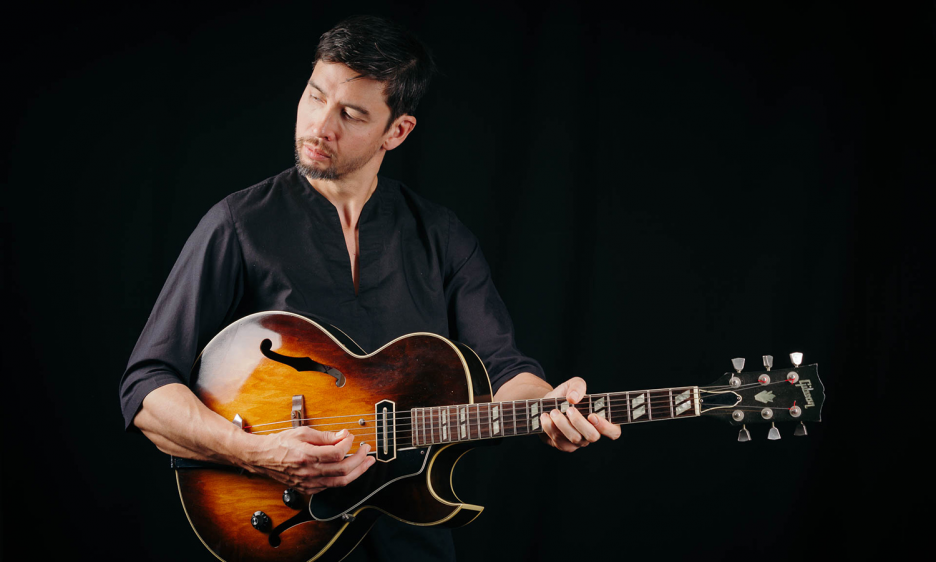
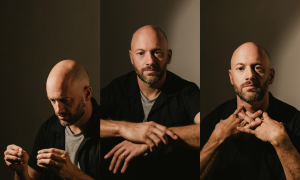
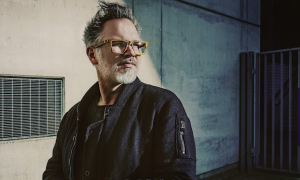
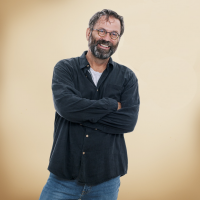
Courtesy Dimitri Louis
Why Monk? Because he's the greatest composer of all time, in my opinion. For me, I have two things that are my main [sources of inspiration]. Like going to the well. One is Monk and one is Bach. I don't perform Bach, because I'm not that kind of guitar player. But I do study it a lot, and practice it. And just look, his sort of unknowable genius...
—Miles Okazaki
On October 10, 2026, filmmaker Frank Heath and producer David Breskin will release The Monkathon, a live concert film documenting Okazaki's extraordinary solo performance of Thelonious Monk's complete songbook at The Jazz Gallery in New York, performed in a single night. Free to view, the film captures the performance in its entirety and is accompanied by a documentary, Behind the Monkathon, offering additional insight into the ambitious project.
Okazaki's interview with All About Jazz's Keith Flint and Mark Corroto discusses the film, the challenges and discoveries of performing Monk's entire songbook in one sitting, and its predecessor, the guitarist's six-volume 2018 recording Work, Volumes 1—6 (The Complete Compositions of Thelonious Monk).
All About Jazz: We know that this interview is focused on the Monkathon that's coming out in October, the film.
Miles Okazaki: Yes.
AAJ: And we're also pleased to talk more about Thelonious Monk and his music. Just to give you a little background, we pulled 135 CDs of artists covering Monk's music.
MO: Yes, it's a well-worn territory.
AAJ: Beside Frank Kimbrough and yourself, the only other musician who has covered all Monk's compositions is Alexander von Schlippenbach. But from those 135 recordings, it is clear that most people do their own interpretations of Monk. Only one other has taken an approach similar to yours. That was Walter Davis Jr.'s In Walks Thelonious (Mapleshade Recordings, 1994)
MO: I actually don't know that record, I'm going to make a note here to get that.
AAJ: He covers the same territory as your work in the Monkathon. But everybody else is interpreting. Maybe you can you clue us in on the difference between their arrangements and what you call your translations of Monk?
MO: Every person's rendition of something will be some kind of interpretation, as long as their personality comes through on some level, right? So, I guess I don't draw a sharp line. And there are certainly songs I take pretty big liberties with in terms of how they would be traditionally played. For example, there's a lot of medium tempo tunes. So, for the recording that I made, on the CD, I could have them be more uniform in tempo. But for a live performance with an audience, I felt there needed to be more variety. So I did change quite a bit in terms of shaping the sets. That's the main reimagining that's happening in this performance compared to how I did it before i(n the studio—ed).
Then there's the fact that it's a continuous performance, so there's certain endurance things involved in that. Some people are more faithful to the original harmonies than others. But some people's liberties, like Jason Moran playing Monk, he really takes it into a different place. He has such an authority in that language. That's something that I'd like to hear. That is really interesting to me, and I take just about as much as I feel like I'm authorized to do at my level. Sometimes I deal with a lot of rhythmic stuff because I've worked a lot in the area of rhythm. More so than thinking about all the possible harmonies for these tunes. I'm mostly working with what's there.
AAJ: One of the comments you made in the documentary was that you wanted to be true to the body of work, and I think you've done that in ways that others haven't, by working out what to do on guitar. What the left hand may have been doing on Monk's piano playing versus his more expressive right-handed stuff. And you've really stayed true to the original in ways that others have not. I am curious to hear what it was like for you to adapt from what you did with the Work CD recordings to the live Monkathon performance, and how difficult that was in a live setting to be as exact or as precise as you were during the studio recordings.
MO: Again, I can't speak to what others have done. I mean, there are people who have done amazing things with Monk. I'm thinking of people like Bill Frisell, who heard details I didn't hear. To me, it's all just about details. So, I've gone around the block with this music many times in my life so far. And every time I go back, more details get added. What do they call it? A palimpsest? Something where you write over the top? I don't think there's any kind of definitive way to do anything. But what I can do to the best of my ability is get the information that exists. As opposed to the visual arts. I think about the visual arts a lot. Right now I'm looking at this Leonardo da Vinci notebook on my shelf here, and I'm thinking back to when I was in a European museum and I was doing a sketch from a Leonardo da Vinci painting, just trying to copy what he was doing in drawing a horse. And it was this view of a horse from the front. I don't even know why I'm telling this story right now, it just came to mind when I saw that book. But as I looked at that thing, I was like, is that really actually what a horse looks like? If I were just to draw a horse from my mind, I think it would come out looking kind of like a dog or something like that. But it has this really long face. I guess that's where the joke comes from: "A horse walks into the bar and the bartender asks, 'Why the long face?'" But it's unbelievably narrow and long when you look from the front. And I was looking at this picture that definitely looks like a horse, but I never thought it actually looked like that. Then I went and looked at a photograph, and yes, it is. So, someone with that eye is able to see the thing as it actually is, as opposed to what they assume that it is. Do you know what I mean?
AAJ: Yes.
MO: I think about these songs that way. If you could start without any assumptions, and just kind of listen and you say, I thought this was this type of chord I heard. And I have a formation for that chord. And I have a symbol. Because we work off of chord symbols. Those are our shorthand—but they don't have any real detail in them. If you could let go of that assumption, then what details might you hear that you had assumed were not there? So, hearing what it actually is, as opposed to what you assume it is, that's the kind of a thing I'm working on.
AAJ: I just want to back all the way up to the question, why Monk? Where did your life intersect with Thelonious Monk's music, and when?
MO: Why Monk? Because he's the greatest composer of all time, in my opinion. For me, I have two things that are my main (sources of inspiration)—ed. Like going to the well. One is Monk and one is Bach. I don't perform Bach, because I'm not that kind of guitarist. But I do study it a lot, and practice it. And just look, his sort of unknowable genius; I try to understand how could that have even happened? So, I have that feeling when there are improvisers who I have that feeling for: Sonny Rollins or John Coltrane. But in terms of structures, vehicles for improvisation, to me it is the most perfect body of work that I can think of.
AAJ: When did that begin?
MO: It began when I was about 12 years old. I had a couple of records. One of them being this record called Thelonious Himself. It has some solo stuff, and on one of them, he's working out "Round Midnight" over maybe 22 minutes or so. I was really interested in the fact that he was making choices that were different the next time around. I didn't have an understanding at that time that things could kind of change.
I went to a jazz camp when I was a little younger than that, maybe 11 or 12. And we played "All Blues." When it came time for me to play my solo, I just played the solo from the record, like the Miles Davis solo, because I thought that's what you did on the solo. And then I learned: oh no, you're supposed to improvise. So these things are all the dynamic structure. I didn't understand that whole thing. I also didn't understand that could be a part of composition, like you're working it out. You're coming around and you're doing it in this fashion that is in some kind of a flow. Monk spent that amount of time just trying to work that out. There's another recording where he's playing, "I'm Getting Sentimental Over You," for a really long time and he's just going through it. And there are many stories of him just sitting there and working. Just going around and around and just making these very measured and very deliberate choices about what's possible at this spot. So, that to me, was like discovering an endless playground. I started learning Monk's music when I was a teenager. Then I had this idea that I was just trying to figure out, how much of it is there? How many songs are there? How many records are there? I didn't really have that information at that time. There weren't any books about it that I was aware of. I didn't have many records. I couldn't just get unlimited records. I think I had my little list of maybe 25 or 30 tunes. So, I worked on those. But there were a lot that I couldn't understand at all. But that's where the mystery is and there are a lot of them I still don't understand. It never ends, it's sort of a great thing that you can come back to again and again—like a great novel, like a great, well-made anything.
AAJ: So, you mentioned Bach. And you said that you are not that kind of guitarist. Having listened to a lot of Bach over a lot of years, I'm curious to know if you have a response to Chris Thile's performance of Bach's sonatas and partitas on mandolin. Have you listened to those?
MO: Does he play Violin Partita Number 3 in E major (BWV 1006)? I think I've heard a little bit of that. I'm not too familiar with that full recording, but sometimes it doesn't matter what instrument a composition is written for. Bach's music speaks not because of what instrument it's chosen for, but because of the inherent information that's in it. Of course, if we could have heard him play, that would have been something else, because he was an improviser as well. But even just the written part of it is strong enough to convey the idea. And that is really crazy. Imagine if we never had any recordings of Monk and we only had these lead sheets or scores or something, we could never hear how he touched the instrument.
AAJ: So you talked about endurance and about changing things up during the four sets when you performed live. What mental or physical fatigue did you experience doing that one performance over four sets in a single day? Can you describe what that was like, either its preparation or the performance itself?
MO: Yeah, I actually performed those four sets twice. I played on a Wednesday and then a Friday. I did the whole program, so I could have choices for the film. I was not fatigued at all. I could have done them two days in a row instead of taking a day off. It's different. If I was sitting in a room by myself doing it, I think that would be one thing. But when there's an audience there, I rarely feel any kind of fatigue. I really am not conscious of anything like that. Maybe afterwards, but I remember afterwards really not feeling tired. I was like, okay, it's fine. I'm energized.
AAJ: That is pretty amazing.
MO: But it does require some preparation. If I had been struggling the whole time, it would have been to remember things or how to physically execute them. That would have been real hard. But I prepared pretty well.
AAJ: You were also preparing for running at least one other marathon at the same time, correct?
MO: Yeah, I did a marathon, just two weeks after. So, when I was doing the Monk concert I was doing what marathoners call tapering. Still doing stuff, but not 25-mile runs. That was kind of the angle that originally was not really part of the film idea at all. It was the filmmaker Frank Heath's idea to combine these two things and talk about training in general, as opposed to just Monk. Maybe somebody's watching this who doesn't have any interest in this music or any knowledge of the music, and they're just kind of interested in the mindset involved when tackling such a big project and how you might approach it. And, of course, it's always the same thing, which is just incremental and a lot of repetition. There's no real way around it. It's also very clear how to go about doing it, as long as you stay focused. I'm not any kind of athlete at all. I never started doing any athletic stuff until I was 45.
AAJ: In the documentary you said that your first experience running the New York City marathon didn't go as well as you had hoped. So, you wanted to train differently the second time. Were there parallel paths of preparation for both of these activities?
MO: The thing about recording in the studio, or at home, which is how I did the record, is you can do as many takes as you like and then you just say, "That's the one I like." So, you get the version that you like and you have the option of fixing it. That is a totally different thing than a live performance, so I just approached them in a totally different way.
MO: Sorry, I'm trying to return to the question.
AAJ: Actually, I like the question you're answering. One thing is the way you prepare for the studio work compared to the way you prepare for the live performance. But I am also curious about parallel paths with your marathon training and conditioning at the same time you're preparing for the live performances.
MO: Assuming you don't have any injuries or anything like that, the main thing is just mental. Assuming that the muscles are working and all that. The muscles will work as long as you keep them moving on a regular basis. But the main thing is mental. I'm interested in trying to get to a new place in a live context. That's really the main thing that I want to do as a musician. I like to make great records, as great as I can. But really, the main thing is projecting and doing something in a live setting that is new and engaging to people that are listening. It's funny, I was just watching this documentary about Julian Bream, the great classical guitarist, and he said that he liked Andrés Segovia's records, of course, because he was a legend at the time. But there was something about his programming that was unsatisfying to him, because he would just kind of cherry-pick the best parts of all these different pieces and play them all as a kind of greatest hits thing. Whereas Bream was interested in doing an entire suite. The whole concert is one suite, so you do the whole thing.
As for the Monk songs, some of them are clearly more detailed than others. If I were to just play you "Round Midnight" and "Well, You Needn't" and all your favorites, you wouldn't be getting the whole spectrum. You just get the cream that's on top. Then you realize there's all these hidden things everywhere that people sometimes don't pay attention to. So, preparation is about trying to convey some sense of the scope of the whole thing. And I did that by playing them somewhat chronologically. And by not messing with the guitar. There are a couple tracks on the original recording where I retune the guitar, not many. But there's one especially called "Oska T," where the whole point of the song is the sound of this one chord. And you just can't play it on guitar (with standard tuning—ed), it's just too low and the voicing is just impossible. So I had to retune the guitar. That enabled me to play that exact voicing. That's on the CD recording. But in the film, I played it higher and it has a different effect; it's not as sinister sounding. It's not as heavy. It's a different thing. But that's all right, because that's the result of me putting that music through the filter of this instrument. This instrument changes stuff and just like in Bach's music. You hear the Chaconne on guitar, you hear it on piano, you hear it on violin, which it's written for, and it's a different impression each time.
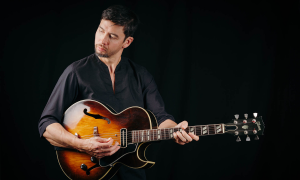
Part of the effect on the audience is to really let them have what they call complete information. For example: chess is a game of complete information. You can see all the stuff. Poker is a game of incomplete information. You can lie. People don't know what you're holding, right? But in chess, it's all out there, everybody can see it. The only thing that's available is your choice. If I have a guitar that's hooked up to a bunch of pedals and loop stations and stuff like that, and there's all this sound coming out. It's cool, and it can be to definitely fill up the space better. But it becomes for the audience a situation of incomplete information. To me, that doesn't feel right for this project. I want to present the music in a way where everything that I'm doing is creating the sound. That to me is a more exposed place to be. Just a plain guitar with no effects, and actually a guitar from 1940, which is very difficult to play. It's like wrestling with an old chunky instrument.
AAJ: During your Audeze-sponsored Jazz Guitar Hang with Mary Halvorson and Julian Lage, you were talking about that guitar versus the one that you bought when you were touring with Mary in Holland, right? We'd like for you to talk a little bit about the guitar you played in the Monkathon, and I whether that has become your go-to guitar since you acquired it.
MO: I mean, this is a little in the weeds. So, it might only appeal to guitar people, but the guitar that I've had since I was 18, I bought in New Orleans after saving up money as an ice cream truck driver. That's the Gibson ES-175 back there. I played that for years and years with the Charlie Christian pickup. I didn't even know what the Charlie Christian pickup was at the time. Now they're very popular. Pat Metheny started using one, so I think that's the reason. I just became accustomed to that sound of that particular pickup, and also listening to Charlie Christian. That's a great sound. And all the people who use that, such as Grant Green and George Benson have that sound. It would be great to actually play one of those guitars from that era, but they're very expensive, and they're not always in very good condition.
During COVID, I found one that I got a very good deal on it. At the same time, I was talking about the idea for this project so I thought maybe I could use this guitar for this project, and that would put me more in the mood for that music. Because it's actually from the time period when Monk was around. It's the kind of guitar that Charlie Christian would have used back then. So I guess it's more of a psychological thing. I don't know, you put on certain clothes and they make you feel a certain way. So, I'm getting dressed up. I don't really get that dressed up for gigs, usually, but the instrument that I choose makes a big difference to me in terms of what vibe I'm going to feel. When I'm playing that guitar, it just sounds old. It sounds like an old guitar from that time period. I'm not doing anything to it. So everything has to come from my technique and I like that. I feel like it's being exposed in that way, and being so vulnerable gives more to the audience.
AAJ: I'm curious about your attraction to some things that Monk does that I think you do as well. You both have recurring motifs, musical phases or gestures. Those recurring themes can be heard across multiple albums you've recorded. Similarly, there are recurring motifs that occur in multiple compositions by Monk. And that's especially apparent when you listen to his full body of work. Like you said, if you look at the cream at the top—the surface—you might miss it. But if you listen through his oeuvre, the entire corpus, then you start to hear these gestures that recur. Do you have a parallel to draw between what you do in that regard and what he did?
MO: (laughing) Are you trying to say I stole his shit?
AAJ: No, not at all. I don't think the gestures that you do are the gestures he did. Rather, I hear recurring themes in each of your compositions.
MO: Yeah, this is a very subtle point and a very astute question. Because it's actually deliberate. Again, I'm not always thinking about music when I'm making music, I think about some other things sometimes. I believe that it's a project of world-building. In terms of creating a body of work. I feel like Monk does that. You hear these things that are like symbols, or they're like characters and they recur, and they come back, and you have this thing. (plays brief passage on guitar—ed) This chord is all over the place. You'll hear it in (plays brief passage on guitar—ed) And you hear it in (plays brief passage on guitar—ed) I played "Crepuscule With Nellie" and "Introspection." But those are examples of that thing that exists.
It's also in (plays brief passage on guitar—ed) "Coming On The Hudson." That same structure and when you hear that signifies that you're in that world. It's like a signpost. It was like, you're walking in the wilderness. Where am I? Oh, then you see, here's the thing. You recognize it. It's a landmark. I've made a number of records now, maybe a dozen records. I like to write music, I'm not a composer on the level of a lot of people, but I took that early on to be an idea of how to create a personal language.
My mother mentioned this to me. She's a painter and she said, "If you're a visual artist and you portray two or three great characters in your art in your whole career, you're doing well." You create something that is your style. It doesn't need to be a person, but it could be some sort of identifiable marker about the way that you do things. And of course, that is true in novels as well, these characters come back again and again in different ways in things that are a series, in movies, whatever. In my own records, there's this thing: I have this band called Trickster, and every Trickster record starts off the same way. (plays brief passage on guitar—ed) This is a cue, it's just a phrase that was part of a song, but then it became the universal cue for that band, that something's going to happen. It's like, turn the page. There are many, many things I've embraced as being the thing that I do. I got a lot of that from my teacher, Rodney Jones, who said, "Don't try to do the thing that somebody else does, try to make something work just for you. Try to figure out what the things are that you do uniquely and amplify those. Then that becomes your thing." Sometimes there will be other people who have made things that resonate with you in the same way as those things that you have identified and those will be the people that you dig. For me, that's Monk, and that's some other people, such as Billy Strayhorn and a few others.
AAJ: Let's talk more about the Monkathon video that's coming out in October. You spoke about the studio recording of your 2018 six—volume CD release, Work. You described keeping various versions and discarding others. When you made this video, you had a director, you had an editor. Were you happy with the choices made in the film? The cuts and the angles? Were you happy with their representation in the accompanying documentary?
MO: So, that's two different things. Imagine the amount of footage that we had. Four hours of footage for two nights, that's 8 hours times 5 cameras.
Frank Heath, the director, was also the editor. He did everything, basically. Speaking about concert footage, which we did first, he would call me up and say, "Okay, I've got a draft of the first set." I would go to his studio, and we just start watching. It was just synced, there wasn't really any sound editing in terms of needing to take out notes or anything like that. That wasn't really possible or desirable. My only requirement was that it wouldn't bump me. Like a switch of a camera doesn't take me away from my concentration. I want to feel like I'm actually in there. That each choice I make is something I would like to see. I notice sort of bad versions of this all the time. And it makes me wonder, where he's doing all this stuff? Why aren't they showing the hands? Instead they cut to showing somebody in the audience. That's very distracting. My only thing was, will this bump me or not? Frank is a master editor. I had only a few notes, such as maybe we cut to the other camera there. But it was mostly Frank just listening to the music, and he learned all this music in the process. Not like, how to play it, but just how it goes. When I saw that, I didn't even know that that was actually possible. I wanted to make this interesting. It may not be interesting to everyone, admittedly, but I know the music, and I'm the one looking at myself. Normally I don't really like to look at videos of myself playing. But this was like I was just kind of outside of it, trying to imagine it as if I were just watching something someone else was doing. It really brings you in. It's masterful in the way that it's cut, and there are a lot of cuts. You don't notice how many cuts there are, but it's constantly moving, and the cameras are moving also. It's very dynamic in that way. That's necessary because the subject is not necessarily that dynamic. I'm playing as dynamically as I can, but I'm one person in a chair or standing with a guitar. That's it. You can't cut to the backup singers and the drummer and all this stuff. It is just different versions of me. So it feels pretty incredible to me that he was able to do that. To have the patience to actually go all the way through all that footage and get it done.
We had this other footage that we had shot. The original documentary idea was that we would have these kind of cold opens at the beginning of each episode. It would create mini-documentaries, maybe 5 minutes or so, that would be kind of an intro. Then the producer, David Breskin, said, "Why don't you make—what he called—the fifth wheel." The fifth wheel is just a sort of a behind-the-scenes thing. I said to Frank, "Look, you've just been in the trenches with this footage for, like, a year and a half." He makes these great documentaries, and they have a lot of his personality in them. "Why don't you just make something that's interesting? Put your humor in it" I think Monk's music does have a very humorous and playful side. I think the concert is pretty serious, because I'm just sitting there and concentrating, not talking. So this is a chance to see his way, what his style is as a director. Even though it's still determined by what the subject is. The story behind that is just that. So, let's make a short piece that somehow provides a window into this project without just being just a talking head thing.
AAJ: We have to admit that we were not able to watch all 4 sets in one sitting. It was indeed a marathon. We absorbed each one on a different day, and it was the perfect way to watch it. Unfortunately, due to its length and subject, it's not going to be shown on MTV.
MO: No, that was one of the reasons for making it a website. We thought about various things, and I did shop it around a little, film festivals, et cetera. That's a whole other world that I don't know anything about. I'm not even very good with navigating the music business and all that, so the film business is, like, unreachable. The main goal was just to get it out, That was Breskin's idea in the first place. It wasn't like we were trying to make money off of it or anything like that. We just wanted to make this thing that's cool. Cool and unprecedented. So that's what it is. We got a guy to build this beautiful portal for it, so then people can just watch it at their leisure. They don't have to try to sit through this whole thing all at once. That's not the idea. It's more of an installation.
AAJ: With the CD release, one of the things I did was make a mixtape of Monk playing a solo track followed by your performance of that same track. Just to experience in context—for comparison.
MO: Oh, man.
AAJ: Some of the more obscure compositions that I wasn't familiar with, it made them a little richer, I think. You could do it with these videos, you know.
MO: Wow, I wouldn't want to do that.
AAJ: What I found really compelling was, and you alluded to this a minute ago, is that when some musical performance films cut away, we wonder, "What are we not seeing?" "Why aren't they showing the player's hands?" But in your documentary, I could see you working through everything. Openly. I could watch, during that one section that you, in the documentary, said, "I guess I need to work on this one a little bit more," trying to work through how to do both the left hand on top of the right hand work. Then, to see that come to fruition when you performed it live. I think that helped make the whole thing even more compelling. It showcased all your hard work, discipline, and concentration. And it brought that to life in a really interesting way.
MO: Oh, that's great. I'm glad you perceived it that way. Yeah.
AAJ: So is there any chance that this will tour, that you will tour? Would you perform all 70 pieces? Would you play selections?
MO: Solo guitar tours are pretty easy to put together. So, I'd say there's a better chance of me doing that than touring my last record that just came out. That was with a 10-piece group. As a composer, I've been interested in large ensembles, and that's kind of different. It's a different relationship when making the thing and then touring the thing. I toured quite a bit after the original album, I would say, up through the pandemic. I did this whole thing again at Big Ears Festival this year. We were pitching to the festival to play the film there. Then the organizer of the festival was like, well, can he just come and just do it? Oh man, I thought I would never have to do this again. Then I did it, I practiced it up again, and I went. I sat in a church and played for an entire afternoon, from 4 to 10 PM. I did the whole thing again, and it wasn't that bad. Now I know what it is. So, I even did more different things than I had done before. So every time, it's always different. There's no limit. I could play concerts where I just play one song for the whole concert and variations on that. I would be satisfied with that. It might not be so great for the audience, but it depends on your ability to invent things. So, yes. I would say hopefully, but touring alone is lonely. It's a little bit strange.
AAJ: So you have the Monkathon and the marathon. Might you start moving into ultramarathons, the 100-milers, 24-hour races.
MO: I had a running mentor at Michigan named Ellen Rowe, and she was doing those kinds of things. At a certain point, as with a lot of things, I could get too deep into it. But, I'm like, wait, I gotta get back and practice guitar here. I've done that a number of times with different activities. But I don't really like to practice all the time. I like to do as much as I can, and then I like to do some other stuff, too. It's not just all about the notes and the timing and the information, It's for me, this stuff is about letting it sink in and become part of your DNA on some level.
AAJ: Changing topics, what have you been listening to lately?
MO: Lately, I've been listening to Julian Bream. My friend Dan Weiss was like, have you ever checked this out? It was Julian Bream playing the Chaconne. So, of course, I had to check that out. I had forgotten how great he was. I had one record of his as a kid, and it was Julian playing a selection of lute pieces. Just yesterday, I watched this 2-hour long documentary about him. He was a really down-to-earth guy. I felt like I could feel that in his sound. He played rhythm guitar and his favorite guy was Django Reinhardt. That's who got him started on guitar, which I thought was amazing. But that was in the days when classical guitar wasn't established as it is nowadays. There was Andrés Segovia and a few others, and it was hard to find music. His emphasis on the rhythm was something that always attracted me. Something about the envelope of the sound. So there's an attack, delay, and release. All that stuff. The attack is always the thing that interests me. The very first part of the note, the transient part, you know? And that's something you hear in Charlie Christian. For sure you hear in Julian Bream, i. And for sure you hear in somebody like Grant Green. My teacher Rodney Jones was all about this, the articulation, that initial thing that comes out which establishes the rhythm and the impact of each note. That's something. I was just thinking about that, because the way he plays, even though it's different with fingernails, is very, very rhythmically focused. Also, he had that thing about playing long pieces, so I was just thinking about that over the last couple days.
I like to go out to see shows, because I live in New York. So, I'm like, well I live here, I should go out. I'm going out tonight to see Bill Frisell. And I think I'll go out tomorrow as well. I still just want to be in a room with people for music. That's the best way.
 FOLLOW Keith Flint
and get notified whenever a new article published.
A passionate observer and inquisitive, attentive listener.
About Miles Okazaki

Tags
PREVIOUS / NEXT

Become a Sustaining Member

Since 1995, All About Jazz has championed jazz as an art form and supported the musicians who create it. Over three decades, it has grown into one of the world's leading jazz resources, serving hundreds of thousands of readers, musicians, presenters and industry professionals each month.
Help Build the Future of All About Jazz
Your support helps us continue building All About Jazz for the next generation—expanding our editorial coverage, preserving jazz history, developing new community features and creating better ways to discover the music and the people behind it.
Become a sustaining member for as little as $20 per year and you'll immediately enjoy an ad-free experience along with access to subscriber features and future articles for a full year.
Together, we're not simply sustaining All About Jazz—we're building its future. Thank you for being part of the journey.