Home » Jazz Articles » Interview » David Six: Making Music Out Of This World
David Six: Making Music Out Of This World
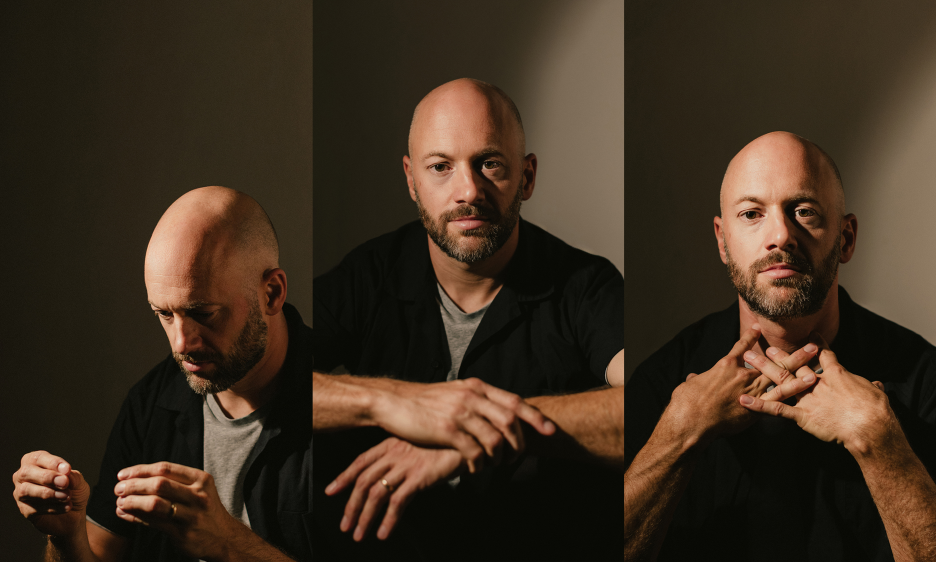
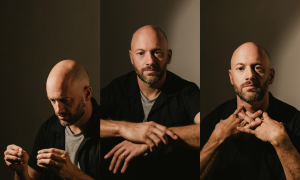
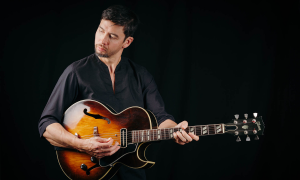
Courtesy Victoria Nazarova
To me, music isn’t the notes you write or play, it’s what happens in between those notes
—David Six
All About Jazz: David, how would you define yourself as a musician, or as a human?
David Six: Mainly, I see myself as a really lucky person, because I get to do what I really want. Stylistically, the jazz community has often seen me as a classical musician, and in classical circles, as an outsider, a jazz musician, and I'm very comfortable with that. My musical mother's milk is traditional Austrian music, and I probably feel closer to Franz Schubert than to Duke Ellington. Wolfgang Muthspiel once said something very similar, and when I heard it, I liked it, because it's exactly how I feel.
I think I found my niche, and I like interacting with the small audiences I have and making them happy. I'm 40 now, and it still works, that's remarkable. I also like reaching out beyond my own stylistic corner, into other traditions, but also into other art forms altogether: light installations, photography, dance. I love going on stage not knowing what's about to come, free improv is close to my heart. But I also like composition, which is the opposite of that.
AAJ: But you were trained as a classical music pianist, right?
DS: Yes, from an early age, at one point with five different teachers. I'm from a small village in the Austrian countryside. Musical education there is something people have access to. My parents play traditional music; that's what I first learned. Then a progressive local priest offered me piano lessons in exchange for playing one improvised "rhythmical mass" per month. He gave me improv lessons on the piano and cassette tapes: Monk, Miles Davis's "Bitches Brew," the Mahavishnu Orchestra. Back then you needed luck to have access to great music; the record store never guaranteed anything good. That was a good moment for me.
When I finished my piano studies, classical and jazz, I decided against making a living playing weddings, funerals, and pop covers. I did the opposite: just my own thing, no compromise. And somehow it worked. I still don't really understand the mechanics of the music business, and I honestly think I just got lucky.
For four years, alongside music, I was also studying environmental and bioresource management, which included physics, hydrology, zoology, mathematics, mostly natural sciences. I did it really just out of interest, it was always clear to me that I wanted to end up working in a creative field, but I couldn't help following that curiosity too.
Afterwards I moved to Berlin to study the mridangam with Manickam Yogeswaran, then to Delhi to study tablas with Shailendra Misra.
AAJ: How long did you stay in India?
DS: I was there for around one year and three months, then I moved back to Europe. I continued studying Indian classical music online, and for a couple of years I played even more tablas than piano. This was before the kids, when I still had plenty of time to practice. It was great and I really enjoyed that.
AAJ: How many kids do you have?
DS: Two now. But since I have the kids, I compose way more. Much less time, so much more inspiration. I wasn't expecting that at all, and I enjoy that quite a lot.
AAJ: I read that you have played with Bill Frisell. I didn't find any recording of it.
DS: This was with Stargaze, the chamber group I was playing with for 12 years. The concerts we did with Bill Frisell were all in Ireland, and there might be recordings of them, but I'm not sure. With Stargaze we did so many different and often really interesting projects, but we only ever released a fraction of what we actually wanted to. It's all still out there somewhere, on some hard drive, I don't even know where anymore.
AAJ: It looks like a kind of contemporary music ensemble?
DS: Yeah, Stargaze was a contemporary music ensemble, but approached in a bit of a different fashion. Our artistic director was André de Ridder, who conducts many big top orchestras around the globe, but he's also a huge hip-hop fan and very open-minded. Stargaze was much more like a band than a traditional classical ensemble, and we loved moving between playing Bach or the Ligeti cello concerto and some post-punk stuff. We did arrangements of the Beethoven symphonies for our ensemble, some commissioned, some composed by ourselves, and we worked a lot with other people too, like Lisa Hannigan, or Bryce Dessner, or many artists from outside the jazz world that I have to admit I mostly didn't know before, just because jazz is such a huge world in itself that you can easily lose track of everything else. I felt really lucky to be part of it. We toured the world together and played in all those nice big concert houses and festivals.
AAJ: You're talking in the past tense because this band doesn't exist anymore...
DS: Not long ago we played our last concerts, right after making a really nice recording with David Longstreth and Dirty Projectors. But things grow and things die, and it's okay.
AAJ: You have been collaborating with musicians from the Middle East and India, classical music players... But finally, you do not have that much of an activity in a pure jazz context. Is it just because it has happened like this, or you prefer to go toward other types of music because you find that it's personally more fruitful to go in this direction?
DS: I enjoy very much listening to the classic trio setting, like to what Oscar Peterson was doing, or Pablo Held, or Cecil Taylor. But honestly, it's more the second thing you said: I just find it more fruitful to go wherever the music I'm currently hearing takes me. Right now, that's simply not a classic-trio kind of sound in my ear.
I actually do have a trio now, with Tilo Weber and Janos Aved [The Transcendent Triptych (BMC Music, 2026)], one that's really close to my heart. It isn't a classical bass, drums, piano trio at all, János plays tenor saxophone instead of bass, and on some pieces I play harpsichord instead of piano. But I still think of it as jazz. Open-minded jazz, I guess.
Externally Constrained Music
AAJ: Your website shows a very interesting set of compositions based on Platonic cosmological geometry, "Platonic Solids," for which your website provides most of the music score. Was it ever recorded?DS: No, we performed it a couple of times live, and other times just parts of it. Not recorded, no.
AAJ: It was very funny to play, probably.
DS: Definitely. But, looking at it now, ages after I wrote it, I see it more like a child's play, sort of. Still, for me this work was important, because I discovered other paths I could go composition-wise. There are actually five Platonic solids, and the piece "Platonic Solids" only covered four. The fifth, the dodecahedron (Op. 101), belongs to the same set, but I wrote it separately, a year or two later. What I like about working with that material is that you start composing with a rather abstract idea, but then those platonic solids give you very concrete, definite numbers to work with. Especially with the dodecahedron, most of the music came directly out of the numbers I could derive from it. Some of the material I found during the work on these compositions is still stuff that keeps me busy today. I'll send you the score if you want.
AAJ: Yes, yes. I'm very much interested in this. Two and a half years ago I started to think of composition also constrained by scientific figures, namely volcanic gases on Mars. I had the idea of a composition that would somehow explain how it works in musical ways based on the scientific implications of these gases which come from magma beneath the surface. Various types of instruments and ways of improvising, depending on where you are located on Mars. A kind of correspondence between quantified processes and music. This type of approach, this platonic solids approach in fact.
DS: Are you planning to continue this?
AAJ: If I have the opportunity and time, yes.
DS: Please let me know about it.
I like this general idea of when you compose that you take some sort of limitations. I find this so helpful. But this is a great source of inspiration, actually, this last year I started a band. There's a drummer, Romain Bly, who came from Stargaze. He studied classical horn, plays the trumpet beautifully, but is also a really great drummer. Then there's Caimin Gilmore, a bassist and composer, and me. I play mainly synths and keyboards in that band. We were so inspired by the movie Fire of Love. Maybe you know it. It's about Maurice Krafft and...
AAJ: Katia Krafft. Maurice and Katia.
DS: Do you know this movie?
AAJ: No, but I know these people, I didn't know them personally, but these volcanologists were quite famous in their time. I have not seen this movie though.
DS: I recommend it. It's really nice, highly inspirational. First of all, their great story and how it's told, but also the colors of the movie. Most of the pictures were filmed by them, with their own cameras, in the '70s, with really amazing colors. Watching it left a big mark on us. We decided that this band we were about to form needed to be called "Lava Lovers."
AAJ: Wow. That's an idea.
DS: We really loved it. We haven't put out any recording yet; we're putting together a tour for 2027 now. Once we record something, I'll let you know. You could be the right person to listen to!
AAJ: Certainly yes!
Dance With The Ghosts: The Trilogy
AAJ: When did you start the Dance With The Ghosts trilogy project?DS: In 2020, I wrote a song called "Moria," which I then recorded with a friend of mine from Palestine, Saied Silbak, who plays the oud on it. My wife is always heavily into current political issues, and back then she talked to me a lot about the refugee camp in Moria on Lesbos, where people were living under severe conditions. She's a huge inspiration to me in that sense, through her own engagement with what's happening politically, and, honestly, because she keeps bringing it up. I wrote the song because I wanted my music to be more connected to the world that actually surrounds us.
AAJ: I saw the short documentary about it, where you have this telecon with Saied.
DS: Yeah, I put this online, and the feedback was really different from everything before. Many people said they were thankful for this contribution, because the music helped them feel a connection to the people in Moria. It made it easier to emotionally grasp what the situation was actually about.
That reaction was really what started it all for me. I realized I could never convey the things on my mind through a set of words the way I could through music, and that this was exactly the kind of music I wanted to keep making: connected to what's actually happening around us. So I started this bigger project, which eventually became a trilogy, Dance with the Ghosts.
AAJ: Here you are referring to the three parts of the trilogy: first the quartet, then the sextet, and the third part has musicians playing solo, duos, or in trio.
DS: Yes. The original plan was actually to put all the music on a single album: a quartet session, a sextet session, and pieces with individual musicians. But then my colleagues advised dividing the material up into three separate releases instead. That's how the trilogy was born, and I'm genuinely happy now to finally bring it to a close.
AAJ: Graphical aspects seem to be very important for you, as remarkably shown with the Platonic Solids. When you're looking at the booklets, the graphical design of this and the explanations and the way you are giving some information about the tunes it's very much visual. Even the music scores which you are giving are just almost pieces of art. Just the way you are writing. For instance, I noted "I Carry Your Oxygen" as a very nice music score in the booklet of Dance With The Ghosts Chamber Sextet (Sessionwork Records, 2023), the sextet.
DS: Thank you!
AAJ: Does this score in the booklet describe the whole tune? Do you give this to the musicians, then explain how it works, and you start playing? Or it's just a basis for how the piece should be played?
DS: It is a mixed thing. Some things indicate very specific actions, other elements just give a framework for improvisation. For example, in that piece you mentioned, there are those bells played by András (Dés), and the beginning of his playing is indicated by that square. The specific pitches he needed to play, we found together during a rehearsal, still without the score. Based on what came out of that rehearsal, I then finalized the score.
With much of the music on the chamber sextet album, we actually followed an approach I learned from Michael Keegan-Dolan, a choreographer I've worked with a lot over the last seven years. For the show we created together, called MÁM, dancers and musicians freely improvised together for several weeks in a row, and whenever something of substance emerged, Michael would ask, "How do you call this?" We'd then name it, write it on a piece of paper, pin it to the wall, and later build the whole structure of the show from those notes.
We used the same principle for many pieces on the chamber sextet album: improvise, name it, I'd sometimes draw it, then redraw it as we changed it together. It was a really lovely process, also because the people involved are great friends and musicians.
AAJ: Let's now move to the last part of the trilogy, which was released in 2026, three years after the others. How did you select the musicians for this last album? Let's start with the first piece, "Living in the Rays of Light." Tuva Halse is playing on that track.
DS: Yeah, she's playing on one track only.
AAJ: You had not collaborated before. How did you find her?
DS: Tuva was playing with Mathias Eick at a festival in Austria [wellenklænge festival, Lunz am See, 2023], a festival I can highly recommend. The most beautiful stage you can imagine, floating on a cold lake, a green hill in the background, the coldest region in Austria, a paradise, with curators combining traditional music and jazz fantastically. I heard Tuva play there and immediately knew she's probably my favorite violin player of all time.
AAJ: You mean, I am not the only one?
DS: [Laughs] We have to share this.
AAJ: Then there is Zsófia Boros , who plays two guitar solos, "Lacrimae" and "Norway Maple Song."
DS: We also met at the wellenklænge festival, in a different year though, playing back-to-back solo sets, and I wanted her to play those two pieces from the very beginning. She's remarkable, she puts so much thought and empathy into every note I write for her. I could never do it that way. I really look up to her and admire her music.
AAJ: So the two guitar solos were fully composed?
DS: Exactly. But to me, music isn't the notes you write or play, it's what happens in between those notes, which actually makes Zsófi the composer of this music.
Other than that, there were originally two drummers planned, Amir Wahba and András Dés, both people I admire a lot. But Amir got sick just before the recording, so I jumped in and prepared one of the pianos with rubber and a knitting needle, playing it as a substitute for the second drum kit. I like listening to drum solos, one of the most fascinating things.
AAJ: I agree.Why do you have "Norway Maple Song," everywhere in the trilogy?
DS: Because it's probably the most fundamental piece that resembles hope. The Norway maple itself is part of that: it's considered one of the trees of the future, resilient enough to handle the kind of climate our forests will increasingly face. It makes me think of the possibilities we have to not let our woods and forests dry out or be eaten up by pests, which is a big issue here in Austria. We already have a lot of the knowledge we'd need, we just have to apply it. The city I live in, Vienna, is a good example: many of its elms were dying from a fungus around the turn of the century, and now the city is planting them again, a small proof that some threats can eventually be overcome. And there's another reason: I like having the three parts, once meant to be a single album, connected by one recurring piece.
AAJ: A kind of through-line.
DS: Yeah, having a thread.
Then, on "Resonance," there's Simon Zöchbauer, who I wrote a trumpet piece for, but we couldn't perform it in a way I liked, so instead we kept a track where he played zither and tape delay, with my drum-substituting piano again. That one's a complete improvisation.
AAJ: On the last piece, "Arcane Celestial," there is András Dés on drums but also Caimin Gilmore on bass.
DS: Yes, one of my Stargaze colleagues. He is the most remarkable bow player I've ever heard, deeply into contemporary classical music but also alternative pop and Irish traditional music, and a crazy good composer himself. That's it, just six pieces. There were originally other tracks, including two saxophone solos I composed for Andrej Prozorov, from Odessa, but they didn't fit into the final album, so he's releasing those separately.
AAJ: Did you have many takes?
DS: With "Living in the Rays of Light" it was one take, a song where a second take just wouldn't have worked. The first take is always the magical one, after that you're just trying to recreate what worked, which gets in the way. With "Lacrimae" and "Norway Maple Song" it's different, both technically incredibly challenging on guitar. Zsófia initially said they weren't playable, but of course she managed. It took a few takes, and even if I as the composer thought a take was perfect, she'd still veto it if it wasn't right for her. The other pieces were also first takes.
AAJ: You wrote something on the second album's booklet about a ritual you'd do before a session, everyone cleaning the studio together, that kind of thing. Is that something you did for this album as well?
DS: With the chamber sextet album, yes. It's actually something I picked up from Michael, this small ritual before we start rehearsing. Everyone lines up along one side of the room, each person gets a cloth, we lay them side by side on the floor, and together, all at once, we wipe across the whole studio in one go. It only takes a couple of minutes. Then the chairs go back up for the musicians, and the actual rehearsal begins. So, it's not really about cleaning, it's more about creating something together before the real work starts. Only sometimes it is about cleaning too.
AAJ: What is the common denominator of your sources of inspiration?
DS: It could be many things. For the trilogy, it would often be topics I'd love to start a social media conversation about, but don't dare to, very personal, but in a way, I also want to address other people with. Some things keep cooking until I decide to make a piece of it or around it. Thanks for asking that.
AAJ: These inspiration sources are very much diverse. It seems to be based on a lot of your own personal experience in various fields—and in fact, a little bit everywhere it seems. Especially, it's quite a lot focused on human rights, somehow.
DS: Yeah.
AAJ: You have two or three songs which are quite clearly influenced by this. The other big thing is connection to the environment, climate change, observing and benefitting from nature instead of destroying it, especially with this soil science from which you found the inspiration for... .what's the name of this tune again...
DS: "The Dirt of Easter Island?"
AAJ: Yes. In Part II, the sextet.
DS: Yes, exactly. That piece grew out of a collaboration with scientists from two universities here in Austria, studying how soil changes and the challenges we're facing. It's not only an artistic thing for the sake of aesthetics. Again, I like to connect parts of my music to real things from outside of it.
Soil as a subject has actually kept going for me well beyond the trilogy. There's a new ensemble here, actually called Soil, dedicated specifically to this subject, and I've since written a piece for them called "Geflecht," for bass clarinet, trumpet, guitar and electronics, piano, electronics and percussion, and viola. Simon Zöchbauer, the trumpet player from my chamber sextet, is actually part of that ensemble too, so there's a nice connection there, even if it's really its own chapter, separate from the trilogy. The piece "Geflecht" is about what's called the Wood Wide Web, the idea that trees and plants communicate through an underground network of root connections and mycelium, exchanging nutrients, warning signals, even something like emotional impulses [See the review of "Wood Wide Web," the composition of Maria Dybbroe at Moldejazz 2026]. On stage, the five musicians symbolically take on the role of trees. We use LED chains and light installations to make those invisible connections visible, so every light impulse gets translated into a musical one. The composition gives us clear structures, but within them there's a lot of room for improvisation, turning this invisible natural network into a living, audible world.
AAJ: Would it be a correct way of describing your inspiration: trying to understand what we have around us and what's happening right now?
DS: Yes, that's true. Probably inspiration always comes from what surrounds us. Maybe not from outer space, but outer space surrounds us too.
AAJ: You have an album with exoplanets, Exoplanetary Frequencies (Audioguido Records, 2023)...
DS: Ah, yeah.
AAJ: So, it's outer space.
DS: I forgot about that! I do have that album, of course. I'm definitely someone who tends to pull in everything I can get my hands on, a reader, curious about the world in general. Spending time with biology, and with environmental and bioresource management, it's hard not to keep noticing the urgent changes happening in the world. That's often overwhelming and frightening. Coming back to this, that's actually part of why the third part of the trilogy has hope as such a deliberate theme. With this final installment I didn't want to express only dramatic, pessimistic things. I wanted the opposite. I think we need to be hopeful.
AAJ: It goes directly to my question about historian and writer Rutger Bregman. He has this idea that human nature is fundamentally good.
DS: Yes.
AAJ: But you used the words "need to be hopeful." We need to be optimistic. It is different because Bregman is trying to show that the people are fundamentally good. What you are saying is that we have no option. We need to think this way.
DS: Yes, and I think it's strongly connected, not opposite. I loved Rutger's book [Rutger Bregman, Humankind: A Hopeful History, trans. Elizabeth Manton and Erica Moore (London: Bloomsbury Publishing, 2020)], to me it reads like a scientific proof of what I have always felt. But when I say we need to be optimistic, I say it in opposition to what the media bring us on a large scale, anxiety, especially among younger generations. With this music I wanted to inject a little hope that we can still talk, still work on solutions. I'm not saying all is going well, and I don't want to be naive, but giving up is a bad idea.
AAJ: I agree. Actually, I was expecting that you would have this type of answer. But I prepared this Nietzsche citation: "We have art in order not to die of the truth." Quite pessimistic, but it gives a good reason for art to exist! I was wondering if you would agree with this statement. Then it goes to the question was, what is art for, if it is not to avoid to die of the truth? That's a tough question.
DS: That's a fantastic question. Maybe it doesn't need to be that black and white. I think that truth can be expanded through art, not just survived, because art opens up other realities or possibilities. It's like taking a drug that changes your perspective on truth and on our existence. I think your quote works well, but I'm not sure it's valid in every life situation.
AAJ: Well, it's a little bit extreme... Your answer about drugs I think makes a lot of sense. A drug that allows us to see things with a different perspective.
DS: There's a thought from Herbert Marcuse that stuck with me on exactly this question, that art, at its best, isn't an escape from the world but "the protest against that which is." Sometimes I think even a single thought, held clearly in your mind, could already count as a kind of protest, a kind of art, even before it becomes anything visible.
AAJ: But you need to have a kind of concrete manifestation of it. If it stays in the mind, it is not enough to make it an art. It needs to be expressed and somehow visible to the others to become art.
DS: You're right, it needs to go somewhere, even if only very quietly. I'm also a photographer, and these last years, everything I photograph comes out really blurry. I use old manual-focus lenses so I can do that, on these photos you can't actually recognize what's been photographed. To me, that blur is a form of art, even if I might be the only person who ever sees it that way. But I still have to go through the process of selecting, developing and printing those photos, so that they actually leave me. Once they're out, once they've left me, they can come back as a kind of inspiration. So it's not only something happening inside my head.
AAJ: You had a strange source of inspiration with the political conservatives, who are drifting farther and farther to the right. This sort of inspiration is very unusual. How did the idea come to make a song out of this?
DS: That's actually where the title "Envious Naiveté" comes from. The story behind it is that my father used to be mayor of a small village, 6,000 people, and for 13 years he did a really great job, even though he was in the conservative party. He was progressive on ecological decisions, and on building houses for refugees during 2015, in a way I could fully endorse. But he could never fully admit that the party he'd grown up with in the '70s had become something completely different. He knew it was drifting right, but couldn't quite pin it down enough to leave. Just super naive, I always thought, not in a bad sense, because he believes in the good sides of things and has supported many people. But he was blind to how crazy and corrupt that party became. There hasn't been an Austrian government without conservative involvement for over 30 years, and I'm highly opposed to them, at least on a national and regional level, but my father stayed part of it anyway. That's where the inspiration for this piece comes from. I sometimes wish I could hold onto that kind of naiveté myself, it must make the world a much easier place to live in.
AAJ: Yeah. I think that when you are in this type of environment, it's also difficult to step back and see from the outside what's happening.
DS: Which is probably why neither of us is a politician. I don't know, I wouldn't want to exchange roles. Personally, I'm not interested in influencing anyone, because I'm always thinking I may be wrong.
AAJ: Yeah, I can connect to that thought. You might be wrong yourself.
DS: In music, it's hard to be wrong, incredibly hard. This is what I tell my students too: you cannot really hurt anyone with music, so really try whatever you can.
AAJ: So you are a teacher as well?
DS: I started last autumn, at MDW, Universität für Musik und darstellende Kunst Wien. I teach composing techniques of popular music at the Institute for Composition. From next autumn I'll also teach jazz piano in Innsbruck.
Is improvisation composition?
AAJ: In general, improvisation is quite well framed in your music. It is not easy to understand what is composed and what is improvised. But in the booklets that go with the trilogy albums, you give some keys by providing fragments of music scores.DS: It's really different with each piece, especially in this trilogy setting. I wrote these graphics based on the improvised material, whenever I felt something made sense and was worth keeping, I'd write a score for it, and we'd sort of reproduce it. I really like it when you cannot hear whether something is composed or improvised. In the end, a good interpretation of something pre-composed is some sort of improvisation too. To really play it well, you need to feel it in this moment, and it will always feel different from the moment you played it before.
AAJ: Would you agree with people who say that improvisation is just instantaneous composition?
DS: I agree. When you freely improvise, you have no chance to revise, which is great, it gives a certain freedom. You're in dialogue with someone, and whatever comes out will come out. Still, you can frame yourself, let's say, by choosing only every second creative impulse and dropping the rest, and that's already a very conceptual approach, really a form of composition in itself. So, I agree with that sentence, but the difference is still massive. I just listened to Rachmaninoff's Third Piano Concerto again, completely mind-blown by the craft, that could never have been improvised. But probably he sat down, improvised, kept what worked, wrote it down, and built the other parts around it. It's just another approach, like playing a different instrument.
AAJ: What do you mean?
DS: If you improvise freely on piano, your instrument is "improvised piano." If you compose for piano and turn every bar over again a month later, it's like a different instrument, because you use your mind in a completely different way. At the end it's not the physical thing in front of you that matters, it's always just your mind, or your body, let's not forget that.
AAJ: Hmm... that was not obvious to me!
DS: How do you see the difference?
AAJ: The difference between improvisation and composition?
DS: Yeah, what are your thoughts?
AAJ: When I compose something, I'm frequently not able to comply with what I wrote, I escape it immediately, it goes another direction. Improvisation is something I can't refrain from, even with my own compositions. They're just a starting point, because once it's written, I'm not interested in it anymore. I struggle with this a lot; it's my main thing to fight with, or against.
DS: That's interesting, it makes me think of one realization I had with my first band, the one that had my name on it. I wrote a lot of really complex music that I was also proud of. And then, after a couple of concerts, I realized the music got so much nicer once I stopped telling my colleagues what to do, at least on a micro level, and just trusted what would happen in the moment. For a couple of years now, that's been a really important principle for me: leaving people the freedom to express what they're feeling in the moment. What's necessary, of course, is choosing the right people.
AI-Generated Music
AAJ: We may soon not need to worry about improvisation and composition anymore. You are listening to a music that you really like, then you learn that it's generated by AI. What is your reaction?DS: I would be mind-blown, it hasn't happened to me yet. But I think I'd just stop liking it. Something about knowing a person struggled with it, thought it through, actually made it, that's part of what I connect to. If there's no human behind it, my brain won't work with it.
AAJ: I wonder if and when this will ever happen. What if it is good music as an art? As Duke Ellington said : "There are simply two kinds of music, good music and the other kind." The other kind may be blown away by AI quite easily. It can be duplicated indefinitely. And finally, what's remaining are the musicians who are able only to do something and to show it on stage. Then you have it on the album, and the album is becoming also important, because you know that it's coming from someone.
DS: Even if AI-music sounds good, that's still not quite the point for me. Interestingly, for me there's actually a kind of middle ground between human performance and machines, someone like Conlon Nancarrow, whose music is so complex it can only be played on a mechanical piano, beyond what a human pianist could ever physically perform. I really admire him for that, the piano executes it, but the mind behind it is entirely his. That's the difference for me.
It's part of why I do the booklets by hand, the typography looks like it's from a typewriter, less digital, even though I actually have to scan in my own handwriting to get it there. I also like the flaws that come from imperfections when humans perform.
AAJ: Yes. This applies to something made by hand, but also improvisation...
DS: I fully agree. It's one of the coolest things, when you compose and do something wrong, or don't follow your own guidelines, and that "accident" turns out to be the most fruitful thing for the whole piece, or maybe just a tiny nice detail. I hope at least live performances will stay.
AAJ: Are you really worrying about this?
DS: What worries me a bit is that the era that started with the Beatles in the late '60s, where you'd produce an album and could go back, re-record, bring in instruments, try things in ways impossible live, that whole beautiful, patient way of making records, loses its value, because AI can't be beaten on cost. Live performances might become the one clear refuge left for humans to make culture by themselves. I'm more worried about the fact that the average listening time for a piece of music, once you put it out, is four seconds, which also makes me laugh, because after four seconds we haven't even started to grasp where we're going.
... And now?
AAJ: Maybe a short question about your projects now. Would you synthesize your plans?DS: Lately I've discovered that I like composing in conjunction with light installations, an LED score that makes the musicians react to it. That's actually how "Geflecht" came about, for the Soil Ensemble, about the Wood Wide Web. Right now I'm deep into the piece that follows it, "Mandat," written for the same ensemble but thematically different, about the rights of nature, again built around a light installation that functions as the score. On this one I'll probably end up playing more drums than piano, maybe some keyboards too, but mostly drums, I really love doing that.
There's also the trio with Tilo Weber and János Ávéd, our first album just came out and we're touring with it now. That was actually the first time I recorded on harpsichord, and it's made me want to do a lot more with that instrument, maybe even a solo recording at some point. We're already working on the next trio album too, which we'll record at BMC in 2028.
And I think it's time for another solo piano record. The compositions keep piling up, and after two solo albums already, a third one is really overdue. Plus, I just really love playing the piano.
 FOLLOW Daniel Mège
and get notified whenever a new article published.
Scientists search by day, musicians find by night.
About David Six

Tags
PREVIOUS / NEXT
Become a Sustaining Member

Since 1995, All About Jazz has championed jazz as an art form and supported the musicians who create it. Over three decades, it has grown into one of the world's leading jazz resources, serving hundreds of thousands of readers, musicians, presenters and industry professionals each month.
Help Build the Future of All About Jazz
Your support helps us continue building All About Jazz for the next generation—expanding our editorial coverage, preserving jazz history, developing new community features and creating better ways to discover the music and the people behind it.
Become a sustaining member for as little as $20 per year and you'll immediately enjoy an ad-free experience along with access to subscriber features and future articles for a full year.
Together, we're not simply sustaining All About Jazz—we're building its future. Thank you for being part of the journey.