Home » Jazz Articles » Interview » Nicolas King: No bad Chords
Nicolas King: No bad Chords
Courtesy Stephen Sorokoff
Mike never settled for average; he never settled for 'just good enough.' He was always finding ways to improve a chord or voicing, and always finding ways to be better as a human or a musician.
All About Jazz: How did you and Mike Renzi first meet, and what made you want to keep working together?
Nicolas King: I first met Mike when I was 17 years old at a pizza place in Rhode Island. He had heard me sing earlier in the evening and said to me, "If you ever need someone to play for you, I'll play for you!" I was so honored and almost didn't believe him! So I called his bluff a month or so later and asked him to accompany me on a jazz gig at a loud restaurant in Rhode Island, for very little pay, and he had to bring his own piano! To my surprise, he said yes, and for the next 14 years he never left my side. He was just a genius; he heard things that I could hear in my heart but didn't know how to express. So we made a really great team.
AAJ: What did Mike hear in you as a young singer that you hadn't yet heard in yourself?
NK: That's a hard one to answer. I suppose you would have had to have asked him! But I know that we shared the same taste and appreciation for good material—good lyrics, good string lines or soaring melodies, good stories—so maybe we found musical soulmates in each other. When we worked together, it was like breathing—we phrased things the same way, we often understood when to pull back or when to push forward, oftentimes without even looking at each other. It was quite a musical marriage.
AAJ: When did your relationship shift from mentor and student into a genuine musical partnership?
NK: I think those two things are generally intertwined; it's hard to tell when one stops and the other starts. Maybe it was always a flow between the two? One of us would have an idea and share it with the other, and then the other one would add his own perspective on it, and before you knew it, we would have a really gorgeous product at the end of it.
AAJ: Mike accompanied and arranged for singers with very different styles. What do his arrangements reveal about the way he listened to each vocalist?
NK: Mike listened to lyrics, and he let the lyrics dictate where the arrangement would go. Of course, every singer interprets a lyric differently and from their own point of view, so Mike was always adjusting and listening, almost like a sculptor carves an image out of each individual stone.
AAJ: Ella Fitzgerald called Mike "the greatest accompanist in the world." What do you think made him such an exceptional partner for singers?
NK: Again, I attribute it to Mike's love of the lyrics and the story that the song told. If he loved a song, he would pour every ounce of his heart into it and paint the picture along with the singer; he never overplayed or overshadowed the song's intent or the singer's.
AAJ: When you sing one of Mike's arrangements, how do you balance honoring his choices with making the performance distinctly your own?
NK: It's funny, I think the two are inseparable. Mike's arrangements were tailor-made to me; his choices have become distinctly my own, as my own choices became distinct in his arranging.
AAJ: His arrangements can be intricate without losing the shape of a song. How do you keep the lyric and emotional story at the center while navigating the musical detail?
NK: I think in order to do that, it takes two skills—being a musician and being an actor. Thankfully, I am both of those things, so it's not difficult for me to keep both things in the balance.
AAJ: Mel Tormé's Bach-inflected arrangement of "Pick Yourself Up" is especially demanding. What was your way into the piece, and what did it teach you?
NK: That arrangement is a marathon for sure! You have to learn breath control with that one. I ended up learning that piece because Mike had suggested we do it at a concert at Lincoln Center one year, in tribute to Jerome Kern, four days before the concert. I listened to it and thought he was crazy! There was no way that I could learn that in four days. But Mike gave me the challenge, and I rose to it! I love a good challenge. We performed it four days later, after I learned Mel's scat solo note for note, and it stayed in the act ever since.
AAJ: Did Mike ever explain a musical choice that changed how you heard a song—or leave you to discover its meaning through rehearsal?
NK: Mike was always so instinctual; he knew just how to highlight a lyric without overshadowing it. For instance, at the end of our recording of "The Summer Knows," from our album Nineteen (self-released, 2010), the lyric is "one last caress, it's time to dress for fall." If you listen, you can hear how Mike changes his chords from a sort of French avant-garde approach to one that conjures up thoughts of trees changing colors, various shades of reds and oranges, and winds rustling between them—it's simply astounding. Liza Minnelli always said he was like a painter, and the song was his canvas. She said every chord he made was like a broad brush stroke, and every upper-register fill he made was like drawing stars on a night sky. That completely resonated with me, and every time I hear a recording where he can really shine in that department, I think to myself, "There goes the great painter once again."
AAJ: How much space do you leave in these arrangements for spontaneity, improvisation, or interaction with the band?
NK: With charts like "Pick Yourself Up" excluded (which is a tribute), everything else is left for interpretation and spontaneity for sure. I'm a very quick memorizer, so it takes a lot of effort for me to not settle into patterns that will become old habits. Both Mike and I loved to keep it fresh and new each time, so the arrangements serve as more of a skeleton than a detailed map. But when the details are intentionally put there, good lord, there's nothing better.
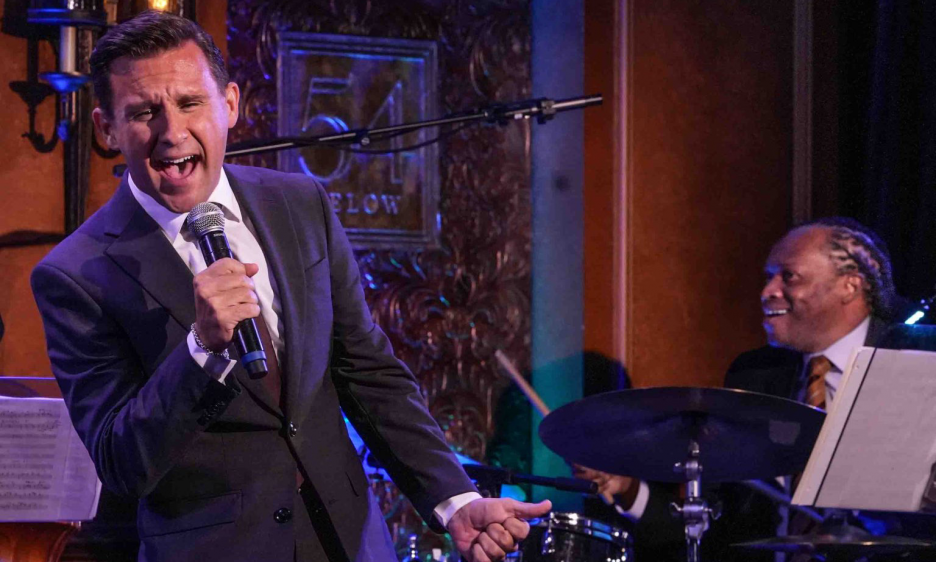
AAJ: You recorded the album live at 54 Below on what would have been Mike's 85th birthday. What did that date mean to you as you stepped onstage?
NK: It was beyond special. Mike's birthday was his favorite day of the year; he felt very strongly that people should be celebrated on the anniversary of their birth. He thought it was the greatest gift you could give to your friends—showing love and gratitude for them and your relationship with them. So to be able to utilize that date for this tribute was a great honor and keeping Mike's memory and tradition alive.
AAJ: Was there a moment during the concert when you felt Mike's presence particularly strongly?
NK: Two moments in particular: the first was when I was greeted on stage by a very enthusiastic response from the audience—of course I knew they were there to see me, but I also knew that they were all there to celebrate Mike, and that felt beautiful. The second moment was when my brilliant musical director, Tedd Firth, played the intro to "Where Is Love?," an intro that Mike came up with for me during off time at the piano of The Oak Room of the Algonquin Hotel while he was in the middle of a run there with Jack Jones. He never wrote it out on my chart; the chart just says "32 bars piano/vocal." But Tedd, being the genius that he is, transcribed the intro from the recording we had made, and hearing those chords and those voicings again for the first time in many years choked me up and brought me back to the hundreds of concerts we did together. I felt like he was right behind me, and it was the best feeling in the world.
AAJ: You're performing music associated with Mel Tormé, Lena Horne, Jack Jones, and others. How do you study their interpretations without letting them dictate yours?
NK: Well, nobody likes a copycat. I've always felt if you're going to do material associated with another artist, you must find your own point of view. So anytime I attack a number that Mike wrote for someone else, I think about what that song means to me and what the lyrics say, and that always puts me on the path of approaching it from an original standpoint.
AAJ: What connects these singers across their different styles—and what did Mike understand about each of them?
NK: I think Mike was drawn to people with great musicality, timing, and phrasing. When you look at Peggy Lee, Tony Bennett, Lena Horne—these luminaries all were great storytellers.
AAJ: "His Hands," written by Ann Hampton Callaway, brings a new song into a program centered on Mike's arrangements. What was it like to sing a tribute that was written specifically for him?
NK: Rough! Ann's beautiful lyrics and melody welled me up like crazy! There comes a point in a singer's show, with certain songs, where you have to decide if you're going to detach from the lyric a little bit, so as not to cry your eyes out, or to lean into it. I think I wound up doing something in the middle, if I'm being honest. Of course, an audience wants to see raw emotion, otherwise what's the point? But a meltdown is seldom received well, so I had to rehearse it and rehearse it until I got most of the tears out!
AAJ: What did Billy Stritch's perspective add to the album's liner notes, given his own experience as a singer, pianist, and collaborator?
NK: Billy has been a friend since I was 11 years old, and having been influenced by Mike himself, having his comments on this album—and having him at the concert itself—just meant the world to me. He is a brilliant musician and a wonderful human.
AAJ: At 35, you're carrying forward songs and arrangements from earlier generations. How do you make that music feel alive to listeners encountering it for the first time?
NK: Oftentimes, for younger listeners, it is the first time they're hearing it. And for older listeners who know the material already, it can definitely be tricky to grab their attention if they've heard it all before. But I hope that the energy and the point of view that I carry as an actor when singing this material makes it new and exciting no matter who is listening.
AAJ: Your performances combine showmanship with restraint. How do you decide when a song calls for a big gesture and when a quieter choice will say more?
NK: I always let the lyrics dictate those choices. Just because you can go big and belt and be bold doesn't mean you need to, or should. Most of the time, it's those soft, poignant moments that reach the heart.
AAJ: As you take No Bad Chords to audiences in different cities, what do you hope they'll understand about Mike beyond his reputation as a pianist and arranger?
NK: Well, "No Bad Chords" was Mike's mantra in life, his philosophy, if you will. And when you hear these arrangements, you hear songs that you may be familiar with, but you hear them from an entirely different perspective. Mike never settled for average; he never settled for "just good enough." He was always finding ways to improve a chord or voicing, and always finding ways to be better as a human or a musician. I have certainly taken on that philosophy since knowing him, and I hope that listeners will feel inspired to do the same, not just musically, but in their lives as well.
AAJ: If Mike could hear the finished album, what would you most hope he recognized in the way you brought his music—and his friendship—back to the stage?
NK: While he was never one for excessive compliments or attention, I know he would feel the love and gratitude and be deeply moved by it. He was always so proud of his work, never in an arrogant way, but like a little kid coming home showing you his artwork from school. I think he would be really proud of our tribute to his work, and of course with a little added "aw shucks, guys" in there too.
 FOLLOW Sherry Rubel
and get notified whenever a new article published.
Creative Media Liaison, International Photographer, and Activist
About Nicolas King

Tags
PREVIOUS / NEXT
Become a Sustaining Member

Since 1995, All About Jazz has championed jazz as an art form and supported the musicians who create it. Over three decades, it has grown into one of the world's leading jazz resources, serving hundreds of thousands of readers, musicians, presenters and industry professionals each month.
Help Build the Future of All About Jazz
Your support helps us continue building All About Jazz for the next generation—expanding our editorial coverage, preserving jazz history, developing new community features and creating better ways to discover the music and the people behind it.
Become a sustaining member for as little as $20 per year and you'll immediately enjoy an ad-free experience along with access to subscriber features and future articles for a full year.
Together, we're not simply sustaining All About Jazz—we're building its future. Thank you for being part of the journey.