Home » Jazz Articles » Interview » Leonardo Pavkovic: The Other Side of the Mountain
Leonardo Pavkovic: The Other Side of the Mountain
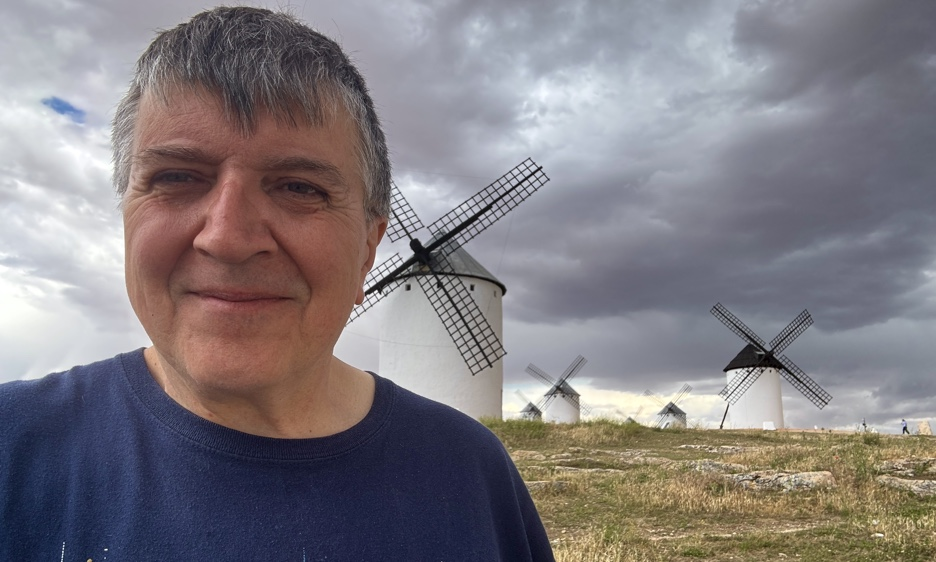
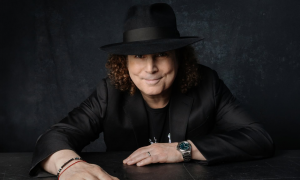
Courtesy Leonardo Pavkovic
The MoonJune festivals have been like everything else in my life: they arise by chance, but there's always a good reason for it.
—Leonardo Pavkovic
In the following interview, Pavkovic explains the journey that brought him and MoonJune Festival 2026 to Teramo. "I love the idea of celebrating MoonJune's 25th anniversary in a city at the foot of a big mountain!" he explains.
"Since 2026 coincides with MoonJune's 25th anniversary, it's a celebratory event for my record label and booking agency," he continues. "The MoonJune festivals have been like everything else in my life: they arise by chance, but there's always a good reason for it." The main reason is because, in the MoonJune-iverse, friends make music that they like for other friends who like it. Everything is connected—and nothing is ordinary.
All About Jazz: It has been such a difficult year for live music in the United States that we have a new phrase here, "blue dot fever." Sound familiar?
Leonardo Pavkovic: Yes, I've heard about that. I don't pay much attention to what's going on in the music industry. I've always done things my way and fought for my cause regardless of the current market.
AAJ: Have you seen and experienced the same or similar phenomenon in the live music business in Europe?
LP: No, not really. The main problem isn't only the price of tickets or that people don't have money. Something very simple also affects people's purchasing power: market saturation. There are simply too many options now.
In my case, I work with artists from progressive rock, jazz, fusion, world music—including fusion—and everything in between. The audience is roughly made up of people between 55 and 65 years old, some a little younger and some much older.
A few years ago, a study revealed that the average 60-year-old music lover in the United States has between $300 and $350 a month to spend on music —CDs, vinyl, digital—and roughly the same amount on concerts; that is, between $600 and $700 a month for a middle-class working person in the United States. For many, that's a lot of money. But how many things can you actually buy with that money? With the same amount of money twenty years ago, you could do so much more. Gas was cheaper, almost everything was cheaper, and there were fewer touring bands competing against each other and fewer albums on the market.
Let's say you're one of those people with eclectic musical tastes. You like everything from progressive rock to jazz, fusion, world music, singer-songwriters, and classic rock, maybe some hard rock, heavy metal, and blues. There are so many bands and so many concerts and you have to choose what to do. Someone just told me, "Look, I went to see Taylor Swift with my granddaughter and spent $600 that night just to make her happy." That person would like to see Stick Men and Soft Machine but had to spend that money to take his granddaughter to see Taylor Swift because he's a great grandfather! Another fan told me he'd love to buy all the music I release. He loves my label. He buys some albums but he can't buy everything because other labels and independent artists also release excellent music.
The CD revolution in the late 1980s brought many bands back together and created a new market for them. I benefited from this: As a booking agent, I've built my career working with progressive rock and jazz fusion artists, primarily from Italy and the UK, who reunited. I've also revived some artists whose careers were winding down, created new environments and opportunities for Soft Machine and Hatfield and the North, and touring opportunities for artists like Allan Holdsworth and others. Reunions boosted the live concert and record markets.
But at a certain point, we reached oversaturation. It's happening now in Japan, where I've done more than 40 tours in 24 years. Unless the project, the reunion, or the band is very special, ticket sales decline and the audience keeps aging. And it doesn't stop. Each band has musicians who want to start their own projects and here we go—more bands, more albums, more saturation!
On the one hand, a lot of great music is great. But the buyer and fan base can't handle it all. So, while the record industry is selling more albums than ever, and there are more concerts than ever, it's increasingly difficult for individual artists to make a living from touring and album sales simply because there's too much out there!
Let's talk about one of my favorite bands, King Crimson. Yes, King Crimson retired, but there's Stick Men with two KC members, Tony Levin and Pat Mastelotto. There's the Adrian Belew Band, Tu-Ner with Trey Gunn and Pat Mastelotto, the David Cross Band, and others. They all release studio albums, current live albums, archive live albums, remastered albums, remixed albums, albums with bonus tracks, special editions, Japanese editions, Blu-Ray, UHQCD, cassettes, vinyl, CDs... How do you buy all that and when do you find the time to listen to it all?
AAJ: If I take my granddaughters to see Billie Eilish, I'm won't be able to afford something for myself, too.
LP: The first post-COVID touring season had some incredibly well-attended shows. I toured with Stick Men three times: East Coast, West Coast, and back to the East Coast. We did really well with merch and ticket sales. But the next tour was a little less successful, the one after that even less, and so on. Their current tour was a bit better, maybe because BEAT's tour helped in terms of brand recognition, but we are still talking about 150-350 tickets.
Soft Machine's last two US tours, in 2024, were a complete disaster. The tour before that, in 2018, covered the East Coast, the Midwest, and parts of Canada, and saw very good attendance and some sold-out shows. In early 2019, the band toured the West Coast, starting in Seattle and traveling through California and Arizona, and it was also a big success.
But that line-up included legendary musicians from the band's glorious past: John Etheridge, Roy Babbington, and John Marshall, along with Theo Travis. When the band returned after the pandemic, neither Marshall or Babbington were with them; instead, Etheridge and Travis played with Asaf Sirkis and Freddy Baker. Attendance plummeted, and to make matters worse, visa delays forced us to cancel 12 shows. When the band returned to the West Coast, many shows were canceled due to low attendance. The band played only five of 14 shows and made virtually no money. Touring the United States is very expensive for small foreign groups: The costs of visas, flights, transport logistics, and fees are proportional to attendance, but when you have 75 to 80 paying attendees at some concerts, it's not easy to make money.
To play in the US, you need to apply for a work permit visa, and that's a real hassle. Not only are they expensive, but the biggest problem is that you don't know when visas will be ready. Nobody can tell you. If you apply for a work permit or visa in Japan, for example, the Japanese promoter applies for you, and the visa office informs them exactly when it's ready—the exact date! Even if you're touring Indonesia, Brazil, or Mexico, the paperwork can be ready in one or two weeks, or three at most, and you know exactly when it will be ready. But it's not like that in the US. Nobody knows, and nobody wants to or can tell you when it will be ready. It's chaos.
AAJ: What is it like booking shows in Europe?
LP: There's a fundamental difference between touring in Europe and the United States: In the US, you can play concerts 350 days a year, and that's so great! If it's July 4th, you can play a concert on July 6th without a problem. You can't play on December 23rd, 24th, or 25th, but you can on the 26th. You can play a concert on January 2nd; I've had West Coast tours start that day.
In Europe, that's not possible. In Europe, you have at least 80 to 90 fewer days for certain types of concerts. For example, there are no concerts in theaters and clubs in Italy and Spain during the summer. Almost everything is closed. Everyone goes to the beach. There are festivals, but they're packed with way too many bands. In Germany, people go to beer gardens in the summer, so the club and theater scene isn't as vibrant in July and August. All of this significantly limits the time available for playing concerts. In that respect, the United States is absolutely the best touring market in the world.
Sometimes promoters can't book two "guitar heroes" in the same week or month in the same market. I remember last year an agent had trouble booking two similar fusion guitarists in Finland. The local promoter, who was offering two or three concerts there, told the agent: "Choose only one, Greg Howe or Alex Skolnick. I can't book both artists in the same period. People can't spend money to see so many concerts in such a short time." The agent had to reschedule both artists' tours to other countries to make a four-to six-week tour possible. Agents fight for every single concert. Putting together a tour isn't as easy as some might think.
Often, artists blame the promoters if concerts are not well attended. But artists and their managers have to promote themselves these days. Whether you like it or not, you have to be active on all social media platforms. You can't expect others to do things for you.
Not everyone is like that. Some older artists are old school and don't have that kind of attitude; others feel entitled and wonder why they have to promote themselves if they're artists. Times have changed. The fact that you played guitar or bass for a major artist who sold millions of records thirty, forty, or fifty years ago, or that Herbie Hancock or Joe Zawinul considered you an amazing keyboard player thirty years ago, doesn't really matter. People need to know what you're doing now. It's one thing if you're an artist with a consistent career. But if you're a niche artist or disappeared from the scene for four decades, then things get complicated. Touring is an abstract and risky business. You've heard of Sicilian guitarist Matteo Mancuso?
AAJ: Sure.
LP: Thank you very much. His father was a musician and he's very talented, but he understands self-promotion. He showcases that enormous talent with persistence and discipline all over social media, and now, after a decade of hard work, he tours successfully all over the world. He's pretty good, a guitar genius, but he's not the only one in the world. Many incredible musicians will never reach their audience because they lack that ability to promote themselves. You have to be direct and communicate with the audience, and build an audience. Old-school thinkers might disagree but we live in a different world now.
AAJ: I watch sumo wrestling with a friend. Paul McCartney had just released an album and he hired flag bearers who carried around a flag with the picture of the new album and the name of it in Japanese. During breaks in between matches, these flag bearers walked around the circular ring, promoting Paul McCartney's new record in Japan.
LP: If he has to do it, why shouldn't everyone else? It's not about being good or bad, it's about promotion. Any promotion is good, especially one with a good strategy. Any kind of buzz is better than no buzz.
When I moved all my stuff out of New York to Spain a few years ago, I opened a box of photocopies of reviews for one of my earliest releases, DFA's 2001 album Work in Progress Live. I counted over 250 reviews, which means I generated a lot of buzz when I was promoting my label back in 2001/2002. Now, if I get 30 reviews, wow! A critic from New Zealand used to be one of the first to review my albums, one at a time, and now he's just sent me a review of an album I sent him a year and a half ago. Talk about oversaturation!
AAJ: Do you receive a lot more unsolicited music now, too?
LP: I receive between 70 and 80, or even 100, submissions every month from artists all over the world. They want me to listen to their music, they want my opinion, many want to be on my label. Do you think I can listen to everything? No, I can't, and I'm pretty sure I've missed some good stuff. You can't know everything, you can't listen to everything.
Social media isn't for everyone, I understand that, but sometimes it's good to embrace modernity. I embrace modernity, I adapt, I adjust, and I'm a romantic guy—I live in the place famous for Don Quixote and Cervantes and the legend of fighting against windmills. Why fight windmills? Accept them. Use what you have, make the most of it, and then reinvent yourself. Humanity advances through constant evolution if you embrace new things.
Improviser Without an Instrument
AAJ: Tilting against windmills is a nearly perfect introduction to this topic: I'm sure you could come up with reasons why you should not be presenting the fourth MoonJune Festival in July. But why are you?LP: Markus Reuter and Bill Bruford have said that I'm not a musician but I act like one. They say I'm an excellent improviser—I'm like a musician without an instrument. My whole life has been improvisation because I had to survive. I had a very difficult childhood but I was always optimistic and fought for love, freedom, recognition, and validation. I started this "MoonJune thing" by accident 25 years ago, by chance. But why a festival?
I didn't want to organize a festival. Then, my friend Boro from Bosnia who had moved to Sweden as a war refugee in 1992 asked me why we didn't do something in our hometown of Jajce, Bosnia & Herzegovina. That's how it all began.
At the time, my friend from Indonesia, the extraordinary pianist and keyboardist Dwiki Dharmawan was very close friends with the ambassador of Indonesia in Sarajevo, the capital of Bosnia & Herzegovina where I was born. With the ambassador's help, Dwiki was invited to the Sarajevo Jazz Festival, one of the most prestigious jazz festivals in Europe. We assembled an excellent international band for the festival, held in November 2019: Asaf Sirkis (Israel) on drums, Kamal Mussalam (Palestine) on oud and electric guitar, and Boris Savoldelli (Italy) on vocals and electronics.
I left Bosnia for good in 1980, although I returned six or seven times after that, when my grandparents were still alive. The last time was in 1989, a few days before my grandfather died, and then I hadn't been back for thirty years. I was born 160 kilometers west of Sarajevo, in an ancient city—the former capital of medieval Bosnia—called Jajce, which means "little egg."
Boro frequented our hometown since moving to Sweden in 1992, and he was able to ask some locals and officials: "Leonardo hasn't been to our city or our country in over 30 years, and he has an international band that will be performing at the Sarajevo Jazz Festival, so perhaps we can do something and book them? If we cover the band's local expenses, to come from Sarajevo and back to the Bosnian capital for a two or three day stay, that will be enough. They'll be delighted."
And so it was, and two days before the jazz festival in Sarajevo, I returned to my hometown for the first time in 30 years. It was very emotional for me and I went with some of my dearest friends among the musicians: Dwiki, Asaf, Boris, Kamal—and of course the mighty Boro.
That show was a complete sold-out success: 300 people came to the theater, from ten-year-old children to ninety-year-old women who remembered me as a child. It was an almost-free event, but they charged the equivalent of one or two dollars because it was sponsored by the local government. Bosnia suffered greatly during the war in the early 1990s and lost a large part of its population because the country was devastated, and people simply wanted to leave. But then we arrived with a positive festive attitude, to bring international arts to this magic place, and people remembered: "We knew Leonardo when he was little. He had a very tough and difficult childhood but look what he's achieved: He went to Italy and then to the United States and now he travels the world and lives in New York City."
We arrived on a cold November day in 2019—a Palestinian Christian, an Indonesian Muslim, an Italian agnostic, an Israeli Jew, and me, a mixed blood atheist—to a country which suffered through civil war due to ethnic and religious tensions. But we brought unity and brotherhood, regardless of our ethnic and spiritual denomination: Forget who arrived first, who arrived last, whose prophet or pastor is more potent, or whether you are white, black, or yellow. We are all human.
It was one of the most significant and emotional moments of my life when the band and I received standing ovations. We transformed a sad city into a joyful one. We brought hope and optimism. We united people. That night allowed me to forget all the bad memories from when I lived in Jajce as a child and teenager. I broke the ice and reconciled with my past. It was my personal little triumph.
AAJ: How did this transfer into the first MoonJune Festival in 2022?
LP: The next morning, we had a reception at the town hall with the mayor and his team. My friend Boro suggested organizing a festival, and I liked the idea. If they covered the costs, we would do it purely for fun and could bring in between four and six bands. We planned the festival for June 2020 but had to cancel it due to COVID-19.
But in June of 2022 it happened. And it was simply magical. I gathered a group of friends: Markus Reuter, Boris Savoldelli, Dwiki Dharmawan, Beledo, Dennis Rea. Each artist had one or two projects, and we ended up with a three-night festival, two performances per night. Friends and fans came from Italy, Poland, Israel, USA, UK, and different parts of Bosnia & Herzegovina. It was a small but sweet gathering. Everyone loved not only the event, but the beyond beautiful sceneries of that gorgeous place. My first festival was a kind of gift to my beautiful hometown of Jajce, where I was born; just six artists, but we had a blast.
Then I had the idea of organizing another festival in a beautiful place, and why not Toledo in Spain, a majestically beautiful place where I already lived, in June 2023?
But June was too soon so I held the second festival in September 2023, after finding a local person who helped me organize the event. There were elections in the city; the old government, which wanted to help us, was replaced, and the new government said it would help but didn't. It was an incredible event in a beautiful venue, a cultural center that once upon a time was the office and church of the Spanish Inquisition! I invited Soft Machine and Diego Amador, a prominent Spanish flamenco-jazz artist, brought back some artists like Dwiki Dharmawan and Beledo and added some others, and it was a success, despite losing quite a bit of money.
But I'm a stubborn person and believed in the festival's future. It was an investment and a way to build my brand. I said I would do another one in Toledo, since the town council had promised to help with sponsorship and funding. But the funding never materialized. I got so fed up with empty promises that I decided to hold the festival in Guadamur, an ancient town founded by the Visigoths, ten kilometers from Toledo. Perhaps it wasn't the smartest decision, because I would have saved a lot of money by staying in Toledo. But I'm a stubborn person and I wanted a change. "Change" seems to be the constant in my life.
The mayor of Guadamur and her husband were very kind and allowed us to use their theater free of charge. But we encountered problems of nearly every kind two to three months before the festival. It ended up being one of the hardest things I've ever done. I almost abandoned the idea, which would have saved me tons of money. But I wanted to do it; I had promised my musician friends to invite them to my new hometown, and I like to keep my word. Besides, I liked the challenge—another constant in my life—and there's something special about the number three, when you do something three times.
AAJ: One is a data point, two is coincidence, three is a trend.
LP: That third festival happened in Guadamur in September 2024. From an outsider's perspective, it was great, but in reality, it was a personal disaster in terms of finances and organization. We had some logistical and technical problems, and when it ended, I didn't have any desire to do anything else.
But I am a stubborn romantic guy and I believe in the poetry of life. And then a miracle happened, as they always do in my life. Asaf Sirkis, now in Soft Machine, sent me the contact information of an Italian promoter who used to organize shows and festivals in this city of Teramo and the Abruzzo region: Emiliano Di Serafino, who returned to the business after a hiatus of more than a decade due to two catastrophic earthquakes in 2009 and 2016 that hit the region, followed by the pandemic.
Emiliano is a big fan of Soft Machine and asked Asaf to put me in touch with him. They had previously met when Asaf was touring with John Abercrombie and Larry Coryell and had become friends. After our initial contact, Emiliano booked some of the artists on my booking roster: Soft Machine, the David Cross Band, Paqueando featuring Diego Amador, and the Pete Roth Trio featuring Bill Bruford.
Then he asked me whether I was going to organize my festival, and where. I told him I needed money and a promoter, and that I had no plans for the festival in 2025 but that if someone came up with a good idea, I could do it in 2026. He asked me how much I needed, because he might be able to get money from the local government and other public funding organizations, and I gave him a figure. We joined forces, drew up an agreement, presented the proposal to the local authorities, and after several meetings got approved! And since 2026 coincides with MoonJune's 25th anniversary, it's a celebratory event for my record label and booking agency.
The MoonJune festivals have been like everything else in my life: They arise by chance, but there's always a good reason for it. This festival takes place from July 22nd to 25th in Italy, my fourth festival in a third country. And although almost everything is going well so far, thanks to the generous support of the local authorities in Teramo and public funding, it didn't all start perfectly.
I told Eder (Emiliano) that he didn't need to look for artists—I already had plenty on my booking and record label rosters. But I couldn't count on my dear friend and music legend Tony Levin, who was touring with BEAT at the time. Phil Manzanera was also busy. Besides, other than a few close friends in the States and one from Indonesia, I didn't want to invite musicians who didn't live in Europe due to budget constraints. I want this festival to be just with friends. It's a festival of friends, for friends, and with friends.
I originally had plans to bring in two legendary progressive rock bands, Caravan and PFM, with whom I have worked as a booking agent in some territories outside of Europe.
I was disappointed by Caravan's booking agent in the UK. He knew me quite well and had secured them several very lucrative tours in Japan in previous years, but he was arrogant and disrespectful, demanding 100% of the money upfront before the festival was even announced—and that was last October! His argument was that Caravan felt insecure about accepting an offer from a festival that, in his opinion, might not actually happen. We had the budget for Caravan to pay what the agent was asking for, which was a very reasonable price, but his arrogance made me turn it down. I'm almost certain he didn't even speak to the band to let them know there was a festival interested in them. Beyond stipulating the usual terms, signing the contract, paying 50% by a certain date and the rest before the show, the guy wanted 100% upfront in October 2025 for a festival taking place in July 2026! Seriously! In the end, I let it go. I prefer to work with enthusiastic and positive people.
The second setback was completely different. I've worked with PFM since 2002. I took them to Japan seven times. We recorded a DVD there; that was the moment that launched my intense business relationship with Japan, a country I've visited more than 50 times, organized more than 40 tours, and licensed several hundred albums in. I've organized around 70 PFM concerts worldwide, mainly in Japan and throughout Latin America, as well as in the United States, Canada, on a couple of progressive rock cruises, and even in South Korea. I'm very good friends with Franz Di Cioccio, the drummer and frontman.
We were even going to put them on a bigger stage in the main square of the city of Teramo with a large orchestra! And their famous tune "É festa" from their seminal debut album Storia di un minute (renamed "Celebration" with English lyrics written by Peter Sinfield, released internationally on their 1973 album Photos of Ghosts, which catapulted them onto the world stage—ed) was supposed to be the "anthem and theme" of the festival—MoonJune's 25th Anniversary celebration!
But after the first official press conference announcing the fourth edition of the MoonJune Festival in November 2025, destiny changed in a matter of days. The press conference was held on Friday, and when they returned to Milan where they live on Monday, their manager called me and told me they wouldn't be playing at my festival. It has nothing to do with me, nor with the city of Teramo.
Franz Di Cioccio is famous in Italy not only as a musician but also as an animal lover, and the Abruzzo region (not the city of Teramo) had passed a law cutting funding for dog welfare. He told me, "This is my homeland, where I was born, and I will never play here again unless they change that law. Leonardo, you're my friend and I love you, but I'm not coming. Period!" Despite the disappointment, I accepted their decision and, of course, I had a Plan B!
The only thing I had a few minor objections to when I invited PFM was that they wanted to be the only Italian classic progressive rock band at the festival—just them, no one else. I wasn't completely sold at that request of the exclusivity, but I accepted. Because having PFM with the orchestra is a privilege and an honor. And we're still friends; PFM holds a very special place in my heart, and that will never change.
Those were the only two bands that I wanted that didn't happen, but everyone else was already confirmed. Reaching 25 years is a significant milestone, and celebrating it isn't about paying tribute to myself, but to what I do and the community I do it for. I'm not one to get stuck in nostalgia. As Peter Hammill said, "I want the future now." I always say I miss the future, not the past. The future is the only past that present-ly matters. I like the past, and I agree that it should be celebrated, but not with a "How I miss those times." Those times are gone.
And if I do another one in 2027, it's already completely booked. I've already secured enough bands for another 4-day event.
AAJ: What is on the program for the 25-year celebration of MoonJune on July 23?
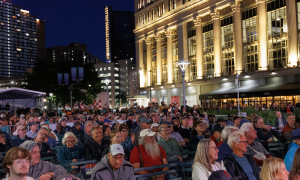
LP: On the first day, July 22nd, admission is free, and it will be held at the main venue, open air Piazza Sant'Anna, and Boris Savoldelli's Psychedelic Jazz Trio will perform Pink Floyd's masterpiece Dark Side of the Moon in their unique style. Before Boris, a duo of Venezuelan friends of mine who live in Toledo—guitarist Oswaldo Gomez and pianist Heindy Balza—will open the evening with a short set of Afro-Venezuelan rhythms, jazz, and progressive rock. Afterward, there will be a jam session with local musicians and festival musicians already in town
Three roundtable discussions will be held in the indoor venue Sala Ipogea on the mornings of July 23, 24, and 25. On Thursday: 25 Years of MoonJune, moderated by Italian journalist Donato Zoppo; on Friday: 60 Years of Soft Machine, moderated by British journalist Sid Smith; and on Saturday: Derek Shulman, former frontman of the seminal Gentle Giant and an acclaimed music impresario.
In the late afternoons, several concerts will be held on the secondary stage, Largo Melatino, just a few minutes' walk from the main stage in Piazza Sant'Anna. On Thursday: Local accordion virtuoso Danilo Di Paolonicola will perform a short solo set featuring his arrangements of Charlie Parker songs, followed by the fabulous duo of Swiss guitarist and former Jeff Beck Group member Nicolas Meier and Balinese guitarist Dewa Budjana.
On Friday: Chilean pianist Gustavo Cerqueiras, now based in Spain, will perform a short set of progressive jazz pieces, followed by the futuristic music of the Stephan Thelen Fractal Trio, joined by guitarist Anthony Garone and Italian keyboardist Fabio Anile.
On Saturday: Dutch singer-songwriter Anton Roolaart will perform with two Uruguayan musicians, Beledo on guitar and Christian Fattoruso on bass, and American drummer Rob Kirby will be on drums.
The main venue will be full of MoonJune stars. Thursday: German guitarist Markus Reuter will perform with his avant-power trio Truce, featuring Asaf Sirkis on drums and Fabio Trentini on fretless bass. This trio will be followed by the group Beledo MoonUnity, led by the Uruguayan multi-instrumentalist and joined by British musicians of Israeli origin, including Gilad Atzmon on soprano saxophone and clarinet, Yaron Stavi on bass, and Sirkis on drums, with special guests Indonesian guitarist Dewa Budjana and Italian singer Boris Savoldelli. The evening will conclude with Osanna and David Jackson.
Friday: The evening begins with an exclusive, rare performance of Steve Hillage's 1979 album Rainbow Dome Musick joined by his wife Miquette Giraudy on electronics. Gary Husband will continue with a short set of original songs, featuring piano, keyboards, and percussion: pure musical poetry from one of my favorite musicians and longtime friend. Afterward, Soft Machine will take the stage and, midway through their set, invite Gary to join them on keyboards. It will be a celebration of 60 years of music from this iconic band, which has undergone many lineup changes but has always created new, innovative music.
Saturday: Spanish multi-instrumentalist Diego Amador will fuse jazz and flamenco accompanied by Gitano bassist Julian Heredia and Mexican drummer Israel Varela. Gong with special guest Steve Hillage will close the evening and the whole festival with their unmistakable dynamic, transcendental psychedelic progressive space-rock.
AAJ: How did Steve Hillage and Miquette Girandy and Rainbow Dome Musick end up on this year's festival bill?
LP: I've known Steve Hillage for many years. We didn't work together, but we knew each other. The first time I saw him in person was when he played with Gong back in 2009, when Daevid Allen was still alive. I worked briefly with Daevid before his passing, and then, when Gong reunited with the musicians who had played with them during the last few years of Daevid's life—one of whom was a close friend, Brazilian guitarist Fabio Galfetti—I also knew a few of the other "new" musicians in the band (Dave Sturt, Kavus Torani, Ian East) and offered to be their booking agent outside of the UK and Europe. I took the band to Japan twice—both with Steve as special guest—on a progressive rock cruise, we did two North American tours, one South American tour, and a few festivals in Southern Europe. When we went to Japan frequently, not only was Steve a special guest but so was his wife.
Inviting Gong with Steve Hillage was an obvious choice as one of my festival headliners. Since they would both be attending the Teramo Festival, I suggested Steve to perform entirely his famous Rainbow Dome Musick and he enthusiastically agreed. I believe that he has performed this album live only once before, at the Glastonbury Festival a few years ago, since the early 1980s.
Like everything in my life, this happened naturally and for the mutual satisfaction and happiness of all involved.
AAJ: That's a different currency than most festival transactions.
LP: And that's why I'm so happy. That's why I do it. We have to do certain things to create positivity. There's physical feng shui but there's also mental feng shui. I love it when you walk into a place and everything—your thoughts, your energy, and your vibes—fits together perfectly. It's a mental thing and I base a lot of my life on these vibes. I don't need to know why things happen. All I need to know is that's happening, and I should appreciate it and make it even better for myself and those around me.
Miguel de Cervantes, who wasn't from Toledo but was born in Madrid, very close to here, wrote Don Quixote and the even more profound Exemplary Novels. If you read Cervantes, you'll find many simple things with a deep philosophical weight. Reread Don Quixote if you can; all those windmills are about thirty minutes from where I live.
When I first arrived here, Bill Bruford told me he was glad I was coming to Europe because I'm from here and I belong here. He was also the first person to call me the Don Quixote of the music industry; I wasn't sure if I did it on purpose or if it came about naturally, but it makes sense that I've come to the land of Don Quixote, in the heart of Spain.
AAJ: We previously talked about how the retail model was changing. How has that model changed for MoonJune over the last eight years? How does that relationship between your business and the Bandcamp business work?
LP: Over the 25 years of MoonJune Records, I've learned one fundamental thing: Regardless of how distribution works, regardless of whether you have a major or minor distributor, the best way to sell your product is directly to the consumer.
I've created my own mailing list that I send newsletters to, and when I do, I get a lot of responses. Of course, the responses to Soft Machine and Stick Men are significantly higher than those for other artists, for obvious reasons. I still rely on the newsletter.
I've collected over 40,000 email addresses through various channels over the course of 25 years but a good portion of these addresses are no longer valid. Other people unsubscribe because they receive too many other communications or because they can follow us on social media or elsewhere. So, the list currently has about 15—16,000 active subscribers.
Before 2012, I sold my albums on my website: I'd post the album cover with basic information and a PayPal link so people could purchase them. In 2012, however, I started thinking about Bandcamp, and saw my good friend Steve Feigenbaum selling Cuneiform Records releases on Bandcamp. I did some research, liked the tool, and realized that creating an online store on Bandcamp with downloads and the ability to sell physical products was much more effective than having my own website. So, I uploaded my albums to Bandcamp and built an email list of about 11,000 active BandCamp followers and subscribers.
For MoonJune's 15th anniversary, I released a free downloadable compilation, 15th Anniversary Sampler 2001-2016 featuring a track from every album on my label up to that point and offered it at no cost. I immediately acquired 1,250 active subscribers and the compilation was downloaded over 2,500 times.
A good portion of these subscribers became customers. If it wasn't for that compilation, who knows if these people would have ever "discovered unknown artists" on MoonJune Records. And I know exactly who these people are; whereas, if I created a playlist on Spotify, I wouldn't have a clue who they are. That's why I love Bandcamp: every download, every purchase, even a free download, tells you who the person is. Developing a customer base and database is crucial.
For example, just in the last three days, more than 600 people have purchased an archival live Brand X album I released on behalf of my good friend and bass legend Percy Jones with virtually no promotion, just Bandcamp's algorithms. Obviously, I can't get those numbers with an unknown artist. You have to have legacy name such as Brand X, Soft Machine, Stick Men, or Tony Levin. Markus Reuter, who manages the Stick Men catalog and understands Bandcamp, social media and algorithms, has developed good strategies for selling albums directly to consumers. We help each other; I also do the fulfillment for Stick Men physical goods here in Europe. Stick Men's latest album Let's Thrack Again (MoonJune Records, 2018) is the band's best-selling album to date but before going on general release, the band sold a considerable number of downloads, CDs, LPs, and box sets. Direct-to-consumer sales are the best way to finance independent music, but you need followers, a mailing list, and interaction with your audience.
 FOLLOW Chris M. Slawecki
and get notified whenever a new article published.
FOLLOW Chris M. Slawecki
and get notified whenever a new article published.
Chris M. Slawecki has been published in music industry and related publications for more than thirty years and has served AllAboutJazz.com as Senior Editor since 1997.
About Markus Reuter

Tags
PREVIOUS / NEXT

Become a Sustaining Member

Since 1995, All About Jazz has championed jazz as an art form and supported the musicians who create it. Over three decades, it has grown into one of the world's leading jazz resources, serving hundreds of thousands of readers, musicians, presenters and industry professionals each month.
Help Build the Future of All About Jazz
Your support helps us continue building All About Jazz for the next generation—expanding our editorial coverage, preserving jazz history, developing new community features and creating better ways to discover the music and the people behind it.
Become a sustaining member for as little as $20 per year and you'll immediately enjoy an ad-free experience along with access to subscriber features and future articles for a full year.
Together, we're not simply sustaining All About Jazz—we're building its future. Thank you for being part of the journey.