Home » Jazz Articles » Live Review » Vilnius Mama Jazz 2026
Vilnius Mama Jazz 2026
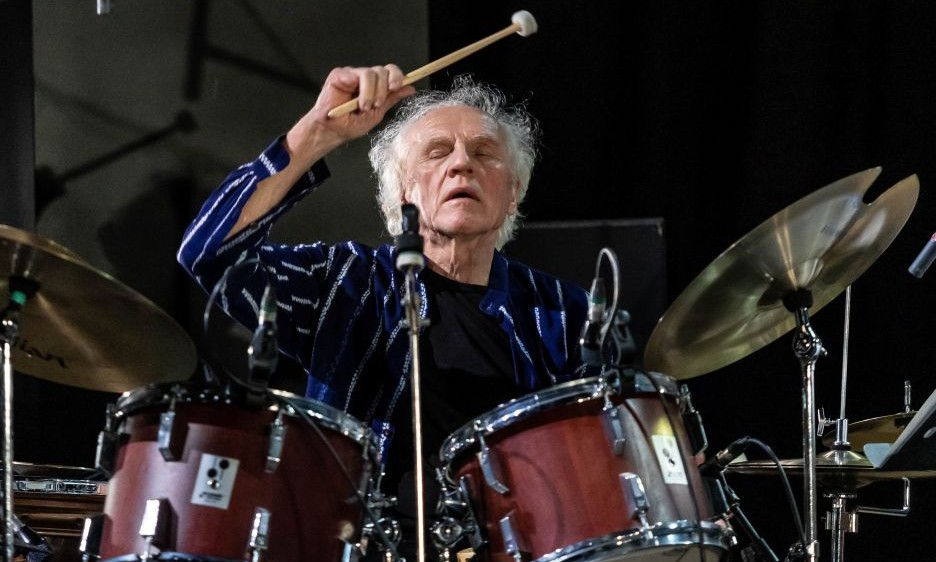
Courtesy Dainius Labutis
Lithuanian National Drama Theatre
25th Edition
Vilnius. Lithuania
May 22-24, 2026
Vilnius Mama Jazz turned 25. In festival terms that is early middle age. When you consider that 25 years is roughly a quarter of the entire history of jazz, the significance of the milestone assumes greater meaning.
The evolution in jazz in the lifetime of VMJ has been hefty. The passing of many of jazz's old guard, the rise and rise of female leaders, the advances in music technology, and the explosion in independent publishing all mean that jazz is in quite a different place today than when VMJ launched back in 2002.
VMJ has moved with the times, embracing new talent and new sounds while acknowledging the traditional roots of the music. Steering VMJ all these years has been Judita Bartoševičienė—the woman who put the 'mama' in Vilnius Mama Jazz. Under her watch, VMJ has struck a good balance between presenting Lithuanian jazz musicians of all stripes, as well as international marquee names.
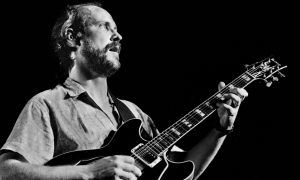
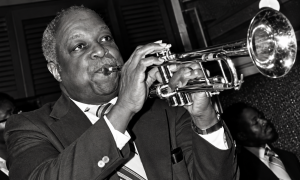
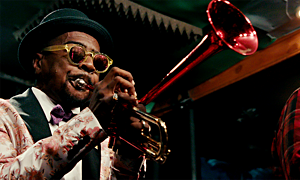
Bartoševičienė would have had every reason to celebrate, but instead the 25th edition of VMJ felt like business as usual. With the exception of Danius Labutis' photographic exhibition in the foyer—portraying jazz artists who have graced the festival over the years—there was almost no fanfare around the occasion. At VMJ 2026, the music, as ever, was front and center.
Friday, 22nd
Vega Trails; Mary Halvorson: Canis Major
The opening double bill saw two concerts of stark contrast. First up was the Vega Trails, the chamber-jazz duo of double bassist Milo Fitzpatrick and saxophonist—clarinetist Jack Wyllie, the latter subbing for Jordan Smart. This concert marked a return to VMJ for the pair following their appearance with Portico Quartet in 2019.Both the name Vega Trails and the title of its debut album Tremors in the Static (Gondwana Records, 2022) were inspired by astronomer and author Carl Sagan's novel Contact (1985). The music drew from baroque, minimalism and Indian music. Another source of inspiration was pianist Jan Johansson's Jazz på Svenska (Megafon,1964)—duets based on Swedish folk songs with bassist Georg Riedel. The sparse, melancholic beauty in the chamber minimalism of that iconic album—found in over 250,000 Swedish homes—colored Fitzpatrick's and Wyllie's dialogs to a degree, though the electronic filter on saxophone lent a sci-fi ambiance to the melodious, reverb-heavy compositions.
The set visited compositions from Vega Trails' first album and the follow-up, Sierra Tracks (Gondwana Records, 2025). Intimate, contemplative and undeniably beautiful, the effect of the music across 80 minutes was diluted a little by the limited rhythmic range and the lack of improvisational spark.
The darker tones of Wyllie's bass clarinet brought welcome contrasts in texture and mood, but when on saxophone the specter of Jan Garbarek loomed large throughout. Fitzpatrick switched frequently between legato bowing and plucked lines, his obvious emotional investment in the music translating itself to an appreciative audience.
Perhaps it was the effect of the almost heavy reverb, or maybe it was the largely unwavering dynamics that made the music feel like one long, slow-pulse tone poem, but this concert felt about 20 minutes too much of a good thing.
Jazz is not short of exceptional guitarists. In fact, this may be something of a golden age, though keeping track of them and their output is the challenge. One guitarist whose every move has been worth watching since the turn of the century is Mary Halvorson. Her distinctive approach to her instrument—eschewing the usual tropes and forging a highly personal, instantly recognizable language—marks Halvorson out from the pack.
Halvorson is fairly prolific, but no two releases are the same. Canis Major, featuring drummer Thomas Fujiwara, bassist Henry Fraser and trumpeter Dave Adewumi is a new project, having debuted with a two-night run at The Jazz Gallery in 2025, followed by an appearance at that year's Vision Festival. It followed that the music presented at Vilnius had not yet been recorded, providing a welcome opportunity to see a Halvorson group in its early stages of development.
And what a curious, hypnotic beast Canis Major proved to be. Rhythmically intricate yet subtly grooving, experimental yet rooted in familiar jazz soil, by turn tightly interwoven and arch, spare and darkly lyrical.
Over subtly shifting rhythmic pulses, Halvorson and Adewumi toggled between briefly rendered unison lines and improvisation. Impressive though Adewumi was throughout, the ears were frequently pulled towards Halvorson, whose comping was just as fascinating as her soloing. Pedal boards have long been de rigeur for guitarists, but Halvorson's brand of slurred, delayed or shimmering notes bear her own copyright. Perhaps her woozy, sci-fi punctuation owes a little to Bill Frisell—with whom she recorded the excellent The Maid With The Flaxen Hair (Tzadik, 2018) but her influences are refreshingly elusive.
In a 2026 interview with All About Jazz, Halvorson cited Jimi Hendrix as an important early influence, but it was the spirit of Hendrix's outré studio experimentation as opposed to his blues-based live theatrics that Halvorson seems to have absorbed most.
Two solo spots, a bewitching intervention from Halvorson that evolved like real-time sonic sculpture, and an earthy bass solo from Fraser proved set highlights. Canis Major signed off with the fast-paced "The Color of Bone," which brought extended solos from Fraser, Fujiwara and Adewumi—Halvorson content to hold the rudder in her inimitable style. A standing ovation brought the musicians back for farewell bows—in some ways a more fitting exchange of mutual appreciation than a perfunctory encore.
Lithuanian Programme: Jazz Cellar 11
It was a short walk through Vilnius's old town, bustling on this Friday night, to Jazz Cellar 11 , a vaulted basement bar nearby the Gate of Dawn. Though Jazz Cellar 11 looks as old as the historic quarter in which it sits, it opened only in 2015. Still, in a relatively short space of time it has become a key venue for the Vilnius jazz scene, hosting gigs by established and up-and-coming musicians as well as hosting regular jam sessions. In April 2026, Cellar Jazz 11 partnered with London's historic jazz 606 Club in a program of exchange. Jazz Cellar 11 seems set for the long haul.Due to overlapping gig times, the small but mobile jazz media pack arrived at the tail end of the set by the Veronika ChiChi Quartet. Still, a brace of songs by ChiChi, pianist Dimitrij Golovanov, drummer Dovydas Jonas Sulskis and Latvian bassist Artūrs Duckis was sufficient to recognize an artful ensemble at work. It came as no surprise to learn that ChiCi has also toured with a contemporary opera troupe, such was the potency and lyricism in her delivery.
The jam session that ensued began with the same core musicians. On an old upright piano, Golovanov played with joyous, infectious freedom. Equally, tenor saxophonist Pavel Arakerian fanned the flames with passionate interventions evocative of Charlie Parker and Sonny Rollins. With the swapping in and out of younger, less experienced musicians, there was a dip in intensity over the next hour. The takeaway, however, was that at the jam session's peak, the passions ignited on and off stage underlined the enduring appeal of bebop and jazz standards.
Saturday, 23rd
Lithuanian Program: 21st Century Quintet; Arkadijus Gotesmanas & Kazimieras Jušinskas; Duck Saved Jones
The first of three Lithuanian bands to draw the faithful to the small stage of the Lithuanian National Drama Theatre was 21st Century Quintet. Formed in 2019, and nominally led by saxophonist Davit Avetisyan, the band's youthful exuberance chimed with an equally youthful crowd. Avetisyan's folkloric lament on a small reed pipe was a foretaste of one important element in the music—his Armenian heritage. But any notion that 21st Century Quintet's bag might be airy folk-jazz was thunderously dispelled once Andrius Savčenko (keyboards), Danielius Skeivelas (electric guitar), Artūrs Duckis (bass guitar) and Mihail Novikvos (drums) were in full flow.Contemporary jazz-fusion with danceable folkloric DNA, 21st Century Quintet's shift-on-a-dime athleticism from highly charged, guitar and saxophone-driven groove to ambient passages was not far in spirit from 21st-century prog-rock. Most of the set showcased the band's confident debut album, On Ararat (Self Produced, 2024)—mastered by Nate Wood—though a punchy version of Wayne Shorter's "Footprints," with Avetisyan tearing forth on alto saxophone, proved that 21st Century Quintet bows to more than one tradition.
The slower pockets of ambient prog that occasionally surfaced were quickly bulldozed aside, the band's punkish energy, ebullient soloing and excessive volume winning out each time. The young crowd lapped it up.
Melody was ever-present—and the Armenian folk element did feel like the band's trump card—but more subtlety might have made for a more persuasive performance, at least for some of the grey hairs/no hairs in the audience.
Outside of specially dedicated festivals it is not that common to find completely improvised performances. Drummer percussionist Arkadijus Gotesmanas and Kazimieras Jušinskas provided just such a menu, though it was not to everyone's taste. Half an hour into the gig, someone in the audience raised their voice to request some music—a criticism likely provoked by the absence of easily defined melodic contours or ritual groove.
What the duo did offer was a real-time dialog where textures, timbres and atonal utterances prevailed. Gotesmanas is one of Lithuania's most celebrated drummers and percussionists. Artistic Director of Utena Percussion and Jazz Festival, Gotesmanas has collaborated with the likes of John Zorn, Charles Gayle and Barry Guy. A percussive polyglot, he also composes percussive soundtracks for theatre, dance and sculpture. It was fascinating to watch him work his kit, festooned as it was with mini chimes, gongs, resonating bowls and metallic plates, switching between multiple sticks, brushes and mallets with painterly precision.
Kazimieras for his part warbled, honked, squeaked and puttered in the low-to-mid range of his saxophone, and at a fairly steady volume that eschewed the harshest excesses/exclamations (delete for preference) of free jazz. In their sonically challenging environment jazz felt less like a distant shore than a neighboring planet. One reference point was the improvised vocabulary of Korean saxophonist Kang Tae Hwan and Japanese percussionist Midori Takada, with its meditative qualities and ever-shifting dynamics.
One unusual act of sonic manipulation saw Kazimiera shake his saxophone as though wringing it out, its flapping keys and passenger-saliva offering sounds less commonly heard. Another episode saw him insert a small whistle into the bell of his saxophone—a curious piece of theatre that delivered minimal returns.
And this perhaps was the issue: oftentimes the expectations around improvised music demand grand gestures, crescendos and easily discernible virtuosity. Gotesmanas and Kazimiera offered few such obvious signposts, but for those attuned—or at least willing to adjust their antennae—to their unconventional dialogue, the rewards were real.
Formed in 2023, Duck Saved Jones may be a relatively new group, but members Andrius Savčenko (keyboards), Artūrs Duckis (bass) and Dovydas Jonas Sulskis are experienced figures on the Lithuanian jazz scene. With a bank of keyboards to the left and bass/Moog synthesizer to the right, Sulskis' drums were centrally positioned, his kit crowned by seven cymbals, including an o-zone and a China cymbal. Bright, uncluttered melodic contours and head-bobbing vibes were the order of the day, with Savčenko 's solos exploring a no-man's land somewhere between Bruce Hornsby and Neil Cowley—pleasingly melodic and rhythmically sure.
A delightful solo-piano segment brought a lull of gently enticing lyricism, the reverie gradually altered by the entry of hissing cymbals and rumbling bass. A trio groove soon sprouted, carried on uplifting ambient, jazz-electronica and hip-hop wings. Ibiza chill-out? Duck Saved Jones could yet become a crowd favorite for beach sunrise parties the Mediterranean over—for those with the energy still left to dance.
Tom Skinner; Mammal Hands; Nils Petter Molvear: Khmer
After five albums on Gondwana, UK trio Mammal Hands signed to ACT Music, releasing Circadia (2026) on Siggi Loch's German label. That album filled half of its VMJ set. Propelled by saxophonist Jordan Smart's searching lines, Nick Smart's post—minimalist rhythmic churn and drummer Rob Turner's in-the-pocket grooves, the music was accompanied throughout by dry ice and lighting effects that conjured stormy skies.In the Norwich trio's repetitive rhythms, echoes of Steve Reich's minimalism abounded, but so too traces of classical and post-rock influences. In a sense, Mammal Hands is the inheritor of Esbjörn Svensson Trio's and GoGo Penguin's legacy. That the latter group's Rob Turner should replace Jesse Barrett on drums made perfect sense. As this warmly received concert demonstrated, what sets Mammal Hands apart from those two iconic bands— saxophone apart—is its unique blend of ethereal, meditative pull, heard to quietly captivating effect on "A Thread in the Dark" and, on rhythmically layered compositions like "The Coming" and "The Spinner," its unrelenting push.
Afterwards, the queue for Mammal Hands' vinyl and assorted merchandise was longer than the snaking line just across the road for Angolo Italiano's ice-cream.
Tom Skinner was making a return to VMJ following his 2015 appearance with Sons of Kemet—the group he co-founded with Shabaka Hutchings. The drummer was accompanied by cellist Francesca Ter-Berg, tenor saxophonist-flutist Chelsea Carmichael, bassist Tom Herbert and, doubling on tenor saxophone and bass clarinet, Robert Stillman.
The quintet walked slowly onto the stage, each member shaking, rustling or rattling percussive instruments. From there, their primary instruments chirped and groaned atonally, the sounds gradually assuming cohesive rhythmic and melodic forms. It was an entrance evocative of Art Ensemble Of Chicago. And as the music coiled and expanded magnificently, that comparison still held true 80 minutes later.
Beautifully woven saxophone, flute and cello lines were buoyed by earthy bass ostinatos and Skinner's probing kit work. When drums and bass sat out, Carmichael, Ter—Berg and Stillman entwined lyrically—the line between composed and improvised exchanges delightfully blurred. Skinner was presenting selections of music from Kaleidoscopic Visions, (International Anthem, 2025) an apt title for music that skirts easy categorization and, especially in the live arena, seemed open to multiple stylistic influences. New material of episodic grandeur incorporated drone, cantering rhythms, jungle sounds and sparkling virtuosity in a broiling stew.
Compelling from first note to last, Tom Skinner's gig felt like it would be the outstanding gig of the festival, which in due course it proved to be.
At the time of its release in 1997, Nils Petter Molvaer's Khmer marked something of a before and after in ECM Records with its use of electronic production technique—samples, creative soundscaping—and rhythms inspired by drum 'n' bass and trip-hop. For many it was the Bitches Brew of the era, with a nod also to Jon Hassell. The album established Molvaer as a major European figure in so-called nu-jazz. Fast-forward to 2023 when Vossajazz commissioned Molvaer to revisit Khmer on its main stage. It was a subsequent concert in Bergen, however, that resulted in the album Khmer Live in Bergen (Edition Records, 2025).
For revisiting read reimagining. This concert at VMJ, like the handful of others that preceded it—Molvaer is deliberately giving a rationed number of performances of Khmer—presented a contemporary overhaul of the music. The atmospheric studio production sound of the album was amplified to bathe the hall. The ritual grooves courtesy of Auden Erlien on bass and the dual drumming threat of Rune Arnesen and Per Lindvall coursed through the performance like adrenaline shots. Stage left Eivind Aarset perched on guitar and electronics; stage right Jan Bang wove live sampling. And cutting through it all, now as then, was Molvaer's vibrato-less trumpet. Melancholy and plaintive on one hand, bustling and darkly effects-laden at the other.
The title track from Solid Ether (ECM, 1999) mined techno-pop textures both mellow and exploratory. Over an infectious backbeat and a spare, funk bass line, Aarset and Molvaer manipulated their instruments to striking effect—pointing to alternative terrain that Miles Davis might have exploited in his latter years, had he had the right musicians at his disposal.
Both the first-rate acoustics in the Lithuanian National Drama Theatre's main hall, and sympathetic light design by Tord Knudsen—that played to the unfolding dynamics—played key roles. In short, they helped frame and accentuate music that has weathered the passing decades remarkably well.
Sunday, 24th
Lithuanian Programme: Vilnius JJAZZ Ensemble/RavenJazz; No Name Jazz Fellas; Trio Neda, Labutis, Banys
The prize for the most original musical concept of the weekend, had such an award existed, would surely have gone to the members of the Vilnius JJAZZ Ensemble. In matching red shirts and black leather jackets, they may also have been in the run for the best-dressed ensemble award. Trombonist Jievaras Jasinskis, saxophonist Simonas Šipavičius—both doubling on loop stations—and sensory percussionist Domantas Razmus were presenting music from their fourth album RavenJazz (JJA Music, 2024). Their combination of electro- acoustic textures, thumping techno beats, loop-cum-electronic-filtered melodies and improvisation proved a heady cocktail. The birth of the jazz rave? Better believe it.Razmus' sensory percussion kit was a fascinating beast, the drummer using software and sensors to trigger a rich array of digital and organic percussive sounds— from synthesizer sonorities to bass-drum kick and cymbals. Those interested in its precise mechanics can find out reams about it on YouTube, but as Šipavičius put it; "If you can imagine it, you can play it." The future of electronic drums? It has already arrived.
Music speaks louder than words, it is true, but pianist Dmitrij Golovanov's comedic introduction to No Name Jazz Fellas spoke to the trio's manifesto to critique—with humor—modern society's obsession with fame, social media culture and the music industry in whose shark-infested waters it swims.
Behind the jokes, however, Golovanov, bass guitarist Artūrs Duckis and Domantas Razmus were serious about the music, pulling Miles Davis' "Solar" through a bebop prism, playfully warping time, and generating improvisational heat. Original material from the band's eponymous debut album (Self Produced, 2025) brought with it a more modern sheen of slow-funk groove, contemporary drum rhythms and sudden shifts in perspective. Golovanov's free-flowing lines—an exhilarating mash-up of Chopin, Thelonious Monk and Cecil Taylor—grabbed the headlines, but he needed heavy-lifting and agility from the ever-alert Duckis and Razmus.
Familiar yet fresh, rooted yet unpredictable, and frequently thrilling, No Name Jazz Fellas could yet make a name for themselves.
The set by vocalist-flutist Neda Malūnavičiūtė, saxophonist Vytautas Labutis and pianist Richardas Banys was one of the most distinctive of VMJ 2026—and one of the most captivating. Occupying a nebulous zone between chamber-jazz refinement and avant-garde adventure, the trio's flashing unison lines and individual virtuosity made for a potent brew. Refreshing too, after so much instrumental music over the course of the festival, to witness an improvising vocalist of Malūnavičiūtė's class in such fine form.
Their music was open to all influences, including theatre, as played out when Malūnavičiūtė—on flute—and Labutis played as one on the intro to a tango. It could have come from the pen of Astor Piazzolla... until Malūnavičiūtė launched into a sung-spoken passage of contemporary operatic hues.
Malūnavičiūtė and Labutis have been playing together for several decades, but teaming up with the no less virtuosic Banys in 2017 has created a trio of uncommon versatility. From classically tinged chamber-esque intimacy to jazz trio fire, and from left-field tango to folk genre-free exploration, this concert of wide-ranging dynamics just whizzed by. The musical traces, however, lingered long after.
Vladimir Tarasov Octet: Saturn Nocturne; Ahmed; Cecile McLorin Salvant
"Space," went the Sun Ra Arkestra chant, "is the place." And so it was for veteran drummer, percussionist, composer and visual artist Vladimir Tarasov, whose starting point for the world premiere of "Saturn Nocturne" was a NASA recording of sounds from Saturn. Tarasov was heading an international octet comprised of violinists Andreas Schreiber and Angelika Hagen, cellist Anton Lukoszevieze, double bass-electric bassist Gediminas Steponavičius, flutist-electronics Kristupas Gikas, sound artist Arturas Bumšteinas, and vocalist Lauren Newton.The performance started with the NASA recordings from the gas giant that is Saturn—an eerie cosmic wind not unlike an electronic Sun Ra exploration. For the next 50 minutes the octet played an otherworldly soundtrack of unpredictable percussive punctuation, strings harsh and lyrical in turn, abstract electronics and improvised vocals. From minimalist terrain to stormy collective release, the music plotted a strange course—unsettling, edgy yet compelling. Newton's performance was a standout; her wordless improvisations and slow gyrations central to the out-of-world experience suggested by much of the music.
Tarasov's presence became more dominant only in the final quarter, the veteran working his kit hard over staccato riffing and free-wheeling violin. If for a short moment the music felt distinctly earthbound, it took only the reintroduction of Newton—and some random, abstract sounds—to take the music once again into orbit. Art music bearing the adventurous stamp long associated with its creator.
There were doubtless a few groans when only three quarters of Ahmed took to the main stage in the penultimate act of VMJ 2026. A couple of months prior Ahmed had pulled out of Belfast's Brilliant Corners festival due to illness. As it later transpired, Thomas had missed a flight this time around. That left saxophonist Seymour Wright, double bassist Joel Grip and drummer Antonin Gerbal the task of trucking on with one wheel missing.
It had been Seymour who birthed the idea of honoring the musical legacy of Ahmed Abdul-Malik, and in the absence of Thomas he seemed to take on the extra burden, delivering a breathless performance of honking, braying, overblowing and screeching, though with a fierce rhythmic focus. With Grip plucking and slapping his strings in double time, and Gerbal assaulting the drumheads in a relentless barrage, it felt like a contest to see who could sweat themselves away into a puddle the fastest.
Around the thirty-minute mark, Wright began to string his exclamations into something akin to blues-based post-bop, with groove gradually replacing barrage. But not for long. The form soon dissolved into a similar pattern of free improvisation that had kicked off the performance. In the home stretch, a saxophone motif emerged to engender a Sun Ra—esque swing, and the trio strode the high-wire between bluesy, fast-walking form and uninhibited release all the way to the finishing line. Breathless, bonkers, brilliant.
After the storm that was Ahmed, Cecile McLorin Salvant's set arrived like the gentlest of warm breezes. With Sullivan Fortner on piano, Yasushi Nakamura on double bass, and Kyle Poole on drums, the singer delivered a ballad-heavy set interspersed with splashes of blues and swing. McLorin Salvant's own distinctive compositions came from a clutch of her albums on the Nonesuch Records label. "What Does Blue Mean To You? "— inspired by author Toni Morrison—featured a fine solo from Nakamura, and an explosive change of gear from McLorin Salvant and band.
Multiple covers peppered the set. Highlights included "Changeable Daddy of Mine," Cy Colman's-David Zippel's "With Every Breath I Take," Burt Bacharach's "Wives and Lovers," a wildly playful reading of Kurt Weil's "The World Is Mean," and a mesmerizing version of Cole Porter's "Were Thine That Special Face."
This potpourri of early blues, show tunes, swing and pop hits of yesteryear informed McLorin Salvant's own compositions—an eclecticism that defines her art as much as her instantly recognizable, crystal-clear delivery. The power in her high notes alone earned rousing applause, but the greatest ovation and seal of approval came when McLorin Salvant and band took their final bows.
Wrap-up
Above the entrance to the Lithuanian National Drama Theatre, sculptor Stanislovas Kuzma's Celebration of the Muses juts out boldly. Set against a blue sky crowned by a pale half-moon, the three black-shrouded figures with golden masks represent drama, comedy and tragedy. There was musical drama aplenty during VMJ 2026, with innovation, originality and virtuosity the drivers behind the most exciting, adventurous, sometimes divisive, and mostly rewarding music.And there was comedy in Dimitrij Golovavov's introduction to his bandmates before the No Name Jazz Fellas concert: "On drums, the drummer... on bass, the bassist"- -two good reasons to catch a gig of this impressive Lithuanian trio. Thankfully, there was no tragedy. But at the outset, when the international media contingent was told the procedure to follow in the case of a Russian drone attack, it was a reminder of tragedies unfolding in Ukraine.
A word of praise is due the venue: The Lithuanian National Drama Theatre is an attractive edifice with excellent acoustics in all its spaces. The staff and the VMJ volunteers—so essential to the running of the festival—were welcoming and helpful. Hats off.
Perhaps the only false note struck throughout VMJ 2026 was that only one of the three evenings featured a late-night jam session; it felt like a lost opportunity to showcase more of Lithuania's diverse, vibrant jazz scene. Still, the 25th will be remembered as an excellent edition of a much-loved event in Vilnius' cultural calendar. Here is to the festival's architect, Judita Bartoševičienė, and to the next 25 years of Vilnius Mama Jazz.
 FOLLOW Ian Patterson
and get notified whenever a new article published.
FOLLOW Ian Patterson
and get notified whenever a new article published.
Ian is dedicated to the promotion of jazz and all creative music all over the world, and to catching just a little piece of it for himself.
About Mary Halvorson

Tags
PREVIOUS / NEXT

Mary Halvorson Concerts

Become a Sustaining Member

Since 1995, All About Jazz has championed jazz as an art form and supported the musicians who create it. Over three decades, it has grown into one of the world's leading jazz resources, serving hundreds of thousands of readers, musicians, presenters and industry professionals each month.
Help Build the Future of All About Jazz
Your support helps us continue building All About Jazz for the next generation—expanding our editorial coverage, preserving jazz history, developing new community features and creating better ways to discover the music and the people behind it.
Become a sustaining member for as little as $20 per year and you'll immediately enjoy an ad-free experience along with access to subscriber features and future articles for a full year.
Together, we're not simply sustaining All About Jazz—we're building its future. Thank you for being part of the journey.