Home » Jazz Articles » So You Don't Like Jazz » Thirty Essential Transformative Guitarists
Thirty Essential Transformative Guitarists
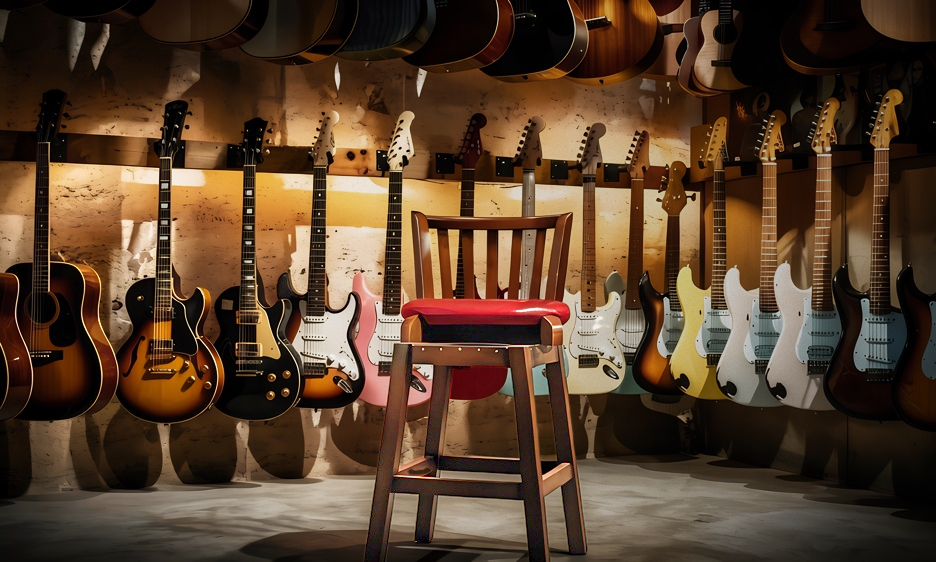
Thirty names could easily be a hundred, so a word on a couple of the most painful omissions appears at the close.
The Deep Foundations
1. Charlie Christian
Christian was the primary architect of the modern electric guitar solo. With Benny Goodman in the late 1930s, on sides like "Solo Flight," he transformed the guitar from a rhythm-section timekeeper into a legitimate single-note lead voice with horn-like phrasing and swing. Amplification—and the Gibson pickup that soon bore his name—let that voice be heard. Nearly every electric lead player since has built, knowingly or not, on his template.2. Django Reinhardt
Reinhardt invented Gypsy jazz and became one of the instrument's first true virtuosos despite a fretting hand left with only two fully functional fingers. His arpeggios, rhythmic drive, and melodic invention with the Quintette du Hot Club de France created an entire idiom that is still vibrantly alive—and a standing reminder that limitation, met with imagination, can become a singular creative power.3. Robert Johnson
Johnson distilled Delta blues into a haunting, fully formed solo style across just 29 recorded songs. The intricacy of his fingerpicking, the cry of his slide, and the weight of songs like "Cross Road Blues" and "Hell Hound on My Trail" became the mythic foundation of blues and rock. When Columbia reissued those recordings as King of the Delta Blues Singers in 1961, they landed on a generation of young guitarists like a dispatch from another world. His vocabulary echoes through nearly every blues-rock player of the last eighty years.4. Maybelle Carter
Carter developed the "Carter scratch," a rhythm-lead hybrid that turned one acoustic guitar into a complete ensemble. By brushing bass notes with her thumb while carrying melody on the higher strings—hear "Wildwood Flower"—she created a driving, full sound ideal for early country and folk. The technique became foundational to American roots music; flatpickers and folk players are still elaborating on it.5. Sister Rosetta Tharpe
Tharpe brought gospel fire to the electric guitar in the 1930s and '40s—distortion-tinged leads, driving rhythm, and rock 'n' roll swagger decades before rock had a name. Her 1945 hit "Strange Things Happening Every Day" is now routinely cited as a proto-rock record. Her performance on a Manchester railway platform shows her commanding the rock idiom just as British teenagers were discovering it. Little Richard called her his greatest influence. "Godmother of Rock 'n' Roll" is no honorary title; it's a job description.Architects of Electric Sound & Genre
6. T-Bone Walker
Walker brought sophisticated single-note soloing and smooth showmanship to electric blues in the 1940s. "Call It Stormy Monday" codified the form—jazzy voicings, elegant phrasing, a lead guitar conversing with the horns. B.B. King heard him and reached for an electric guitar; Chuck Berry built on his language. Postwar blues, and the rock that grew from it, runs through T-Bone. Check out his All Star Back Up Band.7. Chuck Berry
Berry codified the essential vocabulary of rock 'n' roll guitar. The double-stop intro to "Johnny B. Goode"—borrowed, by his own account, from Louis Jordan's guitarist Carl Hogan—is the genre's founding document, and his lean, driving single-note runs rebuilt T-Bone Walker's phrasing for teenagers and car radios. The riffs became a shared language: when the Beatles, the Rolling Stones, and the Beach Boys built early sets on his songs, a generation enrolled in the Berry school. His ideas were absorbed so completely that they stopped sounding like one man's innovations and started sounding like the instrument itself.8. Hubert Sumlin
Muddy Waters electrified the Delta sound, created the template for the modern blues band, and laid a foundation that influenced Elmore James and nearly every post-war blues guitarist alive. But when looking strictly at lead guitar phrasing and innovation on six strings, Howlin' Wolf's foil stands supreme—so much so that Muddy notoriously poached Sumlin from Wolf in 1956 by tripling his wages. Forced by Wolf to abandon his pick, Sumlin developed a bare-finger attack marked by erratic timing, unpredictable double-stops, and stinging, vocal bends that gave tracks like "Smokestack Lightning," "Spoonful," and "Killing Floor" their nervous, dangerous edge. Jimi Hendrix built his early live set around Sumlin's riffcraft, while Eric Clapton, Jimmy Page, and Keith Richards treated his lines as foundational text. Muddy may have built the house, but Sumlin guitar blew its roof off.9. Link Wray
Wray effectively invented the power chord and pioneered high-gain distortion with 1958's "Rumble"—a record so menacing it was banned from some radio stations despite having no lyrics. The story is part of the instrument's folklore: to get the sound, Wray punched holes in his amplifier's speakers. His raw minimalism runs straight through garage rock, punk, and heavy music—the clearest early demonstration that attitude and sonic force could outweigh technical complexity.10. Les Paul
Les Paul was a brilliant player and a relentless inventor whose work on the solid-body electric guitar and multi-track recording made much of the modern instrument—and the modern studio—possible. The "New Sound" hits with Mary Ford, like "How High the Moon," stacked guitar orchestras one overdub at a time. As a guitarist, he set an early standard for fast, clean jazz-country picking. Nobody else on this list changed the machine itself as profoundly.11. Scotty Moore
Moore defined the clean, melodic rockabilly lead style on Elvis Presley's first Sun recordings. His solos on "That's All Right" and "Mystery Train"—fingerpicked, echo-kissed, always serving the song—created the blueprint for early rock lead guitar. Jimmy Page has said everyone wanted to be Elvis; he wanted to be Scotty Moore. His playing remains a masterclass in taste and swing.12. Elmore James
James took a Robert Johnson riff, plugged it in, and turned slide guitar into a raw emotional cry. "Dust My Broom" (1951) is one of the most recognizable opening figures in blues—overdriven, keening, urgent—and his intense vibrato set the bar for electric slide. Duane Allman and Derek Trucks both trace their slide lineage straight back to him.Phrasing & Style Creators
13. B.B. King
B.B. King perfected one of the most expressive single-note vocabularies in guitar history. The vibrato—that shimmering, vocal shake—the economical note choice, and the conversational space between phrases made his guitar sing and cry by turns; Live at the Regal (1965) remains an essential starting point. King prized emotion over speed, and virtually every blues and rock soloist since has measured himself against that standard.14. Albert King
Albert King played a right-handed guitar flipped upside down—bass strings at the bottom—which let him pull bends downward with enormous force. The result was a stinging, vocal attack and the huge, slow, overbent cries of "Born Under a Bad Sign" and "Crosscut Saw." Hendrix, Clapton, and Stevie Ray Vaughan all studied him. Where B.B. was smooth conversation, Albert was raw declaration—together they are the bookends of electric blues guitar.15. Wes Montgomery
Montgomery revolutionized jazz guitar with two choices of technique: picking with his thumb for a warm, round tone, and stating melodies in octaves for horn-like punch. His solos on "Four on Six" and "West Coast Blues" build from single notes to octaves to full chord-melody with inexorable logic—improvisation as architecture. Jazz guitarists from B.B. King to Pat Metheny have adapted his approach.16. Merle Travis
Travis created "Travis picking"—a syncopated, alternating-bass style that lets one guitarist carry bass line, chords, and melody at once, like a small band. Hear it on "Cannonball Rag"; hear his composerly wit in "Sixteen Tons," which he wrote. The style became a cornerstone of country and folk fingerpicking, from Chet Atkins and Doc Watson to everyone who has sat cross-legged with an acoustic since.17. Chet Atkins
Atkins took Travis picking and raised it to orchestral sophistication—bass, chords, and melody moving with classical poise. As "Mr. Guitar" and as architect of the Nashville Sound, he shaped country's very center while recording jazz and pop at the highest level. His standard of tone and musicality is one players across genres still chase.18. Mark O'Connor
O'Connor is a championship flatpicker and multi-instrumentalist who fused bluegrass, classical, jazz, and country into a virtuosic American string style. He raised contest flatpicking to concert-hall sophistication, then codified his approach in a widely adopted teaching method. His career forms a bridge between the roots tradition above and the concert and improvisational worlds beyond it.Boundary Pushers & Virtuoso Innovators
19. Jimi Hendrix
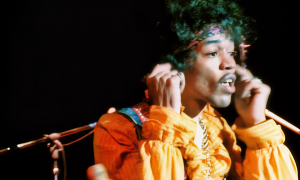
Hendrix expanded the electric guitar's sonic possibilities more than anyone before or since. Feedback, wah, fuzz, and the whammy bar became expressive vocabulary in his hands; his guitar speaks, weeps, and detonates. He treated the instrument as a paintbrush for soundscapes, blending blues, rock, hints of jazz and psychedelia with unmatched freedom. Nearly sixty years on, he remains the reference point for guitarists.20. Duane Allman
Allman turned slide guitar into a soaring, lyrical lead voice—for many "Statesboro Blues" that opens At Fillmore East remains its most famous declaration. But slide blues was the foundation, not the summit. On "In Memory of Elizabeth Reed" and "Hot 'Lanta"—and on the "Mountain Jam" released posthumously on Eat a Peach—he played the guitar like a horn: modal, vocal, endlessly patient, absorbing the Coltrane and Miles Davis records he and his band wore out at their Big House. His harmonized lines with Dickey Betts created the twin-lead template bands still follow, and his Layla session work carried the same singing directness into someone else's record. He died at twenty-four, leaving a legacy few players with fifty-year careers ever matched.21. Tony Iommi
Iommi created the sonic foundation of heavy metal. After a factory accident cost him his fingertips, he slackened his strings, fitted homemade thimbles, and built a dark, tritone-haunted riff language on "Black Sabbath," "Iron Man," and "Paranoid." Every downtuned band since walks a path he cut. The limitations that should have ended his career became one of the most recognizable sounds in guitar history.22. John McLaughlin
McLaughlin fused jazz, rock, Indian classical music, and spiritual intensity at breathtaking speed with the Mahavishnu Orchestra. The odd meters and modal flurries of "Birds of Fire" pushed both guitar technique and guitar concept into new territory; then, with the acoustic Shakti, he reinvented himself again in a world-music idiom. Fusion, jazz-rock, and acoustic string music all carry his fingerprints—few players have reshaped so many genres at so high a level.23. Jeff Beck
Beck spent a career testing the expressive limits of the electric guitar. Volume-knob swells, controlled feedback and harmonics, and notes pulled from the fretboard with his fingers rather than picked gave his playing a vocal, breath-like quality—on "Cause We've Ended as Lovers" the guitar seems to inhale. From the Yardbirds through jazz-rock fusion and beyond, his touch and imagination earned him a singular respect among fellow players: few have made a stronger case that control outlasts speed.24. Allan Holdsworth
Holdsworth developed an entirely new harmonic language and a fluid, horn-like legato that made the fretboard seem to have no fixed positions at all. Albums like Metal Fatigue and his SynthAxe experiments proposed the guitar as something closer to a wind instrument or a keyboard. Eddie Van Halen was among his most vocal champions—which leads directly to the next name on this list. Holdsworth remains the ultimate guitarist's guitarist.25. Eddie Van Halen
Van Halen was the supernova of modern rock guitar. Two-handed tapping had earlier practitioners—Harvey Mandel, Steve Hackett, and Emmett Chapman among them—but Van Halen detonated it: "Eruption," all 102 seconds of it, folded tapping together with dive-bombing whammy work, harmonic squeals, and the legendary "brown sound" into a vocabulary so complete it reset the instrument's limits overnight. Van Halen I (1978) drew a line in the sand; guitarists either absorbed it or pretended not to hear it. Just as crucially, the flash served the songs—his rhythm playing and riffcraft were as strong as his solos. The impact on 1980s guitar culture was seismic, and the aftershocks haven't stopped.26. Lenny Breau
Breau took fingerstyle guitar to astonishing polyphonic heights, approaching it like a piano—independent bass, chords, harmonics, and melody in motion at once. Rooted in country through mentor Chet Atkins and steeped in jazz and classical, he made records, beginning with The Velvet Touch of Lenny Breau, that serious players still study like scripture. He remains the ultimate musician's musician: the name other great guitarists mention last and mean most.27. Jerry Reed
Reed developed a dizzyingly syncopated fingerstyle he called "claw style," making one guitar sound like percussion, bass, and melody at once. When Elvis cut "Guitar Man," only Reed himself could play the part—so Reed played the session. His duets with Atkins and instrumentals like "The Claw" pair jaw-dropping technique with humor and showmanship, a combination few have dared attempt since.28. Joni Mitchell
Mitchell pioneered radical alternate tunings—dozens of them, many of her own invention—that reshaped the guitar as a compositional tool. The open-voiced chords and percussive strumming of Blue, Court and Spark, and Hejira created a painterly accompaniment perfectly matched to her words. Generations of singer-songwriters have since treated the tuning pegs as the place where songwriting begins.29. Nile Rodgers
Rodgers turned rhythm guitar into a percussive, melodic lead voice. His precise "chank"—voicings sketched high on the neck, struck and released—powered Chic's "Le Freak" and "Good Times," then David Bowie's "Let's Dance" and Madonna's "Like a Virgin." The "Good Times" groove alone seeded early hip-hop and a thousand dance records. No one has made two and a half minutes of rhythm guitar do more work.30. Pat Metheny
Metheny built one of the most recognizable voices in modern jazz guitar: lyrical phrasing, horn-like legato, and an orchestral use of effects and guitar synth. From Bright Size Life (1976) onward, he has made harmonic sophistication sing like folk melody—accessible on the surface, deep underneath. Across five decades he has kept the instrument's evolution moving into the present, which is where this list hands the story off.A Note on Omissions—and on Time
Two absences deserve special acknowledgment. On a list of the most impactful electric guitarists, Eric Clapton and Stevie Ray Vaughan would sit near the top: neither merely copied his predecessors; each absorbed deep blues tradition and re-voiced it with rock power, charisma, and a tone recognizable in two notes. Their mastery of feel is a reminder that transformation can also live in inspired reinterpretation—and scores of players across metal, jazz, fusion, funk, bluegrass, and country have claims nearly as strong.It is also fair to ask why the most recent revolution here is nearly half a century old. Distance makes judgment easier—no doubt advocates for effects-and-turntable guitarist, percussive acoustic, extended-range technique, or electrified Tuareg tradition could rightfully argue the guitar is still being reinvented. Thirty names were never intended to be a verdict—consider them as an invitation to share your insights.
Go Deeper with this Playlist
 FOLLOW Alan Bryson
and get notified whenever a new article published.
FOLLOW Alan Bryson
and get notified whenever a new article published.
An American based in Europe, fascinated by the art of tone, drawn to the muse of the blues.
About Charlie Christian

Tags
PREVIOUS / NEXT
Become a Sustaining Member

Since 1995, All About Jazz has championed jazz as an art form and supported the musicians who create it. Over three decades, it has grown into one of the world's leading jazz resources, serving hundreds of thousands of readers, musicians, presenters and industry professionals each month.
Help Build the Future of All About Jazz
Your support helps us continue building All About Jazz for the next generation—expanding our editorial coverage, preserving jazz history, developing new community features and creating better ways to discover the music and the people behind it.
Become a sustaining member for as little as $20 per year and you'll immediately enjoy an ad-free experience along with access to subscriber features and future articles for a full year.
Together, we're not simply sustaining All About Jazz—we're building its future. Thank you for being part of the journey.