Home » Jazz Articles » Building a Jazz Library » Ronnie Cuber: Baritone Boss
Ronnie Cuber: Baritone Boss
Courtesy Spectra Foto
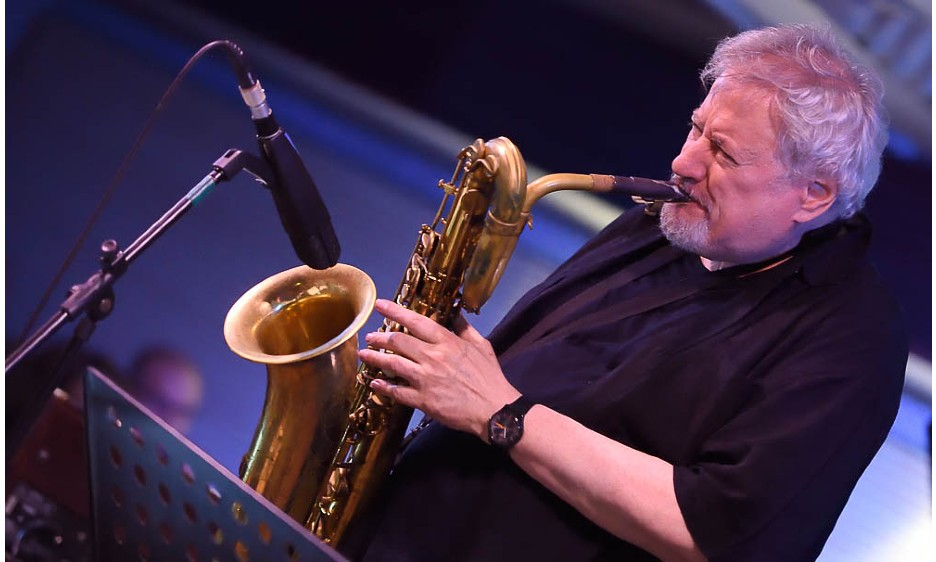
Ronnie Cuber grew from baritone sax sideman to leader to icon over half a century of hard-blowing hard work. Cuber always gave full value with his big, confident sound. He was much in demand as a session player, recording with the likes of Paul Simon, Chaka Khan and the J. Geils Band, as well as being a fixture on the New York big band scene.
Cuber always gave full value with his big, confident sound. He was much in demand as a session player, recording with the likes of Paul Simon, Chaka Khan and the J. Geils Band, as well as being a fixture on the New York big band scene. Much of Cuber's recorded output is small group sessions for the SteepleChase Records label; these are enjoyable outings mainly focusing on the standards repertoire. This listing will explore the full range of Cuber's output including larger groups and other settings.
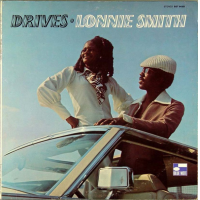 Dr. Lonnie Smith
 Drives
Blue Note Records
1970
Having recorded with Eddie Palmieri and George Benson in the 1960s, Cuber steps up with organist Lonnie Smith on this punchy small-group (organ trio plus two saxophones) album. Cuber's fleet soloing on "Seven Steps To Heaven" is a sure sign of his comfort playing fast, while his punchy bottom-end gives the set much of its power and grunt. "Spinning Wheel" was sampled by A Tribe Called Quest on their 1990 classic "Can I Kick It?." Cuber also appears with this group on Live At Club Mozambique (Blue Note Records, 1970), alongside George Benson.
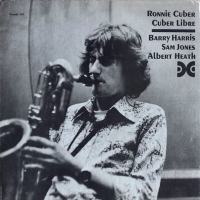 Ronnie Cuber
Cuber Libre
Xanadu
1976
Cuber's debut album as leader sees him stretching out over seven classic tunes with a top-notch quartet. Barry Harris (piano), Sam Jones (bass) and Albert Tootie Heath (drums) give faultless accompaniment (though Cuber would have preferred Philly Joe Jones behind the kit). The music swerves in a Latin direction with "Tin Tin Deo" and "Samba D'Orfeo," "Rifftide" is pure bop, Donald Byrd's tune "Sudwest Funk" offers a twelve-bar workout, while the closing "Prince Albert," credited to Kenny Dorham, is a not-very-contrafact on "All The Things You Are." A very satisfying piece of work all around.
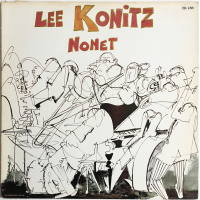 Lee Konitz
Lee Konitz Nonet
Chiaroscuro Records
1977
Lee Konitz' Nonet recorded several albums in the late 1970s, of which this is the second. An unusual line-up (two trumpets, two trombones (one doubling bass trombone), alto sax doubling soprano, baritone, piano, bass and drums) gave arranger Sy Johnson a varied palette to work with, often weaving in classic solos. The album achieved five stars in Downbeat. John Coltrane's "Giant Steps" is a highlight, with Cuber and Konitz soloing separately before (almost unbelievably) tackling Coltrane's original sax solo together in unison. Cuber is also featured on Tadd Dameron's "If You Could See Me Now," showing his ballad chops are more than fit for the task.
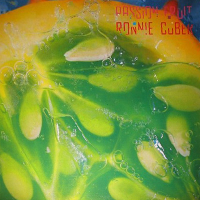 Ronnie Cuber
Passion Fruit
Electric Bird
1985
Ronnie Cuber fitted in very well to the 1980s sensibility of jazz, funk and smooth grooves. This album features two Cuber originals ("Passion Fruit" and "Love Notes"), both of which bring in Cuber's old friend George Benson as guest soloist. Richard Tee offers a shimmering electric piano backdrop, with Dave Weckl is on-the-money behind the kit. Cuber's soloing is quite restrained, fitting in with the overall vibe of the music. He recorded this track many times subsequently; look out for the 1992 version on the Airplay album (SteepleChase, 1992) featuring the estimable Geoffrey Keezer on piano.
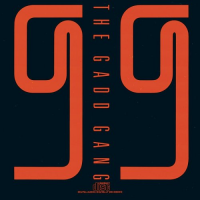 Steve Gadd
 Gadd Gang
Epic Records
1986
Building on the success and sound of Passion Fruit, Cuber joined up with drummer Steve Gadd's Gadd Gang project. This is their second album; Ronnie gets plenty of solo space as the only horn in the line-up. He puts in a fine performance in this all-star line-up with Eddie Gomez (bass) and Cornell Dupree (guitar) joining Gadd and Richard Tee. Whether it's on the grooving "Watching The River Flow," the gospel of "Way Back Home" or the walking blues "Everything You Do," Cuber is on fine form.
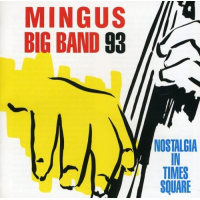 Mingus Big Band 93
Nostalgia In Times Square
Dreyfus Records
1993
One of the most memorable baritone sax lines of all time is the opening to Charles Mingus' tune "Moanin'" (not to be confused with Bobby Timmons' different number of the same name). First appearing on the Blues & Roots album of 1960, it was originally played by hard bop specialist (and one of Cuber's heroes) Pepper Adams. The Mingus Big Band was formed under the artistic direction of Sue Mingus in 1991 to carry the music forward, with Ronnie a shoe-in for the baritone chair. Cuber opens this album talking to the audience over the title track about his encounter with Mingus in Birdland (the bassist called Charlie Parker's "Koko" at top speed; Cuber survived). Cuber than storms "Moanin,'" first in the solo introduction and then soloing with the whole band backing. Listen out for the "Mambo Italiano" quote.
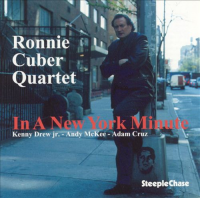 Ronnie Cuber Quartet
In A New York Minute
SteepleChase Records
1996
This neat quartet date is a good example of Cuber in fine blowing form. What makes this release notable is the five Cuber originals alongside four standards. The title track is a loping evocation of the Big Apple with Kenny Drew, Jr. sparkling on piano. "Con Pasión" has Cuber launching into a florid Latin introduction before the band slide in neatly. "Bu's Beat" bustles along with a slight "Milestones" feel with modal shifts predominating. Adam Cruz gets a good slice of the cake with a drum solo. "For Bari & Bass" jumps along, bringing to mind a TV science show theme from the 1970s with bass space for Andy McKee. "12/8 Thang" thunders along in, well, 12/8; McKee's arco bass solo gives a moment of respite.
 The Three Baritone Saxophone Band
 Plays Mulligan
Dreyfus Records
1998
Top baritone players Ronnie Cuber, Nick Brignola and Gary Smulyan pay tribute to Gerry Mulligan on this rich and detailed album. Echoing Mulligan's preference for 'chordless' ensembles, support comes simply from Andy McKee (bass) and Joe Farnsworth (drums). Cuber did the arranging and plays the lead line, with Brignola covering the middle part and Smulyan weighing down below. All three solo with verve, which perhaps takes the music away from Mulligan's delicate Lester Young-inspired sound. "Line For Lyons" twists along, while "Blue Port" fairly charges forward. This is a key recording for baritone and Mulligan enthusiasts alike.
 Ronnie Cuber
Love For Sale
KOCH International Jazz
1998
Cuber finds himself with the Metropole Orkest from the Netherlands in this swinging big band date. As the only featured soloist, Cuber has plenty of space to play, although the arrangements are quite tight and focused. The album is topped and tailed by Cuber originals "Airplay" and "Passion Fruit," with eight well-loved standards forming the filling in the sandwich. The title track breezes along, "Brazil" sees some sizzling samba with the tempo doubling nicely, "Easy Living" is ballad central, and "I'll Remember April" seems to turn autumnal in the middle before regaining its springtime skip.
 Ronnie Cuber and Gary Smulyan
Tough Baritones
SteepleChase Records
2019
These two titans of the baritone join for a straight-ahead session with joyful noises and blazing virtuosity to the fore. Gary Smulyan was the 'other' New York baritone player for decades, and it is almost unbelievable that was their first duo recording. The ambition is clear from the title; take the swinging spirit of Johnny Griffin and Eddie "Lockjaw" Davis Tough Tenors work, but with lower horns. The album features eight standards along with two Cuber originals. The opening Horace Silver tune "Blowin' The Blues Away" sets the scene—a racing 12-bar with unison theme statement. Cuber solos first, perhaps the slightly bigger tone, with Smulyan maybe the more athletic stylist around his instrument. Cuber's compositional contributions fit in well; "Damn Right Blues" is, damn right, a blues, while "Intervals" is a more straight-eight feel number which blooze-grooves the album to a close.
 Steve Gadd, Eddie Gomez, Ronnie Cuber, WDR Big Band
Center Stage
Leopard
2022
Ronnie Cuber's final recording is, fittingly, a meeting of old friends. Eddie Gomez (bass) and Michael Abene (arranger on this date) were with Cuber in Marshall Brown's Newport Jazz Youth Band where he first took up baritone sax. Together with Steve Gadd, they join the excellent WDR Big Band in tunes dating back to the Gadd Gang and beyond. Cuber looks visibly wizened, the aftereffects of a fall at his home in 2020. However, he can still produce the goods. Bob Dylan's bluesy Watching The River Flow is a strolling shuffle, with the WDR alto sax Karolina Strassmayer swapping eights with Ronnie Cuber very effectively, while Pino Daniele's beautiful ballad Che Ore So gives space for Cuber's sax and Ludwig Nuss' smooth trombone to feature. Ronnie Cuber died on October 7, 2022, the very day this album was released.
 FOLLOW Mark McKergow
and get notified whenever a new article published.
FOLLOW Mark McKergow
and get notified whenever a new article published.
Saxophonist, clarinetist and writer living in Edinburgh, Scotland
About Ronnie Cuber

Tags
PREVIOUS / NEXT

Become a Sustaining Member

Since 1995, All About Jazz has championed jazz as an art form and supported the musicians who create it. Over three decades, it has grown into one of the world's leading jazz resources, serving hundreds of thousands of readers, musicians, presenters and industry professionals each month.
Help Build the Future of All About Jazz
Your support helps us continue building All About Jazz for the next generation—expanding our editorial coverage, preserving jazz history, developing new community features and creating better ways to discover the music and the people behind it.
Become a sustaining member for as little as $20 per year and you'll immediately enjoy an ad-free experience along with access to subscriber features and future articles for a full year.
Together, we're not simply sustaining All About Jazz—we're building its future. Thank you for being part of the journey.