Home » Jazz Articles » Building a Jazz Library » Henry Mancini: The Architect of Sound
Henry Mancini: The Architect of Sound
The 10 Landmark Picks
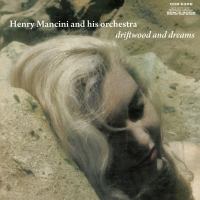 Driftwood and Dreams
Liberty Records
1957
A masterpiece of experimental exotica that marks Mancini's definitive break from traditional big band canons. Hank offers an ethereal ensemble highlighted by the revolutionary use of Rolly Bundock's Fender Precision bass: played with a pick and muted, it defined a modern punch that would change popular music forever. Bob Bain's '53 Telecaster masterfully imitates a lap-steel with behind-the-nut string bending, while a young John Williams on Steinway and Lou Maury's Hammond B-3 create the "shimmering" atmosphere that makes this record an exotica icon.
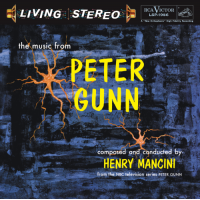 The Music from Peter Gunn
RCA Victor / Legacy
1959
The ultimate manifesto of "Crime Jazz" that redefined the sound of American television. By completely eliminating strings, Mancini focused on a dry, aggressive ensemble featuring 4 trumpets led by the legendary Conrad Gozzo and 4 trombones with cup and harmon mutes. While Ted Nash's alto sax carves out the themes with cool phrasing, Plas Johnson's tenor sax roars through a metal Berg Larsen mouthpiece over a relentless rhythm section, recorded at RCA Studios without an echo chamber to deliver a "hard-boiled," smoky jazz club sound.
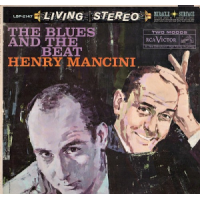 The Blues and the Beat
 RCA Victor / Legacy1960
This album represents the peak of Mancini's Big Band writing and a masterclass in modern arranging. The record showcases surgical precision, where the explosive power of the brass never sacrifices the fluidity of the swing. Tracks like "The Blues" demonstrate Mancini's ability to let the entire ensemble breathe, balancing inspired solo sections with a tight collective interplay that remains, to this day, a fundamental reference for anyone studying large jazz ensemble composition.
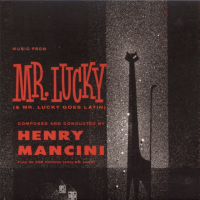 Music from Mr. Lucky
 RCA Victor / Legacy1960
Here Mancini explores the concept of jazz "velvet" through radical instrumentation choices. To achieve a nocturnal, subdued sound that would never be broken by overly bright brass, he chose to use 4 flutes (C flutes and Alto flutes in G) in the lower register. The trumpets are dominated by Don Fagerquist's "cool" touch, while George Roberts' bass trombone ensures immense orchestral depth without the heaviness of a tuba. This album defines the sophisticated lounge aesthetic of the early 1960s.
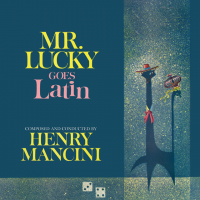 Mr. Lucky Goes Latin
 RCA Victor / Legacy1961
A vibrant exotic encounter featuring the debut of the Lujon (played by Emil Richards), a metallophone with a unique "underwater" timbre, miked very closely here to capture its deep resonance. The arrangement is enriched by the dry, metallic touch of Jimmy Rowles' Tack Piano, while Rolly Bundock's Fender Precision bass handles the frantic speeds of Latin rhythms with precision. It is a record where Mancini's timbral research reaches peaks of absolute innovation.
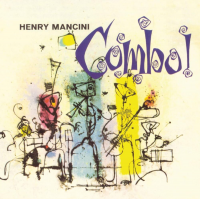 Combo!
 RCA Victor / Legacy1961
A precious small-group gem that lays bare Mancini's contrapuntal skill away from the Hollywood spotlight. Supported by soloists like Art Pepper and Shelly Manne, Hank creates an atmosphere of rare jazz intimacy. Every instrument has a defined vital space, and the melodic lines intertwine with chamber-like finesse. This album best represents Mancini as a pure musician, capable of generating constant emotional tension through a sophisticated and refined jazz language.
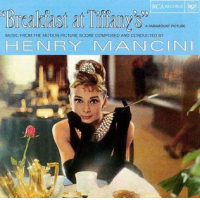 Breakfast at Tiffany's
RCA Victor / Legacy1961
Far more than just a soundtrack, this record is the pinnacle of sophisticated writing applied to the jazz library. Mancini fuses pop sensibilities and jazz roots through crystalline orchestration, elevating tracks like "Moon River" to universal standards. The clever use of the chorus as a human orchestral section and the millimetric management of dynamics make this album a fundamental pillar for any collector, proving that melodic elegance can coexist with high-class harmonic structure.
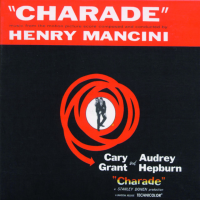 Charade
RCA Victor / Legacy1963
A work that exudes Parisian noir elegance through an eclectic mix of sophisticated jazz and European folk influences. Mancini perfectly balances cinematic tension with flawless jazz structures, confirming his status as a melodic tailor capable of adapting the language of swing to international settings. Between driving rhythms and nocturnal ballads, Charade remains one of his most balanced and structurally solid works of the 1960s, a perfect example of how jazz can serve cinema without losing its soul.
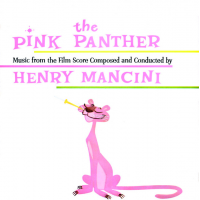 The Pink Panther
 RCA Victor / Legacy1963
The absolute icon of international Technicolor swing. In the iconic main theme, the tenor sax of Plas Johnson enters on tiptoe while the crystalline ping of the triangle and vibraphone evokes the transparency of the legendary "Pink Panther" diamond, delivering the most recognizable hook in cinema history. The track "Royal Blue" reveals the genius of Mancini as a symphonic arranger: a slow swing where the strings dig deep and the accordion is ennobled in a context of sophisticated melancholy. The album is a triumph of timbral details, from crystalline triangles to velvety choruses, creating a sound world where Italian elegance and American jazz merge in a perfect embrace.
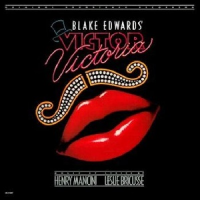 Victor/Victoria
 MGM Records
1982
A triumphant return to 1930s jazz roots, reinvigorated by the "muscle" of modern production. Mancini writes block arrangements for the saxophones and brass sections with millimetric clarity, winning an Oscar for this score. The accordion returns as a main protagonist in the Main Title ("Crazy World"), defining a haunting Parisian atmosphere. This record proves that classic jazz, when treated with Mancini's orchestral intelligence and modern sound technology, remains a living, powerful, and timeless art form.
 FOLLOW Nazareno Bicocchi
and get notified whenever a new article published.
FOLLOW Nazareno Bicocchi
and get notified whenever a new article published.
Nazareno is a pianist, vocalist, arranger, and an audio production and sound engineer.
About Henry Mancini

Tags
PREVIOUS / NEXT


Become a Sustaining Member

Since 1995, All About Jazz has championed jazz as an art form and supported the musicians who create it. Over three decades, it has grown into one of the world's leading jazz resources, serving hundreds of thousands of readers, musicians, presenters and industry professionals each month.
Help Build the Future of All About Jazz
Your support helps us continue building All About Jazz for the next generation—expanding our editorial coverage, preserving jazz history, developing new community features and creating better ways to discover the music and the people behind it.
Become a sustaining member for as little as $20 per year and you'll immediately enjoy an ad-free experience along with access to subscriber features and future articles for a full year.
Together, we're not simply sustaining All About Jazz—we're building its future. Thank you for being part of the journey.