Home » Jazz Articles » Big Band in the Sky » Remembering James Blood Ulmer: The Incognito Bluesman
Remembering James Blood Ulmer: The Incognito Bluesman
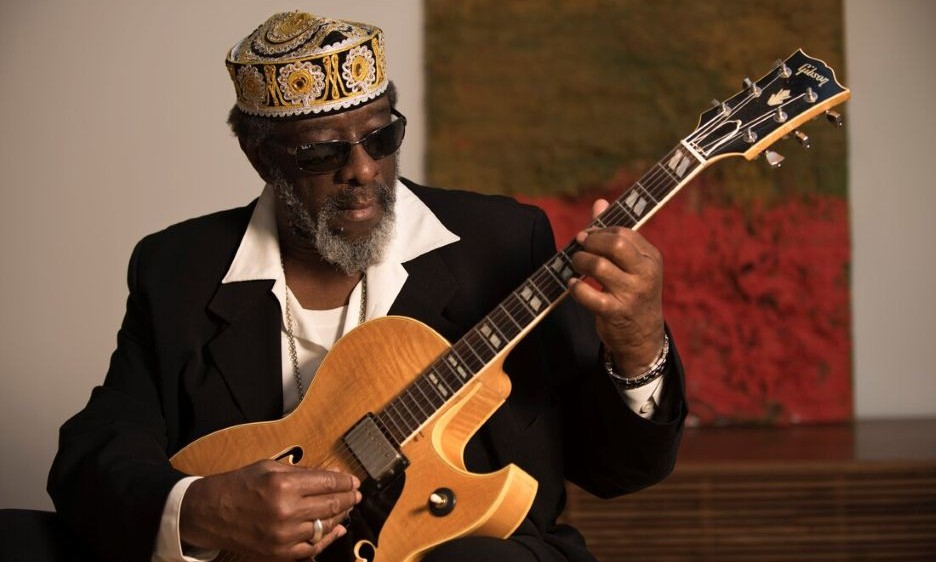
Born William James Ulmer in St. Matthews, South Carolina on February 8, 1940, Ulmer was exposed to gospel music through his father, a Baptist preacher in whose gospel group, The Southern Sons, the young Ulmer sang. Speaking with All About Jazz' Paul Olson in 2005 about his upbringing, Ulmer recalled: "my folks were definitely gospel people. Nothing else existed. When I was a child, we were tutored into being gospel people. That's how I grew up: gospel, the church..."
In his teenage years Ulmer's new gospel was the electric blues of Muddy Waters and the nascent rock 'n' roll of Chuck Berry, both of which would later filter into his vocabulary.
Upon graduating school, Ulmer moved to Pittsburgh, Pennsylvania in 1958, where he was taught by teenage guitarist George Benson. He spent the next few years playing in soul-jazz and doo-wop groups before moving to Columbus, Ohio in the mid-'60s. There he followed in Freddie King's footsteps when he was hired as guitarist in organist Hank Marr's band. Ulmer made his recording debut on Marr's Sounds from the Marr-Ket Place (King, 1968), a fairly unremarkable soul-jazz platter, with Ulmer sounding like a coarser Wes Montgomery.
A brief sojourn in Detroit saw Ulmer join the experimental jazz group Focus Novii, where he began to embrace free improvisation and unusual tunings.
Moving to New York in 1971, Ulmer played with Rashied Ali, Art Blakey and Ornette Coleman, recording with Ali but not with Blakey or Coleman at that time. He worked closely with Coleman on the saxophonist's concept of harmolodics—the equal weight given to harmony, melody and rhythm. Coleman's influence on Ulmer was significant, but Ulmer also influenced Coleman—particularly in the latter's Prime Time bands, which initially featured two guitarists. Ulmer would work intermittently with Prime Time's electric bassist Jamaaladeen Tacuma and drummer Ronald Shannon Jackson in the coming decades.
At the end of the '70s Ulmer appeared on a brace of albums by saxophonist Arthur Blythe, including the celebrated Lennox Avenue Breakdown (Columbia, 1979). One year prior he had recorded his debut album, Revealing—which reunited him with saxophonist George Adams from their days in Hank Marr's group—though it would be another 13 years before it was released.
Ulmer's emergence as a leader began with Tales of Captain Black (Artists House, 1979), which featured Ornette Coleman. It was the first in a rich streak of half a dozen albums in as many years that cemented his reputation as a unique voice. His brew of untethered improvisation, punkish energy, psychedelic, gospel-tinged blues and left-field funk sounded like nothing that had come before—and little since. When it came to tuning his guitar, Ulmer broke with convention by tuning several strings to the same pitch.
Perhaps surprisingly, the revived Blue Note Records came knocking. For the storied label Ulmer delivered America, Do You Remember the Love? (1987). An outlier in his discography for its polished production values, it remains an underappreciated gem. Stripped of some of the density of his earlier work, it allowed his vocal-like guitar lines, noirish blues, highly personal chordal textures and raw vocals to come through clearly.
It is one of the great 'what ifs' to ponder how Ulmer's career might have developed had Blue Note stuck with him.
If grungy funk and gnarly, blues-laced rock and roll was Ulmer's staple with his Odyssey and Phalanx groups, he threw a delightful curve ball with the austere beauty of Harmolodic Guitar With Strings (DIW, 1993)—a collaboration with the Indigo String Quartet where he explored spiritual themes with surprising tenderness.
The turn of the century saw Ulmer embark on a new path—blues covers. Memphis Blood: The Sun Sessions (Hyena, 2001) featured classic songs by Willie Dixon, John Lee Hooker, Son House and Howlin' Wolf .
Ulmer told All About Jazz how he came to be rebranded as a bluesman: "Memphis Blood wasn't my decision at all. I would have never in a million years come up with that idea. That was my colleague Vernon Reid. He had the imagination in his brain that I was a hidden bluesman... I mean, I always tried to play the blues— undercover." Reid's vision paid off, with Memphis Blood nominated for a Grammy in the Best Traditional Blues category.
Encouraged by the response, No Escape from the Blues: The Electric Lady Sessions (Hyena, 2003) and the post-Katrina Bad Blood in the City: The Piety Street Sessions (Hyena, 2007) followed the same blues covers template, but, as ever, infused with a political undercurrent.
For Vernon Reid, Ulmer was a major influence. Others to acknowledge his influence include Mark Ribot, Nels Cline and former Captain Beefheart Magic Band guitarist Gary Lucas.
In later years Ulmer also made guest appearances in the studio and on stage with Bill Laswell, James Carter, hip-hop band The Roots, Vinny Golia, and pan-Scandinavian band The Thing.
James Blood Ulmer, who described himself as "the incognito bluesman," but who was so much more, passed away on June 3, 2026.
 FOLLOW Ian Patterson
and get notified whenever a new article published.
FOLLOW Ian Patterson
and get notified whenever a new article published.
Ian is dedicated to the promotion of jazz and all creative music all over the world, and to catching just a little piece of it for himself.
About James Blood Ulmer

Tags
PREVIOUS / NEXT

Become a Sustaining Member

Since 1995, All About Jazz has championed jazz as an art form and supported the musicians who create it. Over three decades, it has grown into one of the world's leading jazz resources, serving hundreds of thousands of readers, musicians, presenters and industry professionals each month.
Help Build the Future of All About Jazz
Your support helps us continue building All About Jazz for the next generation—expanding our editorial coverage, preserving jazz history, developing new community features and creating better ways to discover the music and the people behind it.
Become a sustaining member for as little as $20 per year and you'll immediately enjoy an ad-free experience along with access to subscriber features and future articles for a full year.
Together, we're not simply sustaining All About Jazz—we're building its future. Thank you for being part of the journey.