Home » Jazz Articles » Interview » Rez Abbasi: Thoroughly Modern Marvel
Rez Abbasi: Thoroughly Modern Marvel

RA: No, they have titles by the time they're being played. But the compositional process is all about the music. Although someone mentioned lately that I should try composing to a title, which might instigate some kind of ideas which is a great thing as well.
AAJ: Some improvisers do something similar where they just pick a theme and that theme could actually have no manifestation in the music or for an individual player it might. A tool...
RA: ... to point you in a direction. Yes. Sometimes I take a raga and I want to write a composition based on that because it's so moving, something my wife [singer Kiran Ahluwalia] might be singing or something. I'll ask, "Hey what are these notes?" I'll grapple with the notes and I'll start a composition with that. The issue I have is that then I start hearing other things. So do I now not go to that direction and stick to this raga or do I say, "Okay, now I'm veering off, even it's not catching that same essence that I thought it was catching initially?" Generally I go towards the latter, I generally move towards wherever my intuition takes me. It's the confining or defining that can be a good starting point, but for some reason I tend to not be able to stick with that all the time. I can, but it's rare.
AAJ: Not to belabor the point but there are a couple of points on the new record where the titles came across as meaningful.
RA: What do you mean, they correlated to the actual music you were hearing?
AAJ: Yes. "Thanks for Giving," the track that opens the record, for one. There is a profound nature to that track.
RA: That's interesting you say that [laughs], because that actually has some meaning. Before I was generalizing but, with "Thanks for Giving," strangely enough—and this has never happened to me—but I woke up from a dream and I heard that melody and usually I forget these melodies by the time I wake up. But I woke up and I was like, "Wait, I was hearing this melody in my dream!" It was somewhat of a lucid experience. So I heard it, and it was Rudresh and I playing this melody. Instantly I woke up and I ran to the computer and I put it in the computer and it's the beginning of that song [sings the melody]. That whole thing. And then I heard this sort of Qawwali-esque approach to it where after we state that melody then we go into the big groove which is very unique to Qawwali. Other music does that too but Qawwali definitely has that effect, the heightened kind of reality. That was the way the tune came about. But it happened to be on Thanksgiving morning, 2009. So I called it "Thanks for Giving" because it was sort of like, well, it was given to me.
AAJ: That was a quintessential Sufi experience. The communication of something important to you through a dream.
RA: Yeah, and it's never happened to me before. I mean, I've heard full blown compositions but when I wake up I have no idea and am usually like, "Oh, man I wish I could hear that now!" But this is the first time I've wakened up to the melody and there it was.
AAJ: So it's a Sufi music tradition or a musical tradition associated with Sufism communicated to you in a dream [laughs]. That's not trivial.
RA: I know. I didn't make it into a big deal at the time but when you mention it and when I speak of it I, it's definitely beautiful and the fact that Rudresh and I were playing it, it wasn't just the melody it was like our song. Okay, let's play, ready (sings the melody). And then I just woke up and I was like, "Wow, I really like that melody man, I gotta write." And without even hugging my wife I jumped out of bed and hit the guitar.
I sometimes tend to just blow these things off but the way you're speaking of it now I'm realizing how profound it actually was. You get very close to your own music so you don't really see it from outside. But other people who listen to it do see it as the first time and hear it as the first time. That's a whole other level of perception.
Saxophone
AAJ: You produce your own projects.RA: Yes. I think most jazz musicians do that now because given the state of the industry, how much money can you really afford? But even aside from that for me it's more about the fact that I know the music better than anybody and I know what I'm trying to convey. So essentially I don't know if I trust anybody enough to come and mess with the vision, especially if I'm going to pay them on top of that. I think I've got big ears and I'm happy with my own production skills.
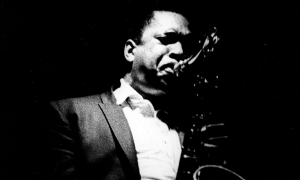
AAJ: Sonny Sharrock always spoke about the guitar with something like disdain. He was asthmatic, couldn't play saxophone and said he was trying to achieve on the guitar what he heard John Coltrane doing, especially later period with over-blowing and things like that. Someplace else you made mention of the fact that you generally have two tones, one of them was kind of a cleaner jazz tone and one of them was more overdriven. You said that was your saxophone tone.
RA: Really? He said those things? That's interesting. My comments were from a blog I wrote recently for Guitar Player Magazine on the idea of shredding and how I have disdain for that word because of the correlation with rock and heavy metal. And not that that music's bad, I love some of that stuff as well. But we are talking about jazz and there are a lot of intricacies that go on with creating a vocabulary in jazz. I can only speak for myself but with thousands of hours working on that and when you have an overdriven sound suddenly people relate to this other kind of thing that has nothing to do with jazz. So for me that overdriven sound, yes, that's something that reminds me more of a saxophonist because it cuts through the band. You don't hear a saxophonist as being dull when you hear he or she in the context of a quartet or a quintet. It cuts through the band and yet it's within the realm of the band as well. So, a clean jazz guitar just does not do that. It's a different take on the guitar and it sounds equally as beautiful but when you want that kind of push of the band I think the overdriven sound really helps.
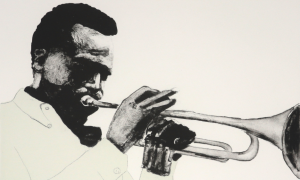
AAJ: Is the saxophone the preeminent post-war jazz instrument? Excepting maybe Miles Davis?
RA: Yeah, I think the saxophone can be seen as the number one or the preeminent jazz instrument. Well, people would argue that the trumpet, maybe because of Louis Armstrong, but I think the general public would probably say the saxophone.
AAJ: And do you think about where the guitar fits in the hierarchy or the history of jazz and lineage of jazz?
RA: I try not to because it depresses me. The guitar is making strides and there are some leader-type guitarists that really have helped. People like John McLaughlin and Wes Montgomery before that, obviously. But I'm saying post-'70s, McLaughlin, Pat Metheny, Frisell, etc., etc. You know, these are leaders on the guitar, you can hear that in their music. But in history the guitar, it's sort of like the vibraphone, it's sort of an under the radar instrument, maybe even underrated.
AAJ: Underutilized?
RA: Underutilized, definitely. In some ways I can see why. The piano's so beautiful and striking, it sounds so good with like a ride cymbal, you know [laughs]? I don't blame anybody but this is just seems to be what the truth is of this particular situation. But I think there's an opening now that the guitar can be part of. It's continually opening up doors where with some other instruments, you know, you have Coltrane, you have certain people who've made the mark on those instruments and it's hard to imagine anybody going too much further than that.
Or the piano for that matter. Art Tatum to Keith Jarrett. I mean, wow! What are you going to do? With the guitar, it's still in the baby steps in some fashion because also with the guitar you have electronics, with the electric guitar. You can manipulate the sound, that's innate within the electric guitar to do that. I'm a big guitar fan, I love the guitar because I love the plucked instrument. The fact that you can use different tools as a plucking mechanism, like a plectrum, you can use all kinds of different ways of plucking these stringed instruments and that's in itself a really great thing to have.
Guitar Talk
AAJ: Do you ever use an Ebow or anything like that?RA: I have used it; I used it on my wife's last record. She was doing a sort of a slow version of a Qawwali tune and I wanted to create that atmospheric vibe. I love it, it was fun.
AAJ: You touch on the notion of manipulating the strings or different things you can pluck with and that was another thing that Sharrock spoke of, which was the guitar was second only, for him, the saxophone which he said had the breath of life. But the guitar was the second most expressive because you could really work it physically. He played a Les Paul through a Marshall stack, but said his tone was in his fingers.
RA: It is definitely in your fingers but it's also in your musical sense. You can pluck harder than the next guy and that's going to make you sound a particular way. So it's also the actual muscle that goes into the playing. But there's no question about it, I think it's your overall self that is played, you know, to get to that music. To get to the music it's all areas of your body that are doing it. Your fingers because it's the one thing that directly connects to the instrument, sort of interfaced with the instrument. But it's your whole body that's interfaced with the music.
AAJ: McCoy Tyner said music shouldn't be the sole focus of an artist's life. It is interesting to roll that around in your head because, as you said earlier, at certain times in your life it's all you do because you have to build your technique and your study. But you've mentioned boxing a lot and, you've used it as a metaphor a couple of times. Are there other interests you that you have that come back into your music.
RA: Reading. I love reading philosophy and psychology, those two topics I've been back to several times. And sports, there's some great ideas floating around in the sports world. I just read this book called The Fighter's Mind (Grove Press, 2010) [by Sam Sheridan] which is unreal. It's about boxing but it's really about the mind. I'm very much into psychology. Other than that, I think the normal thing that everybody likes, food, film. It's nothing different; everybody has their few things that they love outside of music. But without music I would feel emptiness, I think. So, whether music is a hundred percent or not, it's up there. I haven't gotten to the point that I can move away from that.
AAJ: And married to a musician, you're surrounded by music. Literally, figuratively.
RA: Exactly. And she's kind of like me. She's really into doing it right and discipline and you gotta do your practicing, all these things. Composing, she's always writing new tunes. So, maybe we'll both decide one day that there's other stuff that's more important than music. But right now, why not stick with the music?
About Rez Abbasi

Tags
PREVIOUS / NEXT
Become a Sustaining Member

Since 1995, All About Jazz has championed jazz as an art form and supported the musicians who create it. Over three decades, it has grown into one of the world's leading jazz resources, serving hundreds of thousands of readers, musicians, presenters and industry professionals each month.
Help Build the Future of All About Jazz
Your support helps us continue building All About Jazz for the next generation—expanding our editorial coverage, preserving jazz history, developing new community features and creating better ways to discover the music and the people behind it.
Become a sustaining member for as little as $20 per year and you'll immediately enjoy an ad-free experience along with access to subscriber features and future articles for a full year.
Together, we're not simply sustaining All About Jazz—we're building its future. Thank you for being part of the journey.