Home » Jazz Articles » Multiple Reviews » New Reissue Series Offers A First-Class Ticket To Moodsville
New Reissue Series Offers A First-Class Ticket To Moodsville
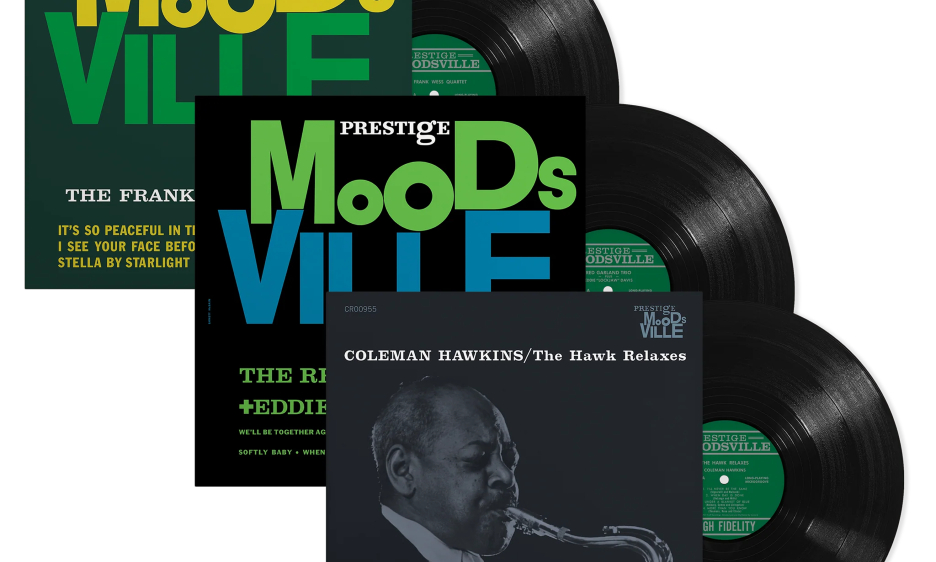
As an antidote to fluffy 1960s mood music, the Moodsville series brought top Prestige jazz artists into the studio to record ballads and blues in settings that could be enjoyed as background music but nevertheless repay careful listening.
Craft Recordings is again partnering with Acoustic Sounds, the renowned audiophile company that operates The Mastering Lab and its Quality Record Pressings plant in Salina, Kansas, to reissue a series of original Moodsville recordings. Featuring all-analog (AAA) remastering from the original tapes by Matthew Lutthans, the albums are pressed on 180-gram vinyl and housed in sturdy tip-on jackets that reproduce all original art and liner notes. Additionally, every title in the series will be delivered to digital platforms in hi-res audio. The first three releases in September 2026 include Moodsville, Volume 1 (Prestige Records, 1960) by The Red Garland Trio with Eddie "Lockjaw" Davis, Moodsville, Volume 8 (Prestige Records, 1960) by The Frank Wess Quartet and The Hawk Relaxes (Prestige Records, 1961) by Coleman Hawkins. As with other Craft/Acoustic Sounds reissue series, the sound quality of these Moodsville albums is stunning and the pressing and packaging are impeccable.
 Moodsville, Volume 1
Red Garland
Prestige Records
1960
Born in Dallas, Texas in 1923, pianist Red Garland is perhaps best known for his role in the first great quintet of Miles Davis between 1955 and 1958. With his own trio, sometimes augmented with special guests on horns, he was also a mainstay at Prestige Records, laying down over two dozen LPs including four Moodsville titles. Here Garland, bassist Sam Jones, and drummer Art Taylor are joined on three of the eight tracks by a different Mr. Davis: tenor man Eddie "Lockjaw" Davis, whose 40-year career encompassed rhythm 'n' blues, swing, bop, Latin, and soul jazz styles. Befitting Moodsville's remit, the trio is firmly in a mellow, after-hours groove here, with Taylor mostly on brushes keeping time unobtrusively. Garland begins the ubiquitous standard "Stella By Starlight" with a gorgeous, wistful solo statement of the theme punctuated by dramatic flourishes up and down the keyboard. As the band enters, Jones' choice of bass notes adds drama to this slightly unsettling tune, which never quite seems to resolve comfortably. Jones is also a highlight of "I Heard You Cried Last Night," deploying chromatic walk-ups that add to the tune's pathos. Garland gets more room to work here, and his solo exhibits the impeccable approach to ballads that he brought to the Miles Davis Quintet. The core trio is also featured on "Wonder Why," with another long solo Garland intro that gives way to a brightly swinging tempo from Taylor, and the 1926 Rodgers and Hart show tune "Blue Room," which became an upbeat big band staple. Here, despite the optimistic cast of the original lyrics, it is played as a slow and wistful ballad that again benefits from Jones' thoughtful bass playing.
As beautiful as all this is, it would lodge the album firmly in "background music" territory were it not for the three tracks spiced up with Davis' tenor. On the Fischer/Laine tune "We'll Be Together Again," the saxophonist's big-boned blues tone caresses the melody with a sexy vigor the trio tracks lack. Davis is also in his element on Garland's original blues "Softly Baby," his solo diving to delicious low notes that shake the speakers. Finally, the desolate "When Your Lover Has Gone," sung so effectively by Frank Sinatra (Like faded flowers/life can't mean anything/When your lover has gone) on his album In The Wee Small Hours (Capitol Records, 1955), is given an equally satisfying treatment by Davis, his furry tone captured impressively for the period by Van Gelder's microphones and tape machines. The tenor's blues cry here raises the temperature considerably, as does the trio's strutting "The Red Blues," which closes the album with a flourish.
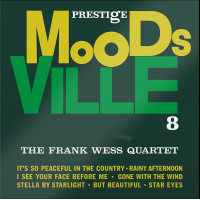 Moodsville, Volume 8
Frank Wess Quartet
Prestige Records
1960
Though principally known as one of the few breakout jazz flautists, Kansas City native Frank Wess was equally at home on the tenor saxophone. A mainstay of Count Basie's band in the 1950s and early 1960s, Wess also co-led a series of dates for Prestige, including the well-known Wheelin' & Dealin' (Prestige, 1958) with John Coltrane, and harpist Dorothy Ashby's early albums on Prestige's New Jazz imprint. On Moodsville, Volume 8, Wess is joined by the great Tommy Flanagan on piano, Eddie Jones on bass, and Bobby Donaldson on drums. The album opens with Alec Wilder's "It's So Peaceful In The Country," Wess' beautifully recorded flute stating the beguiling melody. Flanagan and Wess solo effectively, with enlivening dotted-triplet double-time rhythmic shifts from Jones and Donaldson. The next track, "Rainy Afternoon," is a deeply groovy eight-minute tenor sax blues that is worth the price of admission alone, with Wess and Flanagan putting on a clinic that may elicit shouts of approval from any listening room. The Raye/DePaul standard "Star Eyes" is introduced with a metropolitan-flavored Latin beat by Donaldson and Jones that switches smoothly to a sprightly swinging groove for Wess' flute solo. "But Beautiful" and "I See Your Face Before Me" also feature Wess on flute, the latter a highlight due to Donaldson's stellar brush work, Jones' unerring walking swing, and Flanagan's expert comping. Back on tenor, Wess essays "Stella By Starlight" with an absolutely beautiful clear tone, and canters through "Gone With The Wind" at the perfect tempo, with Jones' springy bass walk giving the take a delightful buoyancy. Along with Wess' complete mastery of two very distinct instruments, what impresses here is how tight the band is: they never put a foot wrong, and their impeccable interplay is captured in astonishingly clear and present Van Gelder sound. For concentrated listening, this record is the best of the first three.
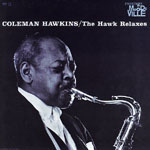 The Hawk Relaxes
Coleman Hawkins
Prestige Records
1961
At this remove, over 120 years after his birth, Coleman Hawkins needs little introduction. Suffice it to say that he played a major role in establishing the tenor saxophone as a jazz instrument, became a star during the big band era, recorded a seminal version of the standard "Body and Soul" in 1939 that laid the groundwork for bebop, the birth of which he then participated in with key sessions in the mid-1940s, made small group recordings with most major and independent jazz labels in the 1950s and 1960s, including albums with Thelonious Monk, Coltrane, and Sonny Rollins, and influenced nearly every tenor man who followed him. His tone was huge and warm, with an emotional vibrato well suited to ballads such as those featured on The Hawk Relaxes. What sets this Moodsville session apart is the young band featuring Kenny Burrell on guitar, Ronnell Bright on piano, Ron Carter on bass, and future Cecil Taylor drummer Andrew Cyrille. Hawkins plays with his characteristic grace, completely at home with these tunes, and the group, while sharp, stays firmly within the idiom. Carter's thorny work with Miles Davis' second great quintet and Cyrille's avant-garde turn were still a few years away.
The date is essentially co-led by Burrell, whose comping and soloing are prominent on every tune; Bright is rather in the background throughout. Highlights include Leonello Casucci's "Just a Gigolo," played tenderly and featuring a lovely conversation between sax and guitar; a calypso-styled take on Kurt Weill's "Speak Low" that gives way to a swinging groove over which Hawkins and Burrell solo effectively; and a lovely stroll through "Moonglow" that inspires some of Hawkins' and Burrell's best playing on the set. Also notable is "When Day Is Done," a tune popularized by Django Reinhardt and Art Tatum. Here, Bright and Cyrille lay out, allowing the focus to stay on Hawkins, with Burrell expertly couching every line the sax spins out with a cushion of chords.
With the list of Moodsville releases including albums by such greats as Oliver Nelson, Gene Ammons, and Clark Terry, not to mention more music involving Hawkins, Davis, Burrell, and Flanagan, we can look forward to further fascinating installments of this new Craft/Acoustic Sounds series.
Tracks and Personnel
Moodsville, Volume 1Tracks: We'll Be Together Again; Stella by Starlight; I Heard You Cried Last Night; Softly Baby; When Your Lover Has Gone; Wonder Why; The Blue Room; The Red Blues.
Personnel: Red Garland: piano; Eddie "Lockjaw" Davis: tenor saxophone; Sam Jones: bass; Arthur Taylor: drums.
Moodsville, Volume 8
Tracks: It's So Peaceful In The Country; Rainy Afternoon; Star Eyes; Stella By Starlight; But Beautiful; Gone With The Wind; I See Your Face Before Me.
Personnel: Frank Wess: flute, tenor saxophone; Tommy Flanagan: piano; Eddie Jones: bass; Bobby Donaldson: drums.
The Hawk Relaxes
Tracks: I'll Never Be the Same; When Day Is Done; Under a Blanket of Blue; More Than You Know; Moonglow; Just a Gigolo; Speak Low.
Personnel: Coleman Hawkins: tenor saxophone; Ronnell Bright: piano; Kenny Burrell: guitar; Ron Carter: bass; Andrew Cyrille: drums.
 FOLLOW Joshua Weiner
and get notified whenever a new article published.
FOLLOW Joshua Weiner
and get notified whenever a new article published.
Joshua Weiner enjoys his day job as a professor and dean but wishes it left more time for music.
Tags
PREVIOUS / NEXT


Become a Sustaining Member

Since 1995, All About Jazz has championed jazz as an art form and supported the musicians who create it. Over three decades, it has grown into one of the world's leading jazz resources, serving hundreds of thousands of readers, musicians, presenters and industry professionals each month.
Help Build the Future of All About Jazz
Your support helps us continue building All About Jazz for the next generation—expanding our editorial coverage, preserving jazz history, developing new community features and creating better ways to discover the music and the people behind it.
Become a sustaining member for as little as $20 per year and you'll immediately enjoy an ad-free experience along with access to subscriber features and future articles for a full year.
Together, we're not simply sustaining All About Jazz—we're building its future. Thank you for being part of the journey.